
Reviewed · THIRD REICH & COLD WAR TOURS
Berlin: Cold War History and Berlin Wall Guided Walking Tour
Berlin’s Cold War story is easiest to grasp when you walk through the places where it happened. This three-hour history tour links Brandenburg Gate, Checkpoint Charlie, Potsdamer Platz, and the Berlin Wall Memorial with the political choices and personal risks behind them.
I like the focus on human stories, including daring escapes and the family experiences shared by guide Cieran. I also like the route’s mix of famous sites and physical remnants, especially the 200-meter wall stretch on Niederkirchnerstrasse and the former DDR watchtower.
The main thing to consider is the walking pace and outdoor setting. Traffic noise can make some explanations harder to hear, and you will want comfortable shoes and weather-ready clothing, especially in winter.
In This Review
- Key points to know before you book
- Why this tour works for understanding divided Berlin
- Starting beside Brandenburg Gate
- Following the former wall through central Berlin
- Topography of Terror and the difficult road to division
- Potsdamer Platz and a city rebuilt around its scars
- Checkpoint Charlie, famous and complicated
- The Berlin Wall Memorial, the tour’s main history lesson
- What the guides add to the experience
- Is three hours enough?
- Is $31 a fair price?
- Who will get the most from this walk?
- Practical tips for a better experience
- My verdict on this Berlin Cold War tour
- FAQ
- How long does the Berlin Cold War walking tour last?
- Where does the tour begin?
- Which languages are available?
- What main sites does the tour visit?
- Does the tour include the Berlin Wall Memorial?
- Is the tour wheelchair accessible?
- What should I bring?
Key points to know before you book
- A full Cold War route: Connect the postwar division of Germany with the wall’s construction, daily life in East Berlin, escape attempts, and the wall’s fall.
- Personal storytelling: Guides including Eugen, Cieran, and Paul are praised for clear explanations, strong storytelling, and thoughtful answers to questions.
- Important surviving sites: See Checkpoint Charlie, the Berlin Wall Memorial, a former DDR watchtower, and a 200-meter section of wall along Niederkirchnerstrasse.
- A useful three-hour format: The tour covers major sites without requiring a full museum day, though it does involve steady walking outdoors.
- Good value at $31: You get a local guide and a focused route through several central historical locations.
- Easy planning: Meet outside Hopfingerbräu beside Brandenburg Gate. English and German tours are available, and the route is wheelchair accessible.
Why this tour works for understanding divided Berlin
Berlin’s Cold War story can feel scattered. One site explains the war’s aftermath, another shows where people crossed the border, and a third marks where the wall once cut through ordinary neighborhoods. This walk ties those pieces together.
You begin with the uneasy partnership between the Soviet Union and the Western Allies after the Second World War. As the relationship broke down, Germany became divided into opposing political systems, and Berlin became the most visible pressure point. The city sat inside Soviet-controlled East Germany, yet parts of Berlin were administered by the Western Allies.
That unusual arrangement made Berlin more than a divided capital. It became a place where the rivalry between East and West could be seen in streets, checkpoints, watchtowers, rail lines, and concrete barriers. Your guide’s job is to explain why the wall was built, not just point out where it used to be.
I find that distinction important. A wall can look like a simple structure when you see a surviving section today. The story becomes much clearer when you learn what came before it, why people tried to leave, and how the division affected families and daily life.
More Third Reich & Cold War Tours in Berlin
- Berlin: Third Reich and Cold War 2 Hour Walking Tour
★ 4.9 · 6,830 reviews - Berlin’s Best: 2 Hour Walking Tour Third Reich and the Cold War
★ 5.0 · 5,486 reviews - Third Reich Berlin: Hitler and WWII Walking Tour
★ 5.0 · 3,301 reviews
Starting beside Brandenburg Gate
The meeting point is outside Hopfingerbräu on Ebertstraße, next to Brandenburg Gate. This is a practical place to begin because the gate gives you an immediate sense of Berlin’s political weight.
Brandenburg Gate once sat beside the dividing line between East and West Berlin. Today, it is an open city landmark, but during the division it represented a closed border and the split between two political worlds. The first stop lasts about 15 minutes, enough time to set the scene without turning the opening into a long lecture.
Starting here also helps you get your bearings. The route later moves through several central districts, and the opening explanation gives those streets a historical frame. If Berlin is your first stop in Germany, this is a useful introduction to the country’s postwar story.
Following the former wall through central Berlin
The tour then moves to remnants of the Berlin Wall. This is where the subject shifts from political history to physical evidence.
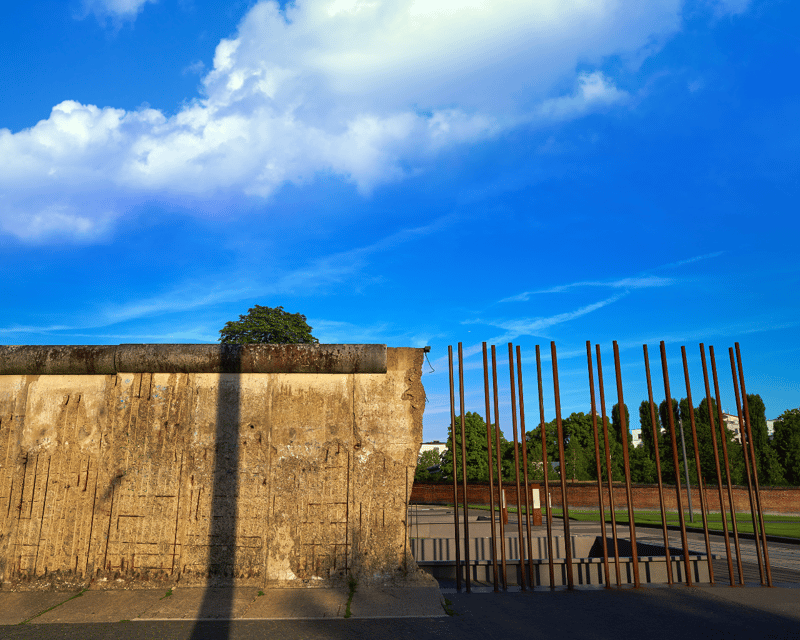
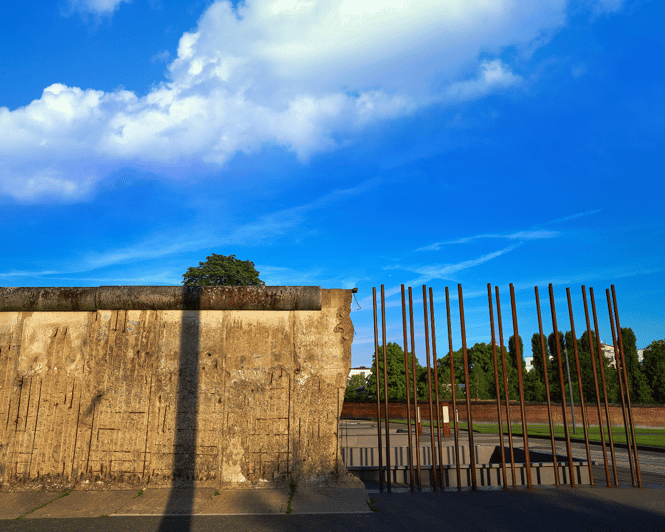
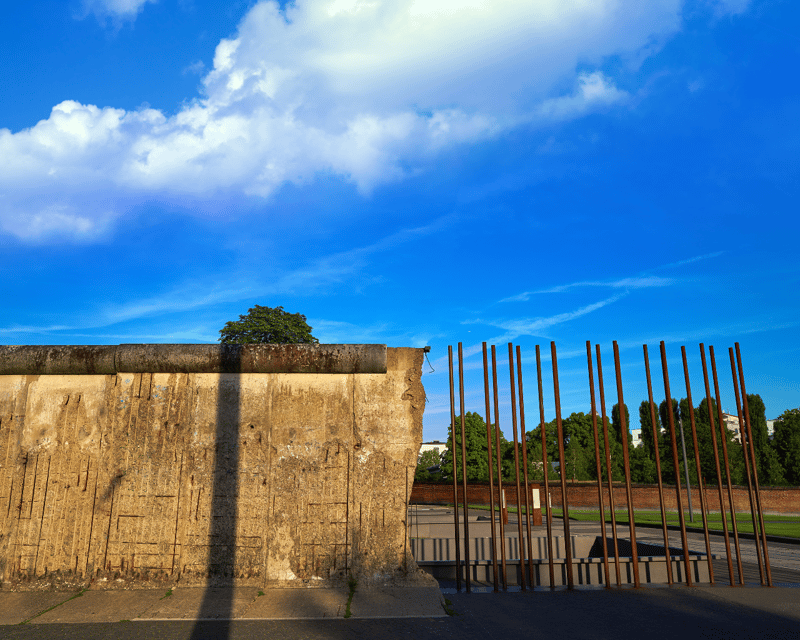
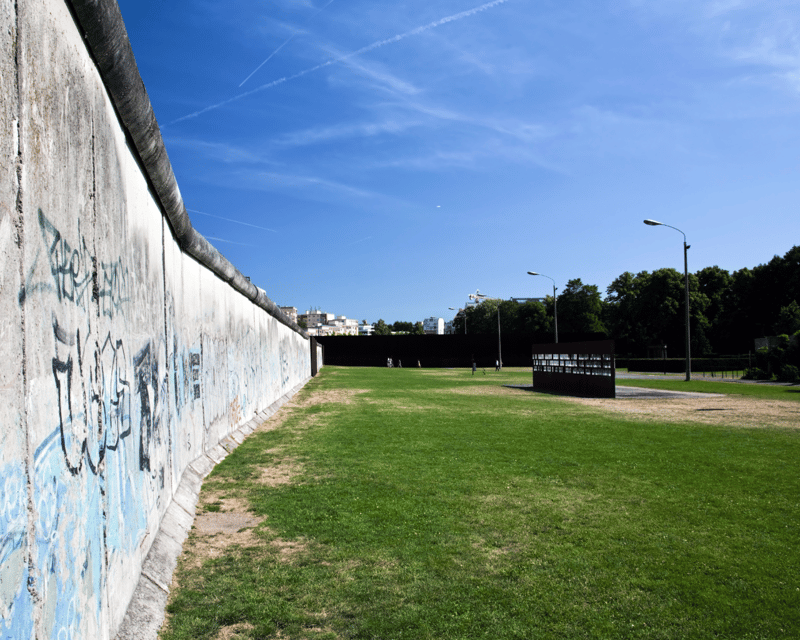
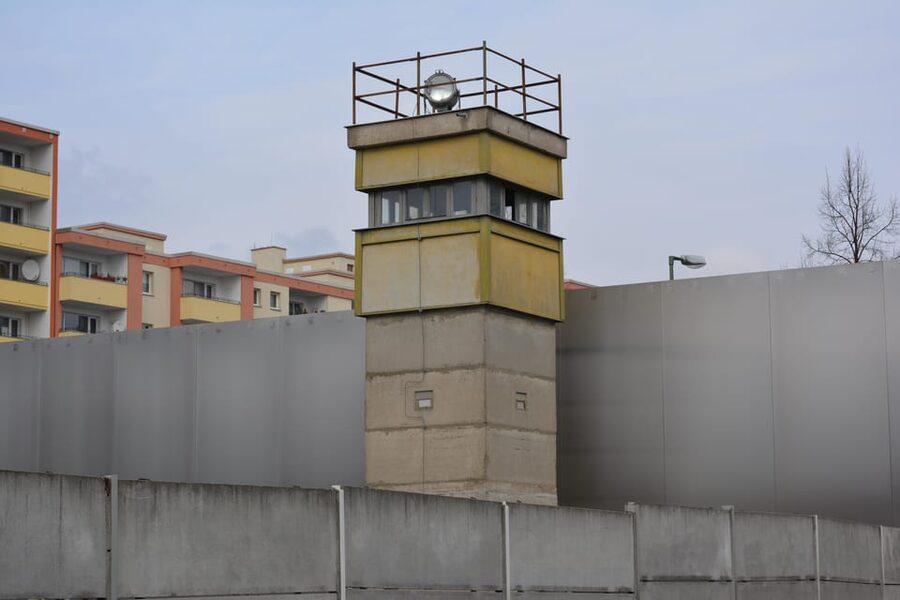
Berlin removed much of the wall after reunification, so the remaining sections matter. They help you see the scale of the barrier and imagine how sharply it interrupted roads, neighborhoods, and everyday movement. The tour includes a 200-meter stretch along Niederkirchnerstrasse, one of the more useful surviving sections for understanding the wall as a built border rather than a distant historical idea.
You may also see a former DDR watchtower. A watchtower brings the border system into sharper focus because it shows that the wall was not just one slab of concrete. It formed part of a controlled zone designed to monitor and restrict movement.
The time spent at the wall is around 25 minutes. That is enough for an explanation and questions, though you should not expect every surviving section in Berlin to be covered. This is a focused route, not a complete survey of all wall sites.
Topography of Terror and the difficult road to division
The stop at Topography of Terror lasts about 15 minutes. This location helps connect the Cold War period to the earlier history of Nazi Germany and the Second World War.
That link matters. Berlin’s division did not appear out of nowhere in 1961. It grew from Germany’s defeat, occupation, and the breakdown of cooperation among the victorious powers. A short stop here gives your guide a chance to explain how the city moved from wartime destruction into postwar confrontation.
You should think of this part as context rather than a long museum visit. The tour does not list an extended indoor museum session, so the stop is best for orientation and explanation. If you want a detailed study of the Nazi period, plan a separate visit.
Same city, a completely different kind of day:
- Berlin: Reichstag, Dome and Government District Guided Tour
★ 4.7 · 18,288 reviews - Berlin: 1-Hour City Tour by Boat with Guaranteed Seating
★ 4.3 · 16,993 reviews - Berlin: Boat Tour Along the River Spree
★ 4.4 · 11,252 reviews - Discover Berlin Half-Day Walking Tour
★ 5.0 · 9,624 reviews
Potsdamer Platz and a city rebuilt around its scars
Potsdamer Platz is another short stop, lasting about 15 minutes. It is a useful place to see how quickly Berlin’s central areas have changed.
The square was divided during the Cold War and later rebuilt. Modern architecture now fills much of the area, which can make the old border hard to picture without guidance. Your guide helps you read the present-day streets against the earlier city, showing how a place that once symbolized separation became part of a reunited center.
I like this stop because it reminds you that Berlin’s Cold War story is not preserved in one old quarter. It runs beneath busy public spaces and newer buildings. The contrast can be striking, but it also means you need the guide’s explanation to appreciate what is no longer visible.
Checkpoint Charlie, famous and complicated
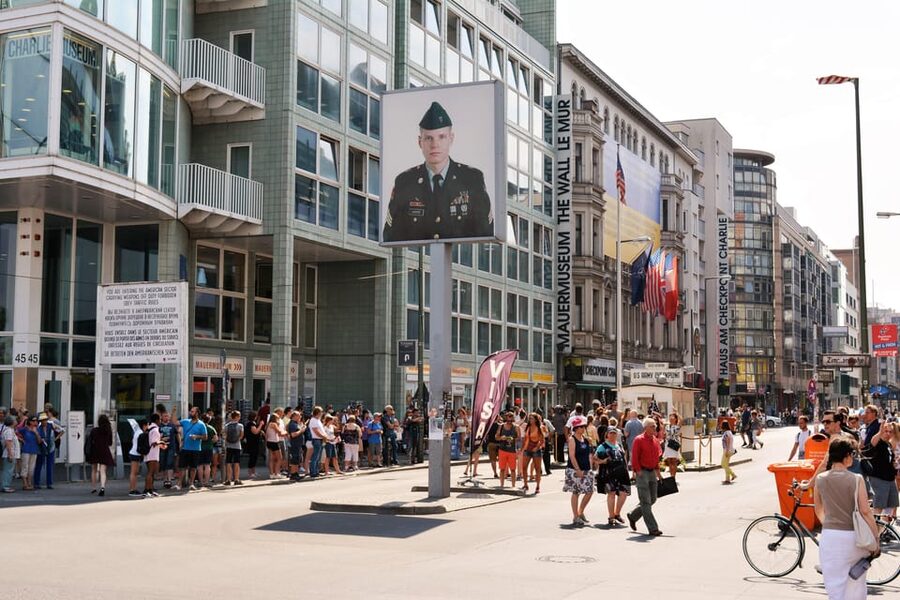
Checkpoint Charlie is the tour’s best-known crossing point. The guided portion here lasts about 25 minutes.
The name is familiar around the world, but the site can be easy to oversimplify. It was a crossing between the American and Soviet sectors, and it became a symbol of the larger confrontation between East and West. Your guide explains its role within the border system and places it in the wider story of Berlin’s division.
You will also hear about attempts to escape from East Berlin and the risks people took to cross the border. These accounts give the site a human scale. Instead of treating the checkpoint as a photo stop, the tour uses it to explain what movement across Berlin could mean for ordinary people.
Checkpoint Charlie is also one of the more commercialized Cold War sites in the city. The surviving historical setting is limited, and the area can feel busy. That is a fair drawback, but the guide’s context is especially useful here because the present-day surroundings do not explain the past on their own.
The Berlin Wall Memorial, the tour’s main history lesson
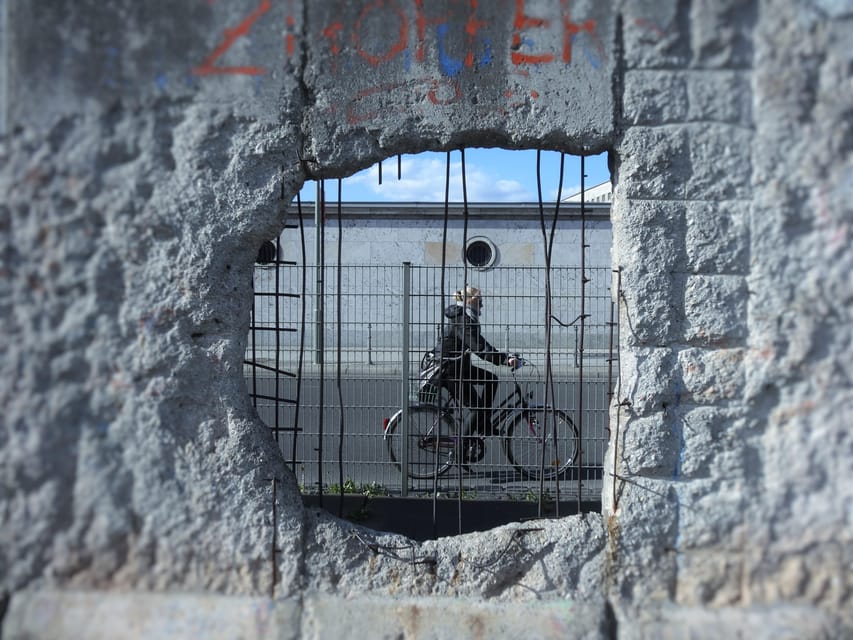
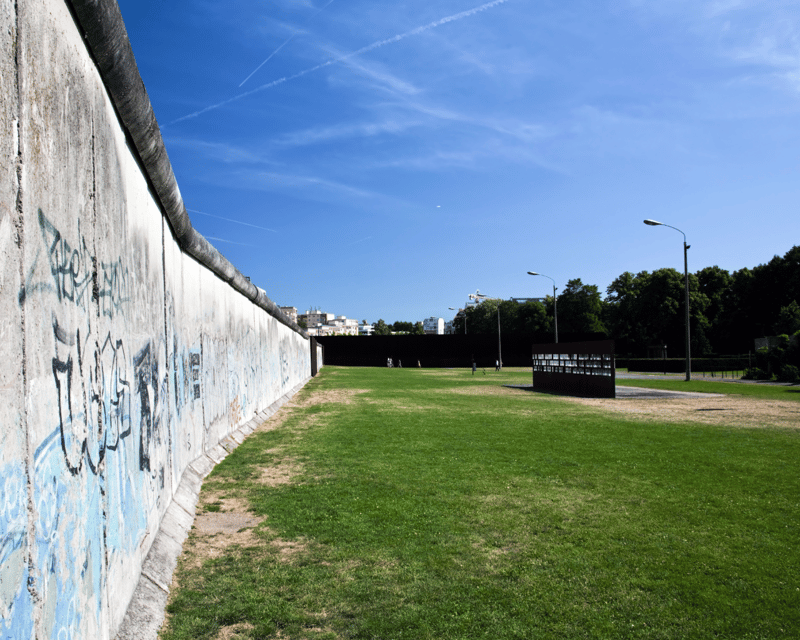
The longest stop is the Berlin Wall Memorial, with about 75 minutes of guided attention. This is the part of the walk that gives the wall’s human cost the most room.
The memorial commemorates the division of Berlin and the people who lost their lives because of it. It also helps explain how the border worked, how communities were cut apart, and why escape attempts were so dangerous.
Expect stories of bravery, loss, and ingenuity. The guides bring up individual experiences rather than leaving you with only dates and political labels. Eugen is praised for explaining not only what happened, but when and why it happened. Cieran has also used photographs connected to his own family’s experiences with the wall, adding a personal layer to the discussion.
Those details can make this stop quite moving. They also require some care from the guide, and the feedback about Eugen and Cieran points to a style that is respectful, patient, and open to questions. Paul is also singled out for his strong command of the Cold War and Berlin Wall story.
The memorial is not just about the concrete wall. It marks the wider border zone and the lives shaped by it. That makes the 75-minute stop the intellectual center of the tour. If you have time for only one part of Berlin’s Cold War story, this is the section I would value most.
What the guides add to the experience
This tour depends heavily on the person leading it. The route has strong sites, but the value comes from how the guide links them.
Eugen is described as a careful storyteller who explains causes, dates, and effects while bringing personal accounts back into view. Cieran is noted for maintaining energy even in heavy snow and for sharing family photographs connected to the wall. Paul is praised for clear command of the subject and an engaging approach.
The guides speak English or German. You can ask questions during the walk, and the available feedback points to a friendly, tactful style rather than a rushed recital of facts.
There is one practical sound issue. Traffic noise can interfere with explanations at some stops. Try to stay close to the guide and face the speaker when information is being given. This is particularly useful on busy streets and open squares.
Is three hours enough?
Three hours is a good middle ground for this subject. You get a clear route through major central locations without committing to a full-day program.
The timing also gives the guide enough space to explain the political background and personal stories. The 75 minutes at the Berlin Wall Memorial is especially helpful, since a shorter visit could leave the subject feeling like a string of disconnected photo stops.
The tradeoff is that the tour cannot cover every Cold War location in Berlin. You will not get an exhaustive tour of all former border crossings, museums, and wall remnants. Instead, you get a carefully focused introduction with several major stops.
Because this is a walking tour, wear comfortable shoes. Bring clothing suited to the forecast, with extra care in cold or wet weather. The group is outside for most of the experience, and winter conditions can affect comfort even when the guide keeps the pace lively.
Is $31 a fair price?
At $31 per person, the price is reasonable for a three-hour guided walk with a local historian. You are paying for interpretation, not admission to a large attraction, and that distinction is worth keeping in mind.
The value is strongest if you want help making sense of Berlin’s scattered Cold War remains. A self-guided walk can take you to Checkpoint Charlie or the Berlin Wall Memorial, but it will not automatically explain how the postwar alliance collapsed, why the wall was built, or how escape stories fit into the political story.
The price is less compelling if you prefer to explore silently at your own pace or already know the subject well. You may also want a separate museum visit for more time with documents, exhibits, and photographs.
The tour includes the walking tour and local guide. It does not list additional attraction admissions, so you should not expect a museum ticket to be part of the price. The main purchase is the guide’s time and explanation.
Who will get the most from this walk?
I would recommend this tour to first-time visitors who want a clear introduction to Berlin’s division. It also suits families and older children who can manage three hours of walking and are ready for serious historical material.
It works well for anyone who knows the wall as a famous symbol but wants to understand the people behind it. The escape stories and personal details give the subject emotional force without losing the political background.
History students and Cold War enthusiasts may enjoy the route as a strong overview. If you already have a high level of expertise, you might find some stops introductory, but the personal stories can still add value.
This is not the best match if you want a relaxed sightseeing stroll with only light commentary. The subject includes death, separation, state control, and failed escapes. The tone is informative and at times moving, not casual entertainment.
The tour is wheelchair accessible, which makes it a useful option for visitors who need an accessible walking experience. Still, because the route takes place outdoors in public streets and memorial areas, it is sensible to check current conditions when booking.
Practical tips for a better experience
Meet outside Hopfingerbräu beside Brandenburg Gate rather than waiting somewhere inside. Arrive ready to walk, since the route returns to the same general meeting point after visiting several central sites.
Stay near the guide when the group is gathered around a street or open square. Traffic can be loud, and one direct tip from the tour experience is to face the guide while explanations are being given.
Wear shoes you can walk in for three hours. Weather-appropriate clothing matters more than it might on a short city stroll, since the tour spends much of its time outdoors.
If you are choosing between a morning and afternoon start, check the available times for your date. The activity lasts three hours, but the exact starting times vary.
The booking terms are flexible: you can cancel up to 24 hours in advance for a full refund, and you can reserve now while paying later. Those options help if Berlin is part of a longer trip with changing plans.
My verdict on this Berlin Cold War tour
Book this tour if you want Berlin’s Cold War story explained through places, dates, and personal accounts. The route covers the major essentials, and the guides appear strongest when turning political history into human stories.
The best reasons to go are the Berlin Wall Memorial, the 200-meter wall section, and the thoughtful guide work associated with Eugen, Cieran, and Paul. The main cautions are outdoor exposure, traffic noise, and the fact that Checkpoint Charlie itself has limited original fabric.
At $31, I see this as a solid introduction rather than a final word on the subject. Take the walk early in your Berlin stay, then return to the memorial or a museum on your own if the history catches your interest.
FAQ
How long does the Berlin Cold War walking tour last?
The tour lasts three hours.
Where does the tour begin?
Meet your guide outside Hopfingerbräu at Ebertstraße 24, next to Brandenburg Gate.
Which languages are available?
The tour is available with a live guide in English or German.
What main sites does the tour visit?
The route includes Brandenburg Gate, remnants of the Berlin Wall, Topography of Terror, Potsdamer Platz, Checkpoint Charlie, and the Berlin Wall Memorial.
Does the tour include the Berlin Wall Memorial?
Yes. The guided visit to the Berlin Wall Memorial lasts about 75 minutes.
Is the tour wheelchair accessible?
Yes, the activity is listed as wheelchair accessible.
What should I bring?
Bring comfortable shoes and clothing suited to the weather, since this is an outdoor walking tour.
More Walking Tours in Berlin
- Berlin: Discover Berlin Walking Tour
★ 4.9 · 5,998 reviews - Berlin: Hidden Backyards Guided Walking Tour
★ 4.8 · 5,360 reviews - Berlin: Alternative Berlin Walking Tour
★ 4.6 · 1,204 reviews - Berlin: Third Reich, Hitler, and WWII Walking Tour
★ 4.9 · 1,133 reviews
More Historical Tours in Berlin
- Berlin: Natural History Museum Entrance Ticket
★ 4.6 · 3,382 reviews - Berlin: World Heritage Cruise to Potsdam
★ 4.5 · 1,435 reviews - Berlin Historical Highlights Walking Tour
★ 4.9 · 657 reviews - Berlin Private Complete History All Day Walking Tour
★ 5.0 · 474 reviews
Just added around Berlin
- Love and War in Berlin: Self-Guided Story Puzzle Walk★ 5.0 · 7 reviews
- Rickshaw Tours Berlin – Groups of up to 16 people with several rickshaws★ 4.0 · 97 reviews
- eSIM for Germany and 34 European Countries★ 4.5 · 16 reviews
- Walking on the Wall: 3-Hour Tour in Berlin★ 4.5 · 34 reviews
- Warnemuende Shore Excursion: Berlin Private Sightseeing Tour from Rostock★ 5.0 · 4 reviews
- Your ticket to The Wall Museum Berlin★ 3.0 · 60 reviews
- Warnemuende Shore Excursion: Private Berlin Tour★ 4.5 · 27 reviews
- Berlin’s Gay, Lesbian, and Queer Scene Small-Group Walking Tour★ 4.5 · 66 reviews
Third Reich & Cold War Tours, compared.



Berlin’s Best: 2 Hour Walking Tour Third Reich and the Cold War
Read our review →

Third Reich Berlin: Hitler and WWII Walking Tour
Read our review →
Skip-the-Line: Berlin Wall Museum at Checkpoint Charlie
Read our review →

Cold War, Berlin Wall, Spies and the East Side Gallery
Read our review →Browse the lists this tour appears in