
Reviewed · THIRD REICH & COLD WAR TOURS
Berlin: Third Reich and Cold War 2 Hour Walking Tour
Berlin’s most important history is often found in plain sight: a gate, a car park, a government building, a strip of pavement. This two-hour walking tour connects those ordinary-looking places to the Nazi dictatorship, the Second World War, the Holocaust, and the Cold War division of Europe.
I like the route for two clear reasons. First, it puts the Third Reich and Cold War in one story, rather than treating them as separate chapters. Second, the walk reaches major sites such as the Soviet War Memorial, the Holocaust Memorial, a surviving section of the Berlin Wall, and Checkpoint Charlie without requiring a bus or train between stops.
The main consideration is pace. You cover about 2 kilometers in two hours, with several serious subjects and many facts along the way. That is a good introduction, but you will not have time to explore every memorial or museum in detail. Also, the supplied meeting information says the activity ends back at the meeting point, while the route description says it finishes at Checkpoint Charlie. Confirm the end point when booking.
In This Review
- Key points at a glance
- Why this route works for Berlin’s difficult history
- Meeting at the Brandenburg Gate
- The Reichstag and the 1933 fire
- Soviet tanks in Tiergarten
- The Holocaust Memorial and the limits of a short tour
- Hitler’s bunker site and the end of the Third Reich
- Detlev-Rohwedder-Haus and the birth of East Germany
- Topography of Terror and the machinery of repression
- A 200-meter stretch of the Berlin Wall
- Checkpoint Charlie and the final Cold War chapter
- Guides, pace, and group choices
- What to bring and who should book
- Should you book this Berlin walking tour?
- FAQ
- How long does the tour last?
- How far will I walk?
- Where does the tour start?
- How can I reach the meeting point?
- What languages are available?
- Is the tour wheelchair accessible?
- Does the tour run in bad weather?
- Can I cancel or pay later?
Key points at a glance
- Start at the Brandenburg Gate: Begin at the Tourist Information point on Pariser Platz, with the pink umbrella as your meeting marker.
- See a 200-meter Berlin Wall section: Hear about escape attempts and the human cost of the city’s division.
- Connect Nazi and postwar history: Visit the Reichstag, Hitler’s bunker site, the former aviation ministry, and the former SS and Gestapo headquarters.
- Pause at powerful memorials: The Soviet War Memorial and Memorial to the Murdered Jews of Europe give the walk emotional weight.
- Choose group or private touring: English and German options are available, though language choices can differ by tour type.
- Expect an easy city walk: The route covers about 2 kilometers and is listed as wheelchair accessible, but comfortable shoes remain essential.
Why this route works for Berlin’s difficult history

Berlin can feel like a giant open-air history lesson, but its evidence is scattered. A grand building may have served the Nazis, East Germany, and the reunited German government. A quiet patch of ground may mark the last days of Hitler’s regime. A busy intersection may once have been the place where American and Soviet tanks faced each other.
This tour gives you a useful timeline. You begin with Berlin under Nazi rule, move through the final battle of 1945, then follow the city’s division and the fall of the Wall. The guide’s job is not simply to name buildings. It is to explain how one political system followed another, and how the same streets changed meaning over time.
The tour is especially useful on your first day in Berlin. It helps you understand the city’s geography quickly, then gives you a list of places to revisit at your own pace. Guides including Hannah, Jimmy, Steve, Ru, Scott, Klaus, Marie, Peter, Tina, Alex, and Mikhail have been praised for clear storytelling, good pacing, humor, and thoughtful answers to questions. Your guide will vary, but the best version of this tour depends heavily on that person’s ability to make a large amount of material easy to follow.
More Third Reich & Cold War Tours in Berlin
- Berlin’s Best: 2 Hour Walking Tour Third Reich and the Cold War
★ 5.0 · 5,486 reviews - Third Reich Berlin: Hitler and WWII Walking Tour
★ 5.0 · 3,301 reviews - Skip-the-Line: Berlin Wall Museum at Checkpoint Charlie
★ 4.1 · 2,041 reviews
Meeting at the Brandenburg Gate
Meet in front of the Tourist Information point at Brandenburg Gate, Pariser Platz 1. Look for the guide with the pink umbrella, a simple detail that matters in a crowded central square.
The closest rail stop is Brandenburger Tor, served by S1, S2, S25, S26, and U5. Buses 100 and 245 also serve the area. Arrive with enough time to find Pariser Platz, since the Brandenburg Gate itself is broad and the meeting point is not simply anywhere beneath the arch.
The gate is a fitting place to begin. It was used as a backdrop for Nazi parades, then sat near the Cold War border, and later became one of the clearest symbols of German reunification. Your guide can use one building to explain how political power reshaped Berlin across several decades.
The square is open and exposed, so bring water and an umbrella. Tours operate in all weather, including public holidays. A guide may adapt the route or pause under cover, but you should still dress for the forecast.
The Reichstag and the 1933 fire
From the Brandenburg Gate, the route passes the Reichstag, the home of Germany’s parliament. The building’s history is unusually useful for understanding the country’s political turns.
The 1933 Reichstag Fire is the focus here. The event became a major step in Hitler’s consolidation of power, allowing the Nazi government to restrict civil liberties and target political opponents. Your guide explains the competing interpretations of the fire and why its political use mattered more than the damaged building itself.
The Reichstag later survived the war, Soviet occupation, division, and years of uncertainty before becoming the seat of the reunited German parliament. You will view it from the outside on this walk, so do not expect a visit to the dome or parliamentary interior. Still, hearing the story at the building gives the subject a physical anchor.
This is one place where a strong guide makes a real difference. The subject involves legal changes, propaganda, and a rapid collapse of democracy. Guides such as James and Joachim have been praised for explaining complicated material in clear language and for handling questions carefully.
Soviet tanks in Tiergarten
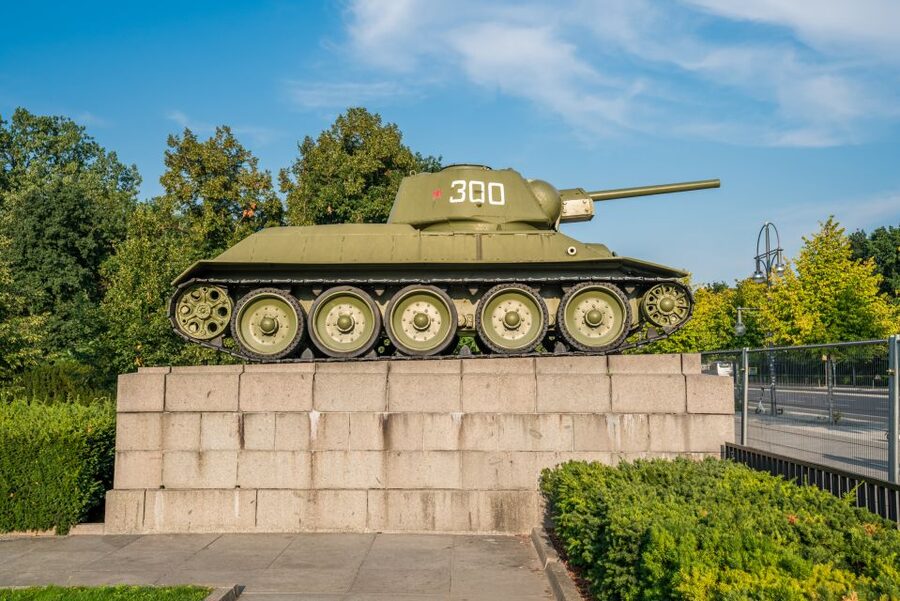
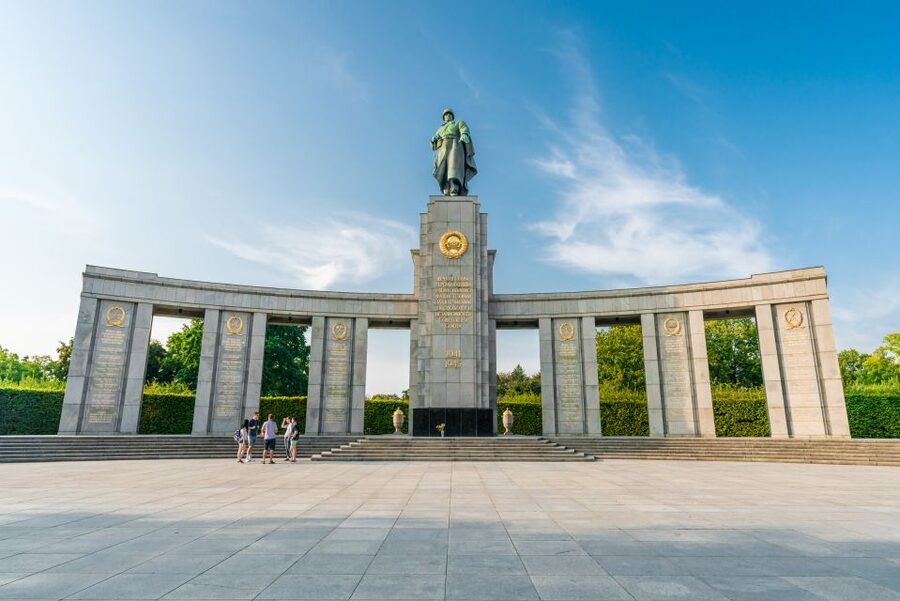
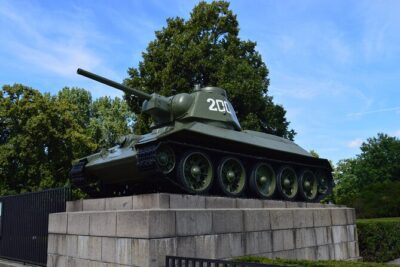
The Soviet War Memorial in Tiergarten changes the tone of the tour. Here, preserved Red Army tanks and artillery pieces face the broad space, commemorating the Soviet soldiers killed in the Battle of Berlin.
The memorial honors about 80,000 Soviet soldiers who fell during that battle. That number helps explain the scale of the final fighting, but the setting adds another layer. This is not only a cemetery and memorial. It is also a reminder that the Soviet Union occupied eastern Germany after defeating Nazi Germany, shaping Berlin’s next political chapter.
You will stop here rather than rush past it. The tanks make the end of the war tangible, though the memorial also raises questions about memory and power. It was created by the Soviet authorities, and its presence in central Berlin continued through the Cold War and after reunification.
Wear comfortable shoes, but note that this is not a strenuous hike. The overall distance is about 2 kilometers, and the pace has been described as a comfortable stroll. On hot days, shade can matter. One guide, Mikhail, was specifically praised for choosing shaded places when possible and checking that the group remained comfortable.
Same city, a completely different kind of day:
- Berlin: Reichstag, Dome and Government District Guided Tour
★ 4.7 · 18,288 reviews - Berlin: 1-Hour City Tour by Boat with Guaranteed Seating
★ 4.3 · 16,993 reviews - Berlin: Boat Tour Along the River Spree
★ 4.4 · 11,252 reviews - Discover Berlin Half-Day Walking Tour
★ 5.0 · 9,624 reviews
The Holocaust Memorial and the limits of a short tour
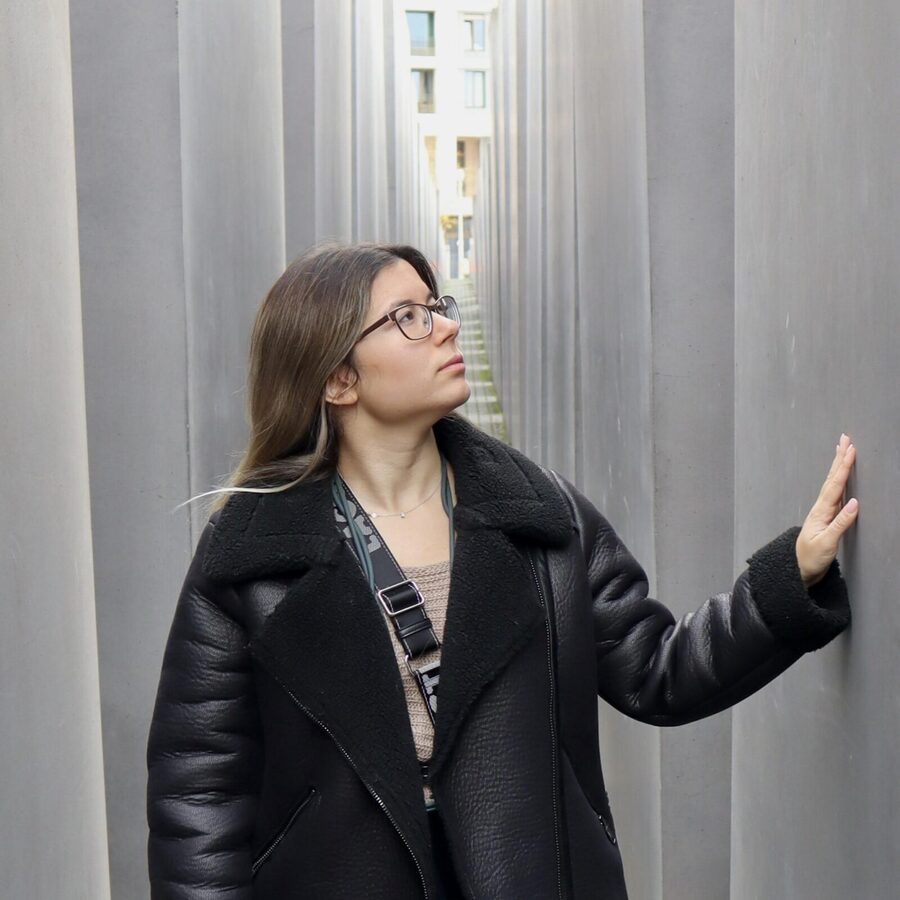
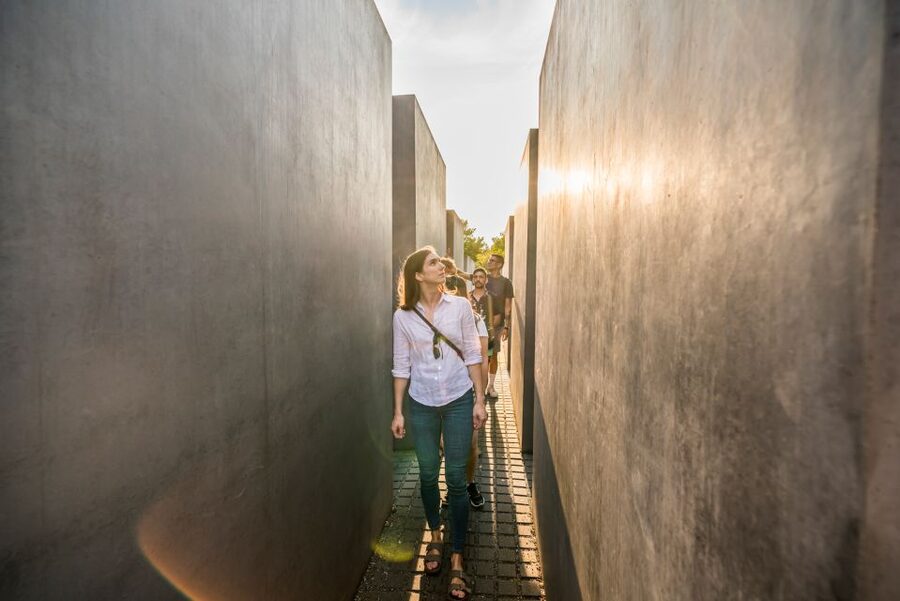
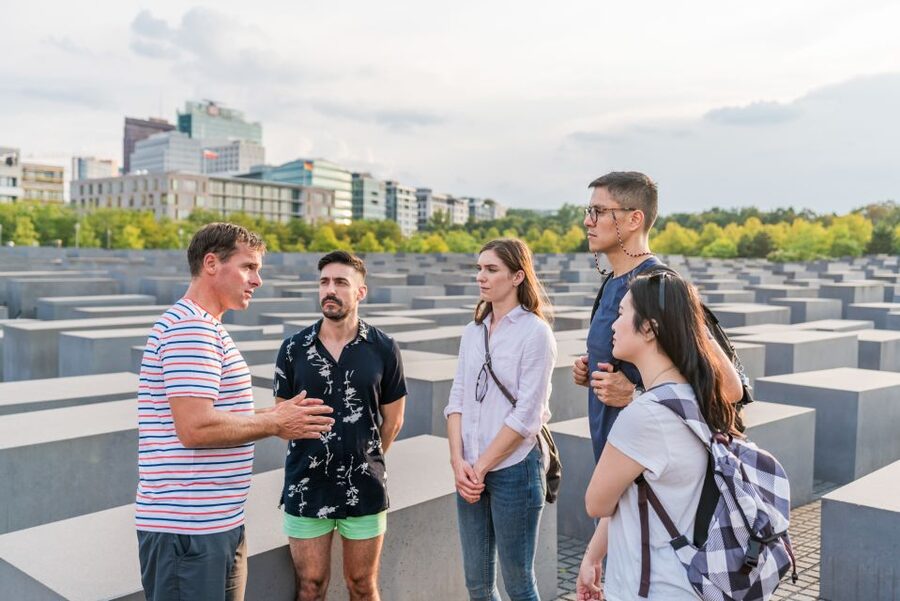
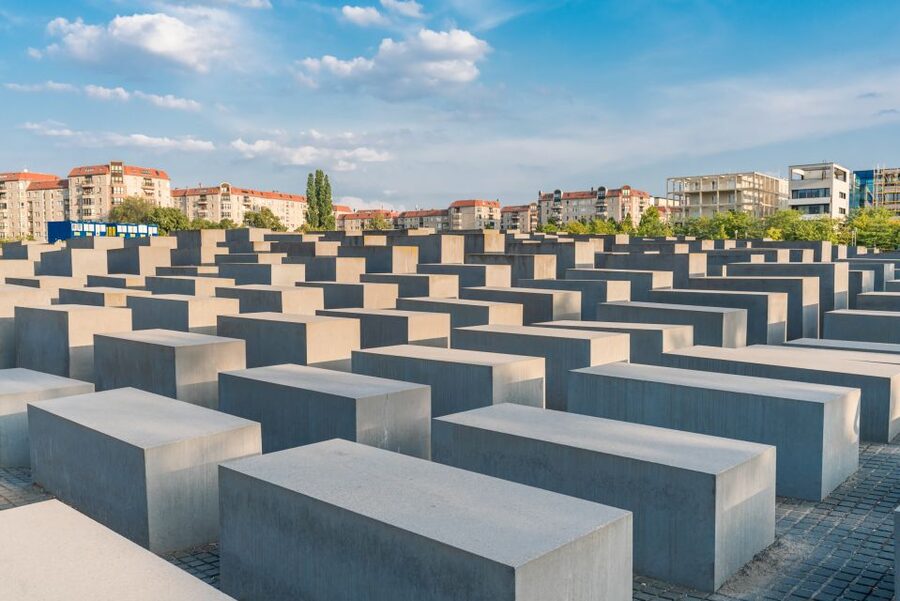
The Memorial to the Murdered Jews of Europe is one of Berlin’s most recognizable modern memorials. Its field of concrete blocks creates narrow paths and changing levels, making the experience different from reading a plaque or viewing a statue.
The tour pauses here to honor the six million Jewish victims of the Holocaust. Your guide provides context, but you should allow yourself a quiet moment to take in the memorial rather than treating it as a quick photo stop.
A two-hour route cannot explain every aspect of Nazi persecution. It does, however, place the Holocaust Memorial within the wider story of Berlin’s government district and the Nazi regime’s collapse. That connection is valuable, especially if you later plan to visit the memorial’s underground information center.
Because the subject is painful, tone matters. The strongest guides on this route are described as both serious and engaging, with humor used carefully rather than constantly. You should expect a respectful walk, not a theatrical performance.
Hitler’s bunker site and the end of the Third Reich
The former site of Hitler’s bunker is one of the most unusual stops because almost nothing dramatic is visible today. The location is associated with the Nazi leader’s final days as the Third Reich fell in 1945. The bunker itself is not presented as a preserved attraction.
That absence is part of the point. The site has no grand entrance or intact underground room to tour. Instead, you stand in an ordinary urban setting and hear what happened there during the final days of the regime. The contrast between the unremarkable surroundings and the importance of the events can be striking.
I appreciate this stop because it avoids turning the bunker into a shrine. It also helps you understand how little physical evidence can remain after a dictatorship and war have reshaped a city.
Detlev-Rohwedder-Haus and the birth of East Germany
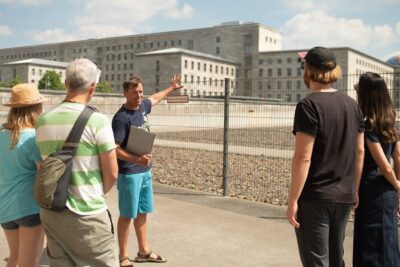
The route continues to Detlev-Rohwedder-Haus, formerly Hermann Göring’s Ministry of Aviation. Its Nazi-era use is only part of its story.
After the war, the building became associated with the formation of East Germany in 1949. That makes it a useful bridge between the defeated Nazi state and the socialist government that controlled East Berlin during the Cold War.
The building itself gives you a sense of how Berlin repeatedly reused its monumental architecture. Political symbols did not vanish when governments changed. They were occupied, renamed, and assigned new purposes.
This stop is easy to miss if you walk through Berlin without a guide. You might see only another official-looking building. The explanation turns it into evidence of the city’s political succession.
Topography of Terror and the machinery of repression
At the former headquarters of the SS and Gestapo, the tour examines how Nazi terror was organized. The site, now associated with the Topography of Terror, focuses on the agencies and officials who planned persecution, surveillance, imprisonment, and mass murder.
This is a key stop for understanding that Nazi crimes were not carried out by one person alone. They required offices, records, orders, police networks, and officials who turned ideology into policy. The physical setting helps make that machinery less abstract.
You will not have time to study the entire Topography of Terror documentation center during this walking tour. Treat the stop as an introduction. If the subject matters to you, return later with more time for the exhibits.
The route’s strength is the way it places this site after the bunker and the aviation ministry. You see the regime’s leadership, its institutions, and its collapse in a connected sequence rather than as isolated attractions.
A 200-meter stretch of the Berlin Wall
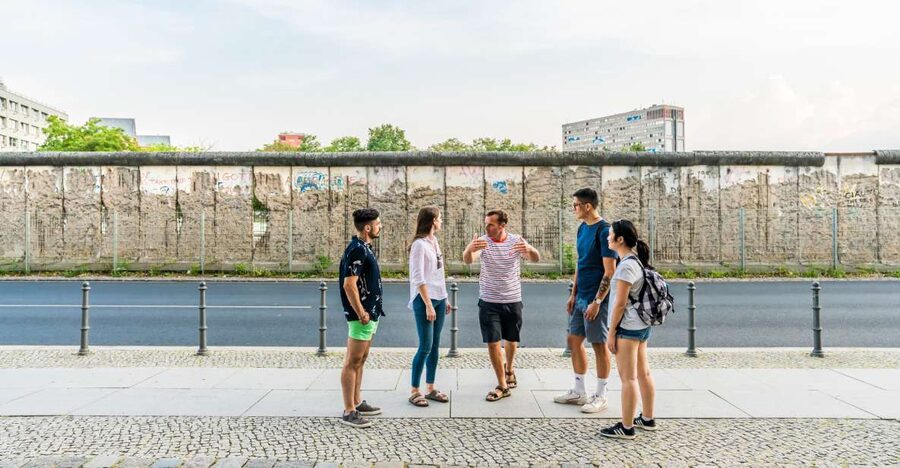
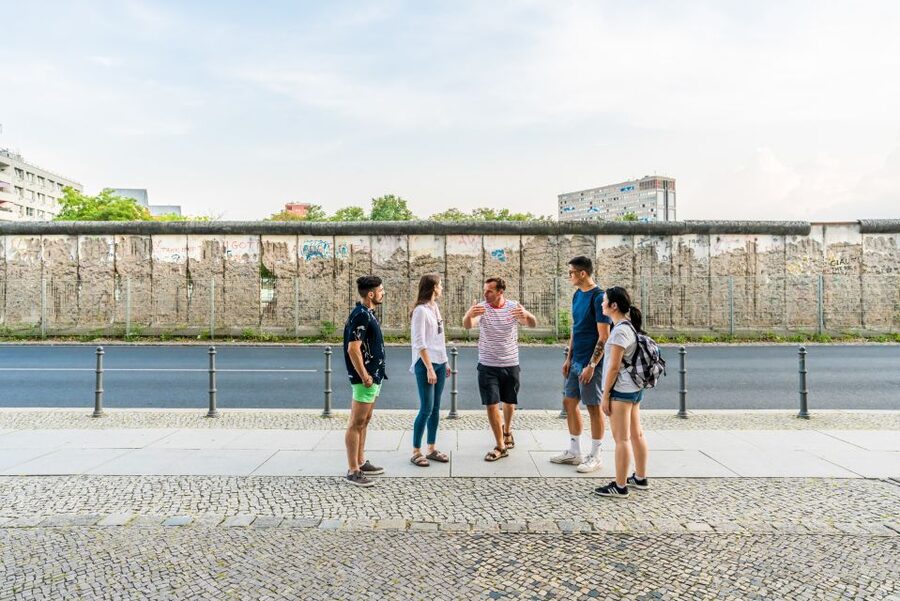
The walk then shifts into Cold War Berlin at a surviving 200-meter section of the Berlin Wall. This is the moment when the tour’s second half becomes physical in a different way.
The Wall divided families, workplaces, streets, and neighborhoods for decades. Your guide tells stories of people who risked their lives trying to cross from East to West, along with the effects of the Wall’s fall and the reunification that followed.
A preserved section can never show the full scale of the former border system. You should not expect a complete reconstruction of every barrier, watchtower, or escape tunnel here. What it does provide is a visible piece of the structure that once cut Berlin in two.
I find this stop most useful when the guide explains the Wall as a system rather than a single slab of concrete. The stories of escape attempts make the political division personal, while the remaining section keeps the discussion tied to a real place.
Checkpoint Charlie and the final Cold War chapter
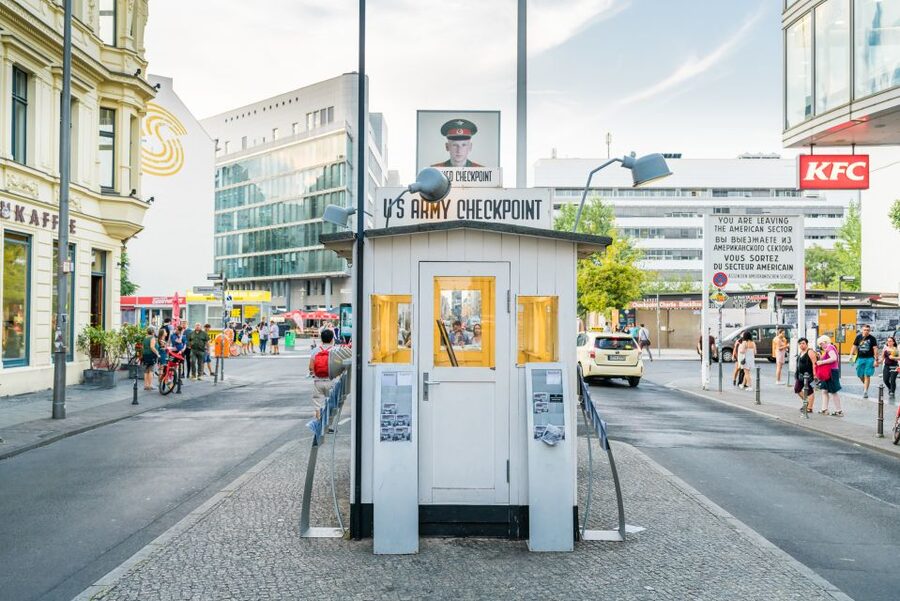
The tour concludes at Checkpoint Charlie, the former crossing between the American and Soviet sectors. It became famous for a tense standoff in which American and Soviet tanks faced each other, bringing the Cold War close to open conflict.
The guide also covers escape attempts and the events leading to the Wall’s fall in 1989. This gives the walk a natural ending: from Nazi dictatorship, through defeat and occupation, to a divided city and its eventual reunification.
Checkpoint Charlie today is a busy urban attraction, and the modern setting can feel less solemn than the history suggests. That is precisely why the explanation matters. Without context, you may see a sign and a photo opportunity. With context, you understand why this intersection carried such weight.
The route description names Checkpoint Charlie as the finish. However, the meeting information also says the activity ends back at the meeting point. Since those details do not match, confirm the final location before setting up your next appointment.
Guides, pace, and group choices
The guide is the heart of this experience. The strongest comments praise guides who speak clearly, keep a steady pace, answer questions, and tell small human stories alongside major events.
Peter was praised for adding memorable incidents about the sites and answering questions while walking. Tina brought extra Cold War context. Thomas was noted for speaking loudly enough for the whole group and adapting sensibly when rain arrived. Emma also offered suggestions for the rest of a first day in Berlin.
Those details suggest what you should look for during the walk: a guide who can organize the chronology, make room for questions, and keep the group together. The tour is available in English and German. Shared group and private options may not offer the same languages, so check the language and format together before booking.
A private group can make sense for families or friends who want more control over questions and pace. The shared group is the better value for most people, especially at $23 per person. For two hours of guiding across several major sites, that price is fair, provided you treat the walk as an overview rather than a substitute for museum visits.
What to bring and who should book
Bring comfortable shoes, water, an umbrella, and a camera. The walk is listed as wheelchair accessible, but Berlin’s streets, memorial surfaces, and crowd conditions can still affect how easy each stop feels. Contact the provider if you need specific access details for your date.
This tour suits you best if you want a clear introduction to Berlin’s twentieth-century history, prefer learning through places rather than a lecture hall, and have only a short time available. It is also a good first activity because it helps you decide which museums and memorials deserve a longer visit.
You may want a different plan if you already know Berlin’s Nazi and Cold War history well, or if you prefer spending an hour or more at each memorial. The route covers a lot, and the emotional weight of the subjects can make the two hours feel full.
The tour runs in all weather, so plan for rain and sun. Free cancellation is available up to 24 hours in advance, and you can reserve now and pay later, which helps if your Berlin schedule is still shifting.
Should you book this Berlin walking tour?
I would book it for a first or second day in Berlin, especially at $23. The combination of Brandenburg Gate, the Reichstag, Soviet War Memorial, Holocaust Memorial, Hitler’s bunker site, Topography of Terror, the Berlin Wall, and Checkpoint Charlie gives you an efficient framework for the city’s recent past.
Choose the private option if you want more questions and a tailored pace. Choose the shared walk if value matters most. Just confirm the language, meeting details, and final stop, then bring shoes suited to about 2 kilometers of city walking.
This is not a museum tour, and it does not attempt to explain every part of Nazi Germany or the Cold War. It does something more practical for a short visit: it shows you where the history happened and gives you enough context to see Berlin with sharper eyes.
FAQ
How long does the tour last?
The walking tour lasts two hours.
How far will I walk?
You should expect to walk approximately 2 kilometers during the tour.
Where does the tour start?
Meet at the Tourist Information point at Brandenburg Gate, Pariser Platz 1. Look for the guide with the pink umbrella.
How can I reach the meeting point?
The closest public transportation is Brandenburger Tor station, served by S1, S2, S25, S26, and U5. Buses 100 and 245 also stop nearby.
What languages are available?
Live tours are offered in English and German. Shared and private options may not offer the same languages, so check the available language for your chosen format.
Is the tour wheelchair accessible?
Yes, the activity is listed as wheelchair accessible.
Does the tour run in bad weather?
Yes. Tours operate in all weather conditions and on public holidays. Bring an umbrella and suitable clothing.
Can I cancel or pay later?
You can cancel up to 24 hours in advance for a full refund. The reserve-now, pay-later option lets you book without paying immediately.
More 2-Hour Experiences in Berlin
- Berlin: 2-Hour Lake Oberhavel Cruise from Tegel
★ 4.4 · 577 reviews - Berlin 2-Hour Segway Tour
★ 4.6 · 238 reviews - East Berlin and the Berlin Wall 2-Hour Walking Tour
★ 5.0 · 228 reviews - Berlin: Backyards of Berlin 2-Hour Tour
★ 4.7 · 163 reviews
More Walking Tours in Berlin
- Berlin: Discover Berlin Walking Tour
★ 4.9 · 5,998 reviews - Berlin: Hidden Backyards Guided Walking Tour
★ 4.8 · 5,360 reviews - Berlin: Alternative Berlin Walking Tour
★ 4.6 · 1,204 reviews - Berlin: Third Reich, Hitler, and WWII Walking Tour
★ 4.9 · 1,133 reviews
Just added around Berlin
- Love and War in Berlin: Self-Guided Story Puzzle Walk★ 5.0 · 7 reviews
- Rickshaw Tours Berlin – Groups of up to 16 people with several rickshaws★ 4.0 · 97 reviews
- eSIM for Germany and 34 European Countries★ 4.5 · 16 reviews
- Walking on the Wall: 3-Hour Tour in Berlin★ 4.5 · 34 reviews
- Warnemuende Shore Excursion: Berlin Private Sightseeing Tour from Rostock★ 5.0 · 4 reviews
- Your ticket to The Wall Museum Berlin★ 3.0 · 60 reviews
- Warnemuende Shore Excursion: Private Berlin Tour★ 4.5 · 27 reviews
- Berlin’s Gay, Lesbian, and Queer Scene Small-Group Walking Tour★ 4.5 · 66 reviews
Third Reich & Cold War Tours, compared.
Berlin’s Best: 2 Hour Walking Tour Third Reich and the Cold War
Read our review →
Third Reich Berlin: Hitler and WWII Walking Tour
Read our review →
Skip-the-Line: Berlin Wall Museum at Checkpoint Charlie
Read our review →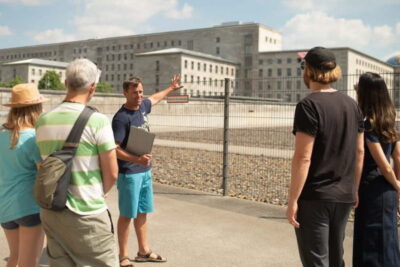
Cold War, Berlin Wall, Spies and the East Side Gallery
Read our review →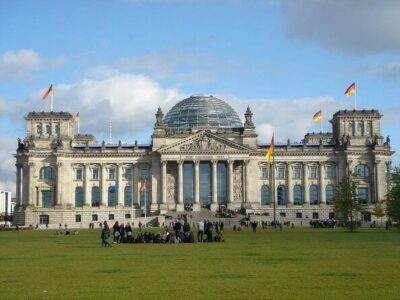
Berlin Third Reich Sites: Half-Day Walking Tour
Read our review →Browse the lists this tour appears in