
Reviewed · THIRD REICH & COLD WAR TOURS
Munich: Third Reich & WWII Walking Tour
Munich was not just a backdrop to the Third Reich. It was where Hitler’s movement gathered supporters, tested its strength, and tried to seize power. This walking tour puts those events on the very streets where they unfolded, moving from the Hofbräuhaus to the Feldherrnhalle and Königsplatz before turning to the White Rose resistance movement.
I like two things here. First, the route connects political events to real city locations, so the subject feels less like a classroom lecture. Second, the guides bring plenty of range: Josh, Steve, Michael, Alex, Danielle, Florian, and others are praised for strong delivery, clear voices, and a serious but human approach. The main drawback is simple: this is an outdoor tour lasting roughly 2.5 to 2.75 hours, so cold, rain, or difficulty standing can affect the experience.
In This Review
- Key points to know before booking
- Why Munich is the right place for this subject
- The Hofbräuhaus and the first mass meeting
- Following the movement through Munich
- The Feldherrnhalle and the failed attempt to seize power
- Königsplatz and the public image of power
- The Hofgarten and the White Rose resistance
- The guides: Josh, Steve, Michael, and more
- Weather, walking pace, and accessibility
- Is $31 a fair price?
- Who should book this Munich walking tour?
- FAQ
- How long is the Munich Third Reich and WWII Walking Tour?
- How much does the walking tour cost?
- Which places are included on the route?
- Is the tour offered in English?
- Is the walking tour wheelchair accessible?
- What should I bring?
- Can I book a private group?
- Should you book it?
Key points to know before booking
- The Hofbräuhaus begins the story: Learn how Hitler’s movement used Munich’s famous beer hall for an early mass meeting.
- The Feldherrnhalle marks a failed power grab: The tour explains the attempted seizure of power and why this location mattered.
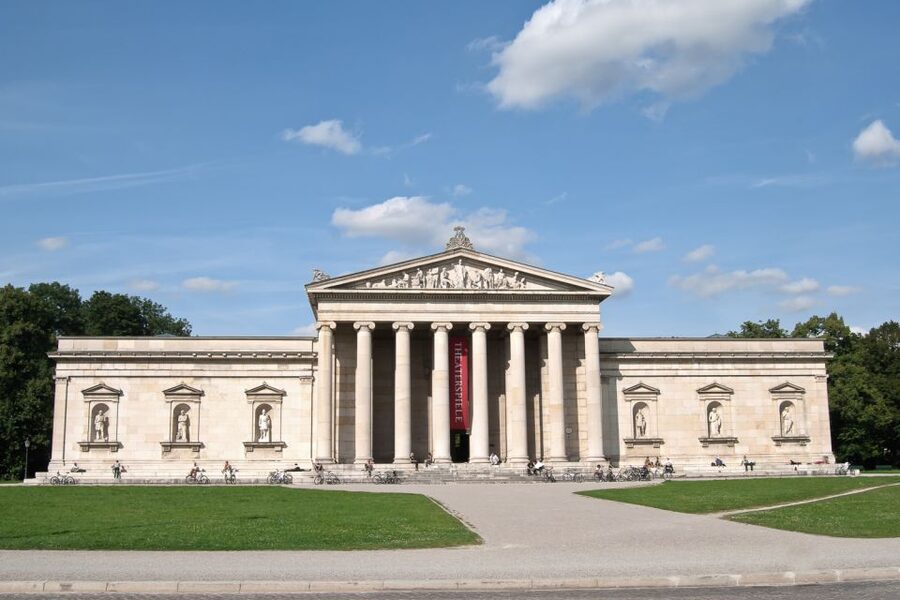
- Königsplatz shows the movement at full scale: See the site connected with Nazi party rallies and the political image the regime wanted to project.
- The White Rose adds a vital counterpoint: The tour does not focus only on Hitler and Nazi power. It also covers Munich’s student resistance movement.
- Guides make or break the day: Josh, Steve, Michael, Alex, Danielle, Florian, and Ulrich are among the guides singled out for strong storytelling and command of the subject.
- Bring warm layers and good shoes: The route is outside, with stops along the way. A small speaker would help in noisy places, according to one useful piece of feedback.
Why Munich is the right place for this subject
Munich is often sold through palaces, beer halls, museums, and Alpine day trips. Those are good reasons to come, but they can leave out the city’s central role in one of Europe’s darkest chapters. This tour corrects that balance.
The story begins in 1919, after Germany’s defeat in World War I. The country was humiliated, inflation was severe, and Bavaria was caught in revolution and political violence. The tour uses that unstable setting to explain how the Nazi movement found an audience in Munich.
That context matters. Hitler’s rise did not happen in a vacuum, and this walk is at its best when it shows the conditions that helped radical politics grow. You are not simply being shown places linked to Hitler. You are being asked to connect public anger, political chaos, organized meetings, and the search for national strength.
I appreciate that the tour focuses on the birth and growth of the movement rather than presenting the Second World War as an isolated event. Munich becomes a case study in how a city can help shape a political movement, then suffer the consequences of it. The experience ends with the destruction of Munich and the wounds left across Germany by the war.
More Third Reich & Cold War Tours in Munich
- Third Reich Walking Tour Munich
★ 4.5 · 4,291 reviews - Munich: Birthplace of the Third Reich Guided Walking Tour
★ 4.6 · 771 reviews - Munich City Walking Tour, includes Third Reich & Viktualienmarkt
★ 5.0 · 458 reviews
The Hofbräuhaus and the first mass meeting
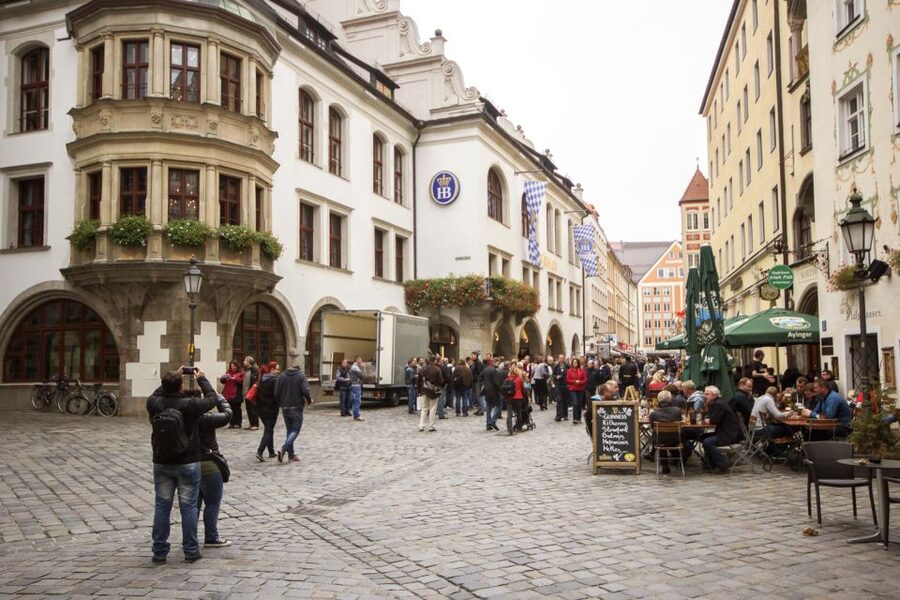
The Hofbräuhaus is an obvious starting point for a Munich history walk, but here it is used for a specific reason. The tour discusses the first mass meeting of Hitler’s movement at this famous beer hall, showing how a place built for social gatherings could also become a stage for political organization.
You will likely notice the contrast between the setting and the subject. The Hofbräuhaus is one of Munich’s best-known public spaces, associated with food, beer, and Bavarian tradition. The tour asks you to consider how public venues can carry very different meanings at different moments in history.
This stop is valuable because it introduces the movement as something that had to recruit, persuade, and gather people. It did not begin as an all-powerful machine. It grew through meetings, speeches, organization, and the ability to turn public frustration into political support.
The guide’s delivery matters here. A flat recitation of dates would make this opening feel heavy. The strongest guides use anecdotes, local details, and a clear explanation of cause and effect. Josh is praised for holding the attention of a large group, while Steve is described as able to explain difficult material without letting the talk become a ramble.
Expect some background before the tour moves on. That is a strength, not wasted time. Without the political conditions of postwar Bavaria, the later stops can seem like disconnected Hitler landmarks.
Following the movement through Munich
The central appeal of this experience is the way it links sites across the city. Instead of stopping at one memorial or museum, you follow the growth of Hitler’s movement from its early public meetings toward a failed attempt to take power.
The walking format helps you see the city as a connected political setting. You move through places where speeches, gatherings, power struggles, and resistance were discussed. The guide can explain what happened at each location and how one stage led to the next.
This is also where the tour’s length becomes useful. At $31 per person, you are paying for a guided walk lasting 165 minutes according to the activity details, although the description also refers to 2 hours and 45 minutes. In practical terms, plan for about two and a half to nearly three hours, depending on the exact option and pace.
The walk is broken up by frequent stops rather than one long march. That makes the time manageable, especially because the subject requires listening and concentration. Still, you should wear comfortable shoes and be ready to stand outdoors.
The group may be large. Several guides are praised for projecting their voices, and one useful suggestion is that a small speaker could improve audibility when crowds or city noise get in the way. If you are hard of hearing, stand near the guide and avoid drifting to the back.
The Feldherrnhalle and the failed attempt to seize power
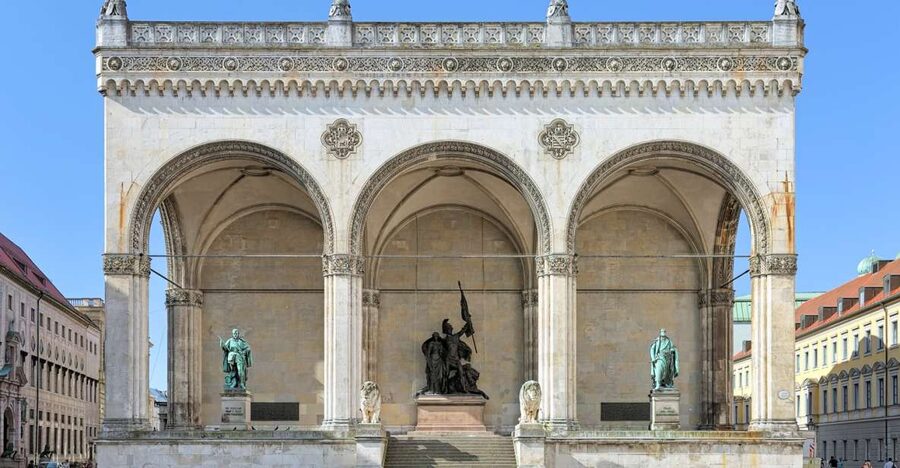
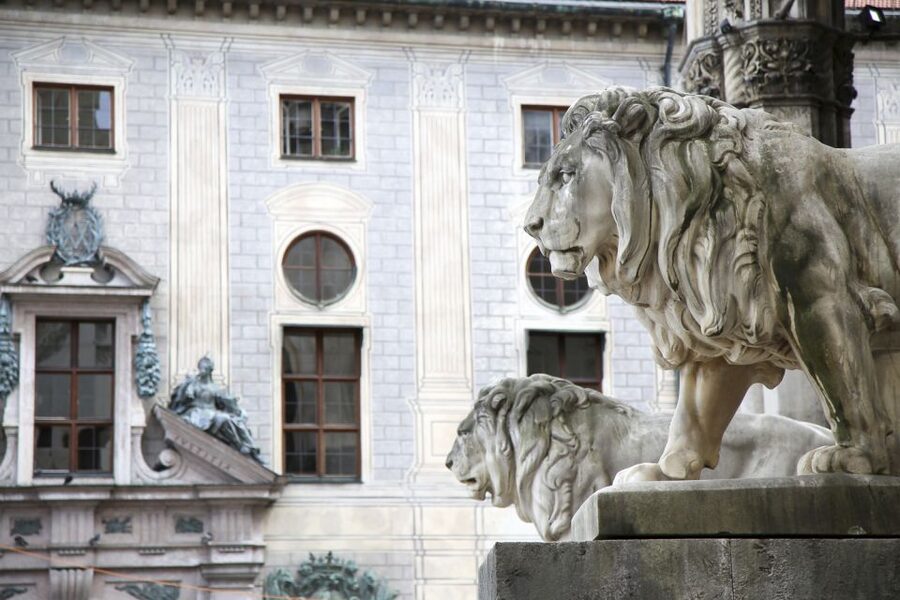
The Feldherrnhalle is one of the tour’s key political locations. Here, the guide explains the failed attempt by Hitler’s movement to seize power. This is not merely a story about failure. It helps show how the movement tested its methods, responded to setbacks, and continued to build political force.
A good guide will make this stop feel like a turning point. The movement was not yet in control, and its attempt to force a change ended unsuccessfully. Understanding that failed effort gives you a clearer sense of the path between early activism and later dictatorship.
This stop also shows why location-based history works so well. You are standing in the place connected to the event rather than hearing about it from a distant exhibit. The setting cannot recreate the past, but it gives the explanation a physical anchor.
The guide’s tone is important. This subject needs energy, but not theatrical treatment. The strongest accounts describe Michael, Steve, Alex, Josh, Brigit Muller, and others as passionate, approachable, and respectful. That combination is useful here, since the guide must keep the story compelling without turning political violence into spectacle.
If you already know a fair amount about the Third Reich, this section can still reward you. Guides may add lesser-known details and local context rather than stopping at the usual textbook outline. One especially strong account praised a guide for bringing the period alive through small details while maintaining historical accuracy.
Same city, a completely different kind of day:
- From Munich: Neuschwanstein & Linderhof Castle Full-Day Trip
★ 4.5 · 12,494 reviews - Neuschwanstein & Linderhof Castle-Fairytale Day Tour from Munich
★ 4.5 · 7,275 reviews - Dachau Concentration Camp Memorial Site Tour from Munich by Train
★ 4.5 · 5,637 reviews - Neuschwanstein Castle Tour from Munich
★ 4.5 · 5,117 reviews
Königsplatz and the public image of power
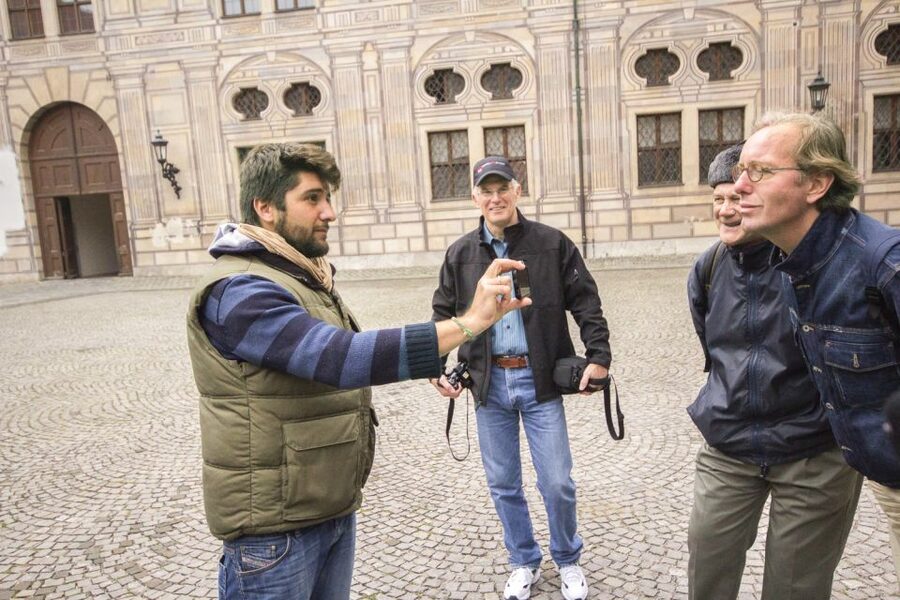
Königsplatz is tied to Nazi party rallies and gives the tour a larger view of how political movements use public space. The Hofbräuhaus represents gathering and recruitment. The Feldherrnhalle represents a failed attempt to seize power. Königsplatz shows the movement presenting itself on a much grander scale.
The stop is useful because it shifts the story from private or semi-private political meetings to mass public display. Rallies are not only about the people on the platform. They are also about symbols, crowds, ceremony, and the creation of an image of strength.
You will want to pay close attention to how the guide explains that transition. A good explanation connects the physical scale of Königsplatz with the changing reach of the movement. It also helps you see why the city itself mattered to Nazi propaganda and public identity.
Königsplatz is listed as one of the tour’s main locations, but the exact finish can vary. One participant reported that the tour did not end there, despite expecting it to, so I would confirm the route and endpoint when you book. This matters if you want to visit the Documentation Center afterward or need to reach a timed reservation.
One useful planning idea is to allow extra time after the walk for the Documentation Center if your tour ends nearby. That suggestion comes directly from the route’s subject and location, but the tour itself is a walking experience rather than a museum visit. Do not expect indoor exhibits or a full museum-style presentation during the walk.
The Hofgarten and the White Rose resistance
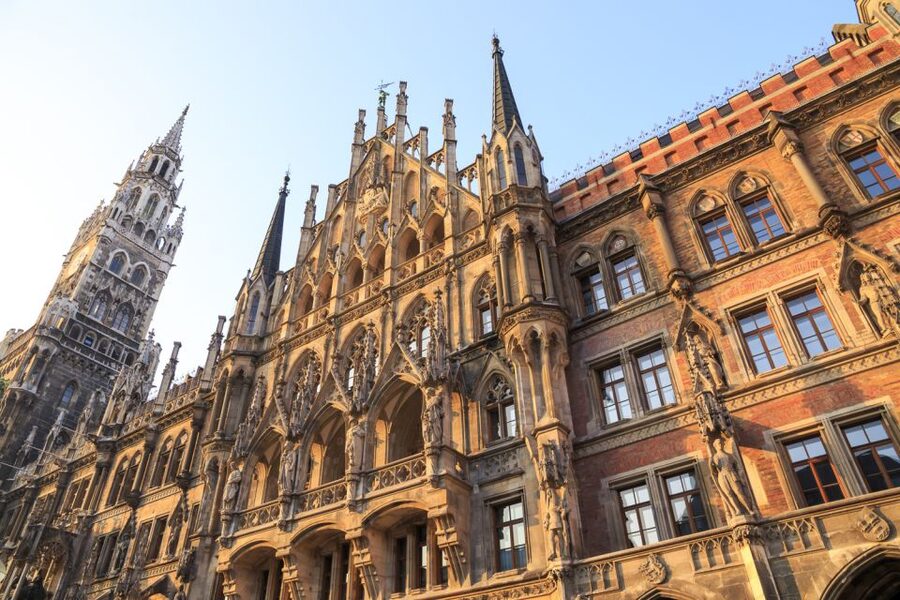
The stop in the Hofgarten is one of the most important parts of the experience because it broadens the story. The tour covers the White Rose resistance movement, a reminder that Munich’s history includes opposition as well as Nazi organization.
This section gives the walk moral and human balance. A tour focused only on Hitler’s rise can accidentally make the dictator seem like the sole force shaping the city. The White Rose adds another view of Munich, centered on people who resisted the regime.
I value this inclusion because it turns the walk into more than a procession of Nazi sites. You are shown both how power was built and how individuals challenged it. That makes the tour more useful for understanding civic courage, not just political history.
Expect the mood to change here. The guide may move from large public events to more personal choices and consequences. Several accounts praise guides for handling the subject with sensitivity, and that is especially important during this section.
This is also a good place to ask questions. Guides are repeatedly praised for answering them in depth and for making complex moments easier to follow. If you want to understand how resistance fit into Munich’s wider wartime story, save some of your questions for this stop.
The guides: Josh, Steve, Michael, and more
The provider uses different guides, so your experience depends partly on who leads your group. That is normal for a scheduled city tour, and the available comments point to a broad team rather than one single personality.
Josh receives especially strong praise for his voice, structure, and ability to hold a large group’s attention for nearly three hours. He is also described as direct about expectations, which can help you understand the seriousness and length of the tour from the start.
Steve is praised for preparation and small acts of care in poor weather. On cold or snowy days, he has brought hot tea, disposable cups, and mats or cushions for damp seating. Those touches are not guaranteed, but they show the kind of practical attention you may encounter.
Michael is described as friendly, enthusiastic, and clear, with a voice that is easy to hear. Alex is praised for charisma and for answering questions. Danielle is noted for keeping large groups together while making the material accessible. Florian and Ulrich are also described as prepared, personable, and strongly informed about Munich and the Third Reich.
The repeated praise for explanation and delivery is important. Historical walking tours succeed when you can hear the guide, follow the chronology, and understand why each stop matters. Here, the strongest feedback centers on exactly those points.
There are minor tradeoffs. Large groups can require more crowd management, and one person felt the instructions became a little strict. Another had trouble finding the starting point in the busy city center. These are manageable concerns, but arrive early, check the meeting details carefully, and stay close to the guide.
Weather, walking pace, and accessibility
This is an outdoor experience in Munich. Comfortable shoes are specifically recommended, and warm clothing is a smart choice in colder months. The tour can be done in rain, snow, or cold, but bad weather will affect your comfort even if the guide works hard to help.
The walk includes regular stops, so you are not expected to walk continuously for nearly three hours. That said, the tour requires time on your feet. If you need frequent seating or find outdoor conditions difficult, check the exact option before booking.
The activity is listed as wheelchair accessible. Since meeting points and options can vary, confirm the practical route details when selecting your booking. The group format also matters: a private group is available if you want a more personal pace or easier opportunity to ask questions.
English and German tours are offered. The quality of the experience will depend on the guide assigned, but the guide team is repeatedly praised for clear speech and strong subject knowledge. If English is not your first language, a guide with a measured pace and good projection can make a major difference.
Is $31 a fair price?
At $31 per person, this is a reasonable price for a 165-minute guided walk through central Munich. You are paying for a structured historical explanation, not admission to a museum or transportation between sites.
I think the value is strongest if you are new to Munich or want to understand the city before visiting related museums and memorials. The tour gives you a framework: early meetings, the attempt to seize power, party rallies, resistance, and the war’s destruction. You can then explore further on your own.
The value also depends on your expectations. If you want a relaxed sightseeing stroll with occasional historical comments, this may feel intense. If you want a serious account of Hitler’s rise and Munich’s part in it, the price is easy to justify.
Free cancellation up to 24 hours before the activity and the option to reserve now and pay later make it easier to fit into a changing itinerary. The meeting point may vary by booking option, so do not rely on a generic city-center assumption.
Who should book this Munich walking tour?
I would recommend it to adults, students, and families with older children who want a clear introduction to Munich’s role in Nazi history. It also suits people who already know the basic story but want to connect it to specific places and local events.
The tour is a particularly good fit if you value a strong guide more than glossy presentation. There is no suggestion of elaborate staging or indoor comfort. The reward is the explanation, the route, and the chance to ask questions in the places being discussed.
You may want a different experience if you dislike long outdoor walks, expect a museum collection, or prefer a light introduction to Munich. This is a dark subject, and the tour treats genocide, dictatorship, war, and resistance directly. The guide may use humor to keep the group focused, but the topic itself remains serious.
Plan to arrive with comfortable shoes, weather protection, and enough time afterward to visit another historical site if you wish. If the Documentation Center interests you, check the endpoint before booking so you can plan the transition.
FAQ
How long is the Munich Third Reich and WWII Walking Tour?
The activity is listed as lasting 2.5 hours, or 165 minutes. The description also refers to 2 hours and 45 minutes, so plan for roughly two and a half to nearly three hours.
How much does the walking tour cost?
The listed price is $31 per person.
Which places are included on the route?
The tour includes the Hofbräuhaus, Feldherrnhalle, Königsplatz, and the Hofgarten. It discusses the first mass meeting at the Hofbräuhaus, the failed attempt to seize power at the Feldherrnhalle, Nazi party rallies at Königsplatz, and the White Rose resistance movement in the Hofgarten.
Is the tour offered in English?
Yes. Live tours are available in English and German.
Is the walking tour wheelchair accessible?
The activity is listed as wheelchair accessible. Because meeting points can vary by booking option, confirm the route details when you reserve.
What should I bring?
Bring comfortable shoes. Warm clothing and rain protection are sensible because the tour takes place outdoors. On cold days, extra layers will make the long walking time more comfortable.
Can I book a private group?
Yes. A private group option is available. The meeting point may vary depending on the option you choose.
Should you book it?
Book this tour if you want Munich’s famous central streets to make sense in historical terms. Its best features are the connected route, the attention to Hitler’s rise in Bavaria, and the inclusion of the White Rose as a vital act of resistance. The guides are widely praised for clear voices, strong preparation, and respectful storytelling.
I would skip it only if you want a short, light sightseeing walk or cannot comfortably spend several hours outdoors. For most visitors interested in World War II, modern German history, or the forces that allowed dictatorship to grow, $31 buys a serious and useful introduction to Munich’s darkest chapter.
More Walking Tours in Munich
- Munich: Old Town & Viktualienmarkt City Walk in German
★ 4.7 · 2,304 reviews - Munich: Night Watchman Walking Tour
★ 4.7 · 2,092 reviews - Munich Ghosts and Spirits Evening Walking Tour
★ 5.0 · 1,900 reviews - Munich Old Town Walking Tour
★ 4.5 · 1,287 reviews
Just added around Munich
- Pub crawl incl. Oktoberfest museum guided tour with beer tasting (private)★ 5.0 · 5 reviews
- South Tyrolean specialties and wine tasting★ 5.0 · 5 reviews
- Size Matters Beer Tour Munich★ 4.6 · 105 reviews
- Short & sweet: Tasting the Viktualienmarkt★ 4.8 · 37 reviews
- Secret Food Tours Munich★ 4.8 · 5 reviews
- Munich: Romantic Wine Experience for Two at Viktualienmarkt★ 4.2 · 14 reviews
- Munich: Resistance against Hitler – Historical Walking Tour★ 5.0 · 5 reviews
- Residence of Munich private tour with skip the line ticket★ 5.0 · 4 reviews
Third Reich & Cold War Tours, compared.
Berlin’s Best: 2 Hour Walking Tour Third Reich and the Cold War
Read our review →
Third Reich Berlin: Hitler and WWII Walking Tour
Read our review →
Skip-the-Line: Berlin Wall Museum at Checkpoint Charlie
Read our review →
Cold War, Berlin Wall, Spies and the East Side Gallery
Read our review →
Berlin Third Reich Sites: Half-Day Walking Tour
Read our review →Browse the lists this tour appears in