
Reviewed · THIRD REICH & COLD WAR TOURS
Skip-the-Line: Berlin Wall Museum at Checkpoint Charlie
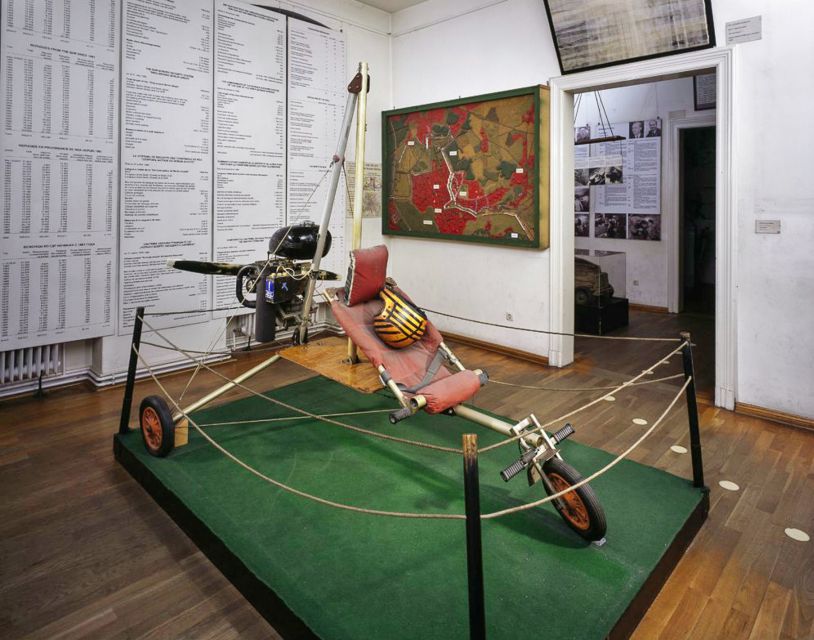
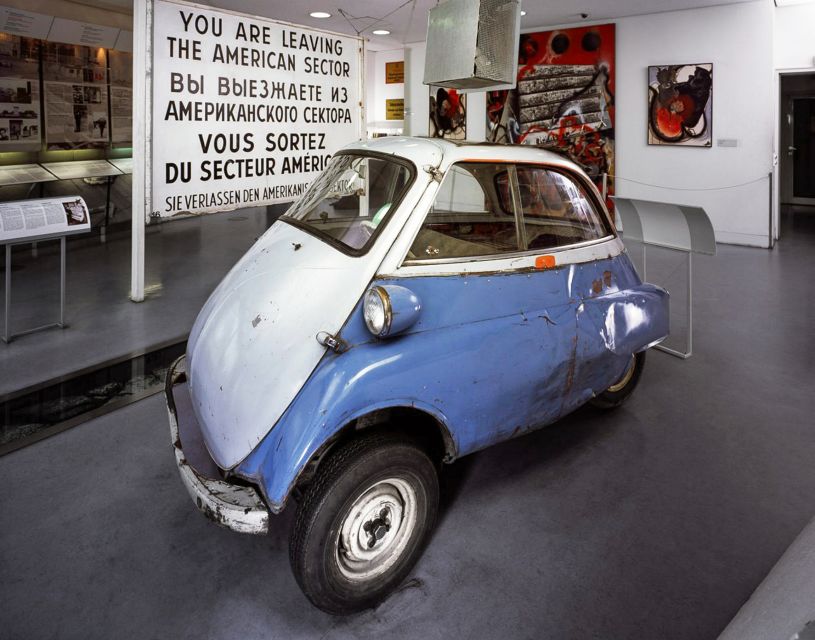
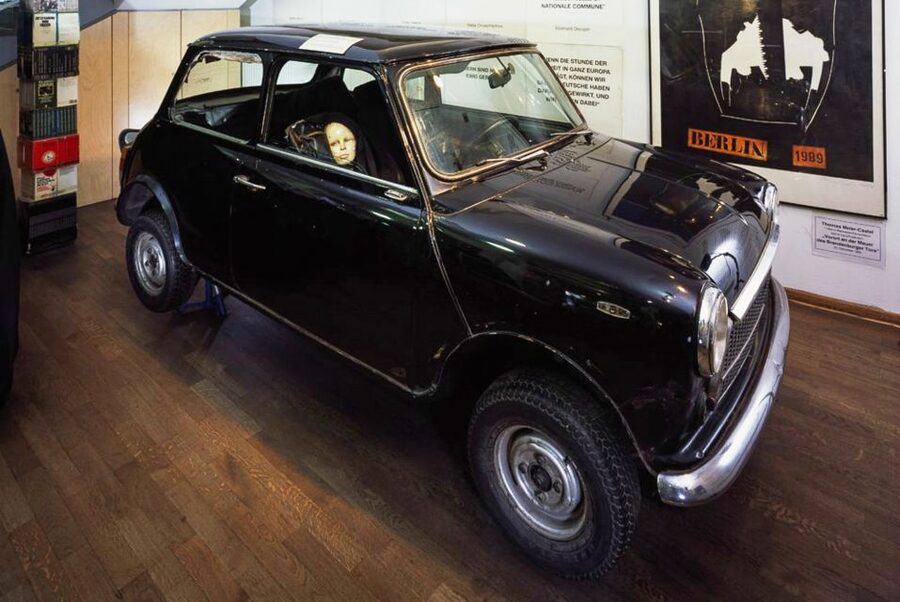
The most gripping part of this museum is its collection of escape equipment: a hot-air balloon, mini-submarine, cars, and aircraft used in real attempts to get East Germans to the West. You are not just looking at a section of concrete. You are seeing the practical, often desperate ideas people developed under the GDR regime.
I like the museum’s strong focus on individual escape stories, and I like that it began as an act of protest soon after the Wall went up in 1961. The main drawback is the sheer amount of text. The museum is much larger than its street frontage suggests, and a rushed visit can leave you with more facts than you can sort out.
In This Review
- Key points at a glance
- Why the escape machines matter
- A museum created while the Wall was still new
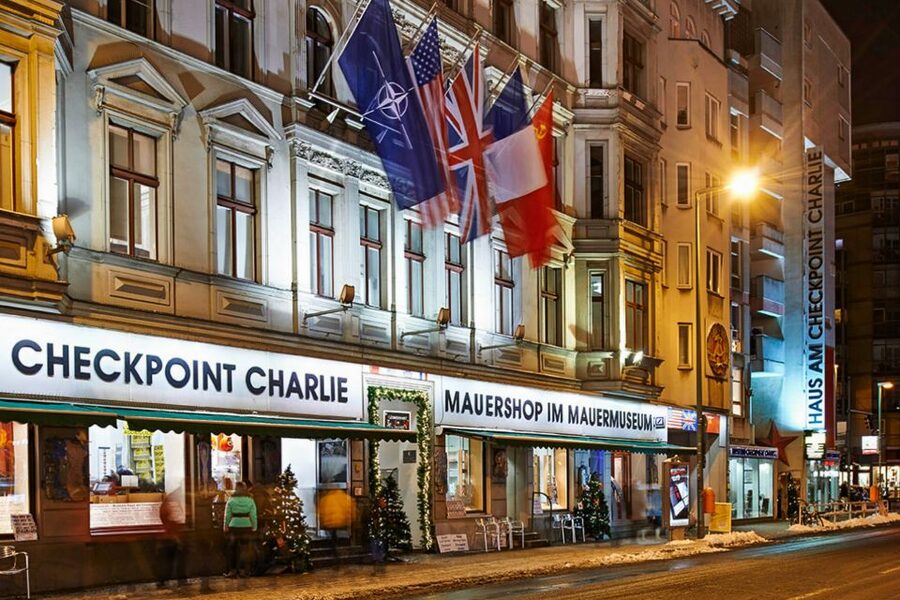
- Entering at Friedrichstraße 43 to 45
- Following the displays without a fixed route
- The stories behind successful escapes
- Looking out over Checkpoint Charlie
- How much time should you allow?
- Is the $21 ticket good value?
- Who will enjoy this museum most?
- What could be improved?
- My practical visit plan
- Should you book the Berlin Wall Museum?
- FAQ
- Where is the Berlin Wall Museum located?
- How much does admission cost?
- How long is the ticket valid?
- Does the ticket include a guided tour?
- Is an audioguide included?
- Can I cancel the booking?
- Is the museum wheelchair accessible?
Key points at a glance
- Original escape artifacts: See conveyances linked to successful escapes, including a hot-air balloon, mini-submarine, cars, and aircraft.
- A museum born in protest: Founded on October 19, 1962, it helped people seeking assistance and opposed human-rights abuses caused by the Wall.
- Much larger than expected: Plan roughly one to three hours, with serious readers able to stay much longer.
- Self-guided and text-heavy: The entrance ticket includes admission only. Audioguides and guided tours are not included.
- Right at Checkpoint Charlie: The museum’s position gives the history a powerful sense of place.
- Easy advance entry: The skip-the-line ticket costs $21 per person, with free cancellation up to 24 hours before the visit.
Why the escape machines matter
The Berlin Wall Museum, also known as Mauermuseum Haus am Checkpoint Charlie, tells the story of a divided city through the people who tried to cross its borders. Its most memorable displays are the objects built or adapted for escape.
A hot-air balloon makes the problem instantly clear. Someone had to plan the route, find materials, keep the project secret, and launch without alerting the authorities. A mini-submarine presents a different kind of gamble, one that required engineering, nerve, and a willingness to trust a homemade machine with your life.
Cars and aircraft show that there was no single escape method. Some people hid inside vehicles. Others used aircraft or other forms of transport. The displays connect these objects to successful escapes, and refugees and helpers donated their equipment after reaching safety.
I find this approach more effective than a purely political timeline. You can read about the GDR, the Cold War, and the division of Germany, but then you see the physical object that turned a plan into a possible way out. The machines give the political story a human scale.
The museum also covers the people who helped East Germans flee. It served as a base where escape plans and resistance efforts could be organized. That history adds moral weight to the visit. This was not simply a place displaying old objects. It was involved in helping people while the Wall was still in place.
More Museum & Gallery Tickets in Berlin
- Berlin: Natural History Museum Entrance Ticket
★ 4.6 · 3,382 reviews - Berlin: Museum Island Multiple Museum Entry Ticket
★ 4.4 · 2,007 reviews - Berlin: Interactive DeJa Vu Museum Entrance Ticket
★ 4.1 · 1,338 reviews
A museum created while the Wall was still new
The museum opened on October 19, 1962, shortly after the Berlin Wall was constructed. That timing matters. It was founded not decades later, once the danger had passed, but while the Wall was an active barrier and people were still seeking help.
Its original purpose was to protest the Wall and assist those affected by it. The museum grew over time, adding exhibition space and records that documented escape attempts, political repression, and resistance to the GDR government.
You can feel that original purpose in the way the museum treats the Wall. It does not present the structure as an isolated building project. Instead, it explains how a political decision split families, restricted movement, and placed ordinary people under pressure.
The museum’s story reaches beyond the Wall’s fall in 1989. Displays continue into later events and present-day issues connected with human rights and international conflict. That wider scope will appeal to you if you want the visit to raise current questions, not just explain a finished chapter of German history.
It can also make the museum feel less tightly organized. Some sections move beyond Checkpoint Charlie and the Berlin Wall, and not every display feels equally connected to the main subject. If you prefer a short, sharply edited museum, the material may seem scattered.
Entering at Friedrichstraße 43 to 45
The meeting point is Friedrichstraße 43 to 45, 10969 Berlin, directly by Checkpoint Charlie. The location is easy to pair with a wider walk through central Berlin, but building work or changes around the area can make the entrance harder to spot, so allow a few extra minutes.
The ticket gives you skip-the-line entry. That is useful during busy periods, particularly if you have a fixed afternoon booking or want to keep your sightseeing schedule moving. In quieter periods, you may find little or no queue, so the $21 price is mainly paying for convenience and advance planning rather than a guaranteed saving.
The ticket is valid for one day, and you can check available starting times when booking. It is not a timed guided visit. You enter during the chosen availability and explore at your own pace.
Staff assist at the entrance, and the museum is wheelchair accessible. If you carry a bag, check the current cloakroom arrangement before settling in. A previous visit noted a locker deposit of two euros, but this detail may change.
Following the displays without a fixed route
The museum is not presented as a simple one-way story from 1961 to 1989. You will find rooms and displays packed with photographs, documents, explanatory panels, objects, and stories. This makes the visit rewarding for patient readers, but it also means you need to create your own route through the material.
Start by getting your bearings. Look for the sections that explain the Wall’s construction and the division between East and West Berlin. Then give yourself time with the escape displays before moving into the larger political and human-rights sections.
Some rooms are mainly reading. The information is often available in several languages, which helps international visitors follow the story. English coverage is present across much of the museum, though language availability is not identical for every section. Italian explanations, for example, have not always been available.
You should not expect a polished, highly interactive science museum. Several interactive features have been reported as not working, and the overall presentation can feel old-fashioned. The museum relies heavily on written explanations, so your experience will depend on how much time and attention you bring.
That is not automatically a flaw. With a subject this serious, photographs, records, and first-hand accounts can carry more weight than flashy technology. Still, teenagers and children who need constant activity may lose interest sooner than adults who enjoy reading.
More Third Reich & Cold War Tours in Berlin
- Berlin: Third Reich and Cold War 2 Hour Walking Tour
★ 4.9 · 6,830 reviews - Berlin’s Best: 2 Hour Walking Tour Third Reich and the Cold War
★ 5.0 · 5,486 reviews - Third Reich Berlin: Hitler and WWII Walking Tour
★ 5.0 · 3,301 reviews - Berlin: Third Reich, Hitler, and WWII Walking Tour
★ 4.9 · 1,133 reviews
The stories behind successful escapes
The heart of the visit is the evidence left behind by people who crossed from East Germany to the West. Each object points to a larger story of planning, secrecy, risk, and cooperation.
You might find yourself spending several minutes with one vehicle because it is easy to imagine the tension involved in using it. A car is familiar and ordinary, which makes its role in an escape especially striking. The mini-submarine and hot-air balloon feel more dramatic, but they also show how limited the available choices were.
The museum’s collection grew because people who escaped, along with those who helped them, donated their conveyances and other objects. These are not decorative props chosen to represent the period. They are tied to real attempts and real decisions.
The displays also help explain why escape was so dangerous. The issue was not just crossing a line on a map. The Wall represented surveillance, restrictions, and the threat of severe consequences. Even when the museum gives you a great deal to read, the escape equipment keeps bringing the subject back to a personal level.
I would give these displays priority if your time is limited. You can always return to the broader political material later, but the escape objects are the part that most clearly separates this museum from a basic Berlin Wall photo exhibit.
Looking out over Checkpoint Charlie
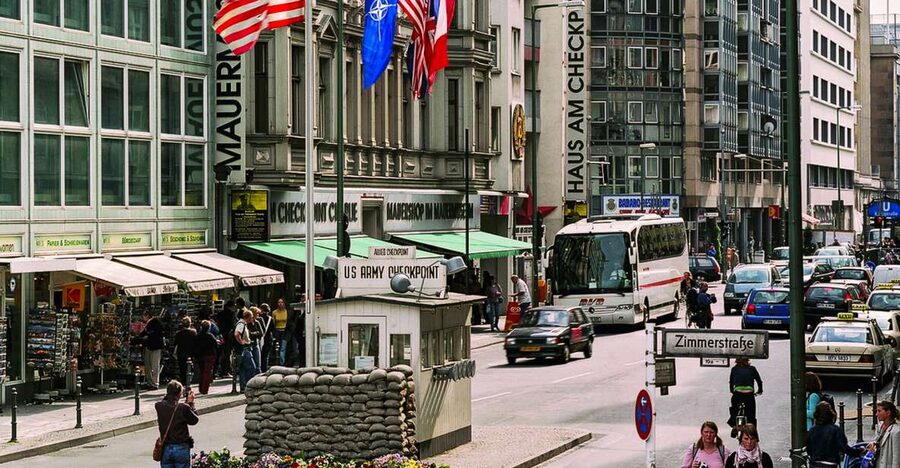
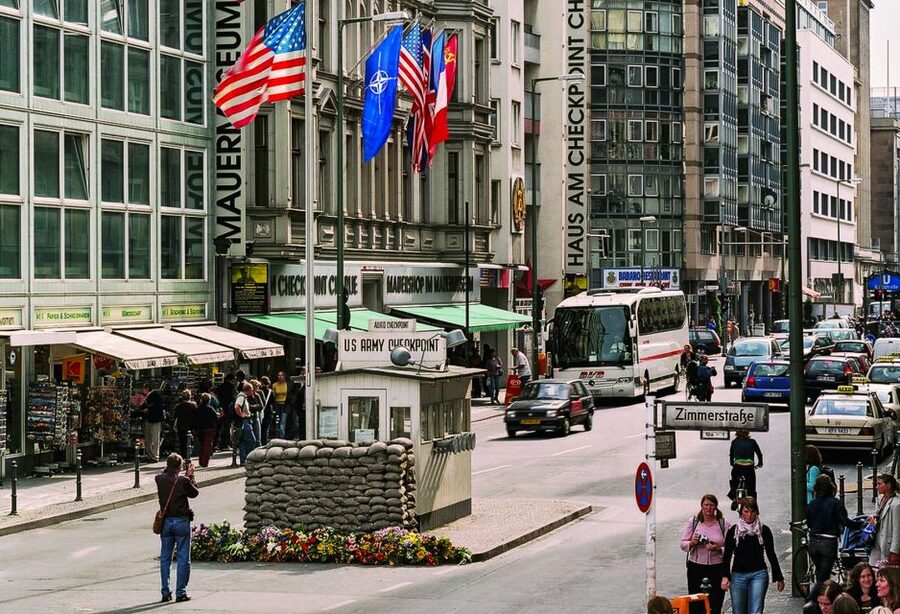
Checkpoint Charlie is directly outside, and the museum’s position gives you a useful link between indoor displays and the city street. After reading about border controls and the division of Berlin, you can step outside and see the place attached to those events.
The modern checkpoint area is not a preserved Cold War scene in every detail. You are looking at a busy central Berlin location shaped by tourism and later development. That contrast is worth noticing. The museum carries the historical record, while the street outside shows how quickly political spaces can change.
The museum also offers views over Checkpoint Charlie from above, a detail that helps you connect the displays with the surrounding streets. I recommend looking out before leaving rather than treating the exterior as a quick photo stop.
The area works well as part of a larger day of Berlin history. You can visit the museum, examine Checkpoint Charlie, and then continue to other sites connected with the city’s division. The ticket itself covers the museum entrance only, so plan any additional stops separately.
How much time should you allow?
A quick visit may take about one to two hours. That is enough to see the main objects and read selected panels, but it will not cover everything carefully.
I would allow at least two hours if the Berlin Wall is a major reason for your visit. Several people have found the museum much bigger than expected, and careful readers can spend close to three hours or more.
The one-day validity is useful because you do not need to treat the museum as a short timed attraction. If you have a flexible schedule, you can take a break and organize the rest of your sightseeing around it, subject to the ticket’s entry conditions.
Do not book it immediately before a train, concert, or another fixed activity unless you are comfortable leaving sections unread. A common mistake is to assume that Checkpoint Charlie means a small museum. The street entrance gives little sense of the amount of material inside.
Is the $21 ticket good value?
At $21 per person, the ticket is reasonable if you want a detailed account of the Wall and prefer to reserve ahead. The museum contains enough material for several hours, and the escape artifacts give the admission more substance than a quick collection of photographs.
The value is weaker if you only want a brief overview or expect every exhibit to be modern and interactive. You are paying for access to a large documentary collection, not a guided performance or an entertainment attraction.
The skip-the-line feature can save time when the entrance is busy. In a quiet season, particularly in January, there may be little waiting anyway. In that case, buying online is more about flexibility than queue avoidance.
The ticket includes entrance only. An audioguide and guided tour are not included. You will find plenty to read, but visitors who want a clear spoken narrative should check whether an audioguide or guide is available and decide if the extra cost suits them.
One practical point: if you are booking for a family, compare the online price with the museum’s direct admission before paying. Advance booking can be convenient, but the online ticket may include an upcharge. That difference becomes more noticeable for a group of four or more.
Who will enjoy this museum most?
I recommend it to adults, history students, and anyone who wants to understand the Berlin Wall through personal stories. It is also a useful first visit to Berlin because it explains the political background behind many Cold War sites around the city.
You will get the most from it if you enjoy reading and can stay with a subject for two hours or more. The museum is especially good for people who want details that may not appear in a standard school account, including the creative methods used in escape attempts.
Families should plan carefully. Older children and teenagers interested in history may enjoy the cars, aircraft, and unusual escape devices. Younger visitors or teens who need frequent hands-on activities may find the walls of text tiring.
The museum can also feel emotionally heavy. Stories of surveillance, separation, failed attempts, and political oppression are not light sightseeing. I would avoid squeezing it between too many cheerful attractions, and I would give yourself a little quiet time afterward.
What could be improved?
The museum’s biggest weakness is presentation. There is a lot of writing, and the route does not always create a clear story from entrance to exit. You may need to pause and decide which panels matter most to you.
Some displays feel dated, and not all interactive elements work reliably. The collection is broad, but that breadth can dilute the main focus on Checkpoint Charlie and the Berlin Wall.
Photography rules may also affect your visit. One recent account described being unable to take pictures, so ask at the entrance rather than assuming you can photograph the displays. If you see something important, make a note of it while you are there.
These limitations do not erase the museum’s value. They simply shape the kind of experience you are buying. This is a document-heavy historical museum with unusual physical evidence, not a sleek attraction built around quick visual impact.
My practical visit plan
I would begin with the museum’s founding purpose and the explanation of the Wall’s effect on Berlin. Then I would spend most of my attention on the successful escape artifacts and the accounts of the people who planned them.
After that, I would move through the political history and the sections covering resistance, human rights, and later conflicts. I would not try to read every panel unless I had a full afternoon.
Before leaving, I would look over Checkpoint Charlie from the museum and then spend a few minutes outside. That simple sequence gives the visit a useful rhythm: understand the event, see the evidence, then connect it with the place.
Bring patience, comfortable shoes, and a willingness to read. If you have an audioguide option and prefer listening, consider it, but do not assume the entrance ticket includes one.
Should you book the Berlin Wall Museum?
Book this if you want a serious, detailed account of the Berlin Wall and the human effort behind successful escapes. The hot-air balloon, mini-submarine, vehicles, and aircraft give the museum a strong reason to visit, while the location at Checkpoint Charlie adds a direct connection to Berlin’s Cold War story.
Think twice if you want a short, highly interactive attraction or have only 45 minutes. The museum is text-heavy, sometimes loosely organized, and larger than it appears. For most history-minded visitors, though, $21 is fair value, especially when a busy entrance makes skip-the-line access useful.
I would reserve it for a flexible part of your Berlin schedule, allow two hours or more, and treat the museum as a thoughtful history stop rather than a quick photo opportunity.
FAQ
Where is the Berlin Wall Museum located?
The museum is at Friedrichstraße 43 to 45, 10969 Berlin, beside Checkpoint Charlie.
How much does admission cost?
The listed price is $21 per person.
How long is the ticket valid?
The ticket is valid for one day. You should check availability for the available starting times when booking.
Does the ticket include a guided tour?
No. The entrance ticket includes admission only. A guided tour is not included.
Is an audioguide included?
No. The audioguide is not included in the entrance ticket.
Can I cancel the booking?
You can cancel up to 24 hours in advance for a full refund.
Is the museum wheelchair accessible?
Yes. The activity is listed as wheelchair accessible.
More Skip the Line in Berlin
- Skip-the-line Charlottenburg Palace Private Tour & Transfers
★ 5.0 · 6 reviews - Stasi Museum GDR History Skip-the-line Private Tour Berlin
★ 5.0 · 5 reviews - Skip-the-line Berlin Cathedral and Old Town Private Tour
★ 4.7 · 4 reviews - Berlin: Panoramapunkt Skip-the-Line Elevator Ticket
★ 4.4 · 1,219 reviews
More Museums in Berlin
- Berlin: “Pergamonmuseum. The Panorama” Exhibition Tickets
★ 4.6 · 1,245 reviews - Berlin: East Side Gallery Spree Cruise in a Solar Catamaran
★ 4.0 · 1,039 reviews - Cold War, Berlin Wall, Spies and the East Side Gallery
★ 5.0 · 1,024 reviews - Berlin: Museum of Communication Entrance Ticket
★ 4.5 · 452 reviews
Just added around Berlin
- Love and War in Berlin: Self-Guided Story Puzzle Walk★ 5.0 · 7 reviews
- Rickshaw Tours Berlin – Groups of up to 16 people with several rickshaws★ 4.0 · 97 reviews
- Walking on the Wall: 3-Hour Tour in Berlin★ 4.5 · 34 reviews
- eSIM for Germany and 34 European Countries★ 4.5 · 16 reviews
- Warnemuende Shore Excursion: Berlin Private Sightseeing Tour from Rostock★ 5.0 · 4 reviews
- Your ticket to The Wall Museum Berlin★ 3.0 · 60 reviews
- Warnemuende Shore Excursion: Private Berlin Tour★ 4.5 · 27 reviews
- Berlin’s Gay, Lesbian, and Queer Scene Small-Group Walking Tour★ 4.5 · 66 reviews
Third Reich & Cold War Tours, compared.
Berlin’s Best: 2 Hour Walking Tour Third Reich and the Cold War
Read our review →

Third Reich Berlin: Hitler and WWII Walking Tour
Read our review →
Cold War, Berlin Wall, Spies and the East Side Gallery
Read our review →
Berlin Third Reich Sites: Half-Day Walking Tour
Read our review →Browse the lists this tour appears in