
Reviewed · MUSEUM & GALLERY TICKETS
Berlin: Natural History Museum Entrance Ticket
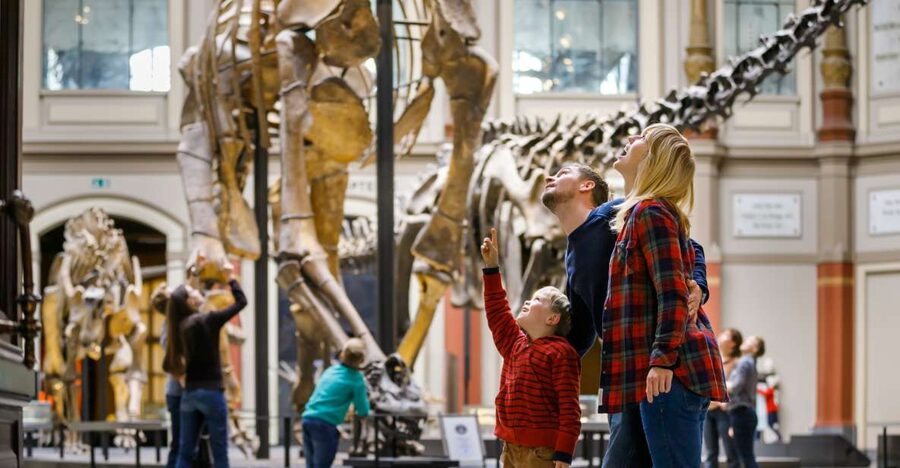
Berlin’s Museum für Naturkunde makes its biggest impression in the Dinosaur Hall, where the towering Giraffatitan brancai greets you beneath the roof. Nearby, Tristan Otto, one of the few original T. rex skeletons in Europe, gives the room its star power, while the delicate Archaeopteryx fossil adds a quieter, more scientific thrill. I like the contrast between giant fossils and tiny preserved specimens, and I like that the $12 ticket works for both adults and children. The main consideration is size: some visitors see the core displays in about 30 minutes, while a careful visit can take much longer.
I also appreciate the museum’s free audio content, which you access on your own phone, and the chance to see the wet collection, with about one million animals stored in alcohol. Bring your ID, headphones, and patience on busy days. The museum can reach capacity, and English information is available for many displays but not always in every format.
In This Review
- Key points to know before you go
- The Dinosaur Hall and Berlin’s prehistoric giants
- Tristan Otto, the T. rex that draws the crowd
- The Archaeopteryx fossil and the quieter side of science
- The East Wing and the museum’s one million preserved animals
- The Biodiversity Wall and a modern warning
- Minerals, taxidermy, and other rooms worth your time
- How long should you plan for?
- Tickets, entry, and the phone-based audio guide
- Who will enjoy this museum most?
- Should you book the Museum für Naturkunde?
- FAQ
- Where is the Museum für Naturkunde in Berlin?
- How much does the entrance ticket cost?
- How long does the visit last?
- Can I see a real T. rex skeleton?
- What is the largest dinosaur exhibit?
- Is Archaeopteryx on display?
- Is an audio guide included?
- Should I bring headphones?
- Is the museum wheelchair accessible?
Key points to know before you go
- Giraffatitan brancai: See the world’s tallest mounted dinosaur skeleton in the central Dinosaur Hall.
- Tristan Otto: Meet one of Europe’s few original T. rex skeletons, a major reason to visit.
- Archaeopteryx lithographica: View the precious fossil often called the Mona Lisa of natural history.
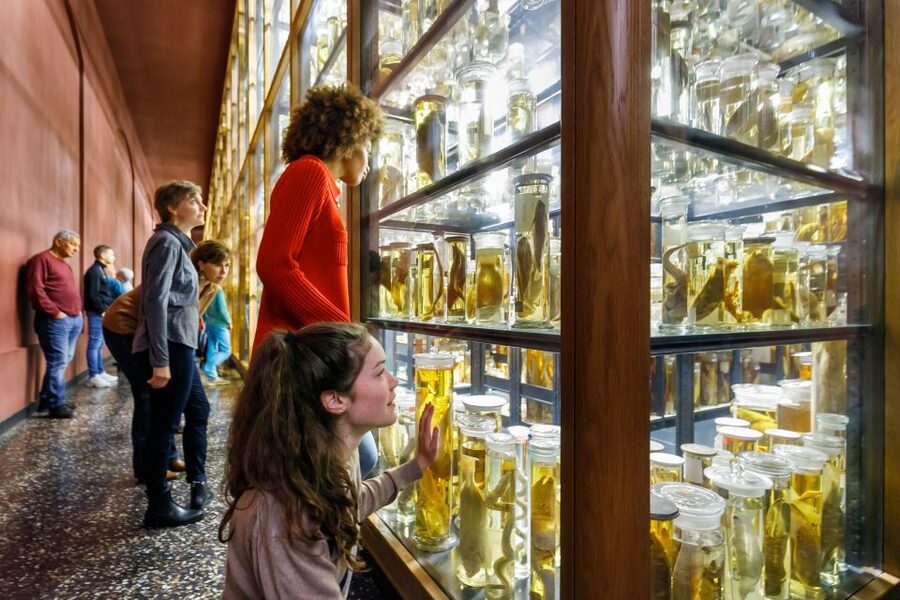
- One million preserved animals: The East Wing reveals a working scientific collection stored in 80 tonnes of alcohol.
- Biodiversity Wall: Take in 3,000 species at one glance, then consider what biodiversity loss means.
- Phone-based audio: Download the audio content online in 11 languages, and bring headphones because no physical guide is included.
The Dinosaur Hall and Berlin’s prehistoric giants
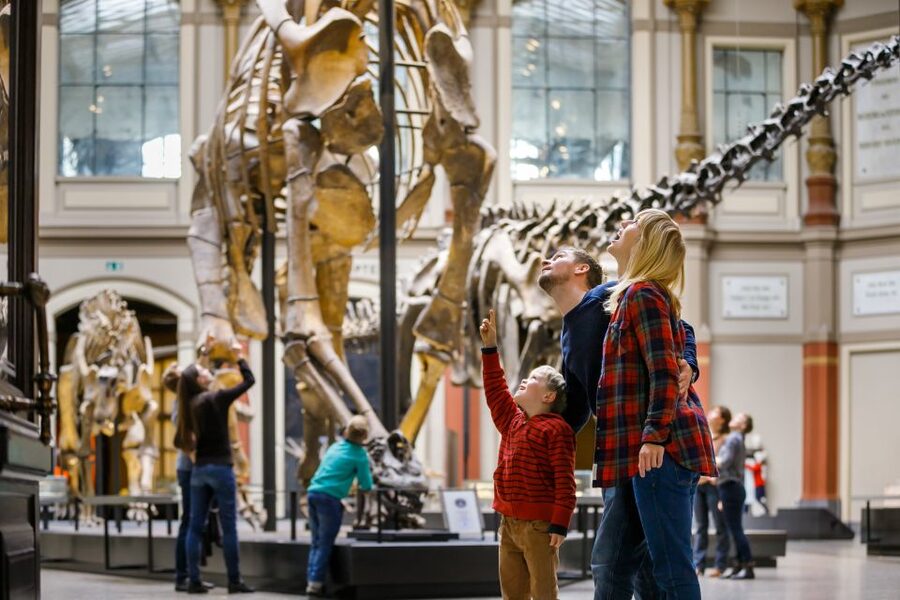
I would make the Dinosaur Hall your first stop. You enter a world shaped around life in the Upper Jurassic period, roughly 150 million years ago, and the scale is immediate. Giraffatitan brancai rises above the room with its long neck and enormous frame. It is the world’s tallest mounted dinosaur skeleton, so it is hard to miss and easy to remember.
The display works well for children because the animals are visually clear. You do not need a specialist’s background to understand the basic story: these creatures were enormous, the world they lived in was different, and their bones still raise questions. Several visitors with young children found the museum engaging, while families with children around four or five years old reported that the kids stayed interested.
The dinosaur displays are not just a parade of bones. The museum explains that fossils continue to produce new information for scientists. That gives the hall more purpose than a simple collection of impressive skeletons. You can look at the structure of a bone, the shape of a skull, or the position of a limb and think about how researchers rebuild an animal’s life from fragments.
Some displays include interactive elements, but keep your expectations in check. This is not a large theme-park attraction packed with hands-on stations. One parent expected more activities for small children and found only limited interaction. If your family needs constant buttons, screens, and games, the museum may feel restrained. If your children enjoy animals, skeletons, and close-looking, it should work better.
The hall can also be noisy when school groups are present. A weekend visit may bring a higher noise level, especially around the dinosaur displays. That is not a flaw in the fossils, but it can affect how long you want to stay.
More Museum & Gallery Tickets in Berlin
- Skip-the-Line: Berlin Wall Museum at Checkpoint Charlie
★ 4.1 · 2,041 reviews - Berlin: Museum Island Multiple Museum Entry Ticket
★ 4.4 · 2,007 reviews - Berlin: Interactive DeJa Vu Museum Entrance Ticket
★ 4.1 · 1,338 reviews
Tristan Otto, the T. rex that draws the crowd
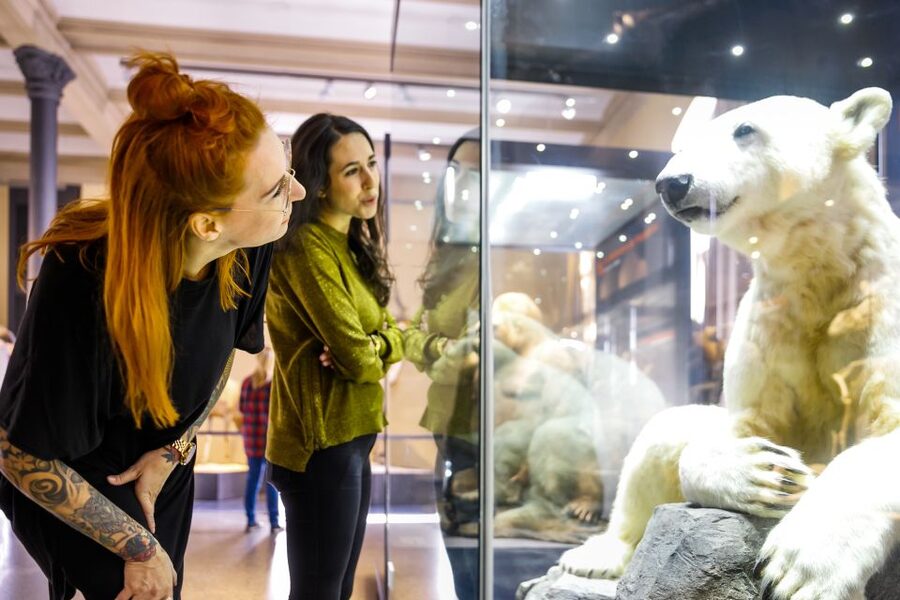
Tristan Otto is the exhibit most likely to dominate your family’s conversation afterward. Seeing a real Tyrannosaurus rex skeleton gives the visit a clear focal point, especially for children who already know the animal from books and films.
The lighting around Tristan Otto helps emphasize the animal’s size and shape. You can examine the skull, teeth, ribs, and long tail while standing close enough to appreciate how the parts fit together. The appeal is simple and direct: this is not a model made for a film set. It is an actual fossil skeleton assembled for public display.
That does not mean Tristan Otto should be your only reason to buy a ticket. The museum’s best moments come from moving between the famous exhibits and the less familiar collections. Still, if you have time for only a short visit, the T. rex and Giraffatitan should be at the top of your list.
The Archaeopteryx fossil and the quieter side of science
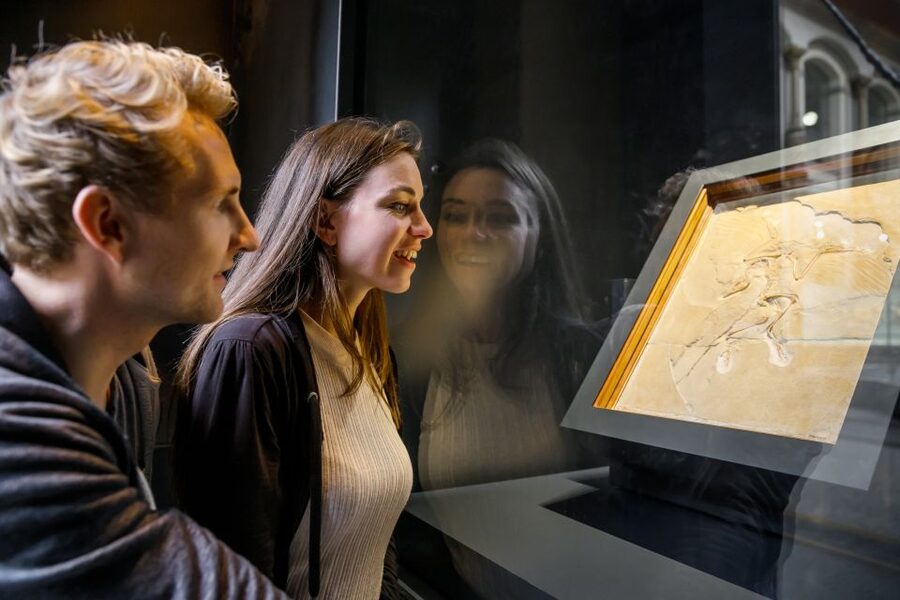
At the rear of the Dinosaur Hall, look for Archaeopteryx lithographica. This fossil is much smaller and more delicate than the giant skeletons, but it carries unusual importance. Its combination of birdlike and dinosaur features makes it a key object in the study of evolution.
The fossil is displayed in a protective case, so this is a slower, closer-looking stop. You will not get the same instant reaction as you do from Tristan Otto. Instead, the value comes from understanding why a single fossil can matter so much. It connects major questions about ancient life, flight, and the relationship between dinosaurs and birds.
I would not rush past this case just because the skeletons are more dramatic. The museum’s story is strongest when it shifts from size to evidence. Giraffatitan shows what prehistoric life looked like at a grand scale. Archaeopteryx shows how a small, fragile object can change scientific thinking.
English explanations are available for many displays, but not every label or digital feature has always been easy to access in English. Some visitors found QR-code translations useful, while others encountered codes that did not work. The free audio content may help, but you will need to use your own phone and headphones.
The East Wing and the museum’s one million preserved animals
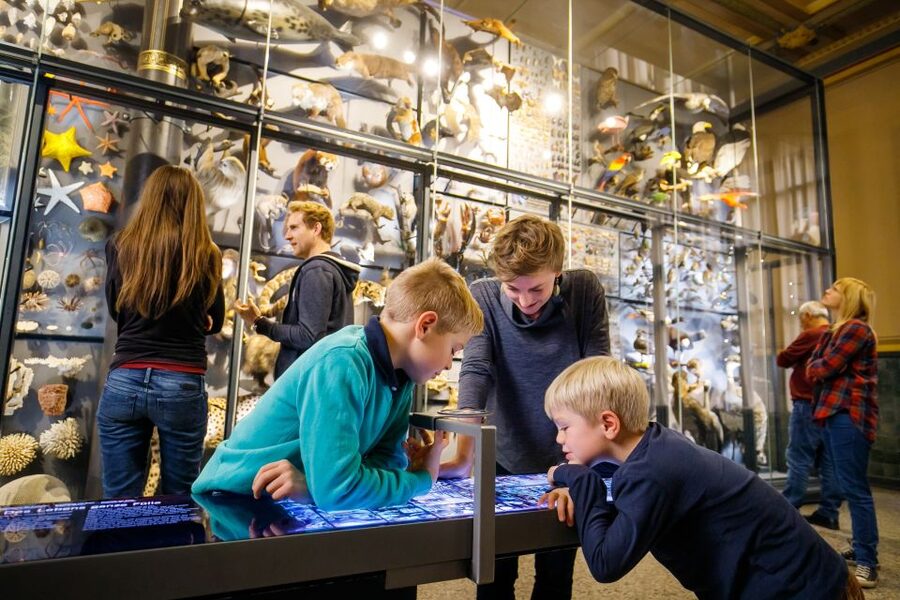
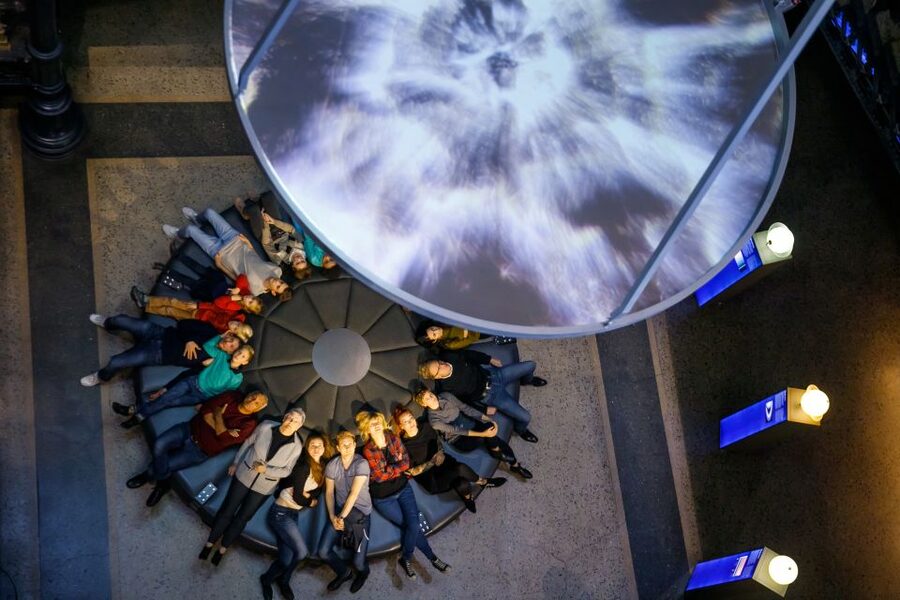
The East Wing changes the mood completely. Here, you see a genuine scientific research collection rather than only polished public displays. About one million animals are preserved in alcohol, using roughly 80 tonnes of alcohol in total.
That number is difficult to picture until you see rows of specimens and realize that the museum is also a research institution. Around 200 scientists work with collections containing more than 30 million items. The public galleries offer only a window into that much larger body of material.
This section may appeal most to adults, older children, and anyone curious about how natural history museums actually work. The specimens are not presented only for decoration. They support research into species, evolution, biodiversity, and the problems facing life on Earth.
Some people may find the preserved animals unsettling. The collection is direct and clinical, and it does not have the same crowd-pleasing effect as the dinosaur hall. That difference is useful. It reminds you that natural history museums are places of research, not just halls of extinct monsters.
If you are visiting with younger children, use the room as a chance to talk about how scientists compare animals and record species. If the displays feel too technical, the audio content may provide a clearer path through them.
Same city, a completely different kind of day:
- Berlin: Reichstag, Dome and Government District Guided Tour
★ 4.7 · 18,288 reviews - Berlin: 1-Hour City Tour by Boat with Guaranteed Seating
★ 4.3 · 16,993 reviews - Berlin: Boat Tour Along the River Spree
★ 4.4 · 11,252 reviews - Discover Berlin Half-Day Walking Tour
★ 5.0 · 9,624 reviews
The Biodiversity Wall and a modern warning
The Biodiversity Wall presents more than 3,000 different species in one large display. Its power comes from comparison. Instead of seeing one animal at a time, you face a broad sample of life and can think about how many forms share the planet.
The display also shifts the museum’s focus from the past to the present. Dinosaurs and fossils naturally pull your attention millions of years backward. The Biodiversity Wall asks you to consider what is happening now, particularly the loss of species and habitats.
I find this one of the most worthwhile parts of the museum because it gives the visit a point beyond spectacle. You begin with prehistoric giants, then move through preserved research specimens, and finally confront the question of how much living variety may disappear. That sequence gives the building an intellectual shape, even if the rooms do not always provide a perfectly clear route.
The museum’s permanent and temporary displays can change over time. Special exhibitions, lectures, workshops, and guided programs may be available, but they are not included with this basic entrance ticket. If you want a guided tour or a special event, check the details before booking.
Minerals, taxidermy, and other rooms worth your time
Do not stop after the dinosaurs. The mineral collection is another worthwhile section, especially if you enjoy color, crystal shapes, and the physical structure of the Earth. It offers a different kind of visual pleasure from the animal displays and gives you a reason to slow down after the busy Dinosaur Hall.
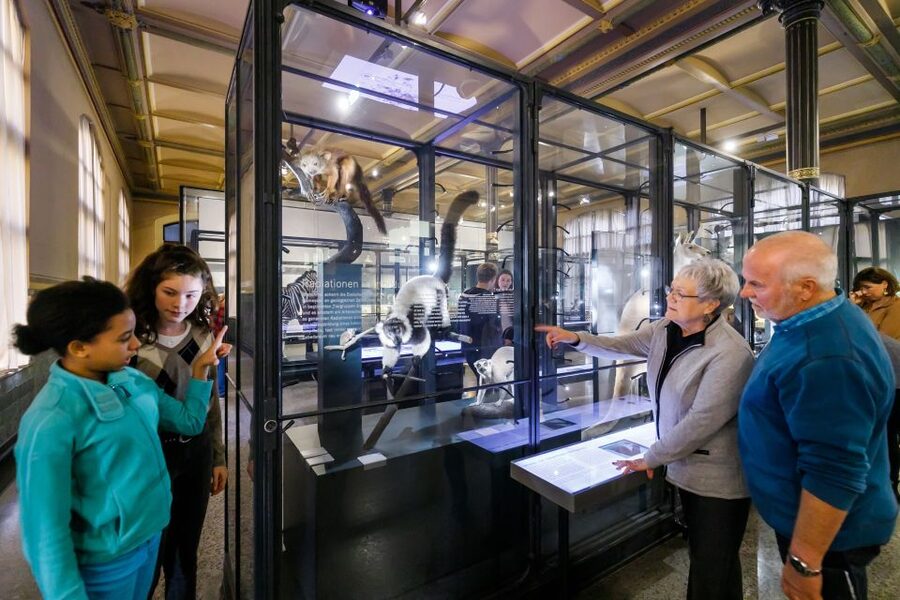
The museum also includes taxidermy specimens and examples of extinct species. These displays can be fascinating because they show animals in a form that feels immediate and recognizable. They can also be divisive. Some visitors are uncomfortable seeing real animals preserved for display, while others value the chance to study species that are rare or no longer living.
Additional areas cover subjects connected with geology, geography, biology, and the solar system. The museum is organized by themes, with individual rooms often focused on a particular subject. That makes it easier to understand each gallery, though the overall route can still feel unclear.
Maps help, but do not assume they will give you a perfect step-by-step path. One visitor found the museum easy to get lost in even with a map. I suggest choosing two or three must-see sections first, then using the remaining time for rooms that catch your attention.
How long should you plan for?
The official visit window is listed as 30 minutes to one hour, but that is best understood as a minimum for a focused visit rather than a limit on what the museum deserves. A quick visit can cover the main dinosaur displays, Tristan Otto, and Archaeopteryx. Several people have completed the museum in about 30 minutes, particularly when only one floor or a limited area was open.
If you read labels, use the audio content, and visit the mineral, taxidermy, biodiversity, and research displays, you can spend considerably longer. The museum has enough variety for an afternoon with children, although children with short attention spans may be happier with a shorter route.
For a first visit, I would allow at least one hour if your schedule permits. Give the Dinosaur Hall 20 to 30 minutes, then decide if your group is ready for the more scientific rooms. If your children are tiring, see the most important exhibits and save the rest for another visit.
The building may have partial closures or construction during some periods. One recent visit found only one floor open, while another comment looked forward to a new building being completed. Check current conditions before you go if you are planning around a tight schedule.
Tickets, entry, and the phone-based audio guide
The entrance is at Invalidenstraße 43, 10115 Berlin. The ticket costs about $12 per person, making it a reasonable choice for a short indoor activity, especially on a rainy day or for a family that wants an educational stop without paying for a full-day attraction.
The value depends on how you visit. If you rush in for the T. rex and leave after half an hour, the price is fair but not extraordinary. If you take time with the dinosaur fossils, Archaeopteryx, minerals, preserved animals, and Biodiversity Wall, the ticket becomes better value.
A booked ticket can help you avoid the main ticket line. This matters because the museum can reach full capacity, and one family had to wait before entering. Keep the mobile voucher ready and make sure you can display it clearly. A few people had trouble presenting tickets through an app or without downloading one, so do not leave the ticket access until the last moment.
The audio content is downloadable through a website and is offered in English, French, German, Italian, Japanese, Polish, Portuguese, Russian, Spanish, Turkish, and Ukrainian. It is not a physical audio guide. Bring your phone and headphones, and use the museum’s free Wi-Fi if needed.
The phone system is useful, but it is not flawless. Some QR codes have failed, and the English coverage may vary from display to display. I would treat the audio as a helpful extra rather than the only way to understand the museum.
Cloakroom access is included. Bring a passport or ID card, and bring proof of age or status if you are using a reduced ticket. The museum is wheelchair accessible.
Who will enjoy this museum most?
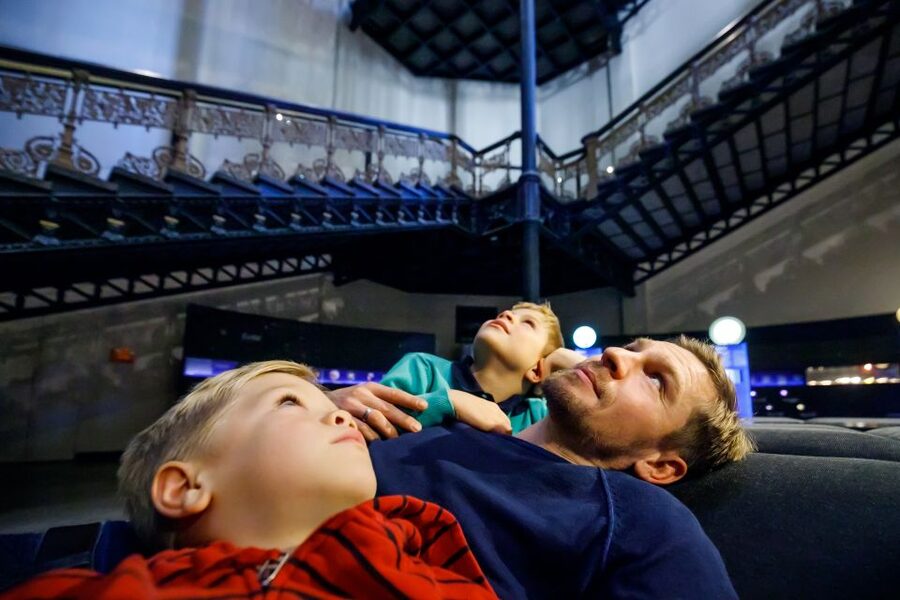
Families with children are the clearest match. The large dinosaurs create an immediate reason to look, while the minerals, animals, and solar system displays give you alternatives when one room loses a child’s attention.
Adults can enjoy it just as much, particularly if you like fossils, evolution, scientific collections, or the history of natural history itself. The connection to Alexander von Humboldt and Charles Darwin gives the museum a wider frame, leading from early explorers and naturalists to present-day research.
This may be less satisfying if you want a huge, polished attraction with constant interactive features. It is smaller than London’s Natural History Museum, and some rooms feel older or less fully updated. The museum’s charm comes from the objects and the research behind them, not from a nonstop entertainment format.
Should you book the Museum für Naturkunde?
I would book this entrance ticket if you want an affordable Berlin activity centered on dinosaurs, fossils, and real scientific collections. Tristan Otto, Giraffatitan, and Archaeopteryx make the visit worthwhile, while the Biodiversity Wall and wet collection add substance beyond the headline exhibits.
Book ahead if your visit falls on a busy weekend or school holiday, since capacity can become an issue. Bring headphones and a charged phone if you want the audio content, and allow more than 30 minutes if you plan to read and explore.
Skip it only if your group needs extensive hands-on activities or expects a museum on the scale of London’s Natural History Museum. For most families, fossil fans, and curious adults, the $12 price buys a compact but memorable look at life past and present.
FAQ
Where is the Museum für Naturkunde in Berlin?
The museum is at Invalidenstraße 43, 10115 Berlin. Enter through the main entrance.
How much does the entrance ticket cost?
The listed price is $12 per person.
How long does the visit last?
The stated duration is 30 minutes to one hour. You may need longer if you want to see the dinosaur, mineral, biodiversity, taxidermy, and preserved animal displays carefully.
Can I see a real T. rex skeleton?
Yes. The museum displays Tristan Otto, one of the few original Tyrannosaurus rex skeletons in Europe.
What is the largest dinosaur exhibit?
Giraffatitan brancai is the world’s tallest mounted dinosaur skeleton and is displayed in the center of the Dinosaur Hall.
Is Archaeopteryx on display?
Yes. Archaeopteryx lithographica is displayed in a protected case at the back of the Dinosaur Hall.
Is an audio guide included?
Downloadable audio content is included through a website. It is available in English, French, German, Italian, Japanese, Polish, Portuguese, Russian, Spanish, Turkish, and Ukrainian. A physical audio guide is not included.
Should I bring headphones?
Yes. The audio content is accessed on your phone, so headphones are useful. Free Wi-Fi is available according to the supplied information.
Is the museum wheelchair accessible?
Yes, the museum is wheelchair accessible.
More Historical Tours in Berlin
- Berlin: World Heritage Cruise to Potsdam
★ 4.5 · 1,435 reviews - Berlin Historical Highlights Walking Tour
★ 4.9 · 657 reviews - Berlin Private Complete History All Day Walking Tour
★ 5.0 · 474 reviews - Berlin: Historic Boat Sightseeing City Center Tour
★ 4.5 · 415 reviews
More Museums in Berlin
- Berlin: “Pergamonmuseum. The Panorama” Exhibition Tickets
★ 4.6 · 1,245 reviews - Berlin: East Side Gallery Spree Cruise in a Solar Catamaran
★ 4.0 · 1,039 reviews - Cold War, Berlin Wall, Spies and the East Side Gallery
★ 5.0 · 1,024 reviews - Berlin: Museum of Communication Entrance Ticket
★ 4.5 · 452 reviews
Just added around Berlin
- Love and War in Berlin: Self-Guided Story Puzzle Walk★ 5.0 · 7 reviews
- Rickshaw Tours Berlin – Groups of up to 16 people with several rickshaws★ 4.0 · 97 reviews
- Walking on the Wall: 3-Hour Tour in Berlin★ 4.5 · 34 reviews
- eSIM for Germany and 34 European Countries★ 4.5 · 16 reviews
- Warnemuende Shore Excursion: Berlin Private Sightseeing Tour from Rostock★ 5.0 · 4 reviews
- Your ticket to The Wall Museum Berlin★ 3.0 · 60 reviews
- Warnemuende Shore Excursion: Private Berlin Tour★ 4.5 · 27 reviews
- Berlin’s Gay, Lesbian, and Queer Scene Small-Group Walking Tour★ 4.5 · 66 reviews
Museum & Gallery Tickets, compared.


Skip-the-Line: Berlin Wall Museum at Checkpoint Charlie
Read our review →
Browse the lists this tour appears in