
Reviewed · HISTORICAL TOURS
Berlin Historical Highlights Walking Tour
Berlin’s past is packed into a walkable central route here, from the open space of Potsdamer Platz to the solemn Holocaust Memorial and the grand Brandenburg Gate. I like the way this tour connects Prussian power, Nazi terror, and Cold War division instead of treating each sight as a separate photo stop. I also like the small-group setup, which gives you room to ask questions and hear the personal stories behind the stones and streets.
The main drawback is the amount of ground covered on foot. You will need comfortable shoes, and winter weather can make the route tough. The tour costs $389 for up to six people, so it offers better value for a family or group than for one or two people.
In This Review
- Key points at a glance
- Why this route works for a first Berlin day
- Potsdamer Platz and the Berlin Wall
- Topography of Terror and Checkpoint Charlie
- Hitler’s bunker area and the Holocaust Memorial
- Reichstag and Brandenburg Gate
- Unter den Linden, Bebelplatz, and Humboldt University
- Museum Island and the Humboldt Forum
- Walking time, weather, and the route’s pace
- The $389 price and who gets good value
- What the guide quality means in practice
- Who should book this Berlin walk
- Should you book the Berlin Historical Highlights Walking Tour?
- FAQ
- How long does the tour last?
- Where does the tour begin?
- What sights are included?
- Is public transport included?
- Which languages are available?
- Can I arrange hotel pickup?
Key points at a glance
- Berlin’s story in one long walk: Connect Potsdamer Platz, the Wall, Nazi-era sites, Brandenburg Gate, Unter den Linden, and Museum Island.
- Cold War landmarks included: See a remaining section of the Berlin Wall and hear about Checkpoint Charlie’s role in divided Berlin.
- Serious history handled on site: Pause at the Topography of Terror, Hitler’s bunker area, and the Memorial to Murdered Jews of Europe.
- Grand central Berlin: Visit the Reichstag, Brandenburg Gate, Bebelplatz, Humboldt University, and Unter den Linden.
- Private-group value: The $389 rate covers up to six people, making the cost easier to justify when shared.
- Flexible language choices: Guides are available in English, French, Italian, and Spanish.
Why this route works for a first Berlin day
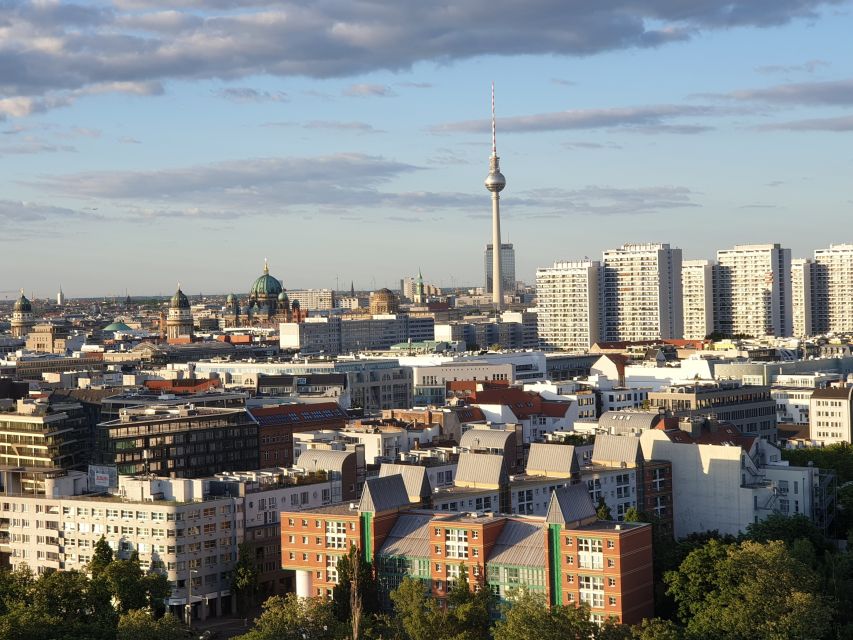
I like this tour because it gives you a working map of central Berlin. You begin with modern Potsdamer Platz, pass through the physical and political scars of the 20th century, then finish among grand boulevards, historic squares, and Museum Island. That sequence helps you understand how the city changed, rather than simply collecting famous buildings.
Berlin can feel confusing at first. Its sights are spread across a large city, and its history does not fit neatly into one period. This walk brings several eras together: 18th-century Prussia at the Brandenburg Gate, 19th-century government at the Reichstag, Nazi Germany around the bunker site and former Gestapo area, the divided city at the Wall and Checkpoint Charlie, and today’s rebuilt center at Potsdamer Platz and the Humboldt Forum.
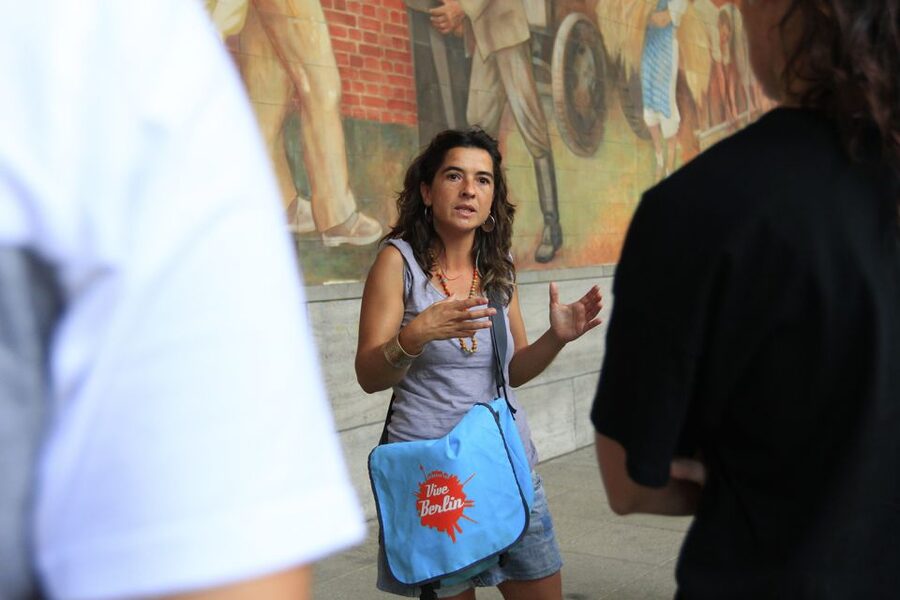
The guide is the key to the experience. You are not just walking between monuments. You are hearing why the places matter and how one period led into the next. Recent guide names include Paul, Jean Charles, Céline, and Paolo, with language options in English, French, Italian, and Spanish.
The route is especially useful at the start of a Berlin stay. You can return later to the museums or memorials that caught your attention. One guide, Paul, also helped explain how to continue exploring independently, which is practical in a city where one central walk can open up several days of sightseeing.
A few more Berlin trips to weigh up
- Berlin: Natural History Museum Entrance Ticket
★ 4.6 · 3,382 reviews - Berlin: World Heritage Cruise to Potsdam
★ 4.5 · 1,435 reviews - Berlin Private Complete History All Day Walking Tour
★ 5.0 · 474 reviews
Potsdamer Platz and the Berlin Wall
The tour begins at Potsdamer Platz, depending on the option you book. This is a smart starting point because the area captures modern Berlin’s dramatic rebirth. Once divided and heavily damaged, it is now one of the city’s most recognizable modern districts.
You receive about 15 minutes of guided context here. Do not expect an extended architectural tour of every building. Instead, use this opening to understand how a former border zone became a symbol of reunified Berlin.
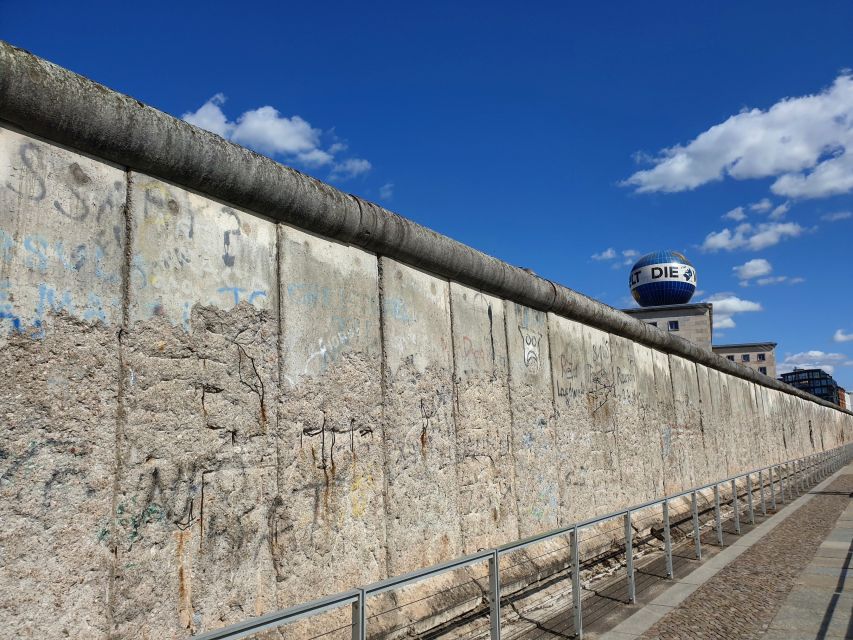
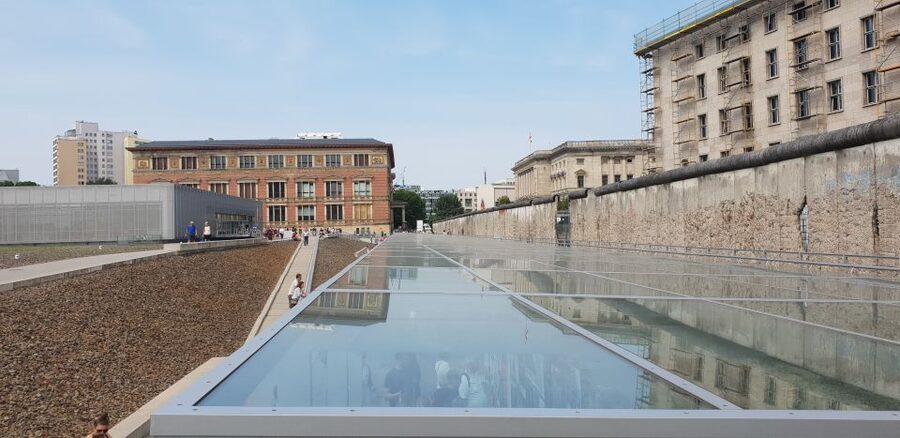
From there, the route reaches a section of the Berlin Wall for about 20 minutes. This is one of the most important stops because the Wall was not just a barrier. It split neighborhoods, families, and the city itself. Seeing a surviving section gives the political story a physical scale that a museum display cannot quite match.
The guide’s explanation matters here. Berlin’s division can seem like a string of dates until you connect it with the streets beneath your feet. Ask questions if you want more detail about the Wall’s role, since the small-group format makes that easier than a large bus tour.
Topography of Terror and Checkpoint Charlie
The next stops focus on two different kinds of 20th-century memory. At the Topography of Terror, the guide gives about 10 minutes of context around the former Nazi institutions in this area. It is a serious stop, and the subject calls for attention rather than a quick snapshot.
The short time means you should think of this as an introduction, not a full museum visit. If the site interests you, plan to return on your own. The tour gives you the historical frame and shows you where this part of Berlin fits into the larger story.
Checkpoint Charlie follows, with another 10-minute explanation. The crossing became a Cold War symbol known around the world. Today, the area can feel more commercial than the history deserves, so the guide’s context is useful. You learn to separate the actual political importance of the crossing from the modern display around it.
I appreciate that the tour includes both the Nazi period and the Cold War. Berlin’s recent past is not one single story. The city moved from dictatorship to devastation, then into occupation and division. Checkpoint Charlie helps explain the later chapter, when Berlin became a front line in the conflict between East and West.
Hitler’s bunker area and the Holocaust Memorial
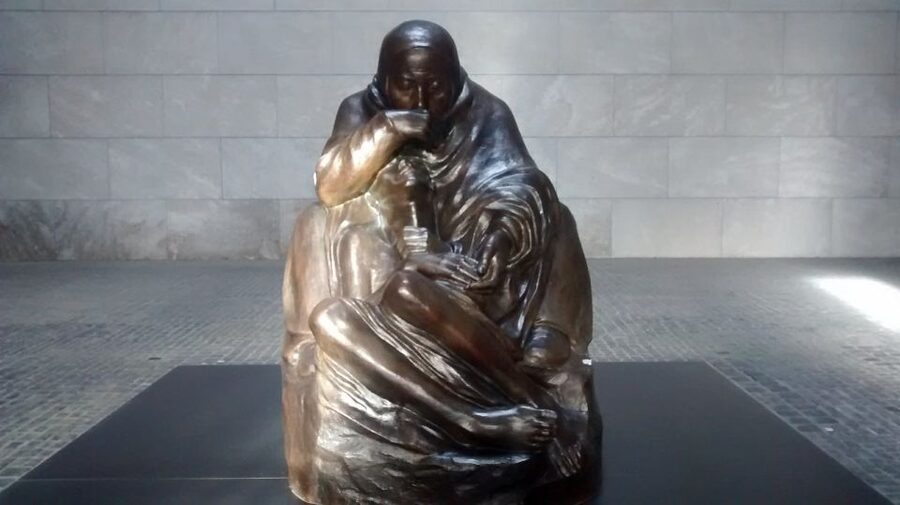
The route then reaches the area of Hitler’s bunker. The visit lasts about 10 minutes and focuses on the site’s place in the final stage of World War II. There is no grand monument to photograph here, and that is part of the point. The location is marked in a restrained way, with ordinary city life continuing around it.
A guide can explain why the site is treated carefully and how Berlin handles places connected with Nazi leaders. You get historical orientation without turning the bunker into a spectacle.
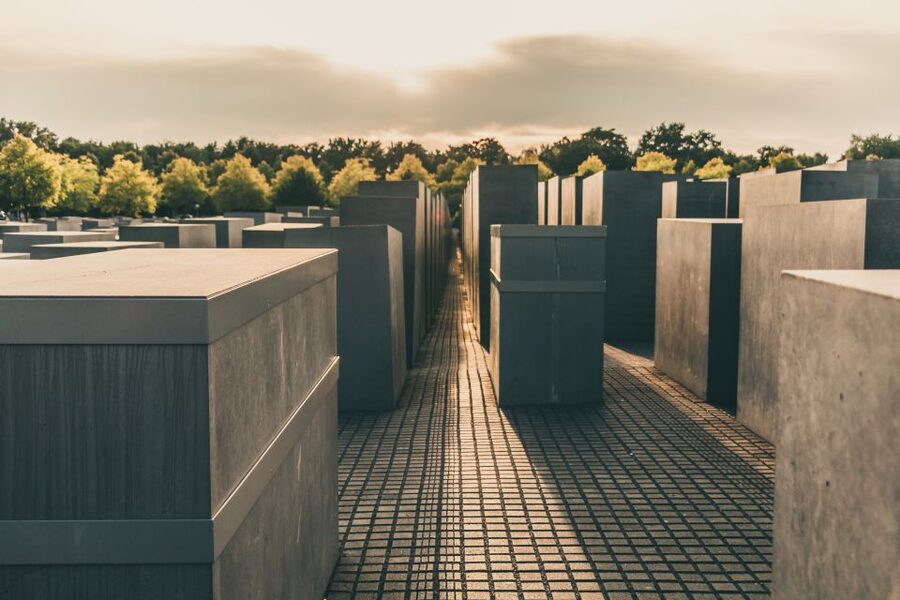
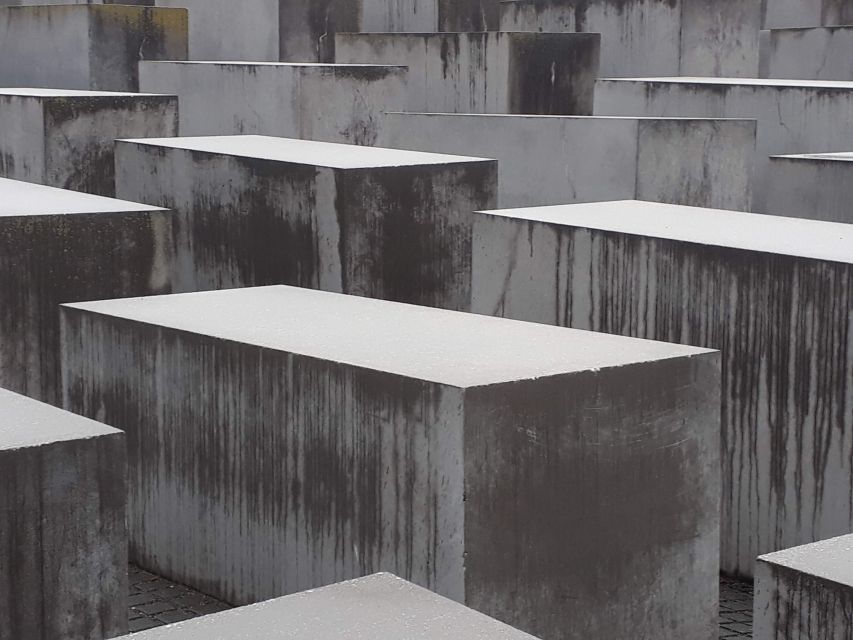
The Holocaust Memorial is one of the tour’s most important pauses. You have about 20 minutes here, enough time to walk among the concrete blocks and reflect on the memorial’s mood and design. The site honors the Jewish people murdered by Nazi Germany, and it asks you to slow down after the factual stops earlier in the route.
I like the change of pace. Much of the walk involves dates, rulers, borders, and political decisions. The memorial creates quiet space for personal thought. It also sits close to the Brandenburg Gate and Reichstag, which makes the contrast between democratic Germany today and the crimes of the Nazi era especially powerful.
Treat this part with respect. It is not simply another central attraction, and the guide’s brief explanation is only a starting point for understanding the memorial.
Same city, a completely different kind of day:
- Berlin: Reichstag, Dome and Government District Guided Tour
★ 4.7 · 18,288 reviews - Berlin: 1-Hour City Tour by Boat with Guaranteed Seating
★ 4.3 · 16,993 reviews - Berlin: Boat Tour Along the River Spree
★ 4.4 · 11,252 reviews - Discover Berlin Half-Day Walking Tour
★ 5.0 · 9,624 reviews
Reichstag and Brandenburg Gate
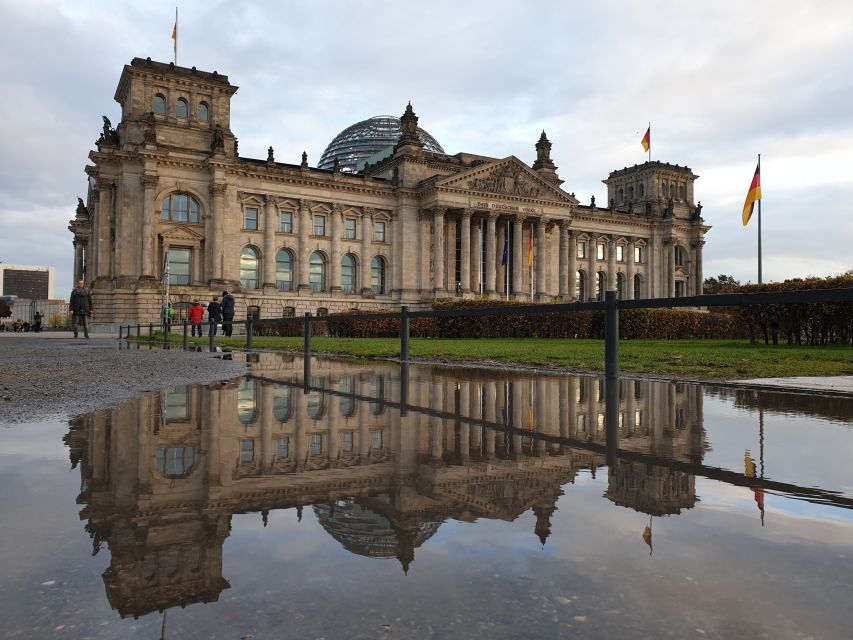
The Reichstag is covered in about 10 minutes. The building represents Germany’s parliamentary tradition, but its story also includes war, political upheaval, and the country’s later return to Berlin. You will see the exterior and hear its place in the city’s development.
The tour does not include entry to the Reichstag dome. If you want to visit inside, that requires separate planning. This is a useful distinction when comparing the tour with a full building visit. Here, the value is in seeing the Reichstag as part of the city’s historical route.
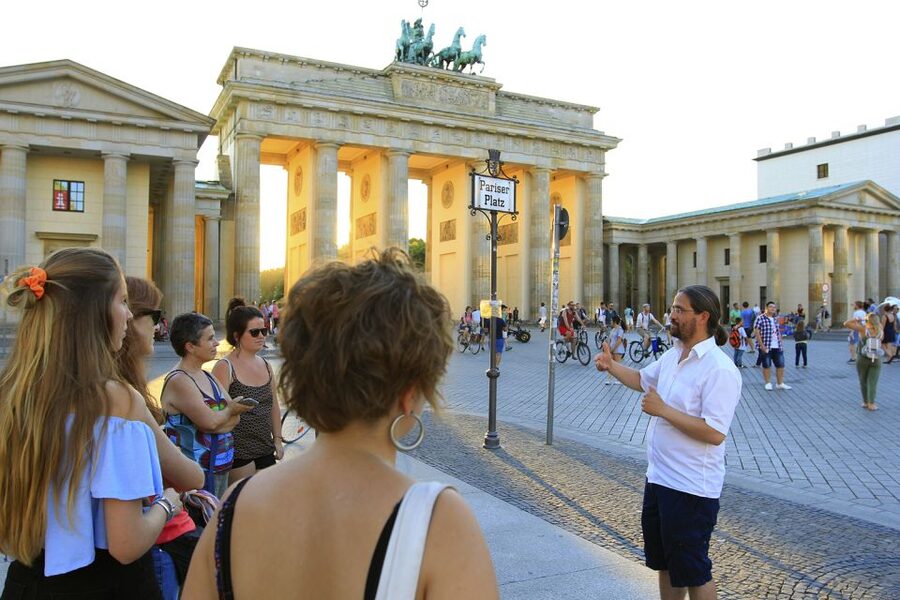
The Brandenburg Gate receives about 15 minutes of guided attention, followed by a 10-minute break. This is one of Berlin’s essential sights, and the pause gives you time to look around, take photographs, and catch your breath.
Built in the 18th century, the gate once marked the edge of the city. It later became a symbol of division and then reunification. That changing meaning is what makes it more than a handsome neoclassical gateway.
The break is welcome. The route has already covered several heavy subjects, and the Brandenburg Gate offers a natural point to rest before the walk continues along Unter den Linden. Bring water and use the pause wisely, especially if the weather is cold.
Unter den Linden, Bebelplatz, and Humboldt University
Unter den Linden brings you into one of central Berlin’s grandest historic corridors. The walk lasts about 15 minutes and links the Brandenburg Gate with the buildings farther east. This is where the city’s imperial and cultural character becomes especially clear.
At Bebelplatz, the guide gives about 10 minutes of explanation. The square is surrounded by important buildings, including the National Opera and Humboldt University. It also carries a dark reminder of Nazi book burning, making it another place where elegant architecture and painful history sit side by side.
This is one reason I prefer a guided walk in central Berlin. Without context, Bebelplatz can look like a beautiful urban square. With context, you see how power used public spaces, how universities fit into the city’s intellectual life, and how Nazi persecution entered daily civic life.
The stop is fairly brief, so do not expect a full university or opera visit. Still, it gives you enough information to decide which buildings deserve a closer look later.
Museum Island and the Humboldt Forum
The final part of the route reaches Museum Island, with about 15 minutes of guided sightseeing, followed by around 10 minutes at the Humboldt Forum. This is a strong finish because the subject shifts from war and division to Berlin’s role as a cultural capital.
Museum Island brings several major museums together on the Spree. The tour does not include museum admission, and the short visit is an introduction rather than a gallery tour. If you want to see the collections, save another half-day or more for a return visit.
The Humboldt Forum occupies the reconstructed Berlin Palace site. Its striking exterior and central location make it an important part of modern Berlin’s rebuilding. Your guide can place the building within the city’s changing center and explain how old royal architecture and new cultural uses meet here.
The tour ends near Unter den Linden 5, rather than returning to the original starting point. That is convenient if you plan to continue toward Museum Island or central Berlin, but it means you should think about your next move. Berlin is a large city, and the tour price does not include public transport.
Walking time, weather, and the route’s pace
The advertised duration ranges from three to six hours, while the main route is described as a three-hour walking tour. The difference likely reflects the selected option, pickup arrangements, language, and tour format, so check the exact time when booking.
The listed stop times add up to a substantial walk with many short explanations. You are moving often, not spending an hour at each monument. That pace works well if you want a broad first look, but it may feel quick if you prefer long museum visits or extended time at memorials.
Wear comfortable shoes. This is not a sightseeing stroll with occasional steps between cafés. You cover a large central section of Berlin, and the route can be demanding in poor weather. The guide may use the metro if conditions become difficult, but public transport is not included.
A day ticket for Berlin’s AB zones is recommended. It can help you reach the meeting point and continue after the final stop. Confirm the meeting location for your chosen option, since it can vary.
The $389 price and who gets good value
At $389 per group of up to six, the price needs to be judged by group size. For six people, the cost works out to about $65 per person. For four, it is about $97 each. For two, it is nearly $195 each, which makes the tour much harder to justify unless you place a high value on a private guide and a customized pace.
The guide is the main purchase here. You are paying for a person who connects difficult subjects and helps you see the city in sequence. Admission tickets are not part of the price, and neither is public transport, so budget for those separately if you want to enter museums or use the metro.
A private group option can be worthwhile for families, friends, or people who want to ask many questions. It also gives you more personal service than a large scheduled group. If you are a solo visitor on a tight budget, a regular group walk may offer better value if one is available.
Pickup from your hotel is optional, but you need to provide the hotel name and address in advance. Private pickup cannot be arranged less than 72 hours before the tour, so leave a few days between booking and your visit.
What the guide quality means in practice
The strongest pattern in the available feedback is guide performance, especially during difficult conditions. Paul is repeatedly singled out for making the city understandable and helping people plan further sightseeing. Jean Charles led a memorable winter walk, while Céline was praised for combining city history with anecdotes. Paolo handled heavy snow well and remained prepared and helpful.
That detail matters because this tour depends more on explanation than on special access. You are not entering every major building, and the route is not built around exclusive interiors. The guide must make outdoor sites meaningful, keep the pace comfortable, and adjust when weather turns bad.
The languages are English, French, Italian, and Spanish. If you have a strong preference, select it clearly when booking and confirm that the requested language is available for your date.
The overall rating is 4.9 from 657 ratings, with a small number of four-star scores alongside many five-star scores. That suggests a very reliable experience, while still leaving room for the practical limitations: a long walk, short stops, no included admissions, and a price that favors larger groups.
Who should book this Berlin walk
I would choose this tour for a first visit when you want the city’s major central stories explained in one sitting. It suits families, couples traveling with friends, and private groups who want to stay together rather than join a large crowd.
It is also a good choice if you like history told through places. The route moves from royal Berlin to Nazi Berlin, from the divided city to the rebuilt capital. You will hear anecdotes, but the focus remains on understanding what happened and why the sites matter.
You may want something else if you prefer a slow museum day, a food-focused walk, or a route with little walking. You should also think twice about booking it for only one or two people unless private guiding is a priority for you.
Book at least several days ahead if you need a private guide or hotel pickup. The activity offers free cancellation up to 24 hours before departure and reserve-now, pay-later booking, which makes planning easier, but those flexible terms do not remove the need to arrange a guide in time.
Should you book the Berlin Historical Highlights Walking Tour?
Book it if you want a clear, serious introduction to Berlin and can share the $389 cost among a group. The route covers an impressive amount of ground, and the best guides, including Paul, Jean Charles, Céline, and Paolo, appear to bring warmth, stories, and practical advice to the walk.
Skip it if you want long indoor visits or if the per-person cost is too high for a small party. For the right group, though, this is a useful first-day orientation: you see the famous sights, face the city’s hardest history, and finish with a better sense of where to spend your own time.
FAQ
How long does the tour last?
The activity lists a duration of three to six hours. The main walking route is described as a three-hour tour, but the exact length depends on the option selected.
Where does the tour begin?
The route starts at Potsdamer Platz in the main description, but the meeting point may vary by booking option. Confirm the location you receive for your selected tour.
What sights are included?
The route includes Potsdamer Platz, a section of the Berlin Wall, the Topography of Terror, Checkpoint Charlie, Hitler’s bunker area, the Holocaust Memorial, the Reichstag, Brandenburg Gate, Unter den Linden, Bebelplatz, Museum Island, and the Humboldt Forum.
Is public transport included?
No. Public transport tickets are not included. An AB-zone day ticket is recommended for reaching the meeting point and continuing after the tour.
Which languages are available?
Live guides are available in English, French, Italian, and Spanish.
Can I arrange hotel pickup?
Pickup is optional. You need to provide your hotel name and address and wait in the lobby 10 minutes before the scheduled pickup. Private pickup cannot be organized less than 72 hours before the tour.
Just added around Berlin
- Love and War in Berlin: Self-Guided Story Puzzle Walk★ 5.0 · 7 reviews
- Rickshaw Tours Berlin – Groups of up to 16 people with several rickshaws★ 4.0 · 97 reviews
- Walking on the Wall: 3-Hour Tour in Berlin★ 4.5 · 34 reviews
- eSIM for Germany and 34 European Countries★ 4.5 · 16 reviews
- Warnemuende Shore Excursion: Berlin Private Sightseeing Tour from Rostock★ 5.0 · 4 reviews
- Your ticket to The Wall Museum Berlin★ 3.0 · 60 reviews
- Warnemuende Shore Excursion: Private Berlin Tour★ 4.5 · 27 reviews
- Karl-Marx-Allee Tour: Life and Architecture in East Berlin★ 5.0 · 19 reviews
Historical Tours, compared.
City History Canal Sightseeing Tour on a Motorboat
Read our review →


Browse the lists this tour appears in