
Reviewed · HISTORICAL TOURS
Elbfloren: Historical city tour
Dresden’s grand center unfolds quickly on this two-hour historical walk, from the royal castle to the Frauenkirche, Fürstenzug, Zwinger, cathedral, and Semper Opera House. The route packs in the city’s best-known Baroque sights without asking you to spend a full day on your feet.
I like the clear historical thread, especially the focus on Augustus the Strong and the stories behind Dresden’s Baroque rebuilding. I also like that the tour includes a look inside the Frauenkirche and guided time at the castle and Zwinger. The main consideration is language: this is conducted in German, so you need enough German to follow a spoken history tour.
In This Review
- Key points
- Dresden’s Baroque center in two focused hours
- Meeting the guide at Dresden Castle
- Inside the Frauenkirche, when the doors are open
- The Fürstenzug and Saxon royal history
- Dresden Castle and the Taschenbergpalais
- The Zwinger, Dresden’s late Baroque showpiece
- Theater Square and Dresden’s grand finale
- What the German-language format means
- Is two hours enough for Dresden?
- Is the $15 price good value?
- Who should book this Dresden walk?
- Practical details before you go
- Should you book the Elbfloren historical city tour?
- FAQ
- How long does the historical Dresden tour last?
- What language is the tour conducted in?
- Where does the tour start and finish?
- Is entry to the Frauenkirche included?
- Are museum and attraction tickets included?
- Is the tour wheelchair accessible?
Key points
- Augustus the Strong shapes the story: Follow Dresden’s royal past through the ruler who helped define its Baroque image.
- The route covers the essential old town: See the Dresden Castle, Frauenkirche, Fürstenzug, Zwinger, cathedral, and Semper Opera House.
- The Frauenkirche interior is included when open: You get more than an exterior photo stop, though church access depends on opening hours.
- Castle and Zwinger guiding are part of the tour: You receive a short guided visit at the castle and guided time in the Zwinger.
- The $15 price is easy to justify: For two hours of live guiding across Dresden’s central sights, it offers a useful first look.
- German is the only tour language: This matters more here than on a simple sightseeing walk because storytelling is central to the experience.
Dresden’s Baroque center in two focused hours
I see this tour as a strong introduction to central Dresden. You begin at the castle and move through a compact group of landmarks, so the time is spent walking and listening rather than dealing with transport between scattered sights.
The route also gives you a useful sense of how Dresden works as a historic center. Royal buildings, church architecture, ceremonial courtyards, art collections, and opera all sit close together. That makes the tour efficient, but it also means the experience is more about orientation and interpretation than long museum visits.
The tour is led by Touristik-Service Dresden Natalie Blau, with a German-speaking guide. The company’s emphasis is on lively storytelling, background, and amusing details, particularly stories connected with Augustus the Strong. If you enjoy hearing how a city’s rulers shaped its buildings and public image, you should find the route rewarding.
I would not treat this as a substitute for visiting Dresden Castle’s museums or attending the Semper Opera House. Museum visits are not included, and admission to the Zwinger and Semper Opera House is also not included. Instead, think of this as a guided introduction that helps you decide where to return later.
A few more Dresden trips to weigh up
- Dresden: Guided Beer Tour of the Historic Old City
★ 4.8 · 95 reviews - Historical tour of the old town including a Saxon dinner
★ 4.7 · 23 reviews - Leipzig: City History Canal Sightseeing Tour on a Motorboat
★ 4.7 · 6,232 reviews
Meeting the guide at Dresden Castle
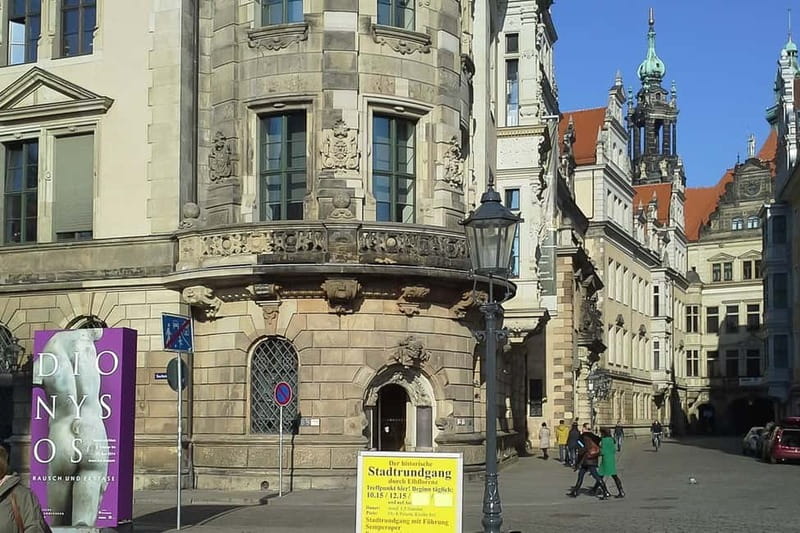
The meeting point is in front of Dresden Castle, at the corner of Schlossstraße and Taschenberg, beneath the tour sign. That is a practical starting place because the castle immediately puts you in the middle of Dresden’s royal quarter.
Arrive with a little time to spare. The route begins outdoors, and the old town can feel confusing when several imposing buildings appear within a short distance of one another. Starting at the castle gives you a fixed landmark and makes the later stops easier to place.
The opening section introduces the historical Dresden often called Florence on the Elbe. The nickname points to the city’s monumental art, architecture, and river setting, but the tour gives you more than a pretty label. It ties the city’s Baroque appearance to Saxony’s royal court and to Augustus the Strong.
This is where the guide’s storytelling matters. The experience includes facts about Augustus that are intended to be interesting and amusing, not only a string of dates. You should expect a walking narrative about ambition, royal display, and the effort to make Dresden look like a major European court.
Inside the Frauenkirche, when the doors are open
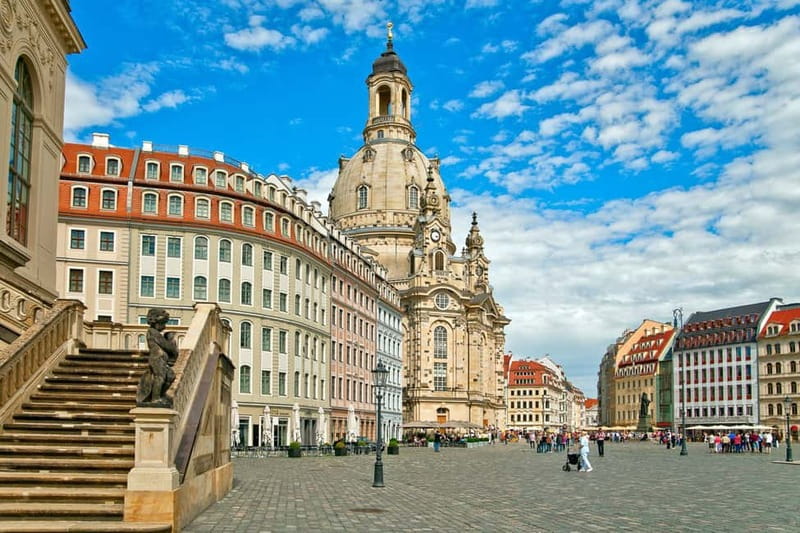
From the castle, the group walks toward Dresden’s most famous landmark, the Frauenkirche, or Church of Our Lady. Its exterior is elaborate and fully restored, making it one of the clearest symbols of Dresden’s wartime destruction and later rebuilding.
The important benefit here is the chance to see the interior. Many city walks stop outside major churches, but this tour includes a visit when opening hours allow it. Inside, you can appreciate the church as a working place of worship and as a major part of Dresden’s rebuilt center.
The opening-hours condition is worth taking seriously. The interior visit is not guaranteed at every starting time, so you should keep your expectations flexible. If the church is closed, the route still includes the exterior and the surrounding historic center, but the experience will be less complete for anyone especially interested in church architecture.
Dogs are not allowed inside churches, and pets are not allowed on the tour. The activity itself is wheelchair accessible, which is useful in a central walking route, though you may still want to confirm current conditions if you have specific mobility needs.
The Fürstenzug and Saxon royal history
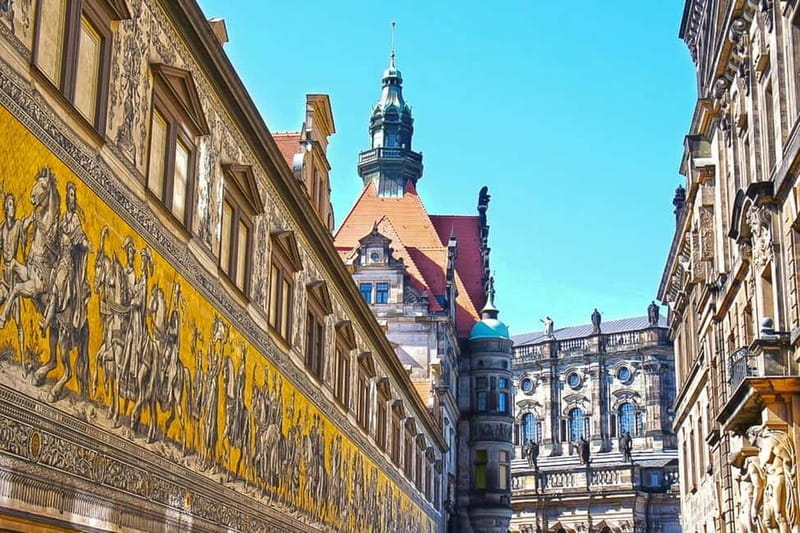
Next comes the Fürstenzug, a major piece of Saxon history displayed along the exterior wall of the former royal complex. The long procession of rulers gives the tour a visual way to explain Saxony’s dynasties and the importance of the court.
This stop works well in a guided format because the artwork can look like a long decorative wall if you do not know what to notice. Your guide can help place the figures within Saxon history and connect the procession to the castle, royal ceremonies, and the wider story of Dresden.
I like this part of the walk because it shows how history appears in public space. You are not entering a museum or standing behind a display case. You are looking at a historic artwork as part of the street, with the castle complex close by.
The route then continues to the stable yard of Dresden Castle. This courtyard gives you a closer look at the royal building’s scale and design. It also helps you understand that the castle was not a single isolated palace, but a working complex tied to ceremonies, horses, service areas, and court life.
Same city, a completely different kind of day:
- Dresden: Semperoper Tickets and Guided Tour
★ 4.7 · 12,102 reviews - Dresden: The Original Night Watchman Tour in Lantern Light
★ 4.6 · 6,653 reviews - Dresden: Semperoper and Old Town Tour
★ 4.8 · 5,735 reviews - Dresden: River Sightseeing Boat Cruise
★ 4.3 · 5,323 reviews
Dresden Castle and the Taschenbergpalais
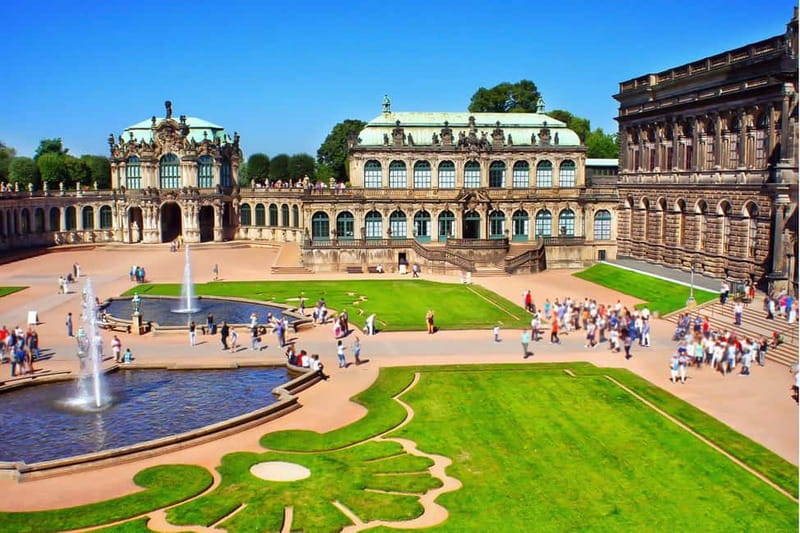
The tour includes a short guided tour at Dresden Castle. This is not a full museum visit, and the distinction matters. Dresden Castle contains major collections and historic rooms, but those museum entries are not part of the $15 walking experience.
What you receive is an introduction to the building and its place in the old town. The castle is one of the best spots for understanding how Dresden’s political power was concentrated around this small central quarter. The guide can point out the relationship between the castle, the stable yard, the Fürstenzug, and nearby court buildings.
You also get a glance at the Taschenbergpalais. It adds another layer to the royal setting and helps fill in the space between the castle and the city’s other landmarks. Because the tour keeps moving, this is a look rather than an extended architectural study.
If you plan to return to the castle museums, this short visit can help you choose how to spend your extra time. If you only have one day in Dresden, the tour gives you context without requiring a separate museum commitment.
The Zwinger, Dresden’s late Baroque showpiece
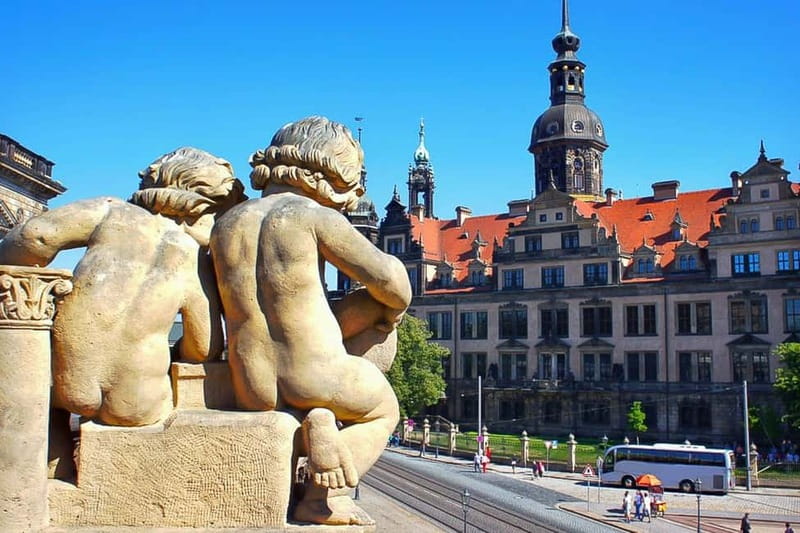
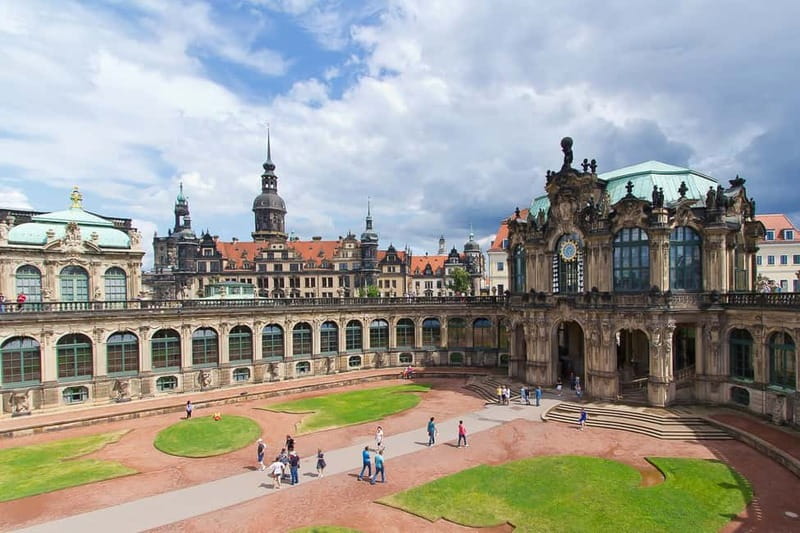
No historical walk through central Dresden would feel complete without the Zwinger. The tour includes guided time at this late Baroque masterpiece, which is one of the city’s most theatrical architectural spaces.
The Zwinger is best understood as a place designed for court display and celebration. Its grand forms, formal spaces, and decorative details show how Baroque rulers used architecture to impress. Your guide’s commentary can turn the building from a collection of ornate walls into evidence of how Augustus the Strong wanted his court to be seen.
Admission to the Zwinger is not included. The guided portion gives you a look at the complex, but you should not assume that it includes access to every museum or interior area. If you want the art collections inside, plan and pay for those separately.
That arrangement is fair for a low-cost walking tour, but you need to know what you are buying. The $15 fee covers the guide and the walking experience, not a museum day. I would book this tour first if you want orientation, then decide if the Zwinger deserves a longer return visit.
Theater Square and Dresden’s grand finale
The route ends at Theater Square, where the cathedral and Semper Opera House create one of Dresden’s most impressive urban scenes. This is an effective ending because the square brings together religion, royal ceremony, music, and architecture in one view.
The cathedral provides another reminder of Dresden’s courtly past, while the Semper Opera House represents the city’s continuing connection with music and performance. The tour does not include admission to the opera house, so you will see the exterior and learn about its place in the square rather than enter for a performance or interior tour.
The end point is back at the original meeting point. That makes planning simple. You are not left across town, and you can continue independently from the same central area.
For me, Theater Square is also where the tour’s structure becomes clear. You start with the castle, pass through royal and religious landmarks, and finish among Dresden’s cultural institutions. In two hours, you get a compact picture of why the center is so architecturally important.
What the German-language format means
This tour is conducted in German, with a live German-speaking guide. That is the single most important booking consideration.
If you understand conversational German well enough to follow a walking explanation, the format should suit you. The tour depends on spoken background about Dresden, Saxony, and Augustus the Strong, so basic survival German will probably not be enough to get the full value.
There is no alternate language listed. You should not book expecting English commentary, written translation, or a multilingual presentation. If language is a concern, use the route as a visual introduction only if you are comfortable accepting that you may miss much of the explanation.
The praise connected with this experience centers on the quality of the narration and the amount of background included. That tells me the tour’s strongest feature is not simply the number of sights. It is the way the guide connects them with history and adds amusing details along the way.
Is two hours enough for Dresden?
Two hours is enough to see the central highlights, but not enough to explore them fully. That is not a flaw, as long as you choose the tour for the right reason.
You will cover the castle, Frauenkirche, Fürstenzug, stable yard, Taschenbergpalais, Zwinger, cathedral, and Semper Opera House in one route. The advantage is efficiency. You can learn the basic layout early in your visit and return later to the places that interest you most.
The tradeoff is pace. You should expect short stops rather than long periods inside each building. The castle segment is short, the Zwinger portion is guided but does not include all admissions, and the Frauenkirche interior depends on opening hours.
I recommend taking notes about the places you want to revisit. The tour gives you enough context to make better choices afterward, especially if you are deciding between a castle museum, a Zwinger collection, or more time around the old town.
Is the $15 price good value?

At $15 per person, this is an inexpensive way to get a live introduction to Dresden’s historic core. The value comes from the number of major sights covered and from the guide’s historical explanation.
You are paying for a two-hour walking tour, a German-speaking guide, a short guided castle visit, guided time at the Zwinger, and a possible Frauenkirche interior visit. You are not paying for museum admission, Zwinger entry, or access to the Semper Opera House.
That separation keeps the base price low, which suits visitors who want to choose their own paid attractions later. It is less suitable if you want one ticket covering every interior. In that case, your total Dresden sightseeing budget will be higher.
Free cancellation up to 24 hours before the start gives you some flexibility, and you can reserve now and pay later. Those terms are helpful when your schedule is still changing, but the more important value question remains language. A cheap tour you cannot follow is not a bargain.
Who should book this Dresden walk?
I would recommend it to a first-time visitor who wants a quick, organized introduction to the old town. It also suits anyone interested in Baroque architecture, Saxon rulers, royal courts, and the rebuilding of Dresden.
The tour works especially well at the beginning of a stay. Once you have seen the main landmarks with a guide, you can spend later hours inside the castle museums, visiting the Zwinger collections, or taking a closer look at the Frauenkirche.
It is also a good fit for visitors who prefer a focused city walk to a long tour packed with transport. The route stays in the historic center, and the start and finish at Dresden Castle make it easy to continue sightseeing afterward.
I would hesitate if you need English commentary, want extensive time inside museums, or hope to enter the Semper Opera House. Those are not small details. They change the basic nature of the experience.
Practical details before you go
The tour lasts two hours, but starting times vary, so check availability for the date you want. Wear comfortable shoes because the experience is entirely on foot and includes several stops across the historic center.
The meeting point is under the sign in front of Dresden Castle, at Schlossstraße and Taschenberg. The activity ends at the same meeting point. Pets are not allowed, and dogs cannot enter the churches.
Because the Frauenkirche visit depends on opening hours, you may want to keep another opportunity available if seeing the interior is essential to your plans. The activity is wheelchair accessible, and the tour offers skip-the-ticket-line access where applicable, but paid museum and venue admissions remain separate.
Should you book the Elbfloren historical city tour?
Book it if you want an affordable, story-led introduction to Dresden’s Baroque center and you can follow German. The route is well chosen, the historical focus gives the landmarks meaning, and the price is modest for two hours of live guiding.
I especially like the combination of the Frauenkirche interior when open, the Fürstenzug, Dresden Castle, and the Zwinger. You see the city’s main royal and cultural symbols without spending the day in museums.
Skip it if you need English, want detailed interior visits, or prefer to explore at your own pace. For German-speaking visitors, though, this is a practical first look at Dresden, with enough history to help you plan the rest of your stay.
FAQ
How long does the historical Dresden tour last?
The tour lasts two hours. Starting times vary, so check availability for the date you plan to visit.
What language is the tour conducted in?
The tour is conducted in German with a live German-speaking guide. No other tour language is listed.
Where does the tour start and finish?
It starts in front of Dresden Castle at the corner of Schlossstraße and Taschenberg, under the sign. The tour finishes back at the same meeting point.
Is entry to the Frauenkirche included?
A visit to the interior of the Frauenkirche is included when opening hours allow it. The visit is not guaranteed at every tour time, and dogs are not allowed inside the church.
Are museum and attraction tickets included?
Museum visits are not included. Admission to the Zwinger and Semper Opera House is also not included, although the tour provides guided time at the Zwinger and a view of the opera house.
Is the tour wheelchair accessible?
Yes, the activity is listed as wheelchair accessible. Pets are not allowed on the tour.
Just added around Dresden
- Test Drive Electric Vehicles from the VW brand (ID. model)★ 4.8 · 190 reviews
- SRF CoBi | City Tour by ConferenceBike★ 4.7 · 38 reviews
- Dresden: Scavenger Hunt to Elbe River & Castles★ 4.7 · 15 reviews
- Dresden: Bike Rental – City Bike with Option Children Seat★ 4.5 · 13 reviews
- Moritzburg: Scavenger Hunt Self-Guided Walking Tour★ 4.8 · 12 reviews
- Historical tour of the old town including a Saxon dinner★ 4.7 · 23 reviews
- Climb the mountains together with goats★ 4.8 · 8 reviews
- From Prague: Day trip to Dresden★ 4.3 · 4 reviews
Historical Tours, compared.
City History Canal Sightseeing Tour on a Motorboat
Read our review →


Guided Old Town Highlights and History Walking Tour
Read our review →Browse the lists this tour appears in