
Reviewed · BERLIN TOURS
Karl-Marx-Allee Tour: Life and Architecture in East Berlin
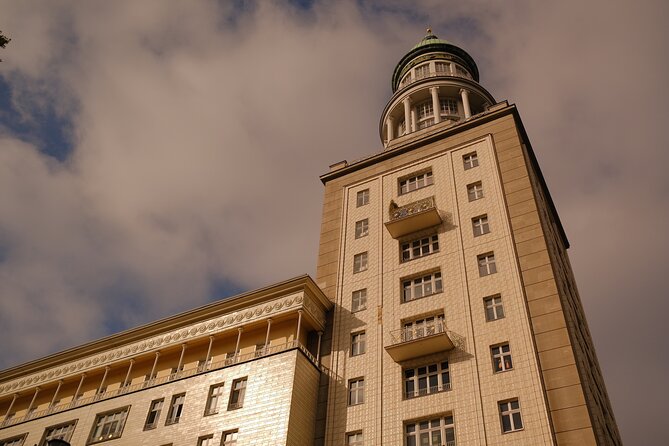
Karl-Marx-Allee was built to impress. Its vast width, twin towers, polished facades, and formal symmetry were meant to show the world that East Germany had a future. This two-hour walk explains how that message was built, used, questioned, and finally left behind.
I like the route for two clear reasons: it connects architecture with ordinary life, and it covers a lot in a short time. Guide Martina is especially strong at turning dry political history into stories you can follow. The small group, capped at 15 people, also gives the walk a more personal feel.
The main drawback is the subject itself. This is not a stroll through postcard Berlin. It is a serious look at dictatorship, propaganda, ruined cities, and failed hopes. You will spend about two hours outdoors, so comfortable shoes and decent weather matter.
In This Review
- Key points to know before you go
- Why Karl-Marx-Allee tells East Berlin’s story so well
- Frankfurter Tor sets the political stage
- Laubenganghäuser reveals a different postwar idea
- Hochhaus an der Weberwiese was a prototype and a sales pitch
- The 17 June 1953 memorial changes the story
- Café Sibylle connects coffee, culture, and Stalin
- The Marx bust brings ideology down to daily life
- Strausberger Platz completes the architectural comparison
- What the $30.01 price gets you
- Practical details that affect the experience
- Who will get the most from this walk
- Should you book the Karl-Marx-Allee Tour?
- FAQ
- How long is the Karl-Marx-Allee Tour?
- Where does the tour begin?
- Where does the tour end?
- What language is the tour offered in?
- How large is the group?
- Are admission tickets included?
- Can I cancel for a full refund?
Key points to know before you go
- Frankfurter Tor gives you the grand opening: The twin towers and broad boulevard show how East Germany wanted its capital to look.
- The architecture changes as the walk unfolds: You see Hans Scharoun’s postwar modernism beside the more formal socialist style.
- The 1953 workers’ uprising adds human weight: The route explains how construction workers turned against the government they were helping to build.
- Café Sibylle links daily life to Soviet power: A café, a Stalin statue, and East Berlin social life come together in one stop.
- Martina brings personal depth: Her storytelling, humor, original visual material, and experience of life under communism make the past easier to grasp.
- The tour ends near Alexanderplatz: Strausberger Platz is about a 10-minute walk from Alexanderplatz, making the route easy to fit into a day of sightseeing.
Why Karl-Marx-Allee tells East Berlin’s story so well
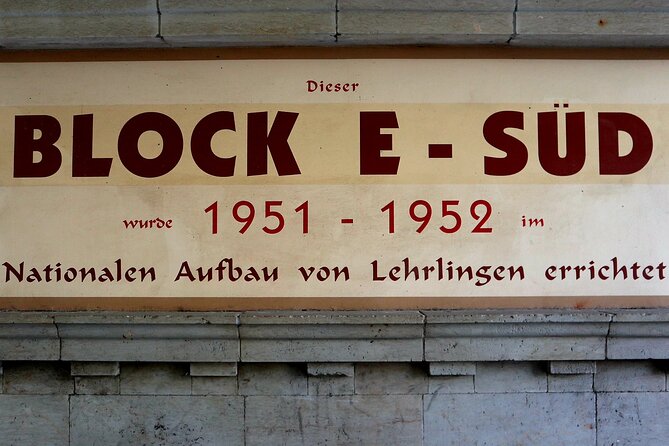
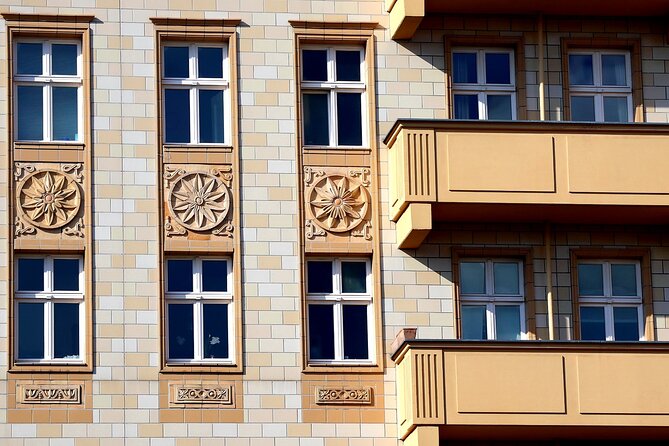
Karl-Marx-Allee is more than a line of large apartment buildings. It is a political project in stone, tile, plaster, and ceremony. The boulevard was first known as Stalinallee, and its design changed as East Germany tried to define itself as a modern socialist state.
That makes this route useful for anyone who wants more than the standard Berlin Wall story. You learn how the government used buildings to promote its ideals, but you also see where those ideals failed. The tour keeps returning to a helpful question: what did these grand plans mean for the people who lived and worked here?
I find that approach more useful than simply labeling buildings as socialist or modernist. You begin to notice scale, decoration, planning, and symbolism. You also learn to ask who paid for a project, who benefited from it, and who had to accept the government’s version of progress.
The walk is conducted in English and is limited to 15 people. That is small enough for questions without making the experience feel like a private tour. The route takes about two hours, and every stop is free to enter because the experience happens on public streets and outside buildings.
Other Berlin days worth putting on the list:
- Berlin: Reichstag, Dome and Government District Guided Tour
★ 4.7 · 18,288 reviews - Berlin: 1-Hour City Tour by Boat with Guaranteed Seating
★ 4.3 · 16,993 reviews - Berlin: Boat Tour Along the River Spree
★ 4.4 · 11,252 reviews
Frankfurter Tor sets the political stage
Start at U Frankfurter Tor, where the two domed towers frame the eastern end of the boulevard. The symmetry is hard to miss. Even before the guide begins, you can see that this was not planned as an ordinary residential street.
Here you learn how the first socialist street in Germany was planned in the early 1950s. The building program drew thousands of volunteers into the national rebuilding effort. That detail matters because the boulevard was presented not just as a government project, but as a shared task for a new society.
The opening stop lasts about 20 minutes. It is a good place to take in the full scale of the project before getting into the smaller stories. Look up at the towers, then look along the avenue. The design depends on long views and repeated forms, so try not to judge it from one doorway or facade.
The grand style also reveals a contradiction. The government wanted to create a worker’s city, but it used a monumental style more often linked with imperial power. Your guide explains how that choice worked as public theater. The buildings were homes, but they were also a message.
Laubenganghäuser reveals a different postwar idea
The next stop shifts the mood. At the Laubenganghäuser, you see modernist buildings by Hans Scharoun, created in the immediate postwar years. Their design came from ideas about a new, humane city rising from the ruins of Berlin.
Scharoun’s vision was more open and experimental than the formal boulevard that followed. The buildings reflect a period when architects were asking how people might live differently after the destruction of the Second World War. Those ideas did not fit comfortably with the East German regime that soon took control of the city’s rebuilding program.
This 15-minute stop helps prevent a common misunderstanding. East Berlin architecture was not created in one single style from the beginning. There was a brief period of competing ideas, and some of the most interesting designs came from plans the new government later rejected.
I like this part because it gives the route a useful pause. After the ceremonial scale of Frankfurter Tor, you see a more utopian and modern approach. You also learn that architectural choices were political choices. A building could be admired for its design and still be pushed aside because it did not express the right ideology.
Hochhaus an der Weberwiese was a prototype and a sales pitch
At the Hochhaus an der Weberwiese, the tour focuses on a building that served as a prototype for later socialist housing along Karl-Marx-Allee. Its first tenants received a level of comfort that was unusual for the time, which helped the government present the project as proof of its success.
That promise of modern living was central to the propaganda. The building was not simply housing. It was an example meant to persuade people that socialism could deliver a better daily life.
The project also attracted architects from the West. That detail adds an international angle to the walk. Berlin was divided, but its architectural debates crossed political borders. The building became a place where Western architects could observe what East Germany was trying to create.
This stop takes about 20 minutes. Listen for the gap between the model apartment and the experience of the wider population. A showcase building can offer real improvements and still serve a political purpose. The tour does not force you to choose one interpretation. It lets you see both at once.
Same city, a completely different kind of day:
- Discover Berlin Half-Day Walking Tour
★ 5.0 · 9,624 reviews - Berlin: Hop-on Hop-off Bus Tour with Live Commentary
★ 4.3 · 8,579 reviews - Berlin: Government District around the Reichstag Guided Tour
★ 4.7 · 8,447 reviews - Berlin: Reichstag, Plenary Chamber, Cupola & Government Tour
★ 4.6 · 8,422 reviews
The 17 June 1953 memorial changes the story
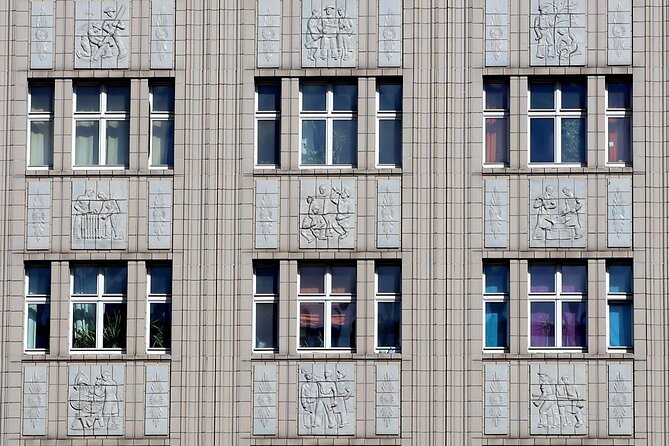
At the memorial to the 17 June 1953 workers’ uprising, the boulevard’s story turns sharply. The same workers celebrated for helping build the new socialist capital became the force behind a mass protest that nearly toppled the East German government.
This is one of the most important stops because it puts people back into the picture. Until this point, you have mainly seen plans, buildings, and official ideals. Here, you confront the anger and disappointment that existed behind the carefully managed public image.
The uprising began with workers’ demands and grew into a much wider challenge to the government. The monument itself is controversial, and your guide explains why. Memorials are never just pieces of stone. Their shape, location, and wording influence how a society remembers conflict.
The stop lasts around 20 minutes. Give yourself time to consider the setting. This is not an isolated historical event placed in a museum. It happened along the very avenue that was meant to prove the system worked.
Café Sibylle connects coffee, culture, and Stalin
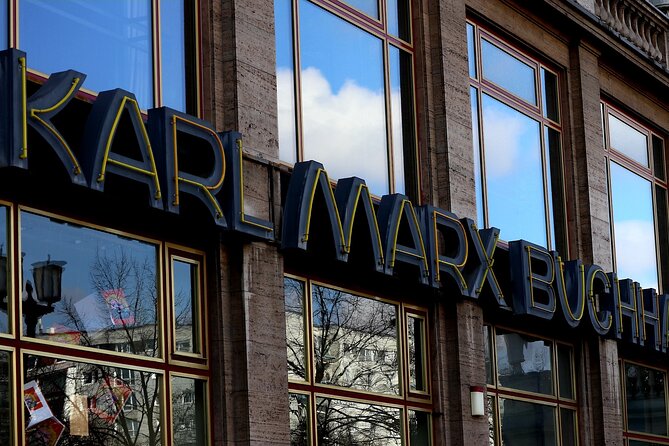
Café Sibylle offers a more intimate look at East Berlin life. Once one of the most exclusive cafés on Karl-Marx-Allee, it was part of the social world created around the monumental avenue.
The café is also linked to the statue of Joseph Stalin that once stood nearby. That statue remained until 1961, when the political line changed and Soviet leader worship became harder for East Germany to defend. The connection between a café and a removed statue may seem small, but it shows how politics reached into everyday surroundings.
This 15-minute stop is useful because it moves beyond government buildings and public ceremonies. You learn how people used the boulevard, where they met, and how changing political winds altered the meaning of familiar places.
Do not expect a long café break built into the route. The stop is about the story and the setting. If you want to sit down afterward, you can make your own plans once the walk ends.
The Marx bust brings ideology down to daily life
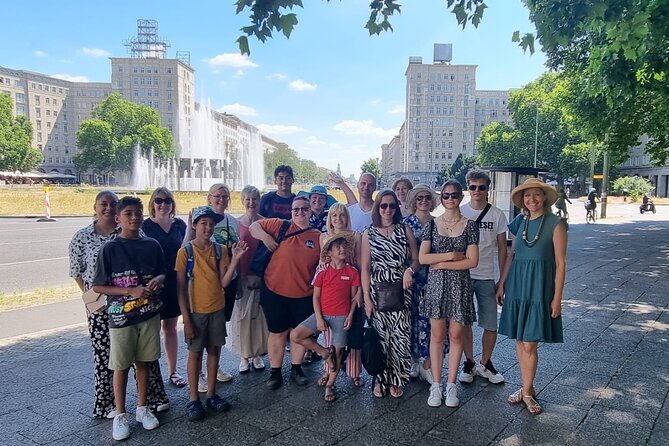
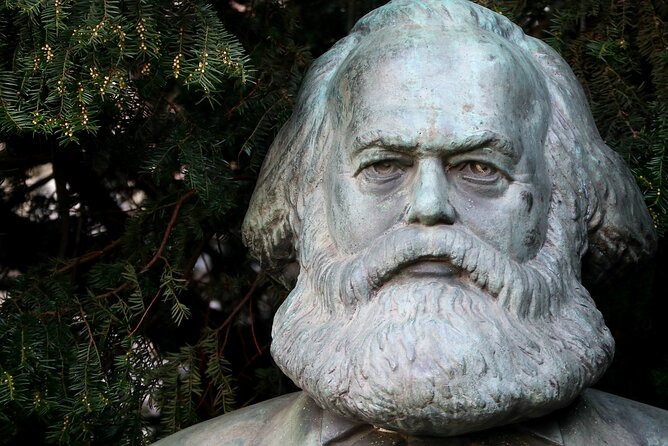
The Karl Marx bust is a natural place to discuss how socialist ideas shaped ordinary East Berlin. Marx was not just a name on a monument. His writing supplied much of the ideological language used to explain work, class, government, and the future.
Your guide connects the bust to daily life rather than leaving Marx as an abstract figure. That is important. You begin to see how political theory appeared in schools, workplaces, public art, housing policy, and official language.
The stop lasts about 15 minutes. It is brief, but it helps tie the architecture to the system behind it. The avenue was designed to suggest that history was moving toward a planned socialist future. The buildings made that idea visible, while the people living there had to deal with its limits.
Guides such as Martina are at their best here. Her tours are described as well researched, funny, and carefully organized, with demonstration material and original items used to make the period more concrete. That sort of preparation can make a familiar monument feel newly relevant.
Strausberger Platz completes the architectural comparison
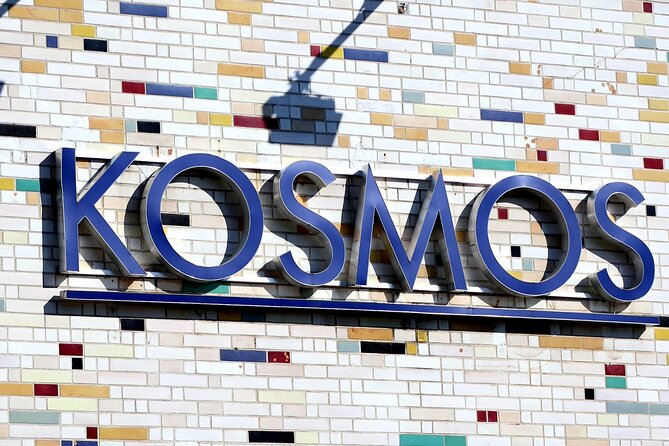
The final stop is Strausberger Platz, another major work associated with Hermann Henselmann. Its formal design gives you one more chance to compare the architecture along the route.
By now, the repeated towers and monumental apartment blocks should look less like a single grand statement. You can see changes in purpose and tone. Some buildings were prototypes, some were symbols, and some were practical homes wrapped in political imagery.
The guide also brings the story into the period after the Berlin Wall fell. Karl-Marx-Allee did not lose its meaning in 1989. The avenue continued to change as Berlin changed around it. Questions about preservation, memory, ownership, and everyday use remain part of its present-day story.
The route ends at the eastern side of the Strausberger Platz roundabout. From there, Alexanderplatz is about a 10-minute walk away. That makes the ending convenient if you are continuing into central Berlin, though you should remember that the walk finishes at a different place from where it began.
What the $30.01 price gets you
At $30.01 per person, this is not the cheapest way to walk down Karl-Marx-Allee. You can see the boulevard without paying for admission because the stops are outdoors and free.
The value comes from interpretation. Without a guide, you will notice the enormous scale and formal architecture, but you may miss why the style changed, how the workers’ uprising relates to the avenue, and what a café had to do with Soviet politics. The tour turns a long street into a connected story.
I think the price is fair for a small-group, two-hour experience, especially if East German history or architecture is high on your list. It is less useful if you only want a quick photo stop or prefer wandering without a set pace.
The fact that it is often booked about 18 days ahead suggests that you should not leave it until the last minute if your Berlin schedule is tight. It also has free cancellation up to 24 hours before the start time. Changes made inside that period are not accepted, and poor weather can lead to a new date or a full refund.
Practical details that affect the experience
Meet at U Frankfurter Tor, at the eastern end of the route. The tour finishes at Strausberger Platz, not back at the starting point, so plan your next activity from there.
You will be outdoors for roughly two hours. The experience requires good weather, and comfortable shoes are a sensible choice. There is no admission fee at the stops, but you should be ready for a steady walking tour rather than a series of indoor visits.
The tour is offered in English. Service animals are allowed, and the meeting area is near public transportation. Most people can take part, but anyone who finds a two-hour outdoor walk difficult should consider that before booking.
The group has a maximum of 15 people. That limit matters here because several stops involve explanation rather than spectacle. A smaller group makes it easier to hear the guide and ask about details that catch your attention.
Who will get the most from this walk
I would choose this tour if you have already seen the Brandenburg Gate and the Berlin Wall memorials and want a different side of the city. It suits people interested in architecture, urban planning, postwar Europe, communism, or the way political systems shape daily life.
It also works well for a short Berlin visit. Two hours is enough to give Karl-Marx-Allee meaning without taking up an entire morning. The route is focused, and the ending near Alexanderplatz lets you continue sightseeing.
Families with older children and teenagers may also find it worthwhile. The story includes grand buildings, social conflict, propaganda, and real human choices. Martina’s humor and clear storytelling can help keep a difficult subject accessible, though the material is more serious than a light city stroll.
I would skip it if you want interiors, museums, or a relaxed café walk. This is an outdoor history lesson with architecture as its evidence. You need to be willing to listen, look closely, and think about uncomfortable contradictions.
Should you book the Karl-Marx-Allee Tour?
Book it if you want to understand why East Berlin looks the way it does. The strongest parts are the clear route from Frankfurter Tor to Strausberger Platz, the contrast between Scharoun’s modernism and Henselmann’s socialist monumentality, and the connection between buildings and political events.
Guide Martina is a major reason to choose this experience when she is leading your departure. Her preparation, humor, personal connection to parts of communist-era life, and use of visual material give the walk unusual substance. Other guides may lead the tour, so check the departure details if a particular guide matters to you.
At $30.01, you are paying for context rather than entrance tickets. For a small group and two focused hours, that is a sound bargain for history and architecture fans. If you prefer to explore silently and set your own route, save the money and walk the avenue independently. If you want the buildings to explain themselves, book the guide.
FAQ
How long is the Karl-Marx-Allee Tour?
The walking tour lasts approximately two hours.
Where does the tour begin?
The meeting point is U Frankfurter Tor, Berlin, Germany.
Where does the tour end?
The tour ends at the eastern side of the Strausberger Platz roundabout. It is about a 10-minute walk from Alexanderplatz.
What language is the tour offered in?
The tour is offered in English.
How large is the group?
The activity has a maximum of 15 participants.
Are admission tickets included?
The listed stops have no admission charge. The experience includes an expert local guide.
Can I cancel for a full refund?
Yes. You can cancel at least 24 hours before the experience start time for a full refund. Cancellations or changes made less than 24 hours before the start time are not accepted for a refund. If poor weather causes the tour to be canceled, you will be offered another date or a full refund.
Just added around Berlin
- Love and War in Berlin: Self-Guided Story Puzzle Walk★ 5.0 · 7 reviews
- Rickshaw Tours Berlin – Groups of up to 16 people with several rickshaws★ 4.0 · 97 reviews
- Walking on the Wall: 3-Hour Tour in Berlin★ 4.5 · 34 reviews
- eSIM for Germany and 34 European Countries★ 4.5 · 16 reviews
- Warnemuende Shore Excursion: Berlin Private Sightseeing Tour from Rostock★ 5.0 · 4 reviews
- Your ticket to The Wall Museum Berlin★ 3.0 · 60 reviews
- Warnemuende Shore Excursion: Private Berlin Tour★ 4.5 · 27 reviews
- Berlin’s Gay, Lesbian, and Queer Scene Small-Group Walking Tour★ 4.5 · 66 reviews
Berlin Tours, compared.

Reichstag, Dome and Government District Guided Tour
Read our review →
1-Hour City Tour by Boat with Guaranteed Seating
Read our review →


Reichstag, Plenary Chamber, Cupola & Government Tour
Read our review →

