Reviewed · WALKING TOURS
Berlin: Discover Berlin Walking Tour
Berlin’s story is unusually easy to read from its streets. On this walking tour, you move from Prussian grandeur to Nazi terror, Cold War division, and today’s reunited capital, often within a few blocks. The most striking stop is the ground above Hitler’s bunker, where the end of the Nazi regime took place.
I like the way the tour links famous sights into one clear story, rather than treating them as isolated photo stops. I also like the guides’ mix of history, humor, and personal experience. Gregor, for example, has spoken about growing up in Berlin as the city changed, while guides such as Anja, a historian and archaeologist, bring extra depth to the city’s origins.
The main drawback is simple: you spend several hours outside, rain or shine. Berlin can be bitterly cold, wet, or windy, and the tour covers a lot of ground. Wear proper shoes and weather-ready clothing, and choose the longer option only if you are happy with a substantial walk.
In This Review
- Key points at a glance
- Why this Berlin walk works so well
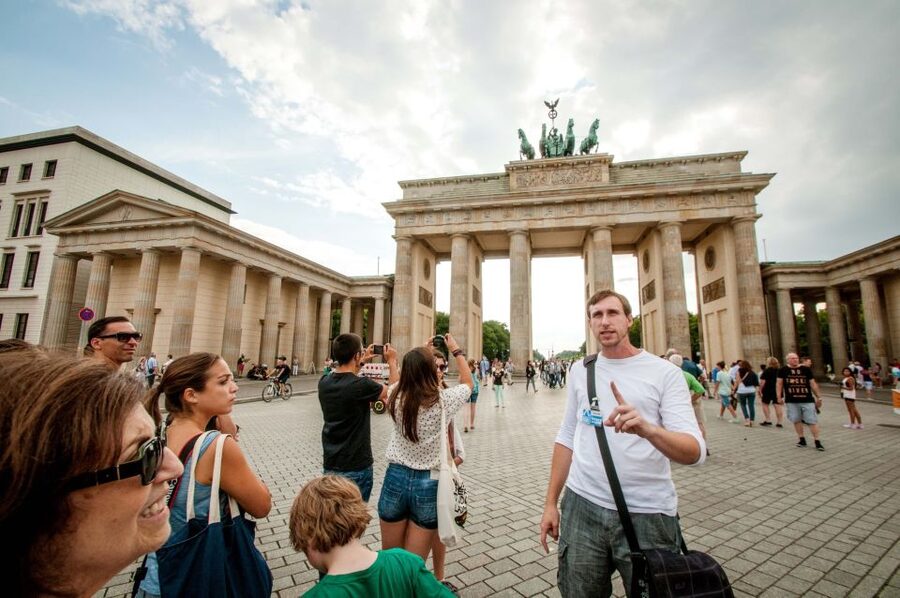
- Brandenburg Gate and the changing face of Berlin
- The Holocaust Memorial and the weight of Bebelplatz
- Museum Island, Berlin Cathedral, and Palace Square
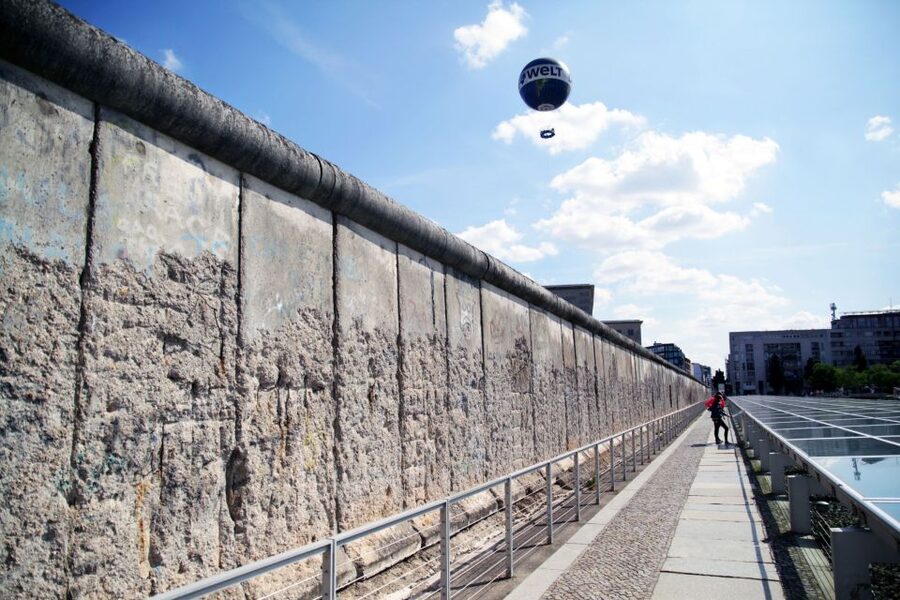
- Checkpoint Charlie and the Berlin Wall
- The bunker site and Berlin’s final days
- People who give Berlin a human voice
- Pace, walking effort, and weather
- What $23 buys you
- Who should take this tour
- How to get more from the experience
- Should you book the Discover Berlin Walking Tour?
- FAQ
- How long does the Discover Berlin Walking Tour last?
- How much does the tour cost?
- Which sights are included?
- Does the tour visit the inside of museums or buildings?
- What languages are available?
- Is a private tour option available?
- What should I bring?
- Can I cancel the booking?
Key points at a glance
- Hitler’s bunker site: Stand above the place where Hitler died in April 1945, with the grim setting explained in its historical context.
- Berlin’s headline sights: See Brandenburg Gate, Checkpoint Charlie, Berlin Cathedral, Palace Square, Museum Island, and the Berlin Wall.
- A history-led route: The story runs from medieval Berlin and Prussian rule through the Imperial, Nazi, Cold War, and present-day eras.
- Strong guide-led storytelling: Guides including Gregor, Georgia, Tobi, Joel, and Anja have been praised for warmth, humor, clear explanations, and vivid stories.
- Two time choices: Select a shorter or longer version, lasting about 2 to 4 hours, to match your schedule and walking stamina.
- Good first-day orientation: At $23 per person, this is a practical way to see central Berlin while learning where to return later.
Why this Berlin walk works so well
Berlin is not a city that explains itself at first glance. A grand square may have been a royal parade ground, a Nazi rally setting, and a Cold War border zone at different points in time. A vacant patch of pavement may mark one of the most important sites in twentieth-century Europe.
That is why a guide matters here. You can find the Brandenburg Gate or Checkpoint Charlie on your own, but the meaning of each place is harder to grasp without a timeline. This tour gives you that timeline as you walk.
The route brings together Prussian, Imperial, Nazi, Cold War, and twenty-first-century Berlin. It also reaches back to the city’s medieval beginnings, including the early settlement that grew from Berlin’s swampy surroundings. You get a sense of how the capital formed, expanded, was damaged, divided, and rebuilt.
I especially value the effort to connect past events with modern Germany. The tour is not only a list of wars, rulers, walls, and memorials. It helps you understand why Berlin looks as it does now, and why Germany has taken certain steps in the decades since the Second World War.
A few more Berlin trips to weigh up
- Discover Berlin Half-Day Walking Tour
★ 5.0 · 9,624 reviews - Berlin: Third Reich and Cold War 2 Hour Walking Tour
★ 4.9 · 6,830 reviews - Berlin’s Best: 2 Hour Walking Tour Third Reich and the Cold War
★ 5.0 · 5,486 reviews
Brandenburg Gate and the changing face of Berlin
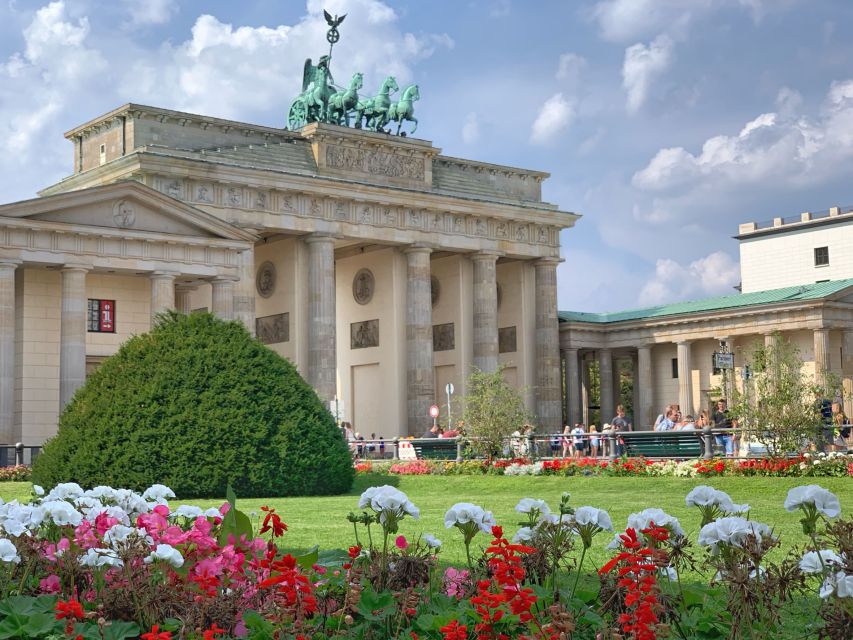
Brandenburg Gate is the natural starting point for Berlin’s big story. Its neoclassical columns and Quadriga sculpture make it one of the city’s most recognizable sights, but its meaning has shifted repeatedly.
The gate once represented royal power. During the Cold War, it sat beside the Berlin Wall in a restricted zone and became a symbol of division. After the Wall fell in 1989, it became a powerful image of reunification.
A guide can explain those changes while you stand in the same open space. That is more useful than simply taking a photograph and moving on. You begin to see Berlin as a city where political symbols are continually reassigned.
The area can feel busy, particularly around the capital’s best-known monuments. Still, the stop earns its place because it gives you a visual key for the rest of the walk: Berlin’s buildings often carry several layers of meaning at once.
The Holocaust Memorial and the weight of Bebelplatz
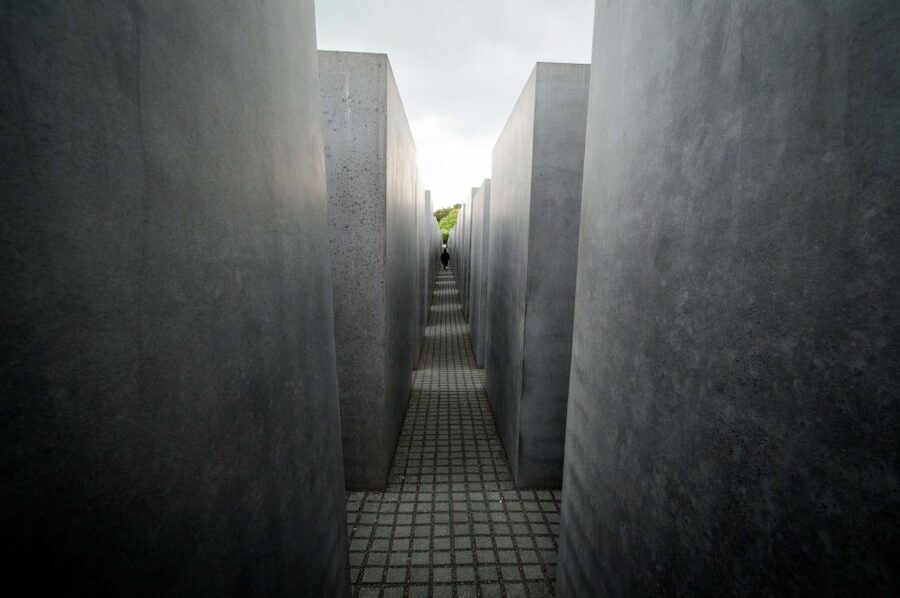
The tour also addresses the Memorial to the Murdered Jews of Europe, the field of concrete slabs near Brandenburg Gate. Its design has long prompted debate, and the guide discusses those controversies rather than presenting the memorial as a simple object with one agreed meaning.
That discussion matters. You can walk among the blocks and have a strong physical reaction, but the design questions help you think about how a country chooses to remember state-sponsored murder in the middle of its capital.
Nearby Bebelplatz marks the scene of the Nazi book burning in 1933. The square is attractive and formal, which makes its history especially unsettling. Under the paving, a window reveals empty bookshelves, a quiet memorial to the books destroyed by the Nazis.
I find this contrast one of the tour’s strongest features. Berlin does not always put its difficult past in a dramatic setting. Sometimes the most disturbing story sits beside an elegant building or a normal city street. A good guide gives you time to take in that contrast.
Museum Island, Berlin Cathedral, and Palace Square
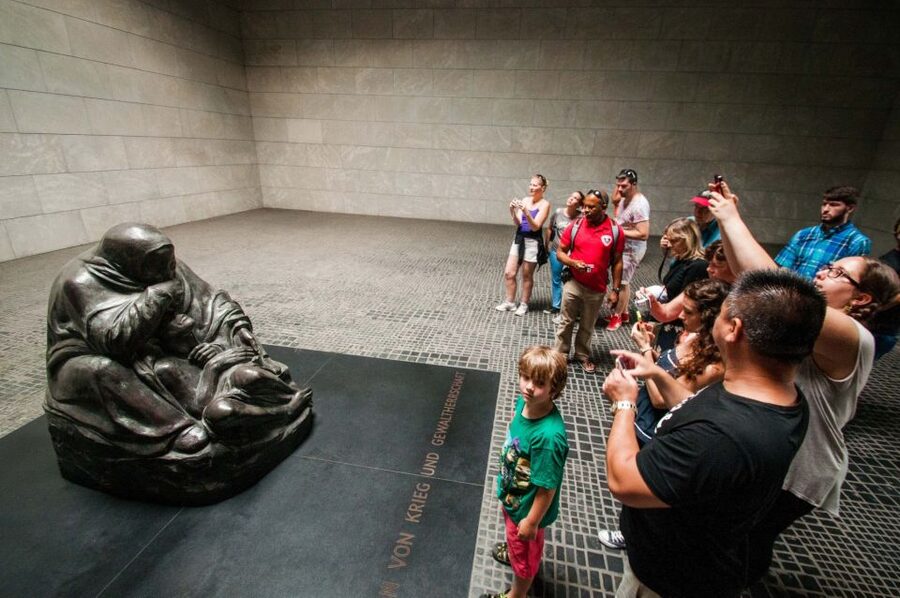
Museum Island gathers several of Berlin’s major cultural buildings beside the River Spree. The walk includes the area around Berlin Cathedral and Palace Square, where monumental architecture reflects the power and ambitions of Prussian and Imperial Berlin.
You should not expect to enter the museums or cathedral as part of this outdoor walking experience. The value here is the setting and the explanation. You learn how royal power shaped the center of Berlin, how later governments used the same urban spaces, and how the city has argued over what should be preserved or rebuilt.
Palace Square is particularly useful for understanding the city’s changing architectural choices. Berlin has repeatedly had to decide what to do with buildings linked to monarchy, war, dictatorship, and socialism. Your guide can turn what looks like a collection of grand facades into a discussion about identity and public memory.
This section also gives the tour some visual relief. The route is not only about grim twentieth-century events. You get architecture, river views, major civic buildings, and the long story of Berlin as a seat of power and culture.
Same city, a completely different kind of day:
- Berlin: Reichstag, Dome and Government District Guided Tour
★ 4.7 · 18,288 reviews - Berlin: 1-Hour City Tour by Boat with Guaranteed Seating
★ 4.3 · 16,993 reviews - Berlin: Boat Tour Along the River Spree
★ 4.4 · 11,252 reviews - Berlin: Hop-on Hop-off Bus Tour with Live Commentary
★ 4.3 · 8,579 reviews
Checkpoint Charlie and the Berlin Wall
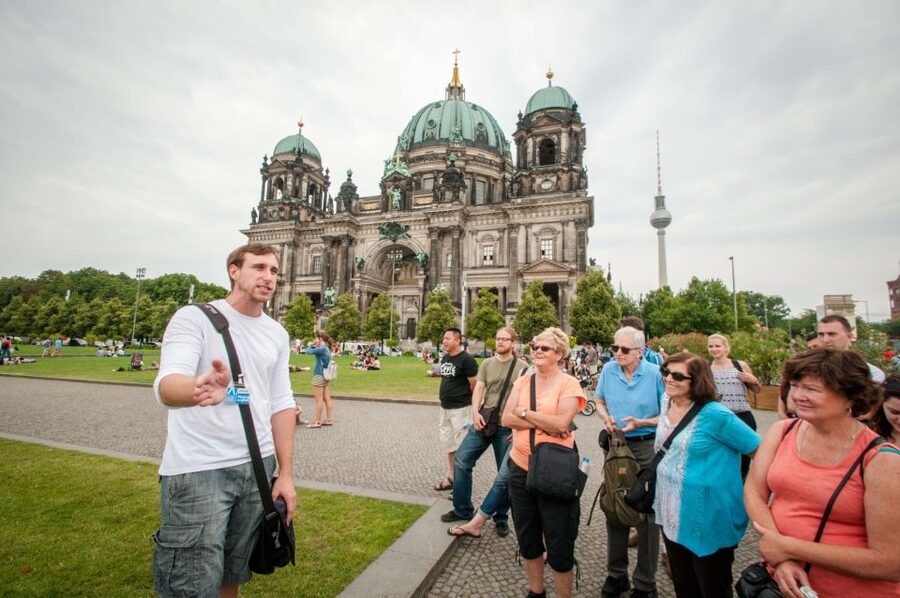
Checkpoint Charlie is one of the clearest reminders that Berlin was once a divided city. The former crossing point became famous for Cold War tension, escape attempts, and the daily reality of a border cutting through neighborhoods.
Today, the area is highly developed and geared toward sightseers. The famous guardhouse and surrounding displays can feel more theatrical than authentic. That is worth knowing before you go. The place is still important, but the present setting does not fully resemble the tense border crossing of the Cold War.
The guide supplies what the modern streets cannot. You hear about daring escapes across the Wall and the human cost of dividing families, workplaces, and communities. You also get context for the Wall’s fall in 1989, one of the moments that changed Berlin and Europe.
I like having Checkpoint Charlie included because it balances the grand monuments farther north. Brandenburg Gate shows political power from above; Checkpoint Charlie shows how that power affected ordinary movement through the city.
The bunker site and Berlin’s final days
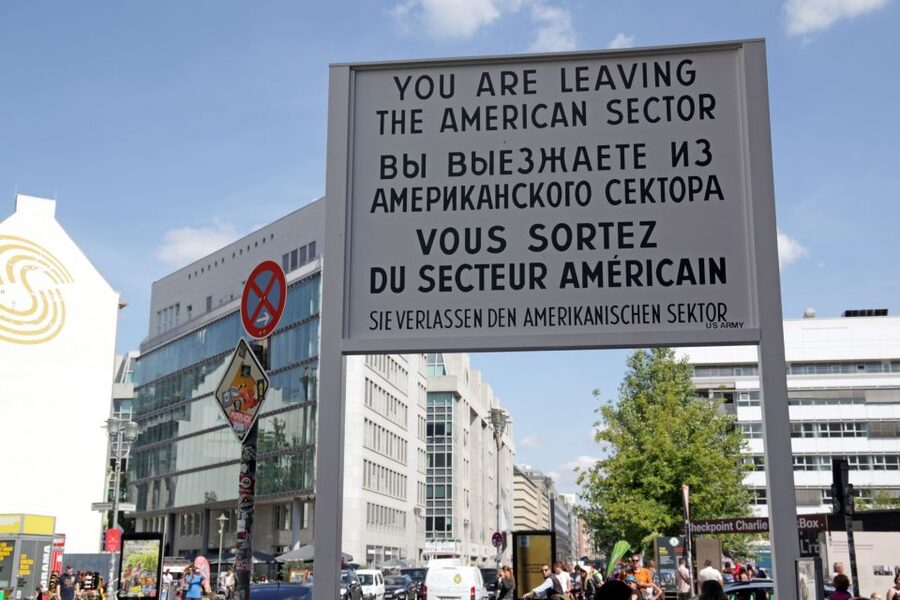
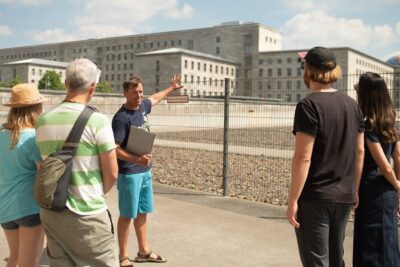
One of the tour’s most sobering stops is the site of Hitler’s bunker. You stand above the location where Hitler took his life in April 1945, near the end of the Second World War.
There is no grand ruin to explore. The bunker was destroyed and the area later built over, so the site can look surprisingly ordinary. That is precisely why a guide is useful. Without an explanation, you could pass by without realizing what happened beneath the ground.
A thoughtful guide handles this stop without turning it into a spectacle. The focus is on the collapse of the Nazi regime, the destruction around Berlin, and the moral consequences of the dictatorship. The location is historically powerful, but it is not a place for theatrical fascination.
This section suits visitors who want a serious understanding of Berlin. Families with older children and teenagers may also find it useful, provided they are ready for difficult material. The tour presents the subject as history, not entertainment.
People who give Berlin a human voice
The tour’s history is not limited to buildings and dates. Along the way, the guide introduces figures connected with Berlin, including Albert Einstein, Marlene Dietrich, and John F. Kennedy.
These personal stories help break up the heavier political material. Einstein links Berlin with science and intellectual life. Dietrich brings in film, performance, and the city’s cultural reach. JFK connects Berlin’s divided status with the international politics of the Cold War.
The guides themselves add another layer. Gregor has been praised for sharing family experiences of Berlin’s changes. Philipp has brought together the city’s past and current culture in a way that keeps the material manageable. Joel has been singled out for careful pacing, practical help, and stopping in sheltered places during freezing weather.
Other guides named by participants include Georgia, Tobi, Ben, Luisa, Glen, Walid, Stefan, Reuben, and Jonathan N. Names can change with scheduling, so you should not book on the assumption that one particular person will lead your tour. The useful point is the style of guiding: the experience depends heavily on a warm, prepared storyteller who welcomes questions.
Pace, walking effort, and weather
The shorter and longer choices are important. A 2-hour route suits you if you want a quick orientation on your first day, have limited time, or prefer not to spend half a day on foot. The 4-hour option gives the historical story more room and is better if Berlin’s politics and twentieth-century past are central to your plans.
The tour is designed to cover many major places, so expect steady walking between stops. Guides have been praised for keeping a good pace, making regular pauses, and allowing time for questions. That helps, but it does not turn the experience into a low-effort sightseeing ride.
There is no transport included. You are seeing central Berlin on foot, which is part of the point. The distance between sites lets you notice how memorials, government buildings, office blocks, and ordinary streets sit side by side.
The activity runs in all weather. In winter, bring a warm coat, gloves, and a hat. In wet weather, waterproof layers and comfortable footwear will make a major difference. Do not assume a mild forecast will remain pleasant after several hours outdoors.
What $23 buys you

At $23 per person, the tour offers good value if you want both an orientation and a serious introduction to Berlin’s history. You are paying for a live guide who can explain connections that a map or self-guided walk would leave out.
The value is strongest for a first visit. In a few hours, you see the city’s headline sights and learn which ones deserve a longer return visit. You can then plan museum time, memorial visits, or neighborhood walks with a much clearer sense of place.
The price does not include museum admission or an indoor visit to the cathedral, and the meeting point can differ depending on the option booked. Check those details when selecting your time. The main product is the guided outdoor route and the interpretation that comes with it.
A private group is available, which may suit families or friends who want a more personal pace. For a standard booking, the guide’s ability to manage questions and keep the group together matters more than luxury extras. The consistently positive response to guides such as Amanda, Giles, and Julia points to the importance of clear delivery and energy, especially with a larger group.
Who should take this tour
I would choose this walk if you are visiting Berlin for the first time and want the city’s major historical threads explained in one sitting. It is also a strong fit if you have only one day and need to use your time well.
History fans will appreciate the attention to Nazi Germany, the Holocaust memorial, the Wall, and Berlin’s political changes. You do not need prior knowledge, though. The storytelling is designed to make the sequence understandable rather than burying you in dates.
Families with teenagers can benefit from the walk, especially because the route includes famous places they may recognize from school or documentaries. The subject matter is serious, so parents should decide how much detail feels right for their children.
You may want something else if you dislike long outdoor walks, need frequent indoor breaks, or prefer to explore one museum in depth. This is a broad city introduction, not a specialist museum tour.
How to get more from the experience
I would take the tour near the beginning of your Berlin stay. Keep a note of places you want to revisit, particularly Museum Island, the Holocaust Memorial, Bebelplatz, and the Berlin Wall sites.
Ask questions. The guides are expected to handle them, and the strongest part of the experience is often the extra context that comes after the basic explanation. Guides such as Walid and Tobi have been praised for mixing humor with history, while Anja’s academic background adds another level of detail.
Do not plan a tight appointment immediately afterward. The shorter route may finish within two hours, but the longer option can take four, and city walks rarely end with the same precision as a train departure. Give yourself breathing room.
Finally, dress for the actual conditions, not the season in your head. The tour operates rain or shine, and Berlin’s open squares can feel much colder than a sheltered street.
Should you book the Discover Berlin Walking Tour?
Book it if you want a clear, human explanation of Berlin’s major sights for $23, especially early in your visit. The combination of Brandenburg Gate, Checkpoint Charlie, Museum Island, Bebelplatz, the Wall, and Hitler’s bunker site gives you a strong framework for understanding the capital.
Choose the shorter route if your schedule or stamina is limited. Choose the longer one if you want more time for context and questions. Just remember that the experience depends on walking outdoors, and your assigned guide may differ from the names highlighted here.
For a first-time visit, I consider it a smart use of a few hours. You will not see every corner of Berlin, but you will understand far more of the city when you do.
FAQ
How long does the Discover Berlin Walking Tour last?
You can choose an option lasting about 2 to 4 hours. Check the available starting times and the duration of the option you select.
How much does the tour cost?
The listed price is $23 per person.
Which sights are included?
The tour includes major central Berlin sights such as Brandenburg Gate, Checkpoint Charlie, Museum Island, Berlin Cathedral, Palace Square, Bebelplatz, the Berlin Wall, and the site of Hitler’s bunker.
Does the tour visit the inside of museums or buildings?
The supplied details describe an outdoor walking tour and do not state that museum or building admission is included.
What languages are available?
Live guiding is available in German and English.
Is a private tour option available?
Yes. A private group option is available, depending on the selection you make.
What should I bring?
Bring weather-appropriate clothing and comfortable footwear for walking. The tour operates rain or shine.
Can I cancel the booking?
You can cancel up to 24 hours in advance for a full refund. A reserve-now, pay-later option is also available.
Just added around Berlin
- Love and War in Berlin: Self-Guided Story Puzzle Walk★ 5.0 · 7 reviews
- Rickshaw Tours Berlin – Groups of up to 16 people with several rickshaws★ 4.0 · 97 reviews
- eSIM for Germany and 34 European Countries★ 4.5 · 16 reviews
- Walking on the Wall: 3-Hour Tour in Berlin★ 4.5 · 34 reviews
- Warnemuende Shore Excursion: Berlin Private Sightseeing Tour from Rostock★ 5.0 · 4 reviews
- Your ticket to The Wall Museum Berlin★ 3.0 · 60 reviews
- Warnemuende Shore Excursion: Private Berlin Tour★ 4.5 · 27 reviews
- Berlin’s Gay, Lesbian, and Queer Scene Small-Group Walking Tour★ 4.5 · 66 reviews
Walking Tours, compared.

Berlin’s Best: 2 Hour Walking Tour Third Reich and the Cold War
Read our review →
Third Reich Berlin: Hitler and WWII Walking Tour
Read our review →