
Reviewed · WALKING TOURS
Berlin’s Gay, Lesbian, and Queer Scene Small-Group Walking Tour
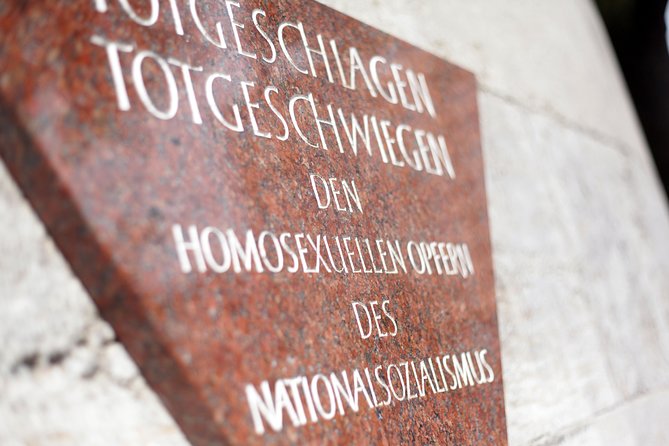
Berlin’s queer story is not tucked into one neighborhood. This tour follows it across Schöneberg, Kreuzberg, and Tiergarten, linking famous names such as Marlene Dietrich and Klaus Wowereit with the everyday places where LGBTQ+ life took shape. You get history, politics, nightlife, and reminders of the periods when simply being open could be dangerous.
I like the way the tour connects past and present, especially at Südblock, a queer-run bar and restaurant that still serves as a community meeting place. I also like the use of photos and an iPad, which guides such as Finn have used to show people and buildings as the group walks.
The main drawback is the meeting-point setup. Several tours may gather near Neue Promenade 3 at noon, and one guest ended up joining a street-art tour by mistake. Listen for the guide announcing the queer tour, and confirm the subject before you leave.
In This Review
- Key points to know before you book
- Berlin’s queer story begins in the city center
- Kreuzberg brings the story into present-day Berlin
- Südblock shows queer community in everyday form
- A famous club connects the 1990s to Berlin after dark
- Schöneberg and Christopher Isherwood’s Berlin
- What makes the history worth three and a half hours
- The guide can make or break the experience
- Transport, timing, and what to bring
- Understanding the Schwules Museum stop
- Who should book this Berlin queer history walk
- Should you book it?
- FAQ
- Where does the tour start?
- What time does the tour begin?
- Where does the tour end?
- How long does the experience last?
- Is the tour offered in English?
- How large is the group?
- Is public transportation included?
- Is admission to the Schwules Museum* included?
- Can I cancel for a full refund?
Key points to know before you book
- A three-and-a-half-hour route across several districts: This is a walking tour with public transport between some areas, not one compact neighborhood stroll.
- The story reaches from the 19th century to today: You’ll hear about queer life, persecution, public figures, activism, nightlife, and changing attitudes.
- Südblock gives the tour a living community stop: This is more than a photo stop. It introduces a queer-run Berlin institution with a social role.
- Guides bring different strengths: Finn, Mal, Lorna, Tom, and Trevor have led tours, with Finn especially noted for using an iPad and historical images.
- The Schwules Museum may require extra planning: It is part of the advertised experience, but food, drinks, transport, and any museum admission are not included in the listed price.
- The small group limit is 15 people: That is a useful size for asking questions, but the tour still depends on clear announcements at the start.
Berlin’s queer story begins in the city center
The tour starts at Neue Promenade 3, in central Berlin, at 12:00 p.m. The opening idea is important: queer culture has been part of Berlin for centuries, not just since the modern club scene or the arrival of present-day LGBTQ+ rights.
Your guide sets up the larger story before the route moves through different parts of the city. Expect discussion of the 19th century onward, including how attitudes toward same-sex relationships and gender expression shifted over time. The tone is not simply celebratory. Berlin’s queer past includes creative freedom and public visibility, but also criminalization, discrimination, and the need for caution.
That balance is one of the tour’s strengths. You are not being shown a string of nightlife venues without context. Places and personalities are used to explain how public life changed. Marlene Dietrich offers one route into questions of performance, fame, gender presentation, and Berlin’s cultural identity. Former mayor Klaus Wowereit represents a much later period, when openly gay public leadership became possible in a very different political climate.
The guide’s quality matters here. The subject covers a lot of ground, and it can become a list of dates if presented poorly. Guides named in the tour feedback include Finn, Mal, Lorna, Tom, and Trevor. Finn was particularly praised for bringing an iPad with images of people and original locations. That kind of visual aid helps when a building has changed or when the person being discussed is not familiar to you.
A few more Berlin trips to weigh up
- Discover Berlin Half-Day Walking Tour
★ 5.0 · 9,624 reviews - Berlin: Third Reich and Cold War 2 Hour Walking Tour
★ 4.9 · 6,830 reviews - Berlin: Discover Berlin Walking Tour
★ 4.9 · 5,998 reviews
Kreuzberg brings the story into present-day Berlin
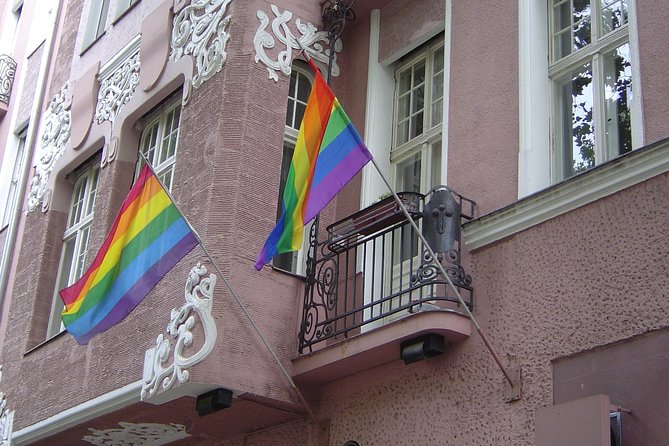
The route includes Berlin’s modern alternative district, Kreuzberg. This section shifts the emphasis from historical figures and older neighborhoods to the city’s current independent and queer culture.
Kreuzberg is useful in the story because queer life does not exist only in formal memorials or designated nightlife streets. It also appears in bars, restaurants, community spaces, creative projects, and places where people gather in ordinary daily life. Your guide explains how the district fits into Berlin’s wider alternative culture and how that culture overlaps with LGBTQ+ life.
Do not expect every stop to look like a museum. Part of the value is learning to read the city itself. A street corner, a venue, or a changed building can tell you how a neighborhood’s role has shifted. The tour is strongest when the guide connects the visible city to people and events that may no longer be obvious on the street.
There is also a practical point here. The tour lasts about three hours and 30 minutes, and it covers several districts. You should be ready to walk, stand, and keep moving. The route may feel longer than a standard two-hour introduction, but that extra time allows the guide to connect different parts of Berlin rather than reducing the subject to one neighborhood.
Südblock shows queer community in everyday form
One of the most distinctive stops is Südblock, described as a queer-run bar and restaurant and an important pillar of the LGBTQ+ community.
This is a valuable stop because it gives the tour a present-day anchor. Historical tours can leave you with monuments and famous names but little sense of where community life happens now. Südblock helps bridge that gap. It is a working social space, not simply a plaque or former address.
The phrase more than meets the eye is a good way to approach the stop. Your guide explains why the venue matters and how it serves the local community. You may not spend a long time inside, and food and drinks are not included, so think of it as a cultural stop rather than a meal break.
If you want to eat or drink there, ask the guide about timing and plan for that purchase yourself. The supplied information does not promise a meal or a reserved table. The key benefit is the explanation of Südblock’s role, not a food experience.
A famous club connects the 1990s to Berlin after dark
Another stop covers one of the world’s most famous clubs, tracing its roots in the 1990s gay scene to its present reputation for all-hours nightlife.
The exact appeal of this section is the change over time. Berlin’s club culture did not appear from nowhere. Queer venues and communities helped shape the city’s reputation for freedom, experimentation, and nightlife outside ordinary schedules.
Your guide places the club within that longer story. You learn about its connection to the gay scene in the 1990s and how the venue became known far beyond that original setting. This makes the stop useful even if you are not planning to go clubbing. It explains how a specifically queer urban culture helped influence Berlin’s broader identity.
Keep your expectations realistic. The information describes a historical stop connected with the club, not a guaranteed club entry or nightlife session. The tour begins at noon, and the experience is educational rather than a night out. If you want to visit the club later, treat that as a separate plan.
Same city, a completely different kind of day:
- Berlin: Reichstag, Dome and Government District Guided Tour
★ 4.7 · 18,288 reviews - Berlin: 1-Hour City Tour by Boat with Guaranteed Seating
★ 4.3 · 16,993 reviews - Berlin: Boat Tour Along the River Spree
★ 4.4 · 11,252 reviews - Berlin: Hop-on Hop-off Bus Tour with Live Commentary
★ 4.3 · 8,579 reviews
Schöneberg and Christopher Isherwood’s Berlin
Schöneberg is one of Europe’s oldest and best-established LGBTQ+ neighborhoods, and it forms a central part of the route. Here, the tour explores both the neighborhood’s queer identity and the people who made Berlin’s gay culture visible to a wider audience.
Christopher Isherwood is a key figure in this section. His life in Berlin helped shape the literary image of the city’s queer nightlife and social world. The guide uses his story to discuss the people and places of an earlier Berlin, while also showing where later interpretations can simplify a more complicated reality.
The neighborhood is valuable because it lets you see how queer history becomes attached to a real urban district. You are not only hearing about laws and personalities. You are learning how people met, socialized, worked, and built a public presence.
Schöneberg also gives the tour a useful contrast with Kreuzberg. One district may be associated with an established LGBTQ+ neighborhood, while the other is linked more closely with alternative culture and newer forms of community life. Seeing both helps you avoid the idea that Berlin has one single queer scene.
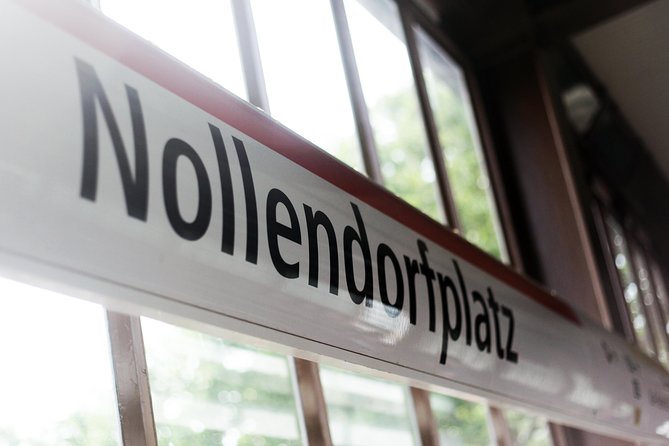
The final destination is Nollendorfplatz, at 10787 Berlin. This is not the same place as the starting point, so you should plan your onward route from there rather than assuming you will finish near Neue Promenade.
What makes the history worth three and a half hours
At around $24.14 per person, the tour is priced below many long guided city walks. The value depends on your interest in the subject, but the cost is reasonable for a small-group experience led by a professional guide and spread across several Berlin districts.
The strongest value comes from interpretation. You could walk through Schöneberg or Kreuzberg alone, but you would not necessarily know which people, venues, or political changes give those streets meaning. A good guide turns scattered locations into a clear story.
The route also covers a wide period. It reaches from the 19th century to modern Berlin, including cultural figures, community spaces, a major club, and the changing public role of LGBTQ+ people. That range makes the tour more useful than a narrow nightlife walk.
The experience is not perfect for everyone. If you have already read extensively about Berlin’s queer past, you may find the general route less rewarding. One person who had read the book Gay Berlin felt the tour added less than expected, though the guide’s visual material still helped. You should book this for the combination of places, explanation, and local perspective, not as a replacement for a specialist academic study.
One German-language assessment also found four hours a little long, especially in hot weather. The listed duration is about three hours and 30 minutes, but the actual experience can run longer. Wear comfortable shoes, bring water, and dress for the forecast.
The guide can make or break the experience
The clearest pattern in the feedback is the importance of the guide. Strong guides have been described as enthusiastic, friendly, entertaining, and well prepared. Finn received special praise for his use of an iPad and for bringing historical people and buildings into the walk. Mal, Lorna, and Tom were also singled out for their engaging presentation and command of the topic.
That does not mean every guide will present the material in exactly the same way. A walking tour allows room for personality, and the experience may feel more conversational with one guide and more structured with another.
The group limit is 15 people, which should make it easier to hear the guide and ask questions. Still, the meeting point may be shared with other Original Berlin Walks tours. One guest followed the wrong group after hearing announcements for a women in Berlin tour and a German-language tour.
Here is the simple fix: arrive early, look for the guide, and ask directly if this is the queer tour before departing. You can say the tour subject clearly if the area is busy. Do not rely only on a sign.
Transport, timing, and what to bring
The tour starts at noon and ends at Nollendorfplatz. Hotel pickup and drop-off are not included. You need to make your own way to Neue Promenade 3 and arrange your return or onward transport from Nollendorfplatz.
A Berlin Transport AB Zone ticket is also not included. The supplied information gives an approximate day-pass price of 7 euros, available from your guide on the day. Because the route covers central Berlin, Kreuzberg, Tiergarten, and Schöneberg, public transport forms part of the practical plan.
The exact balance between walking and transit may vary with the route and guide. You should expect a mixture of both, with time on your feet. Bring:
- Comfortable walking shoes
- Weather-appropriate clothing
- Water, especially in warm weather
- A transit ticket or money for the approximate 7 euro day pass
- Extra time if you want to explore the Schwules Museum beyond the guided portion
The tour operates in all weather. That is useful for scheduling, but it means a wet or very hot day can change your comfort. Service animals are allowed, and the activity is near public transportation. Most people can participate, but the three-and-a-half-hour length is worth considering if standing or walking for long periods is difficult.
Understanding the Schwules Museum stop
The Schwules Museum is included as a key part of the advertised route, offering a closer look at LGBTQ+ history and culture. It adds an indoor, collection-based element to a tour otherwise built around streets, neighborhoods, and former or current community sites.
That combination is helpful. The streets show you where history happened, while the museum can provide objects, images, and exhibitions that make the broader story easier to understand. If museum material is your main reason for booking, check the day’s arrangement with your guide.
There is an important point about expectations. The listed inclusions name the professional guide, but not food, drinks, transport, or museum admission. One person also found that the museum did not seem central to the group experience and was the only participant especially interested in visiting it. So do not assume a long, private museum visit is built into the tour.
If you want more time at the Schwules Museum, treat the walking tour as an introduction and plan additional museum time separately if the schedule and admission arrangements allow.
Who should book this Berlin queer history walk
I would recommend this tour to you if you want more than a list of bars and clubs. It suits first-time Berlin visitors who want a guided introduction to LGBTQ+ history, as well as LGBTQ+ visitors who want to place today’s neighborhoods within a longer story.
It is also a good choice if you learn best through people and places. Marlene Dietrich, Klaus Wowereit, Christopher Isherwood, queer-run Südblock, and the famous club site give the subject clear points of reference.
You may want to skip it if you dislike long walking tours, expect nightlife entry, or have already studied Berlin’s queer history in detail. The tour is also less suitable if you need a short, tightly timed activity. The route can last four hours in practice, and heat or poor weather may make it feel longer.
The overall score attached to the experience is 4.7 out of 5, with 92 percent recommending it. The strongest praise centers on the guides, the historical range, and the lively presentation. The main practical concern is not the subject matter but organization at the start.
Should you book it?
Book this tour if you want a thoughtful introduction to Berlin’s queer past and present, with enough time to connect Schöneberg, Kreuzberg, Tiergarten, community spaces, and cultural history. At about $24.14, it offers good value for a small group and a professional guide.
Before booking, be ready for three things: public transport costs extra, the route is physically active, and the Schwules Museum may not receive as much time as you hope. Arrive early at Neue Promenade 3 and confirm that you are joining the queer tour. With those details handled, this is a strong choice for understanding why LGBTQ+ culture is not an optional side note in Berlin’s story. It is part of the city’s identity.
FAQ
Where does the tour start?
The tour starts at Neue Promenade 3, 10178 Berlin, Germany.
What time does the tour begin?
The scheduled start time is 12:00 p.m.
Where does the tour end?
The tour ends at Nollendorfplatz, 10787 Berlin, Germany.
How long does the experience last?
The listed duration is approximately three hours and 30 minutes. One experience lasted about four and a half hours, so you should allow extra time.
Is the tour offered in English?
Yes. The tour is offered in English.
How large is the group?
The maximum group size is 15 people.
Is public transportation included?
No. A Berlin Transport AB Zone ticket is not included. An approximate day-pass price of 7 euros is provided, and the ticket is available from the guide on the day.
Is admission to the Schwules Museum* included?
The professional guide is included, but museum admission is not listed among the inclusions. Food, drinks, and transport are also not included.
Can I cancel for a full refund?
Yes. You can cancel up to 24 hours before the experience start time for a full refund. Cancellations or changes made less than 24 hours before the start are not refunded or accepted.
Just added around Berlin
- Love and War in Berlin: Self-Guided Story Puzzle Walk★ 5.0 · 7 reviews
- Rickshaw Tours Berlin – Groups of up to 16 people with several rickshaws★ 4.0 · 97 reviews
- Walking on the Wall: 3-Hour Tour in Berlin★ 4.5 · 34 reviews
- eSIM for Germany and 34 European Countries★ 4.5 · 16 reviews
- Warnemuende Shore Excursion: Berlin Private Sightseeing Tour from Rostock★ 5.0 · 4 reviews
- Your ticket to The Wall Museum Berlin★ 3.0 · 60 reviews
- Warnemuende Shore Excursion: Private Berlin Tour★ 4.5 · 27 reviews
- Karl-Marx-Allee Tour: Life and Architecture in East Berlin★ 5.0 · 19 reviews
Walking Tours, compared.





Berlin’s Best: 2 Hour Walking Tour Third Reich and the Cold War
Read our review →


Third Reich Berlin: Hitler and WWII Walking Tour
Read our review →Browse the lists this tour appears in