Reviewed · WALKING TOURS
Berlin: Hidden Backyards Guided Walking Tour
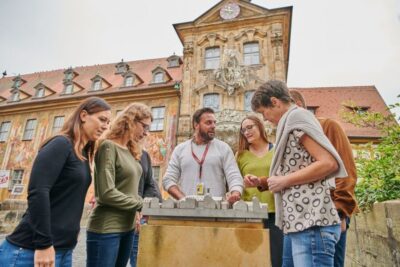
Berlin often hides its best stories behind an ordinary doorway. This two-hour walk through Spandauer Vorstadt leads you into courtyards where artists work, ivy climbs old walls, and the city’s Jewish, industrial, and creative past still shows through. I like the strong mix of architecture and social history, and I like that guides such as Nick, Susanne, Lydia, and Alex make the tour feel like a conversation rather than a lecture.
The tour also gives you places you are unlikely to find by simply strolling between Berlin’s major sights, especially Haus Schwarzenberg and the colorful Heckmann-Höfe. The main point to consider is the tour language: English and German are offered, but some departures may be conducted only in German, so confirm before booking if English is essential.
In This Review
- Key points
- Why Berlin’s courtyards tell a bigger story
- Meeting at Hackescher Markt
- Hackesche Höfe and the grand courtyard tradition
- Rosenhöfe and the quieter details
- Sophienkirche and the area’s older layers
- Auguststraße and Jewish Berlin around the New Synagogue
- Haus Schwarzenberg and Berlin’s creative edge
- Heckmann-Höfe, trees, ivy, and a pause from the street
- The guides make the difference
- What the $23 price gets you
- Practical advice for a comfortable walk
- Who should book this Berlin courtyard tour?
- Should you book it?
- FAQ
- How long does the Berlin Hidden Backyards tour last?
- How much does the tour cost?
- Where does the tour begin?
- Which courtyards are included?
- Does the tour visit Jewish sites?
- What languages are available?
- Is the tour wheelchair accessible?
- What happens if it rains?
Key points
- Haus Schwarzenberg: See a worn but active courtyard filled with street art, studios, and creative spaces.
- Jewish Mitte: Learn how the area around the New Synagogue became a center of Jewish life.
- Several courtyard styles: Compare the grand Hackesche Höfe, quieter Rosenhöfe, and leafy Heckmann-Höfe.
- History with local context: Guides connect buildings to Berlin’s changing social and economic life.
- Easy two-hour format: A compact walk that fits well into a first day or a sightseeing break.
- Rain-or-shine planning: Wear practical shoes and bring weather protection.
Why Berlin’s courtyards tell a bigger story
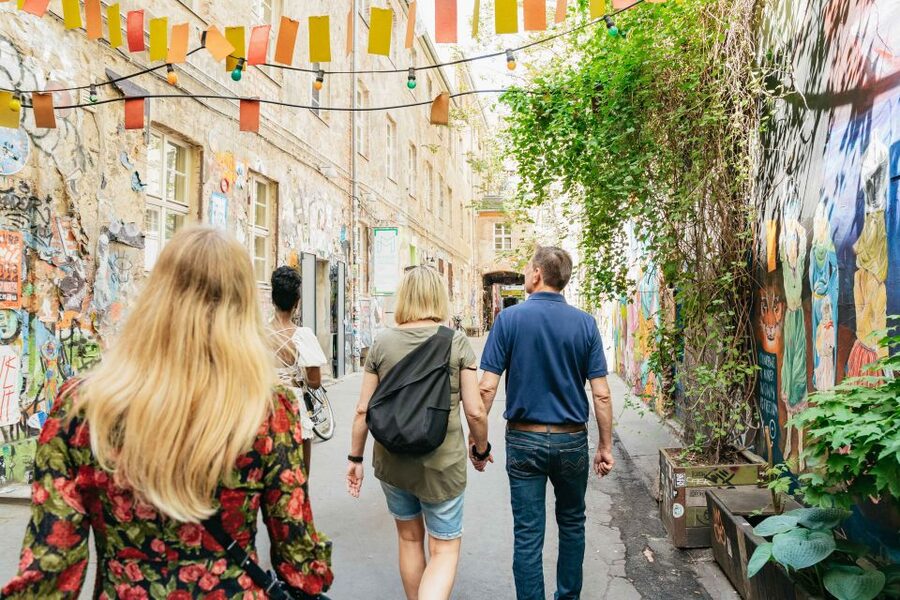
The most useful idea behind this tour is that Berlin’s courtyards are not just pretty shortcuts. They reveal how the city was built, who lived and worked there, and how old commercial spaces changed after war, division, decline, and renewal.
You begin in Spandauer Vorstadt, a district in Berlin-Mitte with layers of urban life packed into a small area. From the street, many buildings look like standard Berlin blocks. Pass through their gateways, though, and you find interior spaces with workshops, restaurants, art rooms, quiet corners, and traces of earlier uses.
I like this approach because it gives you a way to read Berlin. The guide does not simply point at façades and name dates. The walk ties architecture to Jewish life, working neighborhoods, creative communities, and the city’s modern international character.
The tour has earned a 4.8 rating from more than 5,000 bookings, and the praise is notably consistent about the guides’ storytelling, friendly manner, and ability to connect small details to wider Berlin history. That matters here. Without explanation, a courtyard can look like an attractive old passage. With the right context, it becomes evidence of how Berlin changed.
A few more Berlin trips to weigh up
- Discover Berlin Half-Day Walking Tour
★ 5.0 · 9,624 reviews - Berlin: Third Reich and Cold War 2 Hour Walking Tour
★ 4.9 · 6,830 reviews - Berlin: Discover Berlin Walking Tour
★ 4.9 · 5,998 reviews
Meeting at Hackescher Markt
The meeting point is in front of the BUTLERS shop at Hackescher Markt 4. This is a convenient place to begin because Hackescher Markt is already one of central Berlin’s easiest areas to reach and recognize.
Arrive a few minutes early so you can find the guide without rushing. The tour is on foot for two hours, and food and drinks are not included, so have water with you. There is no meal stop built into the route.
This is a city walk, not a museum visit. You will move between courtyards and passageways, pause for explanations, and continue through public streets. The pace is generally described as easy, but comfortable shoes still make sense. Berlin’s weather can change quickly, and the walk operates rain or shine.
Hackesche Höfe and the grand courtyard tradition
One of the first major stops is Hackesche Höfe, a famous series of connected courtyards. It offers a useful introduction to the type of urban complex that defines this part of Mitte.
The appeal is architectural variety. Instead of one simple street frontage, you move through a sequence of enclosed spaces, each with its own character. Decorative details and carefully designed façades make this complex more polished than some of the rougher courtyards nearby.
That contrast is important. The tour does not present every courtyard as untouched or frozen in time. Some spaces have been restored and adapted for shops, offices, food, and culture. Others retain a rougher, less finished look. Seeing both helps you understand that Berlin’s past survives in different forms.
Hackesche Höfe can be busy, so do not expect solitude. Its popularity is part of the story. It shows how an old urban form has become a major part of modern Mitte. The guide helps you look beyond the attractive surfaces and understand the courtyard as a working piece of city life.
Rosenhöfe and the quieter details
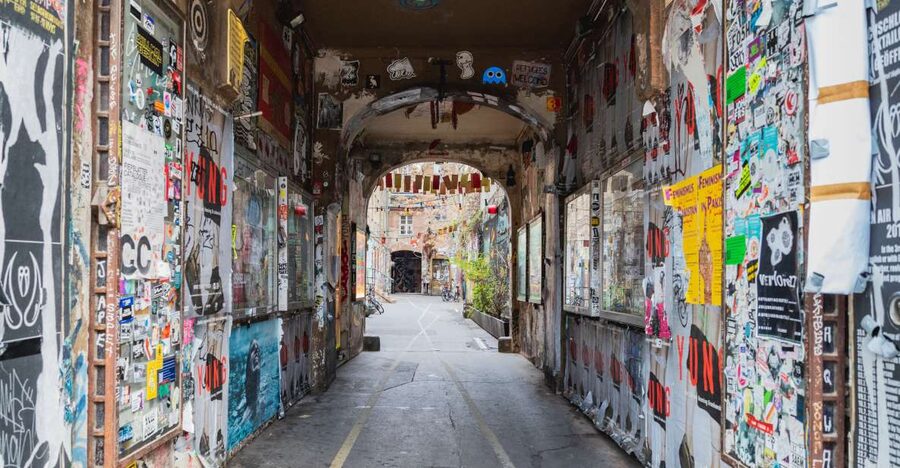
Rosenhöfe adds another point of comparison. It is easy to rush through this district while focusing on the better-known courtyards, but the smaller passages are often where the guide’s local knowledge pays off most.
Here, you get a closer look at how courtyard design changes from one complex to another. The route encourages you to notice the relationship between street entrances, interior buildings, and the spaces where residents and businesses meet.
I especially like this part of the walk for people who enjoy architecture but do not want a technical lecture. The guide explains the setting in plain terms, then connects it to the people and businesses that shaped the quarter. You come away with more than a list of building names.
Same city, a completely different kind of day:
- Berlin: Reichstag, Dome and Government District Guided Tour
★ 4.7 · 18,288 reviews - Berlin: 1-Hour City Tour by Boat with Guaranteed Seating
★ 4.3 · 16,993 reviews - Berlin: Boat Tour Along the River Spree
★ 4.4 · 11,252 reviews - Berlin: Hop-on Hop-off Bus Tour with Live Commentary
★ 4.3 · 8,579 reviews
Sophienkirche and the area’s older layers
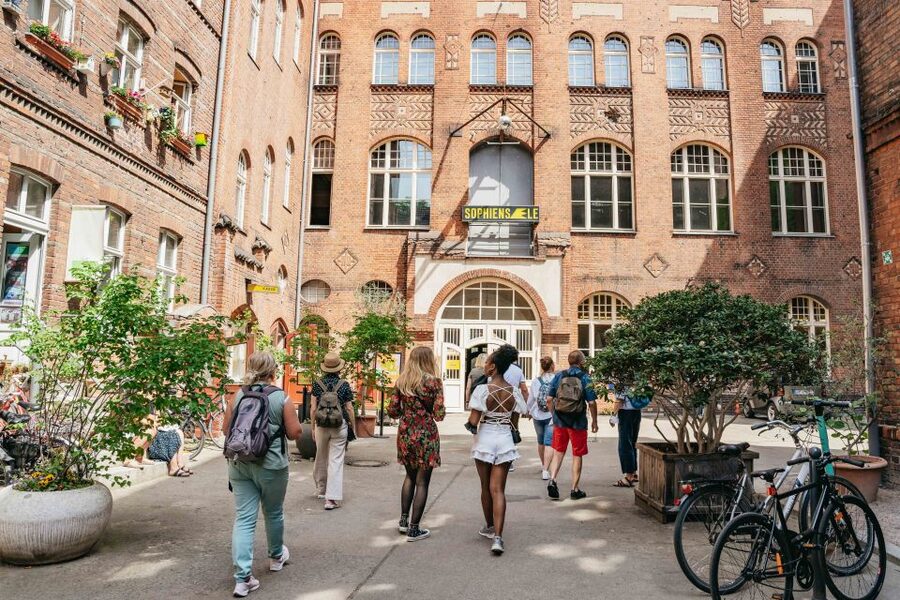
The route continues to Sophienkirche, adding a religious and neighborhood landmark to the courtyard story. This stop broadens the tour beyond commercial buildings and art spaces.
The church helps place Spandauer Vorstadt in a larger historical setting. The district was not created as a stylish visitor quarter. It developed through many stages, and its buildings reflect changing patterns of worship, work, housing, and trade.
This is also where the walk’s wider time frame becomes useful. One guide, Nick, has been praised for taking the group through roughly 600 years of Berlin history in a clear and enjoyable way. That kind of long view helps explain why modern Berlin can feel both old and improvised at the same time.
You will not get a full church tour or a complete survey of Berlin’s religious history. The stop works as part of the route, giving you a landmark that helps anchor the surrounding streets.
Auguststraße and Jewish Berlin around the New Synagogue
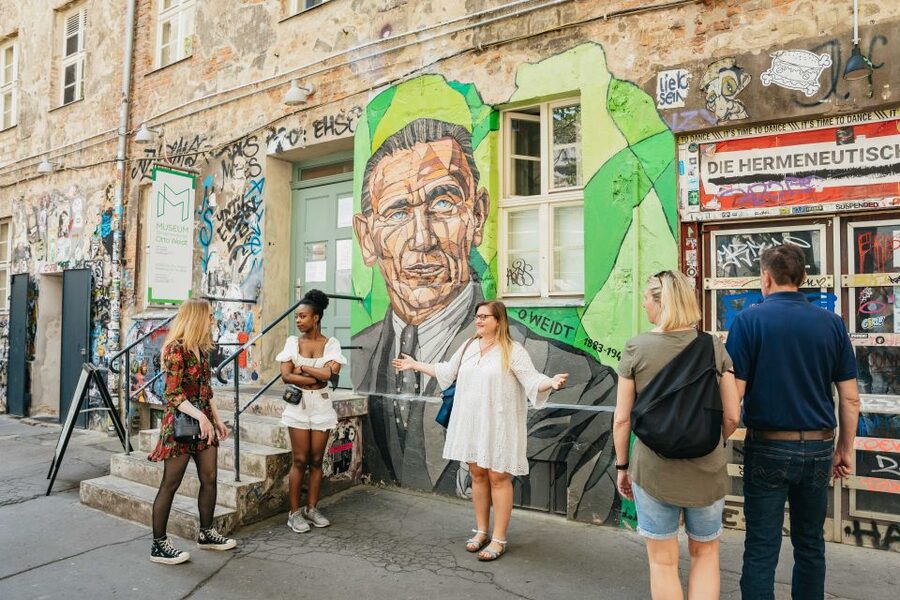
A central theme of the tour is the Jewish history of Spandauer Vorstadt, especially the area around the New Synagogue. As you walk along Auguststraße and nearby streets, the guide explains how this quarter became a center of Jewish life.
This context is one of the tour’s strongest features. The buildings are not treated as attractive scenery detached from difficult history. Instead, the guide connects the streets and courtyards to the communities that lived, worked, prayed, and built lives here.
The New Synagogue area also shows how Berlin has changed from a historic Jewish center into a modern district with international restaurants, galleries, studios, and shops. That change is not simple, and a two-hour walk cannot cover every part of it. Still, the route gives you a grounded introduction rather than reducing the subject to a few memorial plaques.
One especially interesting detail brought up on the tour is the story of the first female rabbi. Small stories like this make the history easier to remember because they put a human face on a larger social change.
If Jewish Berlin is your main reason for visiting, this walk should complement, not replace, a dedicated museum or synagogue visit. Its strength is the connection between Jewish history, architecture, and everyday urban spaces.
Haus Schwarzenberg and Berlin’s creative edge
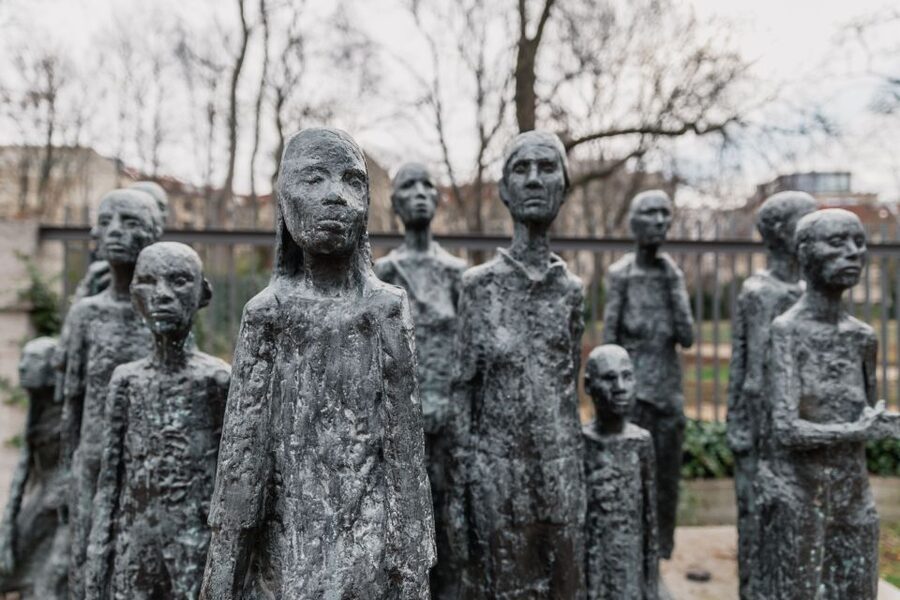
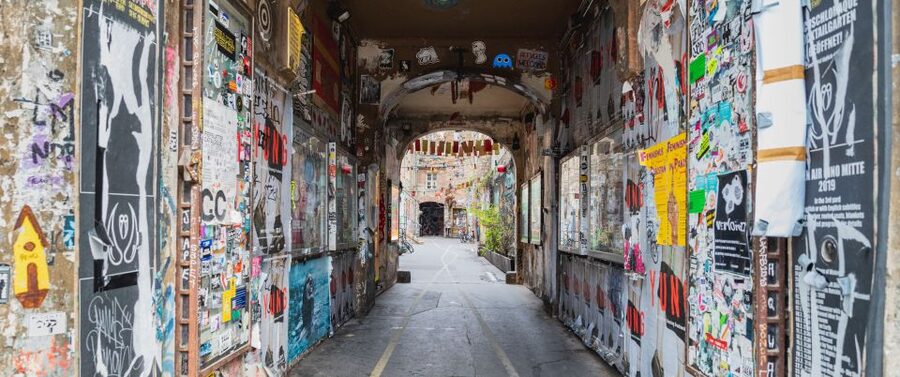
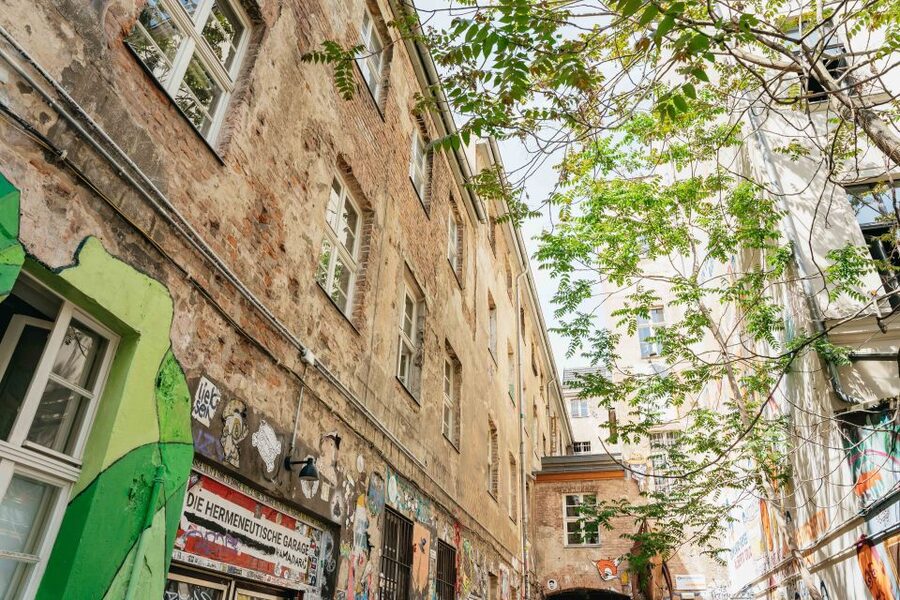
Haus Schwarzenberg is probably the tour’s most distinctive stop. The courtyard has a rough, weathered feel and is filled with street art, studios, and creative spaces.
It is a sharp contrast to the polished parts of Hackesche Höfe. Here, peeling surfaces and painted walls are part of the atmosphere. The setting feels less like a finished attraction and more like a place that has been repeatedly adapted by the people using it.
The guide explains how the buildings served different purposes over time. That history of changing use is central to Berlin. Old structures often survive not because they retain one original function, but because artists, small businesses, and community groups find new uses for them.
I would not come here expecting a formal gallery experience. The courtyard is valuable because it shows creative work in an active setting. Street art changes, studios may have different opening arrangements, and the atmosphere can vary. The point is to see the space as part of Berlin’s living culture.
This is also a good place to listen closely to the guide. The walls may catch your eye first, but the historical explanation tells you why this courtyard matters.
Heckmann-Höfe, trees, ivy, and a pause from the street

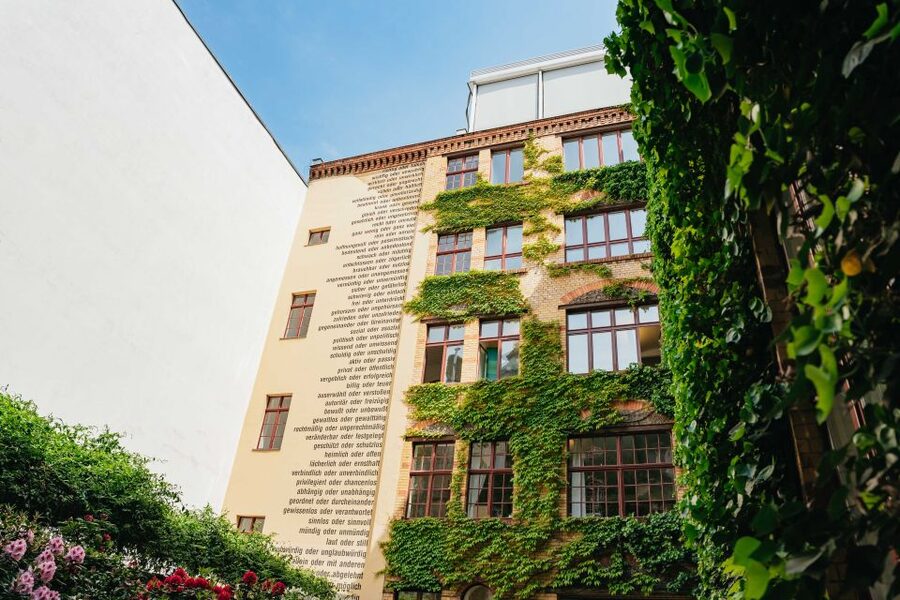
The route’s final major courtyard is Heckmann-Höfe, described as a colorful, leafy space shaded by trees and lined with ivy-covered buildings.
Compared with Haus Schwarzenberg, Heckmann-Höfe feels more like a small oasis. It is a place where you can pause and take in the layout of the courtyard without the traffic and noise of the surrounding streets. The colors and greenery give it a relaxed local feel.
Do not confuse this with Hackesche Höfe. The names sound alike, but they are separate stops with different moods. Hackesche Höfe is the grander, more famous complex. Heckmann-Höfe feels quieter and more tucked away.
This stop also shows why the tour is more than a list of fashionable addresses. You see how courtyards can support ordinary social life, not just art or shopping. People meet, work, eat, and spend time in these spaces. The tour gives you a look at the indoor-outdoor rhythm that is easy to miss from the main road.
The walk finishes with two possible drop-off points on Oranienburger Straße. That leaves you in a useful part of Mitte, close to more restaurants, sights, and public transport connections, though exact departure arrangements may vary.
The guides make the difference
The route is good, but the guide is what turns it into a worthwhile experience. The strongest feedback centers on guides who explain complicated history in a relaxed, personal way.
Nick is repeatedly praised for his clear storytelling and enthusiasm. Susanne is described as a dynamic presenter who can deliver a large amount of information without making it feel heavy. Lydia has been appreciated for linking the courtyards to wider Berlin history, while Alex is noted for being friendly and well informed.
The guide lineup can change, so you should not book solely to meet one named person. Still, these individual comments reveal what the experience aims to deliver: stories, context, and an informal tone.
Language deserves a careful note. The activity is offered in English and German, but some past departures have been conducted only in German. One English-speaking participant with intermediate German managed well because the guide checked for understanding, while another visitor could not follow the tour when the expected language was unavailable.
If you need English, check the selected departure rather than assuming every time slot works the same way. This is the one practical issue most likely to affect your enjoyment.
What the $23 price gets you
At $23 per person, this is a reasonable price for a two-hour guided walk in central Berlin. You are paying for access to a route that is difficult to assemble on your own, plus the guide’s local and historical context.
You can certainly walk past Hackesche Höfe and find some courtyards independently. The harder part is knowing which entrances matter, how the spaces connect, and what their changing uses mean. The fee is worthwhile if you want the story behind the buildings rather than a quick look and a photograph.
The value is strongest for first-time visitors who have already seen, or plan to see, the major sights and want a closer look at everyday Mitte. It also suits returning visitors who want a different side of Berlin without committing to a long day tour.
It is less useful if you dislike guided walks, want extensive time for photography, or prefer to explore each courtyard at your own pace. Two hours gives you a good introduction, not an exhaustive architectural study.
Practical advice for a comfortable walk
Wear shoes suitable for city pavements and be prepared to walk outdoors for the full two hours. The tour runs in all weather, so rain protection is not optional on a wet day.
The route is listed as wheelchair accessible, which makes it a practical choice for many visitors who need step-free access. You may still want to confirm current conditions for individual courtyards before booking, since historic buildings can have changing access arrangements.
Bring water because drinks are not included. If you want lunch or coffee afterward, the finish on Oranienburger Straße puts you in a useful central area.
The walk works well early in a Berlin visit. You will learn how to spot courtyard entrances and understand the basic shape of Spandauer Vorstadt, making later independent walks more rewarding. It also works late in a visit, when you want history without another large museum.
Who should book this Berlin courtyard tour?
I recommend it most to you if you enjoy architecture, urban history, Jewish Berlin, street art, or places that feel more local than monumental. It is especially good for curious walkers who want to understand how Berlin’s old buildings keep finding new lives.
Families with older children may enjoy the changing scenery and short format, though the historical material is more suited to listeners who can follow a sustained explanation. It is also a solid choice for couples and solo visitors because the guide provides structure while still leaving room to look around.
You should think twice if your main goal is a detailed visit inside the New Synagogue, a full Jewish history program, or a long photography stop at every courtyard. This tour gives you a broad, connected picture across several sites.
Should you book it?
Book this walk if you want Berlin’s back doors, not just its famous front doors. For $23, you get a compact route through Hackesche Höfe, Rosenhöfe, Haus Schwarzenberg, Sophienkirche, Auguststraße, and Heckmann-Höfe, along with the context that makes those places matter.
The best reason to go is the combination of courtyard architecture and Jewish neighborhood history. The main caution is the language issue. Confirm that your chosen departure is in English if needed, then bring sensible shoes and weather gear. If you have already covered Berlin’s major sights, this is a smart way to see the city’s quieter, more creative side.
FAQ
How long does the Berlin Hidden Backyards tour last?
The walking tour lasts two hours.
How much does the tour cost?
The listed price is $23 per person.
Where does the tour begin?
Meet the guide in front of the BUTLERS shop at Hackescher Markt 4.
Which courtyards are included?
The route includes Haus Schwarzenberg, Hackesche Höfe, Rosenhöfe, and Heckmann-Höfe.
Does the tour visit Jewish sites?
Yes. The walk explores Spandauer Vorstadt and the area around the New Synagogue, explaining the district’s development as a center of Jewish life.
What languages are available?
The activity is offered with live guides in English and German. Some past departures have been conducted only in German, so confirm the language for your selected time.
Is the tour wheelchair accessible?
Yes, the activity is listed as wheelchair accessible.
What happens if it rains?
The tour takes place rain or shine. Bring suitable clothing and shoes for the weather.
Just added around Berlin
- Love and War in Berlin: Self-Guided Story Puzzle Walk★ 5.0 · 7 reviews
- Rickshaw Tours Berlin – Groups of up to 16 people with several rickshaws★ 4.0 · 97 reviews
- Walking on the Wall: 3-Hour Tour in Berlin★ 4.5 · 34 reviews
- eSIM for Germany and 34 European Countries★ 4.5 · 16 reviews
- Warnemuende Shore Excursion: Berlin Private Sightseeing Tour from Rostock★ 5.0 · 4 reviews
- Your ticket to The Wall Museum Berlin★ 3.0 · 60 reviews
- Warnemuende Shore Excursion: Private Berlin Tour★ 4.5 · 27 reviews
- Berlin’s Gay, Lesbian, and Queer Scene Small-Group Walking Tour★ 4.5 · 66 reviews
Walking Tours, compared.

Berlin’s Best: 2 Hour Walking Tour Third Reich and the Cold War
Read our review →
Third Reich Berlin: Hitler and WWII Walking Tour
Read our review →