
Reviewed · THIRD REICH & COLD WAR TOURS
Third Reich Berlin: Hitler and WWII Walking Tour
Berlin’s most important Nazi-era sites are scattered across the city, and many are easy to miss. This three-hour walk links them into one clear story, from the Reichstag fire and Hitler’s rise to power through the final Soviet assault and the regime’s collapse in 1945. You’ll visit the bunker site, Wilhelmstrasse, the Luftwaffe headquarters, the Topography of Terror, and memorials to those murdered and those who resisted.
I especially like the route’s strong sense of place. You are not only hearing dates and names. You are standing above Hitler’s bunker, looking at buildings used by Göring and Goebbels, and tracing the last battle toward the Reichstag. I also like the guides’ reported mix of context, storytelling, and plain explanations. Guides including Paul, Chris, Maria, Ru, Ciarán, Tom, and others have been praised for making hard material easier to follow.
The main drawback is simple: this is an outdoor walking tour in Berlin weather. Expect about 5,000 brisk steps, few chances to sit, and a subject that is often grim. Wear warm layers, bring comfortable shoes, and plan for the full three hours.
In This Review
- Key points at a glance
- Why this walking route works in Berlin
- Starting at Friedrichstrasse and the Trains to Life, Trains to Death memorial
- The Reichstag fire and the collapse of democracy
- The Soviet War Memorial in Tiergarten
- Brandenburg Gate and the public face of Nazi power
- The Academy of Arts and Albert Speer’s architectural vision
- The Holocaust Memorial and the problem of remembrance
- Hitler’s bunker and the final days of April 1945
- Wilhelmstrasse and the machinery of Nazi government
- Göring’s Air Ministry and the Nazi war machine
- Topography of Terror and the end of the route
- Resistance, daily life, and the people who opposed Hitler
- Is $24.07 good value for three hours?
- Practical advice for the three-hour walk
- Who should book this Berlin history walk?
- Should you book the Third Reich Berlin walking tour?
- FAQ
- How long is the Third Reich Berlin walking tour?
- What language is the tour offered in?
- Where does the tour start?
- Where does the tour finish?
- Is entry to the Reichstag included?
- Does the tour include entry to the Topography of Terror?
- How much walking is involved?
- Is hotel pickup included?
- What is the cancellation policy?
Key points at a glance
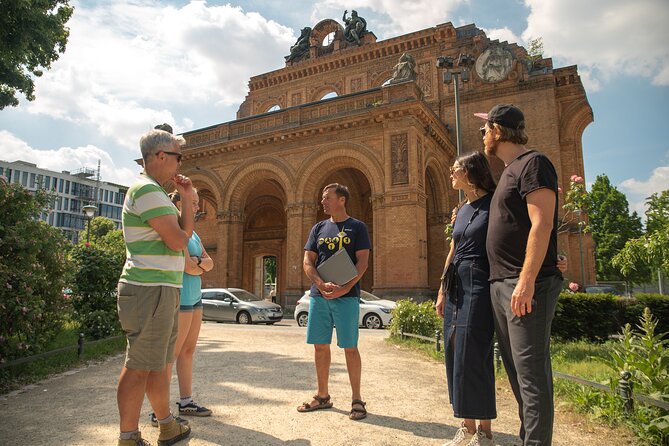
- Hitler’s bunker site: Visit the ordinary-looking ground above the former bunker and learn about Hitler’s final days and death in April 1945.
- Nazi power in one route: See the former Air Ministry, Goebbels’ propaganda headquarters, Wilhelmstrasse, and the site of the New Reich Chancellery.
- The 1945 Battle of Berlin: Follow the route of the final Soviet assault toward the Reichstag and the Soviet War Memorial in Tiergarten.
- Holocaust remembrance: Pause at the Memorial to the Murdered Jews of Europe and the Trains to Life, Trains to Death memorial.
- Resistance and democracy: Hear about Henning von Tresckow, Hans Oster, and Claus von Stauffenberg, as well as the Reichstag fire and the destruction of civil liberties.
- Good value for a half-day: At about $24.07, the tour costs less than many museum visits and gives you a guided framework for several major sites.
Why this walking route works in Berlin
Berlin does not present its Nazi past as one preserved historic quarter. Much of the old government district was destroyed, rebuilt, or put to new use. That makes a guide especially useful. A modern office building may occupy the site of a ministry that directed war or persecution, while the bunker location is marked by little more than an information sign.
The route begins near central Berlin and ends at the Topography of Terror, close to Checkpoint Charlie. That makes it practical for a half-day plan. You can continue sightseeing from the end rather than returning to your starting point.
The tour is offered in English, uses a mobile ticket, and allows a maximum of 25 people. That is not a tiny private walk, but it is small enough for a guide to explain things and take questions. The exact personality of your guide will vary. Names praised in the supplied feedback include Maria, Ru, Chris, Tom, Jimmy, Ben, Jim, Carlos, Eran, Georgia, Paul, Hannah, Thomas, Ciarán, Xavier, Emma, Callam, and Pete.
More Third Reich & Cold War Tours in Berlin
- Berlin: Third Reich and Cold War 2 Hour Walking Tour
★ 4.9 · 6,830 reviews - Berlin’s Best: 2 Hour Walking Tour Third Reich and the Cold War
★ 5.0 · 5,486 reviews - Skip-the-Line: Berlin Wall Museum at Checkpoint Charlie
★ 4.1 · 2,041 reviews
Starting at Friedrichstrasse and the Trains to Life, Trains to Death memorial
The advertised meeting point is Reichstagufer 17, near Friedrichstrasse Station. Arrive 15 minutes early. This area is convenient for public transport, and the guide begins with an overview of the route and the main locations ahead.
The first memorial, Trains to Life, Trains to Death, focuses on the deportation of Jewish people from Berlin to concentration camps. Its power comes from its direct subject: people were taken from their homes, put on trains, and sent toward imprisonment and murder. The stop is short, about 10 minutes, but it gives the rest of the walk a necessary human focus.
This is not a tour that treats the Third Reich only as a story about Hitler, generals, and buildings. You also hear about Jewish persecution, the Holocaust, and daily life under dictatorship. That balance matters. The political decisions made in government offices had consequences for real families across Berlin and Europe.
The Reichstag fire and the collapse of democracy
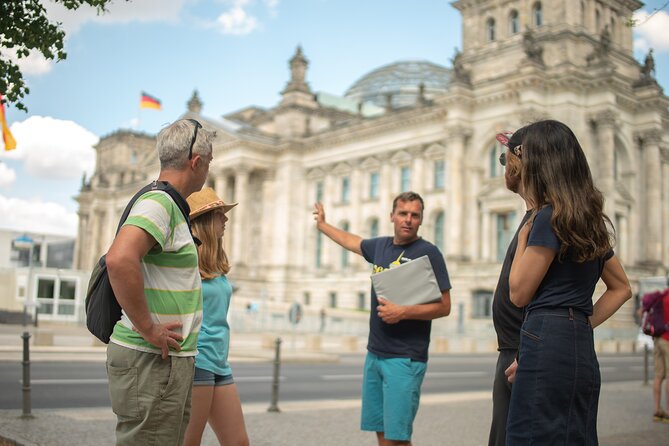
The Reichstag is one of the key stops. In 1933, a fire damaged the building, and the Nazi government used the event to suspend civil liberties and weaken democratic rule. Your guide explains how this helped Hitler’s government move from electoral success toward dictatorship.
The building also connects to the final days of the war. In 1945, Soviet forces fought through Berlin, and the Soviet flag was raised over the Reichstag. The moment became a powerful symbol of Nazi Germany’s defeat.
You will view the Reichstag from outside rather than receive admission to the building. The tour listing specifically excludes admission, so do not book this walk expecting a visit to the dome or interior. That is a fair trade for a route that covers many other sites, but you should arrange a separate Reichstag visit if the interior is high on your list.
The Soviet War Memorial in Tiergarten
The walk continues to the Soviet War Memorial in Tiergarten, where many Red Army soldiers who died in the Battle of Berlin are buried. The memorial includes a large Soviet soldier holding a flag, with fallen Nazi soldiers represented below him.
This stop adds a military perspective to the tour. The final battle was not an abstract end to the war. It involved intense fighting in a ruined city, huge military losses, and civilians caught between armies. The memorial helps explain the Soviet role in defeating Nazi Germany while also giving you a place to consider the human cost of that victory.
Because the tour is on foot, the transition between sites is part of the experience. Your guide can point out how the political center, ceremonial spaces, government offices, and battle route fit together. On your own, you could visit each place, but you would have to build the links yourself.
Same city, a completely different kind of day:
- Berlin: Reichstag, Dome and Government District Guided Tour
★ 4.7 · 18,288 reviews - Berlin: 1-Hour City Tour by Boat with Guaranteed Seating
★ 4.3 · 16,993 reviews - Berlin: Boat Tour Along the River Spree
★ 4.4 · 11,252 reviews - Discover Berlin Half-Day Walking Tour
★ 5.0 · 9,624 reviews
Brandenburg Gate and the public face of Nazi power
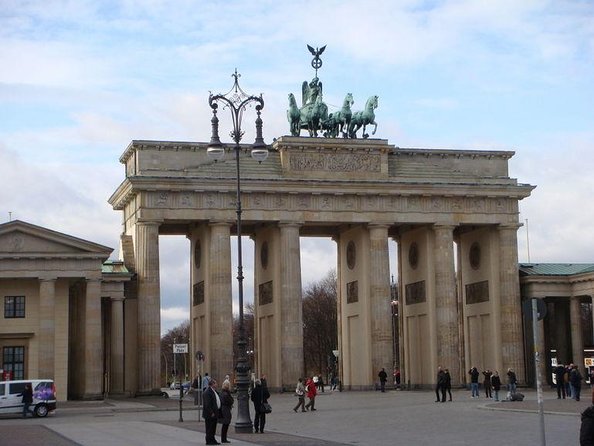
Brandenburg Gate is one of Berlin’s most familiar sights, but its Nazi-era use is less obvious when you see it today. The regime used the gate for public displays, rallies, and propaganda. It became a backdrop for Nazi claims of authority and military strength.
The stop lasts about 10 minutes. Do not expect the guide to spend the entire visit on architectural detail. The emphasis is on how a famous civic monument can be used by different governments for very different purposes. Today, the gate is linked strongly with reunification, but its history also includes dictatorship, war, division, and propaganda.
That shift in meaning is one of the more useful themes of the walk. Berlin’s monuments are not frozen in one era. Their significance changes with the political story around them.
The Academy of Arts and Albert Speer’s architectural vision
At the Akademie der Künste, the guide discusses the relationship between art, architecture, and political power during the Nazi period. Albert Speer, Hitler’s chief architect and later Minister of Armaments, promoted monumental neoclassical designs meant to project authority and permanence.
The academy itself is now associated with contemporary arts, but the stop opens a wider question: how do cultural institutions and artists respond to an authoritarian state? Architecture under the Nazis was not merely decoration. Grand buildings and planned spaces were used to communicate hierarchy, control, and national ambition.
This is a shorter stop, about 10 minutes, so expect an introduction rather than a full museum visit. It works best as part of the larger story about propaganda and the regime’s attempt to shape public life.
The Holocaust Memorial and the problem of remembrance
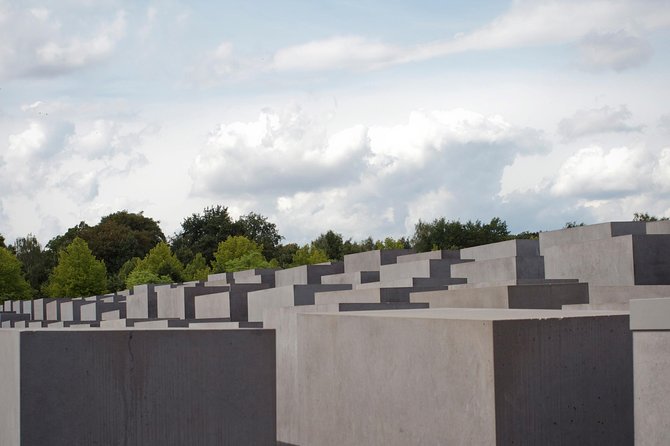
The Memorial to the Murdered Jews of Europe is one of Berlin’s most affecting sites. Its 2,711 concrete slabs form a large field of uneven heights, with paths that can feel disorienting as you move through them.
The design does not tell the story through a long wall of text. Instead, the changing height and narrow passages create a physical experience of uncertainty and discomfort. Your guide provides the historical background, but the memorial also gives you a few quiet minutes to think without a speech filling every second.
The stop is brief, around 10 minutes. That may feel short if you want to explore the memorial fully or visit its underground information center, which is not included in the tour description. Treat this as an introduction. You can return later if you want more time.
The location also lies close to the former Nazi government district, so the walk places remembrance beside the offices where decisions about persecution and war were made. That contrast is deliberate and valuable.
Hitler’s bunker and the final days of April 1945
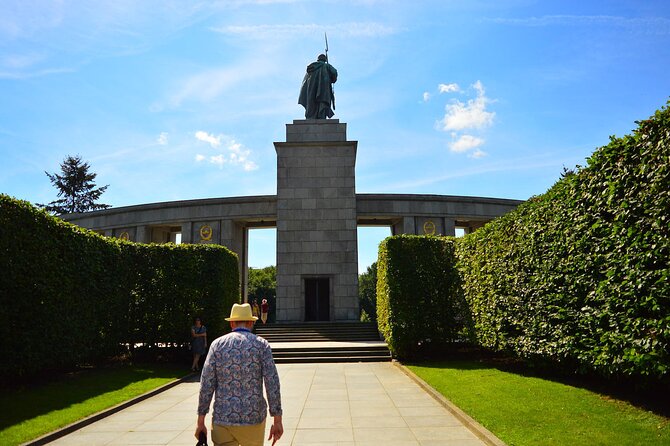
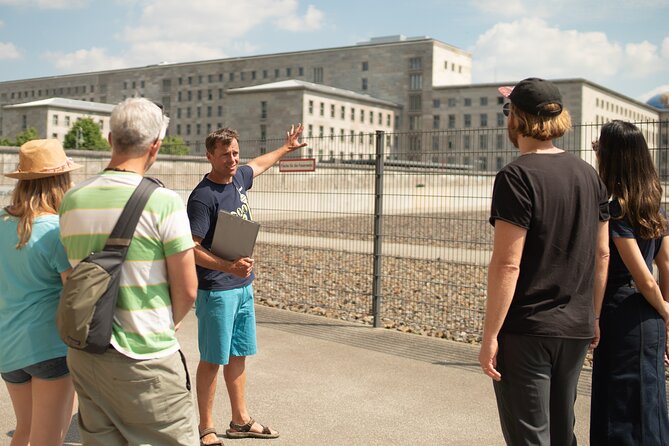
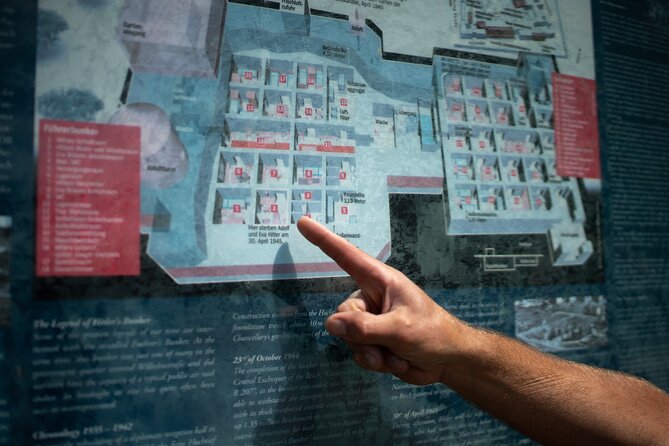
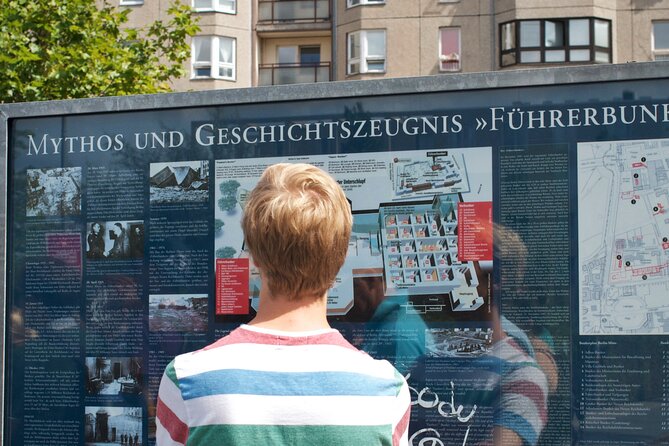
The bunker site is one of the tour’s most anticipated stops, but it is important to set your expectations. You do not enter a preserved underground complex. You stand above the location of Hitler’s bunker, near the site of the former New Reich Chancellery built under Albert Speer.
Today, the area looks ordinary. That is part of the point. The absence of a grand ruin or dramatic entrance can make the site more unsettling. Your guide explains Hitler’s final days, the collapse of the Nazi government, and his death in April 1945.
One guide, Eran, reportedly made the reveal more effective by waiting until the group reached the site marker before explaining exactly where they were. That kind of presentation can help you understand how much of Berlin’s most notorious history is hidden beneath routine modern surroundings.
Do not expect physical remains or a theatrical recreation. The value is in the explanation and the connection between the site, the Reich Chancellery, the Battle of Berlin, and the final end of the regime.
Wilhelmstrasse and the machinery of Nazi government
Wilhelmstrasse was the administrative center of Nazi Berlin. Government offices here included the Reich Chancellery, the Ministry of Foreign Affairs, and the Ministry of Propaganda. The street was tied to decisions about military expansion, persecution, and the running of the dictatorship.
This is where a good guide earns the price of the tour. The buildings and addresses do not always announce their past. You need someone to identify who worked where and explain how the separate ministries fitted into the Nazi system.
You hear about Joseph Goebbels, who directed propaganda and composed speeches designed to shape public opinion. You also learn about the regime’s rise, Hitler’s Lebensraum policy, and the militaristic thinking that helped lead Germany into war and contributed to the Holocaust.
The area has changed greatly since 1945. Some structures were destroyed, others repurposed, and modern development has altered the street. That makes the historical explanation more important than the view itself.
Göring’s Air Ministry and the Nazi war machine
On Niederkirchnerstrasse, the route reaches Hermann Göring’s former Air Ministry, known as the Reichsluftfahrtministerium. This large government building housed the Luftwaffe, Germany’s air force, and reflected Göring’s status as one of Hitler’s most powerful associates.
The guide connects the building to the administration of air operations and the wider war effort, including the Battle of Britain. You are looking at an office headquarters, not a battlefield, which helps show how war was organized through ministries, staff, orders, and paperwork.
This stop also reminds you that Nazi power relied on more than speeches and rallies. It required a large state structure with people carrying out military and political plans. The building’s continued use after the war adds another layer to Berlin’s habit of living with difficult places rather than erasing every trace.
Topography of Terror and the end of the route
The tour ends at the Topography of Terror, located on the former site of the SS and Gestapo headquarters. Its exhibitions use photographs, documents, and personal accounts to explain how these organizations enforced repression, persecution, and mass murder.
This is a fitting final stop because it shifts attention from the grand political center to the practical work of terror. The SS and Gestapo did not simply make threats. They investigated, arrested, interrogated, deported, and helped enforce the racial policies of the Nazi state.
The walking tour finishes outside the museum rather than including a full museum visit. Plan to return if you want to study the displays. The end point is close to Checkpoint Charlie, so you can continue with Cold War Berlin afterward.
Resistance, daily life, and the people who opposed Hitler
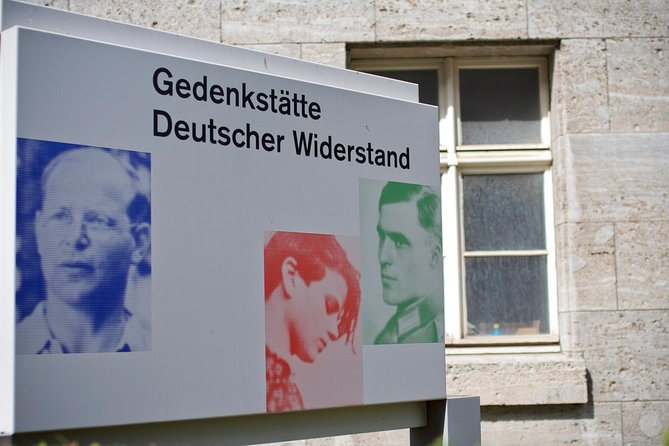
The tour does not present German society as one uniform block of Nazi support. Your guide discusses resistance figures including Henning von Tresckow, Hans Oster, and Claus von Stauffenberg. You learn about the risks faced by people who opposed Hitler and about the failed attempt to remove him from power.
You also hear about ordinary Berliners living under dictatorship and during air raids. That daily-life material is important because it gives scale to the political story. A dictatorship is experienced through fear, censorship, propaganda, shortages, military service, bombing, and pressure to conform.
The best guiding approach here is careful and balanced. Paul has been praised for keeping difficult material clear and accessible, while Ciarán was noted for explaining complicated events without overloading the group. You cannot guarantee a particular guide, but the range of named guides suggests the operator uses a large team with different styles.
Is $24.07 good value for three hours?
At about $24.07 per person, this is a strong value if you want an organized introduction to Nazi Berlin. The cost covers an English-speaking local guide and three hours of walking across a wide central area. There are no major admission fees included, but most stops are outdoor sites or free memorials, so that keeps the price down.
You are paying mainly for the connections between places. The former Air Ministry, Wilhelmstrasse, the bunker site, the Reichstag, and the Topography of Terror make more sense when someone explains who used them and how events unfolded.
The value drops if you dislike group walks, already know Berlin’s Nazi history well, or want to spend long periods inside museums. It is also less appealing in very cold or wet weather. Still, the price is modest for a half-day history lesson, especially early in your Berlin stay when you want a framework for later museum visits.
Practical advice for the three-hour walk
Wear comfortable shoes. The route covers about 5,000 steps at a brisk pace, based on the practical guidance provided for the walk.
Dress for the forecast, with extra care in winter. One group completed the tour in temperatures as low as minus 7 Celsius, and several practical comments stress warm clothing. Bring a drink, and be ready for the fact that much of the experience takes place outdoors.
Arrive 15 minutes early at the central meeting point. Bring your mobile ticket. Hotel pickup and drop-off are not included, but the route begins near public transport and ends close to Checkpoint Charlie.
Most people can take part, and service animals are allowed. The group can reach 25 people, so stay near the guide when crossing streets or moving between stops. The guide’s ability to answer questions is one of the tour’s strongest features, so ask when a detail is unclear.
Free cancellation is available up to 24 hours before the start time for a full refund. Changes or cancellations made less than 24 hours before the start are not accepted for a refund.
Who should book this Berlin history walk?
I would recommend it to anyone interested in World War II, Nazi Germany, the Holocaust, political propaganda, or the Battle of Berlin. It also suits you if you are visiting Berlin for only a few days and want to cover many major sites without spending hours planning a route.
Families with older children and teenagers may find it useful. One 15-year-old was reported to have stayed engaged throughout, especially because the guide connected the past to the fragility of democracy. The subject is serious, so parents should decide if the material fits their children.
I would skip it if you want a relaxed sightseeing stroll. The subject is heavy, the pace can be brisk, and the tour is almost entirely outdoors. I would also avoid making it your only Holocaust education in Berlin. Use the walk as a framework, then give yourself time at the Topography of Terror and the Holocaust Memorial to read and reflect.
Should you book the Third Reich Berlin walking tour?
Book it if you want the sites to connect into a single, understandable story. The bunker site, Reichstag, Wilhelmstrasse, Nazi ministries, Soviet memorial, and Holocaust memorials are far more useful when you know what happened there and why each place matters.
The $24.07 price is fair, the route covers a lot, and the strongest praise is directed at the guides’ clear storytelling, patience, and ability to answer questions. Just bring warm clothes, expect a brisk walk, and remember that the tour visits museum sites from outside rather than including indoor admission.
For a first look at Nazi Berlin, this is a practical and worthwhile choice. For a slower, more reflective experience, combine it with a separate museum visit afterward.
FAQ
How long is the Third Reich Berlin walking tour?
The tour lasts approximately three hours.
What language is the tour offered in?
The walking tour is offered in English.
Where does the tour start?
The meeting point is Reichstagufer 17, 10117 Berlin, near Friedrichstrasse Station. You should arrive 15 minutes before the scheduled start.
Where does the tour finish?
The tour ends at the Topography of Terror on Niederkirchnerstraße 8, 10963 Berlin. The end point is very close to Checkpoint Charlie.
Is entry to the Reichstag included?
No. Admission to the Reichstag is not included. The tour visits and discusses the building from the outside.
Does the tour include entry to the Topography of Terror?
The tour ends at the Topography of Terror, but the stated inclusions cover the walking tour and guide only. Indoor museum admission is not listed as included.
How much walking is involved?
The route is a brisk three-hour walk and covers roughly 5,000 steps, according to the practical guidance provided for the experience.
Is hotel pickup included?
No. Hotel pickup and drop-off are not included. The route begins near public transportation.
What is the cancellation policy?
You can cancel up to 24 hours before the experience begins for a full refund. Cancellations or changes made less than 24 hours before the start time are not accepted for a refund.
More Walking Tours in Berlin
- Berlin: Discover Berlin Walking Tour
★ 4.9 · 5,998 reviews - Berlin: Hidden Backyards Guided Walking Tour
★ 4.8 · 5,360 reviews - Berlin: Alternative Berlin Walking Tour
★ 4.6 · 1,204 reviews - Berlin: Third Reich, Hitler, and WWII Walking Tour
★ 4.9 · 1,133 reviews
Just added around Berlin
- Love and War in Berlin: Self-Guided Story Puzzle Walk★ 5.0 · 7 reviews
- Rickshaw Tours Berlin – Groups of up to 16 people with several rickshaws★ 4.0 · 97 reviews
- Walking on the Wall: 3-Hour Tour in Berlin★ 4.5 · 34 reviews
- eSIM for Germany and 34 European Countries★ 4.5 · 16 reviews
- Warnemuende Shore Excursion: Berlin Private Sightseeing Tour from Rostock★ 5.0 · 4 reviews
- Your ticket to The Wall Museum Berlin★ 3.0 · 60 reviews
- Warnemuende Shore Excursion: Private Berlin Tour★ 4.5 · 27 reviews
- Berlin’s Gay, Lesbian, and Queer Scene Small-Group Walking Tour★ 4.5 · 66 reviews
Third Reich & Cold War Tours, compared.
Berlin’s Best: 2 Hour Walking Tour Third Reich and the Cold War
Read our review →
Skip-the-Line: Berlin Wall Museum at Checkpoint Charlie
Read our review →
Cold War, Berlin Wall, Spies and the East Side Gallery
Read our review →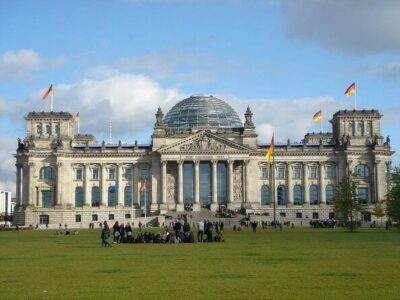
Berlin Third Reich Sites: Half-Day Walking Tour
Read our review →Browse the lists this tour appears in