
Reviewed · THIRD REICH & COLD WAR TOURS
Berlin: Third Reich, Hitler, and WWII Walking Tour
Hitler’s bunker is not a dramatic ruin. It is an unmarked spot beneath an ordinary patch of ground, and that is exactly what makes this tour so effective. In three hours, you trace the Nazi government’s former power centers, the planned Germania axis, the final Soviet assault, and the regime’s collapse.
I like the strong route through central Berlin, which links places you might otherwise see as separate sights. I also like the guides’ clear handling of difficult subjects. Hannah, Mikhail, Jimmy, Martin, Will, and others are singled out for patient answers, lively delivery, and serious preparation. The drawback is practical: there are no scheduled water or toilet breaks, and some departures may feel crowded.
In This Review
- Key points at a glance
- Why this Berlin WWII walk matters
- Starting beside the Palace of Tears
- The former Nazi ministries and the machinery of terror
- Hitler’s New Reich Chancellery and the Germania plan
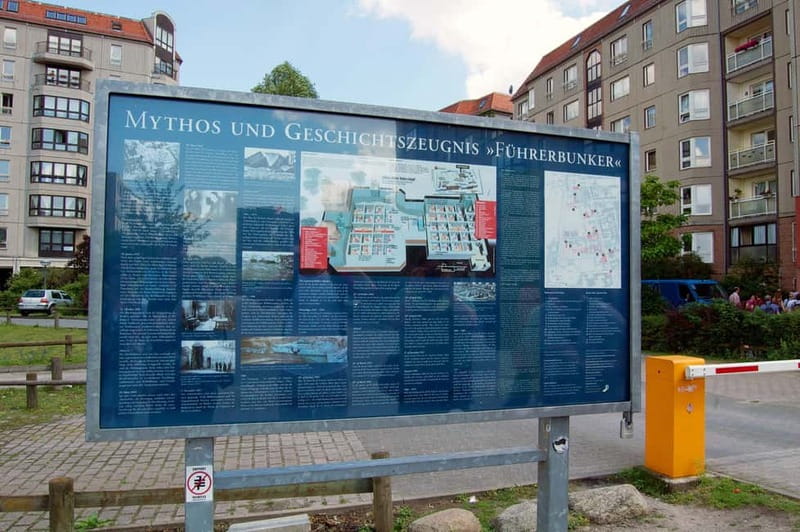
- Above the Führer’s Bunker
- The Topography of Terror and the evidence of persecution
- The Reichstag and the Soviet assault
- Brandenburg Gate, from Nazi symbol to Cold War divide
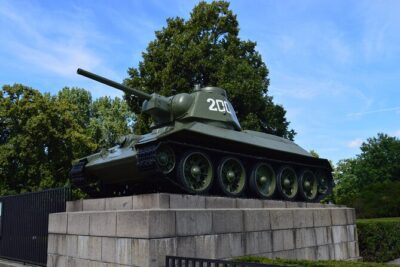
- T-34 tanks at the Soviet War Memorial
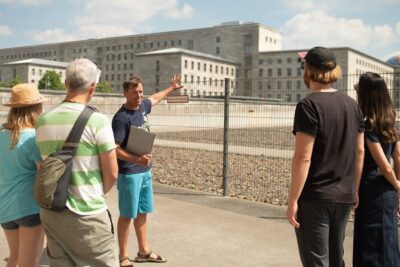
- Guides, group size, and the feel of the walk
- Is $20 good value?
- Who should book this experience?
- Should you book the Berlin Third Reich tour?
- FAQ
- How long does the Berlin Third Reich tour last?
- How much does the tour cost?
- Where does the tour begin?
- How do I find the guide?
- Where does the tour end?
- Is the tour offered in English?
- Does the tour run in bad weather?
- Is hotel pickup included?
- Does the tour include museum admission?
- Can I cancel the tour?
Key points at a glance
- Hitler’s bunker site: Learn what happened during Hitler’s final days while standing above the former Führer’s Bunker.
- Nazi power centers: See the former locations of Goebbels’ Propaganda Ministry, Himmler’s SS and Gestapo headquarters, and Göring’s Air Defence Ministry.
- Topography of Terror: Stop at the major exhibit documenting Nazi persecution and state terror.
- The final battlefield: Follow the route toward the Reichstag and hear how the Soviet assault reached the heart of Berlin.
- Soviet War Memorial: Finish among T-34 tanks and Red Army howitzers at one of Berlin’s most forceful WWII memorials.
- Flexible booking: The tour costs $20 per person, lasts three hours, and allows free cancellation up to 24 hours before departure.
Why this Berlin WWII walk matters
Berlin can make the Nazi period feel oddly scattered. One ministry is now an office building. Another site is marked only by a modest plaque. A government quarter has changed beyond recognition. This tour gives those fragments a clear order.
You begin near Friedrichstraße and move through the former political center of Nazi Berlin. Along the way, your guide explains how the dictatorship gained power, how it organized propaganda and terror, and how the war eventually returned to the city that launched it.
I find walking especially useful for this subject because distance tells part of the story. The ministries, Chancellery, Reichstag, Brandenburg Gate, and bunker site are not abstract points on a map. They are close enough to connect, yet different enough to show how power operated through offices, symbols, institutions, and force.
This is not a museum tour with long indoor visits. Most of the experience takes place outside, with explanations at historic locations. You should expect an interpretive walk rather than a series of grand surviving buildings.
More Third Reich & Cold War Tours in Berlin
- Berlin: Third Reich and Cold War 2 Hour Walking Tour
★ 4.9 · 6,830 reviews - Berlin’s Best: 2 Hour Walking Tour Third Reich and the Cold War
★ 5.0 · 5,486 reviews - Third Reich Berlin: Hitler and WWII Walking Tour
★ 5.0 · 3,301 reviews
Starting beside the Palace of Tears
The meeting point is outside Friedrichstraße train station, on the square between the station and the Tränenpalast, also called the Palace of Tears. Look for guides wearing a blue lanyard and yellow name tag, usually with yellow umbrellas.
This is a useful place to begin because it is easy to reach by public transport and gives you a clear landmark. The Tränenpalast itself is linked to Berlin’s later division, so the setting quietly introduces one of the tour’s larger themes: Berlin’s past did not end in 1945. Nazi rule, wartime destruction, Soviet occupation, and the Cold War are layered across the same city.
The walk ends back at the meeting point. That makes planning easier than a tour that drops you across town, though you should allow the full three hours and avoid scheduling another fixed activity immediately afterward.
The former Nazi ministries and the machinery of terror
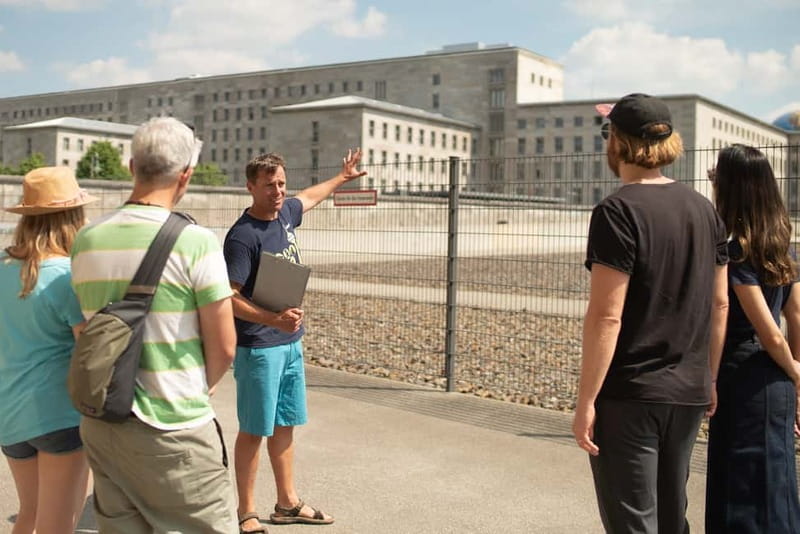
Several early stops focus on the buildings and offices that helped make dictatorship function.
You see the former site of Göring’s Air Defence Ministry, where the Luftwaffe planned the Blitz. The value of this stop is not the appearance of the building alone. Your guide connects a surviving address with military planning and the wider war, showing how decisions made in Berlin reached cities far beyond Germany.
The route also passes the former locations of Goebbels’ Propaganda Ministry and Himmler’s SS and Gestapo headquarters. These places help separate the different tools of Nazi rule. Propaganda shaped public messages and political myth. The SS and Gestapo enforced terror, surveillance, imprisonment, and murder.
I appreciate this part of the walk because it moves beyond Hitler as a lone figure. The tour explains the offices, officials, and systems that carried out the regime’s work. That makes the subject harder, but also more honest. Dictatorships depend on institutions and people, not only on speeches.
Do not expect every site to offer a dramatic remnant. In several places, the historical importance is greater than the visible remains. You are paying for the guide’s explanation and for the chance to understand the city plan, not for entry into preserved Nazi headquarters.
Hitler’s New Reich Chancellery and the Germania plan
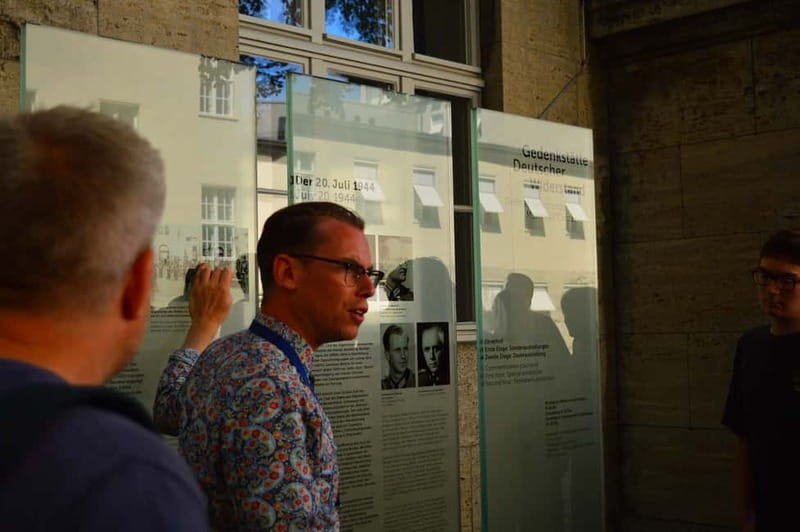
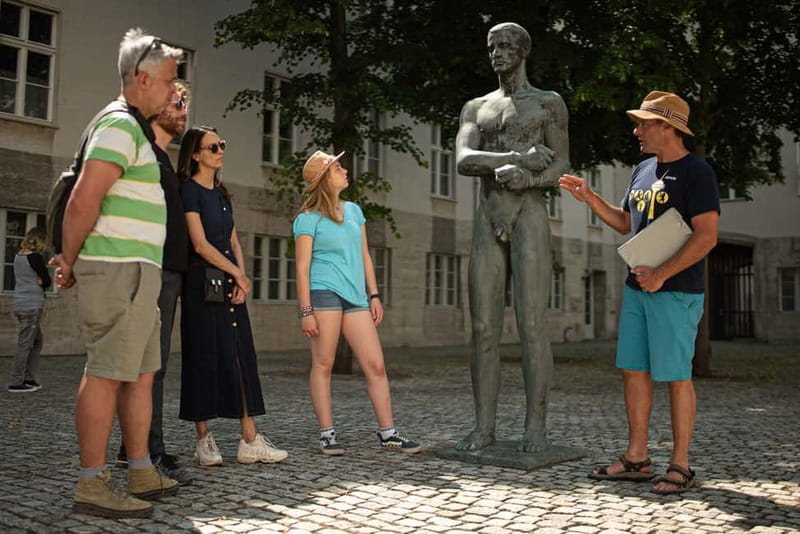
The tour follows part of Hitler’s planned Germania axis, designed by Albert Speer. Germania was meant to reshape Berlin into a monumental capital for Nazi Europe. The plan helps explain the regime’s obsession with scale, ceremony, and architecture.
You also visit the former location of Hitler’s New Reich Chancellery, the seat of power for the Nazi state. The building itself is gone, but the site matters because it places political authority within the physical center of the tour.
This is where a good guide makes a real difference. The route is not simply a list of demolished buildings. It asks you to picture how the Chancellery, ministries, ceremonial avenues, and monuments were intended to work together. The architecture was political theater, built to make the state appear permanent and overwhelming.
For me, this is one of the tour’s best uses of Berlin’s open spaces. You can see how plans for a new capital collided with war, defeat, and the city’s later rebuilding. The grand vision survives mostly through maps, photographs, and explanation, so bring some patience if you prefer tangible ruins.
Same city, a completely different kind of day:
- Berlin: Reichstag, Dome and Government District Guided Tour
★ 4.7 · 18,288 reviews - Berlin: 1-Hour City Tour by Boat with Guaranteed Seating
★ 4.3 · 16,993 reviews - Berlin: Boat Tour Along the River Spree
★ 4.4 · 11,252 reviews - Discover Berlin Half-Day Walking Tour
★ 5.0 · 9,624 reviews
Above the Führer’s Bunker
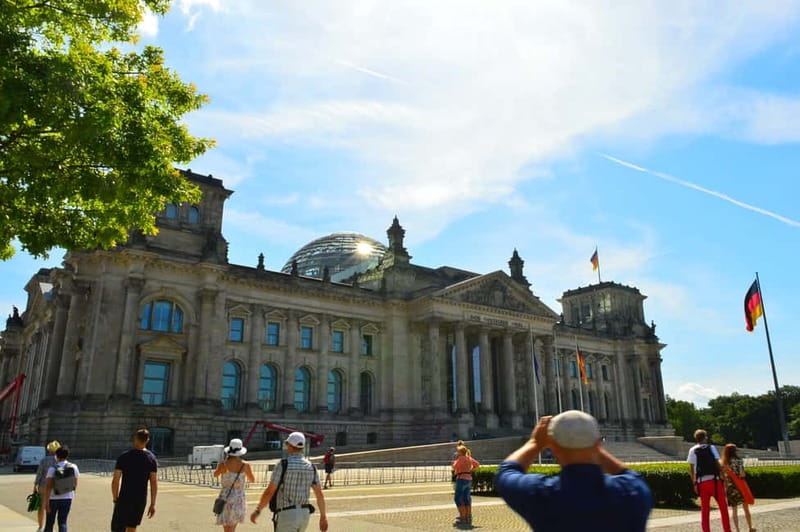
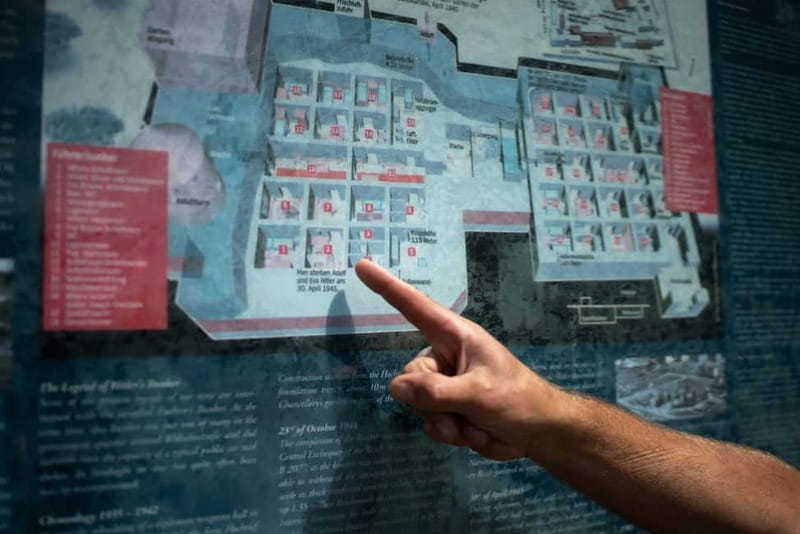
One of the most anticipated stops is the location of Hitler’s Führer’s Bunker. The tour takes you above the site and explains Hitler’s final days, the collapse of the regime, his suicide, and what happened to his remains.
There is no underground bunker visit described here. You are not entering a preserved command room or walking through wartime tunnels. Instead, you stand at the location and listen to a step-by-step account of the final days.
That limitation is important. The site has no grand monument to Hitler, and the ordinary surroundings resist the dramatic image many people bring with them. I consider that a strength. The absence of spectacle keeps attention on the facts and on the human cost of the decisions made inside that collapsing regime.
Guides need to handle this stop with care, and that is where the strongest feedback about the tour matters. Hannah is praised for explaining sensitive topics respectfully and answering questions fully. Mikhail is described as bringing locations to life while remaining approachable. Will is noted for detailed preparation and an ability to make the history understandable without turning it into entertainment.
You should still expect a serious tone. This is not a stop for Nazi memorabilia or sensational stories. The focus is on the end of the dictatorship and the consequences of its actions.
The Topography of Terror and the evidence of persecution
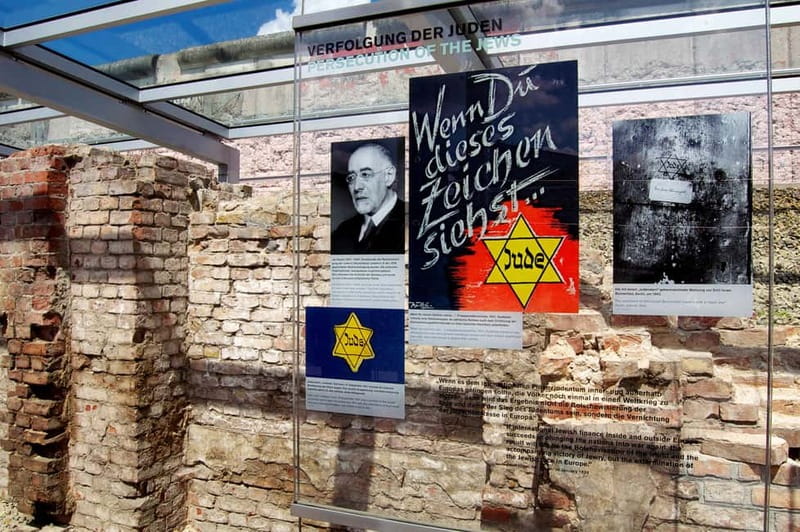
The Topography of Terror exhibit adds documentary weight to the outdoor route. It sits at the former site of key Nazi security institutions and examines the machinery of persecution.
The exhibit is especially useful because it anchors the walk in records and evidence. After hearing about the SS and Gestapo headquarters, you get a place where the system of repression can be examined in greater detail.
The supplied tour details identify the Topography of Terror as a stop, but they do not state that admission is included or that you receive an indoor guided visit. Plan on hearing about the exhibit and seeing the site as part of the walk. If you want extended time inside, check the day’s plan with the operator before booking.
Three hours is enough for an introduction, not a full study of Nazi Germany. If this period is central to your trip, you may want to return to the exhibit separately. The walking tour gives you the map and context; the exhibit can give you more time with documents and displays.
The Reichstag and the Soviet assault
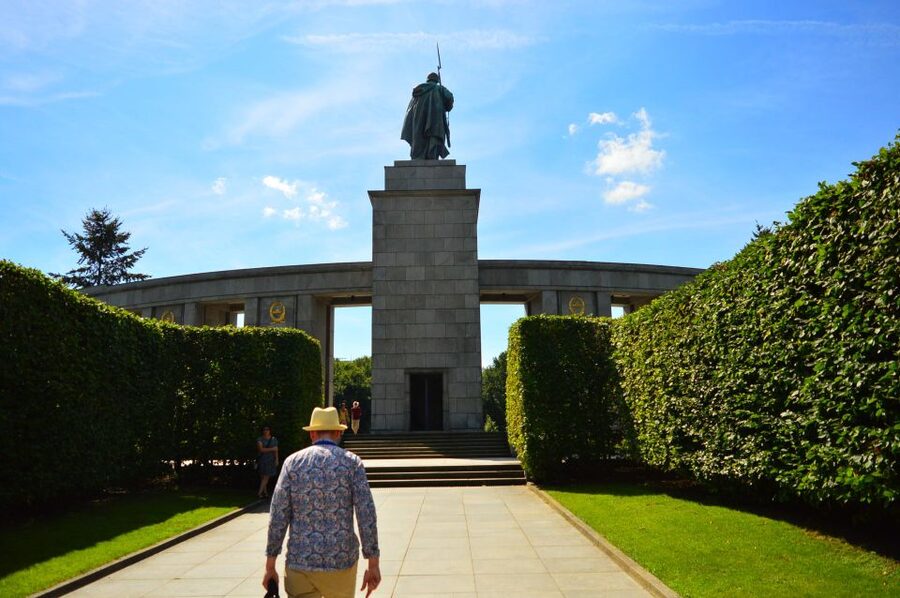
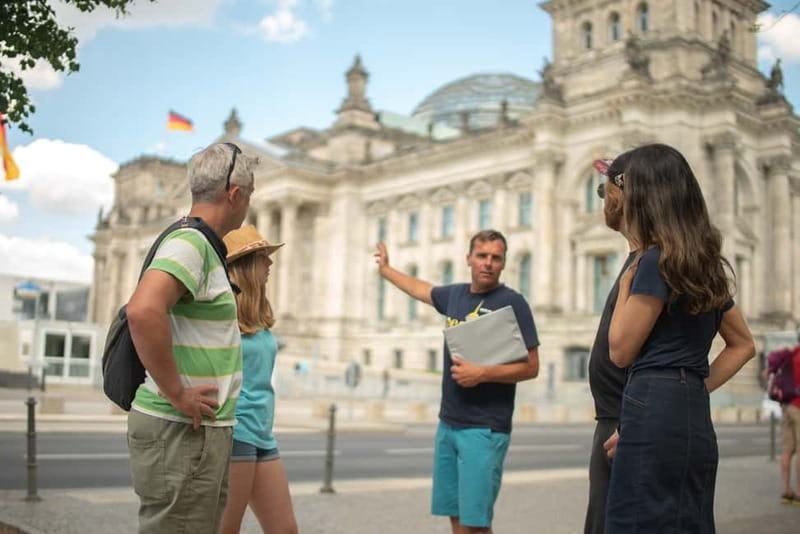
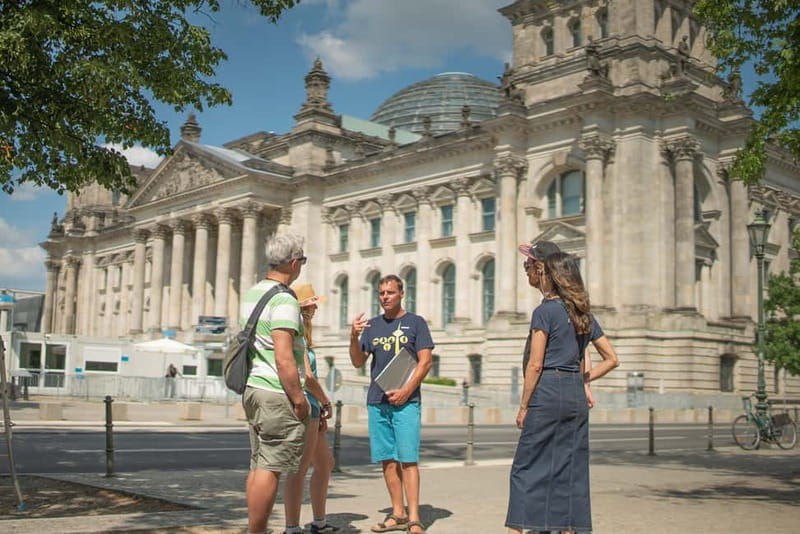
As the route turns toward the Reichstag, the story shifts from Nazi power to military defeat. Your guide follows the path of the Soviet assault and explains why this area became the final battlefield of Nazi Germany.
The Reichstag is one of Berlin’s most recognizable buildings, but this tour asks you to look past its later role as the home of the German parliament. Here, it represents the end of the war in Europe and the symbolic capture of the Nazi capital.
This stop also shows why Berlin rewards guided walks. You may already know the Reichstag from photographs, yet the military context changes how you see the building and the surrounding streets. A guide can point out how the final fighting fits into the city’s wider geography.
The walking pace is part of the appeal. You move from political offices to ceremonial spaces and then toward the battlefield. That steady movement gives the three-hour tour a clear shape instead of leaving you with disconnected facts.
Brandenburg Gate, from Nazi symbol to Cold War divide
The Brandenburg Gate is another place where several eras overlap. During the Nazi period, it was used as a symbol of power. Later, it became part of the Cold War divide.
This is not simply a photo stop. Your guide explains how the meaning of the gate changed as Berlin changed. A monument can be claimed by a dictatorship, separated by a political border, and later absorbed into a reunited city.
I like this broader context because it prevents the tour from treating WWII as an isolated chapter. Berlin’s streets show what came after the war as clearly as they show what happened during it. The same landmark can carry different messages depending on who controls the city and how people are allowed to move through it.
Expect crowds around the Brandenburg Gate, especially at popular times. Keep close to the group and listen carefully when the guide gathers everyone for the explanation.
T-34 tanks at the Soviet War Memorial
The walk finishes at the Soviet War Memorial, where T-34 tanks and Red Army howitzers flank the site. It is a direct, imposing memorial to the Soviet victory and the enormous cost of the fighting.
This ending gives the tour a physical final note. Earlier stops often depend on vanished buildings and invisible boundaries. Here, the military hardware is visible. The tanks and artillery make the Soviet advance feel concrete, while the memorial’s scale reflects the importance placed on the defeat of Nazi Germany.
The stop also invites a wider discussion of memory. A memorial is never only about the event itself. It reflects the political choices of the people who built it and the way later generations encounter it. Your guide can connect the site to Berlin’s postwar division and the city’s changing identity.
Because the activity ends back at Friedrichstraße, confirm how the group returns. The supplied details say the activity ends at the meeting point, so this is not a one-way route ending at the memorial.
Guides, group size, and the feel of the walk
The guide is the heart of this experience. Names associated with strong departures include Hannah, Xavier, Jörg, Will, Mikhail, Jim, Rafa, Artie, Callum, Thomas, Jimmy, Mikey, Jasper, Tina, Marty, and Martin. Guide assignments can change, so treat these names as examples rather than a promise.
The best qualities to look for are clear speaking, patience with questions, and a respectful approach to difficult material. Hannah is noted for sensitivity. Mikhail is described as friendly and prepared, with extra Cold War and general Berlin context. Jimmy is praised for a detailed account that never feels rushed. Martin is described as encouraging questions and bringing real passion to the subject.
Public, small-group, and private options are available. The exact group size is not given, but one comment specifically found a group too large. If you want more time for questions or a quieter pace, choose a small-group or private option when available.
The tour is offered in English, German, and Spanish. Since the subject depends on dates, names, and complex political relationships, choose the language in which you can follow a long spoken explanation most comfortably.
Is $20 good value?
At $20 per person, this is a strong value if you want a serious introduction to Nazi Berlin. You get three hours with a live guide and a route covering major sites that would be difficult to connect on your own.
The price does not include a museum admission, meal, transport, or private hotel pickup for the standard option. Private pickup is available only for private options, and the guide waits in the hotel lobby five minutes before the scheduled time.
The real question is how much you value interpretation. If you only want photographs of the Reichstag and Brandenburg Gate, you can see those without paying for a tour. If you want to understand why the former ministries, Chancellery, bunker, Reichstag, and memorial belong in one story, $20 is sensible.
The main cost is physical and mental, not financial. You walk for three hours, listen to difficult material, and spend the whole time outdoors. Wear comfortable shoes and weather-appropriate clothing. The tour operates rain or shine, and you should bring your own water because there are no water or toilet breaks during the walk.
Who should book this experience?
I would choose this tour for a first visit to Berlin if Nazi Germany and WWII are high on your list. It gives you a strong city orientation while explaining the rise, operation, and collapse of the regime.
It also suits families with older children or teenagers studying the period. One guide was praised for making the material useful to a student preparing for GCSE history. The subject is serious, but a good guide can explain it in plain language and welcome questions.
You may want another plan if you dislike outdoor walking, need regular facilities, or want long indoor museum visits. This tour also cannot show you intact Nazi interiors because many of the key buildings were destroyed or repurposed.
Book a small-group or private departure if personal questions matter to you. For a standard public walk, stay near the guide, avoid checking work emails, and bring water. One person lost the group while multitasking, an easy mistake on a busy central Berlin route.
Should you book the Berlin Third Reich tour?
Book it if you want the former Nazi capital explained as a connected city, not as a collection of famous addresses. The route is strong, the price is modest, and the guide’s skill can turn vanished buildings into understandable parts of the story.
Skip it if you want a light sightseeing stroll or an underground bunker visit. The tone is serious, the subject is painful, and the tour works best when you are ready to listen.
For most history-focused visitors, I would book this early in a Berlin stay. It gives you useful context for later visits to the Topography of Terror, the Reichstag, the Brandenburg Gate, and other memorials. Keep the day flexible, wear good shoes, carry water, and arrive at Friedrichstraße with enough time to find the yellow umbrella.
FAQ
How long does the Berlin Third Reich tour last?
The walking tour lasts three hours. Check availability for the current starting times.
How much does the tour cost?
The listed price is $20 per person.
Where does the tour begin?
It begins outside Friedrichstraße train station, on the square between the station and the Tränenpalast, also called the Palace of Tears. The address provided is Reichstagufer 17, 10117 Berlin.
How do I find the guide?
Look for a guide wearing a blue lanyard and yellow name tag, usually holding a yellow umbrella.
Where does the tour end?
The activity ends back at the meeting point near Friedrichstraße train station.
Is the tour offered in English?
Yes. Live guides are available in English, German, and Spanish.
Does the tour run in bad weather?
Yes. The tour operates rain or shine, so bring weather-appropriate clothing and comfortable shoes.
Is hotel pickup included?
Hotel pickup is available only for private options. For those departures, wait in the hotel lobby five minutes before the scheduled pickup time. The guide will wear a yellow name tag.
Does the tour include museum admission?
The included services list only a walking tour and guide. It does not state that museum admission is included.
Can I cancel the tour?
You can cancel up to 24 hours in advance for a full refund. A reserve now and pay later option is also available.
More Walking Tours in Berlin
- Berlin: Discover Berlin Walking Tour
★ 4.9 · 5,998 reviews - Berlin: Hidden Backyards Guided Walking Tour
★ 4.8 · 5,360 reviews - Berlin: Alternative Berlin Walking Tour
★ 4.6 · 1,204 reviews - Berlin: City Street Art Guided Walking Tour
★ 4.8 · 886 reviews
Just added around Berlin
- Love and War in Berlin: Self-Guided Story Puzzle Walk★ 5.0 · 7 reviews
- Rickshaw Tours Berlin – Groups of up to 16 people with several rickshaws★ 4.0 · 97 reviews
- Walking on the Wall: 3-Hour Tour in Berlin★ 4.5 · 34 reviews
- eSIM for Germany and 34 European Countries★ 4.5 · 16 reviews
- Warnemuende Shore Excursion: Berlin Private Sightseeing Tour from Rostock★ 5.0 · 4 reviews
- Your ticket to The Wall Museum Berlin★ 3.0 · 60 reviews
- Warnemuende Shore Excursion: Private Berlin Tour★ 4.5 · 27 reviews
- Berlin’s Gay, Lesbian, and Queer Scene Small-Group Walking Tour★ 4.5 · 66 reviews
Third Reich & Cold War Tours, compared.
Berlin’s Best: 2 Hour Walking Tour Third Reich and the Cold War
Read our review →
Third Reich Berlin: Hitler and WWII Walking Tour
Read our review →
Skip-the-Line: Berlin Wall Museum at Checkpoint Charlie
Read our review →
Cold War, Berlin Wall, Spies and the East Side Gallery
Read our review →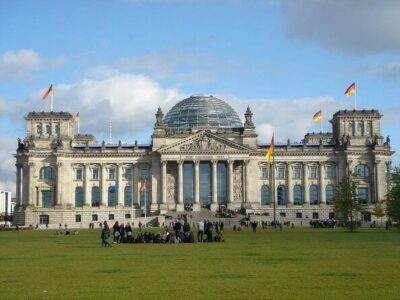
Berlin Third Reich Sites: Half-Day Walking Tour
Read our review →Browse the lists this tour appears in