Reviewed · TICKETS
Berlin: Berlin Story Bunker Entry Ticket
The Berlin Story Bunker puts one of Europe’s darkest chapters inside a real Second World War bunker. Across three levels, you follow Berlin’s story from Imperial times through Hitler’s rise, the Nazi dictatorship, the war, and the fall of the Berlin Wall. I like the clear chronological order and the sheer amount of primary material, from photographs and posters to short films. I also like the self-guided pace, which lets you spend two hours or six, depending on how much you read.
The catch is simple: this is a serious, text-heavy museum, not a quick attraction or a flashy interactive show. Some photographs are graphic, the subject is harrowing, and you’ll do plenty of standing, walking, and stair climbing. If you need a light museum stop, this may feel intense. If you want to understand how Berlin became the center of Nazi power, it is time well spent.
In This Review
- Key points to know before you go
- Entering the Berlin Story Bunker near Anhalter Bahnhof
- Following Berlin from Imperial rule to the Wall
- Hitler’s rise and the machinery of Nazi rule
- The war years and Berlin’s role at the center of power
- The Führerbunker display below ground
- The fall of the regime and Berlin after 1945
- How long should you allow?
- Is the $21 ticket good value?
- Who will enjoy this museum most?
- My verdict on the Berlin Story Bunker
- FAQ
- Where is the Berlin Story Bunker?
- How long does the visit take?
- What does the ticket include?
- Which audio guide languages are available?
- Is the ticket valid for the whole day?
- What is the latest entrance time?
- Can I take photographs inside?
- Is the museum suitable for people with mobility impairments?
- Is the Führerbunker original?
- Can I cancel the booking?
Key points to know before you go
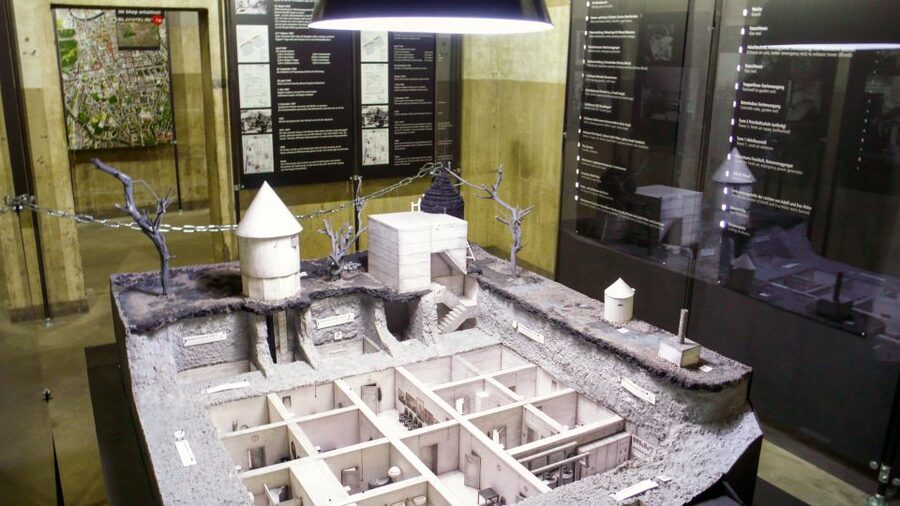
- The setting is a real Second World War bunker: The walls and enclosed rooms give the subject a weight that an ordinary gallery cannot.
- The exhibition covers more than WWII: Follow Berlin’s story across more than 800 years, from Imperial rule to the Berlin Wall.
- Plan far more than one hour: Two hours covers only the main points. Three to four hours is more realistic, and careful readers may want most of a day.
- The Führerbunker display is on the lower level: You’ll see a full-scale replication and a model connected with Hitler’s final bunker.
- The audio guide is available in 11 languages: Options include English, German, Spanish, French, Italian, Danish, Dutch, Russian, Hebrew, Portuguese, and Ukrainian.
- Photography is not permitted: Cameras, video recording, and photography inside are prohibited, so prepare to experience the material without taking pictures.
Entering the Berlin Story Bunker near Anhalter Bahnhof
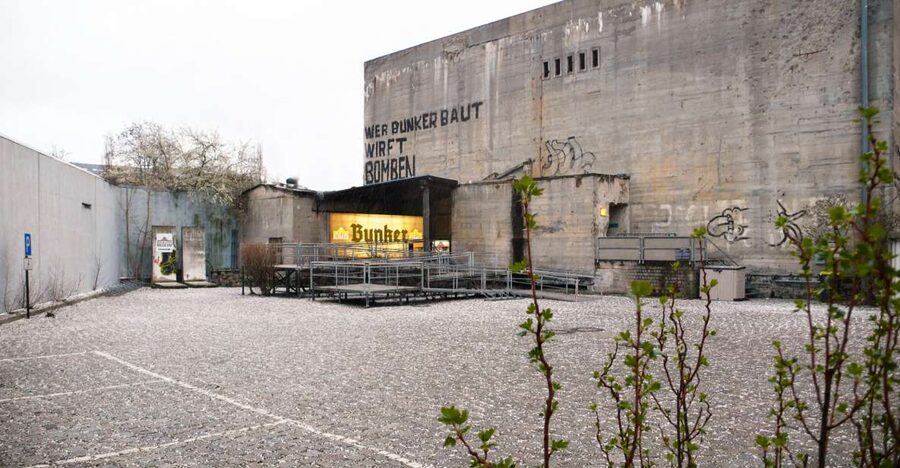
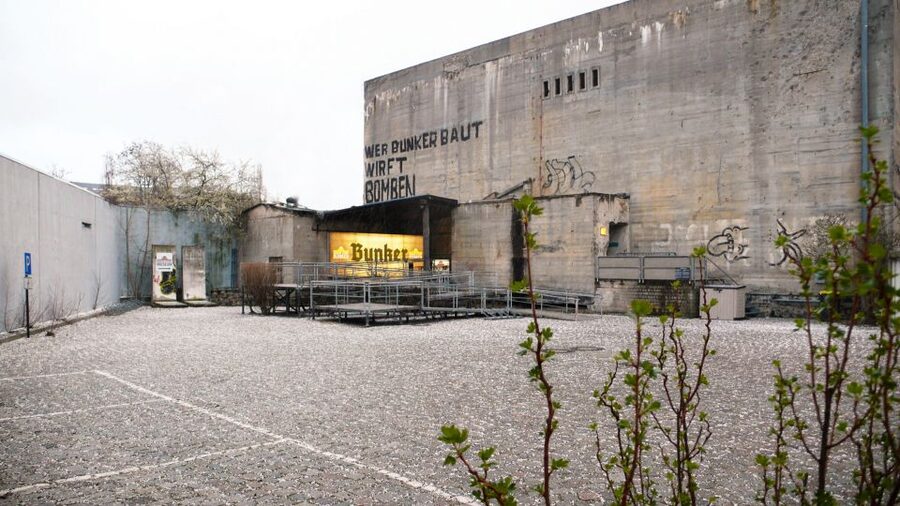
The museum is at Schöneberger Str. 23a, near Anhalter Bahnhof and Potsdamer Platz. That location matters. You are not entering a purpose-built museum designed to make difficult history feel comfortable. You are going below ground into a bunker built during the war, with enclosed rooms and a setting that helps explain the fear and control of the period.
Your ticket covers entry for one day, so you can take the exhibition at your own speed. The ticket also allows you to skip the ticket line. Last entrance is at 5:30 PM, and I would not arrive close to that cut-off. The museum contains too much material to make a late afternoon dash worthwhile.
The space is not uniformly cramped. Some rooms are large, and fans help with the air, but it can feel warm. If enclosed spaces make you uneasy, keep that in mind before booking. The activity is listed as unsuitable for people with mobility impairments, and the stairs and long periods on your feet make that warning important.
A few more Berlin trips to weigh up
- Berlin: Illuseum Berlin Entrance Ticket
★ 4.1 · 3,970 reviews - Berlin: Madame Tussauds Admission Ticket
★ 4.6 · 3,941 reviews - Berlin: Natural History Museum Entrance Ticket
★ 4.6 · 3,382 reviews
Following Berlin from Imperial rule to the Wall
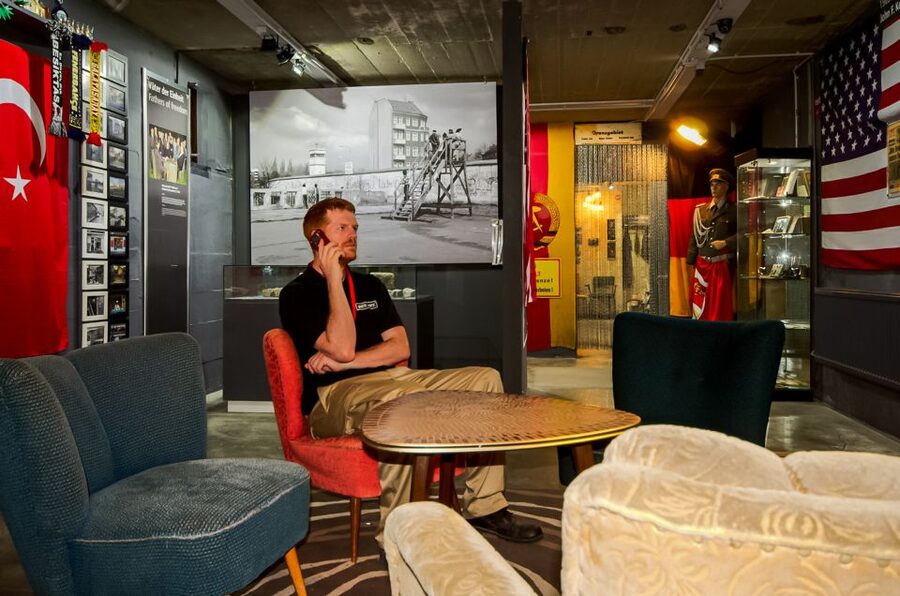
The exhibition begins with Berlin’s longer story, rather than placing Hitler in a vacuum. Across about 50 stations, installations, photographs, and short films trace more than 800 years of the city’s development.
That broader opening is useful because it gives you a sense of how Berlin became a political center. You are not simply shown a timeline of battles and leaders. You see the city’s changing role before the Nazi period, then follow the conditions that helped Hitler and National Socialism gain power.
The layout moves in chronological order, which makes the large amount of information easier to follow. You can read the displays in German and English, then use the audio guide for an additional spoken explanation. I like this combination because the audio gives you a workable outline while the panels provide dates, names, images, and detail.
This is also where you need to make a choice. You can listen and move at a steady pace, or pause at each station and read nearly everything. The first approach may take around two hours. The second can fill three to six hours, especially if you stop to study the photographs and films.
Hitler’s rise and the machinery of Nazi rule
The central section follows Hitler from his early life through his rise to power and dictatorship. The museum does not treat the Nazi period as a simple story of one man acting alone. The displays connect political power, propaganda, racism, repression, and war.
That context is one of the museum’s strongest features. You can see how Berlin functioned as the center of power, and how decisions made there reached far beyond the city. The material is direct and often upsetting, but it should be. A softened presentation would miss the point.
Expect a great deal of reading. The museum uses large installations, newspaper material, posters, photographs, and short film sequences to build its account. There are artifacts, though the experience leans more heavily on documents and visual evidence than on a large collection of objects.
The audio guide helps you get your bearings. It is available in 11 languages, including English, Spanish, French, German, Italian, Danish, Dutch, Russian, Hebrew, Portuguese, and Ukrainian. Some people may prefer to listen to the guide as a clear overview, then read only the sections that interest them. If you want every detail, the audio will add time rather than replace the written displays.
A small practical point: the audio device can be operated by entering station numbers, and it also has a next function. Using next may be easier than typing each number, since entering a number can occasionally send you to a similarly numbered section.
The war years and Berlin’s role at the center of power
The wartime material is where the exhibition becomes especially difficult. You will see photographs and documents connected with the Second World War and Nazi crimes. Some images are graphic, so this is not a carefree family attraction.
I would give older children and teenagers a little context before entering. An 11-year-old with an interest in history may follow the displays, but younger children could find the photographs and subject matter distressing. The museum’s strength is its honesty, not its comfort.
Berlin’s role is a key part of the story. The exhibition shows the city as the political headquarters of the Nazi regime, rather than treating it only as a battlefield at the war’s end. That makes the visit useful alongside other Berlin sites connected with the Third Reich, but the bunker itself gives this section an especially grim setting.
There is little need to rush. The exhibition rewards pauses, and chairs are available in parts of the museum. If you are not a dedicated history fan, those seats make it easier to work through the displays without treating the visit as a race.
Same city, a completely different kind of day:
- Berlin: Reichstag, Dome and Government District Guided Tour
★ 4.7 · 18,288 reviews - Berlin: 1-Hour City Tour by Boat with Guaranteed Seating
★ 4.3 · 16,993 reviews - Berlin: Boat Tour Along the River Spree
★ 4.4 · 11,252 reviews - Discover Berlin Half-Day Walking Tour
★ 5.0 · 9,624 reviews
The Führerbunker display below ground
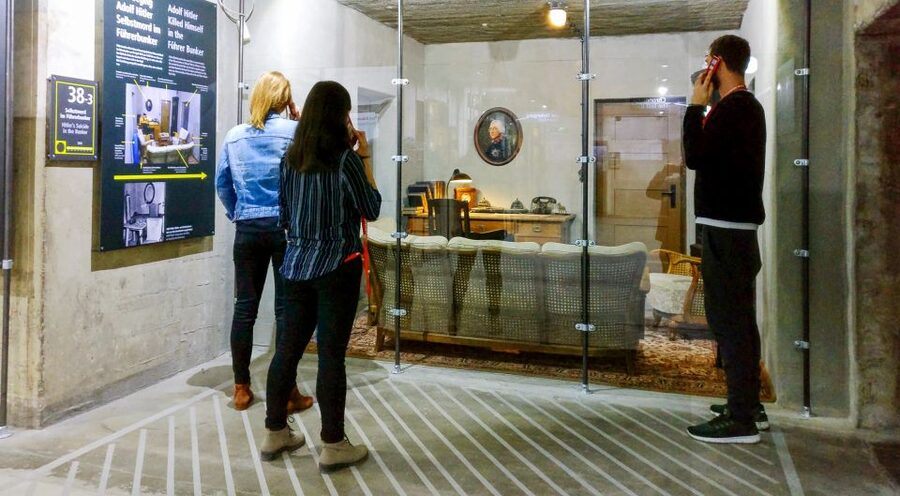
The lower level contains the display many people most want to see: a full-scale replication of Hitler’s Führerbunker, along with a model of the bunker. It is important to understand what this means before you arrive. You are not touring a preserved, intact command center. You are seeing an interpretive reconstruction and model in a bunker setting.
That distinction does not make the display less useful. The replica helps you picture the confined final headquarters and adds a physical reference to the written account of Hitler’s last days. The subject can attract curiosity for the wrong reasons, but the presentation keeps the focus on history and consequences rather than admiration.
The bunker surroundings add a strong emotional layer. Bare, enclosed rooms and the underground setting suggest the pressure and isolation of the final period. You may find the atmosphere unsettling, especially after several hours of photographs and accounts from the war.
One part of the exhibition is presented as conserved from the 1940s, with photographs and films helping explain what you are seeing. Since the visit is built around interpretation, read the labels carefully and treat the replica, model, and preserved sections as different kinds of evidence.
The fall of the regime and Berlin after 1945
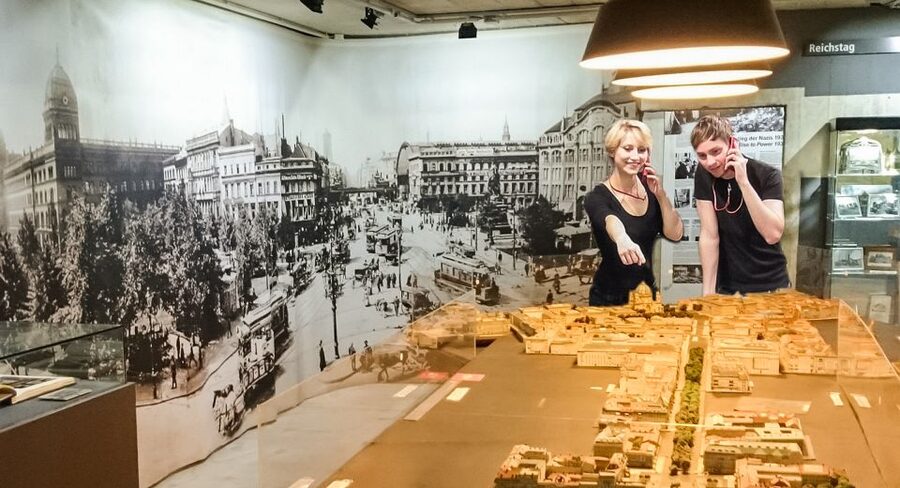
The story does not stop with Hitler’s death. The exhibition carries the timeline through the end of the war, the aftermath, and the fall of the Berlin Wall.
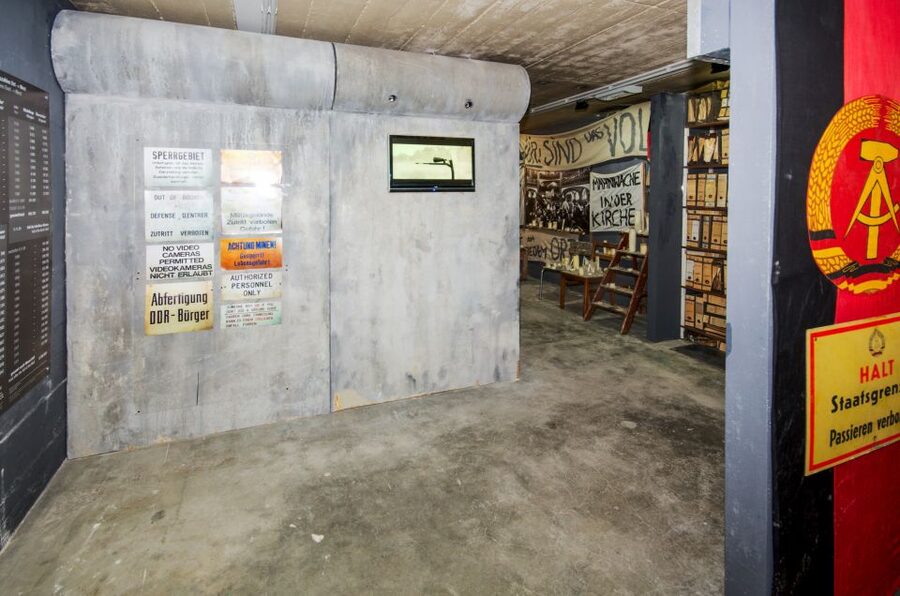
That final stretch is valuable because it places Nazi Germany within Berlin’s wider twentieth-century story. You see how the city moved from dictatorship and total war into division, then toward reunification. The museum’s title may draw you in with the bunker, but the city-wide timeline gives the visit a much wider purpose.
The section on the Wall also creates a personal connection to Berlin’s recent past. On some days, the museum founder may be present and able to share his lived experience of the Berlin Wall. That is not a scheduled part of the ticket, so do not book expecting a meeting, but it can add a memorable human voice when it happens.
How long should you allow?
The official duration is one day, which is best understood as the period for which your ticket is valid, not a required eight-hour visit. In practical terms, I would plan like this:
- 90 minutes: A rushed overview, with little time for reading.
- Two hours: Enough for the main route and audio guide highlights.
- Three to four hours: The sensible plan for most history-minded visitors.
- Five to six hours: Suitable if you read nearly every panel and watch the films carefully.
The exhibition is large enough that many people expect a short museum visit and then run out of time. I would schedule it as the main activity for a morning or afternoon, not squeeze it between two fixed appointments.
Wear comfortable shoes. You will walk and stand more than the ticket description may suggest, and the stairs matter. Bring water for the longer visit, though food and drinks are not part of the entry ticket. A café and toilets are available on site.
Is the $21 ticket good value?
At $21 per person, this is not the cheapest museum stop in Berlin. It can still be good value if you use the time well. A three-hour visit works out as a reasonable cost for a substantial historical exhibition, and a careful half-day visit makes the price easier to justify.
The value comes from the amount of material, the audio guide, the unusual bunker setting, and the ability to move at your own pace. You are not paying for a short guided walk that ends after a fixed route. You can linger over one section, skip a panel, return to a timeline, or spend extra time with the Führerbunker display.
The price is less attractive if you only have an hour or if you dislike reading. This is not primarily an artifact museum, and it does not promise constant hands-on activity. Its appeal is the depth of the account and the seriousness of the presentation.
Flexible booking helps if your schedule is uncertain. You can reserve now and pay later, and cancellation is free up to 24 hours before the visit for a full refund. Check the available starting times when booking, since the ticket is valid for one day rather than an unlimited period.
Who will enjoy this museum most?
I would recommend it most strongly to anyone who wants a fuller explanation of Hitler’s rise, Nazi rule, WWII, and Berlin’s later division. It suits independent visitors who like to read, pause, and set their own rhythm.
It also works well for families with older children and teenagers who already have some interest in history. The chronological route and audio guide make the material easier to follow, but the graphic photographs and serious subject matter call for parental judgment.
You may want to choose another attraction if you have limited mobility, dislike enclosed spaces, or want a light and highly interactive museum. The visit is physically demanding in a modest way, with stairs, walking, standing, and warm underground rooms.
Photography is forbidden inside. That rule may disappoint anyone who likes to document every museum, but it fits the subject. You will need to pay attention in the moment rather than collecting images for later.
My verdict on the Berlin Story Bunker
Book this experience if you want a serious, detailed account of Berlin’s Nazi past in a setting that adds real weight to the subject. The strongest reasons are the clear timeline, the wide collection of photographs and films, the multilingual audio guide, and the lower-level Führerbunker display.
Give yourself at least two hours, and preferably three or four. Read the written displays as well as listening to the audio, since the two formats serve different purposes. Go early enough to avoid the 5:30 PM last entrance, wear comfortable shoes, and prepare for disturbing material.
Skip it if you need a fast attraction, have mobility limitations, or are not ready for graphic evidence of war and genocide. For everyone else, the $21 ticket offers a substantial, thoughtful visit that can anchor your understanding of Berlin’s twentieth century.
FAQ
Where is the Berlin Story Bunker?
The meeting point is the ticket office at Schöneberger Str. 23a, 10963 Berlin, near Anhalter Bahnhof and Potsdamer Platz.
How long does the visit take?
You can see the main sections in about two hours, but three to four hours is a better plan. Visitors who read nearly everything may want five or six hours.
What does the ticket include?
The ticket includes entrance to the Berlin Story Bunker and an audio guide.
Which audio guide languages are available?
The audio guide is available in Spanish, English, French, German, Italian, Danish, Dutch, Russian, Hebrew, Portuguese, and Ukrainian.
Is the ticket valid for the whole day?
The ticket is valid for one day. Check availability for the applicable starting times when booking.
What is the latest entrance time?
Last entrance is at 5:30 PM.
Can I take photographs inside?
No. Cameras, video recording, and photography inside are not permitted.
Is the museum suitable for people with mobility impairments?
The activity is listed as unsuitable for people with mobility impairments. The museum also involves walking, standing, and stairs.
Is the Führerbunker original?
The museum includes a full-scale replication and a model of Hitler’s Führerbunker. You should treat these as interpretive displays rather than an intact original bunker.
Can I cancel the booking?
You can cancel up to 24 hours in advance for a full refund. A reserve-now, pay-later option is also available.
Just added around Berlin
- Love and War in Berlin: Self-Guided Story Puzzle Walk★ 5.0 · 7 reviews
- Rickshaw Tours Berlin – Groups of up to 16 people with several rickshaws★ 4.0 · 97 reviews
- Walking on the Wall: 3-Hour Tour in Berlin★ 4.5 · 34 reviews
- eSIM for Germany and 34 European Countries★ 4.5 · 16 reviews
- Warnemuende Shore Excursion: Berlin Private Sightseeing Tour from Rostock★ 5.0 · 4 reviews
- Your ticket to The Wall Museum Berlin★ 3.0 · 60 reviews
- Warnemuende Shore Excursion: Private Berlin Tour★ 4.5 · 27 reviews
- Karl-Marx-Allee Tour: Life and Architecture in East Berlin★ 5.0 · 19 reviews
Tickets, compared.