
Reviewed · MUSEUM & GALLERY TICKETS
Berlin: Jewish Museum Berlin Entrance Ticket
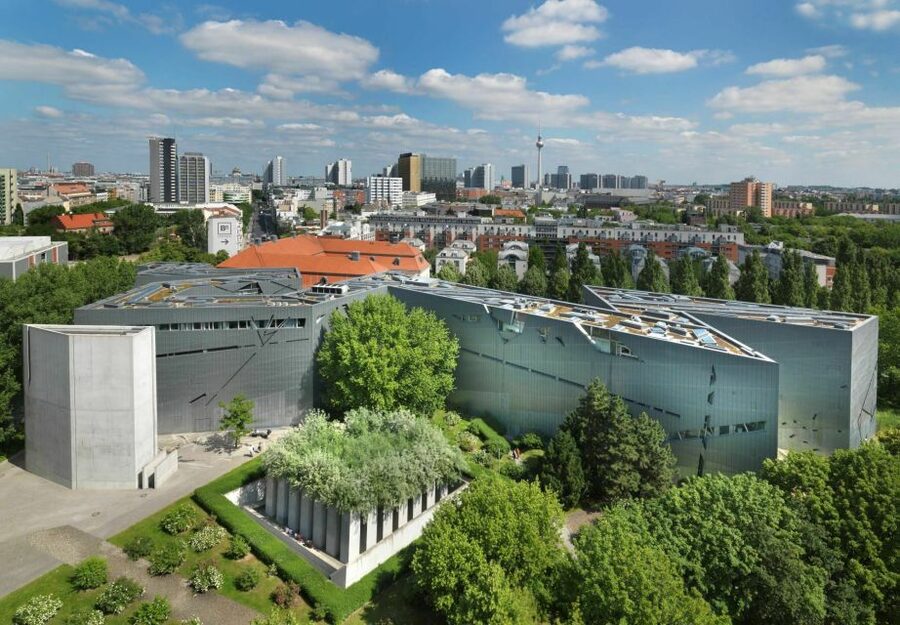
Berlin’s Jewish Museum is not a quiet box of old objects. Daniel Libeskind’s zig-zag building is part of the story, with sloping floors, hard angles, empty spaces, and shafts of light that make you feel off balance. Inside, you move from medieval Jewish life to modern culture, Nazi persecution, and Jewish life today.
I like two things especially: the museum gives Jewish religion and daily life space beyond the Holocaust, and the architecture makes history physical rather than simply something you read. The Holocaust Tower and Memory Void can be difficult experiences, so this is not a light sightseeing stop, and you should allow enough time to process what you see.
In This Review
- Key points
- Why the Jewish Museum Berlin feels different
- Start with centuries of Jewish life in Germany
- Follow the museum’s unusual route
- The underground spaces make the visit physical
- The Holocaust is present, but it is not the whole story
- Special exhibition: Defiance and Jewish women designers
- Special exhibition: Inventories and Salman Schocken
- Use the app, but bring headphones
- Free admission makes this an easy Berlin choice
- Who will get the most from this museum
- Practical plan for a two-hour visit
- Should you book the Jewish Museum Berlin?
- FAQ
- Is admission to the Jewish Museum Berlin free?
- How long does a visit take?
- What are the opening hours?
- Is an audio tour included?
- Should I bring headphones?
- Is the museum wheelchair accessible?
- Is transportation included?
- Can I visit the Berlinische Galerie at a reduced price?
- Is the ticket refundable?
Key points
- The building tells its own story: Libeskind’s sharp geometry, voids, and uneven spaces shape the visit.
- Jewish life comes first, not only Nazi history: Learn about Shabbat, kosher food, holidays, customs, art, and family life.
- The Holocaust Tower and Memory Void are powerful: Expect spare, emotional spaces rather than conventional galleries.
- Admission is free: The museum offers exceptional value, though optional audio content may cost extra.
- Plan on two hours at minimum: A longer visit of two and a half hours or more is sensible if you read closely.
- Bring your own headphones: The free JMB app includes audio tours and item-by-item content.
Why the Jewish Museum Berlin feels different
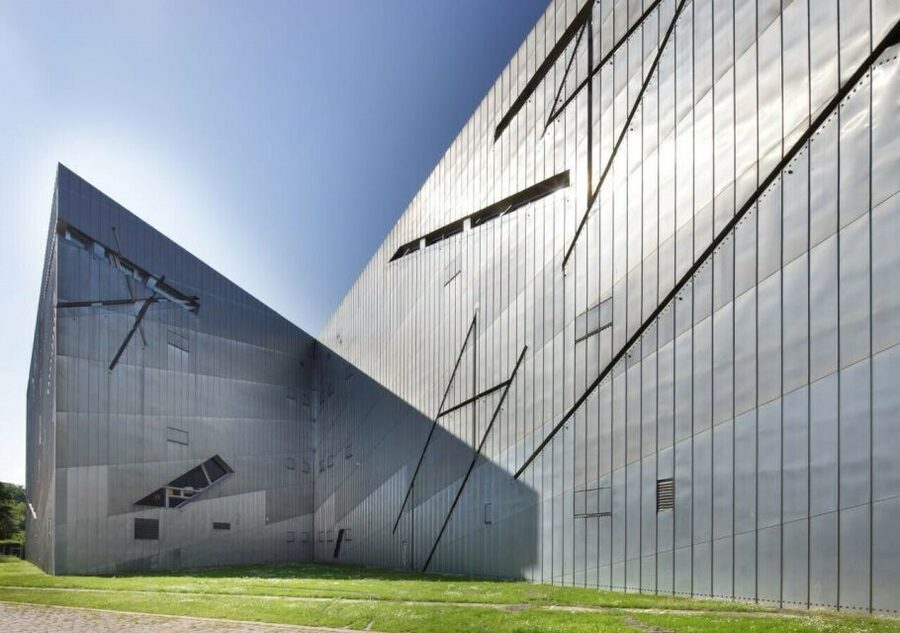
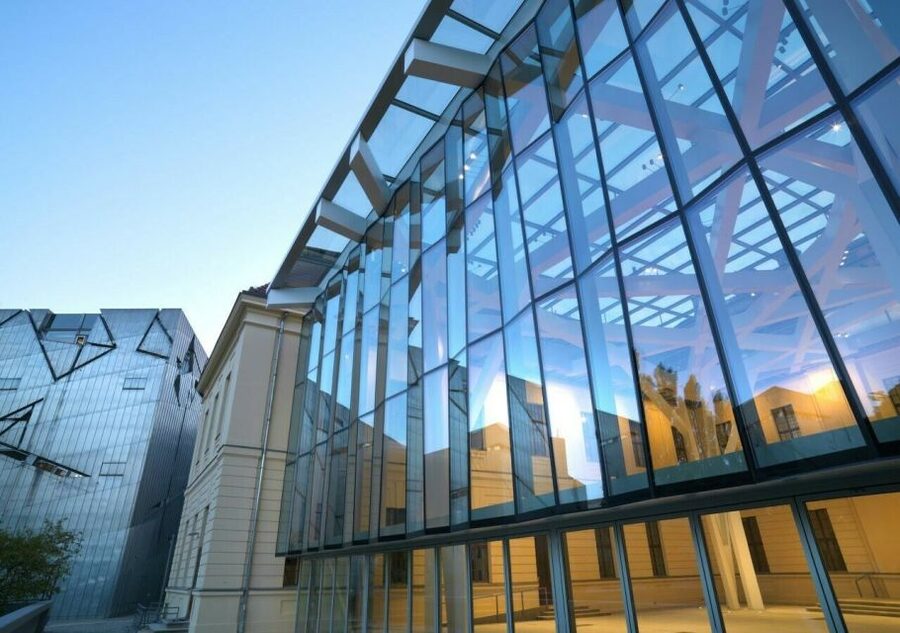
The Jewish Museum Berlin does not present history as a straight corridor. Its main building, designed by Daniel Libeskind, uses architecture to suggest rupture, absence, exile, and disorientation.
From outside, the building looks like a fractured metal zig-zag. Inside, you encounter slanting walls, sharp corners, long empty voids, and floors that do not always feel level. This can make the museum harder to follow than a standard chronological collection, but that confusion is part of the design.
I appreciate that the building does not treat architecture as decoration. It changes how you move and how you pay attention. You may find yourself looking at a doorway, a narrow passage, or a shaft of light before reading the label beside it.
The museum sits in Kreuzberg, within walking distance of Checkpoint Charlie. That makes it easy to pair with a day of central Berlin sightseeing, though you should not squeeze it into a rushed gap between major appointments. The subject matter needs time.
More museum & gallery tickets in Germany:
- Berlin: DDR Museum Tickets
★ 4.3 · 3,443 reviews - Berlin: Natural History Museum Entrance Ticket
★ 4.6 · 3,382 reviews - Berlin: Neues Museum Entry Ticket
★ 4.6 · 3,261 reviews
Start with centuries of Jewish life in Germany
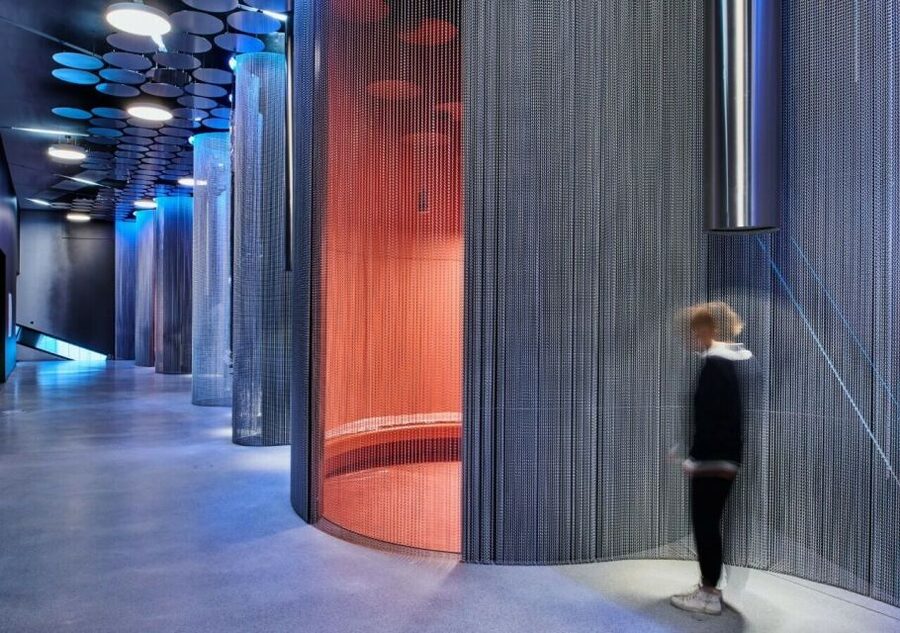
The permanent displays cover Jewish history in Germany from the Middle Ages to the present. The story includes religious practice, work, family life, art, migration, persecution, survival, and contemporary culture.
That range matters. If you visit expecting only a Holocaust memorial museum, you will miss much of the point. Jewish communities shaped German cities, trade, scholarship, design, music, publishing, and public life over many centuries. The museum gives you objects and stories that show people making homes, observing traditions, raising families, and adapting to changing political conditions.
Look for sections that explain the everyday rules and rhythms of Judaism. You can learn about dietary laws, Shabbat, Jewish holidays, and other customs in a way that connects belief to daily choices. These displays are useful even if you know little about Judaism, because they explain practice rather than assuming prior knowledge.
The collection includes ordinary household objects as well as art. That balance is one of the museum’s strengths. A work of art may catch your eye, but an everyday item can tell you just as much about how a family lived.
You will also find video and audio installations, along with interactive stations. These give the museum a more varied pace, though they can add to the amount of information competing for your attention.
Follow the museum’s unusual route
The museum is large enough that a floor plan matters. Several people have found the route confusing, especially when trying to work out which rooms should come next. I recommend taking a moment at the start to understand the layout rather than rushing toward the first exhibit.
The experience is not simply one long upstairs gallery. There are underground spaces, the main exhibition areas, stairs, and some uphill sections. The museum is wheelchair accessible, but the building’s unusual form can still make orientation less direct than in a conventional museum.
Give yourself at least two hours. That is enough for a solid visit if you keep moving and use selected audio material. If you read every panel, stop at the interactive stations, and take time in the architectural spaces, two and a half hours may feel more realistic.
One visitor returned on another day after running out of time before closing. That is a useful warning. The museum closes at 6pm, and leaving your visit until late afternoon can turn an absorbing stop into a hurried one.
The underground spaces make the visit physical
The underground section is where Libeskind’s design often has the strongest effect. Three intersecting axes represent different parts of Jewish experience, including continuity, exile, and the Holocaust.
The spaces are not presented as ordinary galleries. You may walk along a passage that ends in an empty void or move toward a space that feels deliberately inaccessible. The architecture asks you to notice absence, not just objects.
The Holocaust Tower is a tall, cold, largely empty room. It is not filled with explanatory displays competing for your attention. Instead, the bare space, limited light, and height create a feeling of isolation. The effect can be powerful, but it may also feel bleak. That is intentional, and you should not expect a cheerful museum pace here.
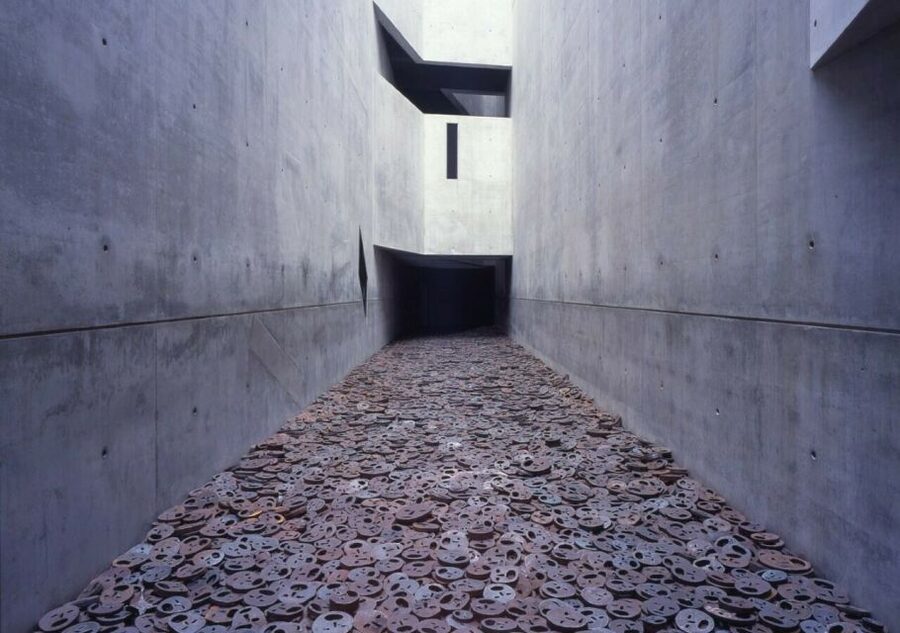
The Memory Void contains the Shalekhet, or Fallen Leaves, installation. Metal faces cover the floor, and walking across them produces a harsh sound. This is one of the museum’s most memorable moments because you do not simply look at the work. You hear and feel your movement across it.
The Garden of Exile offers another architectural idea. Its angled ground and surrounding columns create a sense that familiar orientation has been taken away. This is not a garden in the restful sense. It uses the language of a garden to express displacement.
These spaces reward a slow approach. You do not need to rush through every room. Pause, notice how the building affects your body, then continue to the historical material.
A few more Germany trips to weigh up
- Cologne: Chocolate Museum Entrance Ticket
★ 4.4 · 2,790 reviews - Dresden: Church of Our Lady Guided Tour of Gallery
★ 4.7 · 2,421 reviews - Skip-the-Line: Berlin Wall Museum at Checkpoint Charlie
★ 4.1 · 2,041 reviews - Berlin: Museum Island Multiple Museum Entry Ticket
★ 4.4 · 2,007 reviews
The Holocaust is present, but it is not the whole story
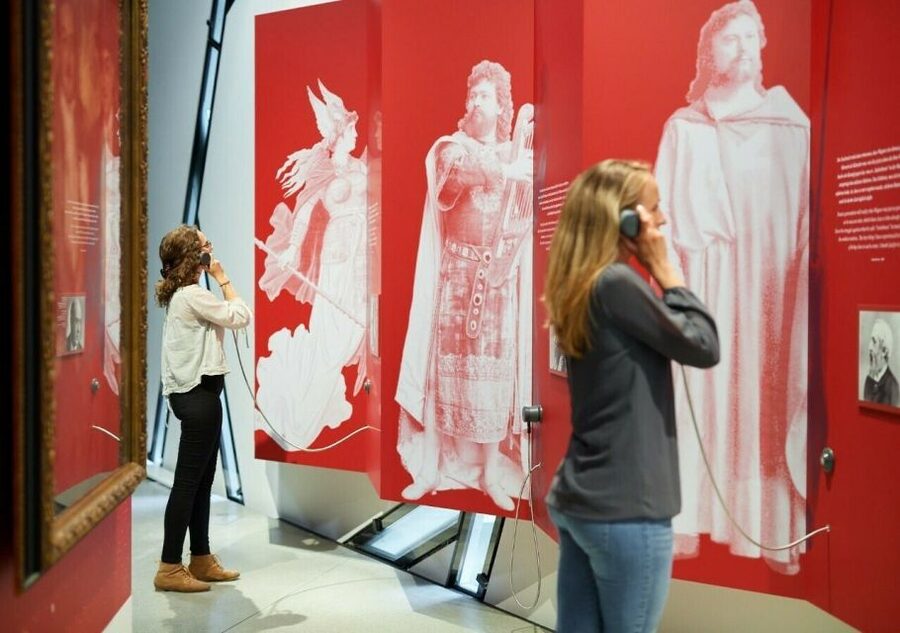
The museum deals directly with the Holocaust and the destruction of Jewish life under Nazi rule. You will encounter memoirs, photographs, documents, and personal accounts that show the human cost of state persecution.
This material can be painful. Some sections are quiet and reflective, while others are emotionally heavy. If you are visiting with children, teenagers, or anyone sensitive to difficult subjects, talk beforehand about what you may encounter and take breaks as needed.
One of the museum’s achievements is the way it connects the Holocaust to the earlier story of Jewish life. The Nazi period becomes an assault on real communities, families, careers, homes, and traditions, not an isolated chapter in a textbook.
The museum also shows the loss to German society itself. Jewish artists, business owners, designers, writers, teachers, and other citizens had helped shape the country. Their removal and murder destroyed lives and weakened the culture around them.
At the same time, the museum does not end in 1945. Later material and current perspectives help show Jewish life as something continuing, changing, and active. That wider view is important, especially if your previous visits to Berlin have focused mainly on Nazi sites.
Special exhibition: Defiance and Jewish women designers
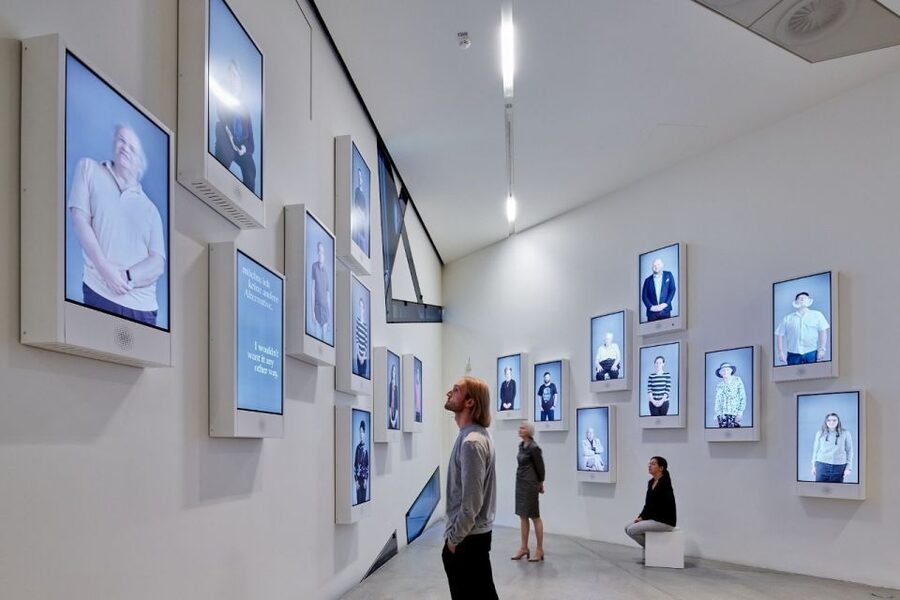
The exhibition Defiance, Jewish Women and Design in the Modern Era examines more than sixty designers and their role in German society during the early twentieth century.
Its focus is unusually specific. These women faced marginalization as women, as Jews, and as artists. They worked in fields including goldsmithing, textiles, ceramics, wood carving, fashion, and graphic design.
The exhibition also follows what happened when the Nazi regime destroyed their careers and lives. Some escaped and rebuilt their lives abroad. Many were later left out of standard accounts of German art and design.
This is valuable because it adds professional and creative lives to the museum’s larger story. You are not only seeing persecution. You are seeing ambition, talent, business, craft, and modernization before those lives were interrupted.
Bring your own headphones if possible. The museum includes audio and video material, and your own pair is more comfortable than trying to share or listen without them. The stated exhibition dates are July 11 through November 23, 2025, so check the current program before you plan a visit around it.
Special exhibition: Inventories and Salman Schocken
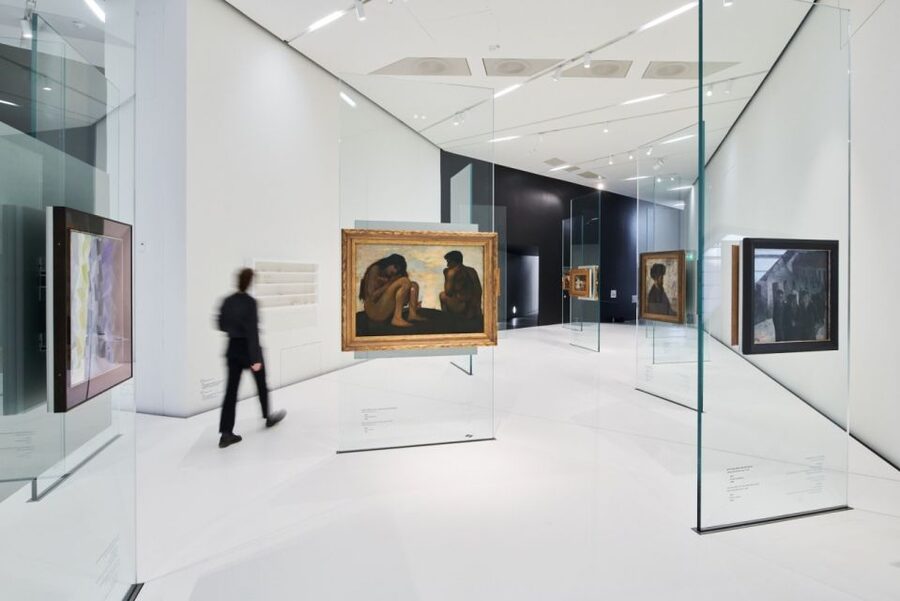
Inventories, The Legacy of Salman Schocken invites American author Joshua Cohen to explore the cultural legacy of Salman Schocken.
Schocken was a publisher and department-store entrepreneur. The exhibition uses books and objects from the museum collection to consider publishing, commerce, museums, culture, ownership, and belonging.
Admission to this exhibition is free. Its subject is more reflective than a basic historical display, so it may appeal most if you enjoy exhibitions that connect objects to questions about who owns culture and how collections are formed.
As with all temporary exhibitions, confirm dates before booking a particular day. The supplied dates run from July 11 to November 23, 2025.
Use the app, but bring headphones
The free JMB app is included with the visit. It offers two suggested audio routes, one lasting about 60 minutes and another lasting at least 90 minutes. You can also select individual objects and listen at your own pace.
I would download the app before entering if your phone connection is uncertain. Bring headphones, especially if you plan to use the longer route. One visitor paid about 5 euros for headphone access and found it worthwhile, but bringing your own avoids that extra cost and gives you more control.
The app can help solve the museum’s signage problem. Since the building’s route is not always obvious, an audio path gives you a clearer structure. Still, do not feel obliged to hear every item. The museum contains enough material to fill a full day, and trying to consume it all can flatten the experience.
Choose one of two approaches:
- Follow the longer suggested route for a guided visit of roughly two hours.
- Pick individual objects and exhibitions if you prefer a slower, less directed visit.
The museum is available for self-guided exploration. A guided visit may sometimes be offered through a separate option, but the basic entrance ticket does not include a guide or an audio tour.
Free admission makes this an easy Berlin choice
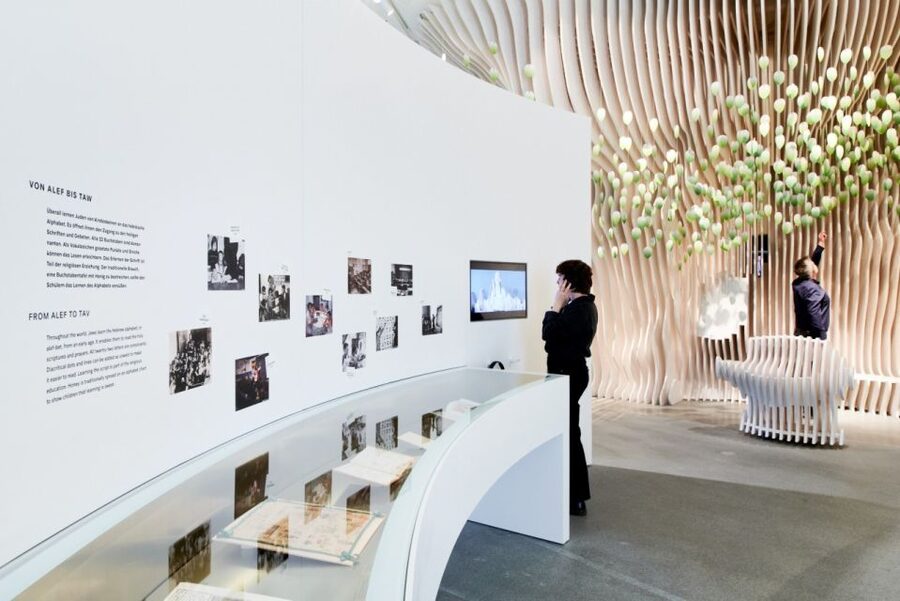
The entrance fee is free, which makes this one of Berlin’s strongest cultural values. You still need to check available starting times and select the correct ticket option, but there is no admission charge for the museum itself.
Free does not mean a quick or minor attraction. The building, permanent displays, underground spaces, and temporary exhibitions can occupy several hours. I also encourage you to make a donation if you find the visit worthwhile. The museum depends on support, and a small contribution is a practical way to help keep admission open.
Food, drinks, parking, and transportation are not included. The museum has a large café, so you can pause there after the galleries. Parking fees are separate, and the ticket does not provide transport to or from the museum.
Your JMB ticket also gives you reduced-rate admission to the neighboring Berlinische Galerie on the day of your museum visit and the following two days. The gallery is about a five-minute walk away, so this can add value to a wider art-focused visit in Kreuzberg.
The booking is non-refundable, so check your date and time before confirming. The activity also offers skip-the-ticket-line entry, which is useful when you want to protect a limited sightseeing schedule.
Who will get the most from this museum
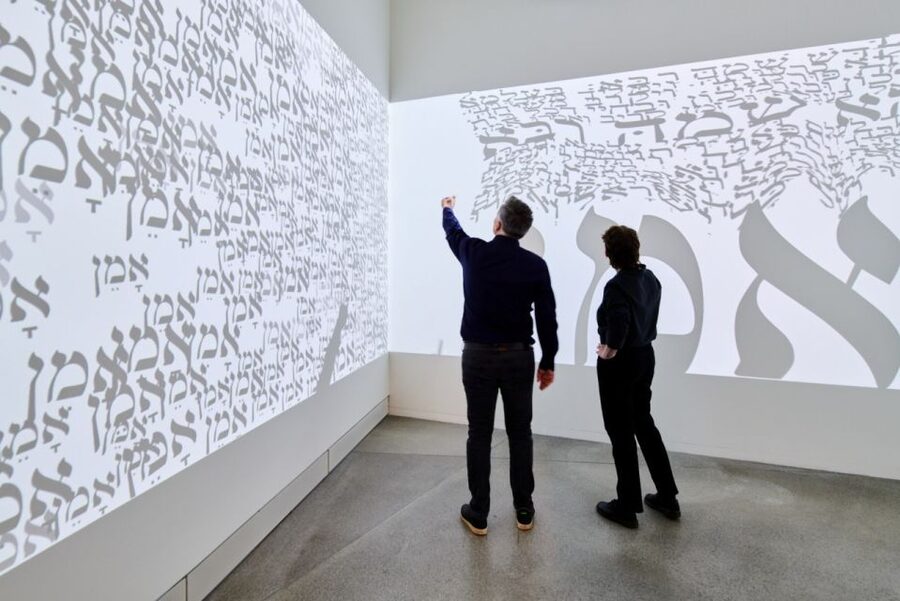
You do not need a strong background in Jewish history to appreciate the museum. The displays explain religious customs, daily life, and major historical changes in accessible ways.
This is especially suitable for:
- Anyone interested in Berlin’s social and cultural history
- Visitors who want Jewish history presented beyond the Holocaust
- Architecture fans curious about Libeskind’s design
- Families with older children who can engage with difficult history
- Museum visitors who enjoy audio, film, and interactive displays
- People pairing the visit with Checkpoint Charlie or the Berlinische Galerie
It may not suit you if you want a quick, light attraction with a simple route. The subject is often sobering, and the architecture can feel disorienting. If you are already tired from a day of memorials and Nazi-era sites, schedule a quiet break before entering.
Practical plan for a two-hour visit
Arrive with headphones, comfortable shoes, and enough time before the 6pm closing. Large bags may need to go into lockers, and one visitor noted needing a euro coin for the locker, so keep a coin handy if possible.
Start by getting your bearings. Then follow either the app’s longer route or the museum’s floor plan. Give the underground spaces time, especially the Holocaust Tower, Memory Void, and Garden of Exile.
Move into the historical galleries with attention to everyday life. Spend time on the sections about kosher food, Shabbat, holidays, and Jewish customs. These displays help keep the visit grounded in lived experience rather than only persecution.
Leave room for at least one temporary exhibition. If you are visiting during Defiance, the stories of Jewish women designers add a fresh angle to the wider history of German modernism and Jewish contribution.
If you have only two hours, do not try to read every panel. Choose the audio route or focus on the sections that interest you most. If you have three hours or more, the museum becomes less pressured and the architecture has more room to work on you.
Should you book the Jewish Museum Berlin?
Yes, if you want a serious, well-designed museum that treats Jewish life in Germany as a long story rather than a single tragedy. The free admission makes the decision easy, and the architecture alone justifies the visit for many people.
Book it if you can spare two hours, preferably closer to two and a half. Bring headphones, allow time for the underground spaces, and do not expect perfect signage. If you want a fast attraction or feel unable to handle difficult historical material that day, choose another stop.
For most Berlin visitors, this is an important and worthwhile museum. Its strongest lesson is simple: Jewish history in Germany includes centuries of belief, work, family, creativity, loss, survival, and life today.
FAQ
Is admission to the Jewish Museum Berlin free?
Yes. Admission to the museum is free. The exhibition Inventories, The Legacy of Salman Schocken is also listed as free.
How long does a visit take?
The average visit takes about two hours. You may need two and a half hours or more if you read the displays closely or use the longer audio route.
What are the opening hours?
The museum is open from 10am to 6pm and closes at 6pm.
Is an audio tour included?
A guided or audio tour is not included with the basic entrance ticket. The free JMB app can be downloaded for audio routes and individual object information.
Should I bring headphones?
Yes. Headphones are recommended for the app and audio content. Bringing your own is practical.
Is the museum wheelchair accessible?
Yes, the activity information states that the museum is wheelchair accessible.
Is transportation included?
No. Transportation to and from the museum is not included. Parking fees are also separate.
Can I visit the Berlinische Galerie at a reduced price?
Yes. Your JMB ticket qualifies you for reduced-rate admission to the Berlinische Galerie on the day of your museum visit and the following two days. It is about a five-minute walk away.
Is the ticket refundable?
No. The activity is non-refundable, so check your selected date and time before booking.
Just added around Germany
- Aachen old town tour – GERMAN (public)★ 5.0 · 24 reviews
- Aachen Private Walking Tour With A Professional Guide★ 5.0 · 11 reviews
- Cologne Highlights: Exclusive Private Tour★ 5.0 · 5 reviews
- Bremen Private Walking Tour With A Professional Guide★ 5.0 · 7 reviews
- Private Walking Tour through the Fascinating Bremen’s City Center★ 5.0 · 5 reviews
- Explore Cologne’s best Street Art Quarter★ 4.5 · 4 reviews
- Bremen Exploration Private Game and City Tour on your Phone★ 4.5 · 7 reviews
- e-Scavenger hunt Bremen: Explore the city at your own pace★ 4.0 · 24 reviews
Museum & Gallery Tickets, compared.



Skip-the-Line: Berlin Wall Museum at Checkpoint Charlie
Read our review →
Browse the lists this tour appears in