
Reviewed · MUSEUM & GALLERY TICKETS
Berlin: DDR Museum Tickets
The DDR Museum makes East German history unusually physical. You do not just look at objects behind glass. You open drawers, switch on televisions, inspect kitchen shelves, sit in a prison cell, and climb into a Trabant for a simulated drive through prefabricated housing districts. I like the hands-on apartment displays and the way ordinary objects explain daily life better than a shelf of labels ever could.
I also like the museum’s flexible pace. You can move between rooms without following one fixed route, and the mix of politics, home life, music, transport, and media keeps the visit from feeling like one long history lesson. The main drawback is space: this popular museum can feel crowded, making it hard to read every panel or try each interactive feature.
In This Review
- Key points to know before entering
- Finding the DDR Museum opposite Berlin Cathedral
- Begin with East Germany as something you can touch
- Walk through a reconstructed DDR apartment
- Drive a Trabant through a prefabricated district
- Watch television, news, and East German entertainment
- See politics through the details of ordinary life
- Sit in a former East German prison cell
- How long should you allow?
- When to go and how crowds change the visit
- Is the $15 admission good value?
- Who will enjoy this museum most?
- Practical tips for a better visit
- Should you book the DDR Museum?
- FAQ
- Where is the DDR Museum located?
- How much does admission cost?
- How long is the ticket valid?
- Is a museum guide included?
- What are the museum’s opening hours?
- Are children allowed to enter free?
- Can I cancel my booking?
- Can I reserve now and pay later?
- Are pets allowed inside?
Key points to know before entering
- Open every day from 9am to 9pm: The long hours make it easy to fit around Berlin Cathedral, Museum Island, or an evening plan.
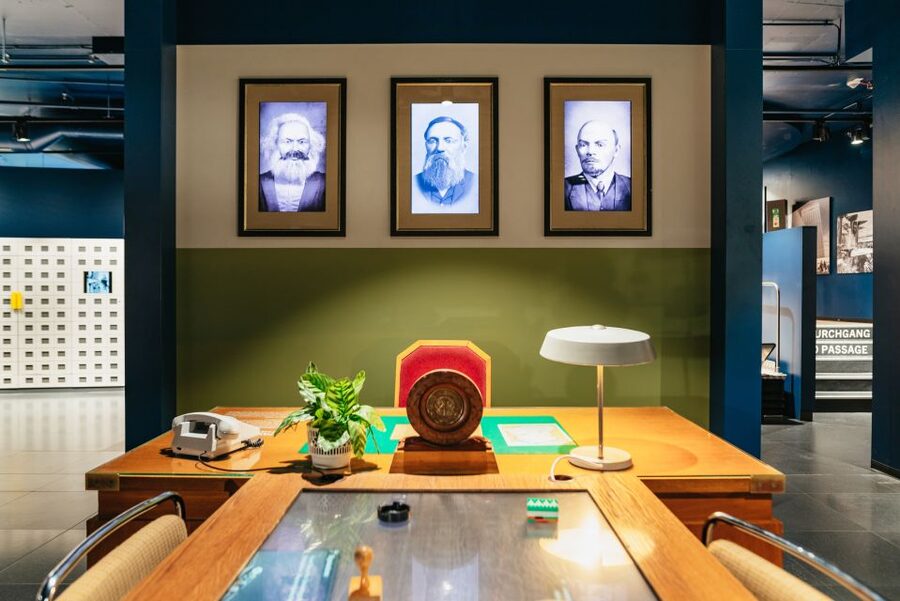
- A real DDR apartment takes center stage: Open cupboards, inspect furniture, and see the everyday products of East German home life.
- The Trabant simulator is a highlight: Sit in an original car, turn the ignition, and experience a simulated drive with period sound effects.
- Most of the visit is self-guided: Entry is included, but a museum guide is not.
- Plan at least 1.5 hours: You can move quickly, but careful readers and families may spend two to three hours.
- Crowds affect the experience: Visit early or late if you want more room around the displays.
Finding the DDR Museum opposite Berlin Cathedral
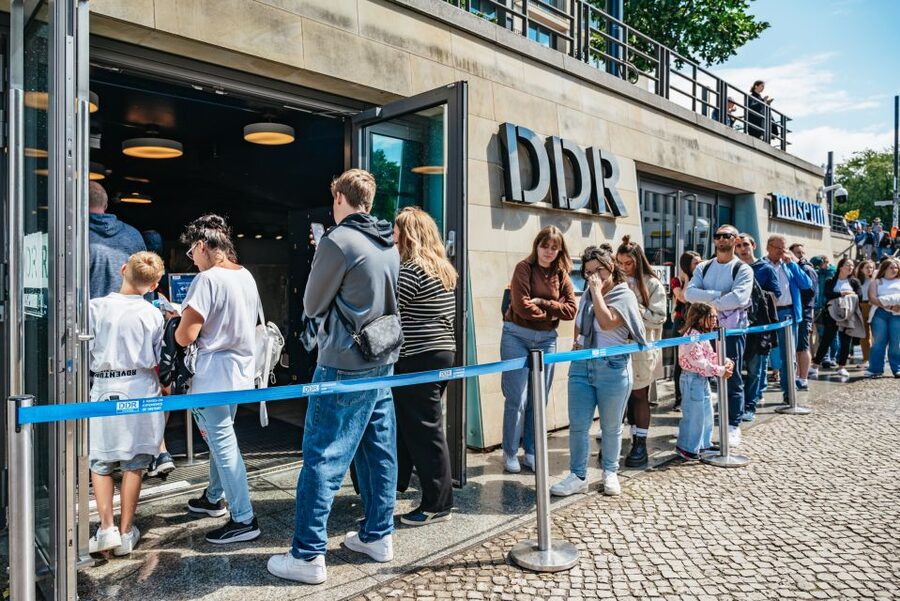
The entrance is on the bank of the Spree, directly opposite Berlin Cathedral. That location makes the museum easy to add to a central Berlin day, especially if you are already walking around Museum Island.
The setting is useful, but do not expect a grand museum hall. The DDR Museum is built around a compact, tightly packed exhibition. That is part of its appeal because you move straight into domestic life rather than spending a long time crossing empty galleries.
I would pair it with nearby sights, but I would not leave the museum until the last few minutes before closing if you want to read carefully. The exhibition invites you to stop, touch, watch, and investigate, so a quick ten-minute visit will miss much of its point.
More museum & gallery tickets in Germany:
- Berlin: Jewish Museum Berlin Entrance Ticket
★ 4.5 · 8,393 reviews - Berlin: Natural History Museum Entrance Ticket
★ 4.6 · 3,382 reviews - Berlin: Neues Museum Entry Ticket
★ 4.6 · 3,261 reviews
Begin with East Germany as something you can touch
The museum focuses on the German Democratic Republic, usually called the DDR in German and the GDR in English. Its subject is not only the Berlin Wall or the political division of Germany. It asks what ordinary life felt like behind the Wall.
That distinction matters. You see how politics reached into housing, work, shopping, transport, entertainment, education, and home decoration. A pressure cooker on a stove or a wall cupboard in a living room may seem modest, but these objects show how people arranged daily life within a very different system.
The information panels provide plenty to read, and the writing is presented in a way that many people find easy to follow. The museum gives you a steady flow of background without requiring a university course in twentieth-century Germany. Still, this is not a place for people who dislike reading. The interactive displays make the visit lively, but the written material supplies much of the context.
Walk through a reconstructed DDR apartment
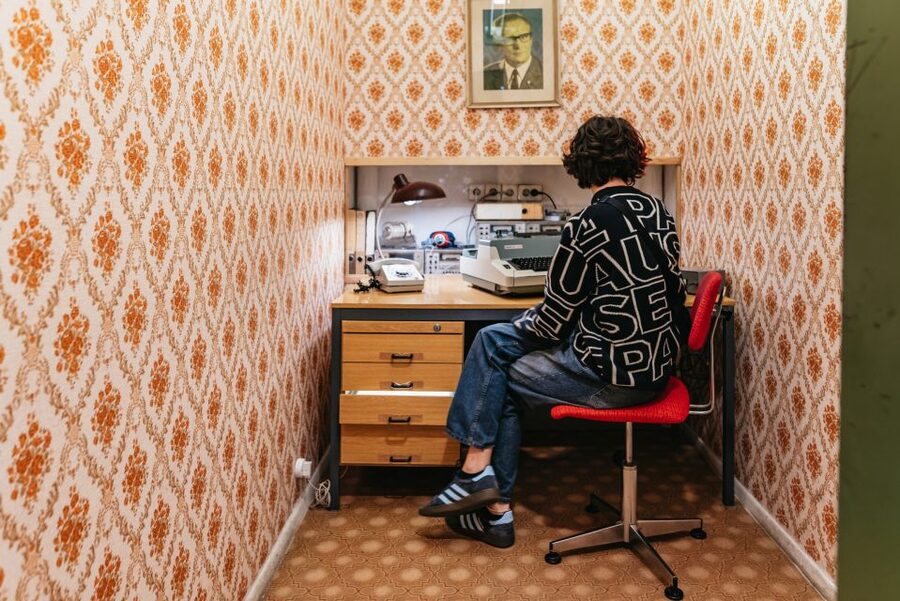
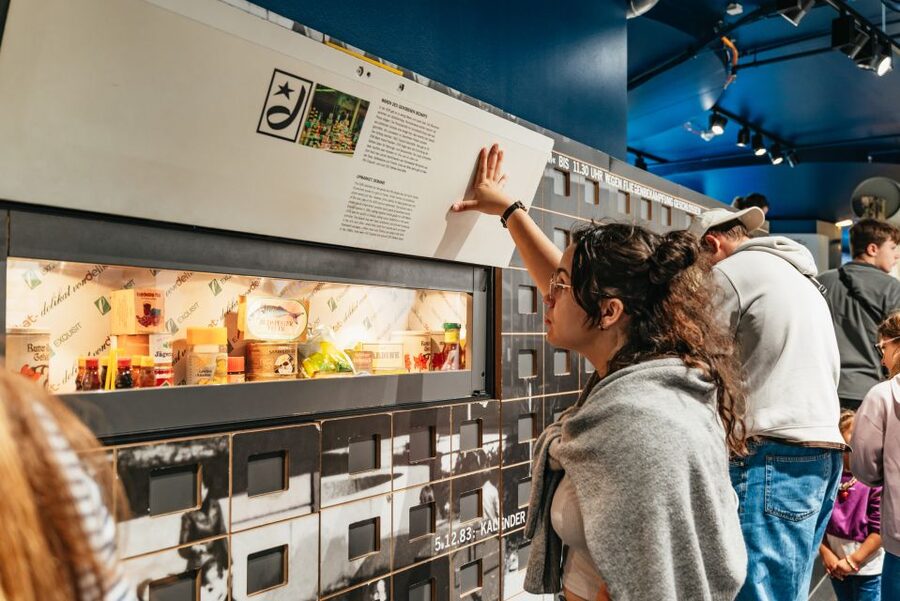
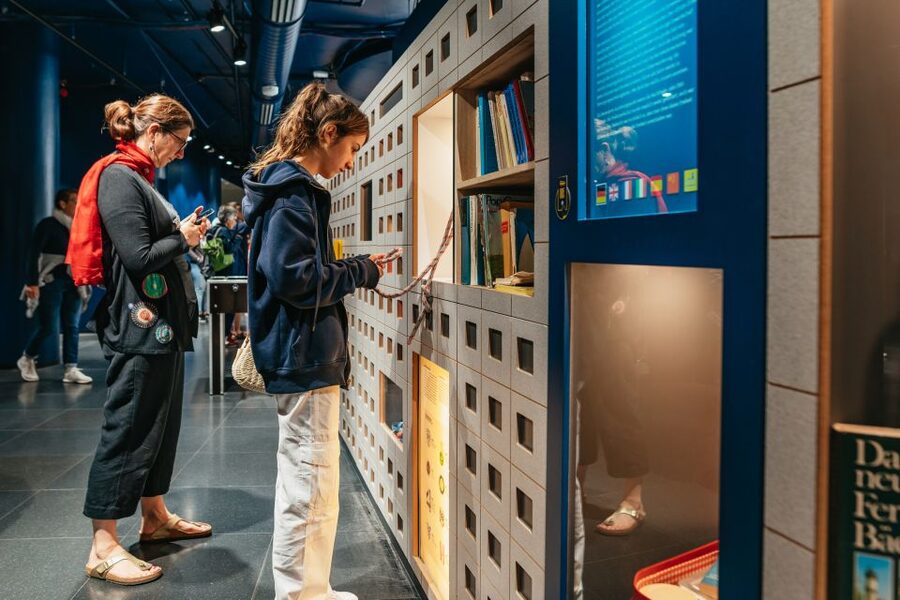
The apartment is the museum’s most effective section. You can move through several rooms arranged with authentic furniture and products from the DDR period. Open drawers and cupboards, look closely at the shelves, and inspect the items people used at home.
The display works because it avoids presenting East Germany as an abstract political idea. You see a household. The Karat wall cupboard, a familiar piece of DDR furniture, gives the living room an instantly period feel. You can turn on the television and see how media entered the home, rather than simply reading that television was important.
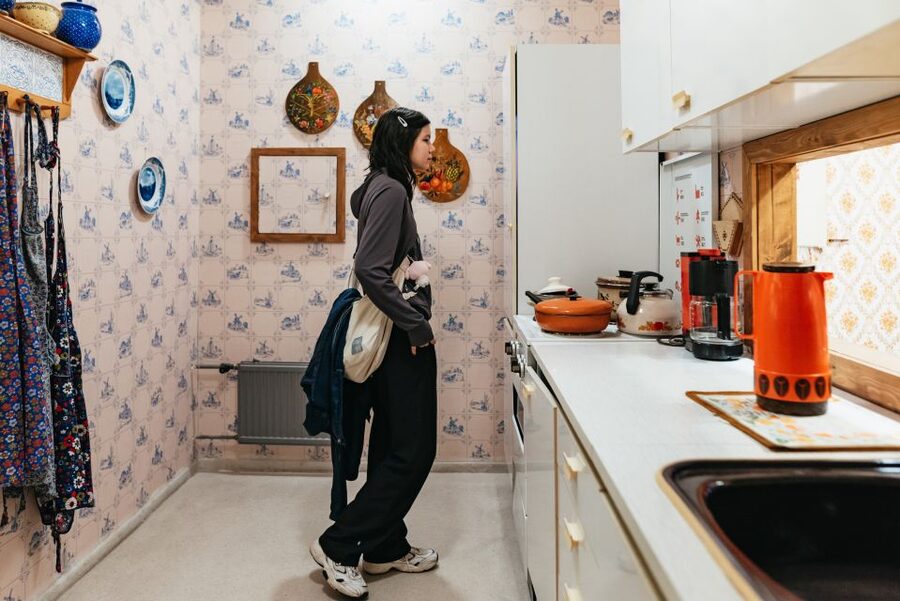
The kitchen adds more sensory detail. You might smell spices on the shelf and see a pressure cooker on the stove. These small touches help you picture routines such as cooking, storing food, and managing a household. The objects are not presented as glamorous. That is the point. They show the limits, habits, and practical choices of an ordinary home.
I would take your time here. The first glance gives you the room’s appearance, but the second look reveals the details: the furniture, the household goods, the television, and the way the rooms fit together. For children, opening things and searching for objects turns the section into a puzzle. For adults who remember the era, it can bring back strong personal memories.
The apartment may also feel a little dusty or worn. That is hardly surprising when the display uses old furniture and period objects, but visitors who want a polished modern exhibition should adjust their expectations. The lived-in quality is part of the experience.
Drive a Trabant through a prefabricated district
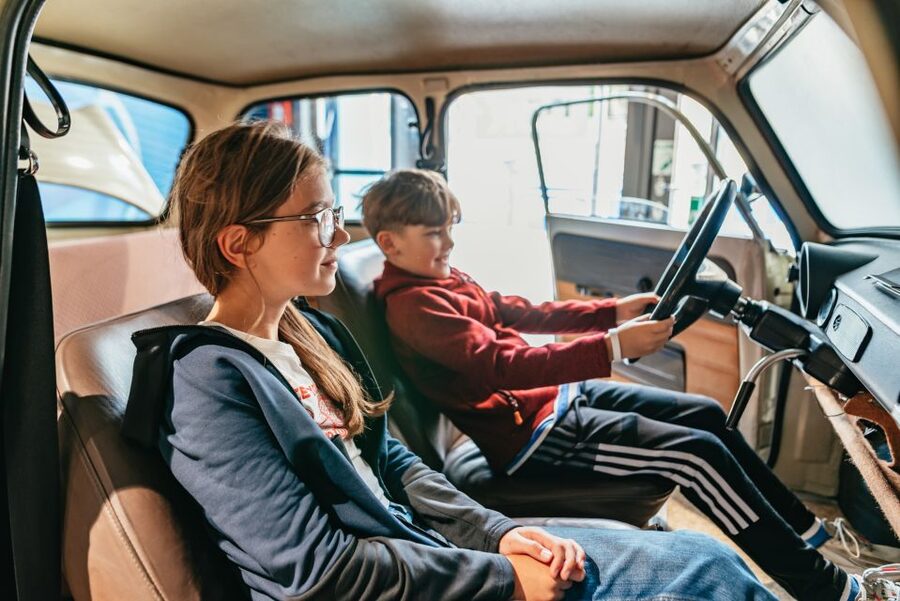
The original Trabant is one of the museum’s biggest draws. You can climb inside, turn the ignition, and use a simulator for a virtual drive through East German prefabricated housing districts.
The car itself is important because it connects transport with the larger story of DDR life. The experience is not simply about sitting in an old vehicle. The simulated journey adds typical Trabant sounds and shows the planned residential districts that shaped daily life for many people.
This is the section most likely to attract children and teenagers, but adults enjoy it too. The controls give you something to do, while the sound effects add a little humor and movement to a subject that can otherwise feel heavy.
Expect a queue when the museum is busy. The simulator is a single focal point, so it can become a bottleneck. If you see a short wait, use the time to inspect nearby displays rather than standing directly beside the car. Then return when it is your turn.
The simulator is fun, but it should not be mistaken for the museum’s whole message. It offers a memorable entry into the subject, while the apartment, political displays, and media sections provide the harder facts.
A few more Germany trips to weigh up
- Cologne: Chocolate Museum Entrance Ticket
★ 4.4 · 2,790 reviews - Dresden: Church of Our Lady Guided Tour of Gallery
★ 4.7 · 2,421 reviews - Skip-the-Line: Berlin Wall Museum at Checkpoint Charlie
★ 4.1 · 2,041 reviews - Berlin: Museum Island Multiple Museum Entry Ticket
★ 4.4 · 2,007 reviews
Watch television, news, and East German entertainment
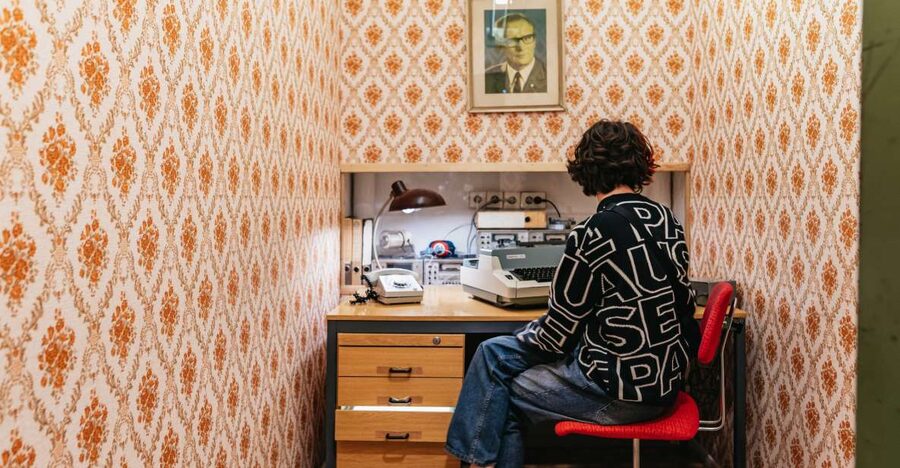
The museum lets you switch on a television in the reconstructed living room. You can also sit in an original cinema stall and watch news reports. These features show how public information and private entertainment overlapped.
The cinema seating makes the media section feel less like a standard panel display. You sit as an audience member, which changes the way you approach the material. The television, meanwhile, belongs to the home, where news and entertainment became part of the daily routine.
Music receives attention too. You can learn about Lipsi, an East German answer to rock and roll, and hear or experience the period’s entertainment culture. This is useful because political history can become too serious and official. Music, television, and cinema reveal how people spent their free time and how the state shaped public culture.
Some films require patience, especially when the museum is crowded. A few people may sit watching a short program while others try to pass through. If a clip interests you, wait for a clear view. If the room is full, you can return later because the museum does not force you along one route.
See politics through the details of ordinary life
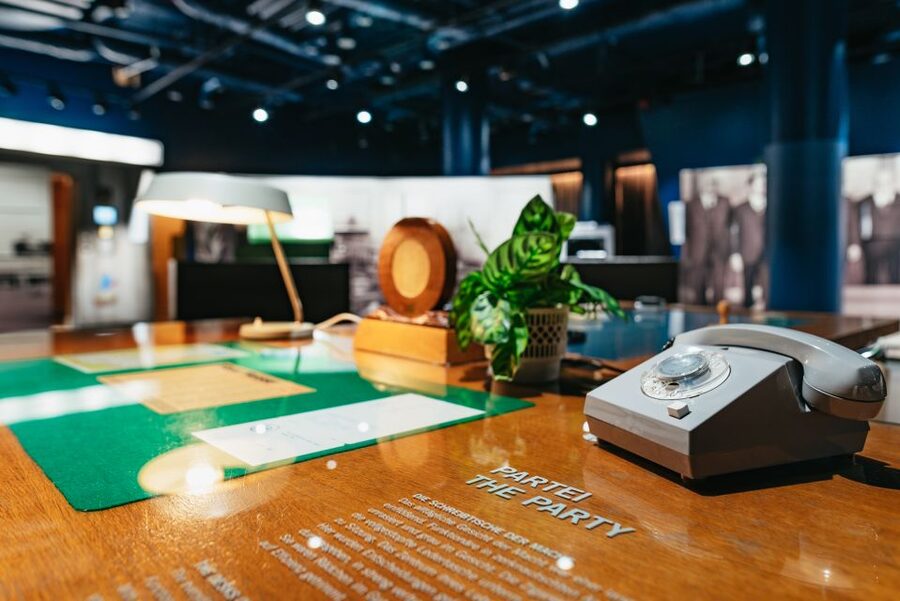
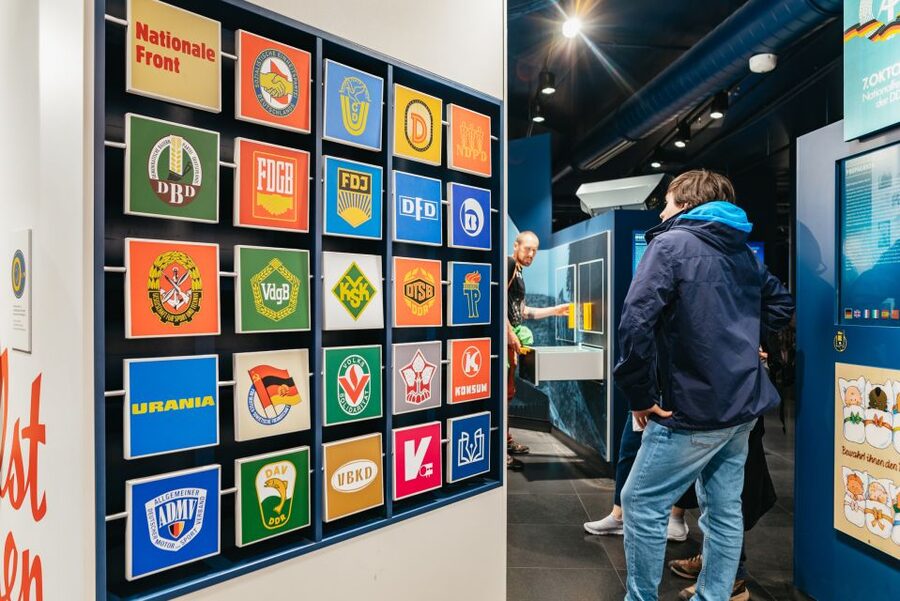
The DDR Museum also covers the political system and the conditions behind the domestic displays. You will find information about life under the communist regime, along with subjects connected to the Berlin Wall and East German society.
The exhibition is strongest when it connects political decisions to daily consequences. Housing, consumer goods, media, transport, and personal freedom become easier to understand when you see them beside the actual objects people used.
One useful quality is its relatively light presentation. The information is serious, but the displays are designed to keep you moving and curious. The museum does not rely only on solemn rooms and long blocks of text. That makes it approachable for families and for anyone who has already spent several hours visiting traditional historical museums.
You should still bring a critical eye. The presentation is clearly shaped by a Western and capitalist viewpoint, as one visitor perceptively noted. It is not especially moralizing, but it is not a neutral time capsule either. I see that as a reason to think about the framing, not a reason to skip the museum. If you want a fuller picture, treat this visit as one part of your Berlin history program rather than the final word on the DDR.
Sit in a former East German prison cell
The exhibition includes a typical former East German prison cell. This is a sharp change from the apartment and Trabant sections.
The cell reminds you that the DDR story is not only about furniture, music, and clever interactive displays. It also concerns surveillance, restrictions, punishment, and the importance of personal freedom. The contrast makes the visit more serious at the right moment.
I find this kind of transition useful. The apartment shows how people lived within the system, while the cell suggests what could happen when people came into conflict with it. You do not need a large dramatic set to understand the point. A confined room and a few clear details can carry considerable weight.
Families may want to explain this section in simple terms before children enter it. The museum is suitable for children, but not every display has the same tone. Younger children may enjoy the car and apartment most, while older children and teenagers can engage with the political material.
How long should you allow?
The official ticket is valid for one day, but most people will use it for one continuous visit. I would allow at least 90 minutes if you want a proper look at the main sections.
A fast visit can be shorter, especially if you focus on the apartment and Trabant. If you read the panels, watch the films, wait for interactive stations, and explore each room, two hours is more realistic. Families who stop often may spend around three hours.
The museum layout lets you move between sections without a fixed route. That is convenient when one display is crowded. It also means you need to keep track of what you have seen, since it is easy to skip a corner and assume you have covered everything.
Do not schedule it as a rushed stop between two timed attractions. The museum rewards curiosity. Open the doors, check the drawers, and look at the small household details. Those actions take time but also make the museum more memorable.
When to go and how crowds change the visit
The DDR Museum is open Monday through Sunday from 9am to 9pm. On December 24 and December 31, it closes earlier, from 9am to 4pm.
The long daily schedule is a real advantage. I would choose early morning, later afternoon, or evening if you want a calmer visit. Wet days and peak weekend periods can bring a noticeable crowd, and the compact rooms become harder to navigate.
A busy museum does not ruin the experience, since you can shift to another section and return later. Still, crowding makes it difficult to read information panels and use the interactive displays at your own pace. If your schedule is flexible, avoid the middle of a rainy Saturday.
There are no fixed starting times listed for the visit. Check availability when booking, but think of the ticket as access for a day rather than a guided appointment. No museum guide is included, so you control the order and speed of your visit.
Is the $15 admission good value?
At $15 per person, the museum offers good value if you spend 90 minutes to two hours inside. The price is especially fair for families because children up to age five enter free, and the interactive displays give different age groups something to do.
The value comes from the range of material packed into one visit. You get reconstructed rooms, period objects, a Trabant simulator, films, music, political information, and the prison cell. A conventional collection of objects behind glass might cover the same subjects, but it would not give you as much to investigate.
The price is less attractive if you only want a quick photo with the Trabant. The car is memorable, but it represents only one small part of the museum. To get your money’s worth, take time with the apartment and the written displays.
Booking offers two practical benefits. You can cancel up to 24 hours before the visit for a full refund, and the reserve-now, pay-later option lets you hold a place without paying at once. Pets are not allowed.
Who will enjoy this museum most?
I would recommend the DDR Museum to adults interested in twentieth-century Europe, families with school-age children, and anyone who wants a clearer picture of East German daily life.
It works particularly well for mixed-age groups. Children can open cupboards and try the Trabant simulator, while adults can read about politics, housing, media, and personal freedom. Older visitors who remember the period may find the household objects nostalgic, while younger people get a tangible introduction to an unfamiliar era.
It may not suit you if you want a quiet, linear museum with lots of space and long periods of contemplation. The layout is compact, the popular stations can be crowded, and the amount of information is substantial. People with difficulty standing for long periods should plan carefully, since much of the visit involves moving and standing.
You should also know that this is not a fully guided experience. If you prefer a live expert explaining each room, the included admission will not provide that. The museum is designed for you to explore independently.
Practical tips for a better visit
- Go early or late: This gives you a better chance of reading the panels and using the interactive stations without waiting.
- Allow two hours if history interests you: Ninety minutes covers the main highlights, but careful reading takes longer.
- Start with the apartment: It gives you the clearest sense of how the museum turns political history into daily experience.
- Return to the Trabant: If it is busy, explore another room and come back rather than waiting in a tight cluster.
- Look inside everything you can open: Drawers, cupboards, shelves, and appliances contain much of the museum’s character.
- Do not skip the serious sections: The prison cell and political material provide needed balance to the fun displays.
- Visit before you are tired: One person found the long periods of standing difficult after a full day in Berlin.
- Use the flexible layout: You do not need to follow one route, so move on when a room is too crowded.
Should you book the DDR Museum?
Book it if you want an active, approachable look at East German life rather than a formal display of objects. The reconstructed apartment, Trabant simulator, television, cinema seating, and open cupboards make the subject easy to grasp, even if you know little about the DDR.
I would be more cautious if your priority is silence, space, or a live guide. Crowding can make the compact museum frustrating, and the large amount of reading means you need to set aside real time.
For most people spending a day in central Berlin, this is a worthwhile $15 stop. Go at a quieter hour, allow at least 90 minutes, and treat the interactive features as a way into the subject rather than the entire visit.
FAQ
Where is the DDR Museum located?
The entrance is on the bank of the Spree, opposite Berlin Cathedral in central Berlin.
How much does admission cost?
The listed price is $15 per person.
How long is the ticket valid?
The ticket is valid for one day.
Is a museum guide included?
No. Entry to the DDR Museum is included, but a museum guide is not.
What are the museum’s opening hours?
The museum is open Monday through Sunday from 9am to 9pm. On December 24 and December 31, it is open from 9am to 4pm.
Are children allowed to enter free?
Children up to age five receive free entry.
Can I cancel my booking?
Yes. You can cancel up to 24 hours in advance for a full refund.
Can I reserve now and pay later?
Yes. The reserve-now, pay-later option allows you to book without paying immediately.
Are pets allowed inside?
No. Pets are not allowed.
Just added around Germany
- Aachen old town tour – GERMAN (public)★ 5.0 · 24 reviews
- Aachen Private Walking Tour With A Professional Guide★ 5.0 · 11 reviews
- Cologne Highlights: Exclusive Private Tour★ 5.0 · 5 reviews
- Bremen Private Walking Tour With A Professional Guide★ 5.0 · 7 reviews
- Private Walking Tour through the Fascinating Bremen’s City Center★ 5.0 · 5 reviews
- Explore Cologne’s best Street Art Quarter★ 4.5 · 4 reviews
- Bremen Exploration Private Game and City Tour on your Phone★ 4.5 · 7 reviews
- e-Scavenger hunt Bremen: Explore the city at your own pace★ 4.0 · 24 reviews
Museum & Gallery Tickets, compared.



Skip-the-Line: Berlin Wall Museum at Checkpoint Charlie
Read our review →
Browse the lists this tour appears in