
Reviewed · MUSEUM & GALLERY TICKETS
Cologne: Chocolate Museum Entrance Ticket
Cologne’s Chocolate Museum turns a familiar treat into a full story, from cocoa trees and ancient Central American cultures to modern machines producing pralines. I like the working glass factory, where you can watch chocolate move from bean to finished product, and the 3-meter fountain, where tasting is part of the visit rather than a distant promise.
I also like the mix of serious history and family fun. The tropical house, old porcelain and silver, industrial equipment, samples, café, and gift shop give you plenty to do. The main drawback is that the museum can feel hot, especially on warm days, and the production area closes about 30 minutes before the museum does.
In This Review
- Key points to know before you go
- A riverside museum with a sweet center
- Start with 5,000 years of cocoa culture
- The tropical house brings the cocoa tree to life
- From ancient objects to Baroque tableware
- Old industrial machines explain the next big change
- Watch the glass factory from bean to praline
- The 3-meter fountain is built for tasting
- The chocolate atelier adds a hands-on option
- Allow time for the café and shop
- Timing, crowds, and practical comfort
- Who will enjoy this most
- Ticket details worth knowing
- Should you book the Chocolate Museum?
- FAQ
- How much does the Chocolate Museum ticket cost?
- How long is the ticket valid?
- What does the ticket include?
- Is a guided tour included?
- Where do I enter the museum?
- Can I cancel the booking?
- Can I reserve now and pay later?
- Is the museum wheelchair accessible?
- Do children need an adult?
- When do the production facilities close?
Key points to know before you go
- See chocolate being made: Glass walls let you watch modern production from cocoa ingredients to molded sweets.
- Taste along the way: Samples are handed out during the visit, including chocolate from the fountain.
- Step into a cocoa-growing climate: The walk-in tropical house contains a real cocoa tree and adds welcome context.
- Plan on one to two and a half hours: A quick visit takes about an hour, while careful readers and families may stay much longer.
- Bring the family: Children, teenagers, couples, and solo visitors all have something to enjoy, though children under 12 need a paying adult.
- Save room for the café: Waffles, cake, fondue, coffee, and hot chocolate make this more than a quick museum stop.
A riverside museum with a sweet center
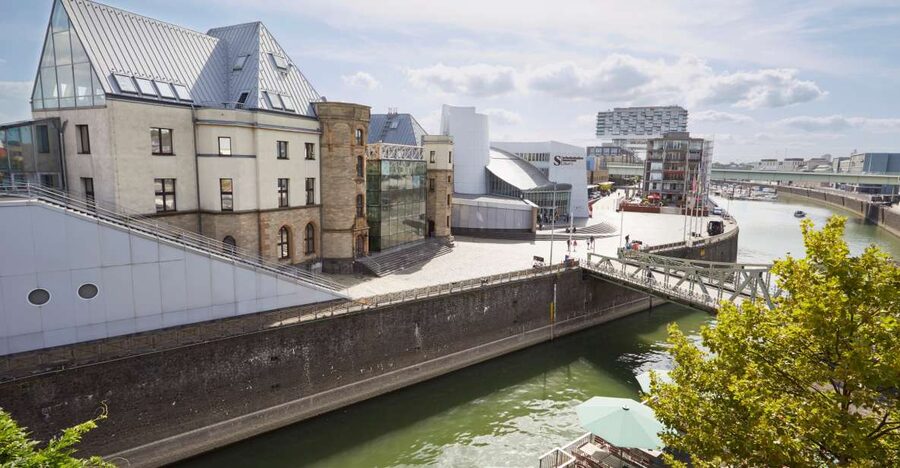
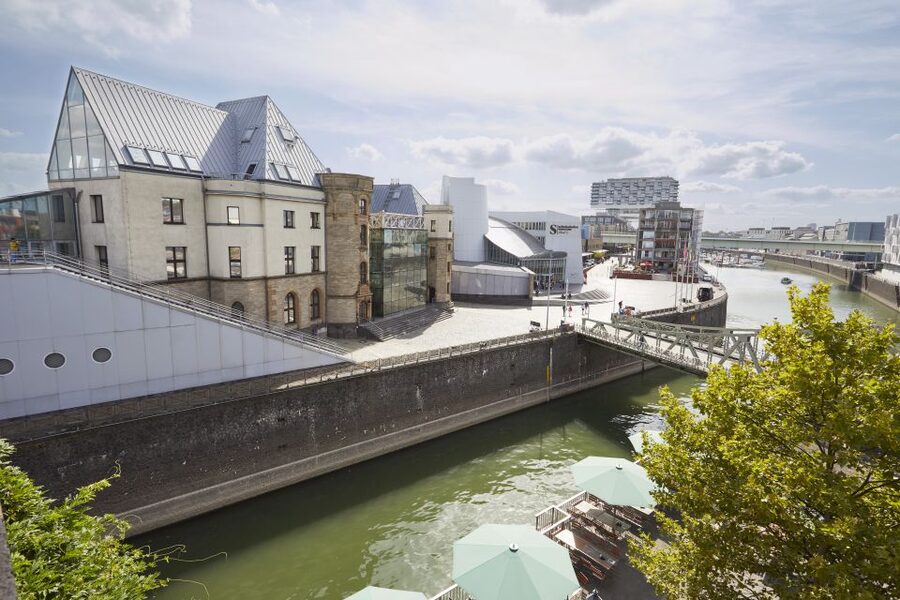
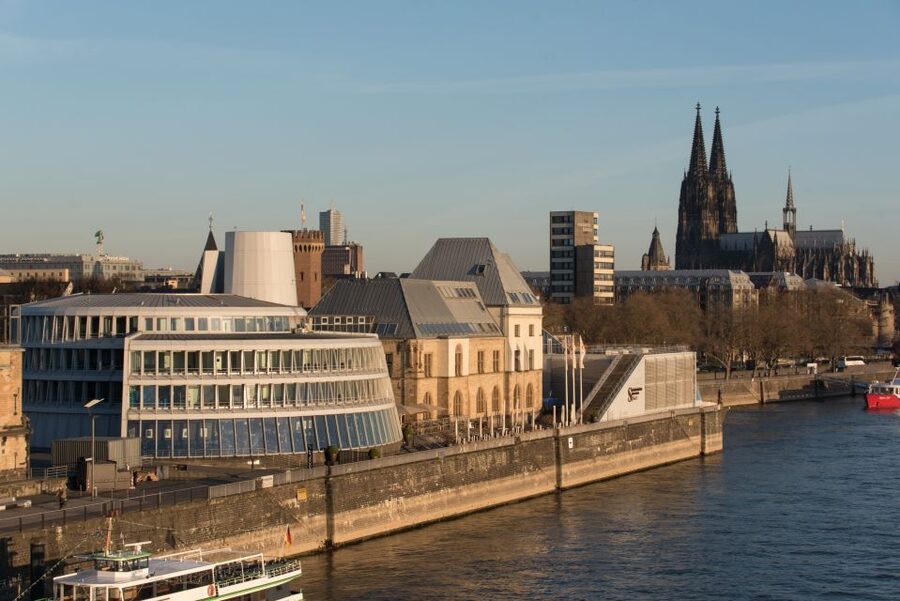
The museum sits on the Rhine in Cologne, a pleasant setting for combining the visit with a walk along the river. You go directly to the entrance and scan your mobile ticket. The ticket is for museum entry, not a guided tour, and an information booklet is included.
The advertised price is about $19 per person. I consider that fair value if you spend at least 90 minutes inside and use the museum as both an exhibit and a food stop. You are paying for a self-guided visit, so the value comes from the number of displays, the working equipment, the samples, and the chance to watch chocolate made fresh.
If you only want a quick look at machines and a taste, the price may feel less compelling. If you read the displays, stop at the production area, visit the tropical house, and enjoy the café, the ticket covers a solid half-day activity without needing a separate tour.
More museum & gallery tickets in Cologne:
- Cologne: Ticket for the German Sport & Olympia Museum
★ 4.5 · 84 reviews - Cologne: HOUSE OF BATES // CONTENT GALLERY
★ 4.7 · 46 reviews - Berlin: Jewish Museum Berlin Entrance Ticket
★ 4.5 · 8,393 reviews
Start with 5,000 years of cocoa culture
The visit opens with the long story of chocolate. You will see how cocoa was grown, handled, and used, with displays linked to the pre-Columbian cultures of Central America. This section gives the sweet you know from supermarkets a much older and more complicated background.
I like that the museum does not rush straight to the modern factory. You first get a sense of cocoa as a plant and a cultural product, then follow its changing role over time. The displays explain harvesting and trade, and the information is arranged as a clear path rather than a loose collection of chocolate memorabilia.
This part works best if you slow down. Families may skim some of the text, while adults and older children can spend time with the details about cocoa growing, processing, and trade. The museum is self-guided, so you set the pace and can skip dense panels when younger children begin looking for the next sample.
The tropical house brings the cocoa tree to life
The walk-in tropical house is one of the most useful early stops. You can see a real cocoa tree and get a sense of the warm, humid conditions the plant needs. It is a small section, but it helps connect the raw ingredient to the rest of the museum.
I find this more effective than looking at a photograph of a plantation. Seeing the plant in a living setting makes the later stages of production easier to understand. You are not just watching a machine turn powder into candy. You have already seen the plant at the start of the chain.
The tropical house can also be a welcome change from text-heavy exhibits. It gives children something real to look at and helps break up the historical displays. On a hot day, though, the museum itself may feel warm, and the tropical house adds to that enclosed, humid atmosphere.
From ancient objects to Baroque tableware
The museum’s historical sections reach beyond cocoa farming. You will find material from pre-Columbian Central America, then a collection of porcelain and silver associated with the Baroque period. These objects show how chocolate moved into European social life and became connected with elaborate serving customs.
This is a good reminder that chocolate was once presented as a special drink and a sign of status, not simply a wrapped snack. The porcelain and silver pieces add visual variety to the visit, particularly after the plant and trade displays.
I would not plan the entire outing around the historical objects alone. They are part of a wider route, and their appeal depends on your interest in decorative arts. Their real strength is the way they widen the story, showing that chocolate belongs to agriculture, commerce, technology, and social culture.
A few more Cologne trips to weigh up
- Cologne: Chocolate tasting Tour per Rickschaw
★ 5.0 · 5 reviews - Dresden: Guided Walking Tour and Chocolate Museum Ticket
★ 4.5 · 385 reviews - Death and Chocolate: Walking Tour of Munich’s Old South Cemetery
★ 5.0 · 35 reviews - Biggesee: Boat Tour with All-inclusive cake buffet
★ 4.4 · 20 reviews
Old industrial machines explain the next big change
The industrialisation section brings in large historic machines and equipment. These displays show how chocolate production changed when factories could handle ingredients at a much greater scale.
The old machines are not just decoration. They help you see the difference between handmade chocolate and the repetitive, mechanical process that made chocolate available to far more people. The museum uses them to connect historical development with the modern factory you see later.
This section may be less exciting for very young children, but the size and shape of the equipment can hold their attention. Older children and teenagers often get more from it because they can compare the older machinery with the clean, active production line in the glass factory.
Watch the glass factory from bean to praline
The glass chocolate factory is the main event for many people. Covering about 43,055 square feet, it lets you watch modern production rather than simply read about it. You can follow the process from cocoa ingredients through roasting, mixing, molding, and the creation of finished chocolate products.
The glass walls matter. They let you see the work without needing to join a scheduled group or listen to a long explanation. You can stand for a few minutes to watch the machines, then move on, or stay longer if a particular stage catches your eye.
You may see chocolate products being made industrially and then learn how individual pieces are finished by hand in the chocolate atelier. That contrast is useful. Factory production explains scale and consistency, while the atelier shows the small decisions and manual work behind individual sweets.
The working production area also gives the museum its energy. Static displays explain the past, but moving belts, machinery, chocolate, and staff at work make the process feel immediate. If you arrive late, remember that the production facilities close around 30 minutes before the museum itself. Give this section priority instead of saving it for the end.
The 3-meter fountain is built for tasting
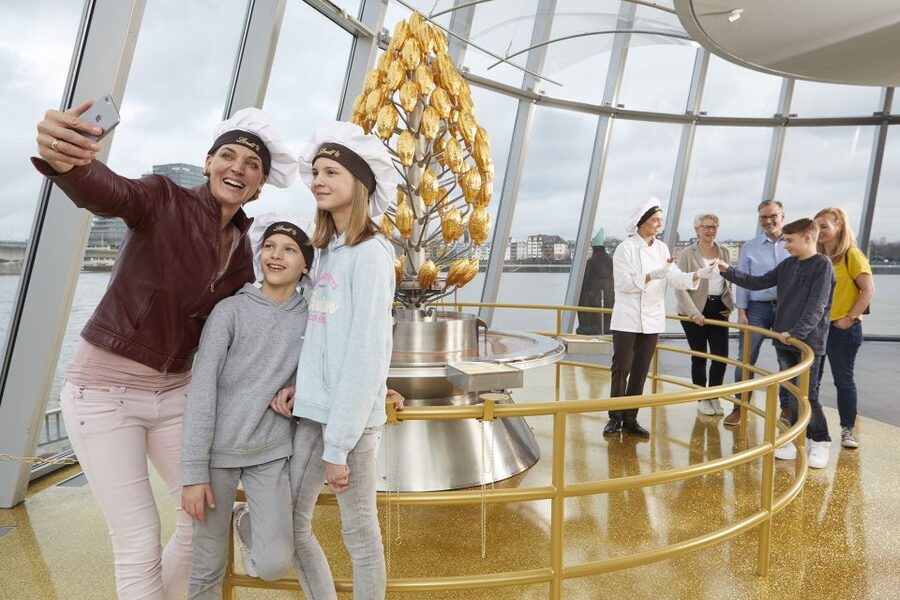
The chocolate fountain is impossible to miss. It rises about 3 meters and holds roughly 200 kilograms of chocolate, which constantly bubbles up for tasting. A wafer dipped into the flowing chocolate is one of the simple pleasures of the visit.
The museum expressly encourages tasting, and small samples are offered at different points. The exact number can vary, but you may receive several pieces as you walk through. One visit included six pieces, while other experiences describe repeated small samples rather than one large serving.
This is not a formal chocolate-tasting class. You should think of it as part of the museum route, a chance to taste while learning how the product is made. That keeps the visit light and family-friendly, but anyone expecting a long guided tasting should know that no guide is included with this ticket.
The fountain can be a busy point, especially at popular times. If you want a quieter look, arriving near opening time is a sensible plan. The museum may become much busier soon after opening, particularly on weekends.
The chocolate atelier adds a hands-on option
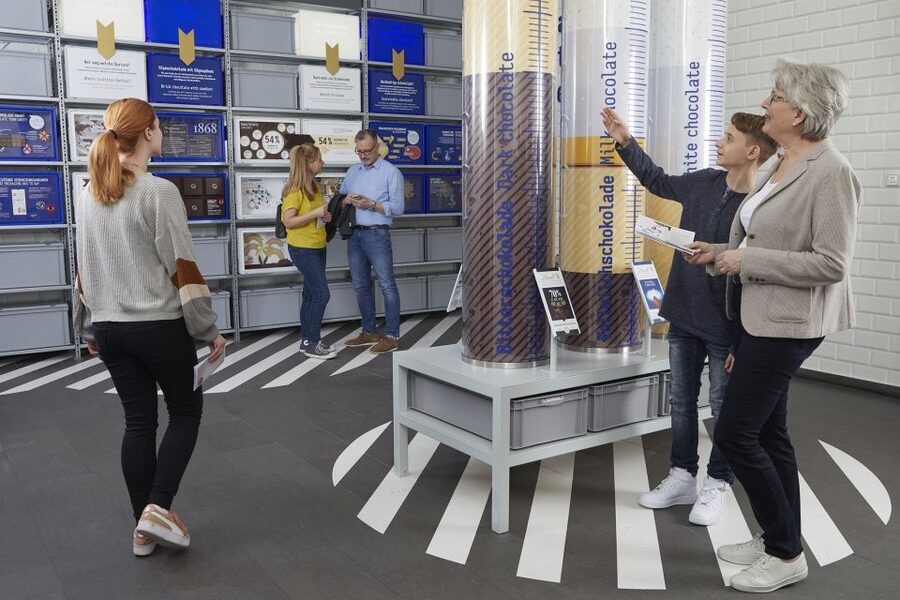
The atelier shows the individual side of chocolate making. You can watch chocolate being finished by hand, and in some cases you can create your own recipe bar for an extra charge.
This optional bar-making activity is especially useful for families with children and teenagers. It gives you something to do, not just something to watch, and the finished bar can work as a personal souvenir or gift. It is not included in the entrance ticket, so ask about the current cost before committing.
I like this add-on because it turns the museum’s central idea into a personal experience. You have seen the plant, the historical objects, and the factory. Now you can make a choice about flavors or toppings and see a bar produced for you. If you are watching your budget, the museum itself still offers plenty without adding this cost.
Allow time for the café and shop
The café is worth treating as part of the outing. It serves chocolate-centered desserts and drinks, along with food, and the available choices include cake, waffles, fondue, espresso, coffee, and hot chocolate.
Portions can be generous. A waffle may be large enough to share, and ordering one alongside a fondue can leave you with more dessert than expected. Chocolate cake and soufflé are also popular choices, so you may want to decide in advance whether you are after a full meal, a drink, or simply one final sweet.
Prices at the café are described as reasonable, which improves the total value of the visit. It is a practical place to rest after the exhibits, especially if you are with children. Service is described as friendly, though a busy museum can make the café slower at peak times.
The shop has a wide selection of chocolate products and gifts. It is convenient for presents, but compare prices if you regularly buy the same brand at home. Some products may cost more than you expect, so the shop is best for unusual museum purchases or gifts rather than automatic bargains.
Timing, crowds, and practical comfort
Plan on one to one and a half hours for a brisk visit. If you read the displays, watch the machines, sample along the way, stop at the café, or make a custom bar, you can easily spend two to two and a half hours.
I would arrive close to opening time if you have flexibility. This gives you a better chance of seeing the production facilities before the crowds build and makes the fountain and factory easier to enjoy. Last entry is one hour before closing, but that is too late for a full visit because the working production areas shut earlier.
The museum is wheelchair accessible, and it also works for pushchairs. The main comfort complaint is the limited number of toilets. Plan a bathroom stop before settling into a long route, especially with children.
The site can get warm. On a hot day, you may want to shorten your time in the enclosed areas or pause in the café. The warm conditions are not a problem for everyone, but they are worth considering if you are sensitive to heat.
Who will enjoy this most
This is an easy choice for families. The samples, fountain, moving machinery, tropical house, and optional custom bar give children several kinds of stimulation. Teenagers also tend to find enough here to stay interested, especially when the visit reaches the factory.
Couples and solo visitors can enjoy it too, particularly if they like food museums, industrial design, or the story behind everyday products. You can move at your own pace and do not need to coordinate with a guide or a fixed tour group.
The museum is less suited to anyone looking only for a quick chocolate purchase. The central experience depends on reading, watching, and following the production story. It is also not the best pick if you dislike enclosed, warm spaces or want a formal expert-led explanation.
Ticket details worth knowing
Your ticket includes museum entry and an information booklet. It does not include a guided tour, and the listed meeting instruction is simple: go to the museum entrance and scan your mobile ticket.
The ticket is valid for one day. Free cancellation is available up to 24 hours in advance, and a reserve-now, pay-later option can keep your plans flexible. Check the selected availability before booking because the ticket uses an available starting time.
Children under 12 must be accompanied by a paying adult. The museum is wheelchair accessible, and small-group availability is offered, though the standard ticket described here is a self-guided entry rather than a named guide experience.
Should you book the Chocolate Museum?
I would book it if you want an activity that works in bad weather, suits several age groups, and offers more than a display of finished candy. The factory, fountain, samples, and café make the admission feel active, while the cocoa plant, Central American material, Baroque objects, and industrial machines give the visit substance.
Book an early time if possible, and allow at least 90 minutes. Add more time if you want the café or a custom chocolate bar. Skip it only if you want a very short stop, dislike warm indoor attractions, or expect a guided tasting to be included.
FAQ
How much does the Chocolate Museum ticket cost?
The listed price is $19 per person.
How long is the ticket valid?
The ticket is valid for one day.
What does the ticket include?
It includes admission to the Chocolate Museum and an information booklet.
Is a guided tour included?
No. The ticket provides self-guided entry, and a guided tour is not included.
Where do I enter the museum?
Go directly to the museum entrance and scan your mobile ticket.
Can I cancel the booking?
Yes. You can cancel up to 24 hours in advance for a full refund.
Can I reserve now and pay later?
Yes. A reserve-now, pay-later option is available to keep your plans flexible.
Is the museum wheelchair accessible?
Yes. The museum is wheelchair accessible.
Do children need an adult?
Yes. Children under 12 must be accompanied by a paying adult.
When do the production facilities close?
The production facilities close approximately 30 minutes before the museum closes. Last entry to the museum is one hour before closing.
More Museums in Cologne
- Berlin: DDR Museum Tickets
★ 4.3 · 3,443 reviews - Berlin: Natural History Museum Entrance Ticket
★ 4.6 · 3,382 reviews - Berlin: Neues Museum Entry Ticket
★ 4.6 · 3,261 reviews - Dresden: Church of Our Lady Guided Tour of Gallery
★ 4.7 · 2,421 reviews
Just added around Cologne
- Aachen old town tour – GERMAN (public)★ 5.0 · 24 reviews
- Cologne Highlights: Exclusive Private Tour★ 5.0 · 5 reviews
- Aachen Private Walking Tour With A Professional Guide★ 5.0 · 11 reviews
- Explore Cologne’s best Street Art Quarter★ 4.5 · 4 reviews
- Aachen – Old town Guided tour★ 3.5 · 4 reviews
- The rather unknown Melaten★ 4.9 · 26 reviews
- Rickshaw Glühwein Ride★ 4.6 · 24 reviews
- Public brewhouse tour Cologne in English★ 4.9 · 154 reviews
Museum & Gallery Tickets, compared.

Skip-the-Line: Berlin Wall Museum at Checkpoint Charlie
Read our review →
Browse the lists this tour appears in