
Reviewed · MUSEUM & GALLERY TICKETS
Dresden: Guided Walking Tour and Chocolate Museum Ticket
Dresden’s story comes into focus on foot, from medieval shadows to Baroque grandeur and the peaceful revolution of 1989. This tour pairs that city walk with a self-guided visit to a chocolate museum, including a tasting of German milk chocolate.
I like the route’s concentration of major sights, especially the Frauenkirche, Semperoper, and Zwinger. I also like the unusual museum choice: Dresden’s chocolate past, including its claim to the invention of milk chocolate, adds a tasty local angle. The main catch is that the guide speaks German, and the museum visit is on your own.
In This Review
- Key points to know before booking
- Why this Dresden pairing works
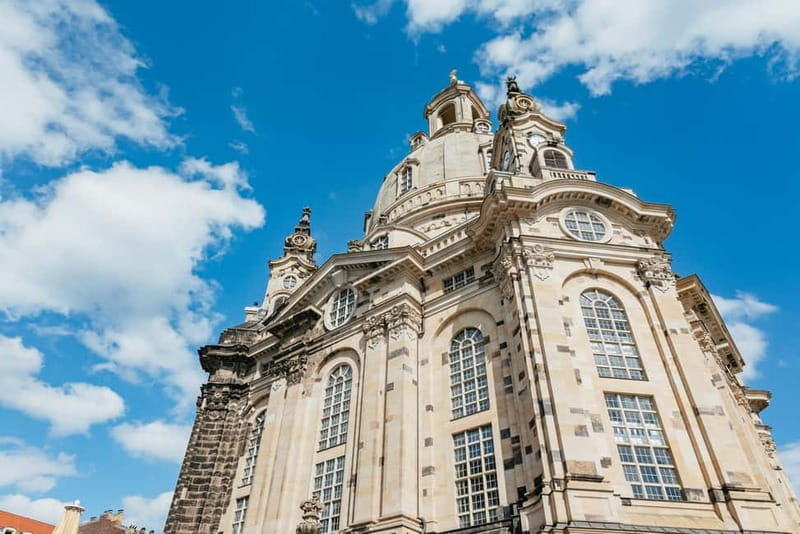
- Starting at Neumarkt and the Frauenkirche
- From medieval Dresden to Baroque power
- Dresden Castle, Brühl’s Terrace, and the Procession of Princes
- Dresden Cathedral, Taschenbergpalais, and Augustus Bridge
- The Peaceful Revolution and German reunification
- Visiting the Chocolate Museum on your own
- What the tasting adds
- Timing, comfort, and accessibility
- Who will get the most from this tour?
- Should you book it?
- FAQ
- Where does the walking tour start?
- Where does the activity end?
- How long is the experience?
- What language is the guided tour?
- Is the chocolate museum visit guided?
- When is the chocolate museum open?
- Can I visit the museum before the walking tour?
- What does the tour include?
- Is the tour wheelchair accessible?
- Can I cancel for a full refund?
Key points to know before booking

- A compact Old Town route: See Dresden Castle, Brühl’s Terrace, the Procession of Princes, Stallhof, Dresden Cathedral, Taschenbergpalais, and Augustus Bridge.
- History beyond royal splendor: The guide covers the Middle Ages, Renaissance, Baroque period, the 1989 Peaceful Revolution, and German reunification.
- The chocolate museum is self-guided: Your guide leads only the walking tour, while you visit the museum independently on the same day.
- A useful timing rule: If you choose the 4:00 PM walk, visit the museum first because it closes at 6:00 PM.
- Included food and drink: You receive a chocolate tasting and a free coffee coupon.
- Good flexibility: Cancellation is free up to 24 hours before the activity, and you can reserve now and pay later.
Why this Dresden pairing works
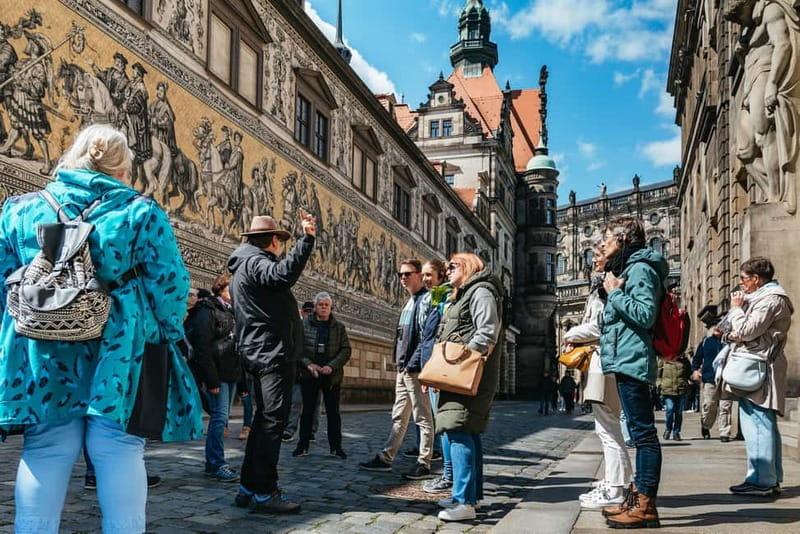
Dresden is a city best understood in layers. Its Old Town gives you medieval foundations, Renaissance ambition, Baroque ceremony, wartime destruction, Communist-era separation, and peaceful political change, often within a few minutes of walking.
That makes a guided route useful. You can look at a grand building on your own, but a guide can explain why it matters, how Dresden changed, and how the city’s past still shapes what you see today. The 1.5-hour length keeps the outing manageable while giving you a clear first orientation.
Then comes the chocolate museum. This is not just a generic sweet shop stop. The focus is Dresden’s former place in Germany’s chocolate industry, with displays about cocoa, milk chocolate, old factories, and chocolate molds made by Anton Reiche. You finish with a tasting, so the museum has a pleasant reward built into it.
At $18 per person, the package is priced as an economical introduction to central Dresden. You get a live guided walk, museum admission, chocolate tasting, and a coffee coupon. The value is strongest if you want a quick overview rather than a long specialist tour. It is less ideal if you prefer an English-language guide or want the guide to accompany you inside the museum.
More Museum & Gallery Tickets in Dresden
- Dresden: Church of Our Lady Guided Tour of Gallery
★ 4.7 · 2,421 reviews - Dresden: Zwinger Museum Entry Ticket
★ 4.7 · 1,436 reviews - Dresden: Dresden Transport Museum Entrance Ticket
★ 4.6 · 189 reviews
Starting at Neumarkt and the Frauenkirche
Meet at Dresden Information on the lower level of the QF-Passage shopping center. The walking route begins in Neumarkt, the square associated most closely with the Frauenkirche and Dresden’s restored Old Town.
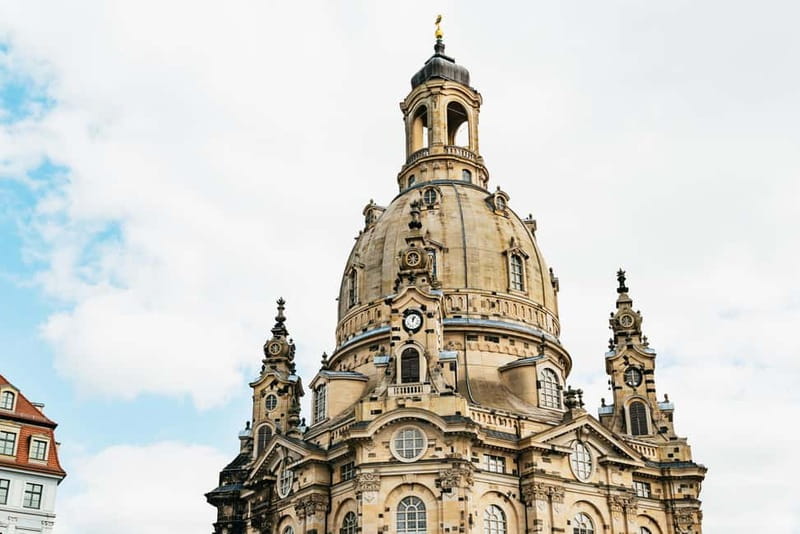
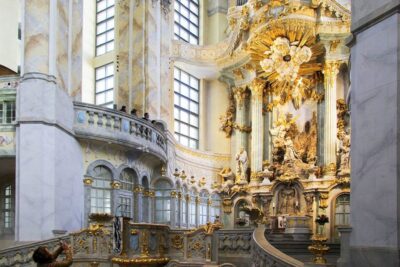
The Frauenkirche is an important first stop because it represents both Dresden’s destruction in the Second World War and the city’s later rebuilding. The tour data does not promise an interior visit, so plan on seeing the church as part of the outdoor walk rather than expecting a full church tour.
This opening area is also practical for first-time visitors. You begin among several of Dresden’s main sights instead of spending time on a bus or traveling out to a distant neighborhood. Wear comfortable shoes, since the experience is entirely a walking tour followed by a separate museum visit.
The German-language format matters. The guide leads the tour in German, so you should book this only if you can follow spoken German or are traveling with someone who can translate informally. The published information names Franziska among the guides associated with the experience, and another guide received praise for explaining the city in a clear, interesting way. Guide assignments can vary, so do not assume Franziska will lead your departure.
From medieval Dresden to Baroque power

The walk covers several major periods, beginning with the difficult side of the Middle Ages. You will hear about the city’s early development and the less polished conditions behind the grand façades.
The Renaissance section shifts the tone. Dresden’s rulers and builders gave the city greater political weight and a more ambitious visual identity. The route then moves into the Baroque era, when court life, ceremony, architecture, and royal display reshaped the center.
The Baroque period is the visual star of the tour. Dresden’s grand buildings were designed to impress, and the route links several of them in a sensible sequence. I like this historical sweep because it keeps the walk from becoming a simple checklist of monuments. You are not just seeing a palace, an opera house, and a church. You are connecting them to the changing power of the city.
The guide also discusses the dark times of the Middle Ages and the energy of the Renaissance before reaching the courtly grandeur of the Baroque era. That contrast should help you read the Old Town with more care. A beautiful façade can represent art, wealth, political power, or all three at once.
Dresden Castle, Brühl’s Terrace, and the Procession of Princes
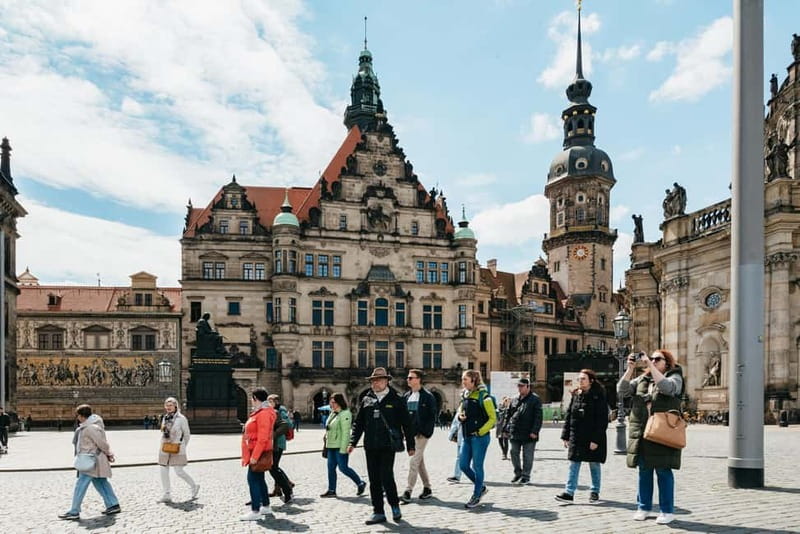
From Dresden Castle, the route heads toward Brühl’s Terrace. Dresden Castle brings together several chapters of the city’s story, particularly the role of the ruling court. The tour description places the castle within a route that continues along the riverfront and through nearby historic courtyards.
Brühl’s Terrace gives you a different view of Dresden. Instead of looking only at buildings from street level, you get a wider sense of the city’s position along the Elbe. The experience focuses on views and outdoor landmarks, so this is a good moment to pause, listen, and take photographs.
The Procession of Princes is one of the walk’s most distinctive stops. This long mural presents a procession of rulers and adds a strong visual record of Saxony’s dynastic past. It is easier to appreciate when a guide explains who the figures represent and why the work matters.
Nearby Stallhof, or the Stable Yard, adds another piece of the former court complex. The name hints at its original function, and the space helps you picture how royal life worked beyond the most formal palace rooms. These are the kinds of details that can pass unnoticed when you walk alone.
Same city, a completely different kind of day:
- Dresden: Semperoper Tickets and Guided Tour
★ 4.7 · 12,102 reviews - Dresden: The Original Night Watchman Tour in Lantern Light
★ 4.6 · 6,653 reviews - Dresden: Semperoper and Old Town Tour
★ 4.8 · 5,735 reviews - Dresden: River Sightseeing Boat Cruise
★ 4.3 · 5,323 reviews
Dresden Cathedral, Taschenbergpalais, and Augustus Bridge
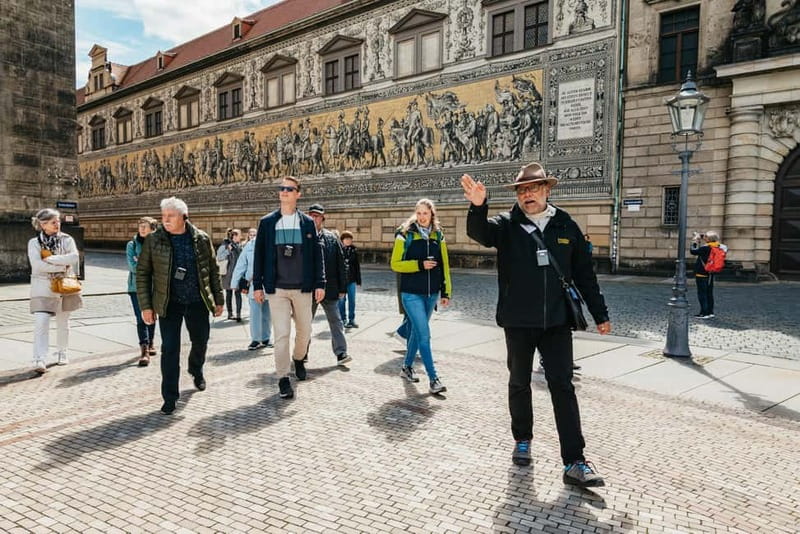
The route continues to Dresden Cathedral, another major Old Town landmark. Its position near the castle and other court buildings makes the area particularly useful for understanding how religion and royal authority shared the same center.
You then see the Taschenbergpalais. The palace belongs to the same broad story of courtly Dresden, where residences, ceremonial spaces, and administrative buildings were placed close together. The walk does not promise a palace interior, so treat this as an architectural and historical stop from the outside.
Augustus Bridge shifts your attention toward the river crossing and the connection between Dresden’s historic districts. Bridges are easy to treat as simple transport links, but here the stop helps tie the Old Town together as a single urban story.
The route description ends near the Frauenkirche, while the activity information gives the end point as back at the meeting point. Since both are in the central Old Town area, confirm the exact finish with your guide at the start. Either way, you remain in a useful part of Dresden for further sightseeing, a meal, or the museum visit.
The Peaceful Revolution and German reunification
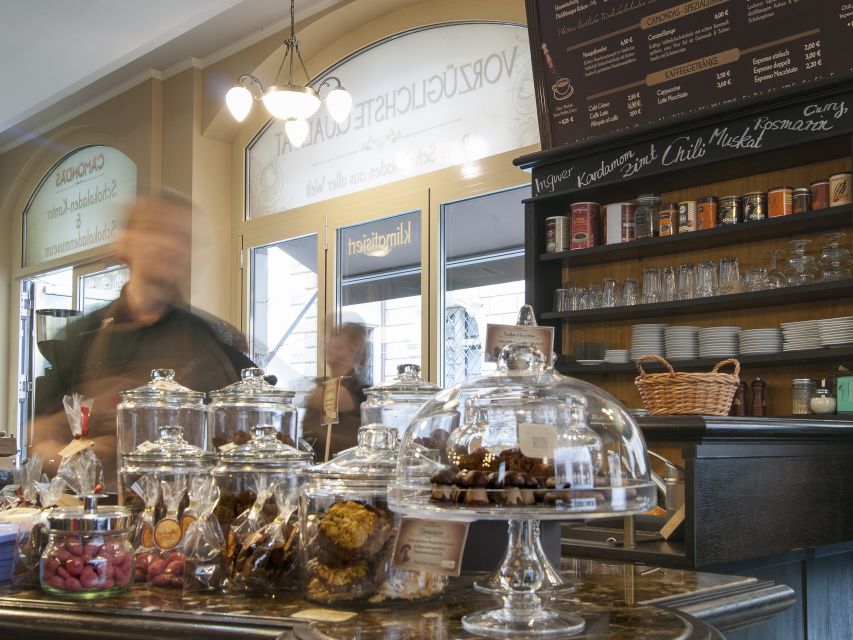
One of the most valuable parts of this walk is its attention to recent history. Dresden is not only a city of princes, churches, and opera. The guide also explains the Peaceful Revolution of 1989 and the reunification of East and West Germany.
That context keeps the tour from becoming a polished royal-history parade. You will hear how the city fits into the political changes that ended East Germany and reshaped the country. For many visitors, this is the part that gives the older monuments a modern frame.
The information provided does not list specific protest sites or promise a separate Communist-era route. You should expect the guide to explain the background during the Old Town walk rather than take you through a dedicated museum or neighborhood focused only on 1989.
Still, the inclusion is important. Dresden’s restored center can look timeless, but its current appearance is tied to war, division, rebuilding, and reunification. A good guide helps you hold those periods together instead of treating them as unrelated facts.
Visiting the Chocolate Museum on your own
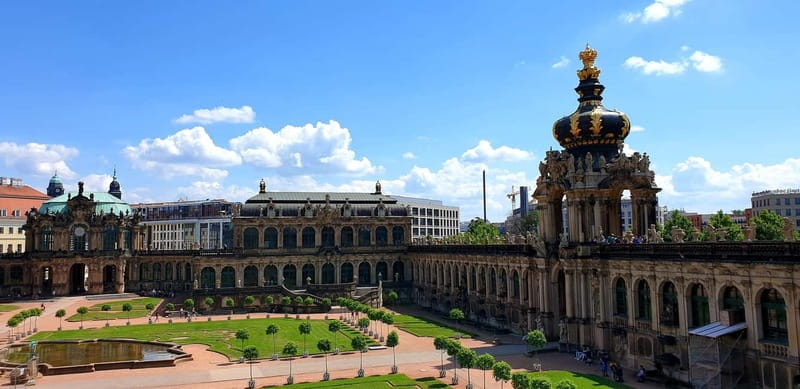
The museum visit is self-guided. Your walking-tour guide does not accompany you, and you can use the voucher at any time on the day of the tour without making a separate reservation.
The museum is open daily from 11:00 AM to 6:00 PM. This gives you useful flexibility for a morning walk, an afternoon walk, or a museum visit between other plans. The one important exception is the 4:00 PM walking tour. If you choose that time, visit the museum before the walk because the museum closes at 6:00 PM.
The museum examines Dresden’s former status as Germany’s capital of chocolate. You will learn about the origins of milk chocolate, which is said to have been invented in Dresden, and follow the route from cocoa bean to finished confection.
One of the most specific displays is the collection of chocolate molds by Anton Reiche, described as one of the world’s largest. These molds show the practical side of chocolate making. Instead of seeing only finished bars and polished packaging, you get a look at the forms used to shape chocolate products.
The museum also covers the numerous chocolate factories that operated in 19th-century Dresden. That industrial story gives the tasting some useful context. You can think about how chocolate changed from a luxury product into something made and sold on a much larger scale.
What the tasting adds
The tasting is modest but well matched to the museum. You learn what contributes to good chocolate, discover what early chocolate bars may have tasted like, and sample some of Germany’s finest milk chocolate.
Do not book this expecting a full meal or a long food workshop. The tasting is a small part of the activity, designed to finish the museum visit on a pleasant note. Its value is that it connects the displays to your senses. After seeing cocoa molds and learning about factory production, you can taste the kind of product the museum describes.
The free coffee coupon is another small benefit. It does not transform the economics of the tour, but it gives you a simple way to pause after the walk and museum visit. Check the coupon’s redemption details locally, since the supplied information does not specify where or when it can be used.
Timing, comfort, and accessibility
The complete activity is listed as 1.5 hours, but the museum voucher can be used at any time on the same day. That means the walking portion has a set start time, while the museum portion gives you more control.
You select the date and walking-tour time when booking. Check the available departures before you commit, especially if you are trying to fit this between a train arrival, a palace visit, or an evening reservation.
The experience is wheelchair accessible. The guided portion is in the Old Town, and the museum has its own operating schedule. If you use a wheelchair, confirm any current route or access details with Dresden Information when you arrive, since the available information does not describe surfaces, entrances, or restroom arrangements.
The tour finishes in the central Old Town area rather than at a transport terminal. That is convenient if you plan to continue sightseeing on foot. It also means you should allow extra time if you have a strict departure schedule afterward.
Cancellation is free up to 24 hours in advance for a full refund. You can also reserve now and pay later, which helps if your Dresden plans are still shifting.
Who will get the most from this tour?
I would choose this experience if you want a quick introduction to Dresden with a local guide and enjoy adding an unusual museum to a standard Old Town route. Families may like the chocolate tasting, while history-minded visitors will appreciate the range from the Middle Ages to reunification.
It also suits first-time visitors who want to see the main central landmarks without arranging several separate admissions. At $18, the cost is reasonable for a guided walk plus museum entry and tasting, particularly if you would visit the chocolate museum anyway.
I would look elsewhere if you need an English-language tour. The guide is German-speaking, and the museum is self-guided, so the experience depends heavily on your ability to follow German or arrange your own translation.
I would also skip it if you want a long, detailed museum tour with a guide beside you. The museum portion is flexible precisely because it is independent. That is convenient, but it is not the same as having an expert explain every display.
Should you book it?
Book this tour if you want Dresden’s major Old Town sights explained in a compact German-language walk, then like the idea of a chocolate-focused museum with a tasting. The strongest reasons are the efficient route, the inclusion of 1989 and reunification, and the museum’s specific Dresden connection.
Think twice if your schedule only allows a late afternoon departure. With the 4:00 PM walk, the museum must come first, and the 6:00 PM closing time leaves little room for delay.
For the right visitor, this is a good-value introduction rather than a deep specialist tour. You get history, landmark views, a local food story, chocolate, and a coffee coupon in one small package. It works best when you treat the walking route as your Dresden orientation and the museum as a relaxed second chapter.
FAQ
Where does the walking tour start?
It starts at Dresden Information on the lower level of the QF-Passage shopping centre in Dresden’s Old Town.
Where does the activity end?
The activity information says it ends back at the meeting point. The route description places the final part near the Frauenkirche.
How long is the experience?
The listed duration is 1.5 hours for the activity. You can use the chocolate museum voucher at any time on the day of the walking tour.
What language is the guided tour?
The live tour guide speaks German.
Is the chocolate museum visit guided?
No. You visit the Chocolate Museum on your own, and the walking-tour guide does not accompany you inside.
When is the chocolate museum open?
The museum is open daily from 11:00 AM to 6:00 PM.
Can I visit the museum before the walking tour?
Yes. If you choose the 4:00 PM walking tour, you must visit the museum before the walk because it closes at 6:00 PM.
What does the tour include?
It includes the guided walking tour, entrance to the Chocolate Museum, a chocolate tasting, and a free coffee coupon.
Is the tour wheelchair accessible?
Yes, the activity is listed as wheelchair accessible.
Can I cancel for a full refund?
Yes. You can cancel up to 24 hours in advance for a full refund. You can also reserve now and pay later.
More Museums in Dresden
- Dresden: Albertinum Museum Entry Ticket
★ 4.5 · 149 reviews - Dresden: Ticket + Tour Gallery Old Masters
★ 5.0 · 107 reviews - Dresden: Semperoper and Old Masters Picture Gallery
★ 4.5 · 91 reviews - Dresden: 2 day ticket for museums of the Dresden State Art Collections
★ 4.7 · 54 reviews
More Dessert Tours in Dresden
- Cologne: Chocolate Museum Entrance Ticket
★ 4.4 · 2,790 reviews - Death and Chocolate: Walking Tour of Munich’s Old South Cemetery
★ 5.0 · 35 reviews - Biggesee: Boat Tour with All-inclusive cake buffet
★ 4.4 · 20 reviews - Bean to Bar Chocolate Mini Tasting in Bonn
★ 5.0 · 8 reviews
Just added around Dresden
- Test Drive Electric Vehicles from the VW brand (ID. model)★ 4.8 · 190 reviews
- SRF CoBi | City Tour by ConferenceBike★ 4.7 · 38 reviews
- Dresden: Scavenger Hunt to Elbe River & Castles★ 4.7 · 15 reviews
- Dresden: Bike Rental – City Bike with Option Children Seat★ 4.5 · 13 reviews
- Moritzburg: Scavenger Hunt Self-Guided Walking Tour★ 4.8 · 12 reviews
- Historical tour of the old town including a Saxon dinner★ 4.7 · 23 reviews
- Climb the mountains together with goats★ 4.8 · 8 reviews
- From Prague: Day trip to Dresden★ 4.3 · 4 reviews
Museum & Gallery Tickets, compared.

Skip-the-Line: Berlin Wall Museum at Checkpoint Charlie
Read our review →
Browse the lists this tour appears in