
Reviewed · MUSEUMS
Berlin: “Pergamonmuseum. The Panorama” Exhibition Tickets
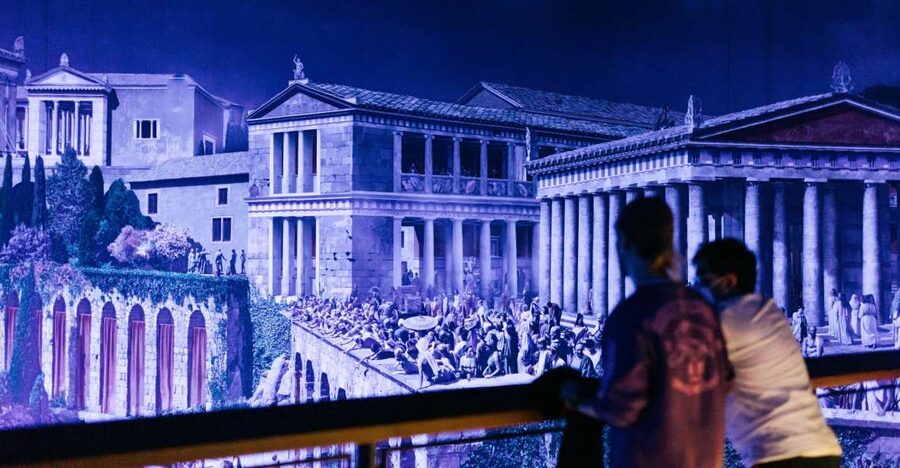
The best part of this exhibition is the leap from small ancient fragments to a full city. Yadegar Asisi’s 360° panorama shows Pergamon in AD 129, when Emperor Hadrian ruled Rome, while original sculptures and reliefs anchor the artistic vision in real archaeology. I like the shift from daylight to night, and I like seeing the Pergamon Altar restored to its original setting on the Acropolis, at least in reconstructed form.
I also like that the visit is compact and family-friendly, with music, lighting, and a giant city scene that can hold a child’s attention better than a case of pottery. The drawback is that the ticket costs $16 for a short listed duration, and the exhibition is only partly accessible for wheelchairs. Backpacks are not allowed, and the security presence may feel a little heavy-handed.
In This Review
- Key points to know before you go
- What this Berlin exhibition actually is
- The 360° city view and the changing light
- The original works that give the panorama weight
- Why the day-to-night sequence matters
- How long to plan, and what $16 buys you
- Finding the entrance near Museum Island
- Accessibility and family suitability
- What may not work for you
- Who should book Pergamonmuseum. Das Panorama?
- FAQ
- Where is Pergamonmuseum. Das Panorama located?
- Does this ticket include the Pergamonmuseum?
- Does the ticket include other museums on Museum Island?
- How much does entry cost?
- How long is the activity?
- Is the exhibition open all year?
- Can children enter for free?
- Are backpacks allowed?
- Is the exhibition accessible for wheelchair users?
Key points to know before you go
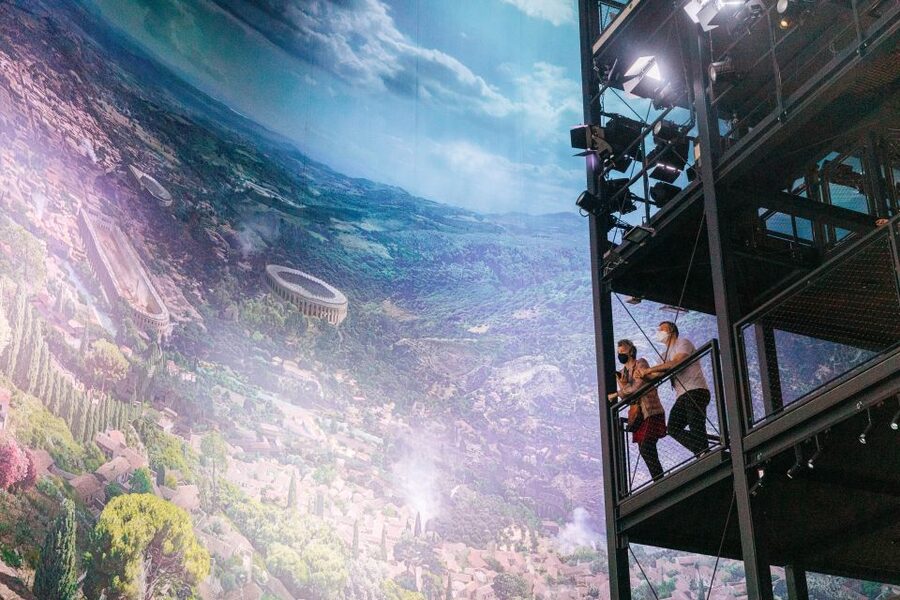
- Pergamon in AD 129: See the ancient city during the High Roman Empire and the reign of Emperor Hadrian.
- A changing 360° scene: Stay long enough to watch the light move from day to night, with music shaping the mood.
- Eighty original works: View major pieces from the Antikensammlung, including the largest section of the Telephos frieze in the collection.
- The Altar in context: For a limited period, the Pergamon Altar appears within a reconstruction of its original Acropolis setting.
- A short but flexible visit: The ticket is valid for 15 minutes from first activation, yet the panorama rewards a longer stay once inside.
- Plan around practical limits: Leave backpacks behind, check the September 1 to October 13 closure, and note that under-18 visitors still need tickets even though entry is free.
What this Berlin exhibition actually is
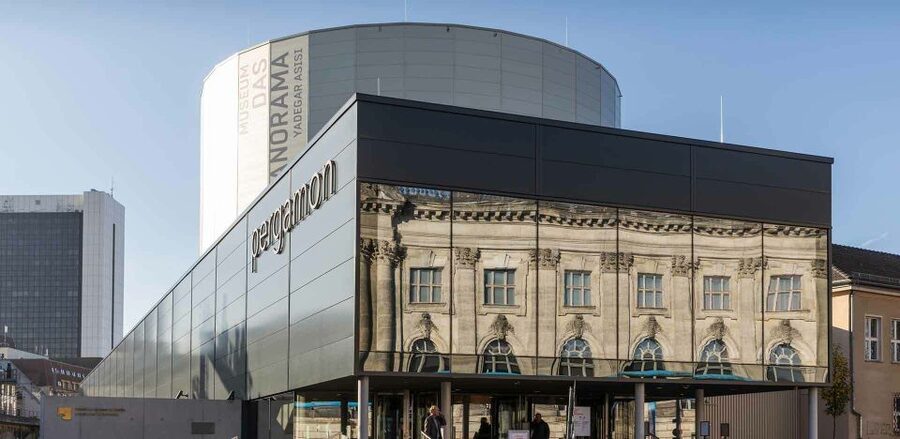
Pergamonmuseum. Das Panorama is a temporary exhibition building at Am Kupfergraben 2, near Berlin’s Museum Island. It is not the same ticket as entry to the Pergamonmuseum, and it does not include the other museums on Museum Island.
That distinction matters. You are buying one focused experience rather than a full museum pass. The exhibition combines archaeological objects with a large-scale artistic reconstruction of Pergamon, an ancient city on the west coast of Asia Minor, in present-day Turkey.
The central scene presents Pergamon during the High Roman Empire, around AD 129. Emperor Hadrian ruled from AD 117 to 138, and the city is shown at a time when its architecture, public spaces, sanctuaries, and sculpture could be read as part of a major ancient urban center.
The panorama is by Iranian architect Yadegar Asisi. His work is not a literal photograph of the past. It is a researched reconstruction, shaped by archaeological evidence and artistic interpretation. That gives you something more useful than a bare wall of ruins, but it also means you should treat the city view as a reasoned vision rather than a perfect record of every building.
A few more Berlin trips to weigh up
- Berlin: Natural History Museum Entrance Ticket
★ 4.6 · 3,382 reviews - Skip-the-Line: Berlin Wall Museum at Checkpoint Charlie
★ 4.1 · 2,041 reviews - Berlin: Museum Island Multiple Museum Entry Ticket
★ 4.4 · 2,007 reviews
The 360° city view and the changing light
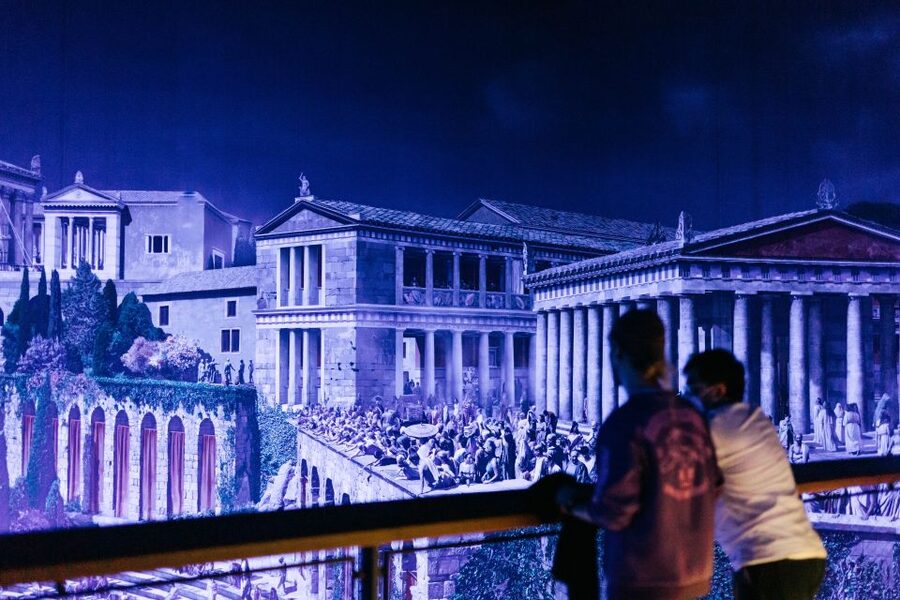
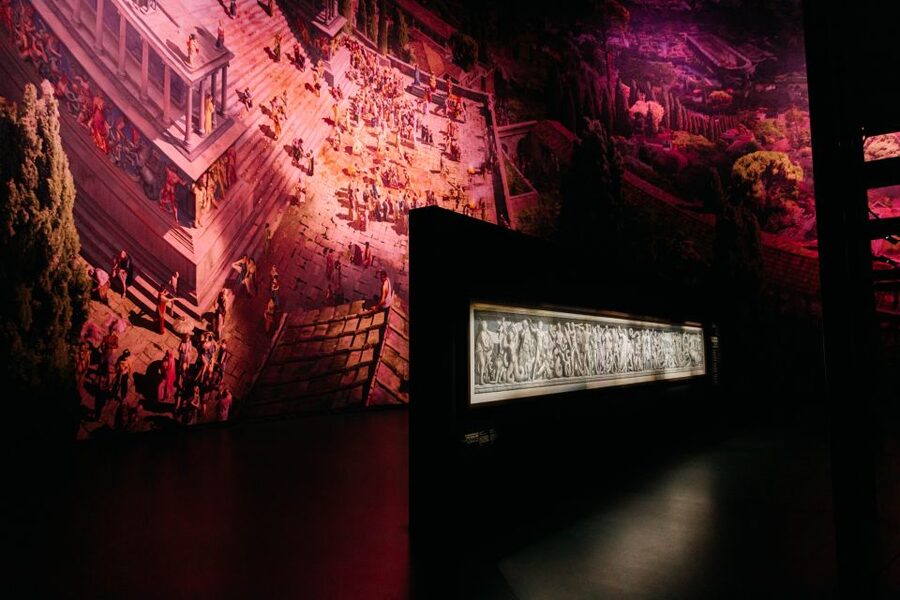
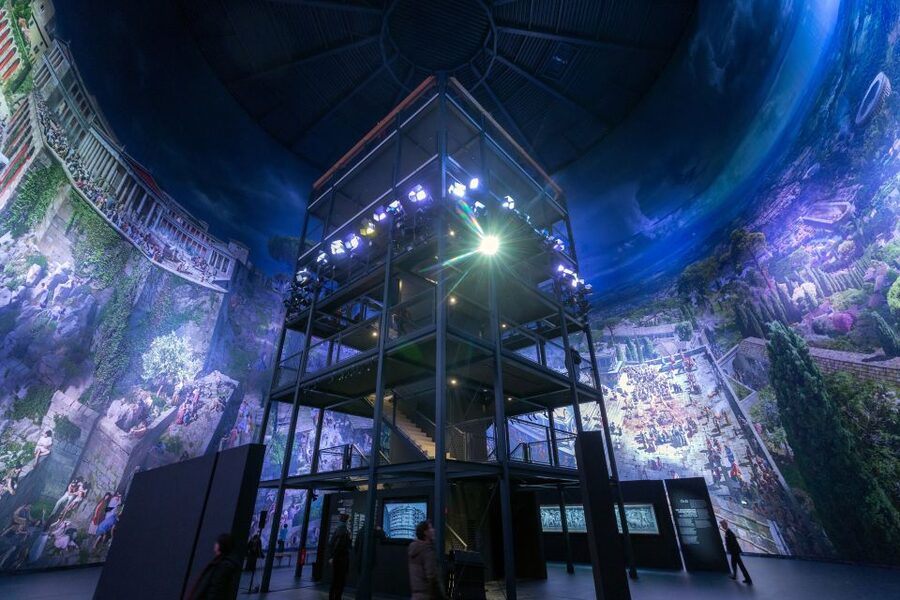
The panorama is the main event. Instead of walking from case to case, you look out across a large circular view of Pergamon. The city appears as a connected place, with its monuments and public life placed in relation to one another.
That sense of scale is the point. A fragment of a frieze can be beautiful in a glass case, but it tells you only part of its story. Here, the reconstructed city gives those objects an architectural setting. You can better understand how sculpture, temples, and public spaces worked together.
Asisi reworked the panorama with 40 new scenes. These additions offer more activity and detail within the city view, so it is worth looking carefully rather than taking one quick glance and leaving. You might find small visual details that are easy to miss from the first viewing.
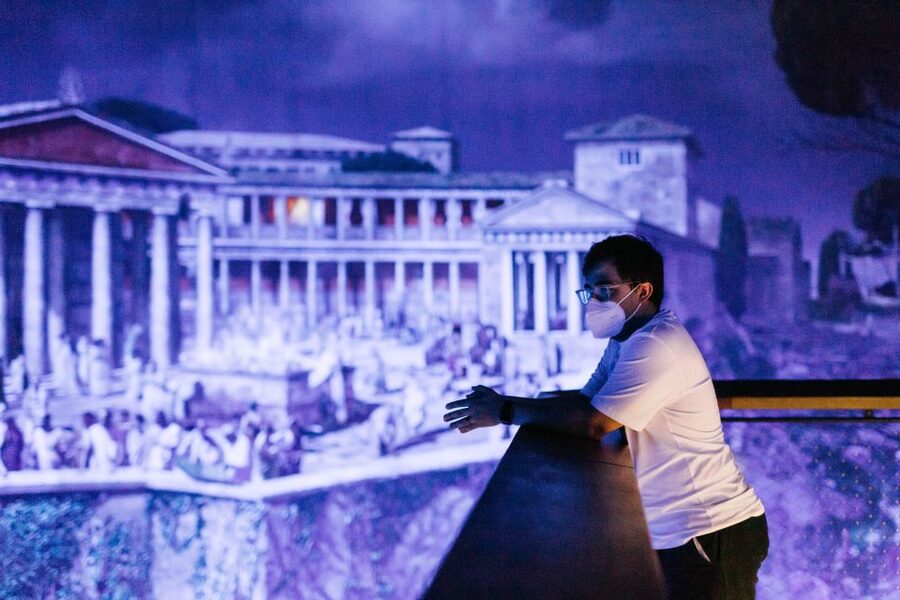
The light and sound effects are important. The scene changes from day to night, and music follows the shift. I would not treat this as background decoration. It controls the pace of the visit and gives the ancient city a sense of passing time.
One practical tip is to remain in the auditorium for at least half an hour if the flow of your day allows. The ticket information lists a 15-minute validity period from first activation, which sounds like a strict short visit. Yet the panorama itself rewards patience. Move gradually up the steps, change your viewing height, and watch the full cycle rather than making one quick circuit.
The higher viewpoints can change what you notice. From a lower position, the city feels close and enclosed. From above, its streets and major buildings read more clearly. The exhibition is best approached as a visual presentation, not as something to rush through like a small gallery.
The original works that give the panorama weight
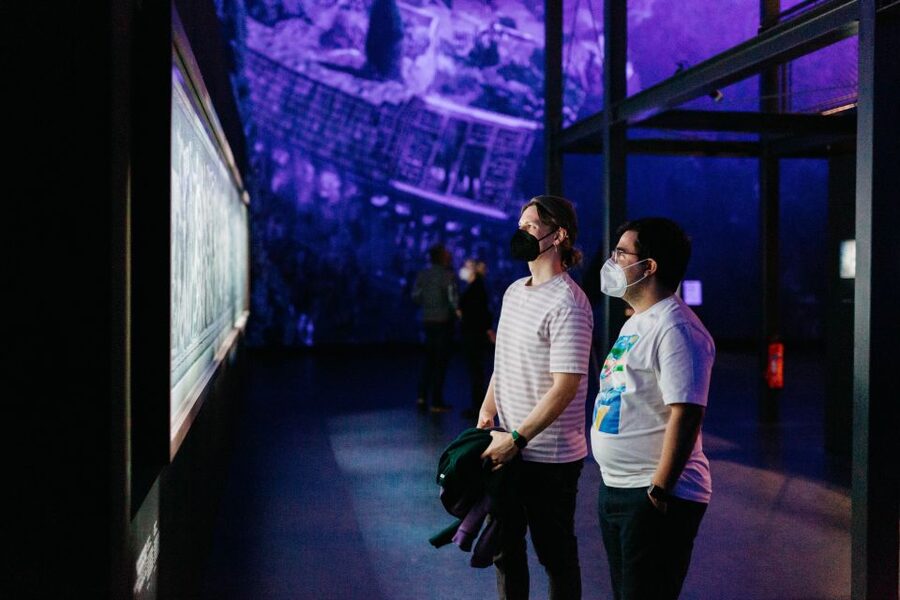
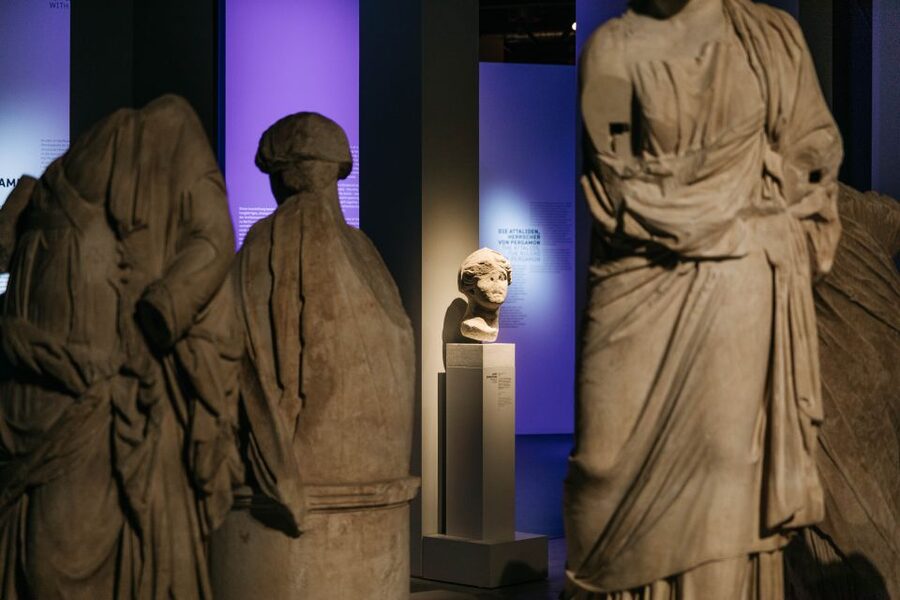
After the large city view, the exhibition brings you close to around 80 important works from Pergamon in the Antikensammlung. This is where the visit moves from broad artistic reconstruction to original ancient material.
The largest section of the Telephos frieze from the Pergamon Altar is a major reason to pay attention. The frieze tells a mythological story connected with Telephos, the legendary founder of Pergamon. In the panorama, the Altar is shown in its original architectural context on the Acropolis, giving you a clearer idea of how the relief belonged to a larger monument.
The display also includes several notable sculptures:
- The Beautiful Head
- The giant head of Herakles
- Portrait sculptures of the kings
- The Archaistic Dancer from the palace
- The Prometheus group
- Athena with a cross-strapped shield
These names may mean more to you after seeing the panorama. You can look at a sculpture not only as an isolated object, but also as part of Pergamon’s political, religious, and artistic world.
The portrait sculptures of the kings are especially useful for understanding how rulers wanted to be seen. The giant head of Herakles has the sort of immediate scale that works well for visitors who are not already serious students of Greek and Roman art.
The Archaistic Dancer, associated with the palace, adds a different mood. It points toward the refined and theatrical side of elite ancient culture, while Athena with the cross-strapped shield brings you back to the power of divine and civic imagery.
The mix keeps the exhibition from becoming a single special effect. If the panorama alone feels too theatrical for your taste, the original pieces provide a firm historical base. If the sculptures initially seem dry, the city reconstruction gives them a setting and a story.
Why the day-to-night sequence matters
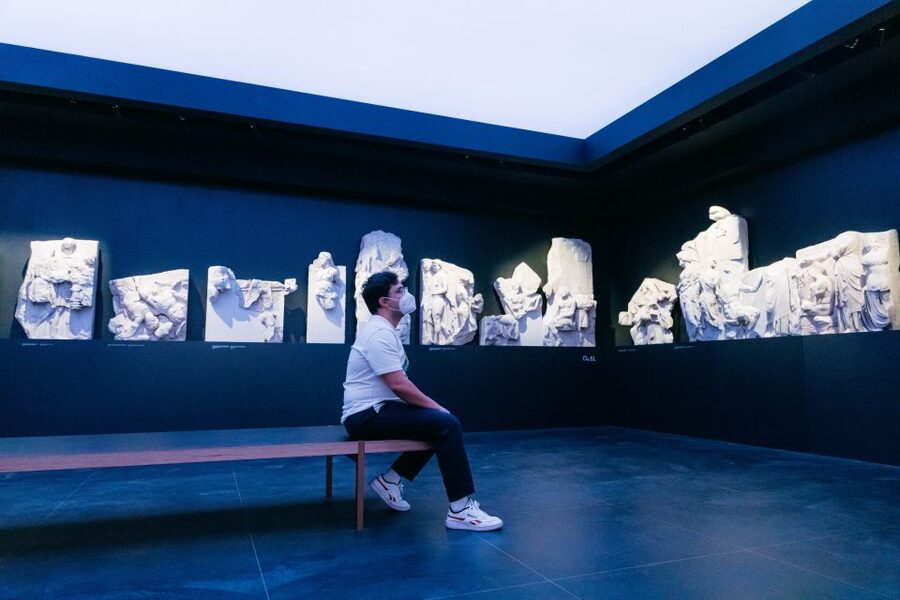
Ancient sites are often reduced to sunlit stones. This exhibition tries to show the city as a place that changed with the hours. Daylight gives you the broad architectural picture. Night brings a different atmosphere, with lighting and music shifting your sense of distance and activity.
I like this because it helps you imagine an ancient city as lived space rather than a silent archaeological diagram. It also gives families a simple way to follow the presentation. Children may not remember every monument, but they usually understand the idea of a city changing from day to night.
The sound can be powerful, so consider your group. The music has been a highlight for many people, but a visitor looking for a quiet, traditional museum display may find the presentation more theatrical than expected.
The panorama also includes small details that function like visual Easter eggs. Ask one of the guides in the room to point them out. No guide name is provided for this experience, but staff members can help you spot details that are easy to overlook.
Same city, a completely different kind of day:
- Berlin: Reichstag, Dome and Government District Guided Tour
★ 4.7 · 18,288 reviews - Berlin: 1-Hour City Tour by Boat with Guaranteed Seating
★ 4.3 · 16,993 reviews - Berlin: Boat Tour Along the River Spree
★ 4.4 · 11,252 reviews - Discover Berlin Half-Day Walking Tour
★ 5.0 · 9,624 reviews
How long to plan, and what $16 buys you
The listed price is $16 per person. That is a reasonable price if you treat the exhibition as a concentrated visual program with original antiquities, rather than as a full museum visit.
The value is strongest for three types of visitors. First, it works well for anyone who wants a quick introduction to Pergamon without committing to a full day of museum rooms. Second, it suits families who prefer a clear visual story. Third, it makes sense for people already interested in the Pergamon Altar, the Telephos frieze, or the city’s sculpture.
The value is weaker if you expect hours of galleries or a traditional audio-led museum tour. Your ticket covers only Pergamonmuseum. Das Panorama. It does not cover entry to the Pergamonmuseum itself or any other museum on Museum Island.
The duration needs careful reading. The activity is described as valid for 15 minutes from first activation, but the exhibition itself is worth viewing for longer if the entry arrangement permits. A shorter visit can give you the basic effect. Half an hour gives the day-to-night sequence, the changing viewpoints, and the object displays more room to work.
An audio guide is available, and it can add useful context. You do not need it to enjoy the lights and panorama, but it is a sensible extra if you want more help connecting the monuments, objects, and historical setting.
The experience is non-refundable, so check your schedule before buying. The exhibition is closed from September 1 through October 13 for renovation. That closure is easy to miss and could spoil a tightly planned Berlin museum day.
Finding the entrance near Museum Island
The address is Pergamonmuseum. Das Panorama, Am Kupfergraben 2, 10117 Berlin. Do not simply follow signs for the Pergamon Museum and assume you have reached the panorama building. The two venues have separate entry arrangements and separate tickets.
Build in a few extra minutes to find the correct entrance, especially if you are moving between Museum Island attractions. Asking staff for Pergamonmuseum. Das Panorama can save time.
Once inside, expect security controls. Backpacks are not allowed. A small bag may still be subject to the venue’s rules, so pack lightly and avoid arriving with a daypack you cannot store.
If you buy tickets at the museum shop, you need a non-cash payment method. That is a small point, but it matters if you are relying on cash during a long day of sightseeing.
Accessibility and family suitability
The experience is presented as suitable for all ages because it combines original archaeology with modern visual effects. I agree that the format is likely to work well for families, particularly those whose children need something more active than a quiet sequence of display cases.
The accessibility information needs a careful reading. The venue is described as wheelchair accessible, but it is also only partially accessible, and the activity is marked as not suitable for wheelchair users. Those statements do not offer a simple guarantee, so contact the venue before booking if mobility access is essential.
The panorama involves steps and changing viewing positions. If you have limited mobility, do not assume every part of the presentation will be available to you. This is one area where the $16 ticket is not worth risking without confirmation.
Under-18 visitors can enter free, but every person still needs a ticket. Do not arrive expecting children to walk in without one.
What may not work for you
The exhibition’s strengths can also be its weaknesses. The sound, lighting, and theatrical presentation may feel dramatic if you enjoy visual storytelling. If you prefer quiet labels, original architecture, and long periods of close study, parts of the experience may feel underwhelming.
The panorama is also an interpretation. It draws on historical research, but it is not the ancient city itself. I would pair it with a visit to the Pergamonmuseum when that museum is open and accessible, though that requires a separate ticket and separate planning.
Security can feel close and uncomfortable. One account describes staff following visitors around the room, which may make the atmosphere less relaxed. This is not a reason to rule out the exhibition, but it is worth knowing if you dislike close monitoring in museum spaces.
Finally, do not judge the visit by its first few minutes. The best effects come from staying through the changes in light, moving to different levels, and spending time with the original works afterward. A rushed look will make the ticket feel expensive.
Who should book Pergamonmuseum. Das Panorama?
I would choose this for a first taste of Pergamon, a family outing, or a short Berlin itinerary that cannot spare several hours for ancient history. The panorama gives you a useful sense of the city’s scale, while the sculptures and frieze keep the presentation tied to real archaeological objects.
I would also recommend it to anyone who has seen photographs of the Pergamon Altar and wants to understand how it once related to the Acropolis. The reconstructed setting cannot replace the original monument, but it can help you picture its place in the city.
I would hesitate if you are visiting Berlin mainly for conventional museum displays, need full wheelchair access, or expect the $16 ticket to include the main Pergamonmuseum. Check the closure dates, travel light, and allow enough time for the panorama to change.
If you can stay for at least half an hour, use the audio guide, and ask staff about the small hidden details, the experience offers more than a quick photo stop. Book it when you want ancient Pergamon presented as a city with movement, sound, and scale, not just as a collection of fragments.
FAQ
Where is Pergamonmuseum. Das Panorama located?
It is at Am Kupfergraben 2, 10117 Berlin, Germany.
Does this ticket include the Pergamonmuseum?
No. It includes entry to the exhibition Pergamonmuseum. Das Panorama only.
Does the ticket include other museums on Museum Island?
No. Entry to the other museums on Museum Island is not included.
How much does entry cost?
The listed price is $16 per person.
How long is the activity?
The ticket is valid for 15 minutes from first activation. Once inside, you may want to spend longer viewing the panorama and the original works.
Is the exhibition open all year?
No. It is scheduled to be closed from September 1 to October 13 for renovation.
Can children enter for free?
Visitors under 18 can enter free of charge, but every visitor still needs a ticket.
Are backpacks allowed?
No. Backpacks are not allowed inside the exhibition.
Is the exhibition accessible for wheelchair users?
The venue is described as wheelchair accessible but only partially accessible, and the activity is also marked as not suitable for wheelchair users. Contact the venue before booking if full access is important.
Just added around Berlin
- Love and War in Berlin: Self-Guided Story Puzzle Walk★ 5.0 · 7 reviews
- Rickshaw Tours Berlin – Groups of up to 16 people with several rickshaws★ 4.0 · 97 reviews
- eSIM for Germany and 34 European Countries★ 4.5 · 16 reviews
- Walking on the Wall: 3-Hour Tour in Berlin★ 4.5 · 34 reviews
- Warnemuende Shore Excursion: Berlin Private Sightseeing Tour from Rostock★ 5.0 · 4 reviews
- Your ticket to The Wall Museum Berlin★ 3.0 · 60 reviews
- Warnemuende Shore Excursion: Private Berlin Tour★ 4.5 · 27 reviews
- Berlin’s Gay, Lesbian, and Queer Scene Small-Group Walking Tour★ 4.5 · 66 reviews
Museums, compared.

Skip-the-Line: Berlin Wall Museum at Checkpoint Charlie
Read our review →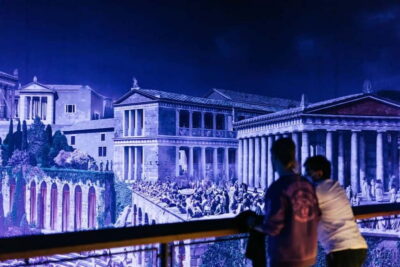
Browse the lists this tour appears in