
Reviewed · THIRD REICH & COLD WAR TOURS
Munich: Birthplace of the Third Reich Guided Walking Tour
Munich’s Nazi past comes into sharp focus when you see the actual beer halls, streets, offices, and memorials linked to Hitler’s rise. This 2.5-hour walking tour connects political events with ordinary city spaces, showing how a fringe movement gained a foothold in Munich.
I like the way the tour links the early party meetings with the later machinery of Nazi power. I also like its careful attention to victims and opponents, rather than treating the subject as a parade of Hitler landmarks. The main drawback is simple: you’ll be outside for the whole walk, so cold, rain, or summer heat can affect your enjoyment.
In This Review
- Key points to know before you book
- Why Munich is the right place for this difficult lesson
- Starting at the Radius Tours office
- Beer halls and the Nazi Party’s first public audience
- The failed putsch and Munich’s streets of violence
- The former Nazi headquarters and surviving wartime buildings
- Kristallnacht and the road toward the Holocaust
- Memorials to victims and those who resisted
- How the guides handle a serious subject
- Weather, pace, and comfort on a 2.5-hour walk
- Is $29 good value?
- Who should book this Munich walk?
- Should you book it?
- FAQ
- How long does the Munich Third Reich walking tour last?
- What language is the tour offered in?
- Where does the tour meet?
- Is hotel pickup included?
- Is transportation included?
- What places does the tour visit?
- Does the tour discuss Kristallnacht?
- Does the tour include memorials to Nazi victims?
- How much does the tour cost?
- Can I cancel the booking?
Key points to know before you book

- Beer halls reveal the movement’s beginnings: See the places where Hitler gave early speeches and where the Nazi Party gathered before it ruled Germany.
- Kristallnacht gets a specific place in the story: The walk includes the building where Goebbels plotted the Night of Broken Glass, a key step toward the Holocaust.
- Munich’s Nazi buildings survived the war: You’ll see the former official headquarters and other structures that escaped the Allied bombing of central Munich.
- Memorials keep the focus on human cost: Victims of Nazism and people who resisted it are part of the route, not an afterthought.
- Guide quality is the tour’s strongest feature: Jake, Sam, Steve, Nick, Aileen, Iain, and others are praised for clear explanations, strong subject knowledge, and a humane tone.
- The $29 price is fair for a focused history walk: Transportation to Munich’s historic center is included, but hotel pickup is not.
Why Munich is the right place for this difficult lesson
Munich is often sold through palaces, churches, beer gardens, and grand squares. Those sights matter, but this tour asks you to read the city in another way. It shows how public meeting places and familiar streets became part of a political campaign that changed Germany and then the world.
The walk focuses on the years before the Second World War. That is important. You are not simply shown wartime ruins and told dates. You learn how the Nazi Party developed in Munich, how Hitler used speeches and public gatherings, and how political violence helped the movement gain power.
I find this approach more useful than a tour that begins with the outbreak of war. It explains how democratic systems can be weakened long before soldiers cross a border. The guide also places anti-Semitism in the story and connects the Night of Broken Glass with the later destruction of Jewish life across Europe.
This is heavy material. The best guides keep the tone serious without making the walk feel like a lecture. Past participants have singled out Jake’s energy, Sam’s command of the subject, Steve’s use of photographs, and Aileen’s clear explanations. Iain has also been praised for handling difficult information in a friendly way while welcoming questions from people who already know a good deal about the period.
More Third Reich & Cold War Tours in Munich
- Munich: Third Reich & WWII Walking Tour
★ 4.6 · 6,181 reviews - Third Reich Walking Tour Munich
★ 4.5 · 4,291 reviews - Munich City Walking Tour, includes Third Reich & Viktualienmarkt
★ 5.0 · 458 reviews
Starting at the Radius Tours office
You meet at the Radius Tours office. The exact starting arrangement depends on the option you select, and transportation to Munich’s historic center is included. Hotel pickup is not included, so you need to reach the meeting office yourself.
That setup keeps the tour practical. You do not waste the first part of the walk finding the historic route, and the group can move directly into the central Munich sites. At the end, the listed drop-off points are 80331 and the Radius Tours office.
Plan to arrive ready to walk. The supplied details do not give a precise distance, group size, or number of indoor stops, so you should not treat this as a museum visit with regular seating. It is a guided city walk, with the story unfolding outside and at the buildings themselves.
Beer halls and the Nazi Party’s first public audience
One of the most memorable parts is seeing the old beer halls connected with Hitler’s early political meetings and speeches. These places help explain why Munich mattered to the young Nazi movement.
A beer hall can sound like a casual setting, but that is exactly why it is useful to see it in context. Political ideas were not confined to private offices. They were presented to crowds in familiar public rooms, where speeches, argument, group loyalty, and intimidation could build momentum.
Your guide explains how the Nazi Party began as a small movement and how its ideology gained a larger audience. The focus is not simply on Hitler as a speaker. You also learn how the party used Munich’s political culture, organized gatherings, and fought for attention in the streets.
This is where a strong guide makes a real difference. Jake has been praised for mixing facts with gentle humor, which can help a group stay focused during a grim subject. Steve has used a binder of photographs to show how earlier scenes looked beside the buildings you see now. That kind of visual comparison is especially useful because many Munich buildings have changed, been repaired, or lost the details that once made their role obvious.
Do not expect every beer hall to look frozen in 1920. The value is in the explanation. You are seeing the setting and then learning what happened there, who gathered there, and how the movement used such spaces to build influence.
The failed putsch and Munich’s streets of violence
The route also covers Hitler’s failed putsch, an early attempt to seize political power. The event matters because it shows that the Nazi rise was not a smooth or inevitable march to control. There were failures, confrontations, and moments when the movement might have ended differently.
As you walk through central Munich, the guide describes how Hitler and his Brownshirts fought their way into political life. Streets that now seem ordinary became places of conflict and intimidation. Seeing them while hearing the story gives the events a physical scale that a book or documentary cannot quite provide.
I especially value this part because it deals with the question many people carry into the tour: how was this possible? The answer is not one dramatic speech or one villain acting alone. The guide discusses the growth of Nazi organization and ideology in Munich, then places the movement in the political and social setting of the time.
The walk does not turn that explanation into an excuse. Understanding the process is meant to sharpen your judgment, not soften it. It also makes the subject relevant beyond a single chapter of German history.
Same city, a completely different kind of day:
- From Munich: Neuschwanstein & Linderhof Castle Full-Day Trip
★ 4.5 · 12,494 reviews - Neuschwanstein & Linderhof Castle-Fairytale Day Tour from Munich
★ 4.5 · 7,275 reviews - Dachau Concentration Camp Memorial Site Tour from Munich by Train
★ 4.5 · 5,637 reviews - Neuschwanstein Castle Tour from Munich
★ 4.5 · 5,117 reviews
The former Nazi headquarters and surviving wartime buildings
A stop at the official Nazi headquarters gives the tour another change of scale. The early beer-hall meetings were part of a small movement. The headquarters represents the later bureaucracy and authority of the Third Reich.
You also see other buildings that bear scars from the Second World War. Much of central Munich was damaged by Allied bombing, yet many Nazi buildings survived. That contrast gives the city an uneasy visual record. A structure can remain standing while the system that used it is gone, and memorials can occupy the same urban space as former centers of power.
The guide’s job here is to help you distinguish between architecture and ideology. Large official buildings can look impressive, but the tour does not ask you to admire them as Nazi monuments. It explains their function and places them beside the human consequences of the regime.
Steve’s photographs are particularly useful at this stage because they help you compare wartime Munich with the present city. Several guides also use images to make their points, according to the supplied feedback. If you like history presented through maps, photographs, and buildings rather than dates alone, this section should work well for you.
Kristallnacht and the road toward the Holocaust
The stop at the building where Goebbels plotted the Night of Broken Glass is among the tour’s hardest moments. Kristallnacht, also called the Night of Broken Glass, was a major escalation in organized anti-Semitic violence. The tour presents it as a grim milestone on the road toward the Holocaust.
The location matters because it removes the event from the safety of an abstract timeline. You are told where plans were made and then shown how that violence fit into the wider Nazi project. The guide also addresses the reality of anti-Semitism, rather than treating it as a footnote to Hitler’s political career.
This part calls for a measured guide. Several guides have been praised for handling the subject with empathy and subtle humor, but humor should never blur the horror. The best use of a light touch is to keep people attentive during a long walk, not to make the events seem less serious.
I would not book this tour expecting an easy sightseeing outing. It is educational, but it is also upsetting. That is part of its value. Munich’s streets can look polished and peaceful today, and the tour helps you remember that public normality can hide a much darker past.
Memorials to victims and those who resisted
The tour does not end with Nazi offices or Hitler’s speeches. It also takes you to monuments honoring victims and opponents of Nazism. This balance is one of the experience’s best features.
You learn about people who suffered under the regime and those who sacrificed everything to resist it. That changes the emotional direction of the walk. Instead of giving all the attention to Nazi leaders, the route recognizes the people whose lives were destroyed and the individuals who refused to cooperate.
A tour of this subject should include memory as well as politics. Otherwise, the buildings can become a collection of grim curiosities. Here, the memorials remind you that the story is about real people, not only about government structures and military events.
The final sections can be especially affecting. One guide’s route has been praised for ending with a reminder that vigilance remains necessary. You may leave with fewer neat answers than you had at the start, but with a clearer sense of why public memory matters.
How the guides handle a serious subject
The strongest praise is directed at the guides. Jake is repeatedly described as energetic, clear, and able to add humor without losing sight of the subject. Sam is praised for extensive knowledge and a friendly manner. Nick is noted for fluent, easy-to-follow English and for keeping the walk moving while answering individual questions.
Steve has spent decades documenting Munich’s neighborhoods and buildings, and his use of a photo binder gives the tour a strong before-and-after quality. Aileen is praised for clear, well-organized explanations and for making sure the group had breaks and stayed together. Iain is a good match for history buffs who want to ask detailed questions.
Other guides named in the feedback include Dan, Sara, Mark, Tom, Werner, Josh, Curt, Jeff, and Aachim. The exact guide depends on the date, so you should not book on the assumption that one particular person will lead your group. Still, the repeated pattern is clear: the tour depends heavily on a guide who can explain complex events in plain English.
The English-language format works well for visitors who want a live explanation rather than an audio guide. If you have read widely on the Third Reich, you can ask questions and pursue details. If the subject is new to you, the guides are praised for making it understandable without watering it down.
Weather, pace, and comfort on a 2.5-hour walk
The practical weakness is the weather. The walk lasts 2.5 hours, and you remain outdoors for much of it. People have completed it in freezing conditions and heavy rain, but that does not mean the weather had no effect. One person also noted that hot weather would have been easier with a stop for water or a drink.
Wear shoes you can walk in and check the forecast before leaving. In cold weather, gloves and a warm coat will make the history easier to absorb. In rain, bring proper waterproof clothing rather than relying on a small umbrella. In warm weather, carry water because the route details do not promise a refreshment stop.
The schedule may offer an earlier morning option, which can help you fit the walk into a busy day. It may also get you away from the busiest part of central Munich before major celebrations or crowds gather. Starting times vary, so check availability when booking.
The listed duration is 2.5 hours. One supplied comment refers to a 90-minute version, which suggests that options or schedules may differ. Confirm the duration shown for your selected booking rather than assuming every departure follows the same format.
Is $29 good value?
At $29 per person, this is a reasonable price for a focused, live history tour. You receive the guide, the guided walk, and transportation to Munich’s historic center. You do not receive hotel pickup, and the experience does not include a meal or a listed museum admission.
The value comes from interpretation. You can walk past old buildings on your own, but you will not necessarily know which beer halls hosted early Nazi meetings, which building was tied to Goebbels and Kristallnacht, or how the surviving Nazi structures fit into Munich’s wartime story.
The price is especially fair if you are new to Munich or want a clear introduction before visiting other museums and memorials. It may be less useful if you want a long indoor museum session, a private guide, or a tour built around military hardware. This is a city walk about political history, memory, and place.
Free cancellation up to 24 hours before the start gives you some flexibility, and you can reserve now and pay later. Those terms help if your Munich schedule is still shifting, but the weather remains the main factor to consider.
Who should book this Munich walk?
I would choose this tour if you want to understand how Munich helped shape the Nazi movement, not simply see famous names and dates. It suits adults, students, history buffs, and anyone trying to make sense of the political steps that led to war and genocide.
It also works for people with limited time. In 2.5 hours, you get a guided route through several important categories of site: beer halls, political buildings, wartime scars, and memorials. You will not cover every aspect of the period, but you will gain a useful framework for exploring further.
I would think twice if you dislike outdoor tours, struggle with long periods of standing or walking, or want a light introduction to Munich. The subject is painful, and the tour does not hide that. Rain, cold, or heat can also turn a good historical experience into a tiring one.
Should you book it?
Book it if you want a serious, place-based explanation of Munich’s role in the rise of the Third Reich. The combination of early beer-hall meetings, the failed putsch, the former Nazi headquarters, the Kristallnacht site, and victim memorials gives the walk a strong narrative shape.
I would particularly recommend it early in your stay, when the guide’s explanation can add meaning to the rest of your time in Munich. Bring water, dress for the weather, and arrive ready to listen. At $29, it offers solid value for a well-led introduction to one of the city’s most difficult chapters.
FAQ
How long does the Munich Third Reich walking tour last?
The advertised duration is 2.5 hours. Check the available start times and the exact option you select when booking.
What language is the tour offered in?
The tour is conducted in English with a live English-speaking guide.
Where does the tour meet?
You meet at the Radius Tours office. The exact starting arrangement depends on the selected option.
Is hotel pickup included?
No. Hotel pickup is not included.
Is transportation included?
Transportation to Munich’s historic center is included. The listed drop-off locations are 80331 and the Radius Tours office.
What places does the tour visit?
The walk includes historic beer halls connected with early Nazi Party meetings and Hitler’s speeches, the official Nazi headquarters, buildings linked with the Second World War, the site connected with Goebbels and Kristallnacht, and memorials to victims and opponents of Nazism.
Does the tour discuss Kristallnacht?
Yes. The tour visits the building where Goebbels plotted the Night of Broken Glass and explains its place on the road toward the Holocaust.
Does the tour include memorials to Nazi victims?
Yes. Monuments honoring victims of Nazism and people who resisted the regime are included.
How much does the tour cost?
The listed price is $29 per person.
Can I cancel the booking?
You can cancel up to 24 hours in advance for a full refund. You can also reserve now and pay later.
More Walking Tours in Munich
- Munich: Old Town & Viktualienmarkt City Walk in German
★ 4.7 · 2,304 reviews - Munich: Night Watchman Walking Tour
★ 4.7 · 2,092 reviews - Munich Ghosts and Spirits Evening Walking Tour
★ 5.0 · 1,900 reviews - Munich Old Town Walking Tour
★ 4.5 · 1,287 reviews
Just added around Munich
- Pub crawl incl. Oktoberfest museum guided tour with beer tasting (private)★ 5.0 · 5 reviews
- South Tyrolean specialties and wine tasting★ 5.0 · 5 reviews
- Size Matters Beer Tour Munich★ 4.6 · 105 reviews
- Short & sweet: Tasting the Viktualienmarkt★ 4.8 · 37 reviews
- Secret Food Tours Munich★ 4.8 · 5 reviews
- Munich: Romantic Wine Experience for Two at Viktualienmarkt★ 4.2 · 14 reviews
- Munich: Resistance against Hitler – Historical Walking Tour★ 5.0 · 5 reviews
- Residence of Munich private tour with skip the line ticket★ 5.0 · 4 reviews
Third Reich & Cold War Tours, compared.
Berlin’s Best: 2 Hour Walking Tour Third Reich and the Cold War
Read our review →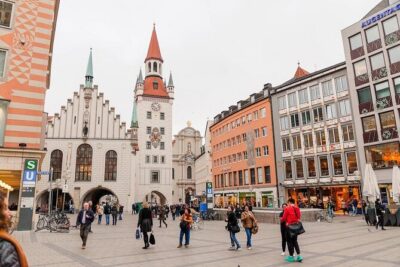
Third Reich Berlin: Hitler and WWII Walking Tour
Read our review →
Skip-the-Line: Berlin Wall Museum at Checkpoint Charlie
Read our review →
Cold War, Berlin Wall, Spies and the East Side Gallery
Read our review →Browse the lists this tour appears in