
Reviewed · 2-HOUR EXPERIENCES
Berlin: Backyards of Berlin 2-Hour Tour
Berlin keeps much of its best story behind the street front. This two-hour walk leads you through the courtyards of the old Spandauer Vorstadt, where workshops, religious buildings, apartment blocks, and traces of Jewish life sit only steps apart. The route links famous places with quieter corners you could easily miss on your own.
I like the focused local history and the way the route joins several themes instead of treating each building as an isolated sight. I also like the chance to ask for a special focus on Jewish history, urban planning, or Berlin’s city history before the tour. The main drawback is pace: two hours may feel long if you are less interested in courtyard architecture or artist shops.
In This Review
- Key points to know before you book
- Why Berlin’s courtyards tell a better story
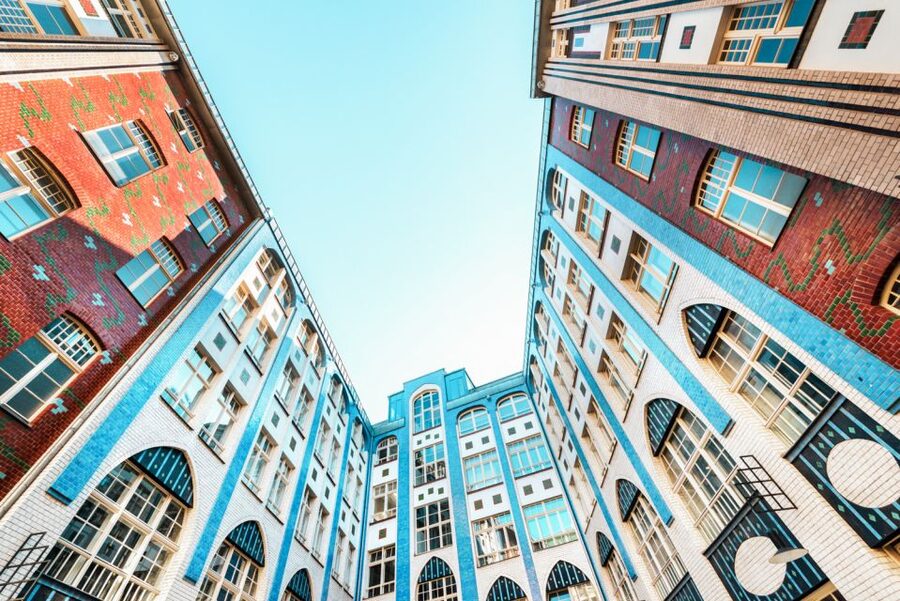
- Starting at Hackesche Höfe
- Sophienstraße and the working courtyards
- Große Hamburger Straße and a road of tolerance
- Oranienburger Straße and the New Synagogue
- Ending at Heckmann Höfe
- What the guide adds to the experience
- Is $21 a fair price?
- Who should book this Berlin walk?
- Practical details that affect your day
- Should you book the Backyards of Berlin tour?
- FAQ
- How long is the Backyards of Berlin tour?
- What languages are available?
- Where does the tour meet?
- Is this a private walking tour?
- What places are included on the route?
- Can I request a special historical focus?
- What is included in the price?
Key points to know before you book
- Hackesche Höfe begins the story: Meet in the first courtyard at the Chamäleon cash counter, then learn why this restored complex matters.
- Jewish Berlin is central to the route: Große Hamburger Straße and the first Jewish cemetery bring difficult, important history into view.
- The courtyards are the main attraction: Sophienstraße, Sophie-Gips-Höfe, and Heckmann Höfe show what lies behind Berlin’s street facades.
- The route mixes faith and city life: You see Catholic institutions, a Baroque church, the New Synagogue, and the old Postfuhramt.
- English and German tours are available: A live guide leads the private walking tour.
- The price is modest for a private walk: At $21 per person, the value improves when you want a tailored history lesson rather than a broad city overview.
Why Berlin’s courtyards tell a better story
The old center of Berlin can seem all facade from the street. Grand buildings, busy roads, and famous attractions give you the outline, but the courtyards show how people actually lived and worked behind those fronts.
That is the useful idea behind this tour. Instead of simply pointing out landmarks, the guide takes you inside a chain of courtyards in and around the Spandauer Vorstadt. You see how residential life, small trades, religious institutions, and cultural activity shared the same tight urban space.
I find this approach especially helpful early in a Berlin visit. The route gives you a clearer sense of how the district changed over time, and it helps explain why a restored courtyard may look polished today while carrying a far more complicated past.
The walk is not built around one huge sight. Its value comes from the connections between many smaller places. You get architecture, social history, Jewish heritage, and urban planning in one compact outing.
A few more Berlin trips to weigh up
- Berlin: Third Reich and Cold War 2 Hour Walking Tour
★ 4.9 · 6,830 reviews - Berlin’s Best: 2 Hour Walking Tour Third Reich and the Cold War
★ 5.0 · 5,486 reviews - Berlin: 2-Hour Lake Oberhavel Cruise from Tegel
★ 4.4 · 577 reviews
Starting at Hackesche Höfe
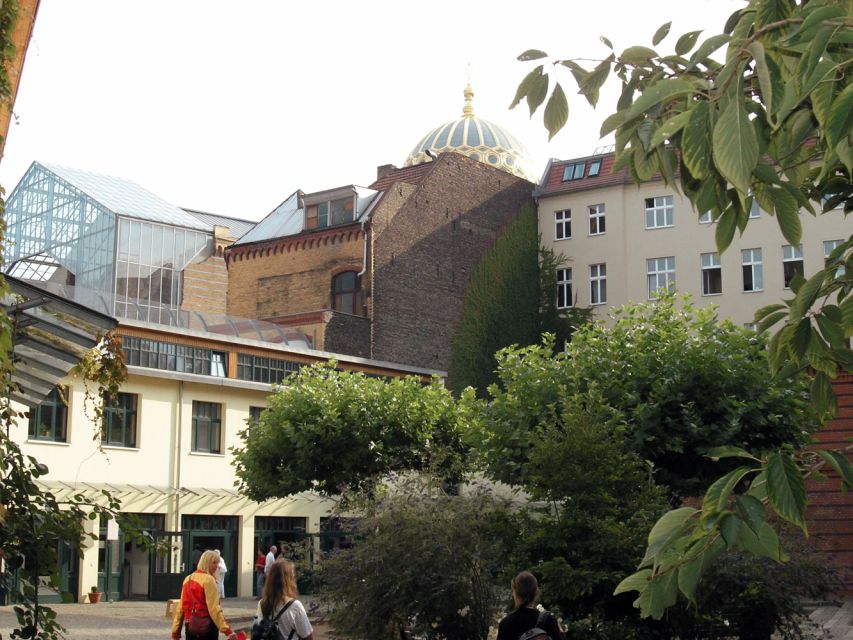
The meeting point is in the first courtyard of Hackesche Höfe, at the cash counter of Chamäleon. That detail matters because Hackesche Höfe is a busy and well-known place, and meeting inside the first courtyard gives you a precise starting point rather than a vague street address.
Hackesche Höfe is also a sensible opening chapter. The complex is one of the district’s best-known examples of courtyard architecture, and the walk uses it to explain the unusual fate of this part of Berlin. The area has been revitalized, but its earlier story is not simply one of decay followed by a neat restoration.
Your guide sets the tone here by explaining how the district developed and why the courtyards were built in the first place. You can expect the focus to remain on the relationship between the street facade and the spaces behind it.
The first courtyard is also useful for getting your bearings. If you arrive early, you can find the meeting point without rushing. Since food and drinks are not included, this is a reasonable place to handle any snack or coffee needs before the walk begins, though the tour itself is a walking history experience rather than a food outing.
Sophienstraße and the working courtyards
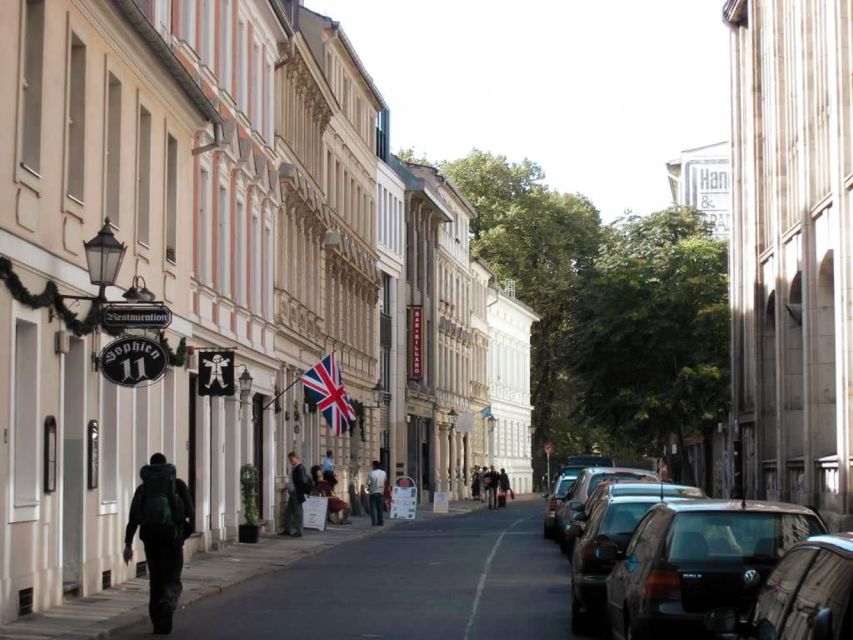
From Hackesche Höfe, the route moves into the colorful multicultural life of Sophienstraße. Here, the point is not just to admire old walls. You are looking at how the neighborhood’s identity has been shaped by different communities and by the many activities once carried out behind the main buildings.
The artisan association courtyard adds a practical side to the story. It gives you a look at the relationship between craft work and urban life, rather than presenting Berlin as a city made only for offices, museums, and monuments.
The Sophie-Gips-Höfe then adds another layer. The courtyard is described as an interesting stop because it helps you read the district from the inside. This is where the tour’s theme becomes clear: the best clues about Berlin’s past may be found in spaces that were never designed as grand public sights.
I would pay close attention to the guide’s explanation of how these courtyards were used and changed. The physical spaces are important, but the interpretation is what turns them into a useful part of your Berlin visit.
There is one practical caution here. One recent rating found that the two-hour length could feel slightly long and suggested that some artist shops might be skipped. If your interest is mainly in major landmarks, you may agree. If you like architecture, small workspaces, and the details of neighborhood life, those stops will likely feel worthwhile.
Große Hamburger Straße and a road of tolerance
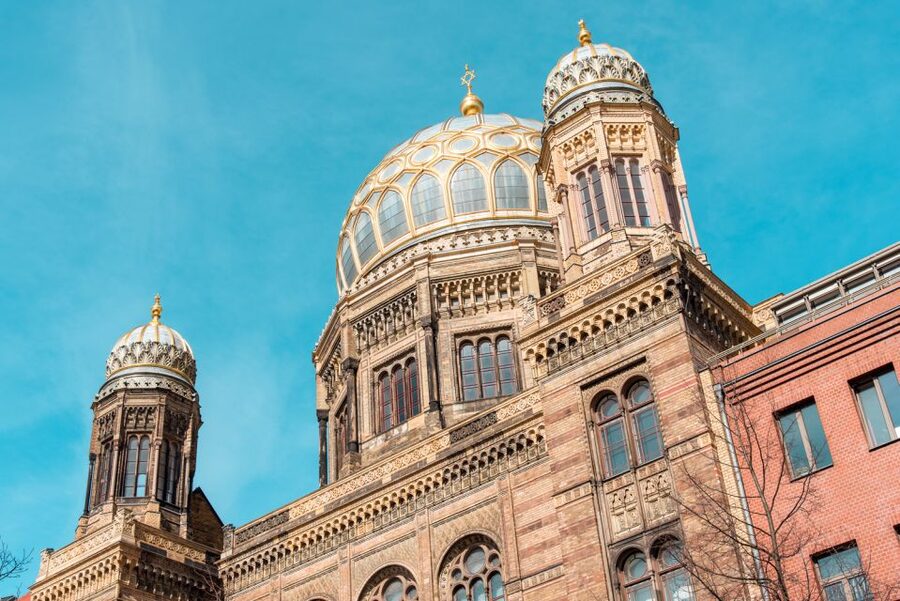
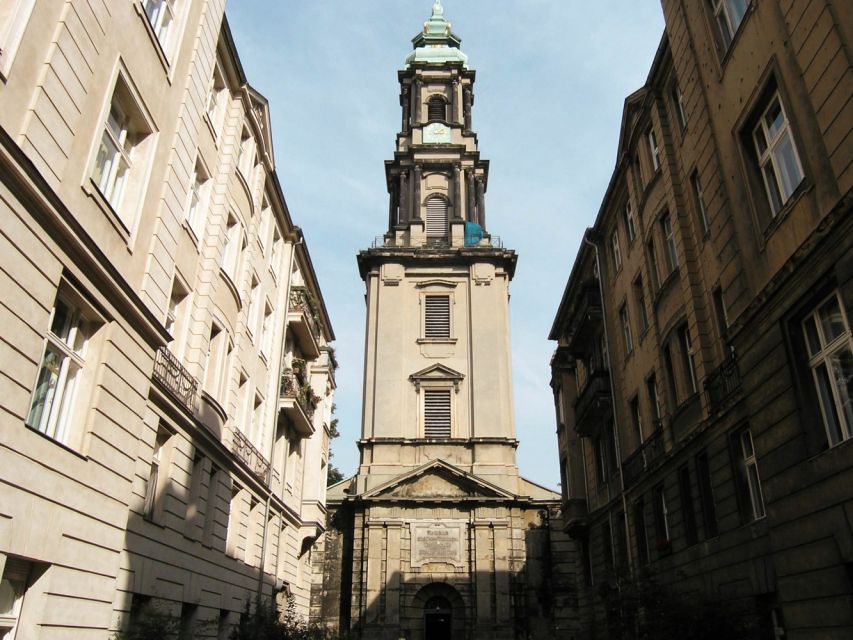
Große Hamburger Straße brings the tour into one of its most serious sections. It has long been described as a road of tolerance, and the route uses it to examine the way different religious communities and institutions existed close to one another.
You get a look behind the scenes of a major Catholic institution, followed by views of one of Berlin’s most important Baroque churches. The contrast is useful. It shows that the area’s identity cannot be reduced to one faith, one period, or one architectural style.
This part also leads into the story of Berlin’s Jewish community and its first cemetery. The subject is not treated as an optional footnote. It is one of the main reasons to choose this walk over a general sightseeing circuit.
I appreciate that the route connects Jewish history to a real street and a real cemetery site. You are not only hearing dates and names. You are seeing the setting in which the community lived, worshipped, worked, and faced persecution and loss.
Because the tour covers difficult history in a short time, you should expect an introduction rather than a full specialist seminar. If Jewish history is your main reason for booking, ask the operator in advance for that focus. The same option is available for urban planning or general city history.
Same city, a completely different kind of day:
- Berlin: Reichstag, Dome and Government District Guided Tour
★ 4.7 · 18,288 reviews - Berlin: 1-Hour City Tour by Boat with Guaranteed Seating
★ 4.3 · 16,993 reviews - Berlin: Boat Tour Along the River Spree
★ 4.4 · 11,252 reviews - Discover Berlin Half-Day Walking Tour
★ 5.0 · 9,624 reviews
Oranienburger Straße and the New Synagogue
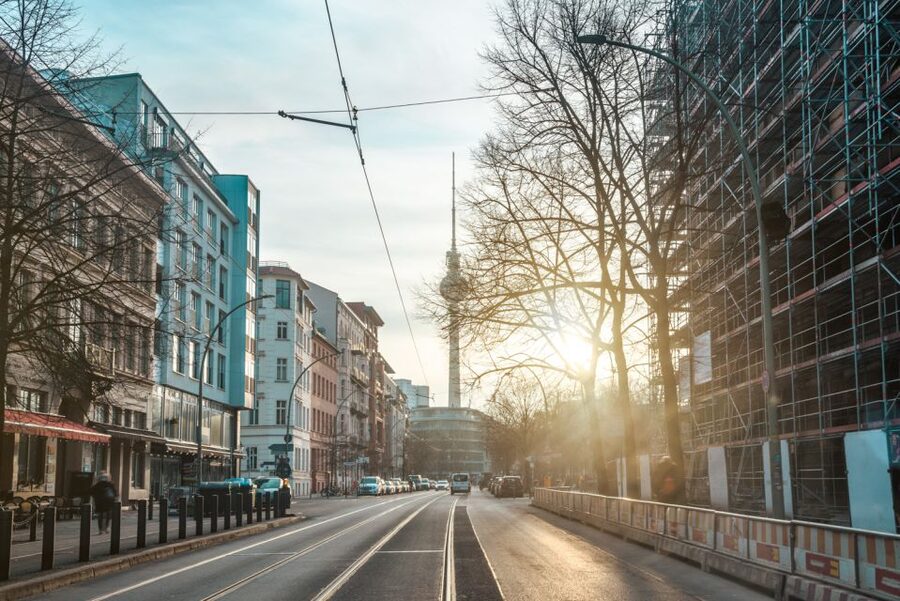
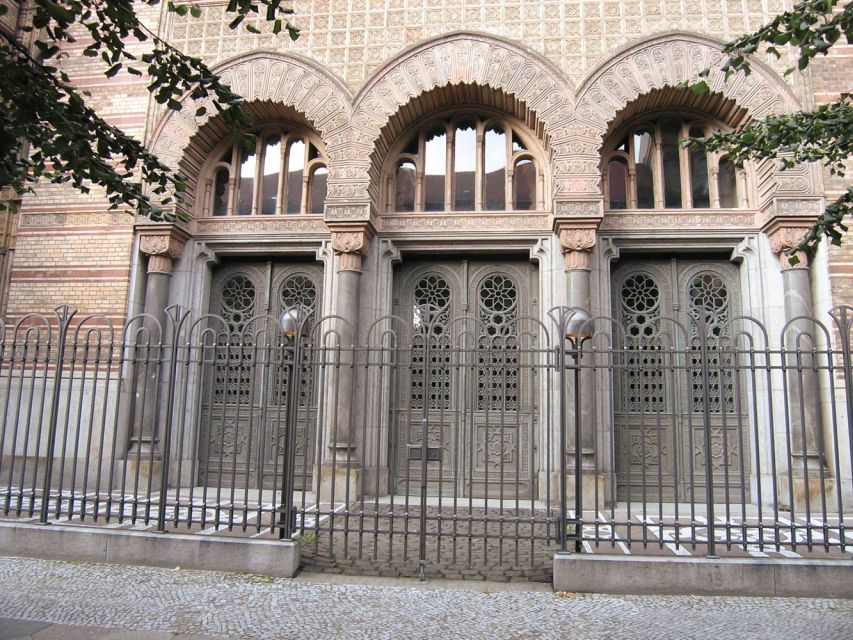
Oranienburger Straße is one of the most recognizable streets on the route. Here, the guide explains the history of the imposing New Synagogue, a building whose scale and appearance make it impossible to ignore.
The stop works best when you look beyond the facade. The synagogue is not presented simply as a striking building for a photograph. Its history is tied to the story of Berlin’s Jewish community, making this another place where architecture and memory meet.
The nearby Postfuhramt gives the street a different character. Its presence helps show how religious, civic, and practical city functions occupied the same central district. You get a wider view of Berlin’s urban development instead of a route limited to religious monuments.
This is also a good point to notice the tour’s balance. You are not spending two hours inside one historical subject. The walk moves between Jewish heritage, Catholic history, Baroque design, postal infrastructure, workshops, and residential courtyards.
That variety should suit you if you like making connections. It may feel less satisfying if you want a single, tightly specialized subject with long stops at each location.
Ending at Heckmann Höfe
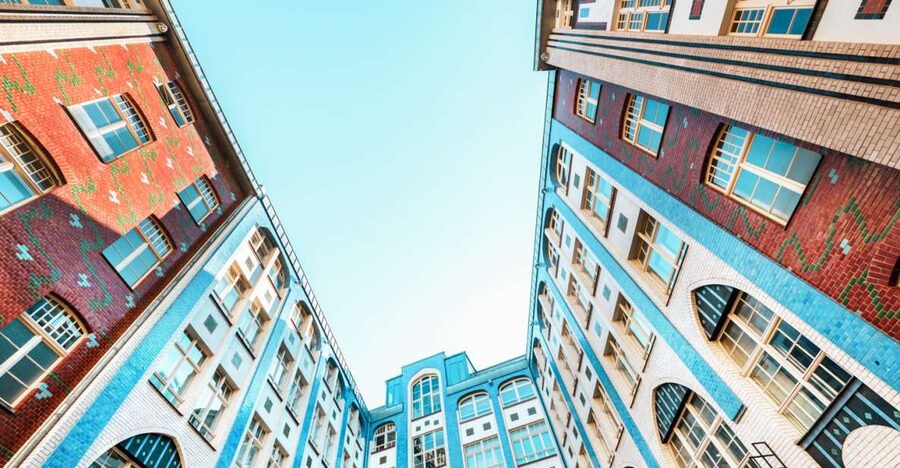
The final courtyard is Heckmann Höfe, described as one of the neighborhood’s most interesting back courtyards. Ending here makes structural sense. After seeing several examples, you have enough context to understand why a courtyard matters and what to look for in it.
At the start of the tour, a courtyard may seem like a pleasant space tucked behind a popular street. By the end, you can read it as part of Berlin’s working and residential history. The arrangement of entrances, buildings, and shared space becomes evidence of how the district functioned.
Do not expect a grand finale in the style of a major museum or palace. The appeal is quieter. Heckmann Höfe completes the walk by bringing you back to the central idea: the public face of Berlin tells only part of the story.
The ending is also a useful moment to ask final questions. Recent feedback highlights guides who explain information with humor, offer sensible tips, and stay open to questions. That matters on a compact walking tour because a good answer can help you decide what to explore next in Berlin.
What the guide adds to the experience
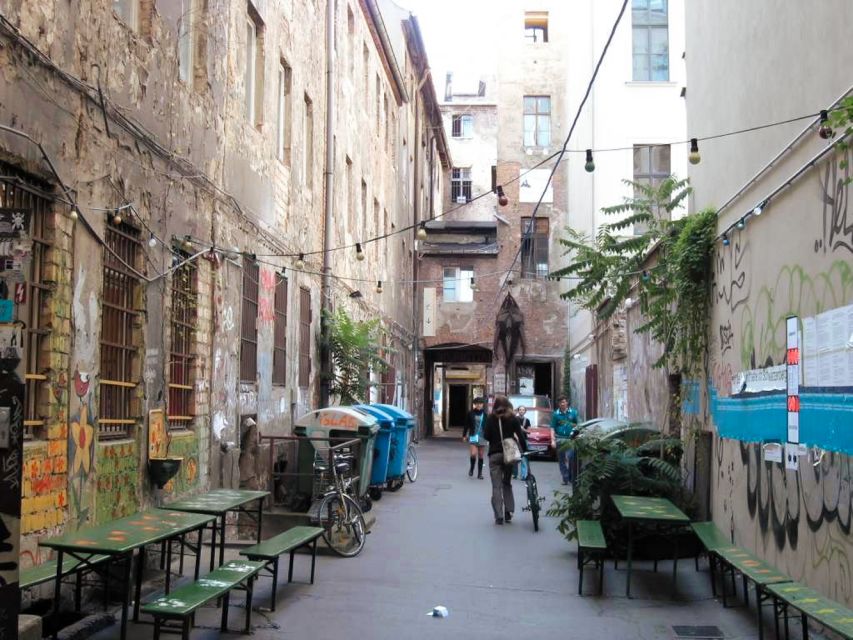
The tour includes a live guide in English or German and is sold as a private walking tour. No guide names are provided, so you should not book expecting a particular individual. The quality of this experience depends heavily on how well the guide handles the mix of architecture, history, and sensitive Jewish heritage.
The strongest pattern in the available feedback is clear: visitors value guides who are friendly, informative, well organized, and funny. One German-language rating specifically praised the guide’s wit and noted that the time passed quickly despite cold weather. Another called the tour very informative and the guide very nice.
That gives you a practical clue. The tour is not just a set route through courtyards. Its success depends on storytelling. The buildings provide the setting, but the guide needs to explain why the district changed and why these particular streets matter.
The feedback is not uniformly glowing. One rating asked for more information and a more interesting selection of courtyards. Another found that two hours was longer than necessary and would have preferred about 90 minutes, with fewer artist-shop stops.
I would treat those comments as useful expectations rather than warning signs. You should book this for interpretation and context, not for a rapid checklist of postcard sights. If you prefer a brisk route, tell the guide early that you want the main historical points.
Is $21 a fair price?
At $21 per person, the price is reasonable for a private, two-hour history walk in central Berlin. You are paying for a guide who links several sites and can adjust the emphasis, not for admissions, meals, or transportation.
The value is strongest if you care about the subjects that are harder to understand alone. Courtyards often have no obvious explanation posted on site. A synagogue, cemetery, church, or former postal building can be visually impressive, but the surrounding story gives it meaning.
The private format may also make the cost easier to justify for a small group. You can ask questions and request a focus on Jewish history, urban planning, or city history in advance. That level of direction is more useful than a one-size-fits-all overview.
The price is less attractive if you only want a quick look at Hackesche Höfe and a few photographs. You could see some of the streets independently. The paid value comes from the route’s connections and the guide’s explanations.
Food, drinks, hotel pickup, and hotel drop-off are not included. Plan to reach Hackesche Höfe on your own and wear shoes suited to two hours of walking. The tour runs at set starting times, so check availability when you choose your date.
Who should book this Berlin walk?
I would recommend it to you if you have already seen Berlin’s main sights and want a closer look at how an old central district works. It is also a smart choice for a first visit if you prefer neighborhood history over a broad tour of the Brandenburg Gate, Reichstag, and Museum Island.
The walk suits people interested in:
- Jewish history in Berlin
- Courtyard architecture and urban planning
- Religious buildings and shared city spaces
- Local history told through streets and buildings
- Small-scale cultural and artisan spaces
Families with older children may find the changing subjects helpful, though the two-hour length could test younger walkers. Since the walk includes serious history, including the fate of Berlin’s Jewish community, it may not be the right pick for someone seeking only light sightseeing.
I would also recommend requesting your preferred subject before booking. The operator can arrange special interests in advance, and that could make a major difference. A Jewish-history focus will produce a different experience from a route centered on urban planning.
Practical details that affect your day
The meeting point is Hackesche Höfe, first courtyard, at the Chamäleon cash counter. Give yourself enough time to locate the courtyard rather than arriving at the last minute.
The duration is two hours, and tours are available with an English- or German-speaking guide. The experience is on foot, with no hotel pickup or drop-off.
You can cancel up to 24 hours before the start for a full refund. You can also reserve now and pay later, which helps if your Berlin schedule is still taking shape.
Cold weather deserves attention. A recent winter rating found the tour enjoyable despite low temperatures, but two hours outside still calls for a warm coat and comfortable shoes. The route includes courtyards and streets, so your comfort will affect how much you take in.
Should you book the Backyards of Berlin tour?
Book it if you want Berlin’s less obvious story: the spaces behind the facades, the history of Jewish life, the mix of Catholic and Jewish institutions, and the way workshops and residences shaped the Spandauer Vorstadt.
At $21, it offers good value for a private two-hour walk, especially if you arrange a subject focus in advance. I would hesitate only if you prefer a fast-paced route or have little interest in courtyard architecture and neighborhood history.
For most visitors, the best approach is simple: arrive ready to listen, ask questions, and notice details that the street alone would hide. The tour will not replace a full Jewish-history program or a broad Berlin city tour. It does something more specific and useful, it shows you how Berlin’s past survives in the spaces between its famous buildings.
FAQ
How long is the Backyards of Berlin tour?
The tour lasts two hours.
What languages are available?
A live guide is available in English or German.
Where does the tour meet?
The meeting point is in the first courtyard of Hackesche Höfe, at the cash counter of Chamäleon.
Is this a private walking tour?
Yes. The tour includes a private walking tour with a guide.
What places are included on the route?
The route includes Hackesche Höfe, Sophienstraße, the artisan association courtyard, Sophie-Gips-Höfe, Große Hamburger Straße, a major Catholic institution, a Baroque church, Oranienburger Straße, the New Synagogue, the Postfuhramt, and Heckmann Höfe.
Can I request a special historical focus?
Yes. You can arrange a focus on Jewish history, urban planning, or Berlin city history with the tour operator in advance.
What is included in the price?
The price includes the tour guide and private walking tour. Food, drinks, hotel pickup, and hotel drop-off are not included.
Just added around Berlin
- Love and War in Berlin: Self-Guided Story Puzzle Walk★ 5.0 · 7 reviews
- Rickshaw Tours Berlin – Groups of up to 16 people with several rickshaws★ 4.0 · 97 reviews
- eSIM for Germany and 34 European Countries★ 4.5 · 16 reviews
- Walking on the Wall: 3-Hour Tour in Berlin★ 4.5 · 34 reviews
- Warnemuende Shore Excursion: Berlin Private Sightseeing Tour from Rostock★ 5.0 · 4 reviews
- Your ticket to The Wall Museum Berlin★ 3.0 · 60 reviews
- Warnemuende Shore Excursion: Private Berlin Tour★ 4.5 · 27 reviews
- Berlin’s Gay, Lesbian, and Queer Scene Small-Group Walking Tour★ 4.5 · 66 reviews
2-Hour Experiences, compared.


Berlin’s Best: 2 Hour Walking Tour Third Reich and the Cold War
Read our review →
Browse the lists this tour appears in