
Reviewed · THIRD REICH & COLD WAR TOURS
Berlin: Berlin Wall & East Side Gallery Walking Tour
Berlin’s Wall is not only a Cold War relic. Along the East Side Gallery, it becomes an open-air art book, with murals that reflect freedom, politics, hope, and the strange energy of reunited Berlin. This tour links those paintings to the streets, bridges, memorials, and neighborhoods around them.
I like two things here: Cris brings art and politics together, and he offers practical photography help rather than simply pointing at famous walls. I also like the neighborhood finish, with suggestions for coffee, food, shopping, and other sights around Kreuzberg.
The main consideration is pace. Two hours is enough for a strong introduction, but not enough for a slow look at every mural or a full Wall history lesson. The tour can also spend more time on street art than some people expect, so tell the guide early if your priority is Cold War history.
In This Review
- Key points to know before booking
- Why the Wall makes a better starting point than a museum room
- Friedrichshain and Kreuzberg, a city divided and reconnected
- East Side Gallery, one mural at a time
- The Berlin Wall Museum and the Cengaver Katranci Memorial
- Oberbaumbrücke, a memorable crossing point
- Kreuzberg and the walk to Schlesisches Tor
- What the two-hour format does well, and what it cannot do
- Price, languages, weather, and walking demands
- Who should book the Berlin Wall and East Side Gallery walk
- Should you book it?
- FAQ
- Where does the tour start?
- Where does the tour finish?
- How long does the experience last?
- Which languages are available?
- Does the tour include the East Side Gallery?
- What should I wear and bring?
Key points to know before booking
- East Side Gallery with context: Look beyond the colorful paint and learn about the artists, symbols, and political mood behind the murals.
- A useful cross-city route: The walk connects Friedrichshain, Oberbaumbrücke, Kreuzberg, and Schlesisches Tor.
- A guide with a clear specialty: Cristobal, often called Cris, focuses on art, architecture, Berlin history, and their links to modern politics.
- Photography is part of the experience: You receive suggestions for good photo spots and help with concrete pictures at specific locations.
- Good value at $29: For two hours of live guiding in English or Spanish, the price is fair, especially if you want more than a quick mural checklist.
- Dress for the season: This is an outdoor walk, and Berlin wind, rain, snow, or icy temperatures can change the experience quickly.
Why the Wall makes a better starting point than a museum room
The most useful thing about this walk is its setting. You are not discussing the Berlin Wall only through photographs or dates. You are moving through the areas shaped by the Wall, seeing surviving sections, memorials, architecture, painted surfaces, and the routes that now connect neighborhoods once split by a border.
The tour begins at East Side Bäckerei on Warschauer Strasse 34-36, unless the option you book gives another meeting point. This is a practical location in Friedrichshain, close to the main East Side Gallery area. Check the exact starting point before you leave, since the meeting place can vary.
Cris, the listed guide, is the central part of the experience. His approach is not limited to a standard account of East and West Berlin. He connects the Wall to the people who lived beside it, the art made after its fall, the changing culture of the neighborhoods, and the political questions that still matter today.
That approach suits you if you enjoy asking why an artwork looks the way it does, not just taking a picture of it. It is also helpful if you arrive in Berlin with only a basic understanding of the Cold War. The guide explains large events at street level, then uses the art and buildings around you to make those events easier to grasp.
More Museum & Gallery Tickets in Berlin
- Berlin: Natural History Museum Entrance Ticket
★ 4.6 · 3,382 reviews - Skip-the-Line: Berlin Wall Museum at Checkpoint Charlie
★ 4.1 · 2,041 reviews - Berlin: Museum Island Multiple Museum Entry Ticket
★ 4.4 · 2,007 reviews
Friedrichshain and Kreuzberg, a city divided and reconnected
The first guided section covers Friedrichshain and Kreuzberg for about 20 minutes. These names now describe lively parts of central Berlin, but the route uses them to show how the former border affected movement, identity, and urban life.
I like this opening because it gives the murals a setting. East Side Gallery is not an isolated art attraction. It belongs to a part of Berlin where old industrial buildings, transport routes, new businesses, public art, and reminders of division sit close together.
You can expect discussion of architecture and street art beyond the most famous Wall paintings. That broader view is useful because Berlin’s art culture is not confined to one preserved stretch of concrete. The surrounding streets help explain why the area became such a strong place for artists and alternative culture after political change.
This part also helps with orientation. The route finishes at Schlesisches Tor, so you are not simply returned to the first sight. You end near another useful part of Kreuzberg, with the guide’s suggestions for food and coffee available before you continue on your own.
East Side Gallery, one mural at a time
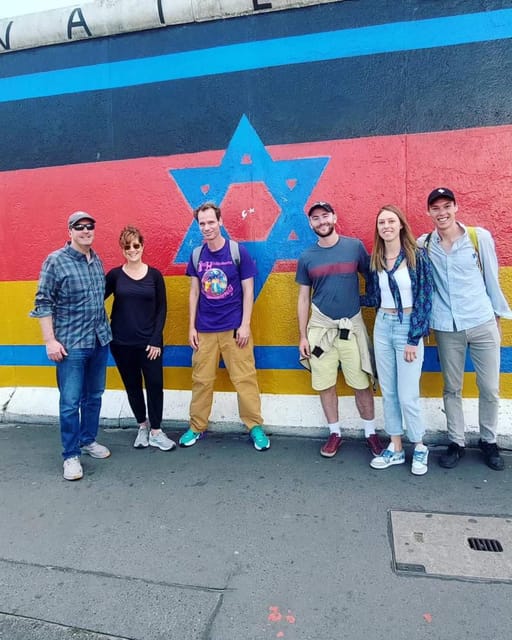
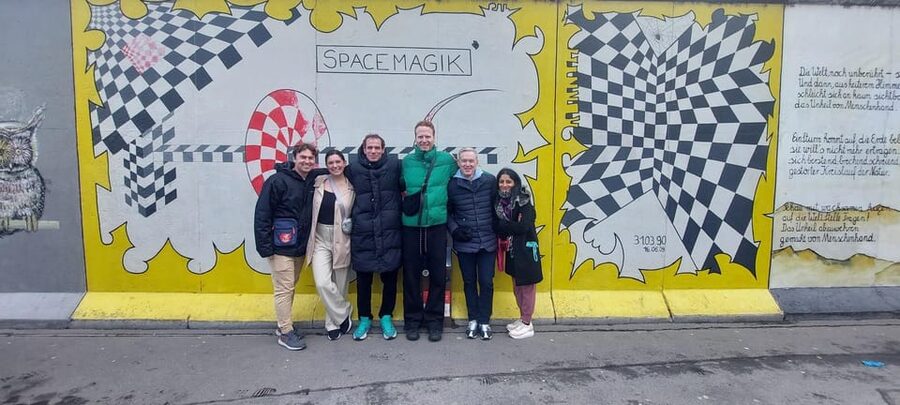
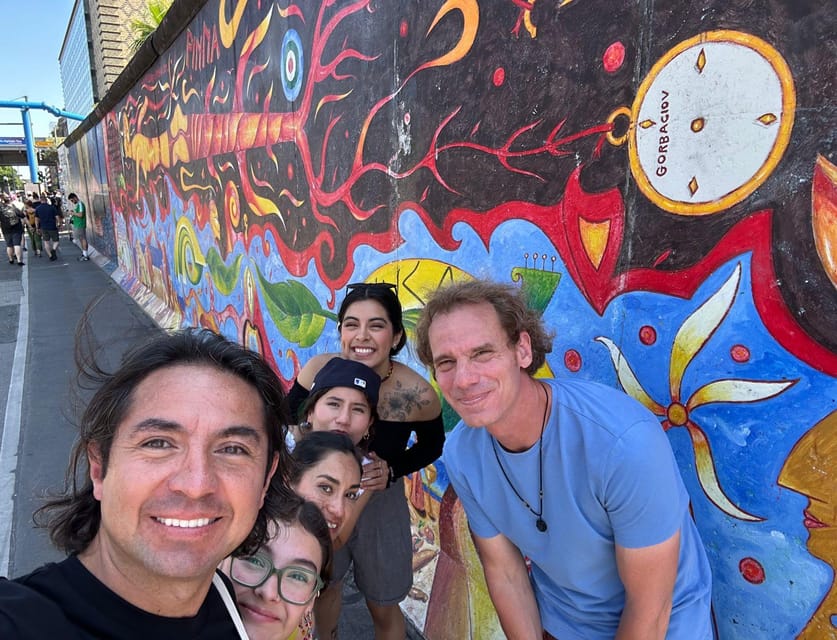
The East Side Gallery receives the longest stop, about one hour. That is the heart of the walk, and rightly so. This section of the former Wall is known as a large open-air gallery, with paintings created on the remaining Wall after its fall.
The value of a guide here is selection and explanation. You can walk past dozens of murals on your own, but it is easy to remember only the most photographed images. Cris focuses on the artists, the techniques, the symbols, and the ideas behind selected works.
The art is tied to the political atmosphere of the early 1990s. That matters because these paintings were not created as decoration for a finished tourist attraction. They emerged during a moment when Europe was changing quickly and artists could respond directly to the meaning of a wall that had divided a city.
You may discuss how an artist uses color, scale, figures, repetition, humor, or visual contrast. The tour also considers how street art developed and how public painting can act as protest, memory, celebration, or argument. This gives you a better way to look at murals elsewhere in Berlin.
One helpful feature is that the guide encourages your own interpretation. You are not expected to accept one official meaning for every image. Instead, you can ask questions, offer ideas, and compare what you see with the historical setting. That makes the stop work well for families and mixed groups, including people who know little about art.
Still, the East Side Gallery has a practical drawback. It is popular, exposed, and outdoors. Other people, passing traffic, weather, and noise can interrupt explanations or photographs. One past participant specifically noted that sirens and a motorcycle group interrupted the walk. That is part of seeing public art in a real city, but it means you should not expect a quiet gallery visit.
The Wall itself has also changed over time. Paint fades, surfaces are repaired, and some works are easier to see than others. The tour’s strength is not promising a pristine display. It is helping you understand why the surviving art matters and how the gallery has become part of Berlin’s public memory.
The Berlin Wall Museum and the Cengaver Katranci Memorial
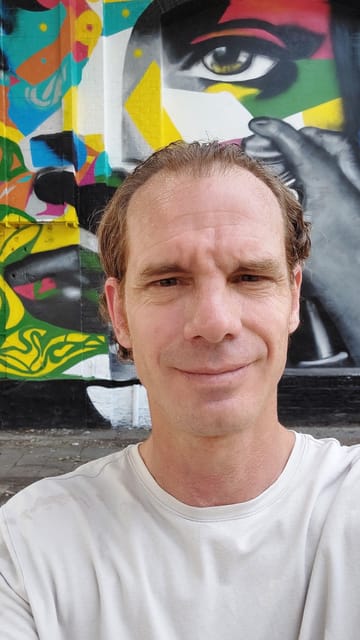
The named route includes the Berlin Wall Museum and the Cengaver Katranci Memorial among its landmarks. The supplied information does not specify a separate museum admission or a long indoor museum visit, so think of these as cultural and historical points connected to the walk rather than assuming an extended museum entry.
The Cengaver Katranci Memorial adds a human scale to the subject. Wall history can become a list of dates, leaders, and diplomatic crises. Memorials bring attention back to individual lives and the cost of a divided city.
That balance is important. The murals are colorful and often hopeful, but the Wall was also a dangerous border. A good explanation needs both sides: the creative energy that followed its fall and the suffering that came before it.
If your main goal is a detailed museum experience, you may want to add a separate Wall museum or memorial visit during your Berlin stay. This two-hour walk is better understood as a guided outdoor route that combines selected historical sites with art and neighborhood context.
More Third Reich & Cold War Tours in Berlin
- Berlin: Third Reich and Cold War 2 Hour Walking Tour
★ 4.9 · 6,830 reviews - Berlin’s Best: 2 Hour Walking Tour Third Reich and the Cold War
★ 5.0 · 5,486 reviews - Third Reich Berlin: Hitler and WWII Walking Tour
★ 5.0 · 3,301 reviews - Berlin: Third Reich, Hitler, and WWII Walking Tour
★ 4.9 · 1,133 reviews
Oberbaumbrücke, a memorable crossing point
After the East Side Gallery, the route reaches Oberbaumbrücke for about 20 minutes. This bridge is one of the area’s most recognizable landmarks and provides a visual link between Friedrichshain and Kreuzberg.
The bridge is valuable on this tour because it turns the idea of separation into a physical scene. You are standing at a crossing that now feels ordinary, but its location carries the memory of a divided Berlin. The contrast between historic restriction and today’s open movement is easy to understand from the bridge itself.
It is also one of the better photography points on the route. You can work with the bridge, the river, nearby buildings, and urban art as layers in a picture. Cris’s photography advice is practical rather than technical for its own sake. He offers suggestions for concrete shots at concrete places, which is useful if you want family photos or something more thoughtful than a quick snapshot.
The bridge can be busy and exposed to weather. Bring patience if you want a clear photo, and do not assume every group will move at the same pace. The 20-minute stop gives you time to look around, but it is not a dedicated photography workshop.
Kreuzberg and the walk to Schlesisches Tor
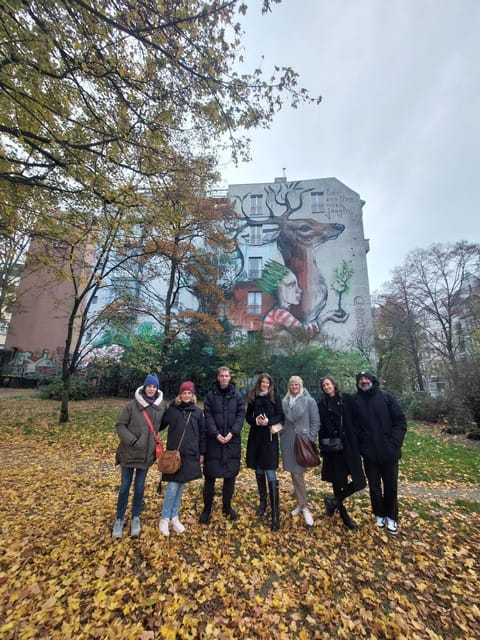
The final guided section covers Kreuzberg for about 20 minutes before the tour ends at Schlesisches Tor. This is a strong finish because the route moves from the Wall’s historical meaning into the everyday life of a neighborhood that now draws people for art, food, architecture, and nightlife.
The guide’s local suggestions are a useful extra. You can ask about restaurants, coffee, shopping, or nearby landmarks while the streets are still fresh in your mind. One especially practical theme in the feedback is food and coffee advice, including a recommendation for a local café after the walk.
Do not treat these tips as a formal food tour. They are more useful as a starting point for the rest of your day. If you have an evening free in Kreuzberg, this can help you avoid returning to the same central Berlin streets.
Ending at Schlesisches Tor also gives you flexibility. You can continue exploring, use public transport, or make your own way toward another part of Berlin. The activity does not finish at the same bakery where it begins, so plan around that.
What the two-hour format does well, and what it cannot do
Two hours is a sensible length for a first look at this area. You get enough time to understand the Wall, study selected murals, cross Oberbaumbrücke, and hear about the neighborhoods without giving up half a day.
The route is information-heavy. Cris is especially interested in art history, architecture, Berlin’s past, and the political meaning of images. If you like a guide who explains details and invites discussion, the time should pass quickly.
The tradeoff is coverage. You cannot see every important Wall site, analyze the complete East Side Gallery, and explore both neighborhoods at a leisurely pace in 120 minutes. One person felt the route gave more time to street art and less time to the Wall itself. That is a fair warning for anyone expecting a strictly historical tour.
I would book this for a balanced introduction, not as your only Berlin Wall experience. If you want the art and history connection, the length works well. If you want military history, escape stories, border procedures, or a museum-heavy lesson, plan another visit as well.
Group size can affect the feel of the walk. The activity information does not promise a fixed maximum, but some departures may be small. A smaller group makes it easier to ask questions and get photography help. A larger group can make conversations and mural viewing less personal.
Price, languages, weather, and walking demands
At $29 per person, this is a reasonable price for a live two-hour tour with a specialist focus. You are paying for interpretation, not admission tickets or transport. The value is strongest if you would otherwise walk through the gallery without understanding the art or the historical setting.
Tours are offered in English and Spanish. You should be comfortable following a spoken explanation in your chosen language. The provider specifically asks people who cannot speak good English or Spanish not to attend, and one person noted that the guide’s pace could be quick for a non-native English speaker. If you need slower delivery, ask at the start.
The activity is listed as wheelchair accessible, but it remains a walking tour. You should check the exact route and your own needs before booking. No sign language interpreter is provided, and the instructions say the activity is not suitable for someone with hearing loss or a temporary injury such as a broken foot.
Berlin weather deserves real attention. Bring comfortable shoes, warm layers, and clothing suited to rain, snow, cold, or changing temperatures. Winter reviews describe freezing and icy conditions, though the guide adjusted the pace and kept the group involved. Even in milder weather, the outdoor format means you should not dress as if you are spending the morning inside a museum.
Cancellation is flexible, with a full refund available if you cancel at least 24 hours ahead. You can also reserve and pay later, which helps if your Berlin schedule is still moving around.
Who should book the Berlin Wall and East Side Gallery walk
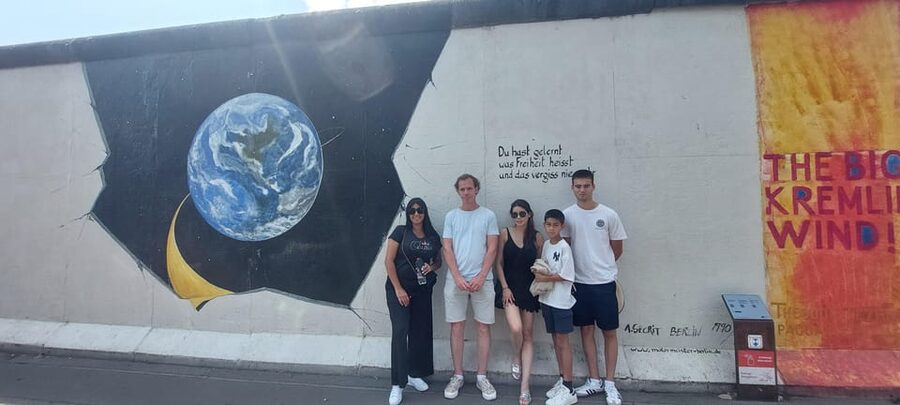
I would recommend this tour to:
- First-time Berlin visitors who want a clear introduction to the Wall area.
- People who enjoy street art, public art, architecture, and political history together.
- Families looking for a walk that can prompt conversation rather than a dry list of dates.
- Photographers who want help finding useful backgrounds and framing family or personal pictures.
- Anyone who prefers local explanations and neighborhood suggestions over a large, scripted group tour.
- English or Spanish speakers comfortable with a two-hour outdoor walk.
I would be more cautious if you need a slow, quiet viewing experience or if your priority is strictly the political and military history of the Wall. The art receives major attention, and the guide’s enthusiasm may pull the route toward interpretation and discussion.
Should you book it?
Book it if you want to see the East Side Gallery as more than a colorful photo stop. The strongest reason to go is Cris’s combination of art knowledge, Berlin history, architecture, photography advice, and local recommendations. That mix gives you a fuller picture of the area and helps the murals make sense.
At $29, it is good value for a first visit, especially if you are curious about symbolism and the cultural changes that followed the Wall’s fall. Just arrive ready to walk outdoors, wear proper clothing, and understand that two hours offers a focused introduction rather than the final word on Berlin’s Wall history.
FAQ
Where does the tour start?
The listed starting point is East Side Bäckerei at Warschauer Str. 34-36. The meeting point may vary depending on the option booked, so check your booking details.
Where does the tour finish?
The walk finishes at Schlesisches Tor in Kreuzberg.
How long does the experience last?
The guided walk lasts two hours.
Which languages are available?
The tour is offered in English and Spanish.
Does the tour include the East Side Gallery?
Yes. The East Side Gallery is the main stop, with about one hour set aside for a guided visit and discussion of its murals, artists, symbols, and historical setting.
What should I wear and bring?
Wear comfortable shoes and weather-appropriate clothing. Warm, thermal, rain, or snow clothing may be needed depending on Berlin’s conditions.
More Walking Tours in Berlin
- Discover Berlin Half-Day Walking Tour
★ 5.0 · 9,624 reviews - Berlin: Discover Berlin Walking Tour
★ 4.9 · 5,998 reviews - Berlin: Hidden Backyards Guided Walking Tour
★ 4.8 · 5,360 reviews - Berlin: Alternative Berlin Walking Tour
★ 4.6 · 1,204 reviews
More Museums in Berlin
- Berlin: Interactive DeJa Vu Museum Entrance Ticket
★ 4.1 · 1,338 reviews - Berlin: “Pergamonmuseum. The Panorama” Exhibition Tickets
★ 4.6 · 1,245 reviews - Berlin: East Side Gallery Spree Cruise in a Solar Catamaran
★ 4.0 · 1,039 reviews - Cold War, Berlin Wall, Spies and the East Side Gallery
★ 5.0 · 1,024 reviews
Just added around Berlin
- Love and War in Berlin: Self-Guided Story Puzzle Walk★ 5.0 · 7 reviews
- Rickshaw Tours Berlin – Groups of up to 16 people with several rickshaws★ 4.0 · 97 reviews
- Walking on the Wall: 3-Hour Tour in Berlin★ 4.5 · 34 reviews
- eSIM for Germany and 34 European Countries★ 4.5 · 16 reviews
- Warnemuende Shore Excursion: Berlin Private Sightseeing Tour from Rostock★ 5.0 · 4 reviews
- Your ticket to The Wall Museum Berlin★ 3.0 · 60 reviews
- Warnemuende Shore Excursion: Private Berlin Tour★ 4.5 · 27 reviews
- Berlin’s Gay, Lesbian, and Queer Scene Small-Group Walking Tour★ 4.5 · 66 reviews
Third Reich & Cold War Tours, compared.



Berlin’s Best: 2 Hour Walking Tour Third Reich and the Cold War
Read our review →

Third Reich Berlin: Hitler and WWII Walking Tour
Read our review →
Skip-the-Line: Berlin Wall Museum at Checkpoint Charlie
Read our review →

Cold War, Berlin Wall, Spies and the East Side Gallery
Read our review →Browse the lists this tour appears in