
Reviewed · THIRD REICH & COLD WAR TOURS
Third Reich Berlin Walking Tour with a French-Speaking Guide
Berlin’s Nazi past is easiest to grasp when you connect places to people. This three-hour French-language walk moves from the Bendlerblock resistance site to Jewish Berlin, ending near Hackescher Markt. You see where decisions were made, where people were detained, and how a few individuals tried to help.
I like the clear route and the personal stories, especially Otto Weidt’s effort to protect blind and deaf Jewish workers. I also like that the tour links the city’s older Jewish life with the machinery of persecution, rather than treating the Third Reich as an isolated chapter.
The main consideration is practical: public transport is extra, and the walk includes a train ride between sections. You should also expect a serious, sometimes painful subject, not a light sightseeing stroll.
In This Review
- Key points to know before you book
- Why this Berlin walk works as a history lesson
- Potsdamer Platz and the first look at resistance
- Anhalter Bahnhof and the machinery of deportation
- Neue Synagoge and Jewish life before Nazism
- Auguststrasse and the institutions of Jewish Berlin
- Grosse Hamburger Strasse and the old Jewish cemetery
- Otto Weidt’s workshop and a story of courage
- Finishing at Hackescher Markt
- What the $31.99 price really covers
- Timing, walking, and what to bring
- Who should book this French-language tour
- Should you book it?
- FAQ
- How long is the Third Reich Berlin walking tour?
- What time and where does the tour begin?
- Where does the tour finish?
- Is transportation included?
- Is the tour conducted in French?
- What is the cancellation policy?
Key points to know before you book
- French-speaking guidance: The tour explains difficult events in French, with guides such as Julie leading a lively, clear presentation.
- Resistance and persecution together: You visit both the German Resistance Memorial and sites tied to deportation and detention.
- A strong human story: The Otto Weidt Museum focuses on one workshop owner who tried to shield blind and deaf Jewish employees.
- Central Berlin by foot: The route begins at Potsdamer Platz and finishes beside Hackescher Markt, with a train ride in between.
- Small enough to follow: The group can include up to 24 people, a useful limit for a city walk with museum stops.
- Good value at $31.99: The price covers the guide and local taxes, but not the Berlin AB transport pass, food, or drinks.
Why this Berlin walk works as a history lesson
The best feature of this tour is its order. You begin with resistance, then move toward the Jewish quarter and the stories of people caught in Nazi persecution. That structure helps you see Berlin as a real city shaped by choices, not just as a collection of memorials.
The guide leads in French, which matters if you want more than a quick translation of dates and names. The subject is difficult, and the tone needs care. The available feedback praises a guide named Julie for making the route both learned and pleasant, while keeping the larger political story connected to individual lives.
At 4.9 out of 5 from 59 ratings, with 100 percent recommending it, the experience has a strong record. I would still keep your expectations in the right place. This is not a museum-heavy private seminar, and the group may reach 24 people. It is a structured city walk with short stops, outdoor sections, and one museum visit.
The tour begins at 10:00 a.m. at Potsdamer Platz 10. You should arrive ready to walk, listen, and use public transport. A Berlin day pass for zones AB is recommended because transportation between the southern and northern parts of the route is not included.
More Third Reich & Cold War Tours in Berlin
- Berlin: Third Reich and Cold War 2 Hour Walking Tour
★ 4.9 · 6,830 reviews - Berlin’s Best: 2 Hour Walking Tour Third Reich and the Cold War
★ 5.0 · 5,486 reviews - Third Reich Berlin: Hitler and WWII Walking Tour
★ 5.0 · 3,301 reviews
Potsdamer Platz and the first look at resistance
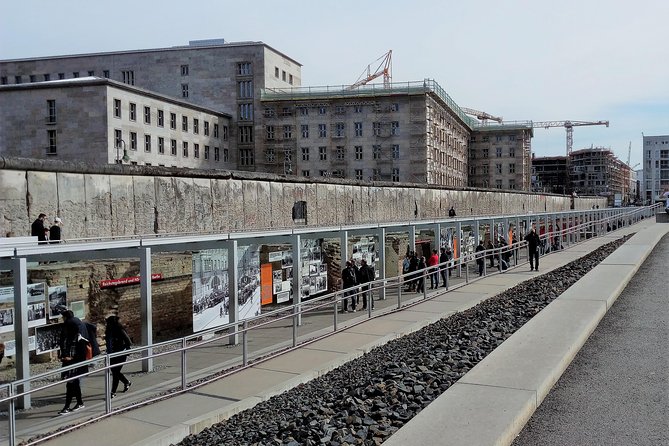
The walk starts near Potsdamer Platz, one of central Berlin’s major modern squares. From here, the guide introduces Varian Fry, the American journalist who helped people escape Nazi-controlled Europe. The stop gives you an early reminder that resistance was not limited to one country or one type of person.
From Potsdamer Platz, the group continues to the German Resistance Memorial Center at the Bendlerblock. Allow about 50 minutes here. Admission is listed as free.
The Bendlerblock is important because Operation Valkyrie was directed from this site. The 1944 attempt to overthrow Hitler failed, and several of the plotters were executed in the building’s courtyard. Today, the memorial honors Germans who opposed and fought against Nazism, including people whose resistance took different forms.
This stop gives the tour a useful balance. You are not shown only the victims of Nazi rule, or only the famous military plot against Hitler. The memorial asks you to think about the many Germans who rejected the regime, and about the risks involved in doing so.
I would pay close attention to the guide’s explanation here. A quick look at the building cannot tell you why the site matters. The value comes from connecting the address to the people who acted there and to the wider question of German resistance.
Anhalter Bahnhof and the machinery of deportation
The next stop is Anhalter Bahnhof, where about 10 minutes are spent looking at the surviving ruined section of the station. The original station was badly damaged, but the remaining piece still gives the place a physical presence.
Anhalter Bahnhof was one of the departure points for deportations of Berlin’s Jews. That fact changes how you see the ruin. It is not simply an old railway fragment or a dramatic piece of wartime architecture. It is linked to a system that moved people from their homes toward detention, deportation, and murder.
From here, the group takes a train to the Jewish quarter. This is one of the tour’s practical details that can catch people off guard. Your transport is not included, so buy a Berlin public transport day card for zones AB before the tour, or make sure you have the correct ticket for the journey.
The train ride also breaks up the walking. That is helpful during a three-hour tour, though you need to keep the group together and be ready to move between the station and the next stop.
Neue Synagoge and Jewish life before Nazism
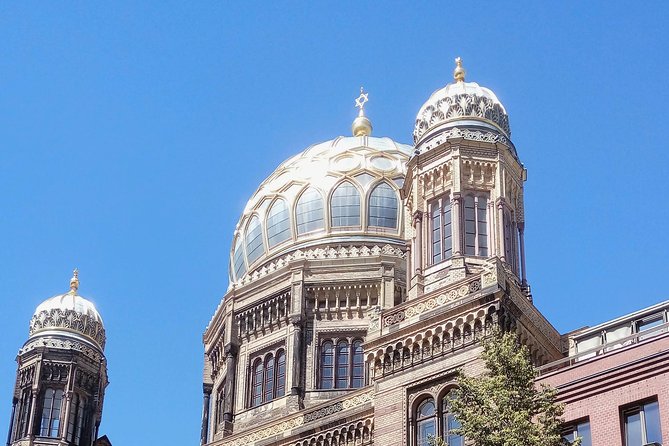
The route continues to the area around the Neue Synagoge Berlin, also known as Centrum Judaicum. The scheduled explanation lasts about 15 minutes, and admission is listed as free for this stop.
Here, the guide discusses the Jewish community in Berlin during the 19th and 20th centuries, along with the synagogue’s history. This context is essential. Nazi persecution did not begin with deportations. It attacked an established community with its own institutions, schools, religious life, work, and family networks.
The synagogue’s history also helps you see that Jewish Berlin was part of the city’s normal civic life long before the Nazi period. That is a more useful lesson than treating Jewish sites as isolated memorial points.
The stop is short, so do not expect a full museum visit or a detailed architectural tour. Its purpose is to place the later persecution in context. I like that choice because it prevents the Jewish quarter from being reduced to a story of loss alone.
Same city, a completely different kind of day:
- Berlin: Reichstag, Dome and Government District Guided Tour
★ 4.7 · 18,288 reviews - Berlin: 1-Hour City Tour by Boat with Guaranteed Seating
★ 4.3 · 16,993 reviews - Berlin: Boat Tour Along the River Spree
★ 4.4 · 11,252 reviews - Discover Berlin Half-Day Walking Tour
★ 5.0 · 9,624 reviews
Auguststrasse and the institutions of Jewish Berlin
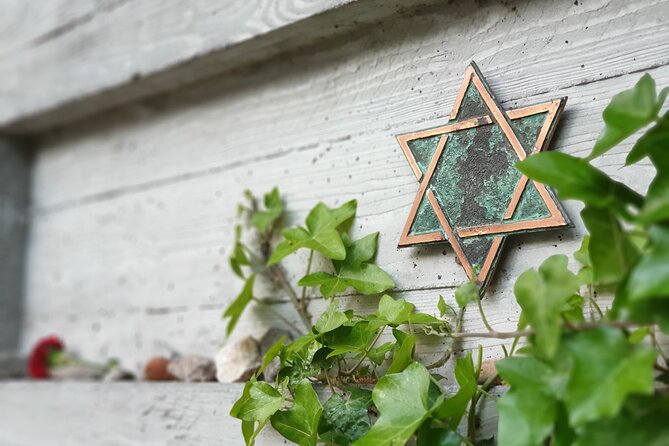
On Auguststrasse, the guide discusses former Jewish institutions, including a school for Jewish girls and an orphanage that existed during the Nazi period. The stop lasts around 20 minutes.
This section of the walk brings the subject down to daily life. Schools and orphanages help you picture the families, children, teachers, and caretakers who lived in Berlin before Nazi policy broke apart their lives.
It also shows how persecution affected institutions, not just individuals. A school is a place of education and routine. An orphanage is meant to provide care. When you hear how such places fit into the Nazi period, the story becomes more immediate and less abstract.
You will be outdoors, and the guide’s commentary carries much of the meaning. If you want to study the buildings in detail or read extensive displays, you may need a separate visit later. On this tour, the benefit is having the street interpreted for you as part of a larger route.
Grosse Hamburger Strasse and the old Jewish cemetery
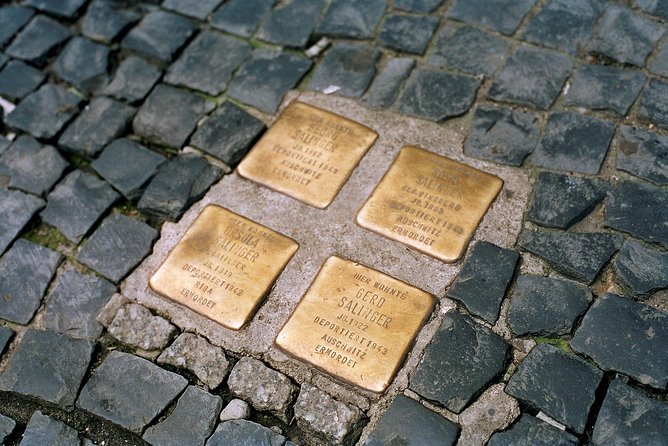
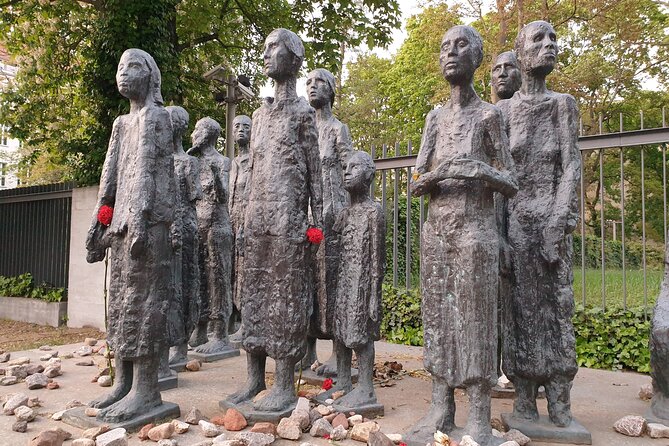
The tour then reaches Grosse Hamburger Strasse, with about 30 minutes devoted to the old Jewish cemetery and a former Sammellager. The German term refers to a collection or detention camp, a place where Jews were held before deportation.
This is one of the most sobering sections of the day because the street connects community memory with the mechanics of persecution. The cemetery points to a much older Jewish presence in Berlin. The detention site shows how that community was later controlled and stripped of its rights.
The guide’s job here is to explain the connection between the places without rushing past it. You will want time to take in the setting, but the schedule is fairly tight. The group has several stops still to cover, so this is a guided introduction rather than a long period for private reflection.
I find this kind of stop particularly useful for first-time visitors to Berlin. The city can feel modern and rebuilt, and the traces of Jewish life are not always obvious. A guide helps you notice what a map alone cannot explain.
Otto Weidt’s workshop and a story of courage
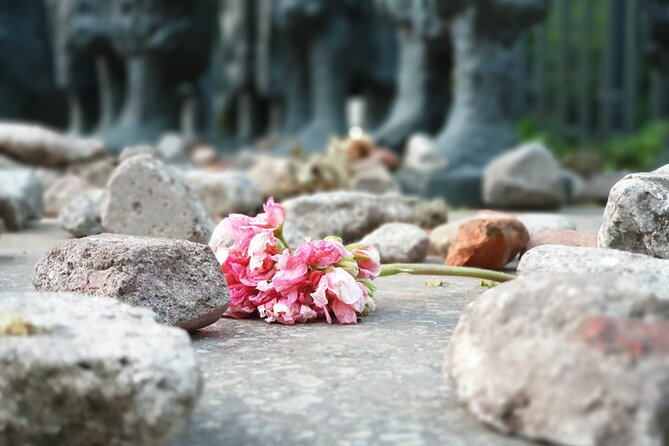
The final major stop is the Museum Blindenwerkstatt Otto Weidt, with about 20 minutes inside. The small workshop produced brooms and brushes. Otto Weidt employed mainly blind and deaf Jewish people during the Second World War and tried to protect them from Nazi persecution.
This is the most personal stop on the route. Instead of focusing only on government orders, military operations, or deportation trains, the museum tells you about a workplace and the people connected to it.
The story is powerful because the workshop was modest. Weidt was not presented as a military leader or public official. He ran a small factory and used what influence he had to help the people who worked for him. The museum focuses on courage and humanity under pressure.
The visit is short, so you should not expect to see every part of the museum in detail. Still, 20 minutes gives the guide time to explain why the workshop matters and to make the final section more personal.
The tour’s strongest quality is the way it reaches this stop after the larger history. You first hear about resistance, deportation, and the destruction of Jewish life. Then you meet a person who tried to protect specific people in a specific workplace. That change in scale can make the whole subject easier to understand.
Finishing at Hackescher Markt
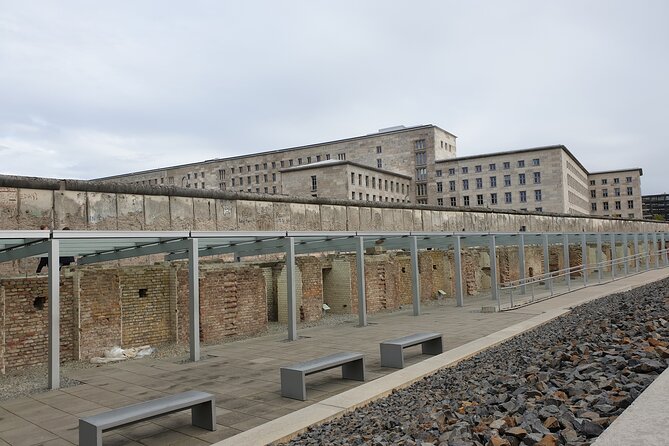
The tour ends near Hackescher Markt, beside the S-Bahn station. The location is convenient for continuing your day, returning to your accommodation, or reaching another part of Berlin by train.
Ending here also makes sense geographically. The route begins in the Potsdamer Platz area and finishes in the historic central district near the Jewish quarter. You do not need to return to the starting point, which saves time.
The end point is a market place, but you should not confuse this with a food tour or a shopping-focused experience. The tour remains centered on Berlin’s 19th and 20th-century Jewish life, Nazi persecution, and resistance.
What the $31.99 price really covers
At $31.99 per person, this tour is fairly priced if you want a French-speaking guide and a clear route through several significant sites. The cost includes local taxes and a local professional guide. It does not include public transport, food, drinks, or entry fees beyond the listed free stops.
The main value is interpretation. You could walk past Potsdamer Platz, Anhalter Bahnhof, Auguststrasse, and Hackescher Markt on your own, but you would not automatically understand how they connect. The guide supplies that link.
The price is less attractive if you already know Berlin’s Nazi history well, speak German or English comfortably, and prefer to read museums at your own pace. You might get more from separate museum visits. For a first introduction in French, though, the route gives you a useful three-hour framework.
The group size can reach 24 people. That is not intimate, but it is still manageable for a walking tour if the guide speaks clearly and keeps the group together. If you want long personal conversations at every stop, a private tour would suit you better, though it would likely cost more.
Timing, walking, and what to bring
The tour lasts about three hours and operates in all weather. Wear shoes you can walk in and bring clothing suited to Berlin’s conditions. The route includes outdoor stops, so rain or cold can affect how comfortable you feel while listening.
You need a moderate level of physical fitness. The tour is not described as strenuous, but you will walk through central Berlin, move between sites, and use public transport. Service animals are allowed, and the route is near public transportation.
Plan to eat before the 10:00 a.m. start or after the tour. Food and drinks are not included. The ending near Hackescher Markt gives you an easy place to continue your day, but the experience itself does not set aside time for a meal.
Book at least a little ahead if your dates are fixed. The experience is booked on average 16 days in advance, which suggests that last-minute spaces may not always be available. You receive confirmation at booking, and free cancellation is available up to 24 hours before the start time. Changes or cancellations inside that window are not refunded.
Who should book this French-language tour
I would choose this walk if you want a serious introduction to Nazi-era Berlin in French, especially if you prefer streets and memorials to a full day inside museums. It suits adults, students, and families with older children who can handle the subject.
It is also a good choice if you want the larger story and the personal story together. The Bendlerblock explains opposition to the regime. Anhalter Bahnhof and Grosse Hamburger Strasse show persecution and deportation. Otto Weidt’s workshop gives you one close human example of help under terrible conditions.
You may want another option if you dislike fixed group schedules, need a fully private experience, or want long visits inside each museum. The 15 to 30-minute stops are designed for a broad route, not exhaustive study.
Should you book it?
Book this tour if French is your strongest language for a difficult subject and you want Berlin’s sites explained in a sensible order. The strongest parts are the Bendlerblock resistance memorial, the Jewish quarter stops, and the Otto Weidt workshop, where the history becomes personal.
Skip it if you want a relaxed sightseeing walk or a tour with all transport included. Bring a Berlin AB transit pass, wear weather-ready shoes, and allow yourself some quiet time afterward. This is a thoughtful, well-paced way to begin understanding Nazi Berlin, not a casual attraction to tick off.
FAQ
How long is the Third Reich Berlin walking tour?
The tour lasts approximately three hours.
What time and where does the tour begin?
It begins at 10:00 a.m. at Potsdamer Platz 10, 10785 Berlin, Germany.
Where does the tour finish?
The tour ends at Hackescher Markt, near the Hackescher Markt S-Bahn station.
Is transportation included?
No. You should buy a Berlin public transportation day card for zones AB. The route includes a train ride from the Anhalter Bahnhof area to Berlin’s Jewish quarter.
Is the tour conducted in French?
Yes. The experience is led by a French-speaking guide.
What is the cancellation policy?
You can cancel up to 24 hours before the experience start time for a full refund. Cancellations or changes made less than 24 hours before the start are not accepted for a refund.
More Walking Tours in Berlin
- Berlin: Discover Berlin Walking Tour
★ 4.9 · 5,998 reviews - Berlin: Hidden Backyards Guided Walking Tour
★ 4.8 · 5,360 reviews - Berlin: Alternative Berlin Walking Tour
★ 4.6 · 1,204 reviews - Berlin: Third Reich, Hitler, and WWII Walking Tour
★ 4.9 · 1,133 reviews
Just added around Berlin
- Love and War in Berlin: Self-Guided Story Puzzle Walk★ 5.0 · 7 reviews
- Rickshaw Tours Berlin – Groups of up to 16 people with several rickshaws★ 4.0 · 97 reviews
- Walking on the Wall: 3-Hour Tour in Berlin★ 4.5 · 34 reviews
- eSIM for Germany and 34 European Countries★ 4.5 · 16 reviews
- Warnemuende Shore Excursion: Berlin Private Sightseeing Tour from Rostock★ 5.0 · 4 reviews
- Your ticket to The Wall Museum Berlin★ 3.0 · 60 reviews
- Warnemuende Shore Excursion: Private Berlin Tour★ 4.5 · 27 reviews
- Berlin’s Gay, Lesbian, and Queer Scene Small-Group Walking Tour★ 4.5 · 66 reviews
Third Reich & Cold War Tours, compared.



Berlin’s Best: 2 Hour Walking Tour Third Reich and the Cold War
Read our review →

Third Reich Berlin: Hitler and WWII Walking Tour
Read our review →
Skip-the-Line: Berlin Wall Museum at Checkpoint Charlie
Read our review →

Cold War, Berlin Wall, Spies and the East Side Gallery
Read our review →Browse the lists this tour appears in