
Reviewed · THIRD REICH & COLD WAR TOURS
Private Walking Tour: Berlin Wall, Cold War and Checkpoint Charlie
Berlin’s Cold War story becomes clearest when you follow it on foot, from the former death strip at Bernauer Strasse to the checkpoint where East and West Berlin faced one another. This private tour also takes you on a subway line once called a ghost train, adding a useful sense of how division shaped daily life below ground.
I like the small private format, since your guide can adjust the pace and explain the parts that matter most to your group. I also like the personal touch offered by guides such as Winfried, Tankred, Gerhard, and Daniel, who have been described as warm, clear, and able to connect the sites with everyday life behind the Wall.
The main tradeoff is the price: $149.78 per person is a serious spend for two hours, and public transport tickets are extra. You are paying for a private guide and a focused history lesson, not for a full day of sightseeing or a package with admission tickets.
In This Review
- Key points at a glance
- Why Bernauer Strasse is the right place to begin
- Seeing an original watchtower and Wall remains
- Riding Berlin’s former ghost-train lines
- The Palace of Tears and Berlin’s hardest goodbyes
- Checkpoint Charlie and the 1961 tank confrontation
- What the private format adds
- Is $149.78 per person a fair price?
- Who will get the most from this tour?
- Timing, meeting point, and practical planning
- Should you book this Berlin Wall tour?
- FAQ
- How long does the private walking tour last?
- What language is the tour offered in?
- Is this a private tour?
- Where does the tour start?
- Where does the tour end?
- Are public transportation tickets included?
- Does the tour include a subway ride?
- Is admission included at the tour stops?
- Can service animals join the tour?
- What is the cancellation policy?
Key points at a glance
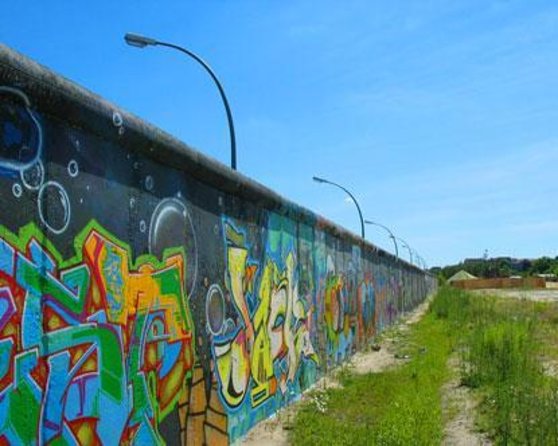
- Bernauer Strasse puts you beside the former death strip, with an open-air exhibition, maps, original Wall sections, and escape stories tied to the actual street.
- The private format gives you room to ask questions, slow down, or focus on family life, escape attempts, military tension, or Berlin’s divided transport system.
- A former ghost-train route links the stops, showing how underground stations near the Wall were sealed off and left in a gloomy state.
- The Palace of Tears explains the human cost of a border crossing, especially the painful goodbyes between relatives from East and West.
- Checkpoint Charlie brings the Cold War’s military crisis into view, including the 1961 confrontation between American and Soviet tanks.
- The tour ends near the Wall Museum, giving you a chance to continue the subject after the guide departs.
Why Bernauer Strasse is the right place to begin
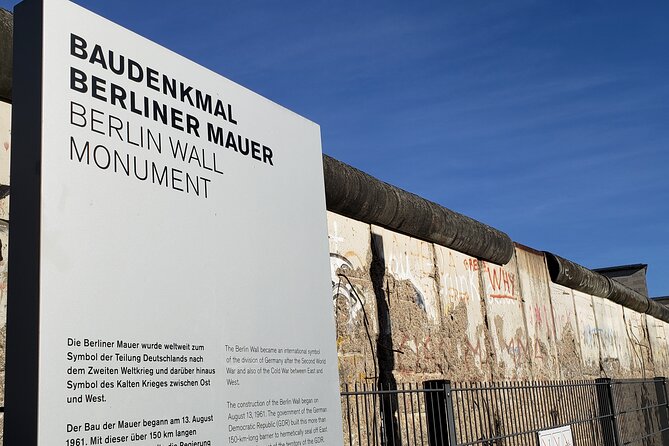
The tour starts at the Berlin Wall Documentation Center on Bernauer Strasse, north of central Berlin. This is not simply a place where a section of concrete survives. The street itself was shaped by the Wall, and the surrounding area preserves the setting for some of the city’s most dramatic escape attempts.
Your guide leads you along the former death strip and explains how the border worked. Maps and the open-air exhibition help you picture the old division, including the fences, patrol areas, walls, and controlled passages that once cut through the city.
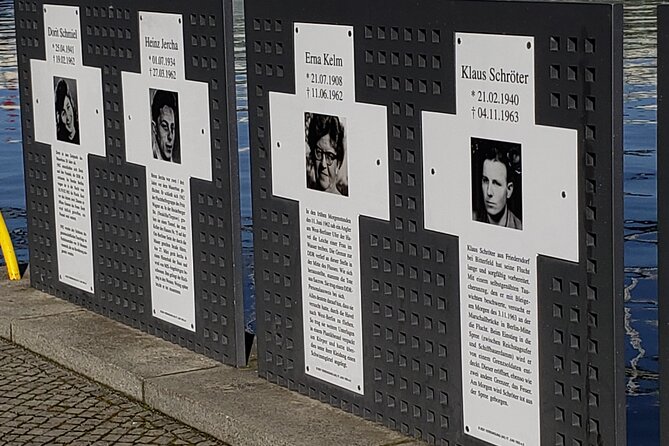
Bernauer Strasse is especially powerful because ordinary homes were caught up in the border system. The fronts of some buildings formed part of the Wall, creating desperate escape scenes. People tried to leave through windows, and some died jumping toward the Western side. You also hear about the famous East German soldier who jumped over the barbed wire, an image that became one of the Cold War’s most recognized moments.
I value this opening because it gives the tour a human scale. Berlin’s division was not only about presidents, tanks, and political speeches. It ran through apartment blocks, family rooms, streets, and subway stations. At Bernauer Strasse, you can understand that before moving on to the better-known checkpoint sites.
The stop lasts about 45 minutes, making it the longest part of the tour. That is sensible. You need time to look at the exhibits, follow the maps, and ask questions before the route moves into the city’s wider Cold War story.
More Third Reich & Cold War Tours in Berlin
- Berlin: Third Reich and Cold War 2 Hour Walking Tour
★ 4.9 · 6,830 reviews - Berlin’s Best: 2 Hour Walking Tour Third Reich and the Cold War
★ 5.0 · 5,486 reviews - Third Reich Berlin: Hitler and WWII Walking Tour
★ 5.0 · 3,301 reviews
Seeing an original watchtower and Wall remains
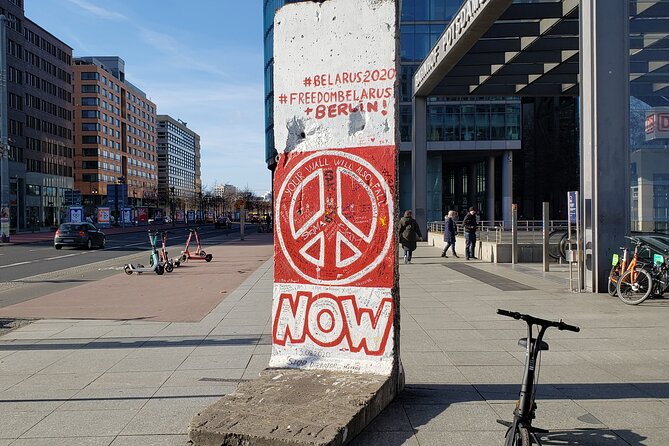
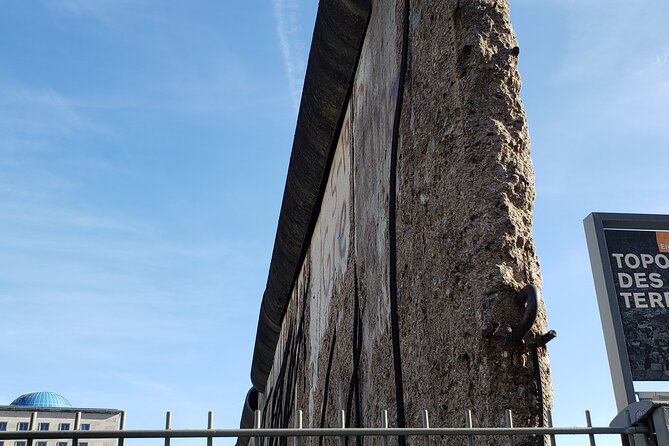
The next stop takes about 10 minutes and focuses on surviving pieces of the border system. You see original sections of the Berlin Wall and one of the last remaining watchtowers built along the former death strip.
This is a short stop, but it gives you a physical reminder of the machinery behind the border. A watchtower can look plain at first glance. With the guide’s explanation, it becomes a place connected to surveillance, restricted movement, and the armed enforcement of the boundary.
Do not expect a large museum visit here. The value is in seeing what remains in place and linking it to the material you have just covered at Bernauer Strasse. The tour works best when you let the guide explain how the separate pieces fit together rather than treating each stop as an isolated monument.
Riding Berlin’s former ghost-train lines
The subway ride is one of the most unusual parts of this experience. During Berlin’s division, some underground routes passed through stations close to the Wall. These stations were shut to regular access, and trains moved through without stopping. Their dim, closed-off atmosphere led to the nickname ghost trains.
You ride one of these former lines on the way to the Palace of Tears. The transport connection matters because it turns an abstract political fact into something you can experience in motion. The division did not stop at street level. It affected the way people crossed the city, which routes they could use, and which stations were simply sealed away.
Public transportation tickets are not included, so you need to budget for them separately. The tour operator describes the subway ride as part of the route, but the ticket cost remains yours to cover. Your guide can help you board safely, and one account specifically praised a guide for being early and watching the group while getting onto local trains.
The subway portion also gives your legs a short break after the walking at Bernauer Strasse. Still, this is a walking tour, not a ride-based sightseeing trip. Wear comfortable shoes and expect to move between historic sites at street level.
The Palace of Tears and Berlin’s hardest goodbyes
The route continues to the Palace of Tears, the former border checkpoint at Friedrichstrasse. West Berlin residents could use this crossing to visit relatives in the East, but the return journey brought a painful ritual. Families had to say goodbye at the checkpoint before one side went back to the West and the other remained in the East.
That human story explains the building’s name. The Palace of Tears was not simply a customs post or transport hall. It was a place where visits ended under the pressure of the border system, often with no clear idea of when the next meeting might be possible.
You see the building and enter its documentation center. Admission is listed as free, so this stop adds substance without another museum charge. The visit takes about 30 minutes, enough time to understand how the crossing worked and why it became such an emotional place.
I find this part important because it shifts the focus away from escape drama and military confrontation. It shows how the Wall affected people who were allowed to cross under controlled conditions, yet still had to submit to rules that turned a family visit into a timed and supervised event.
For families with children or teenagers, this can be a useful point to pause and ask questions. The story is direct and personal, and the setting helps explain why a border can hurt people even when they are technically permitted to pass through it.
Same city, a completely different kind of day:
- Berlin: Reichstag, Dome and Government District Guided Tour
★ 4.7 · 18,288 reviews - Berlin: 1-Hour City Tour by Boat with Guaranteed Seating
★ 4.3 · 16,993 reviews - Berlin: Boat Tour Along the River Spree
★ 4.4 · 11,252 reviews - Discover Berlin Half-Day Walking Tour
★ 5.0 · 9,624 reviews
Checkpoint Charlie and the 1961 tank confrontation
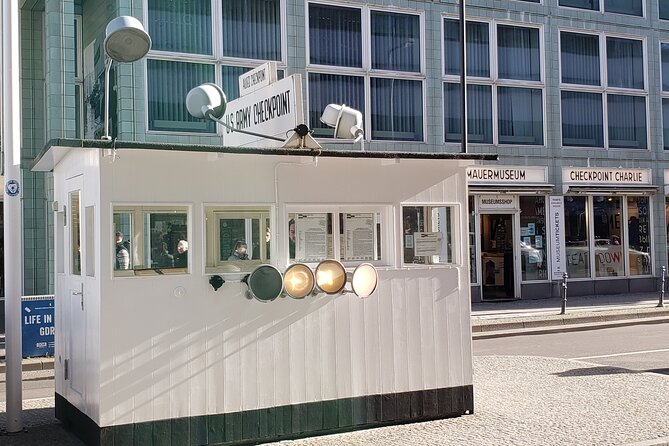
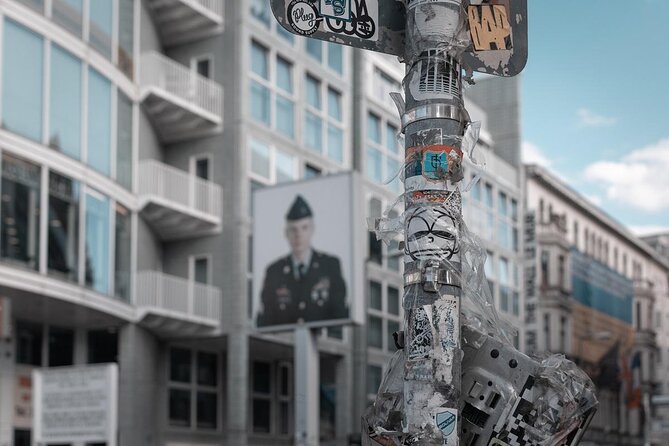
The final major stop is Checkpoint Charlie, the former military crossing on Friedrichstrasse. It became one of the best-known Cold War symbols, and in 1961 it was the scene of a dangerous confrontation between American and Soviet tanks.
Your guide explains the crisis and why the moment mattered. The encounter brought the United States and the Soviet Union into a direct standoff in a divided city. The stakes were far larger than the checkpoint itself, and the confrontation showed how quickly Berlin could become the center of a world crisis.
Checkpoint Charlie is an essential stop, but it can also feel more commercial and crowded than Bernauer Strasse or the Palace of Tears. That contrast is worth keeping in mind. Bernauer Strasse offers a wider setting and stronger physical evidence of the Wall, while Checkpoint Charlie carries the name recognition and the memory of military tension.
The tour ends at the Wall Museum, beside Checkpoint Charlie. You may visit it afterward, though the tour information does not state that museum admission is included. If you want a longer look at Cold War objects and events, this is a practical place to continue on your own.
What the private format adds
A private tour means only your group participates. That changes the rhythm in useful ways. You can ask about a specific relative’s experience, spend longer on the escape stories, or keep moving if your children lose interest in one section.
Several guides have been praised by name. Winfried was described as friendly and able to explain the postwar period clearly. Tankred was praised for making the history and locations come alive, even for a 12-year-old who was usually cynical about tours. Gerhard was described as well informed, while Daniel was praised for keeping teenagers engaged and offering a good restaurant suggestion afterward.
Those details point to the real value here: the guide matters as much as the route. The tour provider assigns the guide, so you should not assume you will receive a particular person. Still, the repeated pattern is encouraging. You can expect an English-speaking professional guide, a personal format, and room for questions rather than a fixed script delivered to a large crowd.
The private setup is especially useful if your group has different interests. One person may want military history, another may care about families divided by the border, and someone else may be curious about Berlin’s subway system. A private guide can connect those threads more easily than a large public walk.
Is $149.78 per person a fair price?
At $149.78 per person, this is not a bargain tour. The price makes more sense for a small group that wants a private guide and a focused two-hour introduction to Berlin’s Wall and Cold War sites.
You are paying for:
- A professional English-speaking guide
- A private tour for your group only
- About two hours of guided sightseeing
- The guide’s interpretation at the Berlin Wall Memorial, watchtower, Palace of Tears, and Checkpoint Charlie
- The subway route between parts of the experience
You still pay for public transportation, and the Wall Museum at the end is not listed as an included admission. The other listed stops have no admission charge, so most of the cost goes toward the guide’s time, planning, and personal attention.
For one or two people, the price may feel high. For a family or group of friends splitting the cost, the private arrangement can offer better value. Group discounts are available, though the exact reduced price is not stated, so check the total before booking.
I would compare this with the cost of a larger group walk. If you mainly want the cheapest introduction, a private tour may not be the best fit. If you want to ask questions freely, move at your own pace, and keep younger members involved, the higher price can be justified.
Who will get the most from this tour?
This experience suits first-time Berlin visitors who want a clear introduction to the city’s divided past without committing to a full-day program. Two hours is long enough to cover major sites but short enough to fit around other sightseeing.
It also works well for families. The route mixes outdoor exhibits, a subway ride, surviving border structures, and dramatic personal stories. The guide feedback includes children and teenagers staying engaged, which is a good sign for groups who worry that a history walk may feel too academic.
History-minded visitors will appreciate the concentration of sites. You see the Wall in its urban setting, an original watchtower, a former crossing point, and the location of a major US-Soviet confrontation. The route does not attempt to cover every Berlin sight, so you receive a more focused lesson.
You may want a different experience if you prefer a quiet museum visit, a longer walking tour, or a broad introduction to Berlin beyond the Cold War. This tour stays tightly centered on the Wall, divided Berlin, escape attempts, checkpoints, and the city’s postwar tension.
The walking portions also mean you should be ready to move outdoors for much of the experience. Most people can participate, and service animals are allowed. The tour is near public transportation, but the supplied details do not state a specific vehicle policy beyond the subway portion.
Timing, meeting point, and practical planning
The meeting point is at Bernauer Straße, 10115 Berlin, at the Berlin Wall Documentation Center. The tour ends at Checkpoint Charlie, Friedrichstraße 43-45, 10117 Berlin.
The listed stops add up to about 105 minutes, with the remaining time used for walking, subway travel, and transitions. Since the total duration is approximately two hours, you should avoid scheduling another fixed activity immediately afterward.
The tour is offered in English and includes mobile ticketing. Confirmation is normally issued at booking, though bookings made within nine days of the travel date may take up to 48 hours to confirm, subject to availability.
Free cancellation is available if you cancel at least 24 hours before the start time. Cancellations made inside that window are not refunded, and late changes are not accepted. Since the tour is private, check your group’s timing carefully before the cutoff.
Should you book this Berlin Wall tour?
I would book it if you want a personal, tightly focused history walk and are willing to pay for private guiding. Bernauer Strasse is the strongest part, the ghost-train ride adds a rare transport detail, and the Palace of Tears brings the story down to the level of families and farewells.
I would skip it if your main goal is low cost, a full-day overview of Berlin, or included museum and transit tickets. At two hours, this is an introduction, not the final word on the Wall.
For families, small groups, and visitors who like asking questions, the format is a strong choice. For the best value, use the guide to understand the sites, then consider visiting the Wall Museum afterward for a longer look at the subject.
FAQ
How long does the private walking tour last?
The tour lasts approximately two hours.
What language is the tour offered in?
The tour is offered in English.
Is this a private tour?
Yes. Only your group participates in the activity.
Where does the tour start?
It starts at the Berlin Wall Documentation Center on Bernauer Straße, 10115 Berlin, Germany.
Where does the tour end?
It ends at Checkpoint Charlie, Friedrichstraße 43-45, 10117 Berlin, Germany.
Are public transportation tickets included?
No. Tickets for public transportation are not included.
Does the tour include a subway ride?
Yes. The route includes a subway ride on a line once known as a ghost train during Berlin’s division.
Is admission included at the tour stops?
The listed stops show free admission. The Wall Museum at the end may be visited afterward, but its admission is not listed as included.
Can service animals join the tour?
Yes. Service animals are allowed.
What is the cancellation policy?
You can cancel up to 24 hours before the experience start time for a full refund. Cancellations or changes made less than 24 hours before the start time are not accepted for a refund.
More Walking Tours in Berlin
- Berlin: Discover Berlin Walking Tour
★ 4.9 · 5,998 reviews - Berlin: Hidden Backyards Guided Walking Tour
★ 4.8 · 5,360 reviews - Berlin: Alternative Berlin Walking Tour
★ 4.6 · 1,204 reviews - Berlin: Third Reich, Hitler, and WWII Walking Tour
★ 4.9 · 1,133 reviews
Just added around Berlin
- Love and War in Berlin: Self-Guided Story Puzzle Walk★ 5.0 · 7 reviews
- Rickshaw Tours Berlin – Groups of up to 16 people with several rickshaws★ 4.0 · 97 reviews
- Walking on the Wall: 3-Hour Tour in Berlin★ 4.5 · 34 reviews
- eSIM for Germany and 34 European Countries★ 4.5 · 16 reviews
- Warnemuende Shore Excursion: Berlin Private Sightseeing Tour from Rostock★ 5.0 · 4 reviews
- Your ticket to The Wall Museum Berlin★ 3.0 · 60 reviews
- Warnemuende Shore Excursion: Private Berlin Tour★ 4.5 · 27 reviews
- Berlin’s Gay, Lesbian, and Queer Scene Small-Group Walking Tour★ 4.5 · 66 reviews
Third Reich & Cold War Tours, compared.



Berlin’s Best: 2 Hour Walking Tour Third Reich and the Cold War
Read our review →

Third Reich Berlin: Hitler and WWII Walking Tour
Read our review →
Skip-the-Line: Berlin Wall Museum at Checkpoint Charlie
Read our review →

Cold War, Berlin Wall, Spies and the East Side Gallery
Read our review →Browse the lists this tour appears in