
Reviewed · THIRD REICH & COLD WAR TOURS
Private Walking Tour Berlin Third Reich Hitler and World War II
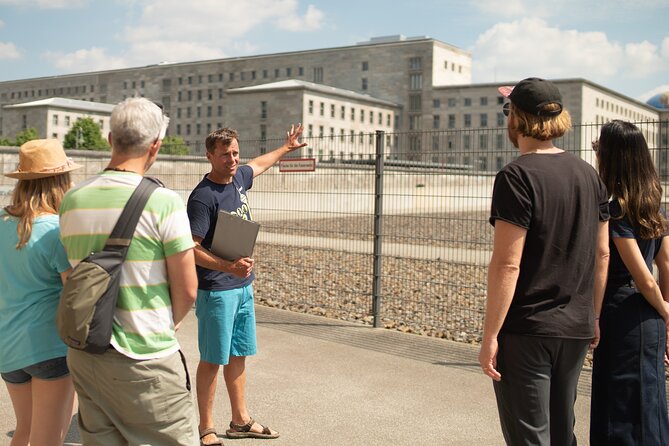
Berlin’s Nazi past is scattered across the city, often hidden behind modern buildings, busy roads, and ordinary-looking streets. This private tour connects those fragments into one difficult but necessary story, from the rise of Hitler’s government to the final battle for Berlin and the crimes that followed.
I like two things right away: hotel pickup and drop-off remove the morning guesswork, and a private guide can adjust the pace and subject matter to suit your group. Guides including Daniel, Jimmy, Georgia, Jasper, Simon, and Tobi have been praised for clear explanations, good storytelling, and flexible routes.
The main drawback is the amount of ground covered in only three to four hours. Several stops last just 10 or 15 minutes, so this is best viewed as a guided introduction rather than a full visit to every museum. You may want to return later to the Topography of Terror or Holocaust Memorial on your own.
In This Review
- Key points to know before booking
- Why this private Berlin history tour works
- Soviet Memorial Tiergarten: beginning with the Battle of Berlin
- Wilhelmstraße and the Aviation Ministry
- Topography of Terror: documents from the machinery of repression
- German Resistance Memorial Center at Bendlerblock
- Bebelplatz and the cost of censorship
- The Reichstag and the Reichstag Fire
- Holocaust Memorial: space for silence and reflection
- Führerbunker site and the end of the Nazi regime
- Anhalter Bahnhof and deportation from Berlin
- T4 Memorial: Nazi murder of disabled people
- Moltkebrücke and the Soviet advance
- How the route feels in practice
- Price, private value, and who should book
- Should you book this Berlin Third Reich tour?
- FAQ
- How long does the private Berlin Third Reich tour last?
- What language is the tour offered in?
- Is hotel pickup included?
- Is hotel drop-off included?
- Is this a private activity?
- How many sites are included?
- Is admission to the Reichstag included?
- Are food and drinks included?
- Does the tour operate in bad weather?
- Can I cancel for a full refund?
Key points to know before booking
- Twelve major sites in one private route: You connect government buildings, memorials, wartime locations, resistance sites, and places tied to the Holocaust.
- A guide-led history lesson: The best guides build a clear timeline and answer questions instead of simply pointing at buildings.
- Hotel pickup is included: This is especially useful if you are staying outside central Berlin or want a simple start.
- Short museum visits: The Topography of Terror and German Resistance Memorial Center are important, but the scheduled time is brief.
- A serious, sometimes upsetting subject: The tour deals directly with dictatorship, genocide, war, and mass murder.
- Good fit for families and history fans: Guides have adapted the experience for children, quieter teenagers, and people with different levels of background knowledge.
Why this private Berlin history tour works
The strength of this experience is its range. In one half-day, you see where Nazi officials worked, where opposition was organized, where books were burned, where Jewish families were deported, and where the regime made its last stand.
A private setting matters here. You can ask about a family connection, pause when a subject needs more explanation, or move faster past a place you have already visited. Several guides have adjusted routes around previous sightseeing, personal interests, and the group’s walking speed.
The guides also appear to bring different backgrounds and styles. Daniel is praised for meeting groups at their hotels, making a quick plan, and offering useful ideas for the rest of a Berlin visit. Jimmy is described as warm with children and able to make a four-hour tour pass quickly. Georgia tailored a route from a hotel starting point, while Jasper, Simon, Callum, Xavier, Martin, Oren, Artie, and Tobi have each been praised for clear explanations and strong command of the subject.
Your assigned guide may be someone else, so the important point is the format: you are paying for personal attention, not a fixed script delivered to a large crowd.
More Third Reich & Cold War Tours in Berlin
- Berlin: Third Reich and Cold War 2 Hour Walking Tour
★ 4.9 · 6,830 reviews - Berlin’s Best: 2 Hour Walking Tour Third Reich and the Cold War
★ 5.0 · 5,486 reviews - Third Reich Berlin: Hitler and WWII Walking Tour
★ 5.0 · 3,301 reviews
Soviet Memorial Tiergarten: beginning with the Battle of Berlin
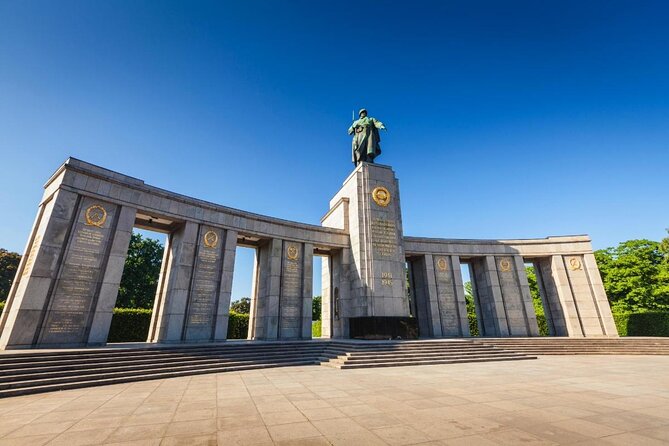
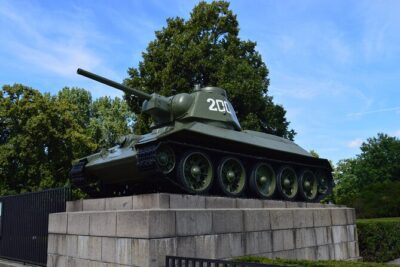
The Soviet Memorial in Tiergarten gives the tour a useful starting point. Opened in 1949, it commemorates Soviet soldiers killed during the 1945 Battle of Berlin.
The large statue of a soldier carrying a sword and shield sets a solemn tone. Your guide can explain the memorial’s symbols, the Soviet role in defeating Nazi Germany, and the terrible fighting that brought the war to Berlin.
The stop is scheduled for about 10 minutes. That is enough for an orientation and a short explanation, but not a detailed visit to the memorial grounds. If military history interests you, ask your guide to place the Battle of Berlin in the wider sequence of the war.
Wilhelmstraße and the Aviation Ministry
Wilhelmstraße was the center of Nazi government, and walking along it helps you understand how dictatorship operated through ministries, offices, paperwork, and policy decisions.
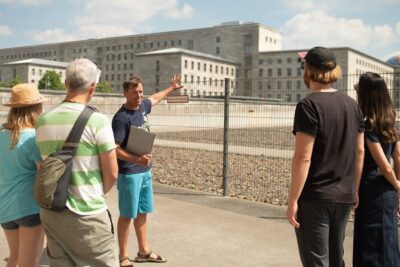
The Detlev-Rohwedder-Haus, originally built for the Reichsbank, later housed the Ministry of Aviation under Hermann Göring. Its exterior does not offer the drama of a ruined bunker, but that is part of the lesson. The machinery of the regime worked from formal government buildings that can look quite ordinary today.
You will hear about the officials and institutions that shaped economic policy, military planning, and wartime administration. The stop lasts around 10 minutes, with another 20 minutes allotted to Wilhelmstraße itself.
This is one place where a guide adds real value. Without explanation, you might walk past the building without realizing what happened there.
Topography of Terror: documents from the machinery of repression
The Topography of Terror occupies the former site of the SS and Gestapo headquarters. Its indoor and outdoor displays use photographs, documents, and personal accounts to explain political repression and state terror.
This is among the most important stops on the route because it shifts the focus from Hitler and military events to the institutions that persecuted opponents and helped carry out Nazi policy. You will learn how repression affected individuals and wider society.
The planned visit is about 20 minutes. That is short for this exhibition. I recommend treating the stop as a guided preview, then returning later if you have time. One visitor used the brief stop to decide to revisit the museum in greater detail the following day, which is a sensible plan.
Same city, a completely different kind of day:
- Berlin: Reichstag, Dome and Government District Guided Tour
★ 4.7 · 18,288 reviews - Berlin: 1-Hour City Tour by Boat with Guaranteed Seating
★ 4.3 · 16,993 reviews - Berlin: Boat Tour Along the River Spree
★ 4.4 · 11,252 reviews - Discover Berlin Half-Day Walking Tour
★ 5.0 · 9,624 reviews
German Resistance Memorial Center at Bendlerblock
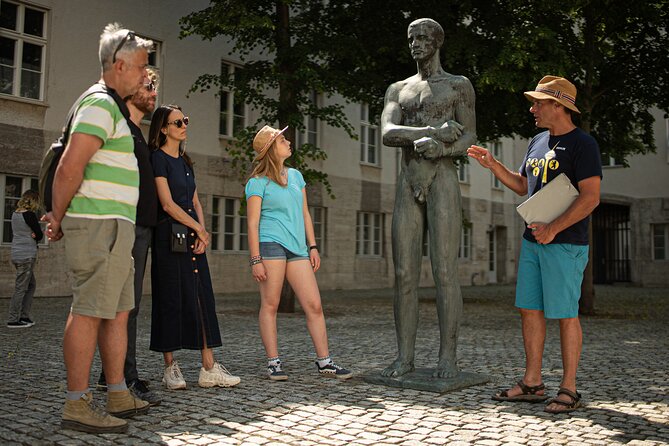
At the Bendlerblock, the German Resistance Memorial Center honors people who opposed the Nazi regime. The focus includes Claus von Stauffenberg and the July 20, 1944, attempt to kill Hitler.
The site helps correct the idea that all Germans supported the regime or remained passive. Resistance came in different forms, with different motives and varying chances of success. Your guide can explain the decisions, risks, and consequences faced by those who acted.
The visit is scheduled for 20 minutes. That allows for the main story and a moment of reflection, but the exhibits deserve more time if resistance history is a major reason for your visit.
Bebelplatz and the cost of censorship
Bebelplatz is one of Berlin’s most powerful public spaces. On May 10, 1933, Nazi supporters burned thousands of books considered politically or culturally unacceptable.
A memorial beneath the square shows empty bookshelves. It is easy to miss unless someone points it out, and that modest design makes the message sharper. The square also includes the State Opera House and Humboldt University, reminders that the book burning took place in the center of the city’s cultural and academic life.
The stop lasts about 10 minutes. Your guide will connect the event to censorship, propaganda, and the steady destruction of free expression. This is a good place to ask how a society can move from public book burning to wider political repression.
The Reichstag and the Reichstag Fire
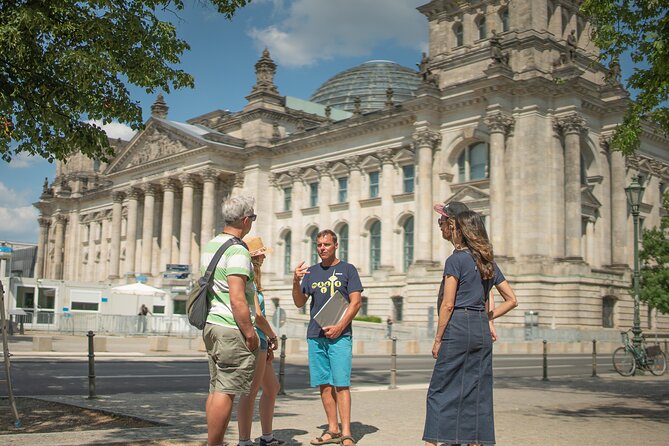
The Reichstag Building, completed in 1894, offers a bridge between Germany’s earlier parliamentary system, the Nazi seizure of power, and the country’s present democratic identity.
The Reichstag Fire in 1933 gave the Nazis a chance to suppress political opponents and consolidate control. Your guide will explain why the event mattered, how the building was damaged during World War II, and how it was later restored as a symbol of democracy.
The outside visit lasts about 15 minutes, and admission is not included. This tour focuses on the building’s Nazi-era role, not a full interior visit, so check separately if you want to see the dome or parliamentary areas.
Holocaust Memorial: space for silence and reflection
The Memorial to the Murdered Jews of Europe consists of 2,711 concrete slabs arranged in rows across a large open area. Their changing heights and uneven ground create a disorienting walk.
Your guide can explain the memorial’s design and place it within the history of the Holocaust, including the Nazi persecution and murder of Europe’s Jewish population. Still, this is a place where you should allow yourself some quiet time. Not every part of the experience needs narration.
The scheduled stop is about 15 minutes. That may feel rushed, especially if you want to walk through the memorial alone or visit the underground information center. Ask how much independent time is possible, and consider returning later.
Führerbunker site and the end of the Nazi regime
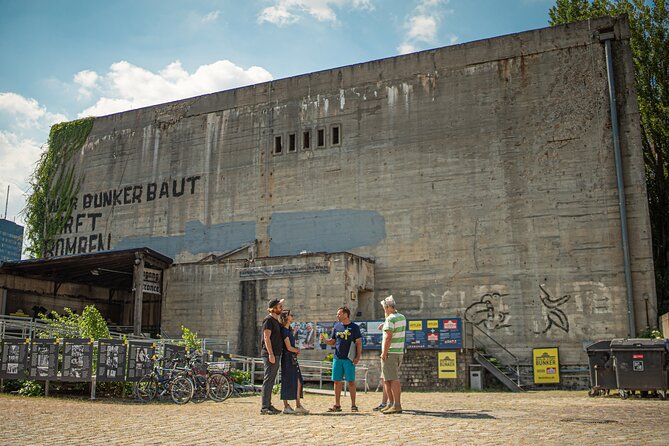
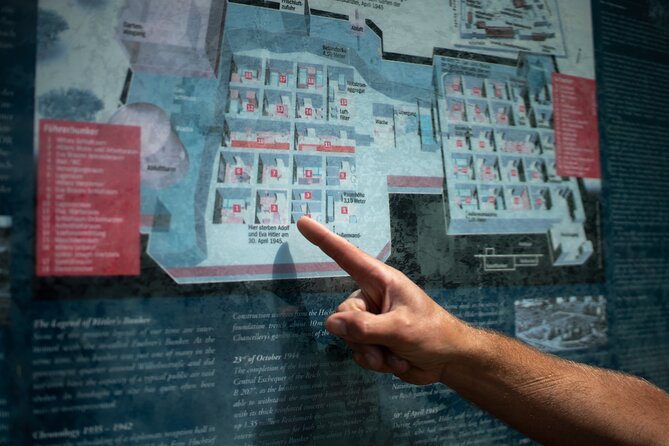
At the Führerbunker site, you stand above the location of Hitler’s final headquarters. The underground complex served as his refuge during the last months of World War II, as Soviet forces closed in on Berlin.
Most of the original structure was destroyed after the war. There is no grand underground attraction here, and that is worth knowing before you arrive. The value comes from the explanation: the bunker’s layout, the decisions made there, and the collapse of Nazi leadership in its final days.
The stop lasts around 10 minutes. It is brief and largely interpretive, but it helps connect the political story to the physical end of the regime.
Anhalter Bahnhof and deportation from Berlin
The remains of Anhalter Bahnhof recall a grand railway terminal that once served as one of Berlin’s busiest stations. During the Nazi period, it became linked to the deportation of Jewish people to concentration camps.
The surviving façade and station ruins make the location especially affecting. This was not an isolated prison or distant battlefield. Families passed through a public transport network on their way to forced removal and murder.
Your guide will discuss the station’s wartime role and the people whose lives were torn apart. The planned stop is only 10 minutes, so expect a focused account rather than a long visit.
T4 Memorial: Nazi murder of disabled people
The T4 Memorial on Tiergartenstraße 4 addresses the Nazi euthanasia program, which targeted people with disabilities and mental illnesses as supposedly unworthy of life.
This stop broadens the tour beyond the Holocaust and military history. It shows how Nazi ideas about race, health, and human worth led to organized murder, and how language and bureaucracy helped hide the crime.
The memorial includes information about the program, its victims, and the ethical questions it raises. The visit lasts about 10 minutes. It is a quiet but important stop, particularly if you want to understand how Nazi mass murder developed through earlier programs of persecution.
Moltkebrücke and the Soviet advance
The Moltkebrücke played a strategic role during the final battle for Berlin. Soviet forces crossed the bridge in 1945 as they advanced into the city.
From the bridge, your guide can describe the nearby fighting and explain why this route mattered during the assault. It is a useful change of pace after several indoor memorials and government sites, giving you a physical sense of how war moved through Berlin.
The stop lasts around 10 minutes. There is no museum visit here, so its value depends heavily on the guide’s ability to explain the military setting.
How the route feels in practice
Although the experience is sold as a walking tour, the complete route covers a broad section of Berlin. One account described walking roughly 10,000 steps, while another praised the combination of walking and public transport.
Hotel pickup and drop-off are included, but the exact meeting point and route can be tailored. Wear good walking shoes, bring water, and dress for rain or cold. The tour operates in all weather conditions.
Because the stops are short, the tour works best when you listen actively and ask questions. It is less suitable if you want long, unhurried museum visits at every location.
Price, private value, and who should book
At $192.97 per person, this is not a budget sightseeing walk. The value depends on your group size and how much you want personal guidance. For a couple or small family, the cost buys a private English-speaking guide, hotel pickup and drop-off, a custom pace, and a coherent route through sites that would take more effort to connect alone.
A large part of what you pay for is interpretation. Many locations have little signage, and some are simply buildings, bridges, or open spaces. Without context, the Aviation Ministry, Führerbunker site, and Moltkebrücke can be easy to overlook.
I would book this for:
- First-time visitors who want a clear introduction to Berlin’s Nazi and World War II history
- Families with older children or teenagers
- People with limited time in Berlin
- Groups who prefer private discussion to a large scheduled tour
- Visitors who want hotel pickup and a route adjusted to their interests
I would think twice if you prefer independent museum visits, dislike walking for several hours, or want a tour focused only on military operations. The Holocaust Memorial, T4 Memorial, and Topography of Terror also require emotional energy, so avoid placing this tour on an already overloaded day.
The experience has a 5 out of 5 rating from 360 reviews, with 99 percent recommending it. That strong record fits the most consistent praise: guides are often described as engaging, flexible, clear, and able to make a four-hour history lesson pass quickly. Still, guide quality can vary by individual, and one account found the guide’s priorities did not always match the group’s wishes. Tell your guide at the start what matters most to you.
Should you book this Berlin Third Reich tour?
Book it if you want one private, serious overview that links Nazi government, resistance, genocide, and the Battle of Berlin. The tour is especially useful early in your stay because it can point you toward places worth revisiting, including the Topography of Terror and Holocaust Memorial.
Do not book it expecting full museum admissions or long time at each stop. At this price, the best return comes from a strong guide and an open conversation. If your group values personal attention, thoughtful pacing, and a broad view of Berlin’s darkest years, this is a worthwhile half-day.
FAQ
How long does the private Berlin Third Reich tour last?
The tour lasts approximately three to four hours.
What language is the tour offered in?
The tour is offered in English.
Is hotel pickup included?
Yes. Hotel pickup is included.
Is hotel drop-off included?
Yes. Hotel drop-off is included.
Is this a private activity?
Yes. Only your group participates in the private tour.
How many sites are included?
The route lists 12 stops, including the Soviet Memorial Tiergarten, Topography of Terror, Reichstag, Holocaust Memorial, Führerbunker site, Anhalter Bahnhof, and T4 Memorial.
Is admission to the Reichstag included?
No. Admission to the Reichstag Building is not included.
Are food and drinks included?
No. Food and drinks are not included.
Does the tour operate in bad weather?
Yes. The tour operates in all weather conditions, so you should dress appropriately.
Can I cancel for a full refund?
Yes. You can cancel at least 24 hours before the scheduled start time for a full refund. Cancellations or changes made less than 24 hours before the start time are not accepted for a refund.
More Walking Tours in Berlin
- Berlin: Discover Berlin Walking Tour
★ 4.9 · 5,998 reviews - Berlin: Hidden Backyards Guided Walking Tour
★ 4.8 · 5,360 reviews - Berlin: Alternative Berlin Walking Tour
★ 4.6 · 1,204 reviews - Berlin: Third Reich, Hitler, and WWII Walking Tour
★ 4.9 · 1,133 reviews
Just added around Berlin
- Love and War in Berlin: Self-Guided Story Puzzle Walk★ 5.0 · 7 reviews
- Rickshaw Tours Berlin – Groups of up to 16 people with several rickshaws★ 4.0 · 97 reviews
- Walking on the Wall: 3-Hour Tour in Berlin★ 4.5 · 34 reviews
- eSIM for Germany and 34 European Countries★ 4.5 · 16 reviews
- Your ticket to The Wall Museum Berlin★ 3.0 · 60 reviews
- Warnemuende Shore Excursion: Private Berlin Tour★ 4.5 · 27 reviews
- Warnemuende Shore Excursion: Berlin Private Sightseeing Tour from Rostock★ 5.0 · 4 reviews
- Berlin’s Gay, Lesbian, and Queer Scene Small-Group Walking Tour★ 4.5 · 66 reviews
Third Reich & Cold War Tours, compared.
Berlin’s Best: 2 Hour Walking Tour Third Reich and the Cold War
Read our review →
Third Reich Berlin: Hitler and WWII Walking Tour
Read our review →
Skip-the-Line: Berlin Wall Museum at Checkpoint Charlie
Read our review →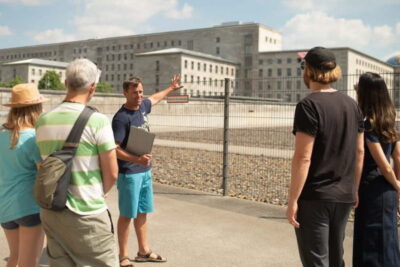
Cold War, Berlin Wall, Spies and the East Side Gallery
Read our review →Browse the lists this tour appears in