
Reviewed · THIRD REICH & COLD WAR TOURS
Private Walking Tour: Behind the Iron Curtain and Berlin Wall
Berlin’s Cold War story becomes far more personal when you follow the former Wall line on foot. This private tour links the Berlin Wall Memorial, escape sites, protest churches, and border crossings, showing how a divided city worked day by day.
I like the private format, which lets your guide adjust the pace and explain details that suit your group. I also like the route’s mix of famous sights and less obvious places, especially Gethsemane Church and Bornholmer Strasse. The main drawback is practical: you must buy a Berlin AB public transport day pass, and four hours of walking requires decent stamina.
In This Review
- Key points at a glance
- Berlin’s Cold War story, told on foot
- Bernauer Strasse and the former death strip
- Gethsemane Church and the 1980s protest movement
- Bornholmer Strasse and the Wall’s sudden opening
- East Side Gallery and the public memory of the Wall
- Alexanderplatz brings the tour back to city life
- What the private guide adds
- Is $166.52 per person a fair price?
- Who will get the most from this tour?
- Practical planning before you book
- Should you book the Berlin Wall tour?
- FAQ
- How long is the private Berlin Wall tour?
- What locations are included?
- Is this a private tour?
- Is hotel pickup available?
- Do I need public transportation during the tour?
- Is the transport pass included?
- Is food or drink included?
- What fitness level is required?
- Which guides may lead the tour?
- Can I cancel for a full refund?
Key points at a glance
- Follow the former death strip at Bernauer Strasse, where escape attempts and divided families shaped the story.
- Visit Gethsemane Church, a key meeting place for East Berlin civil rights activists in the late 1980s.
- See Bornholmer Strasse, one of the border crossings linked to the Wall’s collapse.
- Travel privately with a historian guide, with praised guides including Rachel Wells, Alex, and Philippa.
- Finish at Alexanderplatz, a useful central transport hub with easy onward connections.
- Plan for a Berlin AB day pass, which is required but not included in the tour price.
Berlin’s Cold War story, told on foot
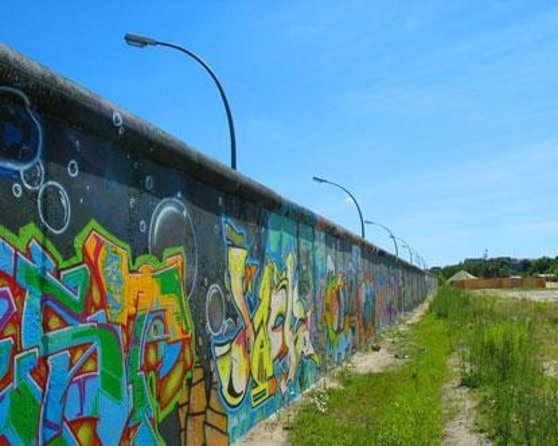
This four-hour private walking tour focuses on Berlin after World War II, when the city became the main pressure point between the Soviet Union and the Western powers. You are not simply looking at pieces of concrete. You are following the line that split streets, families, workplaces, churches, and an entire country.
The tour begins in central Berlin in the morning or afternoon. A centrally located hotel pickup is offered, which can make the start easier if you are still finding your bearings. If your hotel is outside the central pickup area, you will need to meet the guide at an agreed location.
I like the private setup because the subject calls for questions. Berlin’s division can become a blur of dates and political names when presented too quickly. With only your group taking part, you can stop to ask about daily life in the German Democratic Republic, escape attempts, Soviet control, or the events that led to reunification.
The route is not just a parade of famous monuments. It connects political history with physical places. You see where the Wall ran, where people tried to cross it, where church groups organized protests, and where a border crossing became part of the chain of events that brought the Wall down.
More Third Reich & Cold War Tours in Berlin
- Berlin: Third Reich and Cold War 2 Hour Walking Tour
★ 4.9 · 6,830 reviews - Berlin’s Best: 2 Hour Walking Tour Third Reich and the Cold War
★ 5.0 · 5,486 reviews - Third Reich Berlin: Hitler and WWII Walking Tour
★ 5.0 · 3,301 reviews
Bernauer Strasse and the former death strip
Bernauer Strasse is one of the most important stops because the Wall did not merely run beside the street. It cut directly through a lived-in neighborhood. Buildings stood on one side while sidewalks and residents were suddenly separated from the rest of the city.
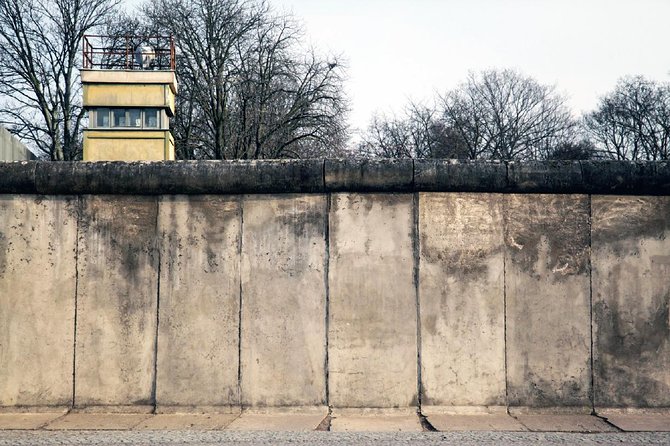
At the Berlin Wall Memorial, you can examine surviving sections of the Wall and the former border zone. The term death strip refers to the controlled area between barriers, not simply the concrete wall itself. That distinction matters. The border system included fences, watchtowers, patrol routes, lighting, and open ground designed to expose anyone trying to cross.
The memorial is also the right place to think about escape attempts. Bernauer Strasse became known for dramatic efforts to reach West Berlin, including attempts connected with buildings and tunnels. The tour gives those events a physical setting, which is more useful than hearing a list of famous escapes in a museum far from the original street.
You should expect some walking along exposed sections of the former border area. Comfortable shoes are a sensible choice, and the tour’s moderate fitness requirement is worth taking seriously. This is not a strenuous hike, but four hours on city streets, with repeated stops, can feel long if you prefer a slow sightseeing day.
Gethsemane Church and the 1980s protest movement
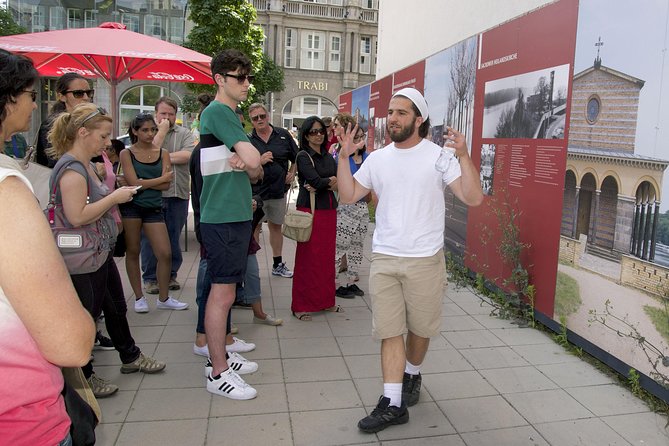
Gethsemane Church in Prenzlauer Berg adds a different side to the story. Here, the focus shifts from escape attempts and border security to organized dissent inside East Berlin.
Civil rights activists gathered at the church during the late 1980s, when public opposition to the East German government was becoming harder to contain. The church offered space for meetings, prayer, protest, and discussion. It helps explain that the end of the Wall was not caused by one announcement alone. Pressure grew through public gatherings and civic action as well as political change beyond East Germany.
I value this stop because it broadens the tour beyond the familiar image of people celebrating on top of the Wall in November 1989. You learn about the people who challenged the system before the border opened. That makes the story more human and gives you a better sense of how ordinary citizens helped force change.
The church stop also breaks up the route. After concrete barriers, former border ground, and escape stories, a functioning place of worship brings the focus back to community life. Your guide can explain how the church fit into the local setting and why it became associated with protest.
The exact balance between walking, public transport, and time at each place can vary. Since this is a private tour, you can ask for more time at Gethsemane Church if civil resistance interests you most, though the full route still needs to fit into about four hours.
Bornholmer Strasse and the Wall’s sudden opening
Bornholmer Strasse was one of the border crossings between East and West Berlin. It is especially important because it became associated with the opening of the Wall on November 9, 1989.
A visit here helps you understand how a border system that had seemed permanent could unravel so quickly. The events were not a tidy, preplanned ceremony. Confusion and public pressure played a major role, and people began crossing after officials gave unclear instructions about new travel rules.
Your guide can connect Bornholmer Strasse with the wider protests and political changes of the late 1980s. This is where the tour’s larger theme comes together: the Wall fell because years of control, public anger, international pressure, and bold decisions collided at a fragile moment.
The site itself may not offer the visual drama of a large surviving Wall section. That is a fair limitation. You come for the historical meaning, not for a grand monument. A guide is particularly useful here because the importance of the location is easy to miss if you pass through without context.
Same city, a completely different kind of day:
- Berlin: Reichstag, Dome and Government District Guided Tour
★ 4.7 · 18,288 reviews - Berlin: 1-Hour City Tour by Boat with Guaranteed Seating
★ 4.3 · 16,993 reviews - Berlin: Boat Tour Along the River Spree
★ 4.4 · 11,252 reviews - Discover Berlin Half-Day Walking Tour
★ 5.0 · 9,624 reviews
East Side Gallery and the public memory of the Wall
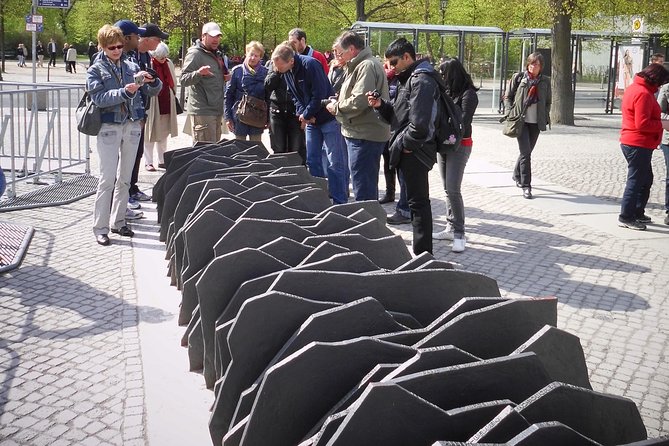
The route also includes the East Side Gallery and other remaining Wall areas. The gallery is known for painted sections of the Wall, making it one of Berlin’s most recognizable places connected with the former divide.
This stop gives you a look at how Berlin remembers the Wall today. The art turns a barrier once used for control into a public display of political expression. It is a different experience from Bernauer Strasse, where the emphasis is on the border system, escape attempts, and preserved historical structures.
The contrast is useful. At the memorial, you are asked to picture surveillance, restrictions, and danger. At the East Side Gallery, you see a later layer of memory and artistic response. One stop explains how the Wall functioned. The other shows how people chose to represent it after its fall.
Do not expect every part of the Wall to survive in its original form. Berlin has changed greatly since reunification, and remnants appear in scattered sections rather than as one continuous barrier. The guide’s route helps you connect those fragments.
Alexanderplatz brings the tour back to city life
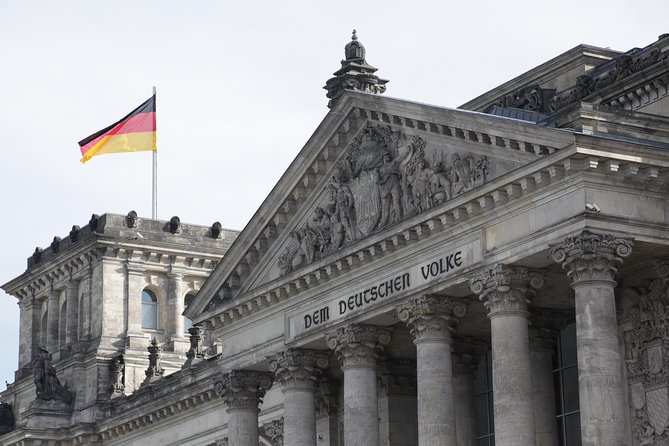
The tour ends at Alexanderplatz in central Mitte. This large public square is also a major transport hub, so the ending is practical. You can continue sightseeing, find food, or head elsewhere in Berlin without spending much time retracing the route.
Alexanderplatz carries its own Cold War associations and helps place the divided city within East Berlin’s civic center. Ending here gives the tour a sense of movement from border zone to public square, from separation toward a reunited city.
It is also a useful point for a private tour to finish. You are not left at an isolated site with a long transfer ahead. If you have another appointment or museum visit, the central location makes planning easier.
What the private guide adds
The guide is the heart of this experience. The tour is sold with a professional historian guide, and the strongest feedback centers on clear explanations, strong site choices, and flexibility.
Rachel Wells is praised for combining historical facts with visits to actual Cold War locations. Alex is described as especially strong on the East German era and reunification, with a route through former Wall areas that added real value. Philippa is praised for adapting the private tour to a group’s interests and making the four hours enjoyable as well as informative.
Those details matter when you are choosing a history tour. Berlin has plenty of Wall fragments and information panels, but the quality of interpretation changes the experience. A good guide helps you understand what happened at a place, why it mattered, and how it fits into the larger story.
The guide can also explain what daily life was like in the GDR, described here as the most heavily policed state in the Eastern Bloc. That subject deserves more than a quick mention. The tour connects government control with travel restrictions, surveillance, protest, and the risks faced by people who tried to leave.
Since this is a private activity, your group can ask for clarification without worrying about holding up a large crowd. It is also easier to pause for photographs or spend extra time on a topic. The tradeoff is that a private tour costs more per person than a large group walk, especially for one or two people.
Is $166.52 per person a fair price?
At $166.52 per person, this is not a budget walking tour. The price makes the most sense for a small group that wants a focused, private history lesson rather than a general introduction to Berlin.
You are paying for about four hours with a dedicated guide, a route built around several Cold War locations, and the ability to shape the discussion. If three or four people share the experience, the private format becomes easier to justify. Group discounts may also be available, so check the final booking price for your party.
The cost does not include food, drinks, or the required Berlin AB public transport day pass. That extra transport cost is modest compared with the tour fee, but you should budget for it before setting out. The pass matters because this is a walking tour with public transport used to connect parts of the route, not four uninterrupted hours on foot.
I would choose this tour if the Berlin Wall is a main reason for your visit and you want a guide to connect separate locations. I would hesitate if you only want a quick overview or if your budget is tight. Berlin has free Wall memorial areas, but you will not get the same private explanation or tailored route by visiting them alone.
Who will get the most from this tour?
This tour suits adults, families with older children, students, and anyone who prefers history explained at the actual places where it happened. It is especially useful for a first visit because the route provides a framework for understanding Berlin’s divided neighborhoods.
It also suits repeat visitors who have already seen the Brandenburg Gate and central landmarks but want a closer look at the Cold War period. The focus goes beyond the usual postcard view of Berlin.
You should have a moderate level of physical fitness. The tour lasts about four hours, includes walking between sites, and uses public transport. Wear comfortable shoes and bring weather-appropriate clothing, since parts of the experience take place outdoors.
The private setting is a good match for families with different levels of background knowledge. You can ask the guide to explain basic terms, or move into more detailed questions about the Soviet Union, the Eastern Bloc, the GDR, and reunification.
Practical planning before you book
Pickup is offered from centrally located hotels. If that does not apply to you, confirm the meeting point before the tour date so your morning or afternoon starts without a scramble.
A mobile ticket is available, and confirmation is normally sent at booking. If you book within seven days of the tour, confirmation can take up to 48 hours and remains subject to availability. The tour is commonly booked about 12 days ahead, so advance planning is sensible, especially if you need a certain time or guide.
Free cancellation is available until 24 hours before the start time. Cancellations made inside that window are not refunded, and late changes are not accepted. Keep the local Berlin start time in mind when making changes.
Most important, buy the Berlin AB public transport day pass before the tour if instructed by the operator. It is not included in the price. Near-public-transport access makes the route manageable, but the day pass is part of your real trip cost.
Should you book the Berlin Wall tour?
Book it if you want the Cold War explained through real streets, border crossings, churches, and surviving Wall sections. The combination of Bernauer Strasse, Gethsemane Church, Bornholmer Strasse, the East Side Gallery, and Alexanderplatz gives you a fuller story than a single memorial visit.
The strongest reason to choose it is the private guide. Rachel Wells, Alex, and Philippa have all been singled out for clear historical explanations, thoughtful routes, and flexibility. That praise matches what this kind of tour needs most: someone who can turn scattered sites into a story you can follow.
Skip it if you want a low-cost, short walk or if your schedule cannot spare four hours. Also remember the added transport pass and the need for moderate fitness. For a small group that values history and wants to understand how Berlin moved from occupation to division, protest, and reunification, this is a well-focused use of half a day.
FAQ
How long is the private Berlin Wall tour?
The tour lasts approximately four hours.
What locations are included?
The route includes the Berlin Wall Memorial on Bernauer Strasse, Gethsemane Church, Bornholmer Strasse, the East Side Gallery, Alexanderplatz, and other Cold War locations.
Is this a private tour?
Yes. Only your group participates in the activity.
Is hotel pickup available?
Pickup is offered if you are staying at a centrally located hotel.
Do I need public transportation during the tour?
Yes. A Berlin public transport day pass covering zones AB is required.
Is the transport pass included?
No. The Berlin AB day pass is an additional cost.
Is food or drink included?
No. Food and drinks are not included.
What fitness level is required?
A moderate level of physical fitness is recommended because the tour includes about four hours of walking and public transport connections.
Which guides may lead the tour?
Guides named in the available information include Rachel Wells, Alex, and Philippa. Guide availability is subject to the booking.
Can I cancel for a full refund?
Yes, if you cancel at least 24 hours before the experience start time. Cancellations made less than 24 hours ahead are not refunded.
More Walking Tours in Berlin
- Berlin: Discover Berlin Walking Tour
★ 4.9 · 5,998 reviews - Berlin: Hidden Backyards Guided Walking Tour
★ 4.8 · 5,360 reviews - Berlin: Alternative Berlin Walking Tour
★ 4.6 · 1,204 reviews - Berlin: Third Reich, Hitler, and WWII Walking Tour
★ 4.9 · 1,133 reviews
Just added around Berlin
- Love and War in Berlin: Self-Guided Story Puzzle Walk★ 5.0 · 7 reviews
- Rickshaw Tours Berlin – Groups of up to 16 people with several rickshaws★ 4.0 · 97 reviews
- Walking on the Wall: 3-Hour Tour in Berlin★ 4.5 · 34 reviews
- eSIM for Germany and 34 European Countries★ 4.5 · 16 reviews
- Warnemuende Shore Excursion: Berlin Private Sightseeing Tour from Rostock★ 5.0 · 4 reviews
- Your ticket to The Wall Museum Berlin★ 3.0 · 60 reviews
- Warnemuende Shore Excursion: Private Berlin Tour★ 4.5 · 27 reviews
- Berlin’s Gay, Lesbian, and Queer Scene Small-Group Walking Tour★ 4.5 · 66 reviews
Third Reich & Cold War Tours, compared.



Berlin’s Best: 2 Hour Walking Tour Third Reich and the Cold War
Read our review →

Third Reich Berlin: Hitler and WWII Walking Tour
Read our review →
Skip-the-Line: Berlin Wall Museum at Checkpoint Charlie
Read our review →

Cold War, Berlin Wall, Spies and the East Side Gallery
Read our review →Browse the lists this tour appears in