
Reviewed · THIRD REICH & COLD WAR TOURS
Private Berlin WWII and Cold War History Tour with Local Expert Guide
Berlin’s past comes at you in layers on this private walk: Nazi power, wartime destruction, the Berlin Wall era, and the city’s lively present. You move from the New Synagogue and Palace of Tears to Brandenburg Gate, the Holocaust Memorial, the Führerbunker site, Checkpoint Charlie, and Museum Island, with a currywurst break along the way.
I like the private format, which lets your guide adjust the pace, answer your questions, and make room for a rest if needed. I also like the mix of famous sights and smaller places such as the Missing House on Große Hamburger Strasse and Heckmann Höfe. The main drawback is simple: this is a long walking tour, and four hours can feel demanding in cold, wet, or icy weather.
In This Review
- Key points at a glance
- Why this route works as a first look at Berlin
- Starting at Oranienburger Strasse and the New Synagogue
- The Palace of Tears and the human cost of division
- Reichstag, Brandenburg Gate, and the center of power
- The Holocaust Memorial and the Führerbunker site
- Currywurst on Wilhelmstrasse
- Checkpoint Charlie and the Cold War story
- Bebelplatz and the memory of Nazi book burning
- Museum Island and the final walk through Mitte
- What the $129 price means
- Pace, weather, and practical planning
- Who should book this Berlin history walk
- Should you book it?
- FAQ
- Where does the tour start?
- Where does the tour finish?
- How long does the tour last?
- Is this a private tour?
- What language is offered?
- Is currywurst included?
- Are museum and attraction admission fees included?
- How far in advance can I cancel?
Key points at a glance
- A full four-hour introduction: Cover major Nazi and Cold War landmarks in central Berlin with one guide connecting the dots.
- Private and adjustable: Your group is alone with the guide, so the route can respond to your interests and walking pace.
- Currywurst included: A classic Berlin snack breaks up the history and gives you a taste of everyday city life.
- Serious history, handled on foot: The route visits the Holocaust Memorial, Führerbunker site, former border points, and places tied to Nazi persecution.
- Famous sights plus quieter corners: See Brandenburg Gate and Checkpoint Charlie, then look for the Missing House and Heckmann Höfe.
- Strong guide feedback: Guides named in the tour’s feedback include Dimitri, Eleni, Lucian, Simon, Despina, Peter, and Demetrios, with praise focused on patience, clear explanations, and flexibility.
Why this route works as a first look at Berlin
Berlin can be confusing at first. Its key sights are spread across former East and West Berlin, and the history is not confined to one museum or one memorial. This walk gives you a useful framework before you explore on your own.
You begin on Oranienburger Strasse, near one of Berlin’s most important Jewish landmarks, then move toward a former crossing point between East and West. From there, the route heads through the government district, the Nazi center of power, Cold War Checkpoint Charlie, elegant historic squares, and Museum Island.
That sequence matters. You are not simply checking off monuments. You are seeing how Berlin’s political center shifted, how the Nazi regime used the city, how war changed it, and how the divided city functioned afterward.
The private setup is especially useful here. You can ask why a site matters, how Berlin looked before the war, or what changed after reunification. A large group tour often has to keep moving. Here, your guide can stop for questions, photos, or a short rest.
More Third Reich & Cold War Tours in Berlin
- Berlin: Third Reich and Cold War 2 Hour Walking Tour
★ 4.9 · 6,830 reviews - Berlin’s Best: 2 Hour Walking Tour Third Reich and the Cold War
★ 5.0 · 5,486 reviews - Third Reich Berlin: Hitler and WWII Walking Tour
★ 5.0 · 3,301 reviews
Starting at Oranienburger Strasse and the New Synagogue

The meeting point is Oranienburger Strasse 28 to 30, near public transportation. This is a practical place to start, since the first stop, the Stiftung Neue Synagoge Berlin and Centrum Judaicum, is nearby.
The New Synagogue is easy to recognize. Its Moorish-style architecture, especially the ornate golden dome, makes it one of Berlin’s most striking façades. Your guide uses the building to discuss Jewish life in Berlin and the destruction and persecution that shaped the city’s twentieth century.
This is an important opening because it keeps Berlin’s wartime story from becoming only a story about military events and political leaders. You begin with a place connected to a community, its traditions, and the Nazi assault on Jewish life.
The listed stop allows about 20 minutes. That is enough for an exterior look and photographs, but do not expect a long museum visit to be part of the walk. The tour is focused on the city itself, with the guide supplying the links between the places you see.
The Palace of Tears and the human cost of division
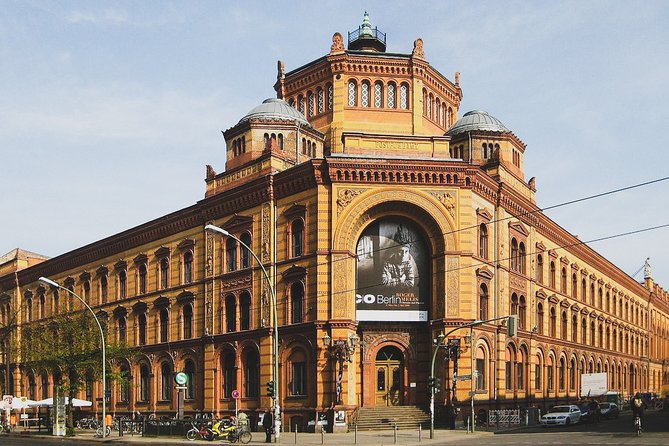
The Palace of Tears, or Tränenpalast, was a border facility at Friedrichstrasse station. Its name comes from the tearful goodbyes that took place there when people from East Berlin had to separate from relatives visiting from the West.
Inside, the preserved setting gives the place a physical sense of the Cold War. Floor tiles, a wall clock, and the plain 1960s interior help you picture the controlled, anxious process of crossing the border. The exhibition also tells stories of people who tried to leave Soviet-occupied East Berlin for the Allied sectors.
This may be the most personal stop on the tour. Checkpoint Charlie is famous, but the Palace of Tears shows how division affected ordinary families. A guide can explain the rules, restrictions, and risks in a way that a quick photograph at a border checkpoint cannot.
Plan for about 20 minutes here. Because the route includes many stops, your guide will need to balance the exhibition with the rest of the walk. If Cold War history is your main interest, say so early. The private itinerary can be adjusted toward the divided city.
Reichstag, Brandenburg Gate, and the center of power
The walk continues toward the Reichstag Building and Brandenburg Gate. These sights are close enough to connect on foot, but each tells a different part of Berlin’s story.
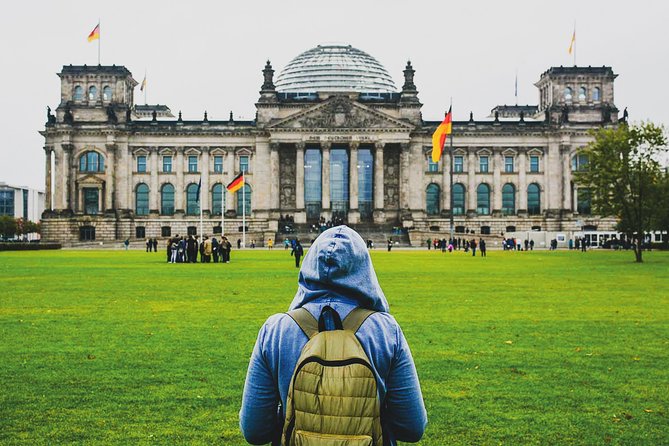
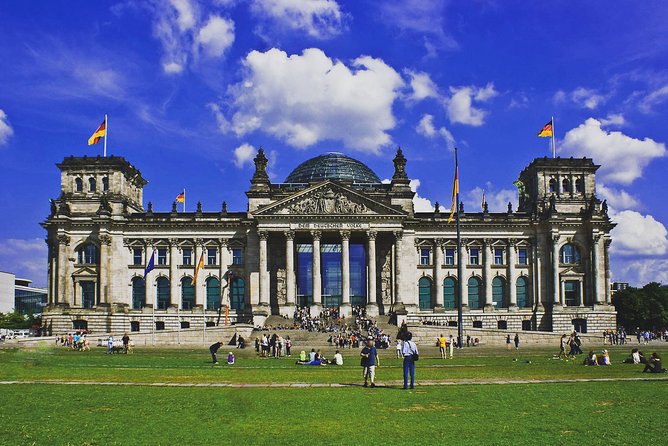
The Reichstag represents Germany’s parliamentary tradition and its turbulent twentieth century. Its setting also helps you understand how the modern government district fits into a city once divided by a fortified border.
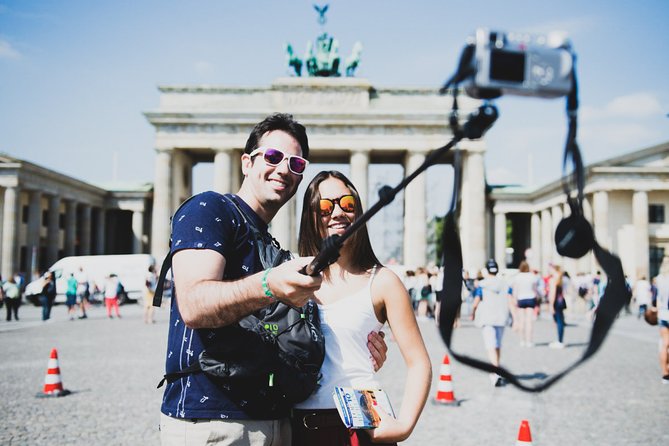
Brandenburg Gate is Berlin’s classic landmark, but its meaning has changed repeatedly. It was once a royal entrance, later a symbol used by the Nazi regime, and during the Cold War it sat beside the Wall in a restricted zone. After reunification, it became one of the clearest public symbols of a reunited Berlin.
You get time for photographs at both locations, though the tour does not include admission to the Reichstag. If you want to visit the building’s dome separately, treat that as a different activity and make sure you allow extra time beyond this walking route.
Same city, a completely different kind of day:
- Berlin: Reichstag, Dome and Government District Guided Tour
★ 4.7 · 18,288 reviews - Berlin: 1-Hour City Tour by Boat with Guaranteed Seating
★ 4.3 · 16,993 reviews - Berlin: Boat Tour Along the River Spree
★ 4.4 · 11,252 reviews - Discover Berlin Half-Day Walking Tour
★ 5.0 · 9,624 reviews
The Holocaust Memorial and the Führerbunker site
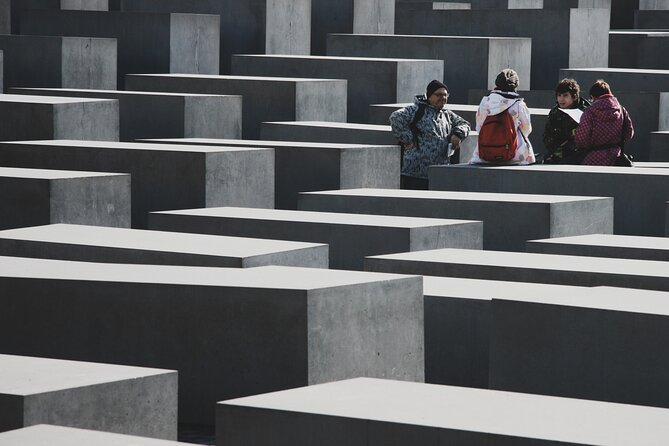
The Memorial to the Murdered Jews of Europe is one of Berlin’s most powerful places. Its field of gray concrete blocks creates a changing sense of enclosure as you walk between them. The design does not offer a simple message or a single viewpoint, which is part of its effect.
Your guide can provide the historical setting, but give yourself a little quiet time here. It is a memorial, not just a photo stop. The nearby information center is not listed as part of the tour, so ask your guide what is included if you want more detailed documentation.
The Führerbunker stop is also easy to misunderstand. The bunker itself is not presented as a restored attraction. The site is marked above ground, and there is no visible grand entrance to photograph. Its importance comes from the historical events that took place below the ground during the final days of Hitler’s life.
This part of Berlin rewards careful explanation. Without context, the ordinary-looking surroundings can seem anticlimactic. With a good guide, the lack of a dramatic structure becomes part of the lesson about how the city chose to mark a grim site without turning it into a shrine.
Currywurst on Wilhelmstrasse
A currywurst break offers a welcome change of tone. This Berlin snack is sausage served with curry sauce, and it is included in the tour. Extra food and drinks are not included, so budget separately if you want coffee, tea, or anything beyond the provided serving.
The stop is practical as well as cultural. Four hours on foot is a lot, and a food break gives you time to reset before the second half. Bring water, especially in warm weather, and do not assume the snack replaces a full meal.
Wilhelmstrasse is a fitting place to pause because it sits in an area once tied to the Nazi government. The contrast between an everyday Berlin street snack and the heavy history around it is very much part of the city’s character.
Checkpoint Charlie and the Cold War story
Checkpoint Charlie was the best-known crossing between East and West Berlin. Today, it is a busy photo stop with a reconstructed guardhouse and large images of American and Soviet soldiers. The setting can feel commercial and crowded, but the historical importance remains.
Your guide can explain the checkpoint’s role, the border system, and the tension that made Berlin one of the most dangerous flashpoints of the Cold War. The value here is not the booth alone. It is understanding how the crossing fit into a much larger system of walls, watchtowers, armed guards, and restricted movement.
This is another place where a private guide helps. You can ask about escape attempts, daily life on either side, and how the border shaped the city. If your interest is mainly Nazi Berlin, the guide may keep this section shorter. If the Cold War is your priority, you can give it more time.
Bebelplatz and the memory of Nazi book burning
Bebelplatz is one of Berlin’s most elegant squares, surrounded by grand buildings connected with the former royal and academic center of the city. It is also tied to the Nazi book burning of 1933.
The memorial is easy to miss if you do not know where to look. A glass panel set into the pavement lets you see empty bookshelves below ground, a stark reminder of the books destroyed by the regime. The square shows how beauty and historical trauma can share the same few steps in Berlin.
I find this stop particularly useful because it moves the Nazi story beyond battlefields and government offices. It shows how censorship and political intimidation entered public life, universities, and culture.
Museum Island and the final walk through Mitte
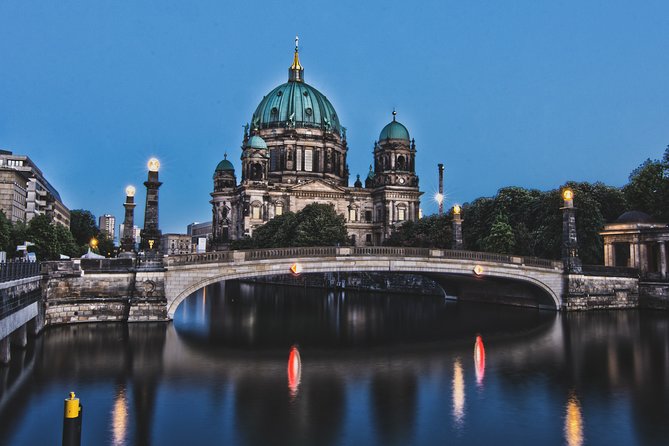
Museum Island is a UNESCO-listed group of five major museums on the Spree. The tour does not include museum admission, so the guide’s role here is to explain the island’s place in Berlin and point out buildings and details you can return to later.
You may also hear about the Nazi book burning again in connection with Museum Island and Bebelplatz. This can help tie together the city’s cultural institutions and the political forces that tried to control them.
The final section moves through Mitte, with lesser-known stops such as the Missing House on Große Hamburger Strasse and the Heckmann Höfe courtyards. The Missing House is a quiet memorial to a building destroyed in the war, with the names of former residents displayed in the space where the house once stood.
Heckmann Höfe provides a more pleasant close to an otherwise serious route. Its connected courtyards offer a glimpse of Berlin away from the major monuments, with a calmer urban feel and details you could easily pass without a guide.
The walk finishes back at the meeting point. That makes planning easier, especially if you have dinner, a train, or another booked activity afterward.
What the $129 price means
At $129 per person, this is not the cheapest way to see Berlin’s central sights. You are paying for a private guide, a four-hour walk, the currywurst, and the ability to adjust the route for your group.
The value depends heavily on your group size. For two people, the price is a significant splurge. For a family or small group, the per-person cost becomes easier to justify, particularly if you would otherwise book several separate activities or spend time piecing the city’s history together yourself.
There are no listed admission fees for the stops, and the museums are viewed from outside unless you arrange separate entry. That means the guide and the custom route are the main product, not ticketed access.
I would consider it good value for a first day in Berlin if you want an organized historical introduction and personal attention. It is less attractive if you prefer to spend hours inside museums or explore at a very slow pace.
Pace, weather, and practical planning
The tour requires a moderate level of fitness. The route covers a lot of ground, and some sessions have lasted about five hours or more when the group took extra time. Even when the planned duration is four hours, you should prepare for steady walking.
Wear comfortable shoes and check the weather. Cold conditions can make this route tough, especially around the open spaces near Brandenburg Gate, the Holocaust Memorial, and Bebelplatz. One session took place on an icy December morning and still kept a comfortable pace, but warm clothing and sensible footwear remain your responsibility.
The private format helps if someone in your group needs more breaks. A guide can slow down and adjust the route, though the tour is not described as wheelchair accessible. If anyone in your group has serious mobility limits, ask the provider before booking.
Multiple start times are available. Since the experience includes many outdoor sites, an earlier start may give you more daylight and a better chance of enjoying photographs. A night tour is possible according to the tour information, but cold weather and dim light can make the walking less comfortable and some sites less visually clear.
Free cancellation is available up to 24 hours before the start time. Changes or cancellations inside that window are not accepted for a refund.
Who should book this Berlin history walk
I would choose this tour for a first visit, especially if you want the main sights explained in one connected story. It suits couples, families, and small groups who value a private pace and want to ask plenty of questions.
It is also a good fit if your interests cover both Nazi Germany and the Cold War. The route does not focus on only one period, so you get a broad introduction rather than a specialist seminar.
The tour may not suit you if long walks are difficult, if you dislike serious memorial sites, or if you want extensive time inside the museums. You should also be comfortable with a fairly full schedule. The flexibility helps, but the route still tries to cover a great deal of central Berlin.
Guide quality matters. Strong guides associated with this experience include Dimitri, Eleni, Lucian, Simon, Despina, Peter, and Demetrios. The most useful qualities to look for are patience, clear explanations, and a willingness to change the pace. If a guide request is possible when you book, you may ask about a preferred guide, but assignment is not guaranteed by the tour details.
Should you book it?
Book this walk if you want Berlin’s major WWII and Cold War sites tied together by a real person, not just a map and a set of plaques. The currywurst, private format, and quieter Mitte stops add useful local texture to a serious historical route.
Skip it if you want a museum-heavy day or cannot manage several hours on foot. For most first-time visitors who can walk comfortably, the $129 price is reasonable when shared by a small group, and the private guide can make Berlin much easier to understand.
FAQ
Where does the tour start?
You meet your private guide at Oranienburger Strasse 28 to 30, 10117 Berlin, Germany.
Where does the tour finish?
The activity ends back at the meeting point on Oranienburger Strasse.
How long does the tour last?
The planned duration is approximately four hours. Some sessions have lasted longer when the group took additional time.
Is this a private tour?
Yes. Only your group participates, and the itinerary can be customized around your interests and preferences.
What language is offered?
The tour is offered in English.
Is currywurst included?
Yes. A traditional Berlin currywurst is included. Extra food and drinks are not included.
Are museum and attraction admission fees included?
All listed tour fees and taxes are included, but the route does not list admission to the museums or separate interior attractions. Museum Island is visited as part of the walking route.
How far in advance can I cancel?
You can cancel up to 24 hours before the experience start time for a full refund. Cancellations or changes made less than 24 hours before the start time are not accepted for a refund.
More Historical Tours in Berlin
- Berlin: Natural History Museum Entrance Ticket
★ 4.6 · 3,382 reviews - Berlin: World Heritage Cruise to Potsdam
★ 4.5 · 1,435 reviews - Berlin Historical Highlights Walking Tour
★ 4.9 · 657 reviews - Berlin Private Complete History All Day Walking Tour
★ 5.0 · 474 reviews
Just added around Berlin
- Love and War in Berlin: Self-Guided Story Puzzle Walk★ 5.0 · 7 reviews
- Rickshaw Tours Berlin – Groups of up to 16 people with several rickshaws★ 4.0 · 97 reviews
- eSIM for Germany and 34 European Countries★ 4.5 · 16 reviews
- Walking on the Wall: 3-Hour Tour in Berlin★ 4.5 · 34 reviews
- Warnemuende Shore Excursion: Berlin Private Sightseeing Tour from Rostock★ 5.0 · 4 reviews
- Your ticket to The Wall Museum Berlin★ 3.0 · 60 reviews
- Warnemuende Shore Excursion: Private Berlin Tour★ 4.5 · 27 reviews
- Berlin’s Gay, Lesbian, and Queer Scene Small-Group Walking Tour★ 4.5 · 66 reviews
Third Reich & Cold War Tours, compared.



Berlin’s Best: 2 Hour Walking Tour Third Reich and the Cold War
Read our review →

Third Reich Berlin: Hitler and WWII Walking Tour
Read our review →
Skip-the-Line: Berlin Wall Museum at Checkpoint Charlie
Read our review →

Cold War, Berlin Wall, Spies and the East Side Gallery
Read our review →Browse the lists this tour appears in