
Reviewed · THIRD REICH & COLD WAR TOURS
Berlin: World War Two Third Reich and Cold War Walking Tour
Berlin’s past is unusually close to the surface, and this five-hour walking tour takes you from the crimes of the Third Reich into the divided city of the Cold War. I like the way it connects Hitler’s Berlin, East German communism, the Wall, escape routes, and modern Berlin instead of treating each era as a separate lesson.
I also like the $21 price and the English-speaking local historian. You get a long, serious look at central Berlin for less than many museum admissions. The main caution is organization: arrive early at the white umbrella, since the meeting process has been reported as chaotic and the advertised tour may not always run exactly as expected.
In This Review
- Key things to know before you go
- Why this Berlin history walk is worth your time
- Starting at Alexanderplatz and finding the group
- The Third Reich route, from the Reichstag to Hitler’s bunker
- Moving from wartime defeat to East German control
- Eastside Gallery and the Berlin Wall Memorial
- Architecture that survived Berlin’s upheavals
- What the $21 price really buys you
- Preparing for five hours outside
- Who will get the most from this tour
- Should you book this Berlin walking tour?
- FAQ
- How long does the Berlin World War Two and Cold War walking tour last?
- What language is the tour conducted in?
- Where does the tour begin?
- Where does the tour finish?
- What landmarks are included?
- Are meals and drinks included?
- Is hotel pickup available?
- Is the tour wheelchair accessible?
- Can I cancel for a refund?
Key things to know before you go
- Five hours on foot: This is a substantial walking experience, not a quick orientation tour. Wear shoes you can trust.
- A direct link between two dark eras: The route ties World War II to the Cold War and shows how one period helped shape the next.
- Major Berlin sites: Expect discussion of the Reichstag, Hitler’s bunker, Flak Tower, the Russian-German war museum, Eastside Gallery, and the Berlin Wall Memorial.
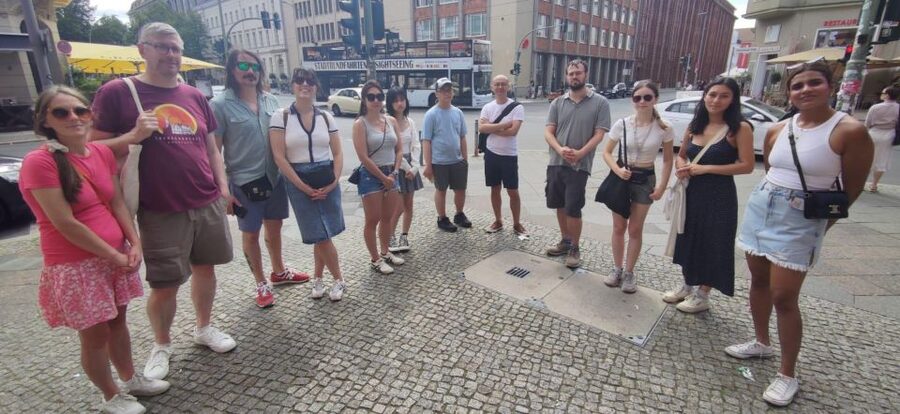
- A useful starting point: Meet at the white umbrella on the corner in front of Generator Berlin Alexanderplatz.
- Bring your own fuel: Meals and drinks are not included, so carry snacks, water, and some cash.
- Check the operation carefully: The overall rating is 4.3 from 17 reviews, but one serious complaint describes confusion at the meeting point and an incomplete match with the advertised route.
Why this Berlin history walk is worth your time
Berlin can feel like several cities laid on top of one another. Imperial buildings, Nazi ruins, Soviet monuments, Cold War border points, and modern galleries often sit within the same broad city center. That makes a guided walk useful. Without context, you may see a concrete wall fragment or an empty lot and have no idea why it matters.
This tour’s strongest idea is its timeline. You begin with the Third Reich and World War II, then move into East Germany, the Cold War, and the Berlin Wall. That order helps you understand the city as a chain of cause and effect. The Nazi period is not treated as an isolated chapter, and the Wall is not presented as a random relic. You are shown how Berlin’s political divisions grew from the catastrophe of the war.
I especially like this approach for a first visit. You can return to museums and memorials later with a clearer sense of place. A guide can explain why a site matters before you move on, which gives even plain-looking streets more weight.
The tone should be serious. This is not a light city stroll with occasional historical trivia. You will be dealing with dictatorship, war, repression, separation, attempted escapes, and the personal cost of political decisions. That is exactly why the walk can be valuable, but it may not suit you if you want a relaxed introduction to Berlin.
More Third Reich & Cold War Tours in Berlin
- Berlin: Third Reich and Cold War 2 Hour Walking Tour
★ 4.9 · 6,830 reviews - Berlin’s Best: 2 Hour Walking Tour Third Reich and the Cold War
★ 5.0 · 5,486 reviews - Third Reich Berlin: Hitler and WWII Walking Tour
★ 5.0 · 3,301 reviews
Starting at Alexanderplatz and finding the group
The meeting point is the corner in front of Generator Berlin Alexanderplatz. Look for the white umbrella. That detail matters because this area can be busy, and several walking tours may gather nearby.
I would arrive with time to spare. One account describes a confusing process in which people arrived at the same spot and were expected to be divided into different groups. The complaint says the advertised tour was not clearly offered, although parts of it appeared to be available. That is a serious practical concern, especially if you have planned your day around five hours of history.
The provider is Original Tours Holding Limited. No individual guide name is supplied, so you cannot request a particular historian in advance based on the available information. The tour is offered in English and includes a live guide described as a local historian.
Once the group is underway, the Alexanderplatz area gives you a central place to begin thinking about Berlin’s modern identity. The meeting point itself is not presented as the main historical highlight. Its value is practical: it is easy to locate, and the tour finishes back there.
The Third Reich route, from the Reichstag to Hitler’s bunker
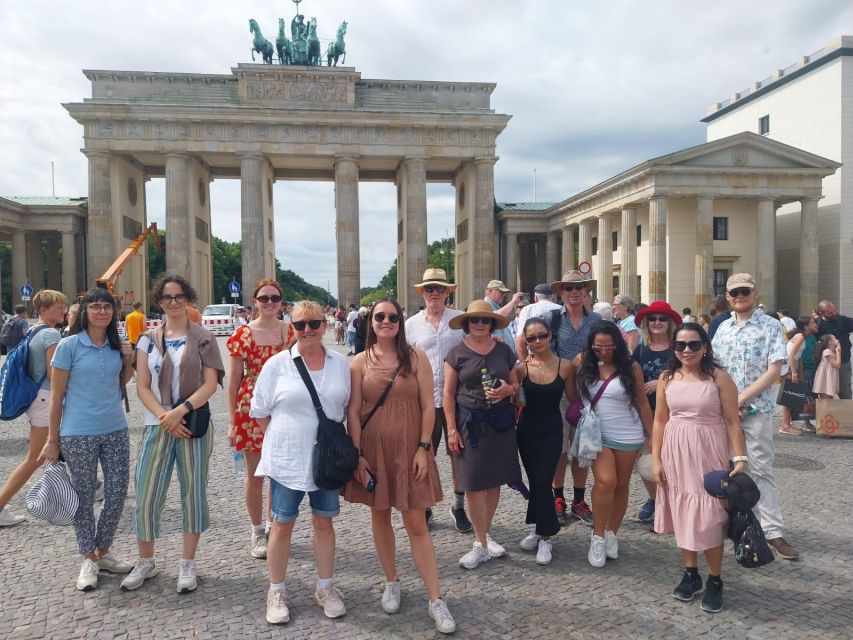
The World War II section is built around places linked to the Nazi government and the final days of the regime. The Reichstag is one of the key landmarks named for the journey. Its presence helps frame Berlin as the political center of a dictatorship and later as the seat of a reunified Germany.
The tour also includes Hitler’s bunker as part of the route. This is a site where expectations matter. The bunker is not presented as a grand underground attraction, and the information provided does not promise an interior visit. You should expect historical explanation connected with the location rather than a theatrical reconstruction.
That restraint is appropriate. The value of the stop lies in understanding what happened there and why the place carries such heavy meaning. A guide can help separate documented events from the myths that have grown around the bunker.
The route also refers to a Flak Tower. These massive wartime structures were built for air defense and were difficult to remove after the war. Their sheer construction tells you something about the scale and permanence of Nazi military planning. Even when a building is damaged, altered, or viewed from outside, its form can reveal how war changed Berlin’s architecture.
A Russian-German war museum is also included among the important sites. This adds a different angle to the war story, moving beyond Hitler and the German government to the conflict between Germany and the Soviet Union. The name suggests a focus on the military relationship and the eventual Soviet role in Berlin, though the supplied details do not specify the exact exhibits or length of the stop.
Because several locations are named but no minute-by-minute schedule is provided, you should not assume equal time at each one. The guide will need to balance walking, explanation, and access to the sites. That is normal for a five-hour city walk, but it means the experience is more about the connected story than a series of long museum visits.
Moving from wartime defeat to East German control
The most useful part of the tour is the shift from World War II into the Cold War. Berlin’s postwar division did not simply create two neighborhoods with different flags. It divided families, jobs, streets, transport routes, and daily choices.
The tour introduces East German communism and the lives of people who lived behind the Berlin Wall. That human focus matters. Political terms can become dry very quickly, but the Wall becomes easier to understand when you consider it as a barrier that shaped where people could work, whom they could visit, and how freely they could move.
You will also hear about escape routes and the people who attempted to cross the border. The information provided refers to hidden sections, guard towers, and escape paths. These details make the Wall more than a strip of concrete. They show the constant contest between a government trying to stop movement and residents trying to regain it.
A good guide should help you hold two ideas at once. The Wall was a physical structure, but it was also a system of watchpoints, rules, patrols, and fear. Looking at surviving sections without that explanation can reduce the site to a photograph. The walking format gives the guide room to connect one remnant with the wider border system.
Same city, a completely different kind of day:
- Berlin: Reichstag, Dome and Government District Guided Tour
★ 4.7 · 18,288 reviews - Berlin: 1-Hour City Tour by Boat with Guaranteed Seating
★ 4.3 · 16,993 reviews - Berlin: Boat Tour Along the River Spree
★ 4.4 · 11,252 reviews - Discover Berlin Half-Day Walking Tour
★ 5.0 · 9,624 reviews
Eastside Gallery and the Berlin Wall Memorial
The Eastside Gallery and Berlin Wall Memorial offer different ways to read the Wall’s legacy. The Eastside Gallery is associated with art painted on a surviving stretch of the Wall. Here, politics, memory, music, and revolutionary art meet in a public setting.
The tour’s reference to Berlin’s cultural impact is important. Berlin’s story is not only about governments and armies. The city has also shaped music, art, protest culture, and political expression. The paintings at the Eastside Gallery help show how a former instrument of separation became a surface for public ideas.
The Berlin Wall Memorial provides a more solemn counterpoint. It helps you understand the border as a complete installation rather than a single slab. Guard towers, restricted areas, and escape attempts become easier to picture when you see how the system worked.
I would pay close attention to the contrast between these two stops. The Eastside Gallery is expressive and public. The memorial is more focused on loss, division, and the lives affected by the border. Together, they prevent an overly simple story in which the Wall is remembered only as a colorful art backdrop.
The supplied details also mention hidden sections and guard towers. Exactly what you see can depend on the day’s route and the guide’s handling of the itinerary, so treat these as planned themes rather than a guarantee that every named fragment receives a long stop.
Architecture that survived Berlin’s upheavals
One reason this walking tour works better than a bus-only overview is the close look at buildings and physical remains. Berlin’s architecture often carries several layers of use. A government building may recall Nazi rule, wartime damage, Soviet occupation, division, and reunification all at once.
The Reichstag represents one of the clearest examples of political change. The Flak Tower reflects wartime construction and the difficulty of erasing it. Wall sections and guard towers point to the Cold War. These places do not all tell the same story, but together they show how Berlin’s built environment was shaped by power.
I like tours that allow you to ask why a structure survived, why another disappeared, and how the city chose to remember it. The information available here promises expert guidance and access to important landmarks, but it does not give a fixed list of interiors or exact entry arrangements. Keep your expectations flexible. Some stops may be viewed from outside, while others may offer a closer visit.
That uncertainty is not automatically a fault. Berlin’s historic sites operate as working public spaces, museums, memorials, and city streets. A five-hour walking tour cannot guarantee an identical experience in every condition. Still, if a specific museum interior is essential to your plans, confirm the day’s details before booking.
What the $21 price really buys you
At $21 per person, this is inexpensive for a five-hour guided experience in central Berlin. The value comes mainly from the time and the guide’s narrative. You are paying for a connected explanation of places that you could otherwise walk past without understanding.
The tour includes a local historian, guided access to important sites, and discussion of Berlin’s major political eras. Meals, refreshments, souvenirs, and hotel transfers are not included. Carrying your own water and snacks keeps the low price from becoming less attractive during a long walk.
The price is particularly appealing if you are visiting Berlin for the first time and want a broad orientation before choosing museums. It is also useful if you prefer learning outdoors instead of spending the entire day inside galleries.
The tradeoff is that budget tours can have complex group arrangements. The overall rating is 4.3 from 17 reviews, which is encouraging but not a large sample. The one detailed complaint is not about the historical subject itself. It focuses on the tour not being clearly available as advertised and the division of people at the meeting point. Since that affects the basic promise of the booking, I would take it seriously.
The free cancellation option up to 24 hours before the activity and the reserve-now, pay-later option reduce some financial risk. They do not remove the need to arrive early and confirm that you are with the correct English-language group.
Preparing for five hours outside
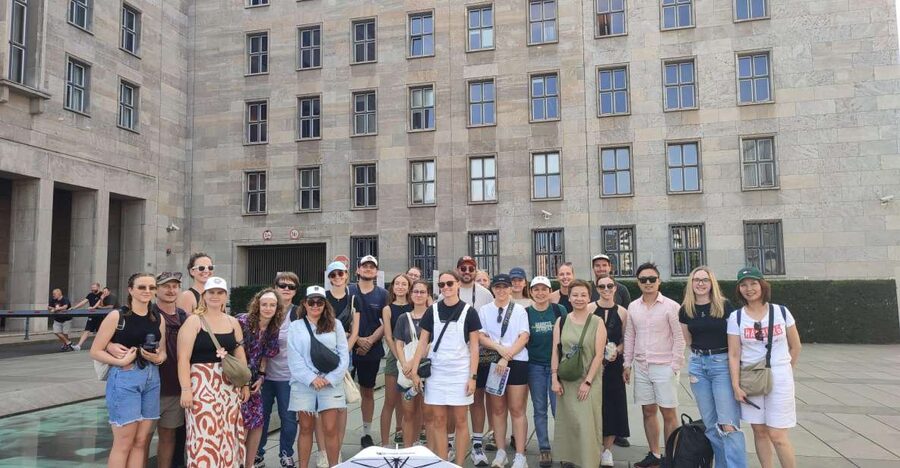
This is a walking tour, so comfortable shoes are essential. Weather-appropriate clothing matters just as much. Berlin can feel very different when you are exposed to wind, rain, or strong sun for several hours.
Bring:
- Water and snacks
- Cash for personal purchases or practical needs
- Comfortable shoes
- Clothing suited to the forecast
There is no meal or refreshment service included. The route ends back at the Alexanderplatz meeting point, so you can plan lunch or dinner afterward rather than trying to fit a separate restaurant stop into the walk.
The tour is listed as wheelchair accessible. If you use a wheelchair, it is sensible to confirm the current route and any site access details before setting out, since the available information does not describe the exact surface conditions or interior arrangements at each stop.
Who will get the most from this tour
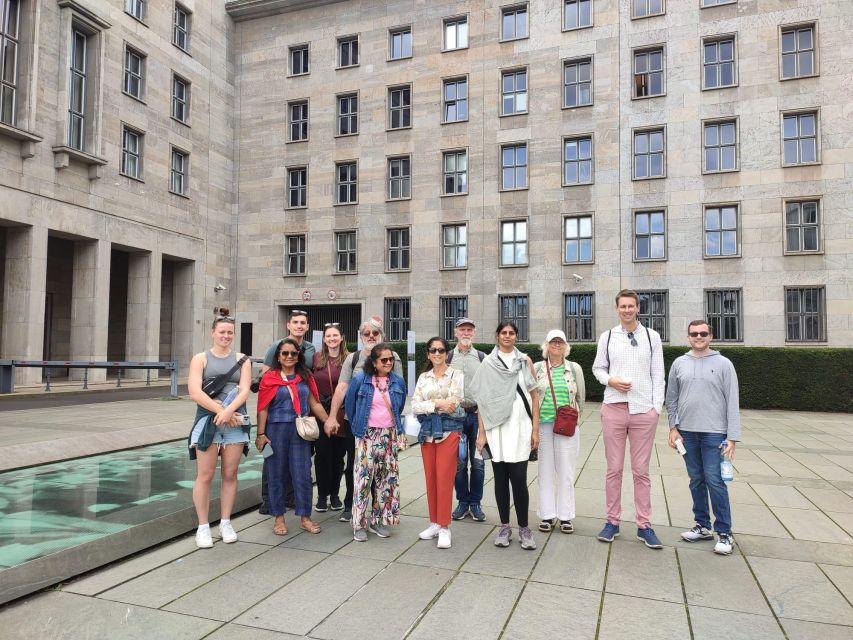
I would choose this tour if you want a serious first look at Berlin’s twentieth-century history and prefer a guide to connect the sites. It suits you especially well if terms such as Third Reich, East German communism, the Berlin Wall, and postwar division feel familiar but not yet connected.
It is also a good match for anyone interested in public art and political culture. The Eastside Gallery adds a cultural thread, while the Wall Memorial and escape stories provide a more personal sense of the divided city.
You may want another option if you need a tightly managed itinerary, a named guide, or guaranteed long visits inside particular museums. The available details do not provide a guide name, group size, exact schedule, or a precise promise of interior access at every location.
Families with older children and teenagers may find the subject meaningful, but the five-hour length and serious material require patience. The tour is not presented as a child-focused activity.
Should you book this Berlin walking tour?
Book it if the price, long format, and broad historical sweep appeal to you. At $21, the tour offers a useful amount of guided time, and the link between Nazi Berlin and the Cold War is its strongest feature.
I would book with two practical safeguards. First, arrive early and look specifically for the white umbrella in front of Generator Berlin Alexanderplatz. Second, keep your schedule flexible in case the group assignment or route is less orderly than expected.
The history deserves careful attention, and this tour promises many of the right places: the Reichstag, Hitler’s bunker, Flak Tower, the Russian-German war museum, Eastside Gallery, and the Berlin Wall Memorial. Its main weakness is not the subject but the reported meeting-point confusion. If you can accept that small risk and want a broad, affordable introduction, it is worth considering.
FAQ
How long does the Berlin World War Two and Cold War walking tour last?
The tour lasts five hours.
What language is the tour conducted in?
The live tour is conducted in English.
Where does the tour begin?
Meet at the white umbrella on the corner in front of Generator Berlin Alexanderplatz.
Where does the tour finish?
The activity ends back at the meeting point.
What landmarks are included?
The route includes or discusses the Reichstag, the Russian-German war museum, Flak Tower, Hitler’s bunker, Eastside Gallery, the Berlin Wall Memorial, guard towers, and parts of the Berlin Wall.
Are meals and drinks included?
No. Meals and refreshments are not included. You should bring snacks and drinks.
Is hotel pickup available?
No. Hotel pickup and drop-off are not included.
Is the tour wheelchair accessible?
Yes, the activity is listed as wheelchair accessible.
Can I cancel for a refund?
Yes. You can cancel up to 24 hours in advance for a full refund. You can also reserve now and pay later.
More Walking Tours in Berlin
- Berlin: Discover Berlin Walking Tour
★ 4.9 · 5,998 reviews - Berlin: Hidden Backyards Guided Walking Tour
★ 4.8 · 5,360 reviews - Berlin: Alternative Berlin Walking Tour
★ 4.6 · 1,204 reviews - Berlin: Third Reich, Hitler, and WWII Walking Tour
★ 4.9 · 1,133 reviews
Just added around Berlin
- Rickshaw Tours Berlin – Groups of up to 16 people with several rickshaws★ 4.0 · 97 reviews
- Love and War in Berlin: Self-Guided Story Puzzle Walk★ 5.0 · 7 reviews
- Walking on the Wall: 3-Hour Tour in Berlin★ 4.5 · 34 reviews
- eSIM for Germany and 34 European Countries★ 4.5 · 16 reviews
- Warnemuende Shore Excursion: Berlin Private Sightseeing Tour from Rostock★ 5.0 · 4 reviews
- Your ticket to The Wall Museum Berlin★ 3.0 · 60 reviews
- Warnemuende Shore Excursion: Private Berlin Tour★ 4.5 · 27 reviews
- Berlin’s Gay, Lesbian, and Queer Scene Small-Group Walking Tour★ 4.5 · 66 reviews
Third Reich & Cold War Tours, compared.



Berlin’s Best: 2 Hour Walking Tour Third Reich and the Cold War
Read our review →

Third Reich Berlin: Hitler and WWII Walking Tour
Read our review →
Skip-the-Line: Berlin Wall Museum at Checkpoint Charlie
Read our review →

Cold War, Berlin Wall, Spies and the East Side Gallery
Read our review →Browse the lists this tour appears in