
Reviewed · THIRD REICH & COLD WAR TOURS
Berlin: Hitler and the Third Reich – a private walking tour
Hitler’s bunker is gone, but the patch of ground where he spent his final days remains one of Berlin’s most unsettling sights. This private walk connects that unmarked site with the Holocaust Memorial, the former Nazi government quarter, and the Topography of Terror, giving you a clear route through the rise and collapse of the Third Reich.
I like the small private format, since you can ask questions without fighting for the guide’s attention. I also like the use of old photographs, which guide Stefan reportedly brings along to show how these places looked under Nazi rule. The main drawback is the short two-hour running time: you will see many important sites, but you will not have time to study every exhibition in detail.
In This Review
- Key points to know before booking
- From the Brandenburg Gate into Nazi Berlin
- The Soviet War Memorial in leafy Tiergarten
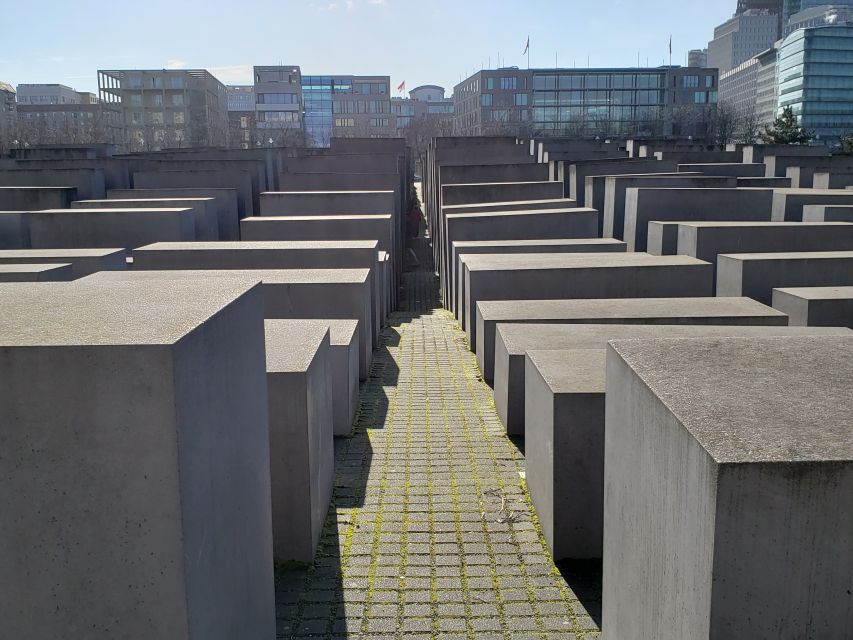
- Walking among 2,710 concrete steles
- Standing above Hitler’s bunker site
- The former Nazi government quarter
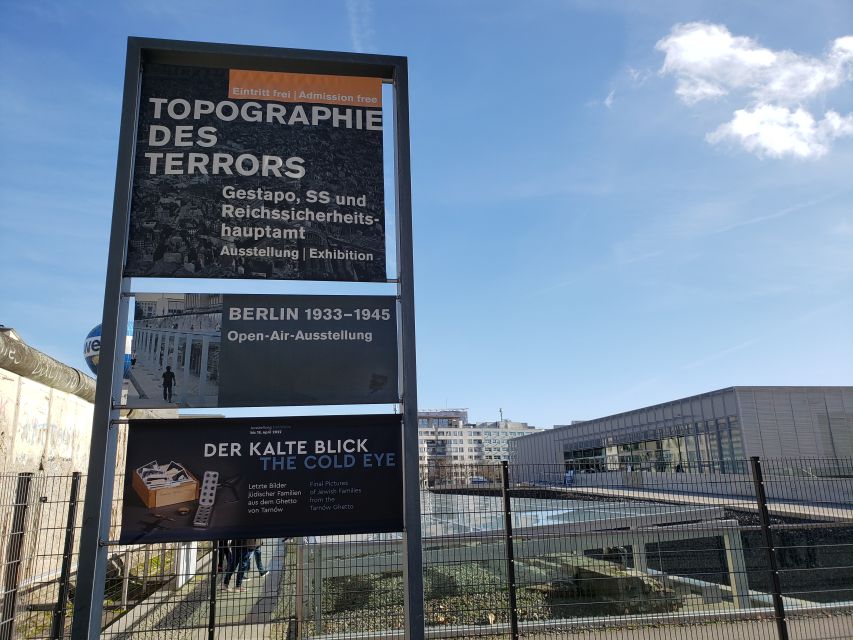
- The SS, Gestapo, and Topography of Terror
- How Stefan’s guiding style affects the experience
- Is two hours enough for this route?
- The $22 price and private group value
- Who should book this Berlin walk?
- Should you book it?
- FAQ
- Where does the tour begin?
- Where does the tour finish?
- How long does the walking tour last?
- Is the tour private?
- Which languages are available?
- Is the tour wheelchair accessible?
- Are entrance tickets included?
- What should I bring?
Key points to know before booking
- Hitler’s bunker site is an unmarked outdoor stop: You stand above the former location, but there is no intact bunker interior to visit.
- The 2,710 concrete steles create a moving memorial walk: The Holocaust Memorial is open to walk through, though it is not a guided museum visit.
- Stefan leads the walk in clear English or German: His explanations and historic photographs are central to the experience.
- You see the former Nazi power center: The route passes the New Reich Chancellery site, the Reich Aviation Ministry, and former SS and Gestapo locations.
- The tour finishes at the Topography of Terror: Plan extra time afterward if you want to explore its open-air exhibition at your own pace.
- At $22 per person, the value depends on group size: For a private group, that is a low price for a focused introduction to central Berlin’s Nazi history.
From the Brandenburg Gate into Nazi Berlin
The walk begins in front of the tourist information center at the Brandenburg Gate. Your guide will hold a sign with your name, a useful arrangement in a busy square where several tour groups may be gathering.
The gate provides a natural starting point because it links Berlin’s older royal past, Nazi rule, the Cold War, and the reunified city. Your guide places the Third Reich within that longer story, beginning with earlier Berlin history and continuing through the postwar division of Germany.
This opening matters. Nazi history did not appear in isolation, and the tour aims to show how Berlin changed from the era of the Teutonic Knights through the rise of the National Socialist Party, the Cold War, and modern unified Germany. In two hours, that broad sweep will be brisk, but it helps you understand why the central government district became so important.
Since this is a private walk, you can ask for more detail on subjects that interest you. If your group wants more political background, military history, or information about Berlin after 1945, speak up early. The guide can shape the conversation more easily than on a large scheduled walk.
More Third Reich & Cold War Tours in Berlin
- Berlin: Third Reich and Cold War 2 Hour Walking Tour
★ 4.9 · 6,830 reviews - Berlin’s Best: 2 Hour Walking Tour Third Reich and the Cold War
★ 5.0 · 5,486 reviews - Third Reich Berlin: Hitler and WWII Walking Tour
★ 5.0 · 3,301 reviews
The Soviet War Memorial in leafy Tiergarten
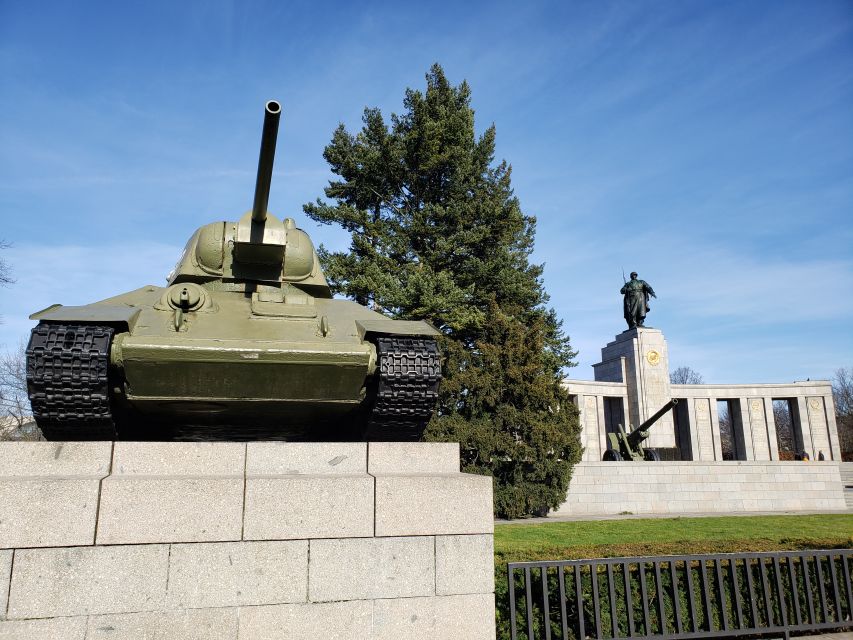
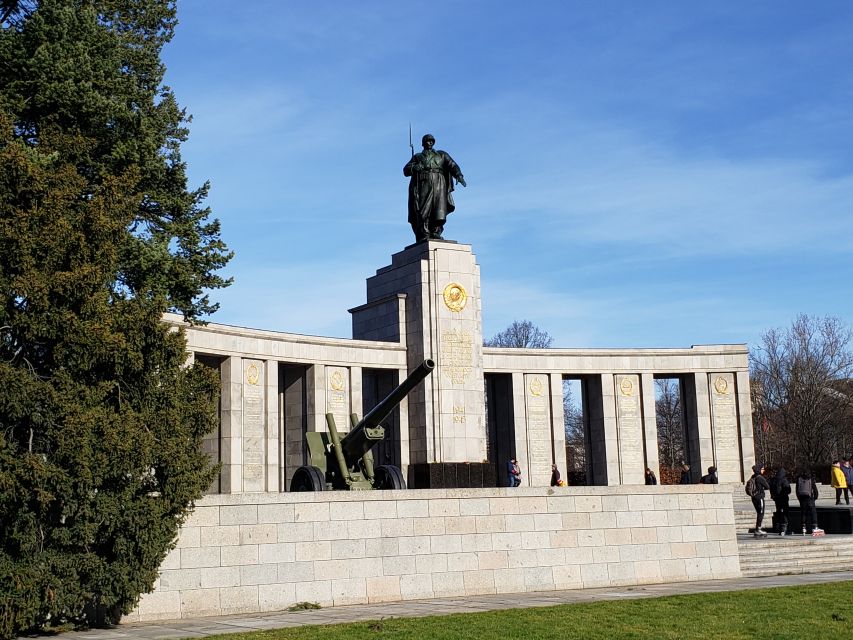
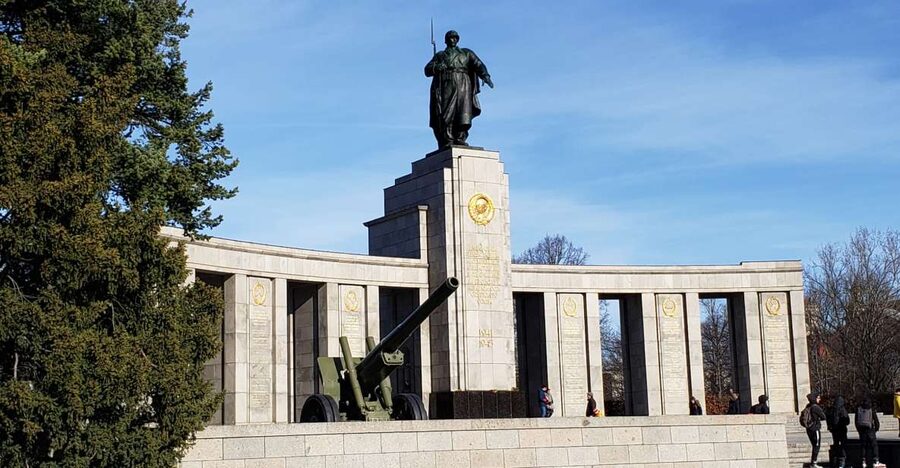
From the Brandenburg Gate, the route includes the Soviet War Memorial in Tiergarten. Its large scale and formal design contrast sharply with the trees around it, making the site easy to remember.
The memorial helps explain what happened when the Nazi state collapsed. It is not simply another monument in central Berlin. It represents the Soviet role in defeating Nazi Germany and places the end of the war within the same city that had served as the center of Hitler’s government.
The Tiergarten setting also gives you a short change of pace from the hard political sites and broad city streets. Still, this is a walking tour, not a garden visit, so you should expect a guided stop rather than a long pause among the trees.
Your guide’s historic photographs are especially useful here. A present-day monument can seem detached from the destruction of 1945. Seeing an older image beside the current view helps connect the memorial to the ruined city and the Soviet victory it commemorates.
Walking among 2,710 concrete steles
The Memorial to the Murdered Jews of Europe is one of the tour’s most memorable stops. Its 2,710 concrete steles cover a large open area near the Brandenburg Gate and the former Nazi government district.
You can walk between the blocks as the ground changes beneath your feet. The memorial has no single viewing point and no simple message delivered by a statue. Instead, the changing height and spacing of the steles create a place for quiet thought.
A guided explanation is valuable here, but this is also a site where your guide should allow some silence. The memorial honors Jewish victims of the Holocaust, and the physical experience is different from reading a plaque or looking at a photograph.
The tour also points out memorials to murdered Roma and Sinti. That broader context is important. Nazi persecution targeted several groups, and a short walk through central Berlin can easily become too focused on government buildings and military power unless the victims remain at the center of the story.
You will not enter a separate museum as part of the tour price. The walk focuses on the outdoor memorial itself. If you want a more detailed visit, allow extra time afterward for nearby exhibitions and reading.
Standing above Hitler’s bunker site
The former bunker site is one of Berlin’s strangest historical locations. Hitler spent the last days of his life there, and the Third Reich ended in that underground complex. Today, you see the area above it rather than a preserved interior.
That absence is part of the story. There is no dramatic bunker entrance to photograph and no underground room to tour. The site was covered, altered, and left without a grand memorial. Your guide explains where the bunker was and what took place during the final days of the regime.
This is where Stefan’s photographs can make a real difference. A current patch of ordinary urban space tells you very little on its own. Historic images help you picture the destroyed Chancellery area and understand the physical setting of the final Nazi headquarters.
You should approach this stop as a place of historical evidence, not a shrine. The tour does not present Hitler as a fascinating celebrity. Instead, it connects the site to dictatorship, war, mass murder, and the collapse caused by the regime itself.
The location is also a reminder that Berlin often hides major history in plain sight. You may walk across central streets and see little that marks what happened beneath them. A guide gives those ordinary spaces their proper context without turning them into theatrical attractions.
Same city, a completely different kind of day:
- Berlin: Reichstag, Dome and Government District Guided Tour
★ 4.7 · 18,288 reviews - Berlin: 1-Hour City Tour by Boat with Guaranteed Seating
★ 4.3 · 16,993 reviews - Berlin: Boat Tour Along the River Spree
★ 4.4 · 11,252 reviews - Discover Berlin Half-Day Walking Tour
★ 5.0 · 9,624 reviews
The former Nazi government quarter
The route takes you through the former government district of the National Socialists. Along the way, you see the site of the New Reich Chancellery and the former Reich Aviation Ministry, built for Hermann Göring.
These stops show how Nazi power used architecture and government offices to project authority. The buildings were not just workplaces. They formed part of a political center designed to control the state and direct war.
Much of the original Nazi architecture is gone, damaged during the war or removed afterward. That means this part of the walk relies heavily on explanation and photographs. If you expect a preserved Nazi-era quarter, adjust your expectations. You will see original locations, but often not intact buildings from the regime.
The former Reich Aviation Ministry is especially useful for understanding how the Nazi state separated power among major institutions. The building connected to Göring and the air force helps move the story beyond Hitler alone and toward the wider network of officials and organizations that carried out Nazi policy.
The walk may also include views of the Reichstag and the former Berlin Wall line, as reflected in the route through central Berlin. These sights connect Nazi history with the divided city that followed the war. The result is a compact lesson in how one political disaster shaped Berlin for decades afterward.
The SS, Gestapo, and Topography of Terror
The final major section centers on the former SS and Secret State Police buildings. The Topography of Terror documentation center now marks this area, using an open-air exhibition on the former Gestapo site.
This is one of the strongest parts of the route for understanding how persecution worked. Hitler’s bunker and the grand government buildings show the regime at the top. The SS and Gestapo site brings you closer to the machinery used to investigate, arrest, imprison, and terrorize people.
The open-air exhibition gives the location a direct connection to the crimes that were planned or carried out through these offices. You should not expect a light final stop. The subject is difficult, but the site helps explain that Nazi terror depended on institutions, paperwork, police power, and many people doing assigned jobs.
The tour finishes at the Topography of Terror. That ending works well because you can continue with the documentation center after the guide departs. The guided walk gives you a framework, then the exhibition allows you to read at your own pace.
Entrance to attractions is not included, so check current arrangements before setting aside extra time inside. The private walking tour itself includes the guide and outdoor route, not admission to indoor displays.
How Stefan’s guiding style affects the experience
The guide is listed as Stefan, and one supplied account identifies him as Herr Knoll. His strongest qualities are clear speech, lively explanations, and the ability to make locations easier to picture.
That matters in Berlin because many Nazi sites are no longer visually obvious. A guide can point to an ordinary street corner and explain what once occupied the space. Historic photographs add another layer, showing the same locations during the Third Reich or immediately after the war.
The comments about Stefan also suggest that he works well with different language groups. The tour is offered in English or German, and clear speaking is important when the subject includes political terms, military events, and unfamiliar institutions.
I would still ask questions and set the pace you need. A private tour is not automatically a slow tour. The route covers several major stops in two hours, so the guide will need to keep moving. If you want longer pauses at the Holocaust Memorial or Topography of Terror, say so at the start.
Is two hours enough for this route?
Two hours is enough for a strong orientation, not a full study of Nazi Berlin. You can cover the main outdoor locations, hear the basic story of the rise and fall of the Nazi Party, and understand how the central district changed after 1945.
The walking distance is manageable for most people, but you should wear comfortable shoes. Bring water and dress for the weather, since the tour is outdoors and there is no promise of shelter during explanations.
The tight schedule has one clear benefit: you get a focused route without losing half a day. That suits a first visit, a family trying to introduce teenagers to Berlin’s past, or anyone with limited time.
The tradeoff is depth. You will not have unlimited time for every memorial, photograph, or question. If you already know Berlin’s Nazi history well, you may prefer a longer specialist tour or an extended museum visit. If the subject is new to you, two hours gives you a useful map of what to explore next.
The $22 price and private group value
At $22 per person, the price is modest for a private walking tour. The value improves when several people share the booking, since you receive a private guide rather than joining a large group.
You are paying for interpretation and structure, not admission tickets or transport. The route stays outdoors and finishes at the Topography of Terror, so there is no hotel pickup or drop-off and no attraction entrance included.
For a couple, family, or small group that wants to ask personal questions, the format can be a good buy. You avoid the waiting and fixed pace that often come with a larger group. For a solo participant, the per-person price may feel less exceptional, though the private attention still has practical value.
The tour allows cancellation up to 24 hours before the start for a full refund, and you can reserve while paying later. Those terms help if your Berlin schedule is still changing.
Who should book this Berlin walk?
I would recommend it to first-time visitors who want a clear introduction to Nazi Berlin without spending a full day in museums. It also suits people who learn best from a person, a map, and old photographs rather than from labels alone.
Families and private groups will benefit from the ability to ask questions. Students and history-minded visitors may also appreciate seeing the actual locations behind familiar names such as the SS, Gestapo, Göring, and Hitler’s bunker.
This may not suit you if you want to enter the bunker, tour preserved Nazi interiors, or spend long periods at each memorial. The bunker is only a site, the outdoor route is brisk, and attraction admission is separate.
Should you book it?
Book this tour if you want a low-cost, private introduction to the places where Nazi power was organized and where the regime finally collapsed. Stefan’s clear delivery and historic photographs add real value, especially at sites that now look ordinary.
Skip it only if you already know central Berlin well and prefer independent museum visits. For most visitors, the combination of the Brandenburg Gate, Soviet War Memorial, Holocaust Memorial, bunker site, former government buildings, and Topography of Terror gives you a serious and well-paced starting point.
FAQ
Where does the tour begin?
The tour begins at the Brandenburg Gate, in front of the tourist information center. Your guide will hold a sign with your name.
Where does the tour finish?
The tour finishes at the Topography of Terror documentation center.
How long does the walking tour last?
The tour lasts two hours.
Is the tour private?
Yes. It is a private walking tour for a private group.
Which languages are available?
The live guide is available in English or German.
Is the tour wheelchair accessible?
Yes, the activity is listed as wheelchair accessible.
Are entrance tickets included?
No. Entrance to attractions is not included. The tour price covers the guide and private walking tour.
What should I bring?
Bring comfortable shoes, water, and clothing suited to the weather. The tour takes place outdoors.
More Walking Tours in Berlin
- Berlin: Discover Berlin Walking Tour
★ 4.9 · 5,998 reviews - Berlin: Hidden Backyards Guided Walking Tour
★ 4.8 · 5,360 reviews - Berlin: Alternative Berlin Walking Tour
★ 4.6 · 1,204 reviews - Berlin: Third Reich, Hitler, and WWII Walking Tour
★ 4.9 · 1,133 reviews
Just added around Berlin
- Love and War in Berlin: Self-Guided Story Puzzle Walk★ 5.0 · 7 reviews
- Rickshaw Tours Berlin – Groups of up to 16 people with several rickshaws★ 4.0 · 97 reviews
- eSIM for Germany and 34 European Countries★ 4.5 · 16 reviews
- Walking on the Wall: 3-Hour Tour in Berlin★ 4.5 · 34 reviews
- Warnemuende Shore Excursion: Berlin Private Sightseeing Tour from Rostock★ 5.0 · 4 reviews
- Your ticket to The Wall Museum Berlin★ 3.0 · 60 reviews
- Warnemuende Shore Excursion: Private Berlin Tour★ 4.5 · 27 reviews
- Berlin’s Gay, Lesbian, and Queer Scene Small-Group Walking Tour★ 4.5 · 66 reviews
Third Reich & Cold War Tours, compared.



Berlin’s Best: 2 Hour Walking Tour Third Reich and the Cold War
Read our review →

Third Reich Berlin: Hitler and WWII Walking Tour
Read our review →
Skip-the-Line: Berlin Wall Museum at Checkpoint Charlie
Read our review →

Cold War, Berlin Wall, Spies and the East Side Gallery
Read our review →Browse the lists this tour appears in