
Reviewed · THIRD REICH & COLD WAR TOURS
Berlin Cold War & World War II Third Reich Walking Tour
Berlin’s past is not locked away in one museum. It is scattered across streets, empty spaces, surviving towers, memorials, and fragments of the Wall. This tour connects those pieces, moving from the Reichstag and Nazi-era Berlin to the Cold War border and the remains of divided Germany.
I like the wide historical sweep, which helps you see how World War II and the Cold War fit together. I also like the guides’ personal style: Miguel is praised for his warmth and practical tips, while Arthur is noted for his humor and clear explanations. The main caution is the timing. The advertised duration is about six hours, but some reported outings lasted closer to two and a half or three and a half hours, so ask for the current schedule before booking.
In This Review
- Key points
- Why Berlin’s history works best as a walk
- Starting at the Reichstag and the heart of power
- Karlshorst and the final days of World War II
- The Humboldthain Flak Tower and wartime scars
- Prenzlauer Berg and the Battle of Berlin
- The Berlin Story Bunker and the Nazi underground
- The Palace of Tears and the mechanics of division
- The Berlin Wall Memorial and East Berlin
- Teufelsberg and the Wall beyond the postcard
- East Side Gallery and a former political border
- The DDR Watch Tower and the final Wall stories
- What $35.64 buys you
- Who should book this Berlin history tour?
- Should you book it?
- FAQ
- How long does the tour last?
- Where does the tour start?
- Where does the tour end?
- What time does the tour begin?
- Is food or drink included?
- What should I wear?
- What is the cancellation policy?
Key points
- Hitler’s Berlin and the Battle of Berlin: Visit places tied to the Third Reich, wartime destruction, and the Nazi surrender.
- Cold War border stories: Follow former crossings, escape routes, East Berlin landmarks, and surviving Wall sites.
- A guide-led history lesson: Miguel and Arthur are among the guides praised for patience, humor, and clear answers to follow-up questions.
- Many sights for $35.64: The low price gives you a useful first look at a large part of Berlin’s modern history.
- A long day on foot: Plan for moderate exercise, comfortable shoes, drinks, snacks, and clothing for rain or cold.
- A large possible group: The maximum is 100 people, which may affect how easily you can hear and ask questions.
Why Berlin’s history works best as a walk
This experience deals with difficult material: dictatorship, war, genocide, occupation, forced conscription, escape attempts, and political repression. A good guide matters because many of the most important sites are not grand buildings. They may be a patch of open ground, a line in the pavement, a tower, or a section of wall that looks easy to miss.
The tour’s strength is its attempt to place those traces in order. You begin with the institutions and power centers of Nazi Germany, then move toward the Battle of Berlin and the end of the war. Later, the focus shifts to Soviet-controlled East Berlin, the Berlin Wall, border crossings, and the city’s reunification-era reminders.
That broad frame suits you if this is your first serious look at Berlin’s twentieth-century past. You will not leave knowing every military detail or every political debate, but you should come away with a clearer sense of how the city changed from Nazi capital to ruined wartime city, then to a divided Cold War frontier.
The guides also add stories about people, music, architecture, famous events, and urban legends. That mix can make a six-hour history walk feel less like a lecture. It also means the amount of detail may depend on the guide and on the questions asked by the group. If you want to go further, speak up. Several guides are praised for answering follow-up questions and expanding on subjects that catch your interest.
More Third Reich & Cold War Tours in Berlin
- Berlin: Third Reich and Cold War 2 Hour Walking Tour
★ 4.9 · 6,830 reviews - Berlin’s Best: 2 Hour Walking Tour Third Reich and the Cold War
★ 5.0 · 5,486 reviews - Third Reich Berlin: Hitler and WWII Walking Tour
★ 5.0 · 3,301 reviews
Starting at the Reichstag and the heart of power
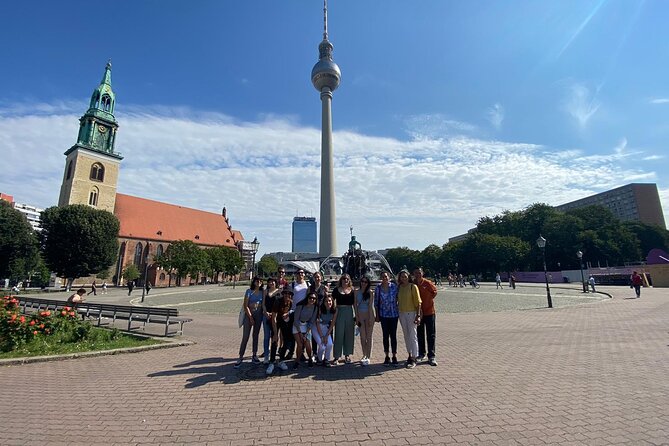
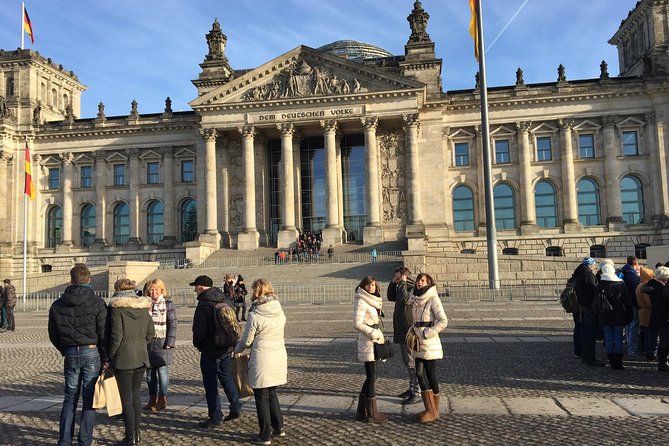
The meeting point is Generator Berlin Alexanderplatz on Otto-Braun-Straße, and the tour begins at noon. From there, the route includes the Reichstag Building, one of Berlin’s clearest symbols of political power and twentieth-century upheaval.
You receive about 30 minutes here, with admission listed as free. Do not expect a full interior visit based on the information provided. The value is the setting and the explanation: your guide can connect the building to the German state, the Nazi period, the war, and the country’s later political reconstruction.
This is a useful opening because it gives you a sense of scale. Berlin’s history was shaped by decisions made in government offices, military headquarters, and political institutions, yet the consequences were felt across ordinary neighborhoods. The guide’s stories help connect those two levels.
A short stop also has a benefit. You get context without spending the whole afternoon at one landmark. The tradeoff is that visitors who want architectural detail or a long discussion of the Reichstag will need to explore it separately.
Karlshorst and the final days of World War II
The Museum Berlin-Karlshorst is one of the tour’s strongest World War II stops. The location is associated with the German surrender that ended the war in Europe, and the guide uses the site to explain the final stage of the conflict and the transition into the postwar order.
The planned stop lasts about 30 minutes, with no admission fee included or required for this activity. The short visit makes this more of a guided historical stop than a museum tour. You should expect explanations at or near the site rather than time to study every exhibit at length.
That distinction matters. If you are especially interested in military history, surrender documents, or the Soviet role in the final defeat of Nazi Germany, you may want to return on your own with more time. For a first visit, though, the stop adds an important piece that many central Berlin tours skip.
The route also brings out one of Berlin’s oddities: key moments may have happened in places that no longer look dramatic. Your guide helps match an ordinary modern setting with events that changed Europe. That can be more powerful than simply ticking off famous buildings.
The Humboldthain Flak Tower and wartime scars
At Humboldthain, the tour points out a flak tower, one of the large wartime defensive structures built during the Nazi period. The stop lasts about 30 minutes and focuses on facts and stories that you might otherwise walk past without noticing.
The appeal here is physical evidence. A flak tower is not an abstract date in a textbook. It is a heavy reminder of how the Nazi state prepared Berlin for air attacks and how military construction altered the city.
The guide may also share stories and local legends. Treat those as a different layer from established historical fact, and ask questions if you want to know which parts are documented. That is a fair approach on any history tour, especially one that mixes urban folklore with serious events.
You are told to expect a leisurely pace and opportunities to stop for drinks along the way. Even so, the route covers many subjects, and the physical demand should not be underestimated. Six hours of walking, standing, and listening can feel tiring even at a relaxed speed.
Same city, a completely different kind of day:
- Berlin: Reichstag, Dome and Government District Guided Tour
★ 4.7 · 18,288 reviews - Berlin: 1-Hour City Tour by Boat with Guaranteed Seating
★ 4.3 · 16,993 reviews - Berlin: Boat Tour Along the River Spree
★ 4.4 · 11,252 reviews - Discover Berlin Half-Day Walking Tour
★ 5.0 · 9,624 reviews
Prenzlauer Berg and the Battle of Berlin
Prenzlauer Berg is used to examine scars left by the Battle of Berlin. The neighborhood helps show that the final fighting was not confined to official government quarters. Residential districts and everyday streets were also caught in the collapse of the Nazi regime.
This part of the experience is valuable because it shifts attention from famous leaders to the city itself. You look at what survived, what changed, and where traces of battle can still be noticed. The guide’s job is to make those clues readable without turning destruction into a spectacle.
The half-hour stop should give you an overview rather than a full military reconstruction. You may hear about major events, people, and the urban setting, but the exact depth will depend on your guide and the questions in the group.
I would listen closely for the connection between the Battle of Berlin and the city’s later division. The ruined capital did not simply return to normal after 1945. Occupation, political conflict, and competing systems shaped what came next.
The Berlin Story Bunker and the Nazi underground
The Berlin Story Bunker stop deals with Hitler’s notorious underground headquarters. The wording supplied for the experience points to the spot associated with his bunker, while the stop itself lasts about 30 minutes and admission is listed as free.
This can be an emotionally charged part of the day. The bunker is not a place to glorify Hitler or turn his final days into a strange celebrity story. A responsible guide should use it to explain the last stage of the regime, the destruction around it, and the consequences of Nazi rule.
The site also shows why Berlin can be confusing for history-minded visitors. Some structures were destroyed, covered, or redeveloped, so a location may not look like the image you have seen in books or films. A guide provides the missing map between the modern city and the wartime scene.
If your main interest is the personal drama of Hitler’s final days, this stop may feel brief. If you want that story placed within the larger collapse of the Third Reich, it earns its place.
The Palace of Tears and the mechanics of division

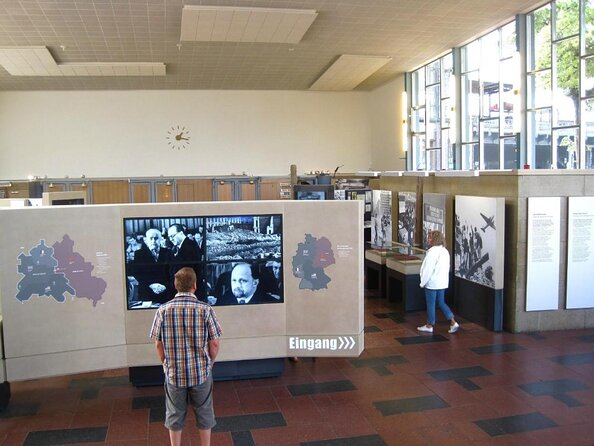
At the Palace of Tears, the focus turns firmly to Cold War Berlin. This stop lasts about 20 minutes and covers border crossings, escape points, and East Berlin landmarks connected with life under communism.
The name refers to the emotional scenes at a former border crossing, where people said goodbye as some could cross and others could not. The important lesson is that the Berlin Wall was not only a concrete barrier. It controlled family visits, travel, work, and daily choices.
This stop helps explain the human side of division. Large political terms such as communism, occupation, and the Cold War can feel distant. Border stories bring them down to the level of a person waiting for permission, leaving a relative, or considering an escape.
Because the stop is short, you will get a compact explanation rather than an extended museum visit. Keep your questions ready. The guides are specifically described as willing to discuss the subjects in more depth when the group asks.
The Berlin Wall Memorial and East Berlin
The Berlin Wall Memorial is one of the central Cold War stops. You see surviving sections and other reminders of the border, while the guide explains how the Wall divided East and West Berlin and what it meant for people living beside it.
This is where the tour’s earlier history begins to connect. The Second World War ended with Germany defeated and occupied, but tension between the former allies hardened. Berlin became a frontline city, and the Wall turned that conflict into a physical fact.
A memorial can also correct a common mistake. The Wall was not simply one painted strip running through the city. It involved barriers, controlled areas, guard positions, and serious risks for anyone attempting to cross. The guide covers stories of escape, forced conscription, and the mixture of fear and courage around the border.
Allow about 30 minutes here. That is enough to understand the site, but not enough for every display or every nearby memorial. If the Wall is your main interest, plan a separate visit after the tour.
Teufelsberg and the Wall beyond the postcard
Teufelsberg is an unusual addition to a central Berlin history route. The tour presents it alongside other Wall-related landmarks and off-the-beaten-path reminders of the division. The stop is listed as 30 minutes.
The information provided also mentions the East Side Gallery, guard towers, and the Wall Memorial in connection with this part of the experience. Since the route covers several widely separated Berlin locations, you should confirm how the group moves between stops. The booking information identifies a walking tour and gives a moderate fitness requirement, but it does not explain transportation between every location.
That is an important practical point. The price is attractive, but you should not assume that every transfer is by public transport, private vehicle, or on foot. Ask before departure, especially if you have limited time, mobility concerns, or do not want a long day of city connections.
Teufelsberg adds variety because it takes you beyond the most familiar Wall photographs. The guide can show how former border sites, towers, and other remnants fit into the wider city. The attraction is less about one polished monument and more about seeing how history survives in unexpected places.
East Side Gallery and a former political border
The East Side Gallery gives the tour a different mood. Here, a section of the former Wall became an outdoor art display, with murals painted after the political barrier lost its purpose.
The stop lasts about 20 minutes. That is enough for an introduction and a look at some of the artwork, but you will not have time to study the entire gallery in detail. The Wall’s transformation from a tool of state control into a public canvas is the key point.
Your guide places the gallery within the conflict between East and West, rather than treating it only as a photo stop. That context makes the paintings more meaningful. They represent freedom and political change, but they also sit on a structure built to stop people from leaving one side of the city.
The East Side Gallery is likely to be busier and more photo-focused than some of the quieter wartime stops. If you prefer solemn memorials, the contrast may feel abrupt. If you want to see how Berlin remembers the Wall through art, it is a worthwhile counterpoint.
The DDR Watch Tower and the final Wall stories
The DDR Watch Tower is another short stop, listed at about 20 minutes. The guide explains places where the Wall once stood and shares stories of escape attempts, forced conscription, horror, and triumph.
This is a useful ending because it brings the Cold War down to the level of surveillance and personal risk. A watchtower represents the machinery of the border, while escape stories show the pressure that machinery placed on real people.
The tour closes back at the original meeting point. Since the day covers many subjects, take a moment afterward to note which sites you want to revisit. You may leave with a long list of questions, which is a sign that the overview has done its job even if it has not answered everything.
What $35.64 buys you
At $35.64 per person, this is priced as an affordable orientation to Berlin’s most important twentieth-century themes. You receive a local guide and access to a long list of historical locations, with admission tickets listed as free.
The value depends on how much explanation you want. If you are staying in Berlin only briefly, the tour can help you identify the places worth returning to. If you already have a strong grasp of Nazi Germany and the Cold War, the broad coverage may feel less satisfying than a specialist tour focused on one period.
The large possible group, up to 100 people, is the main value concern. A big group can make a low price possible, but it may be harder to hear, ask questions, or stay close to the guide. The positive reports about Miguel and Arthur suggest that individual guides can make a major difference. Arrive early and position yourself where you can hear clearly.
Bring water, snacks, and weather protection. Beverages and food are not included, and the tour operates in all weather. Comfortable shoes are essential, not optional. Several descriptions point to a longer outing than some guests expected, so prepare for a full day even though the exact duration may vary.
Who should book this Berlin history tour?
I would choose this tour if you want a strong first orientation to Berlin’s Nazi and Cold War past, especially if you enjoy asking questions. It suits couples, families with older children, and students who need the story tied to real places. One parent found the Cold War content useful for a child studying the subject, which shows the tour can work as a practical history lesson.
You should also consider it if you like stories about how ordinary streets connect to major events. The guides are praised for patience, humor, and clear answers, and Miguel’s restaurant, bar, and book tips add value after the historical portion ends.
I would hesitate if you want long museum visits, detailed military analysis, or a tightly controlled schedule. The route covers a great deal, and some stops last only 20 or 30 minutes. The duration is also worth confirming, since the stated six hours does not match every reported experience.
Cancellation is flexible if your plans may change: you can receive a full refund by canceling at least 24 hours before the local start time. The tour begins at noon, returns to the meeting point, and requires moderate physical fitness.
Should you book it?
Book it if you want Berlin’s major Nazi and Cold War sites explained as one connected story rather than as isolated attractions. For $35.64, the range is impressive, and a strong guide can turn ordinary streets, towers, memorials, and Wall fragments into a readable historical map.
Skip it if you need specialist detail or dislike large groups. Before paying, confirm the actual duration and how the group travels between distant stops. If the timing works for you, bring sturdy shoes, a rain jacket, water, and an open mind. Berlin’s past is not always easy to look at, but this tour gives you a useful way to face it.
FAQ
How long does the tour last?
The tour is advertised as approximately six hours. Some recorded experiences lasted about two and a half to three and a half hours, so confirm the current timing before booking.
Where does the tour start?
It starts at Generator Berlin Alexanderplatz, Otto-Braun-Straße 65, 10178 Berlin, Germany.
Where does the tour end?
The activity ends back at the meeting point.
What time does the tour begin?
The listed start time is 12:00 pm.
Is food or drink included?
No. Beverages and snacks are not included, so bring or buy them during the day.
What should I wear?
The tour operates in all weather conditions. Dress for the forecast and wear comfortable shoes because the experience requires a moderate level of physical fitness.
What is the cancellation policy?
You can cancel for a full refund if you do so at least 24 hours before the experience start time. Cancellations or changes made less than 24 hours before the start are not accepted or refunded.
More Walking Tours in Berlin
- Berlin: Discover Berlin Walking Tour
★ 4.9 · 5,998 reviews - Berlin: Hidden Backyards Guided Walking Tour
★ 4.8 · 5,360 reviews - Berlin: Alternative Berlin Walking Tour
★ 4.6 · 1,204 reviews - Berlin: Third Reich, Hitler, and WWII Walking Tour
★ 4.9 · 1,133 reviews
Just added around Berlin
- Love and War in Berlin: Self-Guided Story Puzzle Walk★ 5.0 · 7 reviews
- Rickshaw Tours Berlin – Groups of up to 16 people with several rickshaws★ 4.0 · 97 reviews
- eSIM for Germany and 34 European Countries★ 4.5 · 16 reviews
- Walking on the Wall: 3-Hour Tour in Berlin★ 4.5 · 34 reviews
- Warnemuende Shore Excursion: Berlin Private Sightseeing Tour from Rostock★ 5.0 · 4 reviews
- Your ticket to The Wall Museum Berlin★ 3.0 · 60 reviews
- Warnemuende Shore Excursion: Private Berlin Tour★ 4.5 · 27 reviews
- Berlin’s Gay, Lesbian, and Queer Scene Small-Group Walking Tour★ 4.5 · 66 reviews
Third Reich & Cold War Tours, compared.



Berlin’s Best: 2 Hour Walking Tour Third Reich and the Cold War
Read our review →

Third Reich Berlin: Hitler and WWII Walking Tour
Read our review →
Skip-the-Line: Berlin Wall Museum at Checkpoint Charlie
Read our review →

Cold War, Berlin Wall, Spies and the East Side Gallery
Read our review →Browse the lists this tour appears in