
Reviewed · THIRD REICH & COLD WAR TOURS
2.5-Hour Berlin Wall and Memorial Sites Walking Tour
Berlin’s Wall is easiest to understand when you follow its old line on foot. This tour begins at the Bornholmer Strasse border crossing, where the Wall first opened on November 9, 1989, then traces the former death strip toward Nordbahnhof. Along the way, you see memorials, escape sites, tunnels, and places where the border once cut through ordinary streets.
I like the route for two clear reasons: it connects famous sights with lesser-known Wall traces, and its small maximum of 12 people should make it easier to ask questions. The main drawback is the pace. Two and a half hours on foot requires moderate fitness, and there is no hotel pickup or transport between stops.
In This Review
- Key points at a glance
- Starting at the November 9, 1989 square
- Walking the former death strip toward Bernauer Strasse
- Ulbricht Curve, Schwedter Way, and the Gleim Tunnel
- Berlin Wall Park and the Bernauer Strasse tunnel
- The Church of Reconciliation and the Wall Memorial
- Ending at Nordbahnhof, the former ghost station
- What the guide adds to the walk
- Is $25.45 a fair price?
- Who should book this Berlin Wall walk?
- My booking advice
- FAQ
- How long is the Berlin Wall walking tour?
- What time does the tour start?
- Where does the tour begin?
- Where does the tour end?
- What is the price?
- How many people can join the tour?
- What sights are included?
- Is a guide included?
- Are food, drinks, and transportation included?
- Can I cancel for a full refund?
Key points at a glance
- Begin where the Wall opened: Start at the Square of November 9, 1989, beside the former Bornholmer Strasse crossing.
- Follow the old death strip: Walk along the former border zone instead of viewing the Wall as a collection of unrelated monuments.
- See Bernauer Strasse’s strongest memorial sites: Visit the Berlin Wall Memorial, the Church of Reconciliation, and a viewing platform.
- Hear personal Cold War stories: The guide provides local context, and one guide has shared stories from her own life during the Wall years.
- Finish at a former ghost station: End at Nordbahnhof, once known for trains that passed through sealed stations.
- Good value for a focused walk: At $25.45, the price is modest for 2.5 hours with a professional local guide.
Starting at the November 9, 1989 square
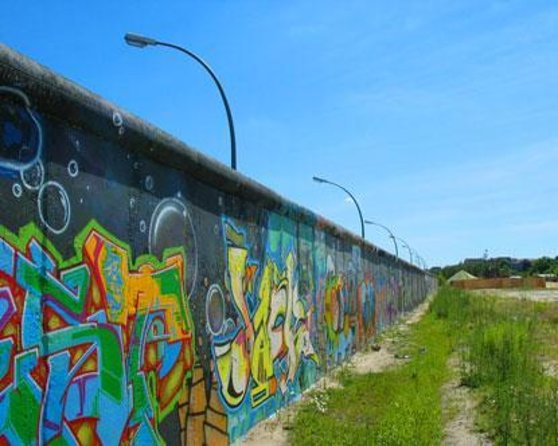
The tour starts at Bornholmer Strasse 75A, in Berlin’s Prenzlauer Berg area, at 3:00 pm. This is not just a convenient meeting point. It is the place where the Berlin Wall began to open on the night of November 9, 1989, after 28 years of splitting Berlin and Germany.
That opening was not a planned ceremony with a ribbon and speeches. The border crossing became overwhelmed, and the gates opened. Beginning here gives the tour an immediate sense of place. You are not first handed a broad lecture in a museum room. You are standing on the ground where the end of the Wall began to unfold.
The square is also a useful reminder that the Wall was a working border, not one solid slab running neatly through the city. It included checkpoints, fences, patrol paths, lights, observation posts, and a zone designed to stop people from crossing. The tour follows this former border area toward the old Nordbahnhof station.
Your guide sets the wider Cold War story in place, covering the 28 years when Berlin was divided. That background matters because the surviving pieces of the Wall can otherwise feel scattered. The guide helps connect a tunnel, a checkpoint, a church, and a railway station into one story.
More Third Reich & Cold War Tours in Berlin
- Berlin: Third Reich and Cold War 2 Hour Walking Tour
★ 4.9 · 6,830 reviews - Berlin’s Best: 2 Hour Walking Tour Third Reich and the Cold War
★ 5.0 · 5,486 reviews - Third Reich Berlin: Hitler and WWII Walking Tour
★ 5.0 · 3,301 reviews
Walking the former death strip toward Bernauer Strasse
The central idea of this experience is simple: you walk the old Wall line. That makes the tour different from a quick stop at the East Side Gallery, where painted sections of Wall are the main attraction. Here, the focus is on the border system and the lives it disrupted.
The route includes the former death strip, the area between layers of border defenses. It was built to expose escape attempts, not to welcome visitors. Today, much of the physical barrier is gone, so a guide is especially useful. You need someone to point out the traces and explain what occupied each space.
The stops include the Ulbricht Curve and the Schwedter Way. These names may mean little before the walk, but they help show how the border shifted and bent through the city. You may see only a path, an open patch, or a line marked in the ground. The value comes from understanding what was there and why it mattered.
This is also where the walking format earns its price. Berlin’s divided spaces make more sense when you move through them at street level. You notice how close buildings, roads, railway lines, and homes once were to the Wall. A bus can carry you past these places, but it cannot give you the same sense of distance and direction.
Ulbricht Curve, Schwedter Way, and the Gleim Tunnel
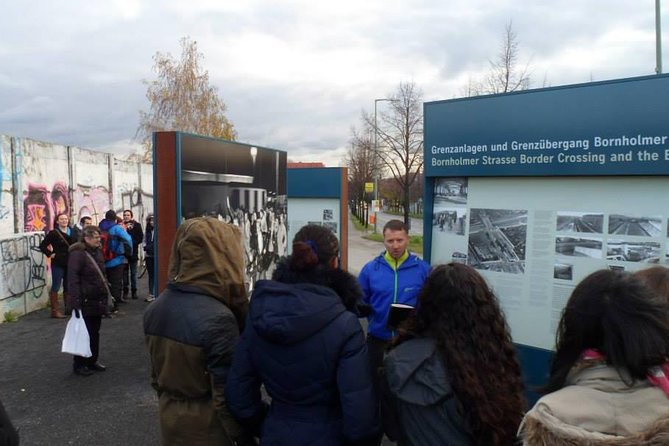
The Ulbricht Curve and Schwedter Way add detail to the route. They are not necessarily the easiest places for independent visitors to interpret, so listen closely as the guide explains the border’s path and the traces left behind.
The tour also stops at the Gleim Tunnel. Underground escape attempts are among the most gripping parts of Berlin’s divided story, but they can also be over-dramatized. A good guide helps you separate documented events from legend. The advertised stops suggest that this walk gives attention to the physical routes people used or tried to use, not only to official political events.
The tunnel stop adds variety to the tour. You are not simply walking from one memorial plaque to the next. You move through streets and open areas, then pause at a place linked with attempts to cross beneath the border. That change in setting keeps the 2.5-hour route from becoming one long explanation beside a fence.
Still, keep your expectations realistic. This is a guided outdoor walk, not a full tunnel visit or an underground adventure. The information provided confirms a stop at the Gleim Tunnel, but not that you enter it. The main experience is seeing the place and understanding its role.
Berlin Wall Park and the Bernauer Strasse tunnel
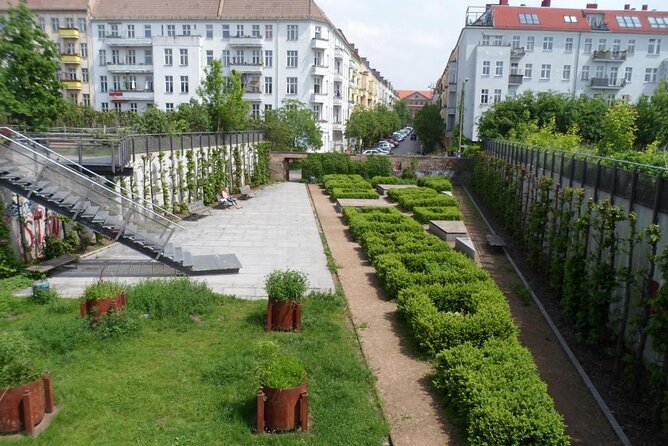
Berlin Wall Park is one of the route’s key points. It gives you room to consider the Wall as a long urban boundary rather than a single preserved fragment. The park setting also makes it easier to see how the former border has been marked and remembered.
The Bernauer Strasse tunnel is another important stop. Bernauer Strasse became one of the best-known Wall locations because the border ran directly beside homes, sidewalks, and churches. The area is closely tied to escape attempts, forced separations, and the physical changes made to prevent crossings.
At this point, a guide can add the human scale that a photograph often lacks. You learn where the old border stood, how people lived alongside it, and why this stretch became such a powerful memorial area. The tour’s stated route includes many Wall traces documented by the city, including some that may be easy to miss if you walk alone.
There is a short pause included during the walk. That matters more than it sounds. Two and a half hours is long enough for the information to pile up, so a break gives you a chance to catch your breath and organize what you have heard. Food and drinks are not included, so bring water and consider eating beforehand.
Same city, a completely different kind of day:
- Berlin: Reichstag, Dome and Government District Guided Tour
★ 4.7 · 18,288 reviews - Berlin: 1-Hour City Tour by Boat with Guaranteed Seating
★ 4.3 · 16,993 reviews - Berlin: Boat Tour Along the River Spree
★ 4.4 · 11,252 reviews - Discover Berlin Half-Day Walking Tour
★ 5.0 · 9,624 reviews
The Church of Reconciliation and the Wall Memorial
The Church of Reconciliation is one of the most striking stops because it shows how the border could consume an existing neighborhood landmark. The church once stood in the Wall’s restricted zone and could no longer serve its normal purpose. Its presence helps you picture the border not as something placed far away, but as a structure that cut through familiar civic and religious spaces.
The tour then reaches the Berlin Wall Memorial and its viewing platform. These are among the strongest places on the route for understanding the full border system. From above, you can see how the Wall was arranged as a zone with multiple barriers and open space between them.
The viewing platform is particularly valuable because the Wall is hard to grasp from ground level. A concrete segment may look simple. From above, the layout becomes clearer. You can better understand how the barriers, patrol area, and surrounding streets worked together.
Do not expect every part of the original Wall to survive. The memorial combines preserved sections, markings, information, and reconstructed elements. That is useful, but it means you should pay attention to the guide’s explanation of what is original and what has been added for interpretation.
Ending at Nordbahnhof, the former ghost station
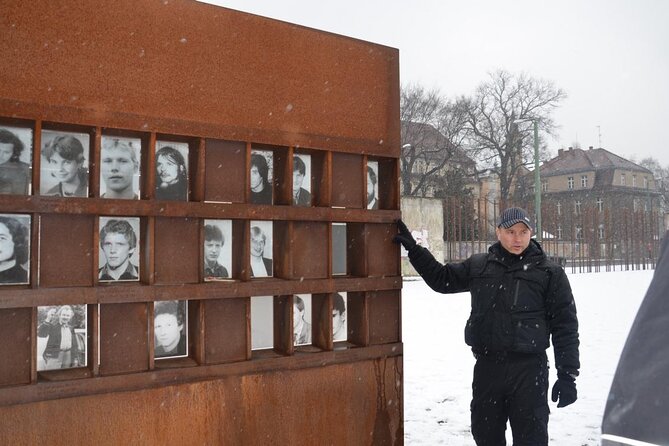
The walk ends at Berlin-Nordbahnhof, at Invalidenstrasse 131. This is a practical finish because Nordbahnhof is a transport hub, but it is also a meaningful final stop.
During the divided period, some Berlin railway stations became sealed ghost stations. Trains passed through without stopping, while entrances were closed and watched. Nordbahnhof helps broaden the story beyond the Wall’s concrete sections. The division affected rail routes, daily commutes, and the basic way people moved around their own city.
Ending here also gives the tour a natural arc. You start at the border opening of November 9, 1989, then follow the barrier and its memorials to a station shaped by the division. The route links the Wall’s construction, its control system, escape attempts, and eventual collapse.
The tour does not include transportation back to your hotel or to the starting point. Plan your onward route from Nordbahnhof before you begin, especially if you have dinner reservations or another timed activity.
What the guide adds to the walk
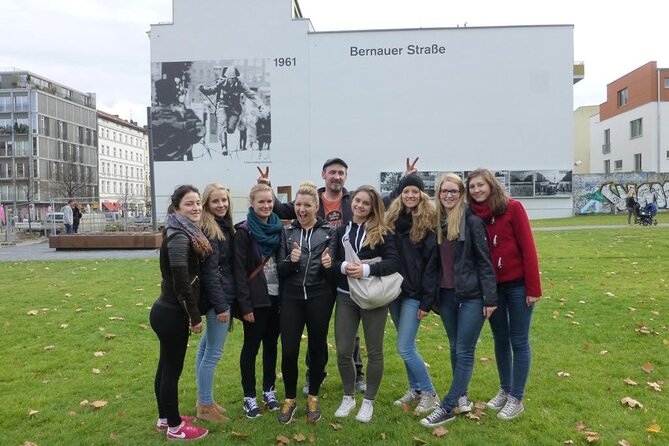
The guide is the main reason to choose this tour instead of walking the memorial route alone. The city has placed many markers and signs along the former Wall line, but the meaning is not always obvious from a quick glance.
The guide explains the Cold War in Berlin and Germany across 28 years, then ties that broad story to the places under your feet. The route includes both famous memorials and traces known mainly to people who have studied the area. That mix should give you more than a standard introduction to the Berlin Wall.
Personal stories can make the subject feel less distant. One guide has drawn on her own life and shared memories connected to the Wall. No guide name is supplied, so I would not book this expecting a particular named historian. Instead, think of it as a small-group walk led by a local professional who may add personal context to the documented story.
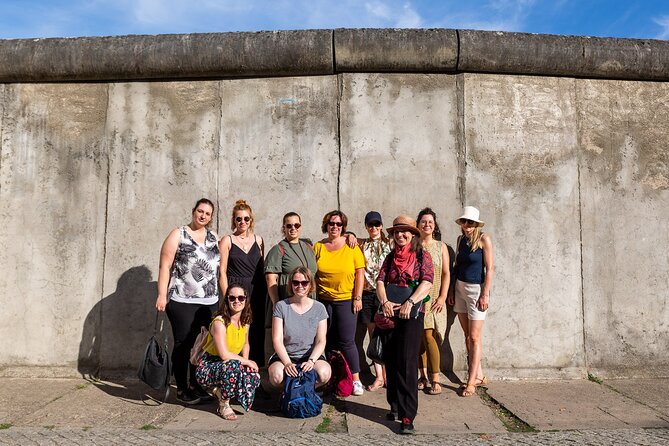
A group limit of 12 is a real advantage. You are not guaranteed a private tour, but a small group generally makes it easier to hear, keep together, and ask questions at the stops. It also suits a subject that benefits from conversation rather than a nonstop speech.
Is $25.45 a fair price?
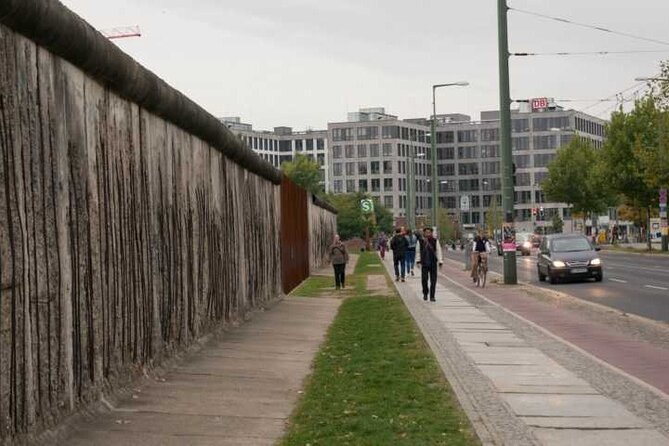
At $25.45 per person, this is a reasonably priced history walk. You receive about 2.5 hours with a local professional guide, a route covering several memorial areas, and a structured explanation of the former border.
The value is strongest if you want context. If you already know Berlin’s Wall story well and plan to visit only one or two memorials, you might prefer to explore independently. But if you are trying to understand how the Wall ran through northern Berlin, the guide saves you from piecing together the route yourself.
The price does not include food, drinks, hotel pickup, or transportation. Those exclusions are normal for a walking tour, but they affect your budget and schedule. You must reach Bornholmer Strasse on your own and arrange your own onward travel from Nordbahnhof.
The experience includes a mobile ticket, and confirmation is provided when you book. Free cancellation is available if you cancel at least 24 hours before the 3:00 pm start time. Cancellations or changes inside that 24-hour window are not refunded or accepted.
Who should book this Berlin Wall walk?
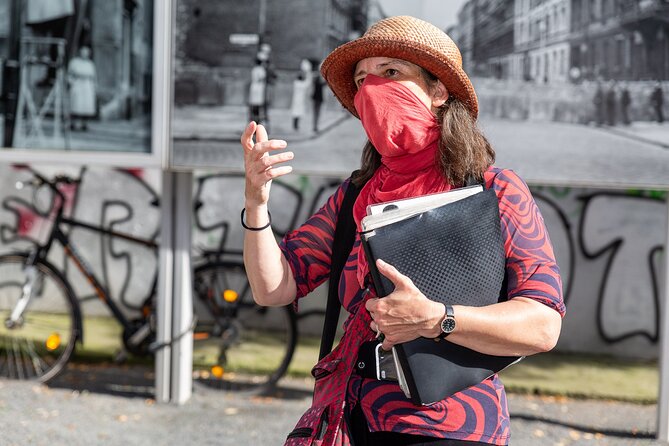
I would recommend this tour to you if you want a focused introduction to Berlin’s divided past and prefer learning while moving through real places. It is especially useful for a first visit, when the Wall’s surviving pieces can otherwise seem disconnected.
It also suits anyone interested in escape tunnels, former border crossings, railway restrictions, and memorial design. The route has more range than a simple Wall photo stop, and the 3:00 pm start leaves the earlier part of your day free.
You should be comfortable walking for 2.5 hours and should have a moderate level of physical fitness. The exact route conditions are not specified, so sensible shoes are a practical choice. Since the tour is outdoors and includes a pause rather than a meal, carry water and dress for Berlin’s weather.
This may not suit you if you need hotel pickup, have difficulty with sustained walking, or want a tour built around interior museums. The itinerary is primarily an outdoor walk between historic sites.
My booking advice
Book this walk if you want the Berlin Wall explained as a connected border system, not just photographed as a remaining strip of concrete. The route from Bornholmer Strasse to Nordbahnhof is its strongest feature, and the small group gives the guide room to explain details and answer questions.
At $25.45, it offers solid value for a short, focused introduction. I would choose it early in a Berlin visit, then return on your own to the memorial sites that interest you most. Skip it only if you already know the Wall story well or cannot manage a 2.5-hour outdoor walk.
FAQ
How long is the Berlin Wall walking tour?
The tour lasts approximately 2 hours and 30 minutes.
What time does the tour start?
The tour starts at 3:00 pm.
Where does the tour begin?
The meeting point is Bornholmer Strasse 75A, 10439 Berlin, Germany, at the Square of November 9, 1989.
Where does the tour end?
The tour ends at Berlin-Nordbahnhof, Invalidenstrasse 131, 10115 Berlin, Germany.
What is the price?
The listed price is $25.45 per person.
How many people can join the tour?
The group has a maximum of 12 participants.
What sights are included?
The route includes the November 9, 1989 memorial and former Bornholmer Strasse border crossing, the Ulbricht Curve, Schwedter Way, Gleim Tunnel, Berlin Wall Park, Bernauer Strasse Tunnel, the Church of Reconciliation, the Berlin Wall Memorial viewing platform, and Nordbahnhof.
Is a guide included?
Yes. A local professional guide is included.
Are food, drinks, and transportation included?
No. Food, drinks, hotel pickup and drop-off, and transportation to and from the attractions are not included.
Can I cancel for a full refund?
Yes, if you cancel at least 24 hours before the experience start time. Cancellations made less than 24 hours before the start are not refunded.
More Walking Tours in Berlin
- Berlin: Discover Berlin Walking Tour
★ 4.9 · 5,998 reviews - Berlin: Hidden Backyards Guided Walking Tour
★ 4.8 · 5,360 reviews - Berlin: Alternative Berlin Walking Tour
★ 4.6 · 1,204 reviews - Berlin: Third Reich, Hitler, and WWII Walking Tour
★ 4.9 · 1,133 reviews
Just added around Berlin
- Love and War in Berlin: Self-Guided Story Puzzle Walk★ 5.0 · 7 reviews
- Rickshaw Tours Berlin – Groups of up to 16 people with several rickshaws★ 4.0 · 97 reviews
- Walking on the Wall: 3-Hour Tour in Berlin★ 4.5 · 34 reviews
- eSIM for Germany and 34 European Countries★ 4.5 · 16 reviews
- Warnemuende Shore Excursion: Berlin Private Sightseeing Tour from Rostock★ 5.0 · 4 reviews
- Your ticket to The Wall Museum Berlin★ 3.0 · 60 reviews
- Warnemuende Shore Excursion: Private Berlin Tour★ 4.5 · 27 reviews
- Berlin’s Gay, Lesbian, and Queer Scene Small-Group Walking Tour★ 4.5 · 66 reviews
Third Reich & Cold War Tours, compared.



Berlin’s Best: 2 Hour Walking Tour Third Reich and the Cold War
Read our review →

Third Reich Berlin: Hitler and WWII Walking Tour
Read our review →
Skip-the-Line: Berlin Wall Museum at Checkpoint Charlie
Read our review →

Cold War, Berlin Wall, Spies and the East Side Gallery
Read our review →Browse the lists this tour appears in