
Reviewed · MUSEUM & GALLERY TICKETS
DDR Museum Berlin Admission Ticket
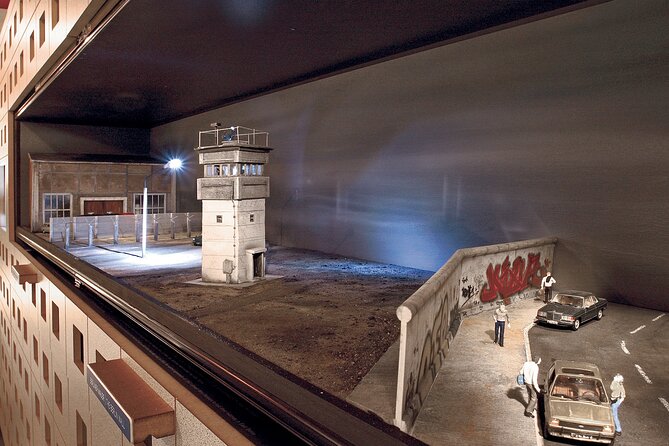
The DDR Museum puts you inside everyday East Germany, not just in front of glass cases. You can sit in a Trabant, inspect a cramped apartment, watch state television, and leave through a hole in the Berlin Wall. It is history presented with buttons, drawers, screens, and rooms you can enter.
I like the hands-on exhibits, especially the Trabant and the reconstructed home. I also like the clear English information and the freedom to move at your own pace. At $16.26 per person, it offers a useful hour or two in central Berlin, though the small space can become very crowded, and some displays require more reading than children may expect.
In This Review
- Key points to know
- Inside Berlin’s compact window on East Germany
- Reconstructed homes show the daily reality
- The Trabant section brings the past to life
- Politics, elections, and the Stasi
- English information makes the visit easy to follow
- Crowds are the main practical problem
- Is $16.26 good value?
- Who will enjoy this museum most?
- A good stop after Berlin Cathedral
- Should you book the DDR Museum?
- FAQ
- Where is the DDR Museum located?
- What are the opening hours?
- How long does a visit take?
- Is the admission ticket offered in English?
- What is included in the ticket?
- Can children enjoy the museum?
- Is the museum near public transportation?
- Can I cancel the booking for a refund?
Key points to know
- Sit inside a Trabant: Watch everyday East German streets on screen while you experience the era’s famous little car.
- Enter a GDR home: See a recreated living room, kitchen, bedrooms, appliances, and the original-style Carat cupboard.
- Take part in history: Try a simulated election, open display drawers, view propaganda television, and face a Stasi interrogation setup.
- Plan around crowds: The museum is compact and can feel packed, especially during the middle of the day.
- Allow one to two hours: You can move quickly in about an hour, but careful reading and video viewing take longer.
- Use the central location: The entrance is opposite Berlin Cathedral on the Spree, near public transportation.
Inside Berlin’s compact window on East Germany
The DDR Museum focuses on the German Democratic Republic, the socialist state that existed in East Germany from 1949 until 1989. That span covers four decades of work, school, housing, shopping, transport, politics, family life, and surveillance.
You do not begin with a long chronological wall of text. Instead, the museum places you among objects and reconstructed spaces. You open drawers, peer into cupboards, watch film clips, and examine the practical details of domestic life. The format makes the subject easier to approach, especially if you are traveling with children or teenagers who may not choose a traditional political museum.
The setting helps. The museum sits in central Berlin on Karl-Liebknecht-Strasse 1, directly opposite Berlin Cathedral and beside the River Spree. You can combine it with a walk around Museum Island, though this is not a grand, quiet gallery. It is a busy, tightly arranged exhibition built for contact and movement.
That compact design is both its strength and its weakness. You get close to the objects instead of viewing them from across a large room. But when several groups gather around the same drawers, screens, or car, moving through the displays becomes slow.
More Museum & Gallery Tickets in Berlin
- Berlin: Natural History Museum Entrance Ticket
★ 4.6 · 3,382 reviews - Skip-the-Line: Berlin Wall Museum at Checkpoint Charlie
★ 4.1 · 2,041 reviews - Berlin: Museum Island Multiple Museum Entry Ticket
★ 4.4 · 2,007 reviews
Reconstructed homes show the daily reality
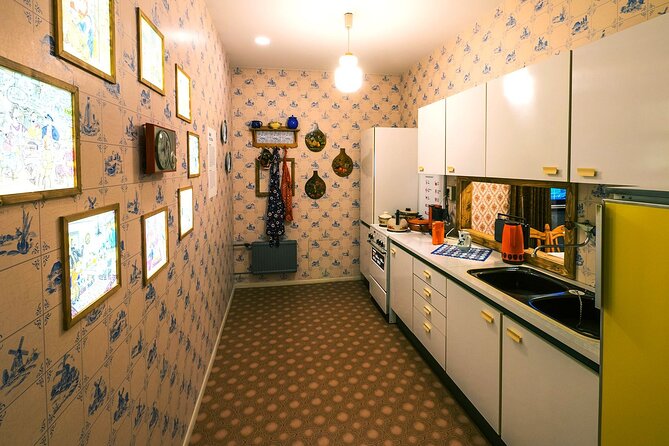
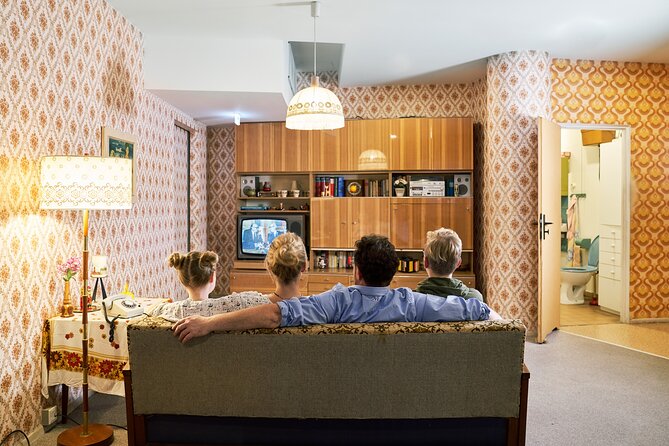
The recreated East German apartment is one of the museum’s most useful sections. You see a living room, kitchen, bedrooms, and household goods arranged to show how ordinary people lived in limited space.
Look closely at the kitchen appliances and storage. The Carat living-room cupboard is an especially telling object. It shows how furniture could combine storage, display, and practical household use in a modest home. The point is not just that the furniture looks old. The arrangement helps you think about space, supply, and the choices available to a family living under a state-run system.
You can also watch East German television, including programming shaped by government messaging. This adds sound and motion to the reconstructed room, but it also makes the political side of domestic life harder to ignore. The home was a private place, yet public messages entered through the television.
The apartment displays work best when you slow down. A quick look gives you a period room. A careful visit reveals the larger questions: How much room did people have? What could they buy? What did the government present as normal? What did people make, repair, or adapt for themselves?
Some visitors may find the exhibition smaller than expected. The living space is not a full apartment block, and the museum does not offer endless galleries. Still, these rooms make abstract political history concrete. You see how a government system affected cupboards, kitchens, bedrooms, and family routines.
The Trabant section brings the past to life
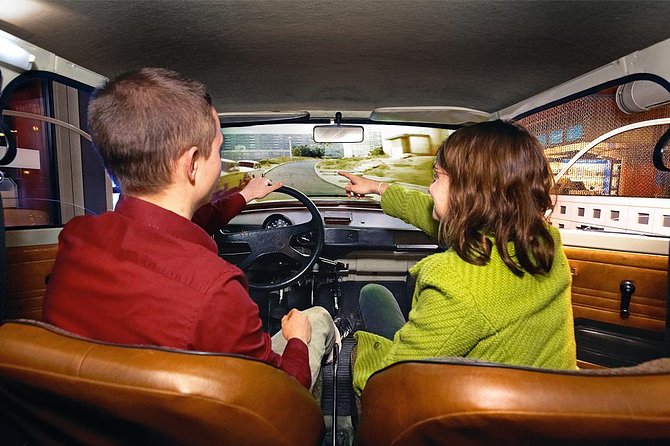
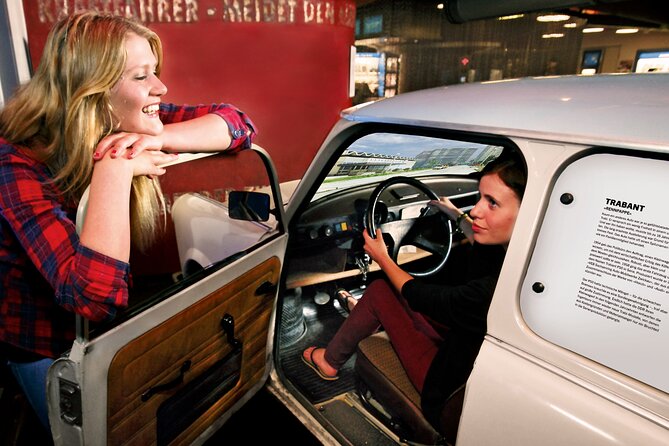
The Trabant is the museum’s most obvious crowd-pleaser. This small car became a familiar symbol of East Germany and the wider Eastern Bloc. Here, you can climb inside rather than simply look at a vehicle behind a barrier.
The experience includes film of everyday scenes and a virtual trip through a GDR housing estate. That combination is clever. The car gives you a physical object to examine, while the screen provides a sense of streets, buildings, and ordinary movement through East Berlin.
You should not expect a full driving lesson or a long simulator ride. The attraction is brief, and the car can draw a line of people waiting for a turn. If you are visiting with children, this is likely to be one of the first things they want to try. If you are visiting alone, you may prefer to come early or later in the day, when you have a better chance of seeing it without a crowd pressing in.
The Trabant also helps explain why objects matter in a history museum. A car can reveal shortages, design limits, family aspirations, and the practical need to keep an older vehicle running. You do not need to know much about East German transport to understand the sense of a vehicle that was both ordinary and politically symbolic.
Politics, elections, and the Stasi
The museum does not present East Germany as only a collection of retro household goods. Its political displays explain the role of the Socialist Unity Party and the structure of life under socialist rule.
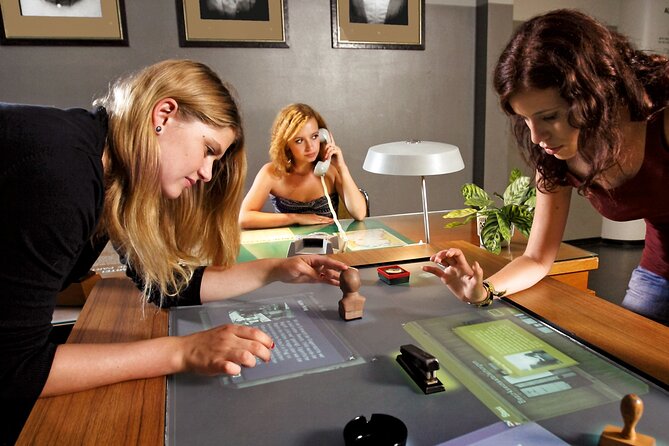
One exhibit lets you take part in a GDR election. This is not a substitute for a full political history, but it gives you a practical way to think about how official participation worked. Other sections address surveillance and state control, including a simulated Stasi interrogation.
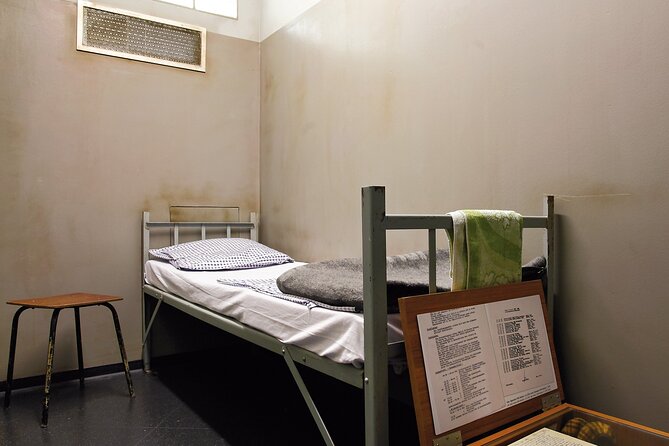
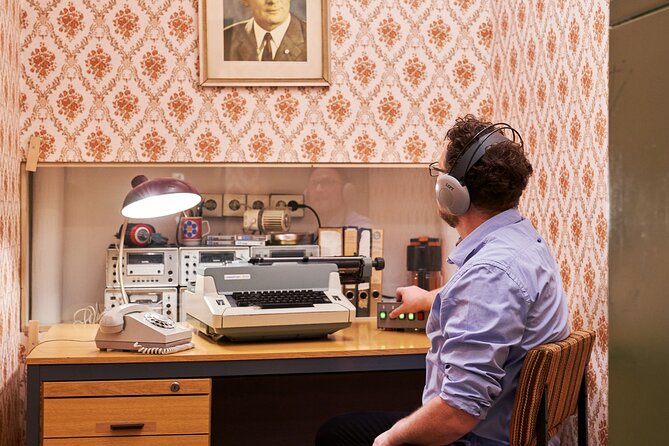
The interrogation display changes the mood. After the bright buttons, household rooms, and car simulator, it reminds you that the DDR was not simply an amusing old-fashioned society. The government controlled public life, and the Stasi monitored citizens. The museum’s family-friendly presentation can sometimes make this difficult balance feel uneven, but the darker material is present.
I recommend giving these sections more time than the quick interactive pieces. The buttons attract attention, yet the reading explains why the objects matter. If you rush from one activity to the next, you may remember the Trabant but miss the political structure that shaped the whole exhibition.
The displays also benefit from comparison. Berlin has several places connected with the Wall, division, and dictatorship. The DDR Museum concentrates on daily life. That makes it a useful companion to sites focused more directly on border crossings, escape attempts, or the Wall itself.
Same city, a completely different kind of day:
- Berlin: Reichstag, Dome and Government District Guided Tour
★ 4.7 · 18,288 reviews - Berlin: 1-Hour City Tour by Boat with Guaranteed Seating
★ 4.3 · 16,993 reviews - Berlin: Boat Tour Along the River Spree
★ 4.4 · 11,252 reviews - Discover Berlin Half-Day Walking Tour
★ 5.0 · 9,624 reviews
English information makes the visit easy to follow
The experience is offered in English, and English text appears throughout the displays. This matters because much of the museum’s value comes from context. A room full of appliances or a row of political objects means little without explanation.
The reading is not limited to one introductory panel. You will find information across drawers, labels, screens, and display areas. That gives you control. You can skim the basic points, or spend longer on the subjects that interest you.
There is a trade-off for families. Interactive does not always mean a game or physical activity. Sometimes it means pulling open a drawer to reveal a label or explanation. Children who expect constant movement may lose interest, especially during the more text-heavy sections.
For adults and older children, this mixed format works well. You can handle objects, watch video, and read at the same time. If you want to understand the period rather than simply take photographs, plan closer to two hours.
Crowds are the main practical problem
The museum is open daily from 9:00 a.m. to 9:00 p.m., giving you more flexibility than a site with a short afternoon schedule. That long opening period is useful in Berlin, where you can visit the cathedral and nearby sights first, then come here later.
Timing matters because the museum is relatively small. At busy times, you may have trouble reaching a display or finding enough room to read. The Trabant and other hands-on exhibits can create little knots of people. The heat can also become uncomfortable, since the building may not have air conditioning.
I would aim for early morning or a later visit. One morning visit around 9:15 a.m. allowed plenty of time for the displays, while a visit around 10:30 a.m. was already relatively busy. The museum stays open until 9:00 p.m., so you have a reasonable chance to avoid the strongest daytime crowd.
A timed admission helps you plan your arrival, but it does not guarantee a quiet interior. Once inside, you explore independently rather than joining a small guided group. If you need a calm, spacious museum experience, this may test your patience.
Is $16.26 good value?
At $16.26 per person, the ticket is fairly priced if you want an active introduction to East German life and will spend close to two hours inside. The central location adds value because you do not need a separate trip across Berlin.
The price feels less attractive if you expect a large museum with many rooms, extensive original collections, or a full day of exhibits. The museum is small, and some people will finish in about an hour. Food and drinks are not included, though this is an admission ticket rather than a meal-based tour.
I see the best value for families, first-time Berlin visitors, and anyone who wants context before visiting other Cold War sites. You pay for access to a focused exhibition with a strong interactive element, not for a vast collection.
Buying ahead also lets you select a date and time that fits your schedule. That is useful during a busy Berlin weekend, although you should check your mobile ticket before arriving. Several admission problems have involved electronic vouchers that did not scan properly or lacked a clear QR code or barcode.
Keep the ticket ready on your phone. If it does not work at the entrance, show the full voucher to the staff rather than repeatedly trying the same screen. The booking includes free cancellation up to 24 hours before the start time. Changes or cancellations inside that period are not refundable.
Who will enjoy this museum most?
I would recommend the DDR Museum to:
- Families with children old enough to read some display text and handle interactive exhibits
- Adults interested in Cold War Berlin and ordinary life under socialism
- First-time visitors who want a broad introduction before visiting more specialized sites
- People who enjoy reconstructed rooms, objects, video, and simple simulations
- Anyone looking for a central indoor stop lasting about one to two hours
You may want to skip it if you prefer quiet galleries, long historical essays, or a large collection of original art and artifacts. The museum can feel more like an attraction than a formal museum, particularly when children are pressing buttons around you.
That does not make the subject unimportant. It means the presentation uses activity to draw you in. I find that effective when you then take time to read the political and social information behind the activities.
A good stop after Berlin Cathedral
The location makes this easy to fit into a day. You can visit Berlin Cathedral, walk along the Spree, and then cross the street to the DDR Museum. Public transportation is nearby, and you make your own way there, with no hotel pickup or drop-off.
Because the visit is self-guided, you are not tied to a group schedule once inside. You can spend extra time in the apartment, move quickly through familiar material, or pause for the films. That flexibility is valuable if you are planning several central Berlin sights.
Do not arrive expecting a long orientation from a guide. There are no guide names provided because this is an admission experience rather than a guided walking tour. The museum’s displays provide the explanation, and you set the pace.
Should you book the DDR Museum?
Book it if you want a hands-on look at East German daily life, especially if a Trabant, recreated apartment, political simulation, and English displays appeal to you. It is a useful, well-located introduction that can work for both adults and children.
I would book an early or late time slot and allow two hours if you plan to read carefully. If you have only one hour, concentrate on the apartment, Trabant, Stasi section, and final exit through the hole in the Berlin Wall.
Skip it if you want a spacious museum or a fully serious, quiet treatment of dictatorship. The compact rooms, crowds, heat, and playful design can weaken the experience. For most visitors interested in Berlin’s divided past, though, the museum earns its place, as long as you arrive with realistic expectations.
FAQ
Where is the DDR Museum located?
The museum is at Karl-Liebknecht-Strasse 1 in central Berlin, opposite Berlin Cathedral and beside the River Spree.
What are the opening hours?
The museum is open Monday through Sunday from 9:00 a.m. to 9:00 p.m.
How long does a visit take?
The expected visit lasts about one to two hours. Some people complete it in about an hour, while careful reading and watching the video can take closer to two hours.
Is the admission ticket offered in English?
Yes. The experience is offered in English, and English information is available throughout the displays.
What is included in the ticket?
The ticket includes admission to the DDR Museum. Food, drinks, hotel pickup, and hotel drop-off are not included.
Can children enjoy the museum?
Yes. The museum is designed as a family-friendly experience with interactive exhibits, a Trabant, a recreated home, and other activities. Some displays also involve a fair amount of reading.
Is the museum near public transportation?
Yes. The museum is near public transportation.
Can I cancel the booking for a refund?
You can cancel up to 24 hours before the experience start time for a full refund. Cancellations or changes made less than 24 hours before the start time are not accepted for a refund.
More Museums in Berlin
- Berlin: Interactive DeJa Vu Museum Entrance Ticket
★ 4.1 · 1,338 reviews - Berlin: “Pergamonmuseum. The Panorama” Exhibition Tickets
★ 4.6 · 1,245 reviews - Berlin: East Side Gallery Spree Cruise in a Solar Catamaran
★ 4.0 · 1,039 reviews - Cold War, Berlin Wall, Spies and the East Side Gallery
★ 5.0 · 1,024 reviews
Just added around Berlin
- Love and War in Berlin: Self-Guided Story Puzzle Walk★ 5.0 · 7 reviews
- Rickshaw Tours Berlin – Groups of up to 16 people with several rickshaws★ 4.0 · 97 reviews
- Walking on the Wall: 3-Hour Tour in Berlin★ 4.5 · 34 reviews
- eSIM for Germany and 34 European Countries★ 4.5 · 16 reviews
- Warnemuende Shore Excursion: Berlin Private Sightseeing Tour from Rostock★ 5.0 · 4 reviews
- Your ticket to The Wall Museum Berlin★ 3.0 · 60 reviews
- Warnemuende Shore Excursion: Private Berlin Tour★ 4.5 · 27 reviews
- Berlin’s Gay, Lesbian, and Queer Scene Small-Group Walking Tour★ 4.5 · 66 reviews
Museum & Gallery Tickets, compared.

Skip-the-Line: Berlin Wall Museum at Checkpoint Charlie
Read our review →
Browse the lists this tour appears in