
Reviewed · MUSEUM & GALLERY TICKETS
Berlin’s Gallery Scene
Berlin’s galleries can feel like a secret city tucked behind plain doors, old school buildings, and former industrial spaces. This private tour gives you a smart way into that world, with an art historian explaining how Berlin became a major center for contemporary art after the Wall fell in 1989.
I like the small private group, which lets you ask questions without fighting for the guide’s attention. I also like the mix of formal galleries and unusual exhibition spaces, including a former Jewish girls’ school and the experimental KW Institute for Contemporary Art. The main caution is that the exact stops can change with current exhibitions, and KW is closed on Tuesdays.
In This Review
- Key points
- Why Berlin’s galleries tell a post-Wall story
- KW Institute: 40 minutes of experimental art
- Auguststrasse and the former Jewish girls’ school
- Potsdamer Straße: a different gallery rhythm
- Galerie Eigen & Art in a former school
- Galerie Giti Nourbakhsch and Berlin’s gallery network
- The value of an art historian guide
- A private format that keeps the conversation open
- What the $330 group price really means
- Who will enjoy this most
- Timing, Tuesday plans, and changing exhibitions
- Should you book Berlin’s Gallery Scene?
- FAQ
- How long does Berlin’s Gallery Scene last?
- How many people can join the private tour?
- Is the tour offered in the morning or afternoon?
- Who leads the tour?
- Where does the tour begin?
- Does the tour include pickup?
- Is KW Institute for Contemporary Art included?
- Is KW open every day for this tour?
- Are food and drinks included?
- Can the itinerary change?
Key points
- Three hours with an art historian: Get context on Berlin’s art scene, its artists, and its post-1989 growth.
- Private group of up to 10: You get a more personal walk and can shape the conversation around your interests.
- Five gallery-area stops: The route includes KW Institute, Auguststrasse, Potsdamer Straße, Galerie Eigen & Art, and Galerie Giti Nourbakhsch.
- Current shows matter: The itinerary may change when galleries install new exhibitions or major art events take place.
- KW admission costs extra: Adults pay €10 and seniors or students pay €6 if the institute is open during your tour.
- A good first look at Mitte: The tour links art with the history and changing character of central Berlin.
Why Berlin’s galleries tell a post-Wall story
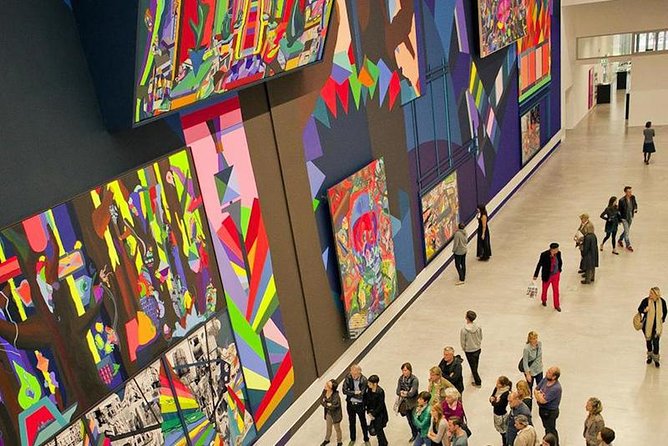
Berlin’s art scene did not grow in a polished museum district. It developed through a mix of empty buildings, affordable workspaces, international artists, experimental institutions, and a city still adjusting to reunification.
That background is the key to this tour. You are not simply walking from one white-walled gallery to another. You are learning why Berlin attracted artists and dealers after 1989, and how the city’s divided past helped create space for new forms of art.
The route centers on Mitte and nearby Potsdamer Straße, two important parts of Berlin’s gallery world. Your guide places each exhibition in context, linking the artwork to the building, the neighborhood, and larger changes in German culture.
This matters because contemporary art can be hard to read when you see it alone. A guide with training in art history can explain the ideas behind a work, point out connections between artists, and help you decide what deserves a closer look. The tour is especially useful if you want more than a quick visit to Berlin’s major museums.
More Museum & Gallery Tickets in Berlin
- Berlin: Natural History Museum Entrance Ticket
★ 4.6 · 3,382 reviews - Skip-the-Line: Berlin Wall Museum at Checkpoint Charlie
★ 4.1 · 2,041 reviews - Berlin: Museum Island Multiple Museum Entry Ticket
★ 4.4 · 2,007 reviews
KW Institute: 40 minutes of experimental art
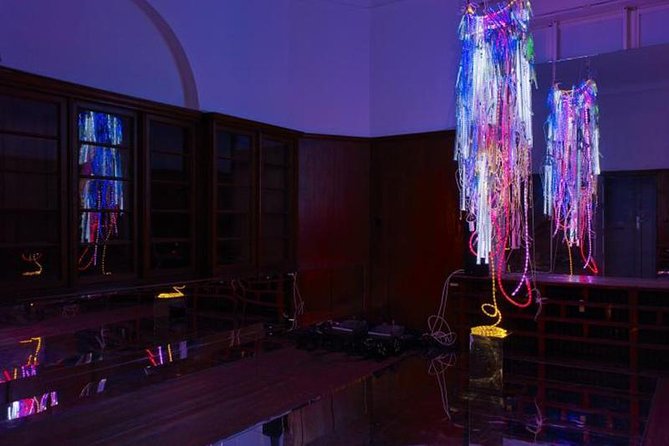
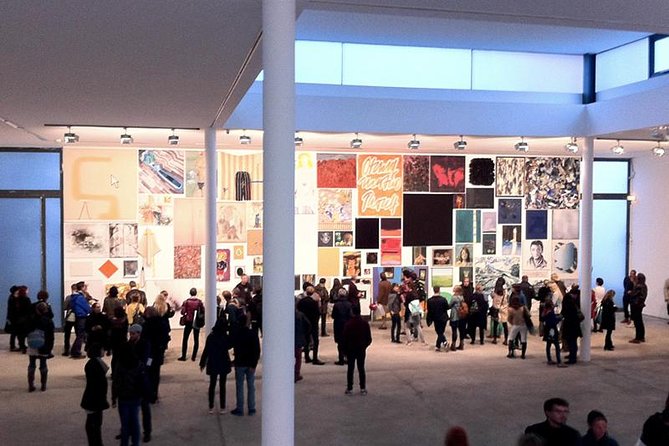
The longest stop is KW Institute for Contemporary Art, one of Germany’s leading institutions for contemporary art. KW has no permanent collection. Instead, it works more like a laboratory, changing its exhibitions, artist studios, and public programs over time.
That changing format makes KW a strong opening stop. You do not arrive expecting a fixed list of famous paintings. You arrive ready to see what Berlin’s art world is thinking about now.
Your guide can help you make sense of the institute’s temporary shows and explain how a contemporary art center differs from a traditional museum. That distinction is useful. A museum usually protects and presents a collection, while KW focuses on new work, current debates, and artists working in the present.
Plan for about 40 minutes here. That gives you enough time to see a substantial portion of the exhibition and discuss what you are looking at without turning the visit into a rushed walk-through.
Admission is not included. The listed price is €10 for adults and €6 for seniors and students. Check the current exhibition schedule before booking, since the institute is closed on Tuesdays. On a Tuesday tour, the walking portion operates, but you should not expect to enter KW.
Auguststrasse and the former Jewish girls’ school
The Auguststrasse stop brings you into a different kind of gallery setting. Michael Fuchs Galerie uses the former assembly hall and two classrooms of the old Jewish girls’ school in Berlin.
The building is part of the experience. The rooms were not designed as a sleek modern art center, and that gives the exhibitions a stronger sense of place. The gallery presents changing solo and group shows, with contemporary art alongside classical modernist works.
I like this stop because it makes you pay attention to the relationship between art and architecture. A former school building carries a different mood from a purpose-built gallery. Your guide can also help you understand how the gallery uses those rooms and how its exhibitions shift from one theme or artist to another.
Admission is free. The planned visit lasts about 30 minutes, a comfortable amount of time for a focused look before moving on through Mitte.
The tour’s historical setting also adds weight here. The building’s past is not treated as decoration. It helps remind you that Berlin’s art spaces often occupy places shaped by the city’s Jewish history, wartime destruction, division, and reunification.
Potsdamer Straße: a different gallery rhythm
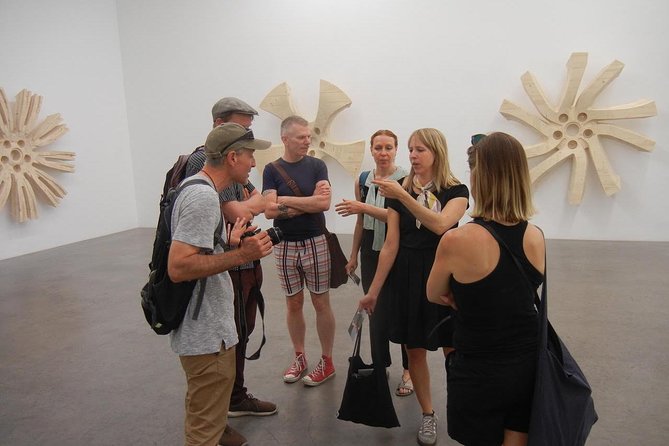
The tour then moves to Potsdamer Straße, where Esther Schipper operates a contemporary art gallery. This part of the route shows you another side of Berlin’s art system, one tied more directly to established international gallery work.
Esther Schipper is known as a contemporary art gallery based in Berlin. The stop is shorter, about 20 minutes, so expect a concentrated visit rather than a long museum-style session.
That short format can be useful. You get a quick sense of the gallery’s current program, then discuss what you have seen with your guide. You are not spending the whole afternoon in one building, and the changing pace helps you compare different approaches to exhibiting art.
Admission is free at this stop. The exact work on view depends on the gallery’s current show, so the experience will change from one tour date to another. This is one reason the tour works best for people who enjoy discovery and discussion more than checking off famous names.
Same city, a completely different kind of day:
- Berlin: Reichstag, Dome and Government District Guided Tour
★ 4.7 · 18,288 reviews - Berlin: 1-Hour City Tour by Boat with Guaranteed Seating
★ 4.3 · 16,993 reviews - Berlin: Boat Tour Along the River Spree
★ 4.4 · 11,252 reviews - Discover Berlin Half-Day Walking Tour
★ 5.0 · 9,624 reviews
Galerie Eigen & Art in a former school
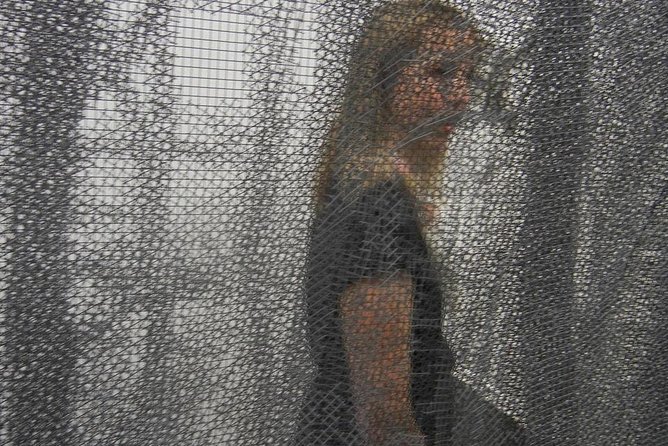
Galerie Eigen & Art occupies another former school building and presents temporary exhibitions by international contemporary artists. The setting continues the tour’s pattern of using buildings with an earlier life, rather than treating galleries as isolated rooms with no connection to the city.
The visit lasts about 20 minutes. That is enough for an introduction to the current exhibition and a conversation about the artist’s approach, but not enough to study every work in detail.
I would pay attention to how this stop differs from KW. KW is an institution devoted to experimental programs and broader cultural activity. Galerie Eigen & Art is a commercial gallery presenting artists through temporary exhibitions. Seeing both helps you understand that Berlin’s art scene is made of many parts, each with a different purpose.
Admission is free. If you have a particular artist or medium you want to see, ask about the current exhibition when you book. The itinerary can change, and the gallery schedule will shape what is available.
Galerie Giti Nourbakhsch and Berlin’s gallery network
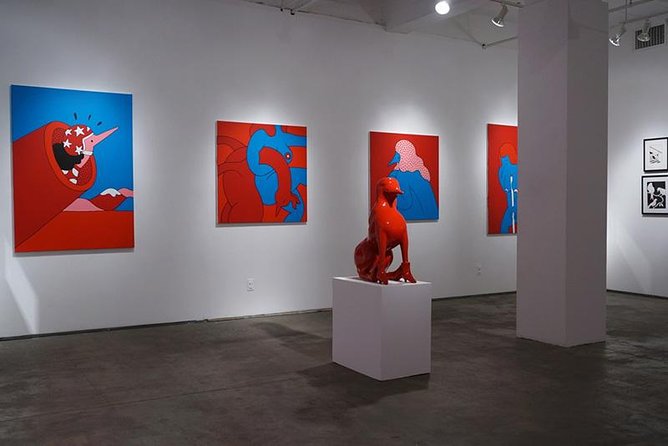
The final listed stop is Galerie Giti Nourbakhsch, located in the Potsdamer Platz gallery district. Giti Nourbakhsch was one of the early gallery owners in this popular district and helped found Berlin Gallery Weekend.
This stop gives the tour a useful sense of continuity. You have seen individual exhibitions and distinctive spaces. Here, you also get a glimpse of the people and networks that helped shape Berlin’s international gallery reputation.
The planned visit lasts around 20 minutes. Admission is not included, so confirm the current fee before you go. As with the other galleries, the exact exhibition may vary.
The gallery’s connection to Berlin Gallery Weekend is worth noting. That event helped focus international attention on Berlin’s galleries and made the city a regular stop for collectors, artists, and art professionals. Your guide can explain this growth without reducing it to a simple success story. Berlin’s gallery world remains changing and sometimes unpredictable, which is part of its appeal.
The value of an art historian guide
The guide is the main reason to choose this tour instead of visiting galleries on your own. You can enter many galleries for free, but free admission does not provide much help if you are unsure what you are seeing or why it matters.
The tour is led by a professional art historian. Two guides named in past feedback are Justin and Laureline. You should not assume that either person will lead your departure, but their reported approach gives you a sense of the tour’s style: broad comparisons, attention to artists and ideas, and clear historical background.
Laureline was praised for preparing carefully and explaining both the artists and their work. One account also described her leading the group through historic buildings in central former East Berlin, including areas above street level. Details like that can make the walk feel less predictable than a standard gallery visit.
Justin was noted for showing a broad range of galleries and adding highlights from the New Museum. That museum visit is not part of the stated five-stop route, so do not book this tour expecting a museum extension. Still, the point is useful: the guide may connect the gallery walk with Berlin’s wider art institutions when that fits the discussion.
A good guide does not need to tell you what to like. The real value is learning how to look. You may leave with a clearer sense of how an artist uses space, why an exhibition is arranged in a certain way, or how Berlin’s political past still shapes its cultural life.
A private format that keeps the conversation open
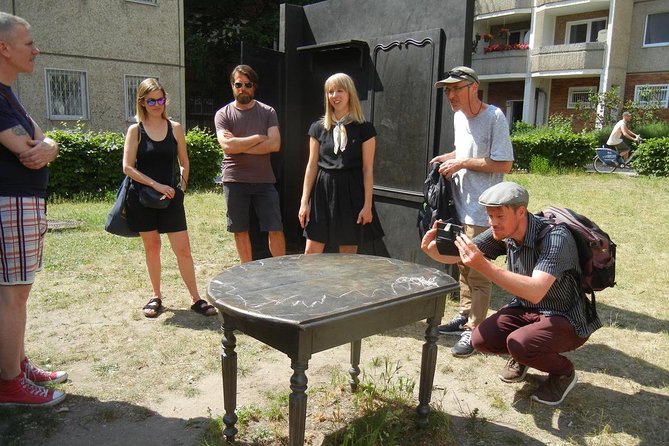
This is a private activity for your group only, with up to 10 people. That format is a major advantage for couples, families with older children, friends, or small professional groups with a shared interest in art.
A private tour also gives you room to ask basic questions. You do not need to pretend you understand a difficult installation, and you can ask the guide to spend more time on a particular artist or building.
The tour lasts about three hours. That is long enough to visit several places but short enough to fit into a morning or afternoon in Berlin. The walking element also gives you a better feel for Mitte and Potsdamer Straße than a taxi ride between isolated galleries.
Pickup is offered, and the meeting point is Schöneberger Ufer 65, 10785 Berlin. The endpoint is listed as Berlin rather than a specific return address, so confirm the final route and drop-off details before the day of your tour.
The route is near public transportation, which makes it practical to reach. Wear comfortable shoes, since the experience includes walking between exhibition spaces and moving through central neighborhoods.
What the $330 group price really means
The price is $330 per group, not per person, for up to 10 people. For a full group, that can be good value for a three-hour private tour with a specialist guide. For one or two people, the cost per person is much higher.
The price does not include the €10 adult admission to KW, or the €6 fee for seniors and students. It also excludes food and drinks. Most other listed gallery visits are free, but admission policies can change along with exhibitions.
I would compare this tour with the cost of a private city guide, not with the price of entering a free gallery. You are paying for planning, interpretation, and a route that brings together several parts of Berlin’s art world.
The tour makes the most financial sense if you are traveling with a small group and want an introduction tailored to your interests. If you are already familiar with contemporary art in Berlin, you may prefer to choose galleries on your own and spend longer at each one.
Who will enjoy this most
This is a strong choice if you want to understand Berlin’s art scene rather than simply visit one museum. It suits people who enjoy contemporary work, changing exhibitions, unusual buildings, and conversations about how art connects to politics and society.
It is also useful early in a Berlin visit. The guide can point you toward galleries and institutions worth returning to on your own, while the walk helps you get your bearings in Mitte and the Potsdamer Straße area.
You do not need formal art training. The tour is designed around explanation and context, so curiosity matters more than a background in art history.
The tour may be less suitable if you want a fixed list of famous works. Temporary exhibitions change, and the route may shift because of gallery schedules or major art events. You should book this expecting a current, flexible look at Berlin rather than a permanent collection.
Families can take part because most people can participate, but the subject matter and discussion will suit older children and adults best. The tour is private, so your group can decide how much time to spend on questions.
Timing, Tuesday plans, and changing exhibitions
You can choose a morning or afternoon departure. A morning start may suit you if you want to continue visiting museums later. An afternoon start works well if you prefer a slower morning or want to pair the tour with another central Berlin activity.
Tuesday requires special planning. KW Institute is closed that day, so the tour operates as a walking experience without the KW interior visit. If KW is a priority, choose another day.
The itinerary can also change when galleries install new shows or when major art events affect opening times. This is not a flaw, but it means you should treat the listed stops as a guide to the route rather than an absolute promise.
Confirmation is sent within 48 hours of booking, subject to availability. Free cancellation is available if you cancel at least 24 hours before the start time. Changes or cancellations inside that window are not accepted for a refund.
Should you book Berlin’s Gallery Scene?
Book this tour if you want a thoughtful introduction to Berlin’s art world, prefer a private group, and like the idea of seeing galleries in working neighborhoods rather than only visiting major museums.
The strongest reasons to go are the art historian’s guidance, the mix of gallery types, and the chance to connect current art with Berlin’s divided and reunited past. The most important cautions are the $330 group price, the extra KW admission, Tuesday’s closure, and the fact that changing shows can alter the route.
For a first look at Berlin’s contemporary art scene, I would choose this over wandering without a plan. If you already know the city’s galleries well, spend your money on individual visits instead. For everyone in between, this private walk offers a clear starting point and enough practical direction to keep exploring afterward.
FAQ
How long does Berlin’s Gallery Scene last?
The tour lasts approximately three hours.
How many people can join the private tour?
The private tour is available for one group of up to 10 people.
Is the tour offered in the morning or afternoon?
Yes. You can take the tour in the morning or afternoon.
Who leads the tour?
A professional art historian leads the experience. Justin and Laureline are two guides named in past tour feedback, but the assigned guide can vary.
Where does the tour begin?
The meeting point is Schöneberger Ufer 65, 10785 Berlin, Germany.
Does the tour include pickup?
Pickup is offered.
Is KW Institute for Contemporary Art included?
The tour visits KW when it is open, but its entrance fee is not included. Admission is €10 for adults and €6 for seniors and students.
Is KW open every day for this tour?
No. KW Institute for Contemporary Art is closed on Tuesdays. On Tuesday, the walking portion operates without the KW visit.
Are food and drinks included?
No. Food and drinks are not included.
Can the itinerary change?
Yes. The route may change based on current gallery exhibitions and major art events.
More Museums in Berlin
- Berlin: Interactive DeJa Vu Museum Entrance Ticket
★ 4.1 · 1,338 reviews - Berlin: “Pergamonmuseum. The Panorama” Exhibition Tickets
★ 4.6 · 1,245 reviews - Berlin: East Side Gallery Spree Cruise in a Solar Catamaran
★ 4.0 · 1,039 reviews - Cold War, Berlin Wall, Spies and the East Side Gallery
★ 5.0 · 1,024 reviews
Just added around Berlin
- Love and War in Berlin: Self-Guided Story Puzzle Walk★ 5.0 · 7 reviews
- Rickshaw Tours Berlin – Groups of up to 16 people with several rickshaws★ 4.0 · 97 reviews
- Walking on the Wall: 3-Hour Tour in Berlin★ 4.5 · 34 reviews
- eSIM for Germany and 34 European Countries★ 4.5 · 16 reviews
- Warnemuende Shore Excursion: Berlin Private Sightseeing Tour from Rostock★ 5.0 · 4 reviews
- Your ticket to The Wall Museum Berlin★ 3.0 · 60 reviews
- Warnemuende Shore Excursion: Private Berlin Tour★ 4.5 · 27 reviews
- Berlin’s Gay, Lesbian, and Queer Scene Small-Group Walking Tour★ 4.5 · 66 reviews
Museum & Gallery Tickets, compared.



Skip-the-Line: Berlin Wall Museum at Checkpoint Charlie
Read our review →
Browse the lists this tour appears in