
Reviewed · MUSEUM & GALLERY TICKETS
Berlin Trabi Museum: Day Ticket
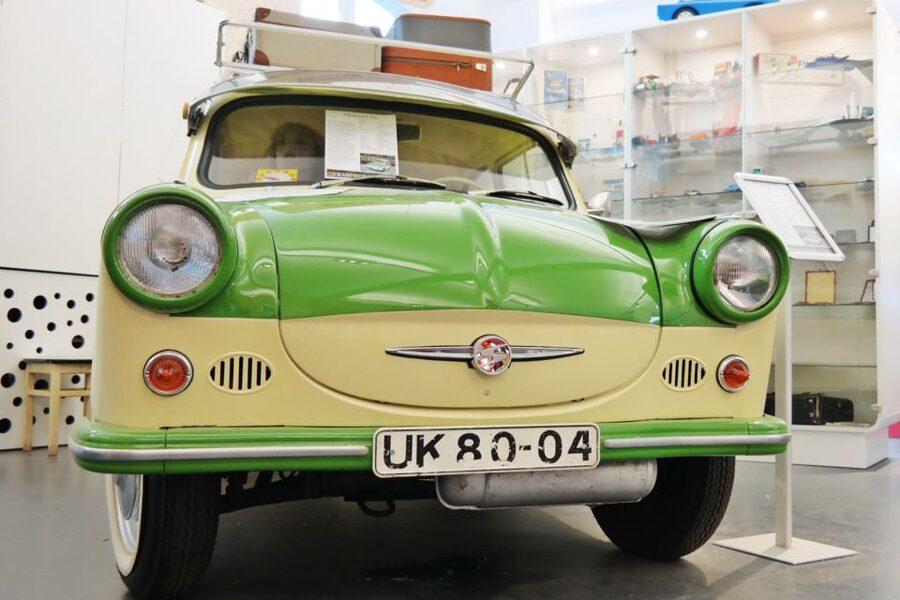
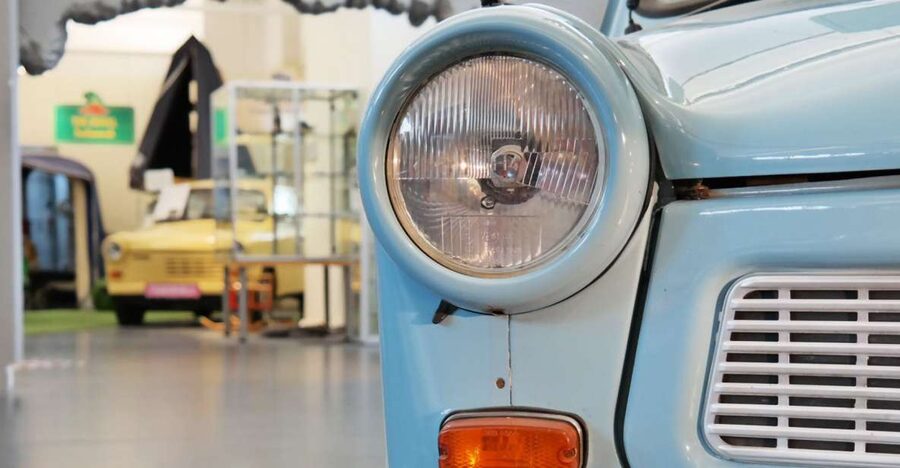
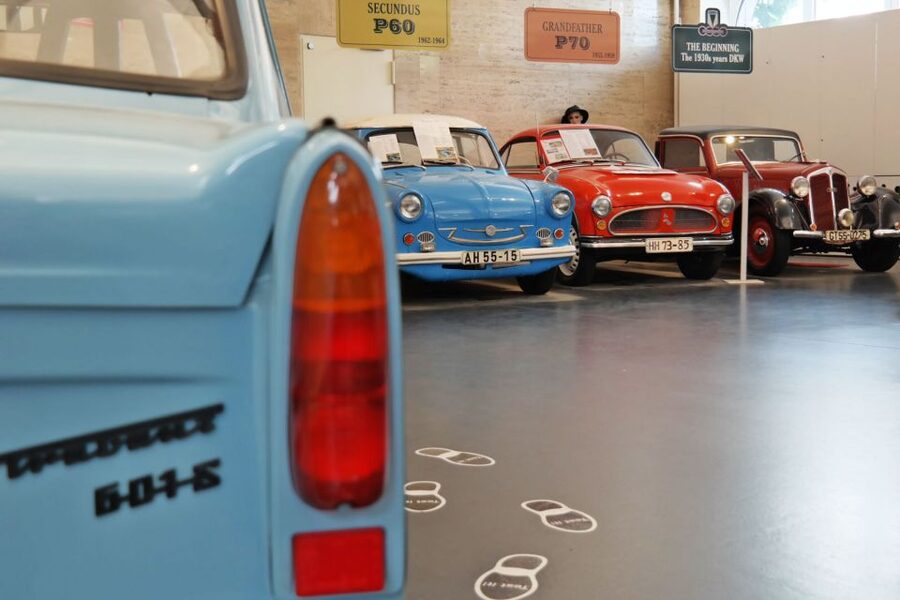
The Trabi Museum puts East Germany’s most famous car in an unlikely setting: just beside Checkpoint Charlie. Inside, you’ll see 14 vehicles, including camping models, military versions, early designs, and rare machines such as the Trabant P70 with its wooden undercarriage.
I like the compact displays and the chance to connect the car with everyday life in the former GDR, not just with automobiles. I also like the short films and miniature GDR world, which give the small museum more context than a simple line of parked cars.
The main drawback is size. At $10, this is an easy add-on near Checkpoint Charlie, but you should not expect a large automobile museum or a long guided tour. The current rating is 4.1 from 63 ratings, and the clearest practical warning is simple: some visitors find the museum very small.
In This Review
- Key points to know before you go
- Why the Trabant matters in Berlin
- Entering the museum at Checkpoint Charlie
- Fourteen cars, from practical to unusual
- The theater and miniature GDR world
- What the ticket includes, and what it does not
- How to build the visit into your Berlin day
- Who will get the most from this museum
- Practical booking advice
- Should you book the Trabi Museum?
- FAQ
- Where is the Trabi Museum?
- What should I do if the museum door is closed?
- How much does museum entry cost?
- How long is the ticket valid?
- What does the ticket include?
- How many vehicles are on display?
- Can I see military and camping Trabants?
- Is a Trabi safari included with museum admission?
- Is the museum wheelchair accessible?
Key points to know before you go
- Fourteen Trabants tell several different stories: See ordinary cars, camping models, military vehicles, and unusual early designs.
- The museum sits at Zimmerstraße 14-15: It is right by Checkpoint Charlie, making it simple to pair with a day of Berlin Wall sights.
- A short theater film adds useful background: Sit down for a brief look at the Trabant and its place in former East Germany.
- The miniature GDR scene rewards a close look: It gives you a small visual setting for the cars and their former world.
- A Trabi safari is not part of the museum ticket: The museum introduces the cars, while driving one requires arranging the safari option.
- The visit is accessible and flexible: Entry is valid for one day, the site is wheelchair accessible, and English and German assistance is available.
Why the Trabant matters in Berlin
The Trabant was more than a small car. It was the everyday vehicle of the former GDR, and its long production story reflects the limits, workarounds, and practical habits of East German life.
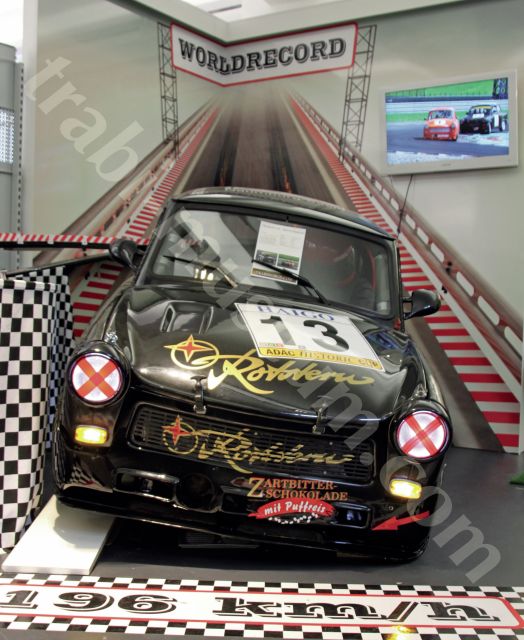
Production of the famous two-stroke car began in 1958 at the VEB Automobilwerk Zwickau. The nickname Rennpappe, often translated loosely as racing cardboard, points to the car’s light construction and modest performance. Its body was made from duroplast, a hard plastic material used instead of conventional steel.
You do not need to be a car expert to get something from the museum. The useful question is not simply how fast a Trabant could go. It is how one basic vehicle could serve so many purposes for ordinary families, camping trips, state services, and military work.
That is where the collection earns its keep. The cars show stages of development and different uses, helping you see the Trabant as a piece of daily life rather than a comic old car. Its familiar shape is only the starting point.
More Museum & Gallery Tickets in Berlin
- Berlin: Natural History Museum Entrance Ticket
★ 4.6 · 3,382 reviews - Skip-the-Line: Berlin Wall Museum at Checkpoint Charlie
★ 4.1 · 2,041 reviews - Berlin: Museum Island Multiple Museum Entry Ticket
★ 4.4 · 2,007 reviews
Entering the museum at Checkpoint Charlie
The address is Zimmerstraße 14-15, 10969 Berlin. This puts the museum in one of the city’s busiest history zones, close to the former border crossing at Checkpoint Charlie.
That location makes the museum particularly easy to add to an existing walk. You can combine it with nearby Berlin Wall material, then step indoors for a compact look at the car that moved many East Germans around their own country.
There is one useful arrival tip. If the door at Zimmerstraße 14-15 is closed, cross the street and find TrabiWorld at Zimmerstraße 97-100. This is worth remembering because the entrance arrangement may not be obvious when you arrive.
The activity offers skip-the-ticket-line entry, so you can spend your time looking at the cars rather than waiting to buy admission. A host or greeter may assist in English or German, and the museum is wheelchair accessible.
Fourteen cars, from practical to unusual
The collection includes 14 vehicles. That number tells you what kind of visit to plan: focused, quick to understand, and built around close inspection rather than a huge sequence of halls.
You will see different stages in the Trabant’s development. This gives the collection a clear thread. Instead of presenting one famous model with little explanation, the museum lets you compare versions and uses.
Some vehicles show how the Trabant served ordinary owners. Others reveal adaptations for specific needs. The camping Trabants are especially useful for understanding the car’s place in family recreation. A tiny car with limited power still became a holiday vehicle, proving how much people could do with what they had.
Military vehicles shift the tone. They show that the Trabant was not only a private family car. It also had official and service roles, with the basic design adapted for different tasks.
The collection also includes rarities. The Trabant P70 with a wooden undercarriage offers a glimpse at an early stage in the car’s development. It is the sort of detail that gives a short museum visit a real point of focus.
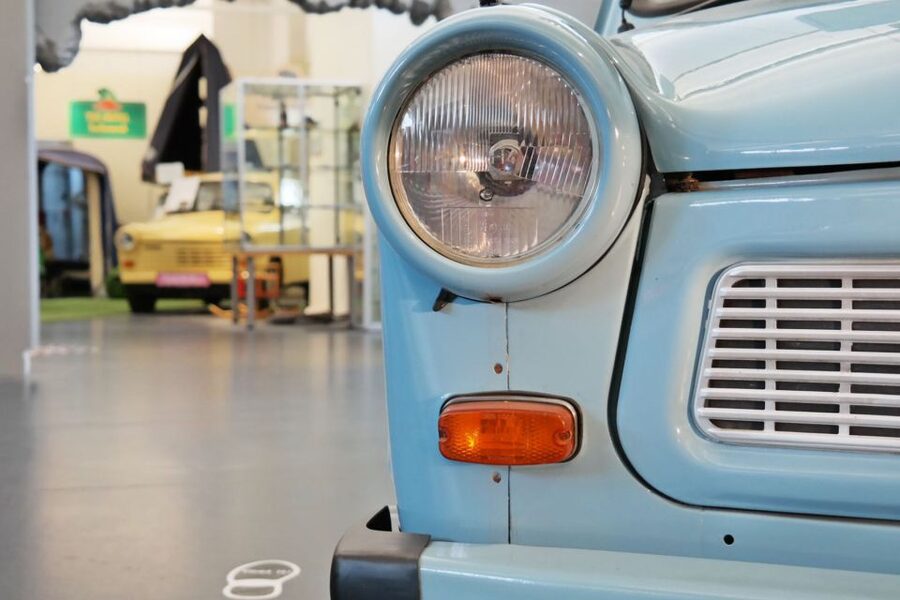
You will also find what is described as the fastest Trabi. The display is a reminder that the Trabant became a subject for modification and performance, not just a slow symbol of state production. The museum does not need a large collection to make that contrast clear.
The theater and miniature GDR world
The lightshow theater is a welcome break from standing beside cars. You can sit down and watch short films about the Trabant, giving the vehicles a bit of social and historical context.
The films are especially useful if you know little about the former GDR. A car can look amusing at first glance, but the film helps explain why it mattered. You begin to see the Trabant as the main personal vehicle available to many people, not simply as an old-fashioned machine.
The miniature GDR world adds another visual layer. It is small, but it helps place the cars in a wider setting. Look at it as a compact scene rather than a full historical reconstruction.
This part of the museum may be a highlight for families and visitors who prefer exhibits they can understand quickly. Children can look for details in the model world, while adults can connect it to the broader story of East Germany.
Do not expect a long cinema program. The film is described as a short presentation, and the museum itself is compact. That is fine if you plan it as a 30-minute to one-hour stop, but the exact length of your visit is not specified.
Same city, a completely different kind of day:
- Berlin: Reichstag, Dome and Government District Guided Tour
★ 4.7 · 18,288 reviews - Berlin: 1-Hour City Tour by Boat with Guaranteed Seating
★ 4.3 · 16,993 reviews - Berlin: Boat Tour Along the River Spree
★ 4.4 · 11,252 reviews - Discover Berlin Half-Day Walking Tour
★ 5.0 · 9,624 reviews
What the ticket includes, and what it does not
The $10 price covers entry to the Trabi Museum. The ticket is valid for one day, which gives you flexibility if you want to leave and continue sightseeing before returning.
For a museum beside one of Berlin’s major sights, the price is reasonable if you enjoy unusual transport, Cold War history, or small specialist collections. You are paying for a concentrated exhibit, not a full day of galleries.
The key distinction is the Trabi safari. You can get behind the wheel of a Trabant and drive through Berlin on a safari route, including paths through the former East or West, along the old Wall, or on a route of your choice. However, the included feature listed for this activity is museum entry only.
If driving is your main goal, confirm the safari arrangement, price, timing, and availability with TrabiWorld Trabi-Safari before booking. Do not assume that the $10 museum ticket includes the driving experience.
This distinction helps you choose wisely. The museum is suited to a short self-guided visit. The safari is a separate kind of experience, with more time on the road and a much stronger sense of the car itself.
How to build the visit into your Berlin day
I would place the museum alongside your Checkpoint Charlie sightseeing rather than crossing the city only for this stop. The location makes it a natural indoor addition to a walking route in central Berlin.
Begin with the development displays. Look first at how the car changed over time, then compare the ordinary models with the camping and military versions. This order helps you understand the collection before you focus on the rare cars.
Next, give yourself time for the P70 and the fastest Trabant. These are the display points that best show the range of the museum. One looks backward toward early construction, while the other points toward speed and modification.
Then sit in the lightshow theater for the short film. The seating matters because the museum is small and the film gives you a pause from reading labels or examining bodywork.
Finish with the miniature GDR world. It works best after you have seen the cars because you can place the vehicles within a broader setting. If you have children with you, this may be the part that keeps their attention longest.
The visit has no stated fixed start time beyond availability, so check the available entry time when you book. Since the ticket is valid for one day, you can plan around other sights rather than treating the museum as a tightly timed tour.
Who will get the most from this museum
I would recommend this stop to anyone interested in the former GDR, the Berlin Wall, unusual cars, or the practical side of daily life behind the Iron Curtain. It is also a good choice if you want a small indoor attraction near Checkpoint Charlie.
Families may find the bright cars, short film, and model world easy to approach. Car fans will appreciate the unusual versions and the chance to compare development stages. Even if you are not interested in engines, the Trabant’s role as a people’s car gives the collection a clear human angle.
The museum is less suited to you if you want a large technical collection, detailed engineering displays, or several hours of exhibits. The comment that the museum is very small should be taken seriously. The compact size is part of its charm, but it also limits how long the visit can hold your attention.
The 4.1 rating from 63 ratings suggests a generally favorable experience with some variation in expectations. The most positive reaction is easy to understand: the cars are fun to look at. The lower reaction is also fair: $10 feels better value when you treat this as a short specialist stop, not a major museum.
Practical booking advice
Book the museum if you want a set entry and the convenience of skipping the ticket line. Reserve and pay later is available, and cancellation is free up to 24 hours before the visit for a full refund.
English and German are the available languages. A host or greeter can assist in either language, but the museum visit is not presented as a long guided tour with a named guide.
The meeting point deserves a note in your phone: Zimmerstraße 14-15. If the door is closed, cross to the TrabiWorld location at Zimmerstraße 97-100.
Wheelchair access is available. If you are arranging a Trabi safari as well, ask about the driving portion separately, since the museum admission details do not list it as included.
Should you book the Trabi Museum?
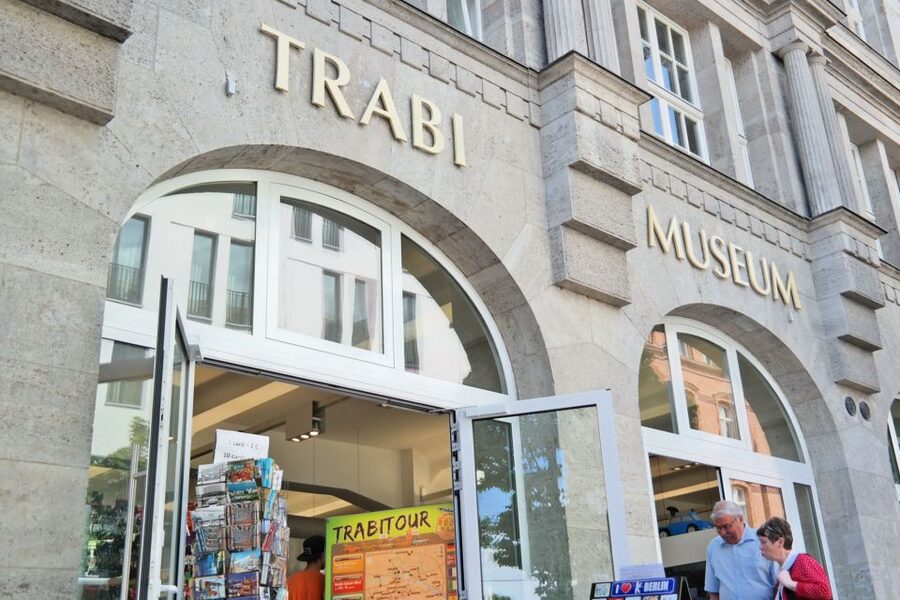
Book it if you are already near Checkpoint Charlie and want a short, affordable look at an important East German symbol. The 14 vehicles, including camping, military, early, and fast models, give the visit more variety than the familiar Trabant shape suggests.
I would not make it a destination for a full afternoon. Instead, allow time for the cars, the theater film, and the miniature GDR world, then continue with Berlin’s nearby Wall sites.
The best reason to go is the combination of humor and history. The Trabant may look quaint, but its story explains how people traveled, adapted, and made use of a limited car in the former GDR. At $10, that is a fair lesson, provided you keep the visit’s small scale in mind.
FAQ
Where is the Trabi Museum?
The museum is at Zimmerstraße 14-15, 10969 Berlin, near Checkpoint Charlie.
What should I do if the museum door is closed?
Cross the street and look for TrabiWorld at Zimmerstraße 97-100.
How much does museum entry cost?
The listed price is $10 per person.
How long is the ticket valid?
The ticket is valid for one day.
What does the ticket include?
It includes entry to the Trabi Museum.
How many vehicles are on display?
The museum displays 14 different vehicles.
Can I see military and camping Trabants?
Yes. The collection includes camping Trabants and military vehicles, along with other development stages and rare models.
Is a Trabi safari included with museum admission?
The listed inclusion is museum entry only. A Trabi safari is described as an available driving experience, so confirm its separate arrangements with the provider.
Is the museum wheelchair accessible?
Yes, the activity is wheelchair accessible. English and German assistance is available.
More Museums in Berlin
- Berlin: Interactive DeJa Vu Museum Entrance Ticket
★ 4.1 · 1,338 reviews - Berlin: “Pergamonmuseum. The Panorama” Exhibition Tickets
★ 4.6 · 1,245 reviews - Berlin: East Side Gallery Spree Cruise in a Solar Catamaran
★ 4.0 · 1,039 reviews - Cold War, Berlin Wall, Spies and the East Side Gallery
★ 5.0 · 1,024 reviews
Just added around Berlin
- Love and War in Berlin: Self-Guided Story Puzzle Walk★ 5.0 · 7 reviews
- Rickshaw Tours Berlin – Groups of up to 16 people with several rickshaws★ 4.0 · 97 reviews
- eSIM for Germany and 34 European Countries★ 4.5 · 16 reviews
- Walking on the Wall: 3-Hour Tour in Berlin★ 4.5 · 34 reviews
- Warnemuende Shore Excursion: Berlin Private Sightseeing Tour from Rostock★ 5.0 · 4 reviews
- Your ticket to The Wall Museum Berlin★ 3.0 · 60 reviews
- Warnemuende Shore Excursion: Private Berlin Tour★ 4.5 · 27 reviews
- Berlin’s Gay, Lesbian, and Queer Scene Small-Group Walking Tour★ 4.5 · 66 reviews
Museum & Gallery Tickets, compared.





Skip-the-Line: Berlin Wall Museum at Checkpoint Charlie
Read our review →
Browse the lists this tour appears in