
Reviewed · MUSEUM & GALLERY TICKETS
Berlin: Samurai Museum Entry Ticket
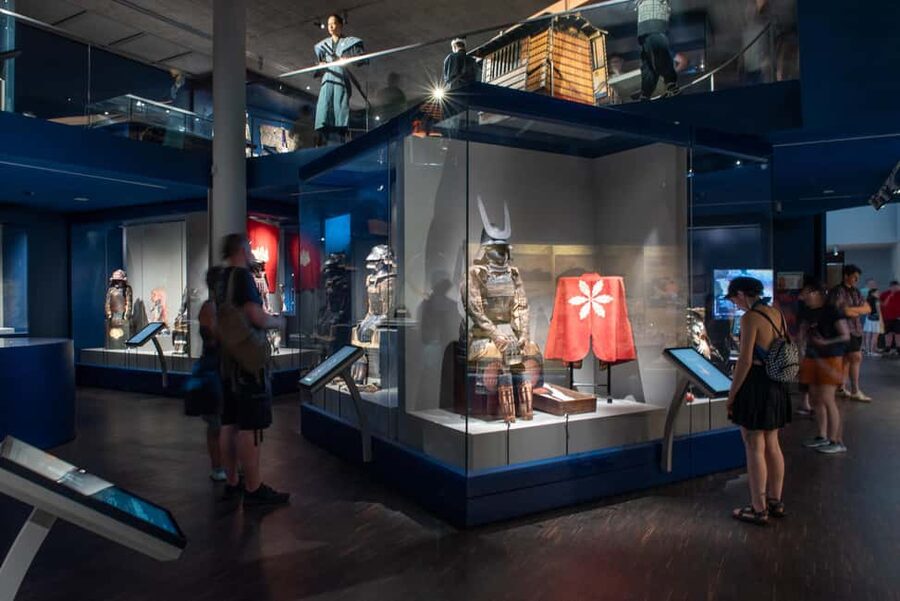
Berlin’s Samurai Museum turns a private collection into a hands-on trip through Japanese history. You’ll see authentic armor, weapons, and art alongside touchscreens, projections, holograms, and an animated fox called Kitsune that asks questions as you move through the exhibits.
I like the carefully built Noh theater and tea house, both made in Japan with traditional materials, and I like the way the displays work for adults and children at the same time. The main drawback is that the high-tech presentation may appeal less to visitors seeking a quiet, traditional museum filled only with objects and labels.
In This Review
- Key points at a glance
- A Samurai Museum with More Than Armor Behind Glass
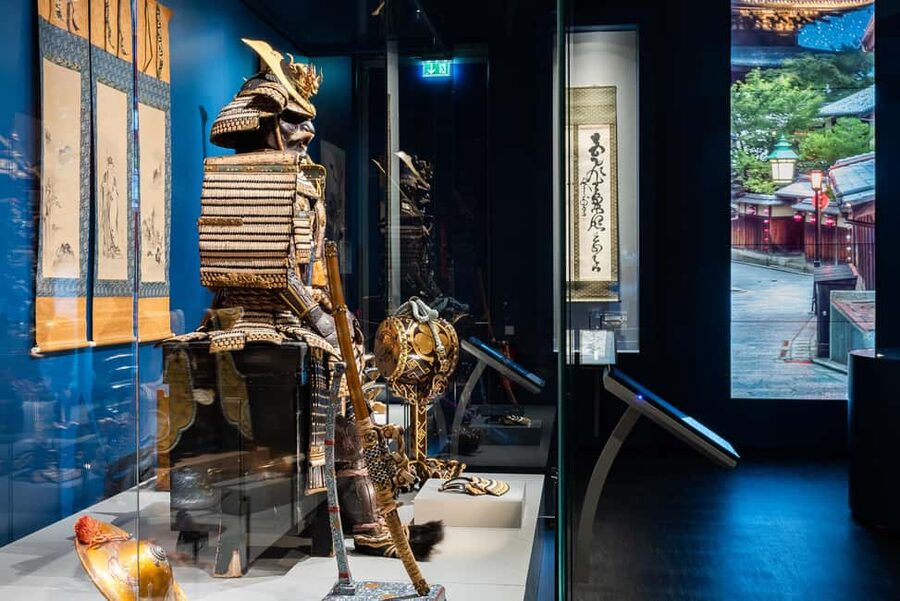
- The Collection: Armor, Swords, and a 17th-Century Palanquin
- The Noh Theater and Tea House Bring Ceremony Into Focus
- Ninja, Yōkai, and the Kitsune Questions
- How the Technology Changes the Museum Visit
- Location in Mitte Makes It Easy to Pair With Other Sights
- Is the $15 Ticket Good Value?
- Who Will Get the Most From This Museum?
- Practical Tips for Planning Your Visit
- Should You Book the Samurai Museum?
- FAQ
- Where is the Samurai Museum Berlin located?
- How much does entry cost?
- How long is the ticket valid?
- Is the ticket wheelchair accessible?
- Which public transport stops are near the museum?
- What does the ticket include?
- Can I bring food, drinks, pets, or large bags?
- Can I cancel my booking?
Key points at a glance
- More than 900 objects on display: Armor, swords, palanquins, tea utensils, and other works cover Japanese culture from the sixth to the nineteenth century.
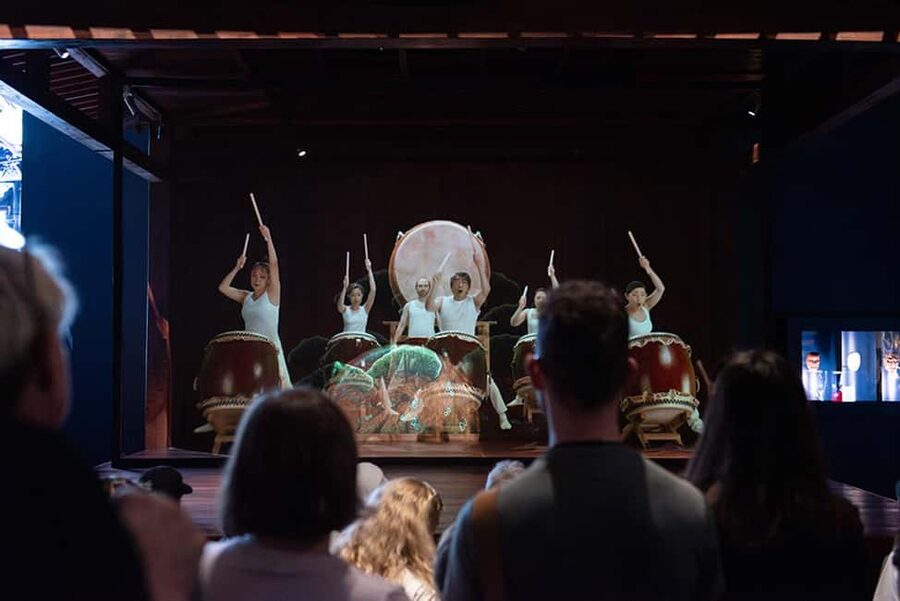
- A real Japanese Noh theater: Traditional materials and projected performances bring this rare theater form to life.
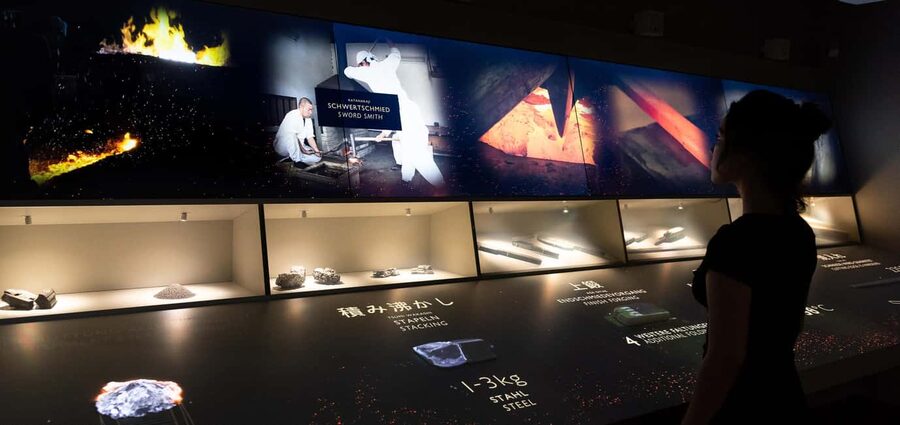
- Swordmaking explained: Interactive displays show how legendary blades were produced and why the craft mattered.
- Kitsune guides children: The fox character turns the visit into a question-and-answer adventure.
- A flexible Berlin ticket: Your entry remains valid for 1 to 14 days, depending on the option and availability.
- Easy Mitte location: The museum is close to Alexanderplatz, Museum Island, cafés, restaurants, and public transport.
A Samurai Museum with More Than Armor Behind Glass
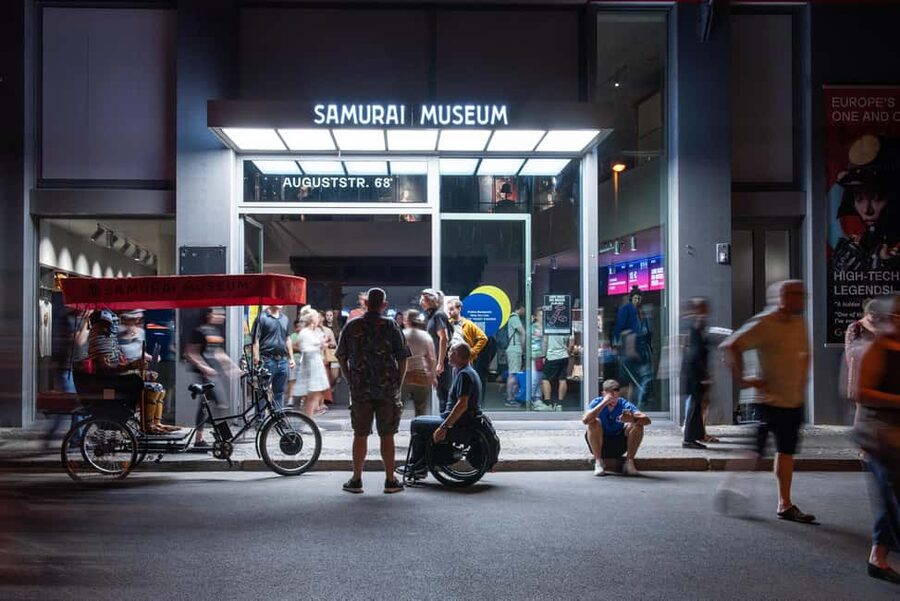
The Samurai Museum Berlin sits on Auguststraße in Mitte, close to the city’s major sights. It is not a day-long historical tour, but it offers a concentrated look at Japanese craftsmanship, warfare, theater, religion, and ceremony in one place.
The collection belongs to Peter Janssen and began with a flea-market find in Berlin. It has grown to more than 4,000 objects, with about 900 historical pieces used in the museum’s exhibition. That gives the visit a strong personal-collection feel, but the display is not simply a room full of old objects. Technology helps explain what you are seeing.
You can expect armor, weapons, artworks, and ceremonial objects from the late Kofun period through the early Meiji period, broadly the sixth to nineteenth centuries. This long time span matters because samurai culture changed greatly across those centuries. The armor and weapons are not just symbols of warriors. They also show the work of metalworkers, textile makers, lacquer artists, woodworkers, and designers.
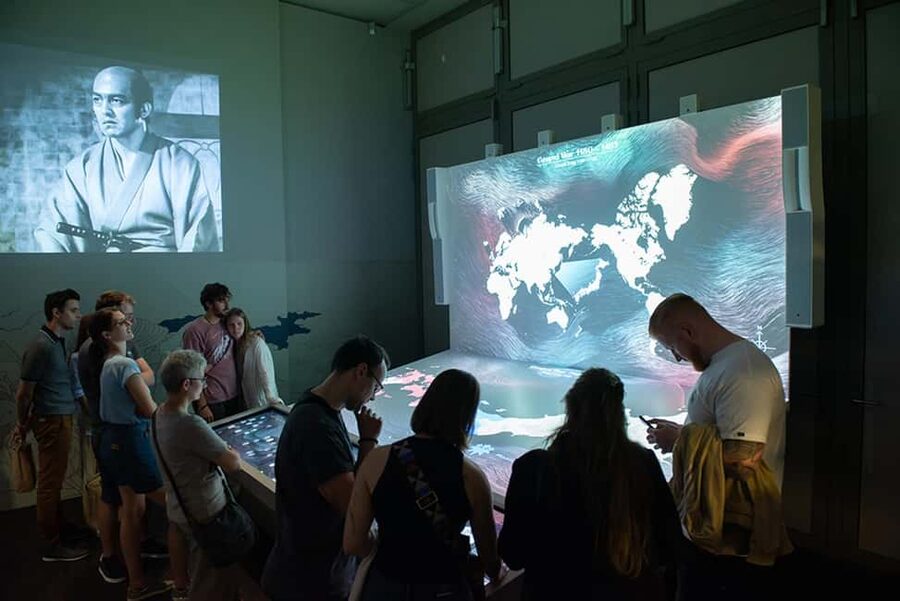
The museum’s central idea is simple: place old objects in conversation with modern tools. Projections, touchscreens, and animated features help explain the people and techniques behind the collection. If you enjoy museums where you can press, watch, listen, and test your memory, this format should suit you.
More Museum & Gallery Tickets in Berlin
- Berlin: Natural History Museum Entrance Ticket
★ 4.6 · 3,382 reviews - Skip-the-Line: Berlin Wall Museum at Checkpoint Charlie
★ 4.1 · 2,041 reviews - Berlin: Museum Island Multiple Museum Entry Ticket
★ 4.4 · 2,007 reviews
The Collection: Armor, Swords, and a 17th-Century Palanquin
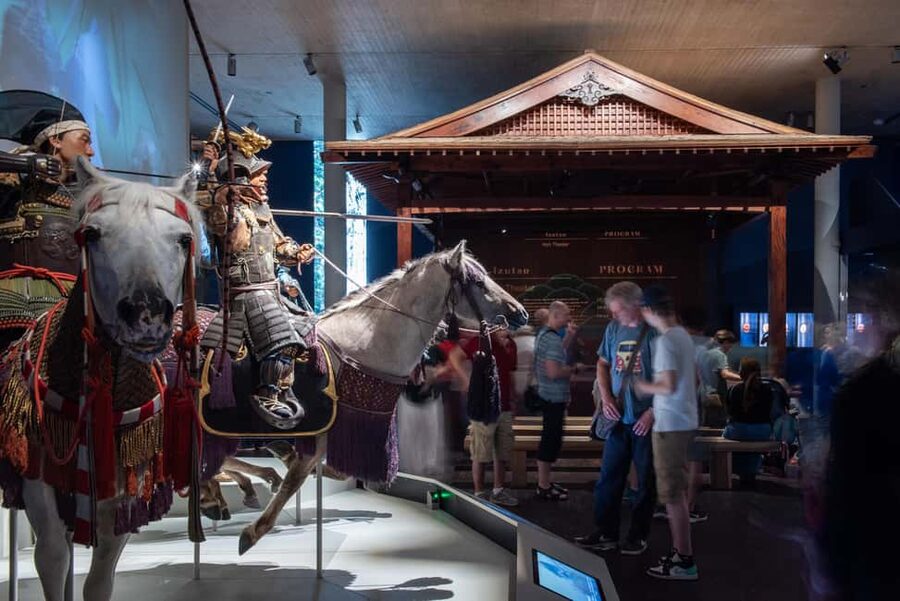
The strongest part of the visit is the collection itself. A 17th-century armor set associated with the Matsudaira clan is one of the major pieces, and an 18th-century palanquin gives you a sense of the status and ceremony connected with elite Japanese life.
You will also see tea utensils linked to the era of Sen no Rikyū, the sixteenth-century tea master whose ideas shaped the Japanese tea ceremony. These objects reward a slower look. Their value is not only in age. It is also in the precision of their materials, shape, finish, and use.
The sword section explains the work of the swordsmith rather than treating the blade as a simple weapon. Interactive displays show stages in the making of a sword and help you understand why Japanese blades became such powerful cultural objects.
This is especially useful if you arrive knowing little about sword construction. The museum gives you a practical framework: raw material, heat, folding, shaping, polishing, and the skill required to produce a blade that was both useful and highly prized. The exact level of detail you absorb will depend on how long you spend with each screen.
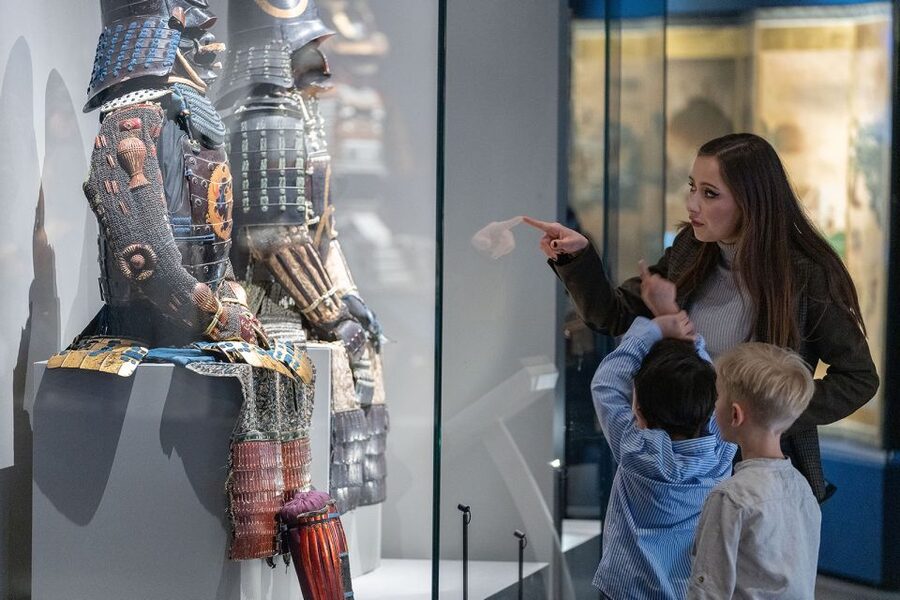
Armor is another major draw. The pieces are visually striking, but the interactive approach helps you look beyond the dramatic silhouettes. You can consider how armor was built, worn, decorated, and connected with rank. For younger visitors, the shapes and materials offer an immediate hook. For adults, the craft details make the displays more rewarding.
The Noh Theater and Tea House Bring Ceremony Into Focus
Two full-scale architectural features give the museum a welcome change of pace: a Noh theater and a tea house. Both were built in Japan with traditional materials and techniques, then reconstructed in Berlin.
The Noh theater is more than a decorative backdrop. It provides a setting for projected performances and helps show how architecture, movement, music, masks, and storytelling work together in Japanese theater. The museum also features holographic music performances, adding a modern layer to the presentation.
Noh can feel unfamiliar if you have never encountered it before. Its pace and style are very different from modern stage entertainment. The projections help you see the theater as a living art form instead of an isolated historical object.
The tea house offers another kind of lesson. Displays explain the process of the centuries-old tea ceremony and connect it with the culture of the samurai. Here, the focus shifts from weapons and rank to discipline, hospitality, design, and controlled movement.
I would give these sections more than a quick glance. They explain an important point: samurai culture was not limited to fighting. It also influenced ceremony, artistic taste, architecture, theater, and the way objects were handled and valued.
Ninja, Yōkai, and the Kitsune Questions
The museum widens its subject beyond the samurai by including ninja and yōkai, the supernatural beings of Japanese folklore. This makes the visit easier for families, especially children who may first arrive for the ninja theme rather than the historical collection.
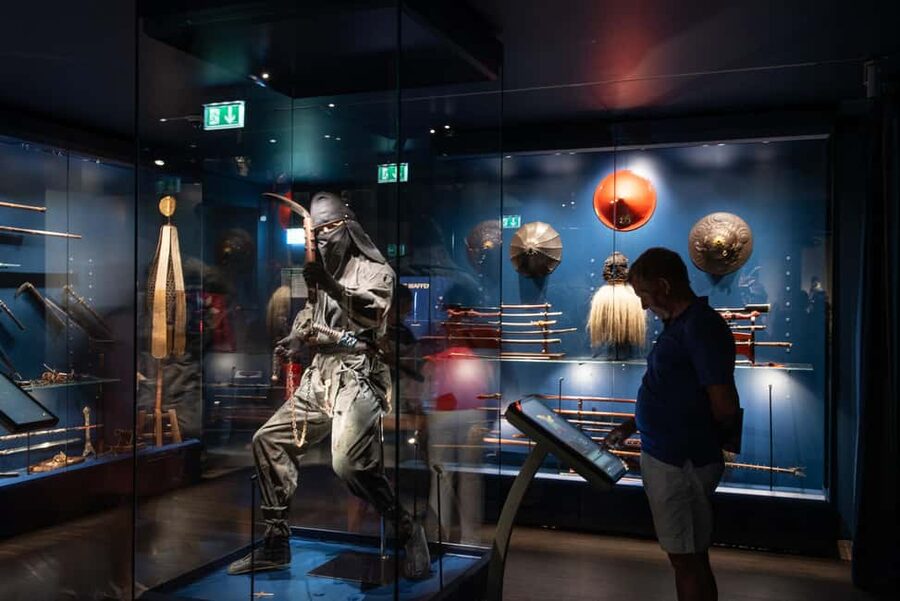
Interactive installations let you learn about ninja techniques and explore the folklore surrounding yōkai. The exact experience is built around screens, projections, and playful prompts rather than a live training session, so you should think of it as an educational museum activity, not a physical ninja course.
A fox character named Kitsune acts as a guide through questions and challenges. The character has a nine-tailed fox appearance that may remind some children of anime. This is a useful feature for families because it gives younger visitors a reason to stay engaged while adults examine the historical objects.
The technology is also available in English and German, making the museum easier to use for international visitors and local families. Staff members are available to help at arrival, and the displays are designed to provide a large amount of information without requiring a separate guide.
You should still expect the experience to vary by age and interest. Children may hurry toward the interactive features, while adults may want to pause at the armor, tea objects, and sword displays. That split is manageable, but it means the museum works best when your group agrees to move at different speeds.
Same city, a completely different kind of day:
- Berlin: Reichstag, Dome and Government District Guided Tour
★ 4.7 · 18,288 reviews - Berlin: 1-Hour City Tour by Boat with Guaranteed Seating
★ 4.3 · 16,993 reviews - Berlin: Boat Tour Along the River Spree
★ 4.4 · 11,252 reviews - Discover Berlin Half-Day Walking Tour
★ 5.0 · 9,624 reviews
How the Technology Changes the Museum Visit
The high-tech elements are not added only for spectacle. They help explain subjects that can otherwise be difficult to grasp from a label.
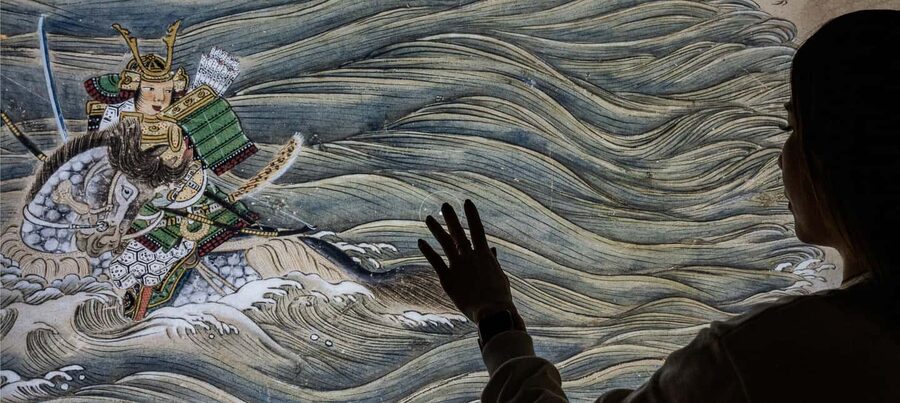
A projection can show how a theater was used. A touchscreen can break down sword production. A holographic performance can offer a sense of sound and movement. Questions from Kitsune can turn passive looking into a small challenge.
I like this approach for first-time learners. You do not need a detailed background in Japanese history to follow the main ideas. The museum creates several entry points, so you can begin with armor, theater, tea, ninja culture, or folklore and still gain a broader picture.
The trade-off is atmosphere. A traditional museum may give you more silence and space for close study. Here, the lights, screens, projections, and performances make the rooms more active. Some visitors will find that exciting. Others may prefer a slower display with fewer digital effects.
The best strategy is to use the technology as a guide, then return your attention to the objects. The screens explain the setting, but the armor, sword fittings, lacquerwork, textiles, and tea utensils are what give the visit its lasting value.
Location in Mitte Makes It Easy to Pair With Other Sights
The museum’s address on Auguststraße is convenient for a day in central Berlin. You can combine it with Museum Island, Alexanderplatz, or a walk through the surrounding streets of Mitte.
Public transport is straightforward. The nearest listed U-Bahn stops are Oranienburger Tor on line U6 and Rosenthaler Platz on line U8. S-Bahn options include Oranienburger Straße on lines S1, S2, S25, and S26.
Trams M1 and M5 stop at Oranienburger Straße, while M8 serves Rosenthaler Platz. Bus options include 142 at Tucholskystraße and M41 at Abgeordnetenhaus.
After the museum, you have cafés, restaurants, and shopping nearby. This makes the ticket easier to fit into a full Berlin day. I would not plan the museum as your only activity, but it works well between other Mitte sights or as a change from Berlin’s European art and wartime museums.
The activity begins and ends at the museum. There is no separate coach transfer or guided city walk included, so you control the rest of your schedule.
Is the $15 Ticket Good Value?
At about $15 per person, the museum is reasonably priced for a central Berlin cultural stop, especially if you have an interest in Japan, craft, history, or family-friendly exhibitions. The value comes from the range of material: armor, swords, theater, tea ceremony, folklore, and digital presentations are all included under one entry ticket.
It is a better buy for visitors who will take time with the displays rather than rush through for photographs. The flexible ticket helps, since it is valid for 1 to 14 days depending on the selected option. You can choose your day and time within the available arrangements instead of locking yourself into a single tightly planned visit.
The ticket includes entry only. An exhibition catalog costs extra, so collectors and serious history fans should budget separately if they want a printed reference.
The ability to go directly to the entrance barrier with your smartphone ticket can save time. The ticket is also wheelchair accessible. Pets, food, drinks, luggage, and large bags are not allowed inside, so plan around those restrictions.
Free cancellation is available up to 24 hours before the visit, and the reserve-now-pay-later option can help if your Berlin plans are still changing. Check the exact ticket conditions and available starting times before booking, since the flexible validity does not mean every time slot is always open.
Who Will Get the Most From This Museum?
I would recommend the Samurai Museum to families, first-time visitors curious about Japanese culture, and anyone who likes museums with interactive features. The Kitsune questions, ninja material, and holographic performances give children clear points of interest.
It also suits adults who care about craft. The swordmaking displays, armor, tea utensils, palanquin, theater, and tea house provide more substance than a simple pop-culture exhibition.
History fans should enjoy the broad date range and the chance to see objects connected with different periods. The museum does not replace a specialist collection focused only on Japanese history, but it offers a useful introduction across several centuries.
Anime fans may like Kitsune’s appearance and the ninja and yōkai themes, but this is not an anime museum. The focus remains on historical objects, Japanese traditions, and the samurai world.
You may want to skip it if you strongly dislike screens, projections, or interactive displays. You may also find the ticket less compelling if your main interest is only in battlefield history, since the museum gives equal attention to theater, tea, folklore, and craftsmanship.
Practical Tips for Planning Your Visit
Use the flexible validity to place the museum on the day you are already exploring Mitte. That saves you from crossing Berlin just for one indoor attraction.
Allow enough time to read and use the interactive displays. No exact visit length is provided, and your pace will depend on whether you stop for the swordmaking explanations, Noh performances, tea ceremony material, and Kitsune challenges.
Bring your ticket on your smartphone and go directly to the entrance barrier. Since large bags and luggage are not allowed, avoid arriving with suitcases or bulky day bags.
If you are visiting with children, let them lead at some of the interactive stations, then bring them back to one or two major objects. This keeps the visit playful without losing the historical content.
If you want a quieter experience, choose a time that fits your schedule through the available booking options. The museum is in a popular central district, so combining it with nearby sights is practical, but the flexible ticket gives you room to adjust.
Should You Book the Samurai Museum?
Book it if you want a lively, accessible introduction to Japanese culture with genuine historical objects at its core. The combination of samurai armor, swordmaking, a Japanese Noh theater, a tea house, holographic performances, and child-friendly questions gives the $15 ticket a strong range of content.
I would especially choose it for a family day in Mitte or for an adult who wants something different from Berlin’s large state museums. The only real question is whether you prefer digital interpretation or a quiet, traditional gallery. If the former sounds appealing, this is an easy museum to add to your Berlin plans.
FAQ
Where is the Samurai Museum Berlin located?
The museum is on Auguststraße in Berlin-Mitte, near Alexanderplatz and Museum Island.
How much does entry cost?
The listed price is $15 per person.
How long is the ticket valid?
The ticket is valid for 1 to 14 days, depending on the selected option. Check availability for the starting times and exact arrangements.
Is the ticket wheelchair accessible?
Yes, the activity is wheelchair accessible.
Which public transport stops are near the museum?
You can use U6 to Oranienburger Tor or U8 to Rosenthaler Platz. S-Bahn lines S1, S2, S25, and S26 stop at Oranienburger Straße. Trams M1, M5, and M8, along with listed bus services, also provide access.
What does the ticket include?
The ticket includes entry to the Samurai Museum. An exhibition catalog is not included.
Can I bring food, drinks, pets, or large bags?
No. Pets, food, drinks, luggage, and large bags are not allowed.
Can I cancel my booking?
Yes. You can cancel up to 24 hours in advance for a full refund. A reserve-now-pay-later option is also available.
More Museums in Berlin
- Berlin: Interactive DeJa Vu Museum Entrance Ticket
★ 4.1 · 1,338 reviews - Berlin: “Pergamonmuseum. The Panorama” Exhibition Tickets
★ 4.6 · 1,245 reviews - Berlin: East Side Gallery Spree Cruise in a Solar Catamaran
★ 4.0 · 1,039 reviews - Cold War, Berlin Wall, Spies and the East Side Gallery
★ 5.0 · 1,024 reviews
Just added around Berlin
- Love and War in Berlin: Self-Guided Story Puzzle Walk★ 5.0 · 7 reviews
- Rickshaw Tours Berlin – Groups of up to 16 people with several rickshaws★ 4.0 · 97 reviews
- Walking on the Wall: 3-Hour Tour in Berlin★ 4.5 · 34 reviews
- eSIM for Germany and 34 European Countries★ 4.5 · 16 reviews
- Warnemuende Shore Excursion: Berlin Private Sightseeing Tour from Rostock★ 5.0 · 4 reviews
- Your ticket to The Wall Museum Berlin★ 3.0 · 60 reviews
- Warnemuende Shore Excursion: Private Berlin Tour★ 4.5 · 27 reviews
- Berlin’s Gay, Lesbian, and Queer Scene Small-Group Walking Tour★ 4.5 · 66 reviews
Museum & Gallery Tickets, compared.





Skip-the-Line: Berlin Wall Museum at Checkpoint Charlie
Read our review →
Browse the lists this tour appears in