
Reviewed · MUSEUM & GALLERY TICKETS
Berlin: Jewish Museum Highlights Tour
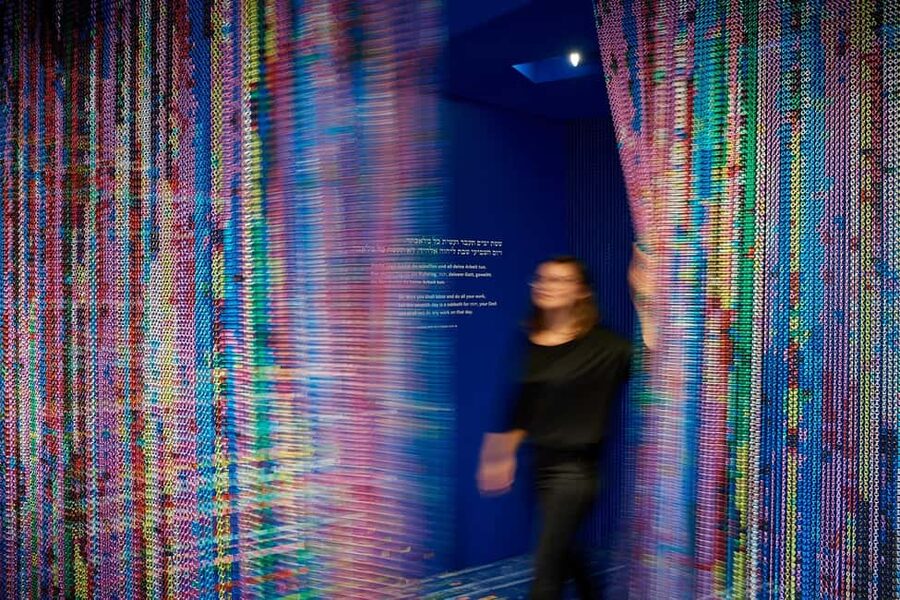
The most striking part of this tour is the way architecture and history speak to each other. Inside the Jewish Museum Berlin, sharp angles, empty spaces, and unusual rooms are not mere decoration. They shape how you think about belonging, exclusion, loss, and Jewish life in Germany.
I like the clear 90-minute format, which gives you a useful first look without taking over your day. I also like the price: at $7 per person, a guided introduction to such a serious and layered museum is a strong value. The main drawback is that the subject is emotionally demanding, and the short tour can only sample the permanent exhibition rather than explain every object or room.
In This Review
- Key points to know before you go
- Why this 90-minute visit matters
- Starting in the old building’s glass courtyard
- Five chapters from medieval life to today
- Eight rooms that connect history with art
- Historical objects, films, and media stations
- The building itself is one of the main stops
- What the guide adds in 90 minutes
- Price, timing, and the small ticket detail
- Who will get the most from this tour
- How to make the most of your visit
- Should you book the Jewish Museum Highlights Tour?
- FAQ
- How long does the Jewish Museum Highlights Tour last?
- What language is the guided tour?
- Is an audio guide included?
- What does the tour cover?
- How is the exhibition organized?
- Where is the meeting point?
- Is museum entry included?
- Is the tour wheelchair accessible?
- Are food, drinks, and transportation included?
- Can I cancel the booking?
Key points to know before you go
- Five historical chapters: Follow Jewish life in Germany from the Middle Ages through the present, with special attention to the Nazi era and the years after 1945.
- Eight rooms on art and culture: These rooms add personal and cultural detail to the historical story.
- A Jewish point of view: The tour presents selected objects and stations through Jewish perspectives, including positions that may disagree with one another.
- Architecture is part of the lesson: The building’s symbolic design helps frame the themes of absence, exclusion, and identity.
- Useful English introduction: You receive a live English tour and an English audio guide, making it easier to continue on your own.
- Good value at $7: Entry and the guided tour are included, but you still need to collect a free core-exhibition ticket at the museum entrance.
Why this 90-minute visit matters
The Jewish Museum Berlin is not simply a place to look at old objects in glass cases. Its core exhibition asks how Jewish life in Germany has changed over time, and how it has been shaped by both belonging and exclusion.
That makes this tour useful even if you already know something about German history. You are not just receiving a sequence of dates. You are being asked to consider how identity is formed, challenged, protected, and sometimes denied.
The museum presents the story from a Jewish perspective. That matters because the exhibition does not reduce Jewish life to persecution alone. It also addresses culture, art, everyday life, and the varied ways Jewish people have understood their place in Germany.
You should still expect serious attention to the Nazi era and the decades after 1945. These subjects are central to the exhibition, and they are handled as part of a longer story that begins in the Middle Ages and continues into the present.
More Museum & Gallery Tickets in Berlin
- Berlin: Natural History Museum Entrance Ticket
★ 4.6 · 3,382 reviews - Skip-the-Line: Berlin Wall Museum at Checkpoint Charlie
★ 4.1 · 2,041 reviews - Berlin: Museum Island Multiple Museum Entry Ticket
★ 4.4 · 2,007 reviews
Starting in the old building’s glass courtyard
You meet your guide on the ground level of the old building, in the glass courtyard. This is an important practical detail, since a museum complex can make a first meeting point harder to find than expected.
The setting also gives you an early sense of the museum’s unusual design. The architecture is not a separate attraction that you inspect before the exhibition. It is part of the experience from the beginning, and the guide helps connect the building’s forms with the subjects inside.
The tour is offered in English, and an English audio guide is included. The live guide gives you a human thread through the visit, while the audio guide can help you take in more information at your own pace.
The activity is wheelchair accessible. Food, drinks, and transportation to or from the museum are not included, so plan your route and refreshments separately.
Five chapters from medieval life to today
The permanent exhibition is arranged in five historical chapters. In 90 minutes, the guide selects key stations and objects instead of attempting to cover every display.
That approach is sensible. A museum dealing with centuries of history can easily become a blur of names and dates. Selected stops give you a framework, then leave room for you to return to areas that catch your attention.
The early sections place Jewish life in Germany within a long historical timeline. They help you see that Jewish presence in Germany did not begin with the 20th century, and that the story cannot be told only through the Holocaust.
As you move forward, the exhibition examines the pressure between belonging and exclusion. The issue is not presented as a simple shift from one condition to another. The museum uses different voices and sometimes conflicting positions, which gives the story more honesty.
The Nazi era receives major focus, as it should. The tour provides a first orientation to this section, but its 90-minute length means you may want more time afterward if you wish to study the material closely.
The chapters following 1945 are equally important. They ask what Jewish life in Germany means after the destruction of European Jewry, and how Jewish identity and public life continue in the present.
Eight rooms that connect history with art
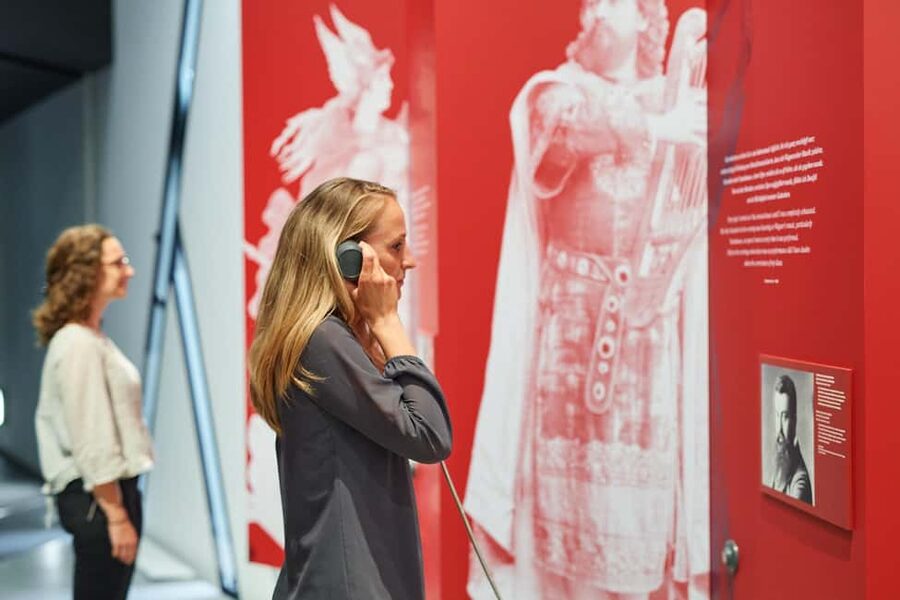
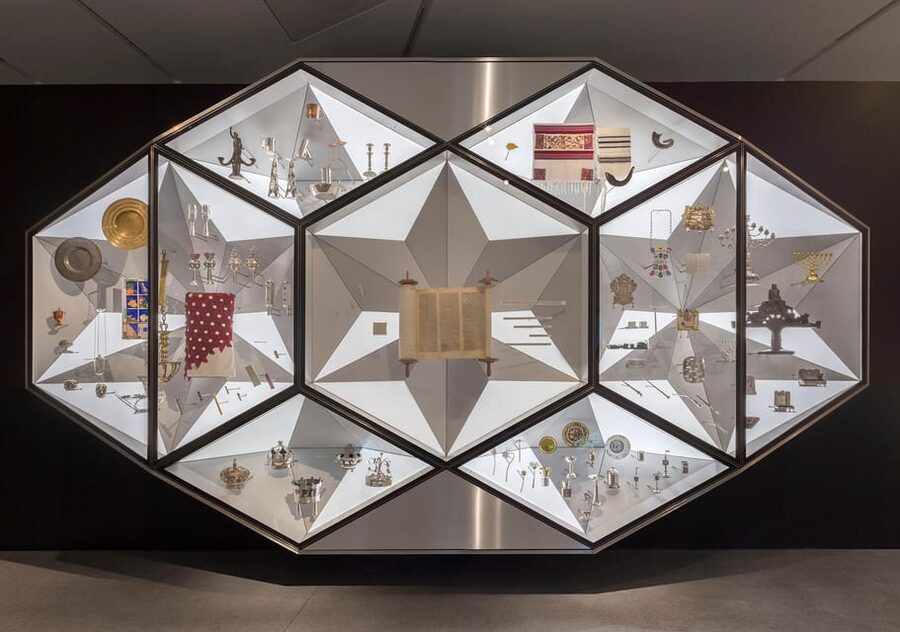
The eight rooms devoted to art and culture give the exhibition a different pace. Instead of moving only through historical explanation, you encounter works of art and cultural material that show how Jewish life can be expressed, remembered, questioned, and reimagined.
I like this balance because objects and images can raise questions that a timeline cannot. A historical object may tell you what happened, while a work of art can suggest how an individual or community experienced that world.
The rooms also support the exhibition’s central idea of polyphonic history. You may encounter positions that do not fit neatly together. That is not a flaw. It reflects the fact that Jewish identity, German identity, memory, and belonging are not single ideas shared in exactly the same way by everyone.
The guide uses selected stops rather than treating each room as an equal item on a checklist. You will get a sense of the main themes, but you should not expect a detailed explanation of every artwork or cultural object.
Same city, a completely different kind of day:
- Berlin: Reichstag, Dome and Government District Guided Tour
★ 4.7 · 18,288 reviews - Berlin: 1-Hour City Tour by Boat with Guaranteed Seating
★ 4.3 · 16,993 reviews - Berlin: Boat Tour Along the River Spree
★ 4.4 · 11,252 reviews - Discover Berlin Half-Day Walking Tour
★ 5.0 · 9,624 reviews
Historical objects, films, and media stations
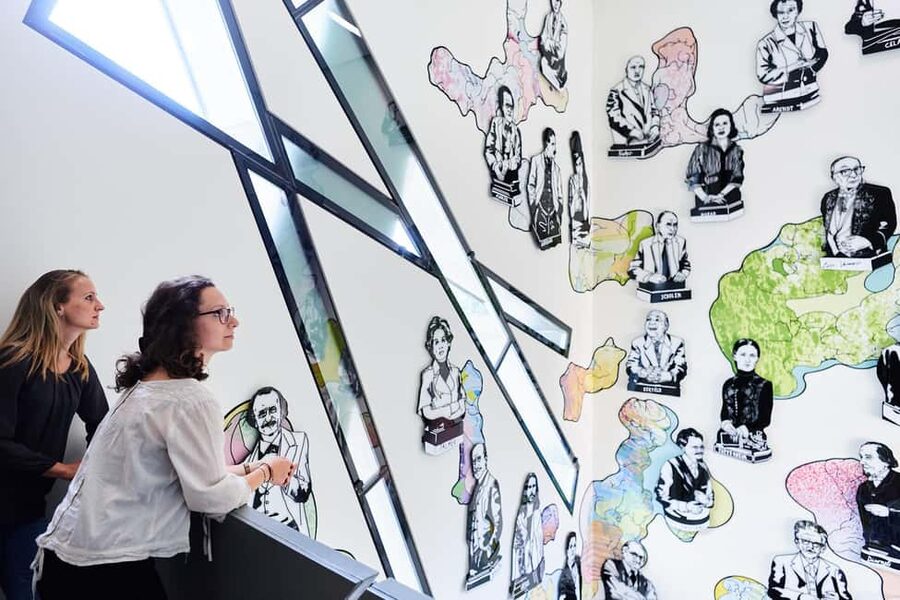
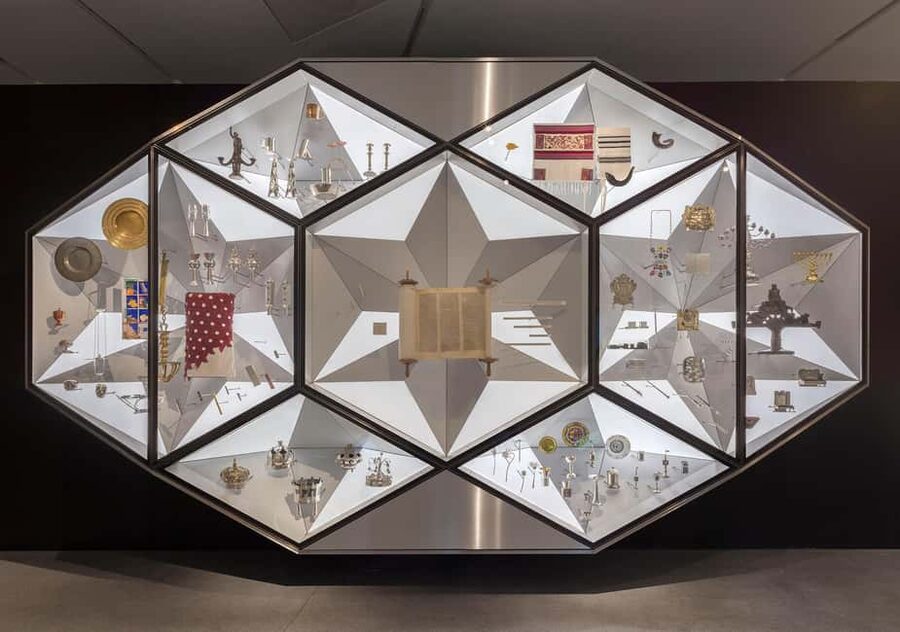
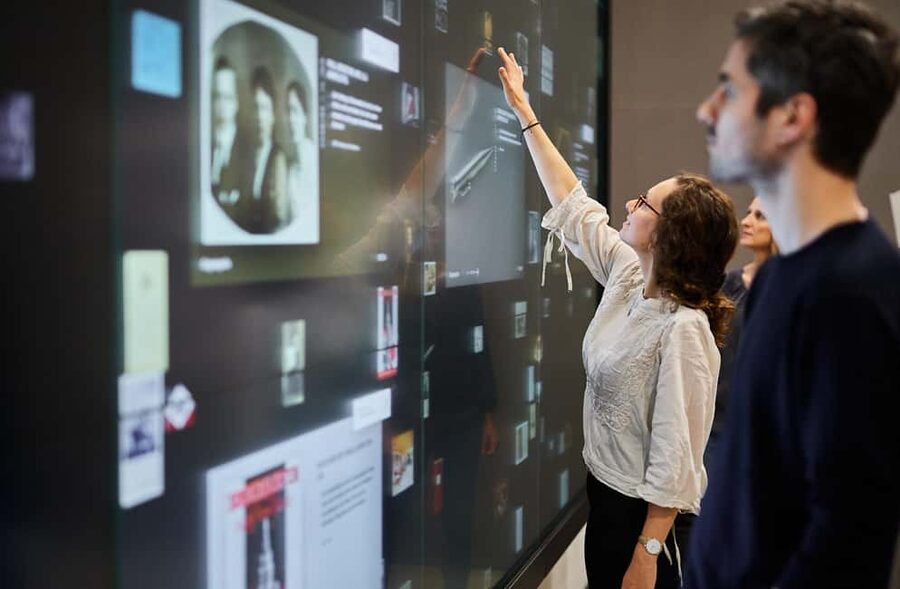
The exhibition uses several kinds of material: historical objects, media stations, video installations, and works of art from the museum’s collection. This variety gives you different ways to approach the subject.
If you prefer traditional museum displays, the objects provide a firm link to specific people and periods. If you learn more easily through images and moving media, the video installations and media stations add context and another human dimension.
The mix can also make the visit feel busy. You are moving between objects, screens, rooms, and architecture, all while following a serious historical argument. The guide’s role is especially useful here because you do not have to decide on your own what deserves your limited time.
The exhibition does not present one tidy answer to what it means to be Jewish today. Instead, it places different ideas beside one another. You may find that some sections give you information, while others leave you with questions. That is part of the intended experience.
The building itself is one of the main stops
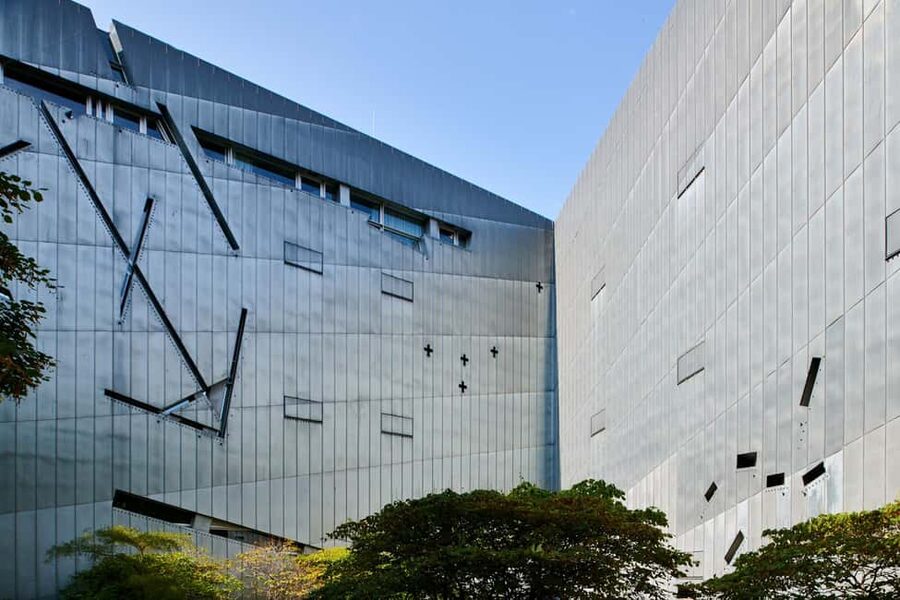
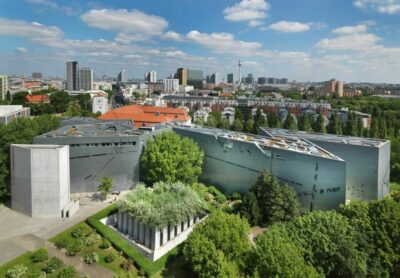
The museum’s symbolic architecture is one of the most praised parts of the experience. The design can feel challenging at first, but the guided explanation helps you see why the building matters.
The architecture creates a physical relationship with the exhibition’s subjects. Angled forms, unusual spaces, and a sense of interruption make the building feel different from a conventional museum.
I would not treat the architecture as a quick photo opportunity before moving on. It shapes the mood of the visit and gives you a way to think about absence, dislocation, and broken continuity.
One important caution: architecture can be interpreted in several ways, and the tour does not make every detail instantly clear. Give yourself permission to listen, look, and sit with an idea rather than trying to solve every symbol at once.
The building may be particularly rewarding if you enjoy museums where design carries meaning. If you prefer a straightforward collection arranged in simple chronological order, the experience may feel less direct.
What the guide adds in 90 minutes
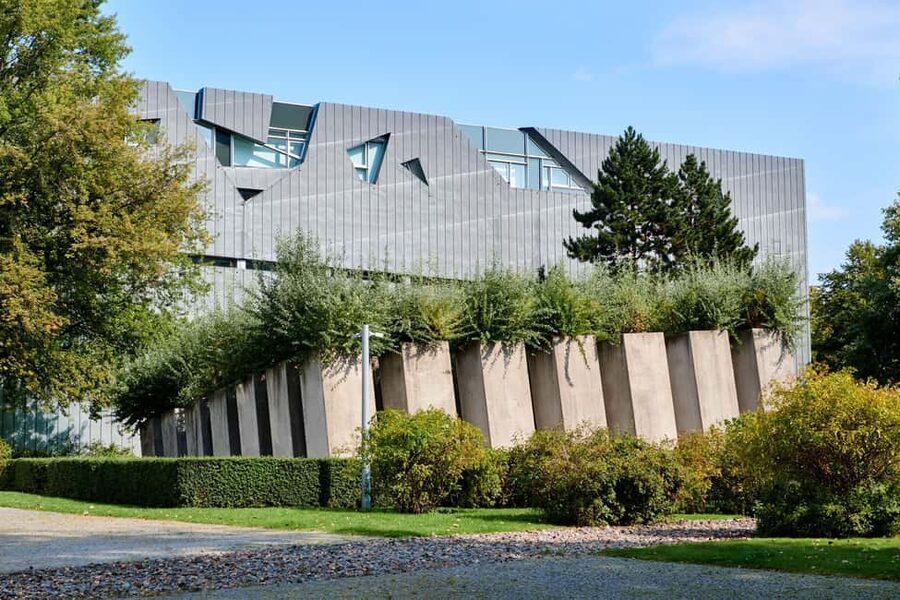
A live guide is valuable here because the exhibition combines difficult history with abstract design. A guide can point out how a selected object connects to a larger chapter, then explain how the architecture reinforces the same theme.
The tour is told from a Jewish perspective, and it includes varied, sometimes contradictory positions. That helps prevent the visit from becoming a single official story delivered without tension.
The guide also gives you a practical starting point for independent exploration. After the 90 minutes, you should understand the basic structure of the core exhibition and know which rooms or subjects deserve a closer look.
Do not expect a private discussion or a fully exhaustive lecture. The tour is designed as a highlights visit. Its job is to give you orientation, context, and a thoughtful route through the exhibition.
Past tour feedback has emphasized the guide’s passion, clear storytelling, and ability to explain the demanding architecture and art. One response described the experience as a highlight of a Berlin visit and said it prompted wider reflection on displaced minorities. That suggests the tour can reach beyond the specific history on display, though the subject remains centered on Jewish life in Germany.
Price, timing, and the small ticket detail
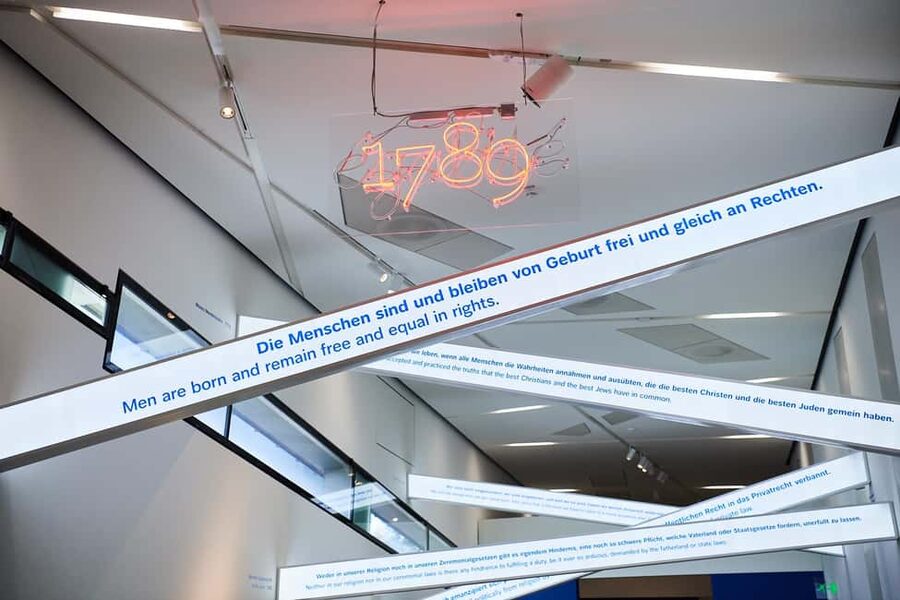
At $7 per person, this is one of the easier museum expenses to justify. You receive entry and a guided tour for 90 minutes, plus an English audio guide. Even if you later spend more time exploring on your own, the tour gives you a useful base.
There is one detail you should not overlook. You are instructed to collect a free ticket for the core exhibition at the museum ticket desk at the entrance. The activity includes entry and offers skip-the-ticket-line access, but the free exhibition ticket is still part of the arrival process.
I would arrive with enough time to handle that step before the tour begins. The meeting point is in the old building’s glass courtyard on the ground level, so you do not want to be searching for the courtyard at the last minute.
The tour lasts 1.5 hours, with starting times depending on availability. That length works well as a focused introduction, especially if you are planning several Berlin sights in the same day.
You can cancel up to 24 hours in advance for a full refund, and you can reserve now and pay later. Those options help if your Berlin schedule is still changing, but the main value here comes from the low price and the guidance through a complex museum.
Who will get the most from this tour
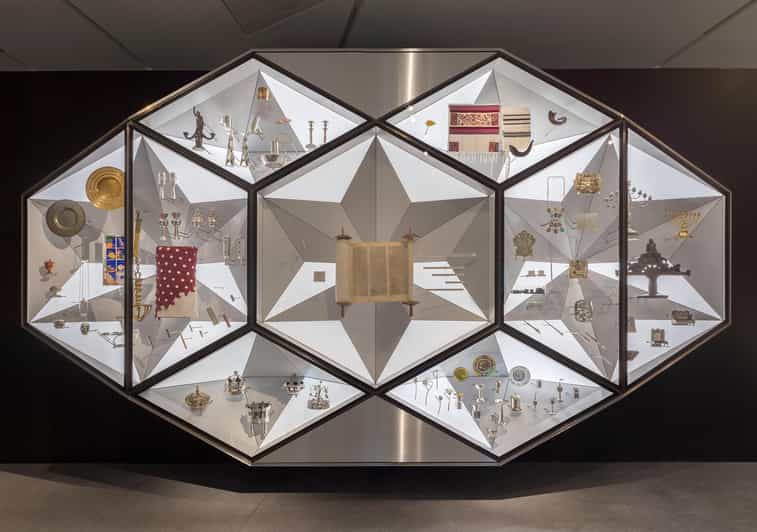
I would recommend this tour to first-time visitors who want an informed entry into the museum rather than wandering through it without context. It also suits anyone interested in the relationship between architecture and historical memory.
The tour is a good choice for:
- Visitors with only 90 minutes who want a focused introduction
- People who want Jewish history in Germany presented across a long timeline
- Museumgoers who enjoy art, media, and symbolic design together
- English-speaking visitors who prefer a live guide
- Anyone who wants a low-cost cultural activity in Berlin
- Visitors using wheelchairs, since the activity is wheelchair accessible
You should think twice if you are looking for a light or casual museum stop. The subjects include persecution, displacement, the Nazi era, and the years after 1945. The experience can be moving and demanding.
You may also prefer a longer self-guided visit if you want to read every label, spend time with each media station, or examine the collection in detail. The tour gives you the map, not every road.
How to make the most of your visit
Before entering, decide what you want from the tour. You can treat it as a compact history lesson, a guided look at the building, or a starting point for a longer visit. Knowing your aim will help you use the 90 minutes well.
Listen for connections between the historical chapters and the art and culture rooms. The strongest benefit comes from seeing how those parts work together, rather than treating the objects, videos, and architecture as separate attractions.
Keep the second half of your day flexible if the exhibition affects you strongly. The tour may end after 90 minutes, but the questions it raises may stay with you longer.
If you have time, use the orientation from the guide to revisit the sections that felt most important. The exact amount of extra time is not specified, so simply check museum access and opening details when planning your day.
Should you book the Jewish Museum Highlights Tour?
Yes, if you want a serious, well-priced introduction to one of Berlin’s most thought-provoking museums. The $7 cost is modest, the 90-minute format is manageable, and the English guide helps connect the five historical chapters, eight art and culture rooms, and symbolic architecture.
Book it especially if you are visiting the museum for the first time or if the building’s design interests you as much as the collection. The tour’s limits are clear: it cannot cover every object, and the subject matter calls for attention rather than a quick sightseeing mood.
If that sounds right for your day in Berlin, this is a sensible way to begin. Just remember to collect the free core-exhibition ticket at the entrance and meet your guide in the old building’s glass courtyard.
FAQ
How long does the Jewish Museum Highlights Tour last?
The tour lasts 1.5 hours, or 90 minutes.
What language is the guided tour?
The guided tour is held in English.
Is an audio guide included?
Yes. An English audio guide is included.
What does the tour cover?
It covers highlights of the core exhibition, including Jewish history in Germany from the Middle Ages to the present day.
How is the exhibition organized?
The exhibition includes five historical chapters and eight rooms focused on art and culture.
Where is the meeting point?
Meet the guide on the ground level of the old building, in the glass courtyard.
Is museum entry included?
Entry and the guided tour are included. You must also get a free ticket for the core exhibition at the museum ticket desk at the entrance.
Is the tour wheelchair accessible?
Yes, the activity is wheelchair accessible.
Are food, drinks, and transportation included?
No. Food, drinks, and transfers to and from the museum are not included.
Can I cancel the booking?
Yes. You can cancel up to 24 hours in advance for a full refund. You can also reserve now and pay later.
More Museums in Berlin
- Berlin: Interactive DeJa Vu Museum Entrance Ticket
★ 4.1 · 1,338 reviews - Berlin: “Pergamonmuseum. The Panorama” Exhibition Tickets
★ 4.6 · 1,245 reviews - Berlin: East Side Gallery Spree Cruise in a Solar Catamaran
★ 4.0 · 1,039 reviews - Cold War, Berlin Wall, Spies and the East Side Gallery
★ 5.0 · 1,024 reviews
Just added around Berlin
- Love and War in Berlin: Self-Guided Story Puzzle Walk★ 5.0 · 7 reviews
- Rickshaw Tours Berlin – Groups of up to 16 people with several rickshaws★ 4.0 · 97 reviews
- Walking on the Wall: 3-Hour Tour in Berlin★ 4.5 · 34 reviews
- eSIM for Germany and 34 European Countries★ 4.5 · 16 reviews
- Warnemuende Shore Excursion: Berlin Private Sightseeing Tour from Rostock★ 5.0 · 4 reviews
- Your ticket to The Wall Museum Berlin★ 3.0 · 60 reviews
- Warnemuende Shore Excursion: Private Berlin Tour★ 4.5 · 27 reviews
- Berlin’s Gay, Lesbian, and Queer Scene Small-Group Walking Tour★ 4.5 · 66 reviews
Museum & Gallery Tickets, compared.




Skip-the-Line: Berlin Wall Museum at Checkpoint Charlie
Read our review →
Browse the lists this tour appears in