
Reviewed · WALKING TOURS
Nuremberg: Walking Tour of Former Nazi Party Rally Grounds
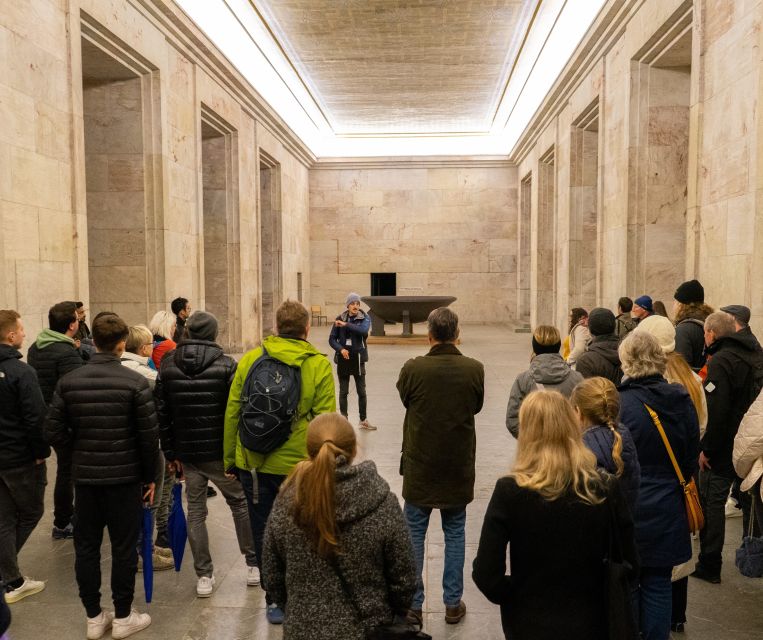
The scale of Nuremberg’s former Nazi Party Rally Grounds is the first thing that hits you. The 40-meter Congress Hall ruins and the huge open spaces were built to make ordinary people feel small and the regime seem permanent. A guide helps you read that design as propaganda, not just as grand old architecture.
I like the way the tour connects the buildings to the Nazi Party’s methods, especially the mass rallies, staged crowds, and carefully planned history the regime wanted to sell. I also like the use of historic photographs, which guides such as Kristina, Kai, Sylvia, and Michael have used to show how these places looked when they were new. The main drawback is simple: there is a lot of walking outdoors, and late tours can reach Zeppelin Field after dark in winter.
In This Review
- Key points at a glance
- Why these grounds matter beyond the ruins
- Starting beside the Documentation Center
- Congress Hall and the shock of scale
- The Great Road makes the plan visible
- Zeppelin Field and the rally as theater
- A serious subject handled with care
- What the $15 price delivers
- Timing, weather, and mobility
- Who will get the most from this walk?
- Should you book the Nuremberg Rally Grounds tour?
- FAQ
- How long does the walking tour last?
- What sites are included?
- Where does the tour meet?
- Where does the tour finish?
- Is the tour offered in English?
- What happens if it rains?
- Is the tour suitable for people with mobility impairments?
Key points at a glance
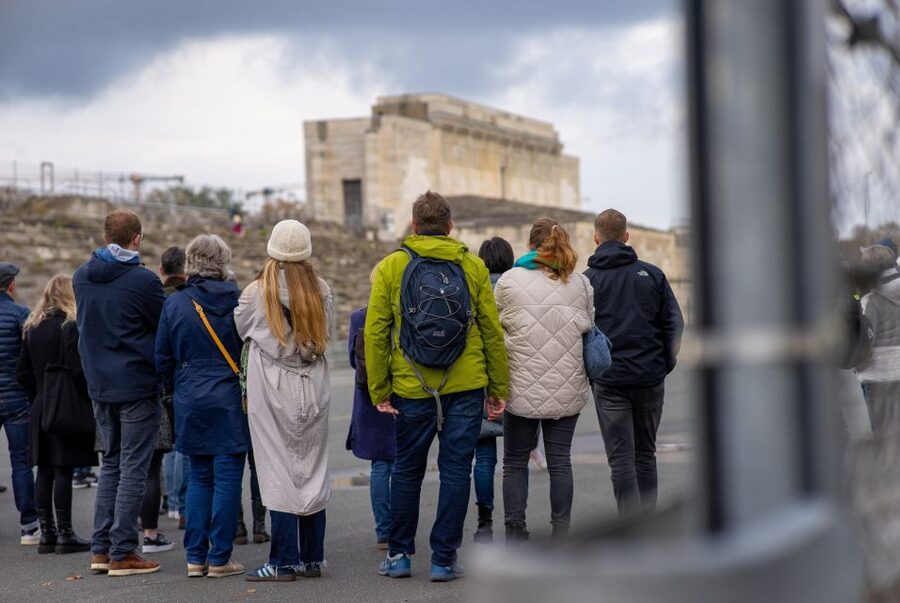
- See the 40-meter Congress Hall ruins: The unfinished structure shows the sheer scale of Nazi building plans.
- Walk the Great Road’s north-south axis: This broad ceremonial route makes the planned spectacle easier to understand.
- Finish at Zeppelin Field: The grandstand and open field reveal how architecture, crowds, and speeches worked together.
- Focus on propaganda, not just military history: The tour explains how the rallies aimed to shape public feeling and political loyalty.
- Choose a guide-led visit for context: Historic images, questions, and explanation add far more than simply walking around alone.
- Plan for weather and daylight: The tour runs rain or shine, and winter departures may finish in darkness.
Why these grounds matter beyond the ruins
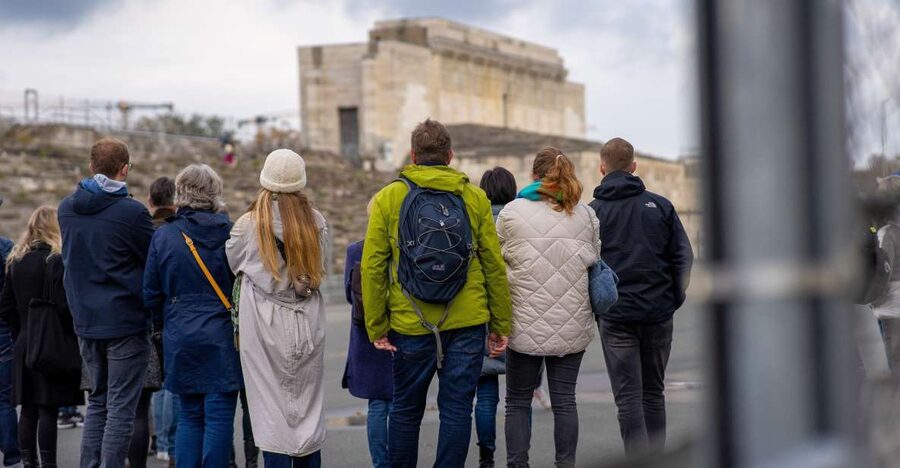
This is not a light sightseeing walk. You are looking at places created by the National Socialist regime to display power, control crowds, and turn politics into theater. The subject includes Nazi crimes, concentration camp systems, mass propaganda, and the way the regime presented its own version of German history.
That focus gives the experience its value. You are not simply told who built a grandstand or when a road was laid out. You learn why the buildings were so oversized, why the rally grounds were positioned and arranged as they were, and how the setting helped create a sense of unity around Hitler and the party.
I find this approach more useful than a tour that treats the grounds as military relics. The central question is how a political movement persuaded, staged, and organized its message. That also makes the visit relevant beyond the 1930s and 1940s, though the guides keep the discussion rooted in the history of Nuremberg.
Geschichte Für Alle e.V. provides the guide, with tours in English or German. The guides named in the feedback include Kai, Sylvia, Kristina, Alan, Andreas, Anita, Ralf, Michael, Frank, Marina, Anne, and others. The exact guide varies, but the strongest pattern is clear: you should expect a prepared speaker who welcomes questions and explains a difficult subject with care.
A few more Nuremberg trips to weigh up
- Nuremberg: Old Town Guided Walking Tour
★ 4.6 · 2,416 reviews - Nuremberg Old Town and Nazi Party Rally Grounds Walking Tour in English
★ 4.5 · 504 reviews - Nuremberg Old Town and Nazi Rally Grounds Walking Tour
★ 4.7 · 377 reviews
Starting beside the Documentation Center
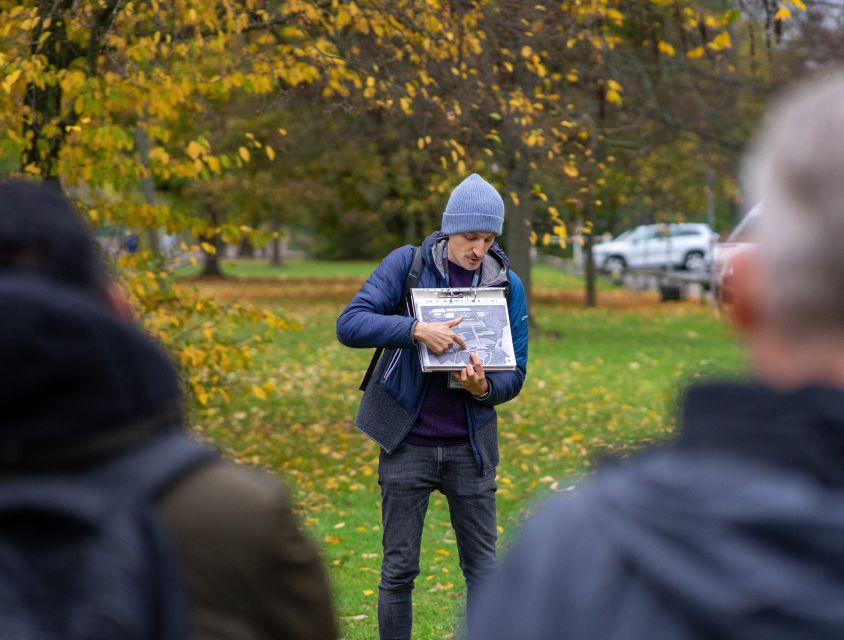
The meeting point is next to the entrance stairs of the Documentation Center Nazi Party Rally Grounds at Bayernstraße 110. Look for a guide holding a picture folder and wearing a name tag marked Geschichte Für Alle e.V.
This is a useful meeting place because it puts you directly beside the Congress Hall, the first major stop. Arrive with enough time to find the entrance stairs and identify the guide. The supplied details also refer to two possible starting options, so check your booking confirmation for the exact departure point and time.
The Documentation Center itself is not described as part of this guided walking tour. The tour takes you around the former rally grounds, so do not assume that the indoor exhibition is included in the $15 price. If you want a museum visit as well, treat that as a separate plan and allow extra time.
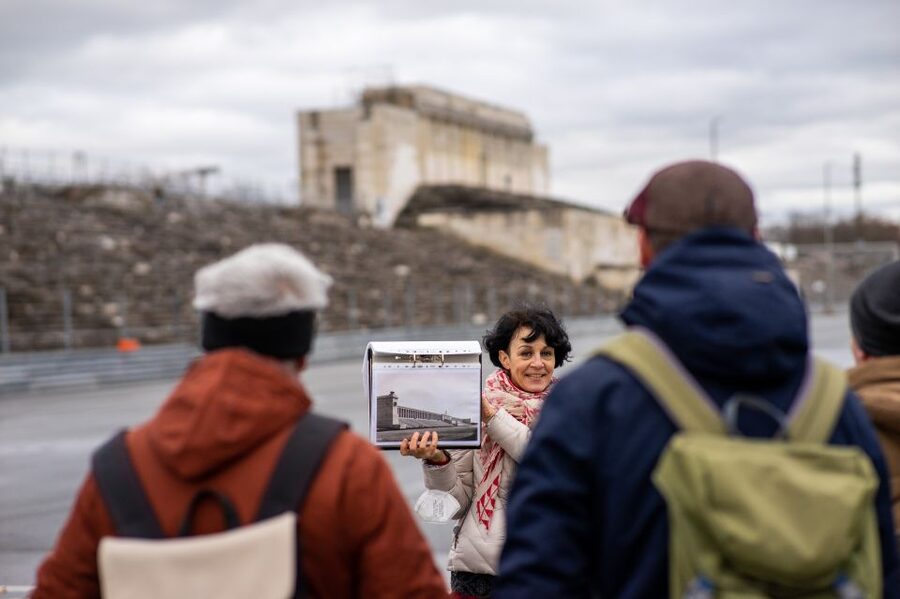
The opening talk sets up the basic political background. Your guide explains the National Socialist Party’s rise, its crimes, and the role of Nuremberg in the party’s public image. Guides often use photographs at this point, allowing you to compare the present-day remains with the original construction and rally scenes.
That visual comparison matters. Large concrete ruins can seem abstract when viewed alone. A photograph showing banners, formations, uniforms, and packed crowds helps you understand how the same space was turned into a carefully managed political show.
Congress Hall and the shock of scale
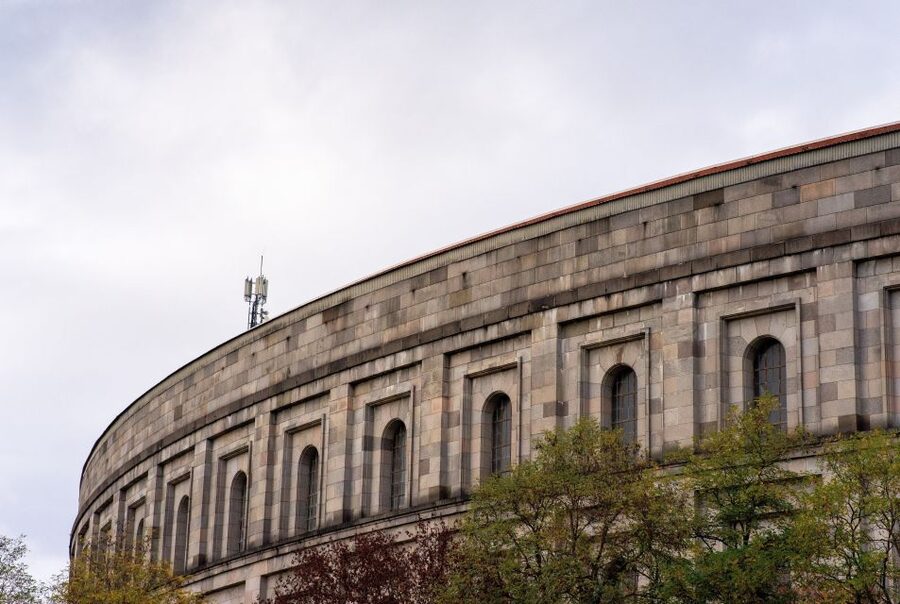
The Congress Hall is one of the most striking parts of the walk. Its surviving structure reaches about 40 meters and was designed as an enormous meeting building. Even unfinished, it gives you a clear sense of the regime’s appetite for size.
Your guide explains the intended function of the building and the effect its architecture was meant to have. The point was not comfort or modest civic design. It was to create a setting in which the individual disappeared into the mass and the state appeared overwhelming.
This is where the tour moves beyond a list of dates. You learn to look at the building as a tool. Its size, shape, and setting were part of a political message. The structure was meant to make the National Socialist movement appear historic, disciplined, and destined to last.
The Congress Hall also helps you grasp the difference between seeing a site alone and hearing it interpreted. You can walk around the exterior independently, but without photographs and explanation, it is easy to miss the intended relationship between the architecture and the rallies.
One limitation is that this is a walking tour around the grounds rather than an indoor architectural visit. If your main interest is detailed construction history or interior spaces, you may want to add the Documentation Center separately. If your main interest is how the site worked as propaganda, the guide-led explanation is the stronger part.
The Great Road makes the plan visible
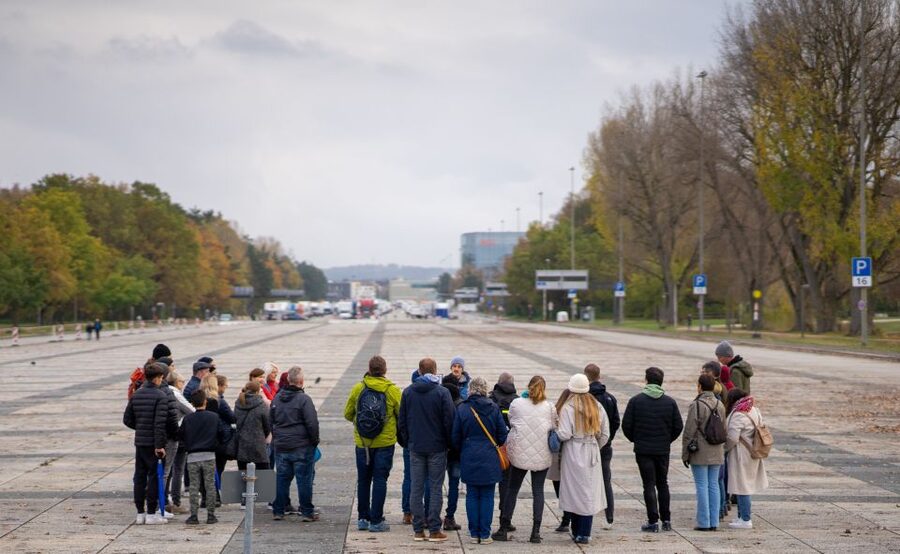
From the Congress Hall, the group continues on foot along the Great Road, or Große Straße. The walk takes about 10 minutes according to the planned route.
This broad ceremonial road formed part of the grounds’ north-south axis and was intended for large-scale displays. Your guide explains how the road fitted into the wider plan and how movement through the grounds helped organize the experience of the rallies.
I like this section because it makes the site’s size easier to read. A building can look impressive from one angle, but a long axis shows how the entire area was designed to direct attention and movement. The road was not simply a way from one structure to another. It helped turn the grounds into a stage.
The guide also discusses the basic features of the National Socialist view of history. That matters because the party did not present its rallies as ordinary political meetings. They were framed as events tied to an imagined national past and future, with the movement claiming to represent the true course of German history.
Expect open ground, changing weather, and a steady pace. The area is large, and the walk can feel longer in cold rain or strong sun. One person estimated the full outing at roughly 5,000 steps, but the practical point is that you should wear comfortable shoes and be ready to remain outside for two hours.
Same city, a completely different kind of day:
- Nuremberg: City Tour with the Bimmelbahn Train
★ 4.4 · 2,475 reviews - Nuremberg: Tunnels and Secret Passages in the City Wall Tour
★ 4.8 · 2,334 reviews - Nuremberg: Medieval Dungeons Guided Tour
★ 4.8 · 1,726 reviews - Medieval Tour in Nuremberg in Spanish
★ 5.0 · 1,374 reviews
Zeppelin Field and the rally as theater
The route continues for about 15 minutes on foot to Zeppelin Field, where the tour ends. This is the part many people most want to see, and it is also where the relationship between architecture and mass propaganda becomes clearest.
The Zeppelin Tribune was designed to hold up to 200,000 people. That figure is difficult to picture until you stand in the open space and see how the grandstand, field, and viewing areas relate to one another.
Your guide explains how the rallies were staged, how crowds were arranged, and how speeches and visual symbols helped create a sense of unity. The setting was made for spectacle. The architecture framed the speaker, organized the audience, and turned political loyalty into something that could be seen and felt by a mass crowd.
The tour also addresses what remains today. Some structures survive in damaged or altered form, and the site has been repurposed in parts. Your guide discusses the current debate over how such a place should be used, preserved, explained, or changed.
That discussion is important. The grounds are not frozen in the past. They are part of present-day Nuremberg, and the city must decide how to confront a site built for dictatorship without turning it into a shrine to the dictatorship. A good guide keeps the emphasis on victims, political responsibility, and public education.
The tour ends at Zeppelin Field rather than returning to the starting point. Keep that in mind when planning the rest of your day. The exact onward transport details are not provided, so check a map before booking if you need to reach a timed train or another attraction immediately afterward.
A serious subject handled with care
The tour deals with Nazi crimes and the concentration camp system, including the relationship between mass political events and the wider system of persecution. That makes the tone important.
The strongest guide comments describe a careful, direct presentation. Anita, Andreas, Kai, Sylvia, Frank, and others are praised for making complex material clear, answering questions fully, and treating the subject with compassion. One guide, Ralf, also brought in personal stories about German life after the war, giving the discussion a wider human frame.
You should expect an educational tour, not a dramatic performance. The aim is to explain how the regime built support, created public loyalty, and used images and ritual to make its politics seem normal or inevitable.
That is also why the tour works for people who already know the basic story. One history teacher from Australia found new connections between Hitler’s regime and Nuremberg. The site adds physical meaning to facts you may have learned in books, while the guide can fill in the political and social links.
The experience may be uncomfortable, and that is appropriate. The tour does not treat the architecture as glamorous or separate it from the crimes committed by the regime. Its best moments ask you to think about how public spaces can influence people and how democratic societies remember places tied to mass violence.
What the $15 price delivers
At $15 per person, this is a strong value if you want context rather than a quick look at the ruins. The fee covers a live two-hour walking tour in English or German, with the guide leading you through Congress Hall, the Great Road, and Zeppelin Field.
You are paying for interpretation, not admission to a large indoor attraction or food and drink. No refreshments are included, and the outdoor route gives you no reason to expect a café-style stop during the walk. Bring anything you need before starting.
The value rests mainly in the guide’s preparation. You can visit many parts of the grounds on your own, but you will not automatically know what each space was meant to do, how the rally events were staged, or how the parts fit together. Historic photographs and questions from the group add another layer that a self-guided stroll may lack.
The tour has a rating of 4.7 from 1,665 reviews, which supports the view that the guide service is its main strength. Still, the price does not remove the practical limits. You need to walk between the sites, remain outdoors in all weather, and accept that some tours may finish in poor light.
Free cancellation is available up to 24 hours before the tour, and you can reserve while paying later. GetYourGuide bookings do not come with a separate invoice, so the booking confirmation serves as proof of payment.
Timing, weather, and mobility
The tour lasts two hours and runs rain or shine. Wear shoes suited to long stretches on foot and bring weather protection. The grounds are open and exposed, so a cold day can feel especially cold when the group stops for explanations.
Daylight deserves special attention. Several winter departures finished at or near darkness by the time the group reached Zeppelin Field. That meant the field could not be seen as clearly as it would earlier in the day. If the grandstand and open rally space are your main reason for booking, choose the earliest suitable departure, especially in December and January.
The activity is not suitable for people with mobility impairments. The route includes outdoor walking between several large sites, with about 10 minutes from Congress Hall to the Great Road section and about 15 minutes onward to Zeppelin Field. The total distance may not sound extreme, but the tour involves standing and walking across a very large area.
Group questions are part of the experience. Guides such as Zoe encouraged people to think through the intended effect of the architecture instead of simply memorizing facts. That style can make the tour more engaging, but it also means you should allow the full two hours rather than planning a tight appointment immediately afterward.
Who will get the most from this walk?
I would recommend this tour to anyone interested in 20th-century history, political propaganda, architecture, or the way Germany confronts its Nazi past. It also suits you if you have visited Nuremberg for the postwar trials and want to understand the earlier use of the city as a center for Nazi spectacle.
Military-history fans will find useful material here, but the focus is broader than weapons, battles, or commanders. The key subject is the machinery of public persuasion: buildings, symbols, ceremonies, crowds, speeches, and historical claims.
It can also work well for students and families with older teenagers, provided everyone is ready for serious content. The strongest guides explain difficult material in clear language and invite questions instead of delivering a string of dates.
I would hesitate to recommend it if you dislike walking, need indoor shelter, or want to see the site mainly through photographs without discussion. I would also avoid a late winter departure if seeing Zeppelin Field clearly is important to you.
Should you book the Nuremberg Rally Grounds tour?
For $15, I think this is a worthwhile way to see the former Nazi Party Rally Grounds. The ruins alone are enormous but hard to interpret. A skilled guide gives the Congress Hall, Great Road, and Zeppelin Field a clear connection to Nazi propaganda and the crimes behind it.
Book it if you want a serious, well-explained visit and can manage two hours outside. Choose an early departure when daylight is short, wear comfortable shoes, and check the endpoint at Zeppelin Field before arranging your next activity.
Skip it only if mobility, weather, or the subject itself makes the walk unsuitable. For most history-minded visitors, the low price and strong guide focus make this one of Nuremberg’s more useful experiences.
FAQ
How long does the walking tour last?
The tour lasts two hours.
What sites are included?
The route includes the Congress Hall, the Great Road, and Zeppelin Field, including the Zeppelin Tribune.
Where does the tour meet?
Meet next to the entrance stairs to the Documentation Center Nazi Party Rally Grounds at Bayernstraße 110. The guide holds a picture folder and wears a Geschichte Für Alle e.V. name tag.
Where does the tour finish?
The tour finishes at Zeppelin Field.
Is the tour offered in English?
Yes. Tours are available in English and German.
What happens if it rains?
The tour takes place rain or shine, so bring suitable clothing and footwear.
Is the tour suitable for people with mobility impairments?
No. The activity is listed as unsuitable for people with mobility impairments because it involves walking between several widely spaced sites.
Just added around Nuremberg
- Tour en español al Campo Zeppelin★ 5.0 · 8 reviews
- Stein: Public guided tour of the “Old Mine” museum★ 4.5 · 18 reviews
- “Rotes Bier” and “Blaue Zipfel”. A historical-culinary walk★ 4.4 · 190 reviews
- Nuremberg: Old Town Guided Tour By Bus★ 4.4 · 198 reviews
- Nürnberg kennenlernen: Highlights in der Altstadt★ 4.7 · 189 reviews
- Nuremberg: Bar and Club Tour with Free Shots and Free Entry★ 3.8 · 23 reviews
- Nürnberg Bachelor(ette) Party with Night PubCrawl★ 4.2 · 5 reviews
- Nuremberg: WWII Tour, Courtroom 600 and 3rd Reich Sites★ 4.6 · 94 reviews
Walking Tours, compared.


Berlin’s Best: 2 Hour Walking Tour Third Reich and the Cold War
Read our review →
Third Reich Berlin: Hitler and WWII Walking Tour
Read our review →Browse the lists this tour appears in