
Reviewed · NUREMBERG TOURS
Nuremberg: WWII Tour, Courtroom 600 and 3rd Reich Sites
Nuremberg’s Nazi past is easiest to grasp when you see the sheer scale of the rally grounds, then enter Courtroom 600, where leading Nazi war criminals faced trial. This four-hour tour links those places by vehicle and on foot, giving you history, context, and time to look closely rather than simply ticking off sights.
I like the small group of up to eight, which makes questions easy and keeps the day personal. I also like the use of period photographs, a simple but effective way to compare what you see now with the Nazi plans for the city. The main drawback is timing: Courtroom 600 comes near the end, and some people have found the visit shorter than expected.
In This Review
- Key points to know before you book
- Why these Nuremberg sites matter
- Pickup and the first hour on the road
- Luitpoldhain and the open-air scale of power
- Große Straße and the machinery of mass display
- Congress Hall and Nazi architectural ambition
- Zeppelin Field and the clearest view of the rally setting
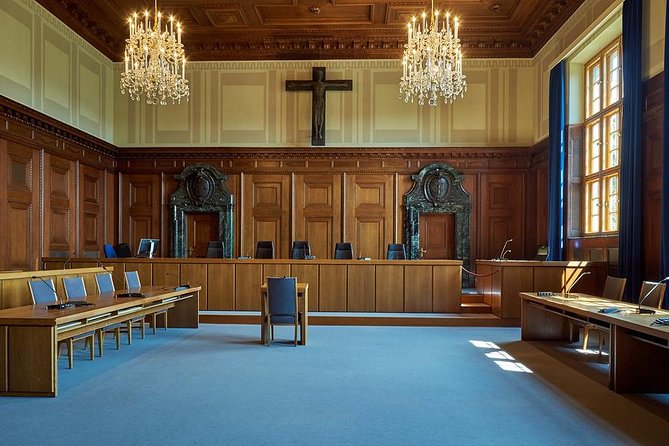
- Courtroom 600 at the Palace of Justice
- The guides and how much they add
- Is $147 a fair price?
- Who should book this four-hour tour?
- Should you book it?
- FAQ
- How long does the Nuremberg WWII tour last?
- Is hotel pickup included?
- Which places does the tour visit?
- Is the Palace of Justice entrance fee included?
- Is Courtroom 600 open every day?
- What languages are available?
Key points to know before you book
- Courtroom 600 is the emotional centerpiece: You can visit the room connected with the International Military Tribunal, subject to opening days and the separate €7.50 entrance fee.
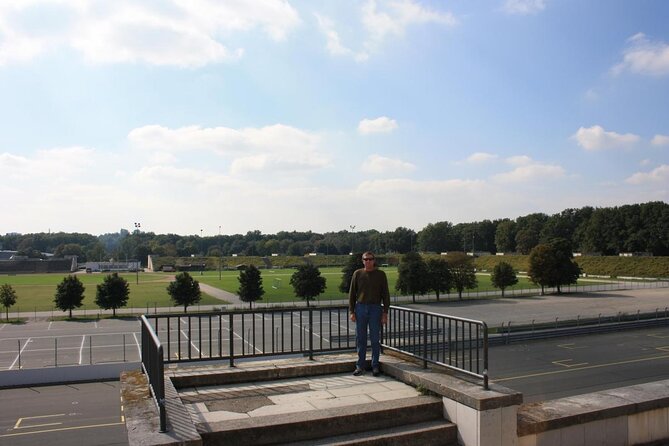
- The rally grounds are enormous: Luitpoldhain, Große Straße, Congress Hall, and Zeppelin Field show the physical scale of Nazi propaganda.
- Hotel pickup saves time: You are collected outside your accommodation in Nuremberg and returned there after the tour.
- Rob is a frequently praised guide: He uses old photographs, lively explanations, and a personable style. Sheba is also listed among the guides.
- The tour is mostly vehicle-supported sightseeing: You walk at several sites, but this is not a four-hour walking tour through the whole city.
- Avoid Tuesday: The Palace of Justice and Courtroom 600 are closed then, so the tour cannot deliver its main indoor visit.
Why these Nuremberg sites matter
Nuremberg was chosen by the Nazi regime for its party rallies partly because the city carried symbolic weight and partly because it offered room for vast public gatherings. The surviving structures in the southeastern part of the city let you see how architecture, crowds, ceremony, and political power were meant to work together.
That scale matters. Photographs in a book can tell you that the rallies were huge, but an open field and a monumental unfinished building give you a better sense of the planning behind them. You see how the regime tried to make individuals feel small and the party feel permanent.
This tour also connects propaganda with accountability. The rally grounds show the public face of the regime. Courtroom 600 shows what came after the war, when the International Military Tribunal put major Nazi figures on trial.
I find that pairing useful. The tour is not only about military events or battlefield movements. It is about how a political system presented itself, how it used space and spectacle, and how the postwar courts tried to respond to its crimes.
Other Nuremberg days worth putting on the list:
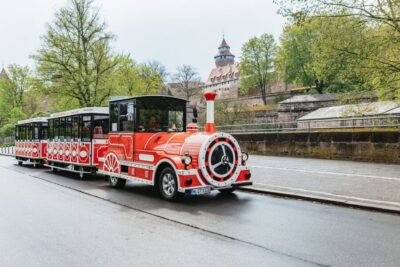
- Nuremberg: City Tour with the Bimmelbahn Train
★ 4.4 · 2,475 reviews - Nuremberg: Old Town Guided Walking Tour
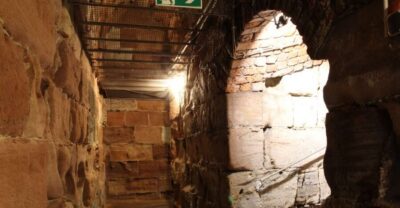
★ 4.6 · 2,416 reviews - Nuremberg: Tunnels and Secret Passages in the City Wall Tour
★ 4.8 · 2,334 reviews
Pickup and the first hour on the road
Your guide picks you up outside your accommodation in Nuremberg in a comfortable vehicle. The full activity lasts four hours, with roughly an hour allocated to bus or coach travel as the tour moves between the main locations.
That arrangement is a real advantage. The rally grounds are spread out, and reaching each site on foot would take time and energy away from the actual visits. You can look out at the city between stops, then get out for focused explanations and short walks.
The vehicle also makes this easier for anyone who does not want a long urban walk. The tour is listed as wheelchair accessible, though the exact ease of each stop will still depend on the site and the group’s movement. Since pickup and drop-off are included, you do not need to arrange a taxi or work out the route to the first location.
The group size is limited to eight. That is small enough for direct conversation, and it helps explain why the guides can adjust their pace when someone asks a question. One useful point from the feedback is that Rob can speak quickly, especially when explaining a lot of material. If you need a slower pace, say so early.
Luitpoldhain and the open-air scale of power
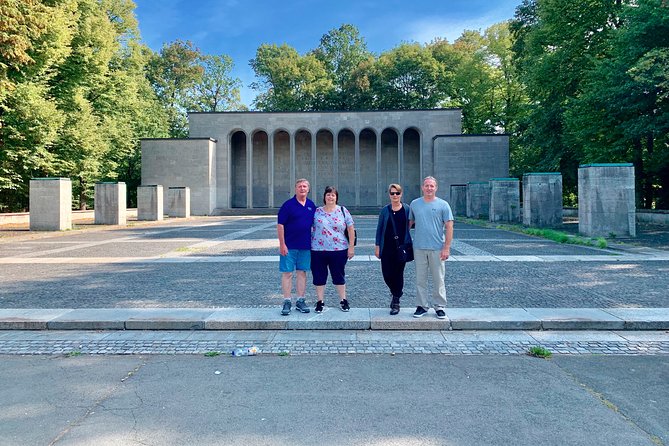
The first major stop is Luitpoldhain, also called the Luitpold Arena in the tour description. You spend about 30 minutes here with a guided explanation.
This is where the size of the Nazi rally setting begins to register. You are not looking at a compact monument that can be understood in five minutes. You are looking across a broad area designed to frame mass gatherings and party ceremony.
Your guide helps translate the open space into something more understandable. Period images are especially useful here. When Rob leads the tour, he has been praised for showing photographs alongside the present-day view, allowing you to compare the intended spectacle with what remains.
I like this stop because it asks you to think about the audience. The architecture and open ground were meant to create a sense of order, unity, and power. You do not need a great deal of prior history knowledge to understand the basic message once the guide points out how people, buildings, and movement were arranged.
The site is also sobering because the present-day view is quieter than the original political performance. That contrast is part of the value. You can look at the space without the crowds and ask how design was used to shape emotion.
Große Straße and the machinery of mass display
The tour then visits Große Straße for about 30 minutes. This broad ceremonial axis was part of the planned rally complex, and its dimensions help show how much importance the regime placed on processions and controlled movement.
I would pay attention here to proportion rather than expecting a museum-style display. The attraction is the physical setting. Your guide supplies the missing pieces by explaining how the area fit into the larger rally plan and by connecting the surviving structures with historical photographs.
This is one reason a guide adds value. If you arrive alone, you might see a very large road and move on. With context, the road becomes part of a plan for spectacle and discipline. The tour keeps returning to that point: these places were built or planned not simply for practical use, but to make political power visible.
The 30-minute stop should be enough for an introduction, but not for a slow, private study of every detail. If you want to read every sign or take extensive photographs, you may feel pressed. I would bring a camera, but keep your attention on the explanation.
Same city, a completely different kind of day:
- Nuremberg: Medieval Dungeons Guided Tour
★ 4.8 · 1,726 reviews - Nuremberg: Walking Tour of Former Nazi Party Rally Grounds
★ 4.7 · 1,665 reviews - Medieval Tour in Nuremberg in Spanish
★ 5.0 · 1,374 reviews - Nuremberg: Historischer Kunstbunker WWII Art Bunker Tour
★ 4.8 · 921 reviews
Congress Hall and Nazi architectural ambition
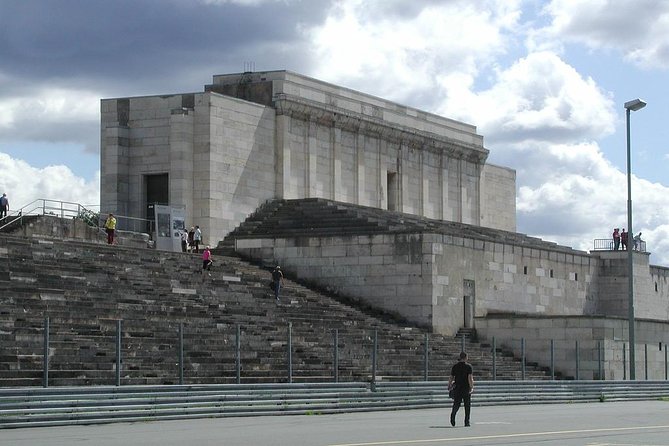
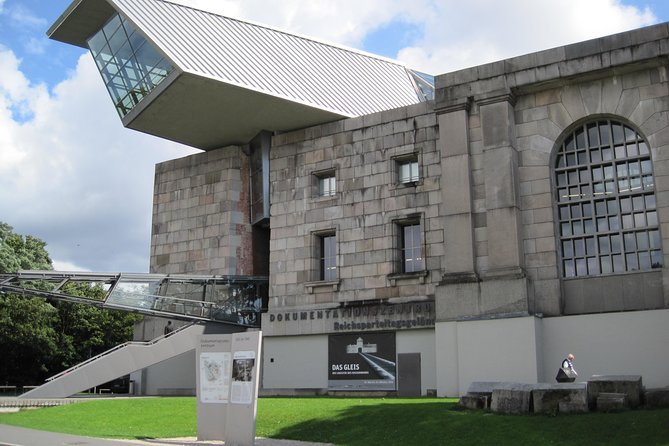
At the Nuremberg Congress Hall, you spend about 30 minutes on a guided visit and photo stop. The building is described as the largest preserved National Socialist monumental building, and its size is difficult to miss.
The structure was intended to help create an image of permanence and authority. Even in its incomplete state, the Congress Hall gives you a clear look at the regime’s architectural ambition. It was not designed to feel friendly or human in scale. It was designed to overwhelm.
The tour highlights an architectural pun at the Documentation Center Nazi Party Rally Grounds, located by the Congress Hall. The sharp modern design cuts into the old monumental structure, creating a visual contrast that carries meaning without needing much decoration. The newer intervention does not simply copy the Nazi architecture. It challenges it.
You may have a photo stop here rather than a full museum visit. That distinction matters. The Documentation Center itself is not presented as a complete indoor museum experience within this four-hour tour. If you want to spend serious time with its exhibits, you will likely need a separate visit.
One participant preferred more time at Zeppelin Field and less at the Documentation Center area. That is a fair concern if open spaces and surviving rally structures interest you most. The balance works better if you want the guide’s explanation and a quick look at the modern documentation approach, rather than a long museum session.
Zeppelin Field and the clearest view of the rally setting
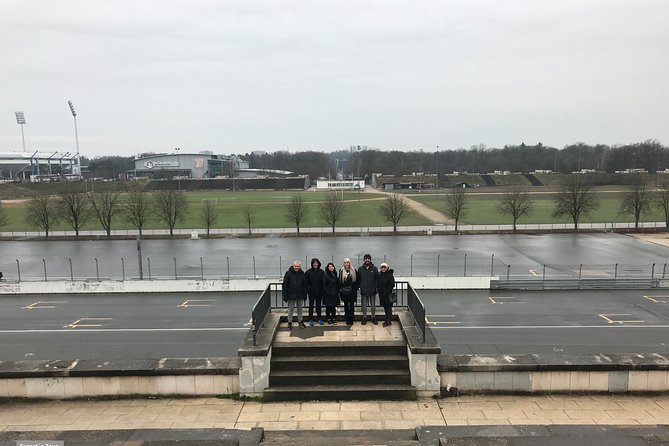
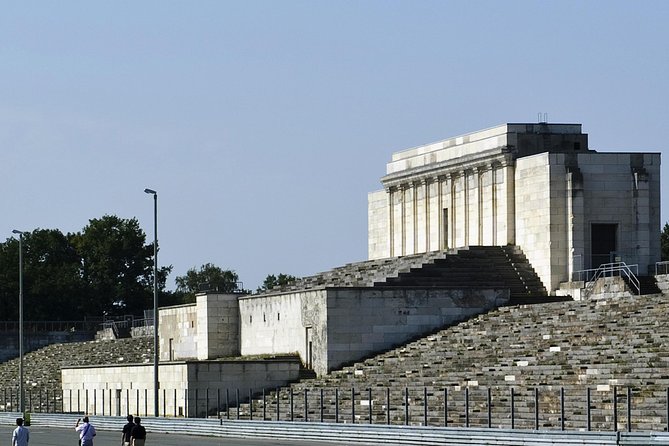
Zeppelin Field receives about 40 minutes, including a photo stop and guided visit. For many people, this is the most visually striking outdoor part of the tour.
The field was intended as an impressive backdrop for party rallies. Its broad proportions make the political purpose plain: the setting was built to hold and organize enormous crowds, while the main structures gave the event a controlled focal point.
I would use this stop to listen first and photograph second. The field can look simple at a glance, but the guide’s explanation helps you understand how it functioned as a stage. The goal was not just to gather people. It was to create a carefully arranged image of unity and authority.
Some people want more than 40 minutes here. I can understand that, especially if you have a strong interest in Nazi architecture or twentieth-century political history. Still, the tour has several stops to fit into four hours, and the vehicle makes it possible to see more than you could on foot.
The surviving structures are valuable precisely because they are not polished attractions. They show an ideology’s physical ambitions without recreating its message. A good guide keeps the focus on historical understanding rather than spectacle, and the strongest feedback about Rob points to his energetic, interactive explanations.
Courtroom 600 at the Palace of Justice
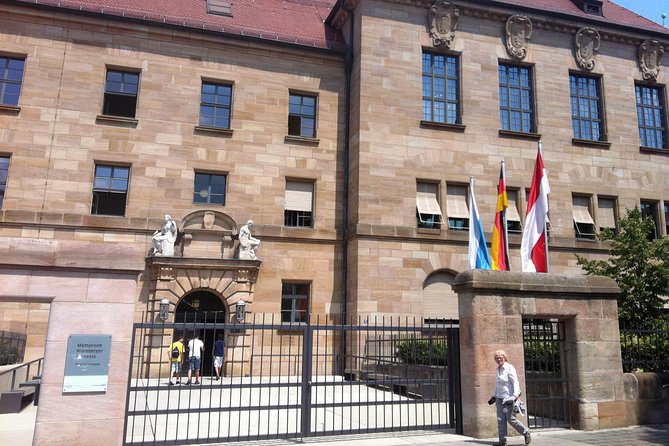
The tour ends at the Nuremberg Palace of Justice, with about 45 minutes for sightseeing and a self-guided visit. You can purchase the entrance ticket for €7.50 per person. The ticket is not included in the tour price.
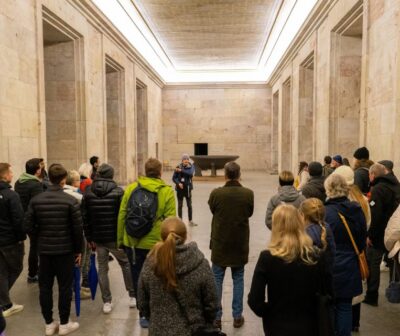
Courtroom 600 is the key indoor stop. This is where the International Military Tribunal tried major Nazi war criminals after World War II. The room connects the outdoor propaganda sites with the legal response that followed the defeat of Nazi Germany.
The visit is self-guided, so the guide’s main historical presentation takes place before or around the arrival at the courthouse. I like that setup because you can process the room at your own pace, even if that pace is brief. The courtroom is not just another historic interior. Its importance comes from the legal proceedings held there and from the wider questions those trials raised about responsibility and crimes committed by a state.
Timing is the biggest issue here. Courtroom 600 comes at the end, and the schedule allows roughly 45 minutes before the tour returns you to your accommodation. Several people wanted more time at the courtroom, while another person particularly enjoyed ending there and seeing the exhibition.
If Courtroom 600 is your main reason for booking, arrive mentally prepared to make the most of the allotted time. Do not assume the four-hour duration means four hours at the Palace of Justice. Most of the activity is spread across the rally grounds, and the court visit is the final portion.
The Palace of Justice and Courtroom 600 are closed on Tuesdays. They may also be unavailable on certain holidays, as shown by a Christmas Day experience that could not include the court. Check the date carefully before paying, especially if the courtroom is essential to your plans.
The guides and how much they add
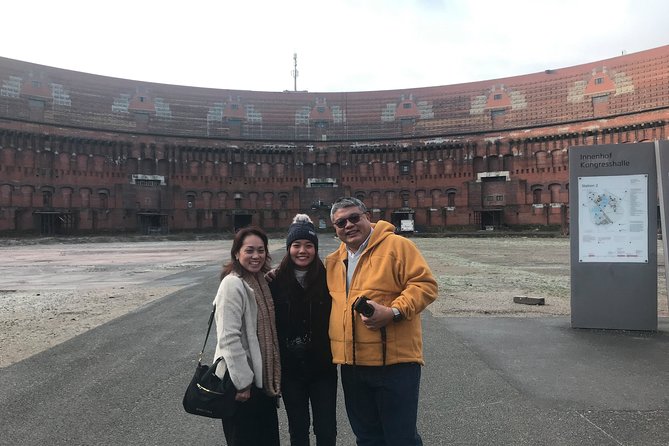
The guides listed for this activity speak English, Portuguese, Spanish, and Italian. Rob receives especially strong praise for his energy, friendliness, driving, and command of the subject. Sheba is also described as an enthusiastic guide.
Rob’s method appears to combine driving commentary, stops at key sites, period photographs, and direct conversation. That mix works well for a subject that can otherwise feel abstract. You do not only hear about a rally ground. You see the open space, then compare it with an image from the Nazi period.
A few practical points matter. Some English-speaking participants found that Rob sometimes spoke fast or that his accent made parts of the explanation harder to follow. One person said he slowed down after being told. I would speak up early if you need clearer pacing. The group is small, so this should be easy to handle.
The guide is not simply transportation. The vehicle gets you between scattered locations, but the interpretation gives those locations meaning. I would book this tour for the explanation, not just for the ride.
Is $147 a fair price?
The cost is $147 per person. That is not a budget sightseeing outing, especially because the €7.50 Palace of Justice entrance fee comes separately.
Still, the price includes hotel pickup and drop-off, a guide, vehicle transport between distant sites, and a small group capped at eight. If you tried to organize the same route alone, you would need to work out transport to the rally grounds, study the sites in advance, and build your own historical explanation.
The value is strongest for a first visit to Nuremberg, for anyone with limited time, or for people who want a guide to connect the sites. It is weaker if you already know the rally grounds well or want long, unhurried periods at one location.
You are paying for access to several spread-out places and for interpretation. The fee makes more sense when you view it as a half-day private-feeling outing rather than a simple museum ticket.
Free cancellation up to 24 hours in advance and reserve-now, pay-later booking add useful flexibility. Those details do not change the historical content, but they help if your Nuremberg plans are still shifting.
Who should book this four-hour tour?
I would recommend it to you if you:
- Want to understand Nuremberg’s Nazi sites without arranging transport yourself.
- Prefer a small group and the chance to ask questions.
- Have a serious interest in World War II, Nazi architecture, or the Nuremberg Trials.
- Want both outdoor rally grounds and Courtroom 600 in one morning or afternoon.
- Appreciate a lively guide who uses historical photographs and personal explanation.
I would hesitate if you want a long museum visit, extensive free time for photography, or a tour focused only on the courtroom. I would also avoid Tuesday if Courtroom 600 is important to you.
The subject matter is grim. The tour is not entertainment, though an energetic guide can make a difficult subject easier to follow. You should expect a serious look at propaganda, political power, persecution, and postwar justice.
Should you book it?
Book this tour if you want the most efficient introduction to Nuremberg’s Nazi rally grounds and Courtroom 600, with hotel pickup and a guide who can explain what the bare structures meant. The small group, period photographs, and vehicle access give it a clear practical advantage.
Before booking, check three things: your date, the Tuesday closure, and your expectations for Courtroom 600. If you understand that the courtroom visit is relatively short and the €7.50 ticket is extra, the tour offers a focused and worthwhile way to face one of Germany’s most difficult chapters.
FAQ
How long does the Nuremberg WWII tour last?
The tour lasts four hours, including transportation between the sites, guided visits, and the self-guided visit at the Palace of Justice.
Is hotel pickup included?
Yes. Pickup and drop-off are included from outside your accommodation in Nuremberg.
Which places does the tour visit?
The tour visits Luitpoldhain, Große Straße, Nuremberg Congress Hall, Zeppelin Field, and the Nuremberg Palace of Justice with Courtroom 600.
Is the Palace of Justice entrance fee included?
No. The entrance fee is €7.50 per person and must be paid separately.
Is Courtroom 600 open every day?
No. The Palace of Justice and Courtroom 600 are closed on Tuesdays. Holiday closures can also affect the visit, so check your chosen date.
What languages are available?
The live guide is available in English, Portuguese, Spanish, and Italian.
Just added around Nuremberg
- Tour en español al Campo Zeppelin★ 5.0 · 8 reviews
- Stein: Public guided tour of the “Old Mine” museum★ 4.5 · 18 reviews
- “Rotes Bier” and “Blaue Zipfel”. A historical-culinary walk★ 4.4 · 190 reviews
- Nuremberg: Old Town Guided Tour By Bus★ 4.4 · 198 reviews
- Nürnberg kennenlernen: Highlights in der Altstadt★ 4.7 · 189 reviews
- Nuremberg: Bar and Club Tour with Free Shots and Free Entry★ 3.8 · 23 reviews
- Nürnberg Bachelor(ette) Party with Night PubCrawl★ 4.2 · 5 reviews
- Nuremberg: Tour of Former Nazi Party Rally Grounds★ 5.0 · 43 reviews
Nuremberg Tours, compared.
Tunnels and Secret Passages in the City Wall Tour
Read our review →
Walking Tour of Former Nazi Party Rally Grounds
Read our review →
Browse the lists this tour appears in