
Reviewed · MUSEUM & GALLERY TICKETS
Stein: Public guided tour of the “Old Mine” museum
The most unusual part of this Faber-Castell visit is not a display case of finished pencils. It is the chance to enter the company’s former lead-mine production rooms, where the work behind ordinary pencils becomes the main story. I like the clear link between old machinery, factory methods, and the pencils still made by Faber-Castell today. I also like that the $14 price includes a souvenir and a 15% castle-store discount from Monday through Friday.
The main drawback is pace. In 90 minutes, you cover two floors and hear plenty of explanation, but you may not have enough time to read every information panel or study the many old photographs. The historic building is not barrier-free, and you should expect long walks and wear sturdy shoes.
In This Review
- Key points at a glance
- Entering Faber-Castell’s old production world
- What happens during the 90-minute visit
- The 1848 building is part of the story
- Seeing how pencil leads were made
- Photographs, panels, and the tour’s pace
- The guide makes the difference
- What the $14 price really buys you
- Making the most of the castle-store discount
- Who will enjoy this tour most
- Practical planning before you arrive
- A focused museum with real character
- Should you book the Faber-Castell Old Mine tour?
- FAQ
- How long does the Old Mine tour last?
- Where does the tour begin?
- What languages are available?
- What is included in the ticket?
- Is the discount available every day?
- Is the museum barrier-free?
- Can I cancel the booking?
Key points at a glance
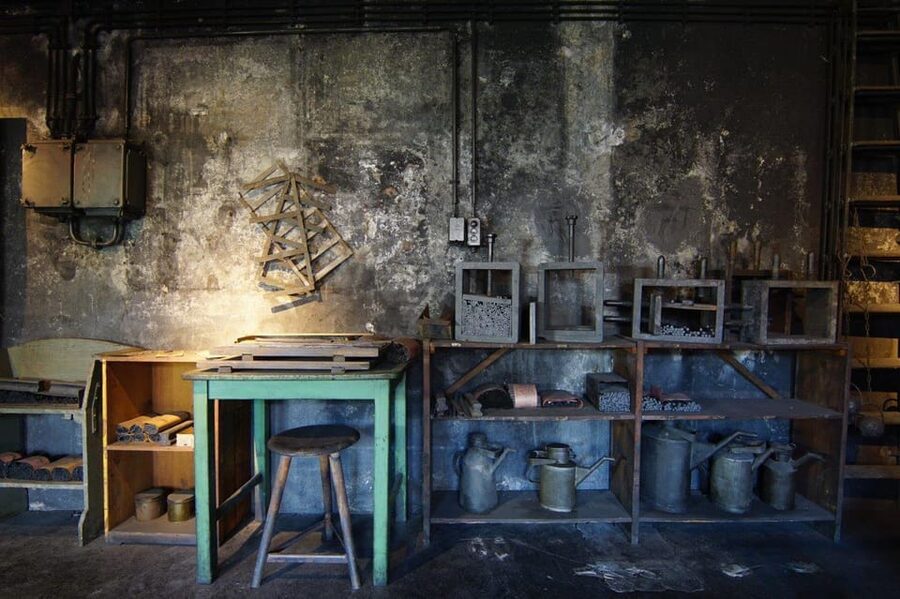
- Two floors of former mine production rooms: See how Faber-Castell’s pencil leads were produced in the 19th and 20th centuries.
- A listed 1848 building: The Old Mine occupies an unusual group of rooms and levels beside the Rednitz near Nuremberg.
- A strong link to modern pencils: The tour explains how older production methods relate to the way pencil leads are made today.
- German and English tours: A live guide leads the visit, though some content remains in its original language.
- Useful extras for the price: Your ticket includes a souvenir and a 15% discount in the castle store on the day of the tour, Monday through Friday.
- Allow time for walking: The historic premises are not barrier-free, so sturdy shoes matter.
Entering Faber-Castell’s old production world
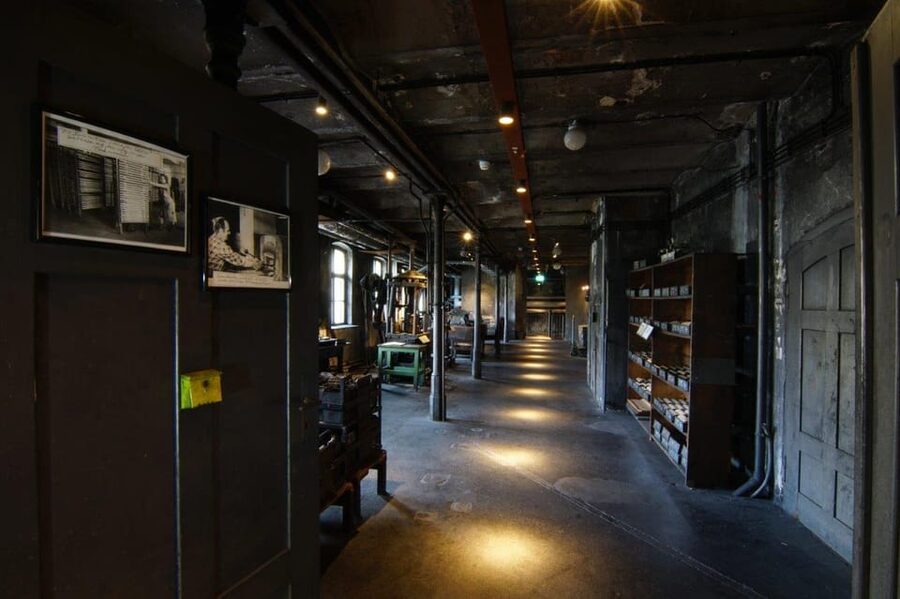
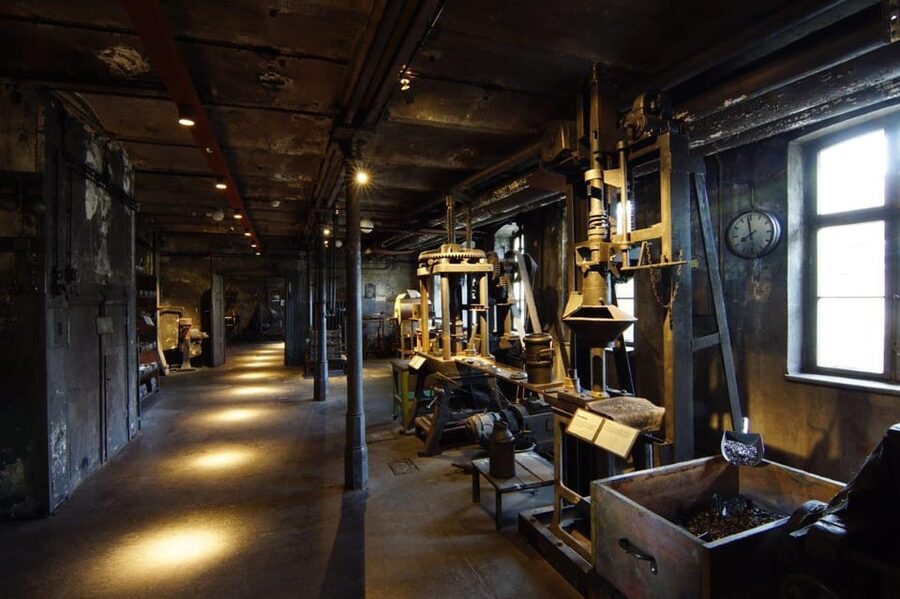
Faber-Castell is best known for pencils, but this tour shifts your attention from the finished product to the material inside it. At the Old Mine museum, you learn how lead mines for pencils and colored pencils were produced, shaped, and prepared for use.
That makes the visit more satisfying than a simple brand display. You are not only looking at Faber-Castell objects. You are following a working process, from the difficult factory conditions of the late 19th century to methods that still have a basic connection with modern production.
The museum occupies a building from 1848 on the west bank of the Rednitz. It is a listed structure, and its rooms do not form one broad, polished exhibition hall. Instead, you move through a compact arrangement of levels and spaces from different periods.
That layout is part of the appeal. The building itself helps explain how industrial work once took place. It also means the visit may feel less straightforward than a modern museum, with changes in level and a fair amount of walking.
More museum & gallery tickets in Nuremberg:
- Berlin: Jewish Museum Berlin Entrance Ticket
★ 4.5 · 8,393 reviews - Berlin: DDR Museum Tickets
★ 4.3 · 3,443 reviews - Berlin: Natural History Museum Entrance Ticket
★ 4.6 · 3,382 reviews
What happens during the 90-minute visit
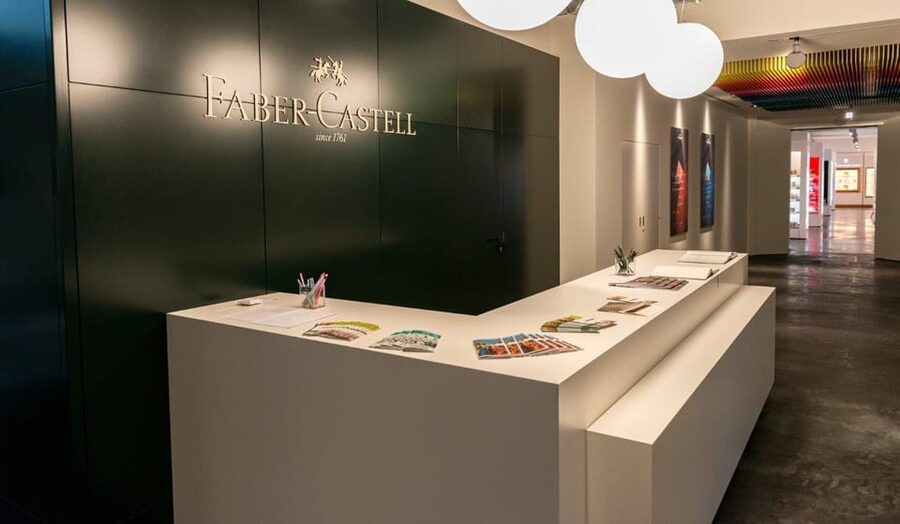
You begin at the Faber-Castell Visitor Center, listed as Faber-Castell Erleben. Booking is required, and this is where you meet the guide before heading to the Old Mine museum.
The tour lasts about an hour and a half, then brings you back to the same visitor-center area. The format is guided rather than self-directed, so the value comes from the explanation as much as from the objects and rooms around you.
Expect the guide to provide context about Faber-Castell, lead production, and the work involved in making pencil cores. The strongest part of the visit is the explanation of how the old exhibits relate to the modern process. One particularly useful detail is that the basic idea of production has not completely changed, even though the tools and working conditions have.
You may want to arrive ready to listen first and read second. The tour moves at a set pace, and the guide’s talk takes priority over spending several minutes at each photograph or panel.
The 1848 building is part of the story
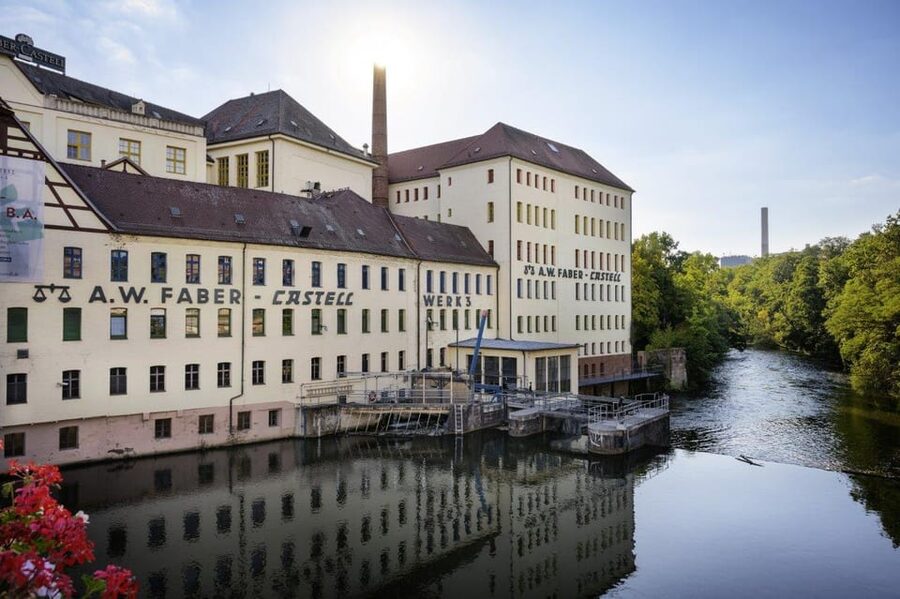
Many museum buildings are just containers for exhibits. Here, the building is one of the exhibits.
The former production site is a layered group of rooms and levels created across different eras. The 1848 structure gives you a direct sense of the industrial setting, while the preserved arrangement helps show how production occupied the site.
This is not a wide, airy museum designed for a quick sweep through a collection. You may pass through rooms that feel close together or move between different levels. For some people, that makes the Old Mine feel more genuine. For others, especially anyone who prefers easy access and large labels, it can be tiring.
The setting also adds a little physical reality to the subject. Pencil production can sound tidy when described in a finished product catalogue. Inside an old factory building, you get a better sense of the labor, time, and care involved.
Seeing how pencil leads were made
The central subject is the production of lead mines for both graphite pencils and colored pencils. The tour uses older objects and explanations to show how the process worked.
You will not simply hear that pencils were made in the past. The guide explains the steps well enough for you to understand how the separate stages fit together. That is why the visit works for curious adults and for families with children old enough to follow a technical demonstration or explanation.
The tour also puts the work in its period. Production at the end of the 19th century was difficult and demanding. You learn that making a pencil lead required more effort than the finished pencil suggests.
The best teaching point is the connection between old and new. The current method is not presented as something completely unrelated to the old one. Instead, the historic objects help you see how the basic production idea developed over time.
If you already know a great deal about industrial manufacturing, the tour may feel introductory. For most people, though, it makes an everyday object far more interesting. You leave with a better answer to the simple question of how a pencil actually gets its core.
A few more Nuremberg trips to weigh up
- Berlin: Neues Museum Entry Ticket
★ 4.6 · 3,261 reviews - Cologne: Chocolate Museum Entrance Ticket
★ 4.4 · 2,790 reviews - Dresden: Church of Our Lady Guided Tour of Gallery
★ 4.7 · 2,421 reviews - Skip-the-Line: Berlin Wall Museum at Checkpoint Charlie
★ 4.1 · 2,041 reviews
Photographs, panels, and the tour’s pace
The museum includes old photographs and explanatory panels. These add human and visual context, especially when the guide points out what you are seeing.
The trade-off is time. With a group moving through the building, you may not be able to stop and fully read every panel. The same is true of the photographs, which deserve a closer look than the schedule may allow.
I would treat the guided talk as the main course and the written material as extra detail. Listen closely when the guide explains a production stage, then use any spare moments to look at the images and displays.
If you are especially interested in industrial photographs, tell yourself in advance that you may need to choose. Focus on the displays that catch your eye rather than trying to absorb every word. The tour is informative and generally lively, but it is not built around long periods of quiet museum study.
The guide makes the difference
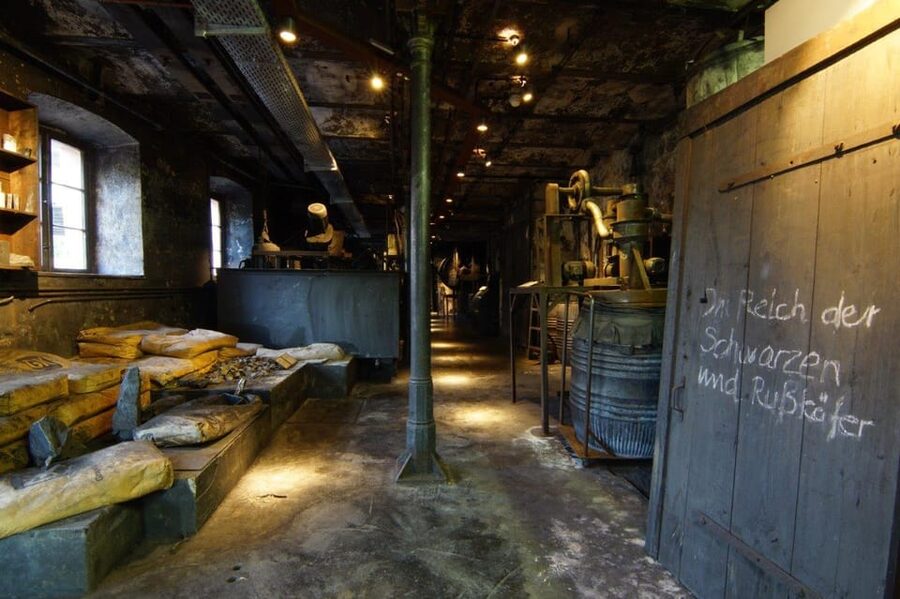
A live guide leads the tour in German or English. The quality of the explanation matters here because the Old Mine is not just a room full of self-explanatory objects.
The strongest praise for this experience concerns the guide’s clear, friendly delivery and strong command of the subject. The tour has been described as both informative and entertaining, which is a useful combination for a technical topic.
You can expect general information about the manufacture of graphite and colored pencil leads, along with specific explanation of the historic exhibits. A good guide helps you see why an old object matters instead of leaving you to guess.
Some material is shown in its original language. If you book an English tour, you should still be prepared for occasional original-language content. The main guided explanation is available in English, but not every piece of written or displayed material is necessarily translated.
What the $14 price really buys you
At $14 per person, this is a fairly focused museum visit rather than a full-day attraction. The ticket covers the guided Old Mine tour, which lasts about 90 minutes, and includes a souvenir.
That price works best for visitors who are genuinely interested in Faber-Castell, manufacturing, design, or the history of everyday objects. You are paying for access to a specialized site and for a guide who connects the old exhibits to the pencil-making process.
The included souvenir adds a small but fitting extra. It is not the reason to book, but it makes the ticket feel more complete, especially if you are visiting with children or want a physical reminder of the experience.
The 15% store discount can improve the value, but there is an important limitation. It applies at the castle store on the day of the tour from Monday through Friday. If you are visiting on a weekend, do not count on using that particular saving.
The discount is most useful if you already plan to buy Faber-Castell products. It should be viewed as a bonus, not as a reason to purchase things you do not need.
Making the most of the castle-store discount
The Old Mine tour is part of a wider Faber-Castell visitor program in Stein. Other sightseeing options include the company’s castle, pencil production, and a special tour about the castle as a press camp.
This particular ticket focuses on the Old Mine. It does not turn the 90-minute visit into a general admission ticket for every Faber-Castell attraction. Still, the connection with the castle store gives you a simple way to extend the visit if your schedule and interests fit.
Use the 15% discount Monday through Friday on the day of your tour. Keep your ticket information available, and check the store timing when planning your visit. The supplied details do not give store opening hours, so you should confirm that separately if the discount is important to your plans.
The main value remains the museum itself. The store discount is a pleasant addition, especially for stationery fans, but it should not overshadow the industrial story.
Who will enjoy this tour most
I would recommend the Old Mine tour to anyone who likes the story behind ordinary products. Pencils are familiar, inexpensive, and easy to overlook. Seeing the work involved in producing their leads gives the object new weight.
It is also a good choice for:
- Faber-Castell fans who want more than a shop visit
- Visitors interested in industrial history near Nuremberg
- Families with children who enjoy seeing how products are made
- People who prefer a guided explanation to a room of unlabeled machinery
- Anyone looking for a short activity lasting about 90 minutes
You may enjoy it less if you want a large museum with lots of free time at every display. The pace is fixed, the building requires walking, and not all content is necessarily translated into your chosen language.
People with limited mobility should plan carefully. The premises include historic areas that are not barrier-free, and the instructions specifically warn that long distances may be involved. Sturdy shoes are a sensible choice for everyone.
Practical planning before you arrive
Meet at the Faber-Castell Visitor Center, also identified as Faber-Castell Erleben. Booking is required, and starting times vary, so check availability for your chosen date.
The tour is available with a live guide in German or English. Some content appears in its original language, so an English-language booking does not necessarily mean every label, photograph caption, or display text will be translated.
The visit begins and ends at the visitor-center area. That makes the schedule easy to understand, but you should still leave enough time for the walking involved inside the old building.
The experience offers free cancellation up to 24 hours before the start time for a full refund. You can also reserve now and pay later, which helps if your itinerary around Nuremberg is still changing.
A focused museum with real character
The Old Mine museum succeeds because it gives a familiar object a physical setting. Instead of treating pencil production as an abstract company story, it places you inside the old rooms where the industrial work happened.
The visit is not perfect. The pace can make it hard to study all the photographs and panels, and the historic premises are not suitable for every visitor. Yet those same old rooms give the tour its character.
The most praised elements are the clear explanation of pencil-lead production, the link between historic and modern methods, and the guide’s engaging presentation. Those strengths make the 90 minutes pass quickly, even for someone who did not arrive with a special interest in stationery.
Should you book the Faber-Castell Old Mine tour?
Book it if you want a short, guided look at how pencils were made and you appreciate historic industrial buildings. The $14 price is reasonable for a 90-minute tour with a live German- or English-speaking guide, souvenir, and possible weekday store discount.
Skip it if you need step-free access, dislike guided schedules, or mainly want time to read every display at your own pace. For everyone else, this is a smart addition to a visit around Stein and Nuremberg, particularly on a weekday when you can use the castle-store discount.
FAQ
How long does the Old Mine tour last?
The guided tour lasts approximately 1.5 hours, or 90 minutes.
Where does the tour begin?
The meeting point is the Faber-Castell Visitor Center, also called Faber-Castell Erleben. The tour returns to this area afterward.
What languages are available?
A live guide is available in German and English. Some content is shown in its original language.
What is included in the ticket?
The ticket includes the guided Old Mine museum tour, a souvenir, and a 15% discount in the Faber-Castell castle store on the day of the tour from Monday through Friday.
Is the discount available every day?
The 15% castle-store discount is specified for Monday through Friday on the day of your tour. The provided details do not confirm the discount for weekends.
Is the museum barrier-free?
No. Some of the historic premises are not barrier-free, and you should plan for long distances on foot. Sturdy shoes are recommended.
Can I cancel the booking?
Yes. You can cancel up to 24 hours in advance for a full refund. Reserve now and pay later is also available.
Just added around Nuremberg
- Tour en español al Campo Zeppelin★ 5.0 · 8 reviews
- “Rotes Bier” and “Blaue Zipfel”. A historical-culinary walk★ 4.4 · 190 reviews
- Nuremberg: Old Town Guided Tour By Bus★ 4.4 · 198 reviews
- Nürnberg kennenlernen: Highlights in der Altstadt★ 4.7 · 189 reviews
- Nuremberg: Bar and Club Tour with Free Shots and Free Entry★ 3.8 · 23 reviews
- Nürnberg Bachelor(ette) Party with Night PubCrawl★ 4.2 · 5 reviews
- Nuremberg: Tour of Former Nazi Party Rally Grounds★ 5.0 · 43 reviews
- Nuremberg: World War 2 History Tour with Beer Tasting★ 5.0 · 4 reviews
Museum & Gallery Tickets, compared.






Skip-the-Line: Berlin Wall Museum at Checkpoint Charlie
Read our review →
Browse the lists this tour appears in