
Reviewed · NUREMBERG TOURS
Nuremberg: Tour of Former Nazi Party Rally Grounds
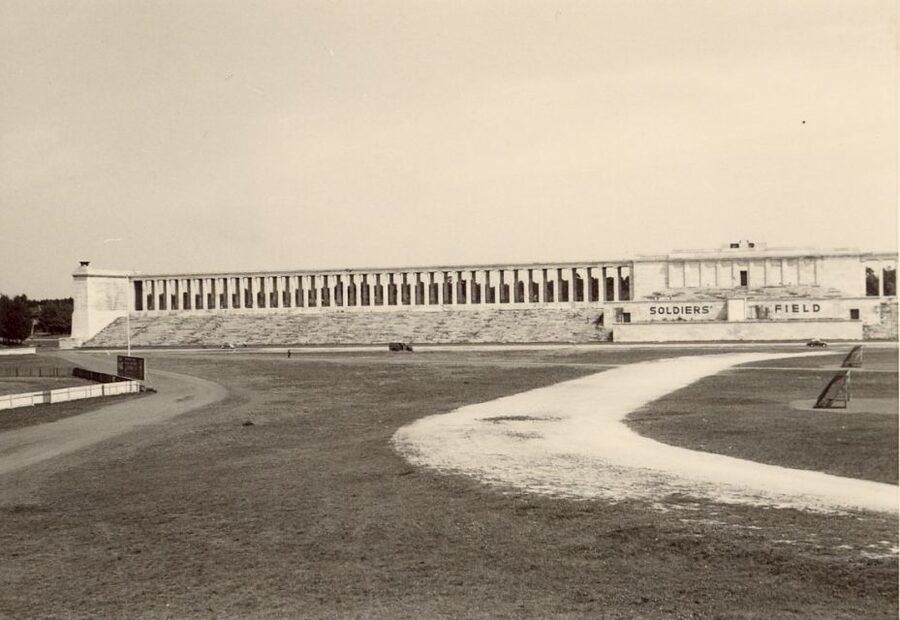
The most striking part of this tour is the sheer scale of what the Nazi regime planned in southeast Nuremberg. The unfinished Congress Hall, Zeppelin Field, and broad ceremonial roads were built to turn politics into mass theater, and the empty spaces still make that ambition hard to ignore.
I like the private group format, which gives you room to ask direct questions instead of following a large crowd. I also like the focus on the outdoor grounds, where the size and layout explain the regime’s goals more clearly than a short museum visit alone.
The main limitation is that the tour is German-language only, and entrance fees are not included. At 90 minutes, it offers a focused introduction rather than a full study of National Socialism or the Nuremberg Trials.
In This Review
- Key points to know before you book
- Why these grounds matter in Nuremberg
- Starting at the DokuZentrum on Bayernstraße
- The unfinished Congress Hall and the danger of grand design
- Zeppelin Field and the theater of mass politics
- The broad streets and the planned crowd of 400,000
- From propaganda grounds to the Nuremberg Trials
- What the private format adds
- Timing, weather, and practical planning
- Who will get the most from this visit
- Should you book the former rally grounds tour?
- FAQ
- Where does the tour begin?
- How long does the tour last?
- What language is the tour in?
- Is the tour private?
- What is included in the price?
- Can I cancel or pay later?
Key points to know before you book
- The scale is the central subject: Albert Speer planned an assembly and demonstration area for up to 400,000 people.
- The route includes major Nazi-era structures: Expect the unfinished Congress Hall, Zeppelin Field, and the wide ceremonial streets.
- You get a private tour: The price covers a group of up to eight people, not eight separate tickets.
- The guide speaks German: This matters if you need explanations in another language.
- The meeting point is the DokuZentrum: Go to the front of the Documentation Centre Nazi Party Rally Grounds at Bayernstraße 110.
- The visit lasts 90 minutes: It fits neatly into a day of sightseeing, but it cannot cover every part of Nuremberg’s Nazi-era story.
Why these grounds matter in Nuremberg
Nuremberg is often associated with medieval walls, churches, and the old town. Southeast of the center, though, you find a very different side of the city: a vast area shaped by the plans of the National Socialist regime.
This is not a site of decorative ruins or picturesque old buildings. Its power comes from size, emptiness, and purpose. The architects wanted visitors to feel small and the state to feel immense. The broad routes and monumental structures were designed for political display, not ordinary city life.
A guide helps you read the site as more than a collection of large buildings. You learn how the spaces were meant to work, who they were meant to impress, and how architecture supported political control. That political background is the heart of the tour.
I find this setting especially useful for understanding how propaganda works through space. Speeches, flags, crowds, stone, and carefully planned movement all formed part of the message. You do not simply look at a building. You see how a whole setting was arranged to shape emotions and behavior.
Other Nuremberg days worth putting on the list:
- Nuremberg: City Tour with the Bimmelbahn Train
★ 4.4 · 2,475 reviews - Nuremberg: Old Town Guided Walking Tour
★ 4.6 · 2,416 reviews - Nuremberg: Tunnels and Secret Passages in the City Wall Tour
★ 4.8 · 2,334 reviews
Starting at the DokuZentrum on Bayernstraße
The tour begins in front of the Documentation Centre Nazi Party Rally Grounds, known locally as the DokuZentrum, at Bayernstraße 110. This is an important practical detail because the former rally grounds cover a large area, and the meeting point is not simply Nuremberg’s old town.
Give yourself enough time to reach the correct side of the site. One piece of useful feedback about the tour points to a meeting-point problem, so check your booking confirmation carefully and keep the guide’s telephone number available. If you are unsure, call before the scheduled start rather than searching around at the last minute.
The guide meets you outside the center, and the tour then takes place around the former grounds. The activity information does not include admission to an exhibition, so do not assume that a museum entrance is part of the 90-minute booking. Any entrance fees are separate, and meals are not included.
That outdoor start sets the tone. You begin with the actual setting that the regime altered, rather than receiving all the information in a classroom. The buildings and open spaces provide the visual evidence while the guide explains their purpose.
The unfinished Congress Hall and the danger of grand design
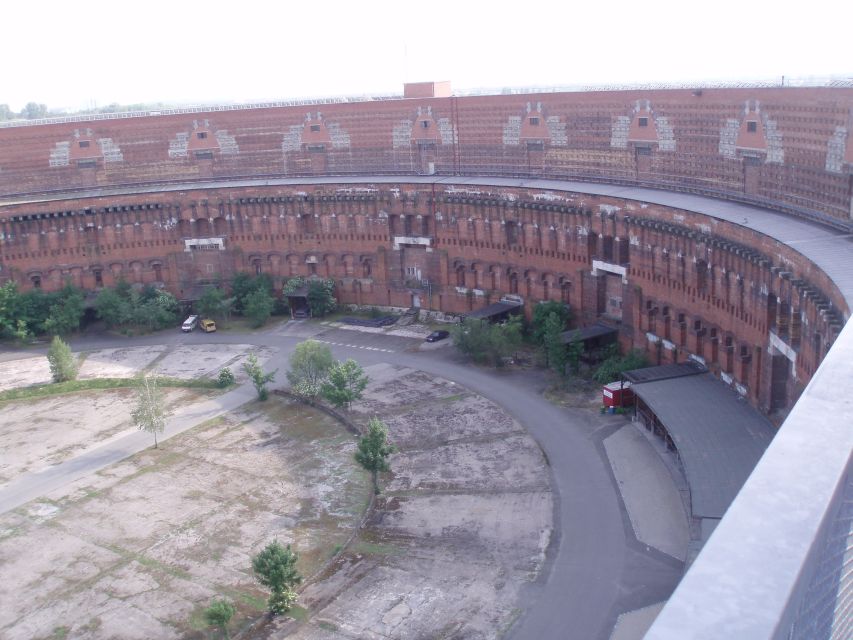
The unfinished Congress Hall is one of the main sights on the route. It was intended to be a monumental gathering place, but it was never completed as planned. Its unfinished condition is part of what makes it so useful to see.
A finished building can make an extreme political project look polished or harmless. Here, the incomplete structure exposes the ambition behind the plan. The size is difficult to grasp from a photograph, but the building’s scale becomes clearer when you walk beside it.
Your guide explains how the Congress Hall fitted into the larger plan for Nuremberg. This was not an isolated construction project. It belonged to an enormous scheme of assembly spaces, parade routes, and demonstration grounds intended to bring huge numbers of people together under the Nazi regime.
That context matters. If you only see a large empty building, you might focus on its materials or construction. With the political background, you can ask more important questions: Why was it built here? Why did it need to be so large? What did the planners want the crowd to feel?
The building also creates a useful contrast with the old city. Nuremberg’s historic center was shaped by centuries of everyday life, trade, religion, and local government. The rally grounds were shaped for centralized power and mass spectacle. Seeing both sides of the city helps you understand how unusual this project was.
Zeppelin Field and the theater of mass politics
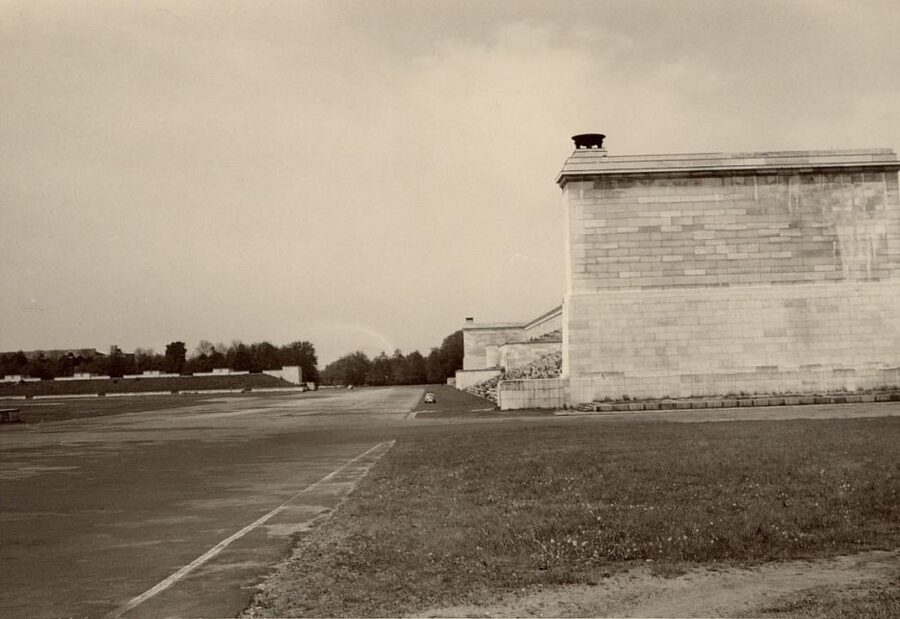
Zeppelin Field is another major stop. The name is familiar to many people because the site has become one of the most recognizable parts of Nuremberg’s former rally grounds.
Here, the important subject is not only the architecture. The field was designed for vast public events, and the open area made the individual part of a much larger visual arrangement. From the ground, you can better understand how rows of people, elevated speakers, symbols, and movement were meant to work together.
The guide’s explanation is valuable because the site can seem almost ordinary when no event is taking place. Without context, you see a large open space and imposing structures. The tour helps you picture the intended use without turning the site into entertainment.
That distinction matters. This is a difficult place, and a good tour should keep the focus on the victims, the political system, and the methods of control rather than treating the architecture as a spectacle. The information provided for this experience emphasizes the dark chapter of German history and the political background, which is the right frame for visiting.
You should expect serious subject matter throughout. This is not a light city walk, and it may not suit someone looking only for traditional sightseeing. For anyone trying to understand how the Nazi regime presented itself to the public, however, Zeppelin Field is a powerful stop.
Same city, a completely different kind of day:
- Nuremberg: Medieval Dungeons Guided Tour
★ 4.8 · 1,726 reviews - Nuremberg: Walking Tour of Former Nazi Party Rally Grounds
★ 4.7 · 1,665 reviews - Medieval Tour in Nuremberg in Spanish
★ 5.0 · 1,374 reviews - Nuremberg: Historischer Kunstbunker WWII Art Bunker Tour
★ 4.8 · 921 reviews
The broad streets and the planned crowd of 400,000
The tour also takes you along the great streets laid out across the grounds. These routes were not just convenient ways to move from one building to another. They formed part of the grand design.
Albert Speer, the chief architect associated with the Nazi regime, planned a gigantic assembly and demonstration area for up to 400,000 people. That number gives you a sense of the intended scale, but walking the site is what makes it more real.
The roads and open areas were made for processions, formations, and large gatherings. Their width changes your sense of distance. You are not walking through a normal urban street pattern, where shops, homes, and small public spaces break up the view. You are moving through a setting designed to make crowds and authority visible.
I like this part of the tour because it connects architecture with human behavior. You see how a government can use distance, height, repetition, and open space to shape a public event. The guide can point out relationships among the different areas, which is hard to understand from a quick independent visit.
The drawback is that the size can make the route feel spread out. A 90-minute tour cannot stop at every structure or explain every detail. If you want a full architectural study, you will need more time than this experience provides.
From propaganda grounds to the Nuremberg Trials
The former rally grounds also connect with the story of the Nuremberg Trials in 1946. The tour places the area within that wider historical chapter, linking the regime’s public displays of power with the later effort to prosecute its leaders.
That connection gives the visit a strong sense of historical reversal. The grounds were intended to project an image of unstoppable authority. Only a few years later, the Nazi leadership faced international legal judgment.
You should not expect this 90-minute outdoor tour to explain the entire legal process in detail. Its main subject is the rally grounds and the political thinking behind them. Still, the link to the trials helps you see Nuremberg as more than the setting for one kind of Nazi spectacle.
The city became associated both with mass rallies and with the legal reckoning that followed the war. Those two stories belong together, but they are not the same story. This tour is best used as a way to understand the physical setting and the regime’s public presentation of power.
If you have time, you can treat the tour as one part of a wider Nuremberg history day. The supplied information does not promise a particular museum visit or courtroom stop, so plan those separately rather than expecting them to be part of this booking.
What the private format adds
The tour is offered as a private group for up to eight people, at a listed price of $128 per group. That works out to $16 per person if you fill all eight places. For two people, the effective cost is $64 each, so the value depends heavily on your group size.
The private setup is most useful when your group has specific questions or wants a measured pace. You can ask the guide to explain a building again, clarify a political point, or spend a little more time on the part of the grounds that matters most to you, within the fixed tour length.
It also avoids the uncertainty of a large public group. You know who you are touring with, and the guide can speak directly to your party. The experience information does not name the individual guide, so you should not book expecting a particular person.
Past feedback on the experience gives special weight to the guide’s expertise, clear explanations, and ability to answer questions fully. That is important here. The buildings alone cannot explain the system that created them, and the quality of the spoken interpretation will shape much of what you take away.
The German-only format is the biggest factor to consider. If you understand German, this can be a direct and personal way to explore the site. If you need English or another language, this activity does not promise it, so you should choose a different option.
Timing, weather, and practical planning
The tour lasts 90 minutes, with starting times shown according to availability. Individual start times are possible on request, which may help if you are arranging a private group around other plans.
The grounds are extensive, so wear shoes suitable for walking and check the weather before you leave. The supplied details do not promise indoor shelter or a particular weather plan, so you should be prepared for an outdoor visit.
Because the meeting point is outside the DokuZentrum, arrive with enough time to identify the correct location. The unclear meeting point caused difficulty for at least one booking party, but the issue was resolved by calling the guide using the number on the confirmation. That makes the telephone contact worth saving in advance.
This tour can fit well before or after other Nuremberg sightseeing, but allow time for getting to the southeast of the city. The activity information gives the meeting address but does not specify transport arrangements, so you need to plan your own route there.
The booking terms are flexible: you can cancel up to 24 hours before the start for a full refund, and you can reserve now and pay later. Those features are useful when your schedule is still shifting, but they do not change the basic need to confirm the German-language format and meeting point.
Who will get the most from this visit
I would choose this tour if you want a clear introduction to Nuremberg’s Nazi-era architecture and political history, especially with your own small group. It suits adults, students, history-minded families, and anyone who wants more explanation than a self-guided walk can provide.
It is also a good choice for people who respond to physical evidence. The scale of the buildings and streets communicates something that photographs often miss. You can see how much effort went into creating a setting for mass political theater.
I would hesitate if you are looking for a broad English-language history tour, a museum visit, or a detailed account of the Nuremberg Trials. The tour is German-language, outdoor-focused, and limited to 90 minutes. It offers a sharp look at one important subject, not the whole story of Nuremberg during and after the Nazi period.
The $128 group price is fair for a full private group of eight, particularly if you value question time and a guide’s interpretation. For one or two people, the cost is harder to justify unless this subject is a high priority for your visit.
Should you book the former rally grounds tour?
Book it if you understand German, can gather a small group, and want to see how the Nazi regime used monumental architecture and mass gatherings to project power. The Congress Hall, Zeppelin Field, and enormous planned routes make the political ideas visible in a way a standard old-town walk cannot.
Before booking, confirm the start time, save the guide’s telephone number, and go to the front of the DokuZentrum at Bayernstraße 110. Be clear that entrance fees and meals are separate, and remember that the tour lasts 90 minutes.
I would recommend it most strongly for a group of four to eight people with a serious interest in twentieth-century history. Solo visitors and English-speaking visitors should compare other options first. For the right audience, this is a focused, sobering, and worthwhile way to understand one of Nuremberg’s most difficult places.
FAQ
Where does the tour begin?
The meeting point is in front of the Documentation Centre Nazi Party Rally Grounds, or DokuZentrum, at Bayernstraße 110 in Nuremberg.
How long does the tour last?
The tour lasts 90 minutes.
What language is the tour in?
The live guide speaks German. No other tour language is listed.
Is the tour private?
Yes. It is a private group tour for up to eight people.
What is included in the price?
The tour and tour guide are included. Entrance fees and meals are not included.
Can I cancel or pay later?
You can cancel up to 24 hours in advance for a full refund. You can also reserve now and pay later.
Just added around Nuremberg
- Tour en español al Campo Zeppelin★ 5.0 · 8 reviews
- Stein: Public guided tour of the “Old Mine” museum★ 4.5 · 18 reviews
- “Rotes Bier” and “Blaue Zipfel”. A historical-culinary walk★ 4.4 · 190 reviews
- Nuremberg: Old Town Guided Tour By Bus★ 4.4 · 198 reviews
- Nürnberg kennenlernen: Highlights in der Altstadt★ 4.7 · 189 reviews
- Nuremberg: Bar and Club Tour with Free Shots and Free Entry★ 3.8 · 23 reviews
- Nürnberg Bachelor(ette) Party with Night PubCrawl★ 4.2 · 5 reviews
- Nuremberg: WWII Tour, Courtroom 600 and 3rd Reich Sites★ 4.6 · 94 reviews
Nuremberg Tours, compared.
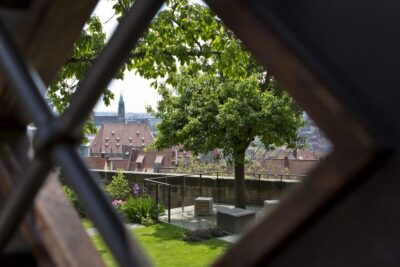
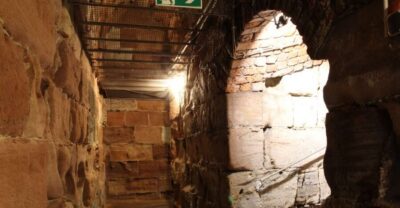
Tunnels and Secret Passages in the City Wall Tour
Read our review →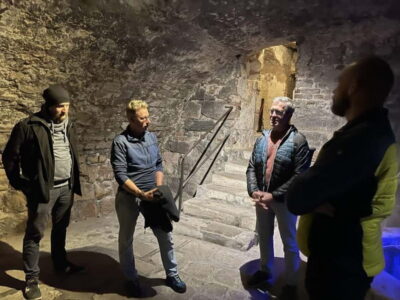
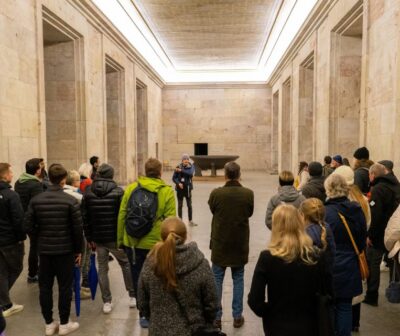
Walking Tour of Former Nazi Party Rally Grounds
Read our review →
Browse the lists this tour appears in