
Reviewed · NUREMBERG TOURS
Nuremberg: Historischer Kunstbunker WWII Art Bunker Tour
Nuremberg’s Historischer Kunstbunker is a place where art, war, and the city’s older past meet underground. In these cold stone tunnels, priceless works were protected while bombing destroyed about 90 percent of the medieval Old Town above.
I like the clear link to famous objects such as the Veit Stoss Altarpiece and Albrecht Dürer’s works. I also like the one-hour length and the way local guides, including Andreas, Michael, Marianne, and Jana, bring in personal knowledge of Nuremberg. The main drawback is the cramped setting: groups can feel crowded, and the cellar stays around 10 to 12°C in every season.
In This Review
- Key things to know before you go
- Walking into Nuremberg’s underground past
- How the art survived the air raids
- Nuremberg’s destruction and difficult rebuilding
- What the one-hour route feels like
- Why the guide makes the difference
- The cold is part of the practical planning
- Is the $14 price good value?
- Who will get the most from this tour?
- How to fit it into a Nuremberg day
- Should you book the Historischer Kunstbunker tour?
- FAQ
- Where does the tour meet?
- How long does the tour last?
- What languages are available?
- What artworks are discussed?
- How cold is the bunker?
- Is transportation included?
- Is the tour suitable for wheelchair users?
- Can I cancel the booking?
Key things to know before you go
- Art saved beneath the city: Learn how important works were stored underground during WWII air raids.
- A cellar with several lives: The tunnels began as medieval beer storage before becoming a wartime shelter for art.
- A useful one-hour history lesson: The compact tour fits neatly before or after other sights in Nuremberg’s Old Town.
- Strong English and German guiding: Guides such as Michael, Andreas, Marianne, and Adrian have been praised for clear explanations, humor, and local insight.
- Cold, narrow, and not step-free: Bring warm clothing, and skip this tour if you have serious mobility limits, use a wheelchair, or dislike enclosed spaces.
Walking into Nuremberg’s underground past
You meet your guide at the entrance to the Historischer Kunstbunker in the Old Town. There is no separate transportation to arrange, and the central location makes this an easy addition to a day spent walking among Nuremberg’s streets and squares.
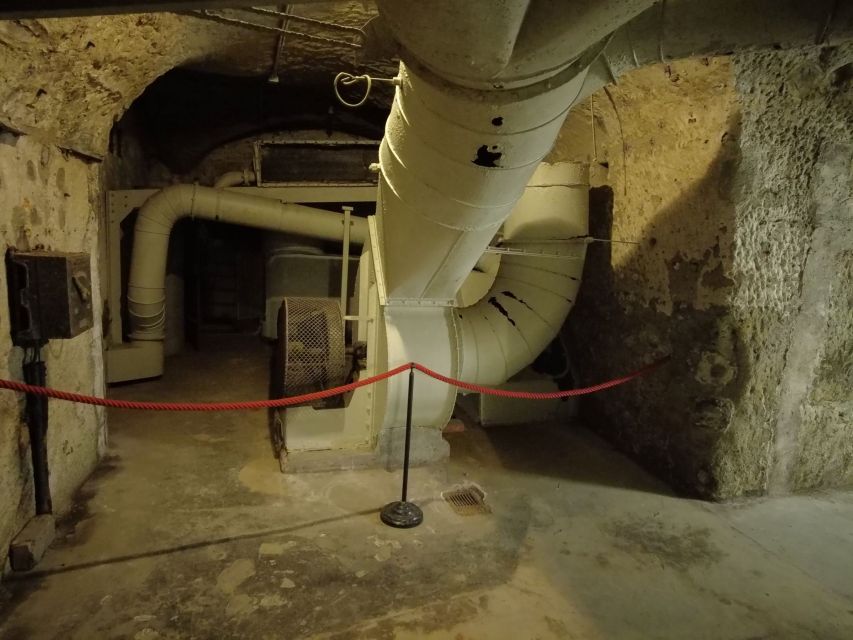
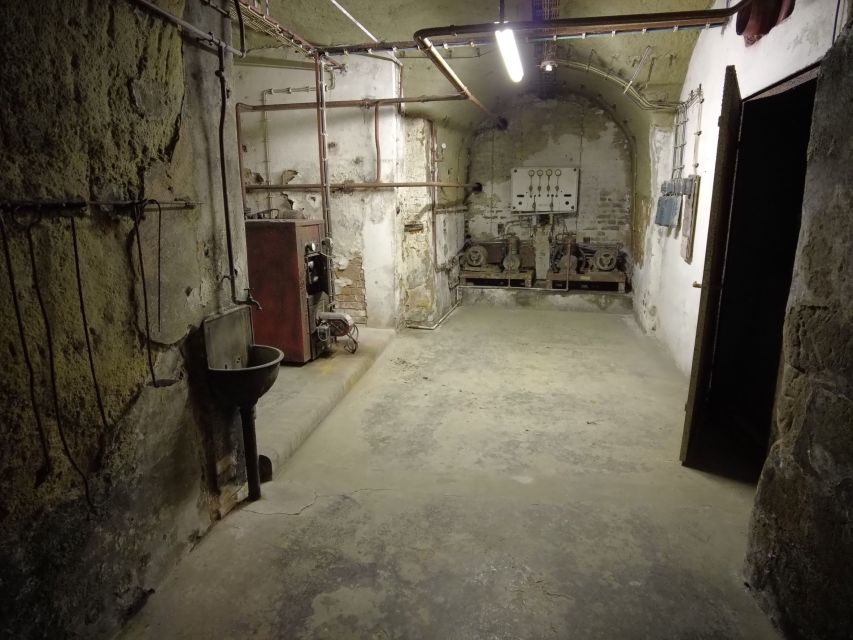
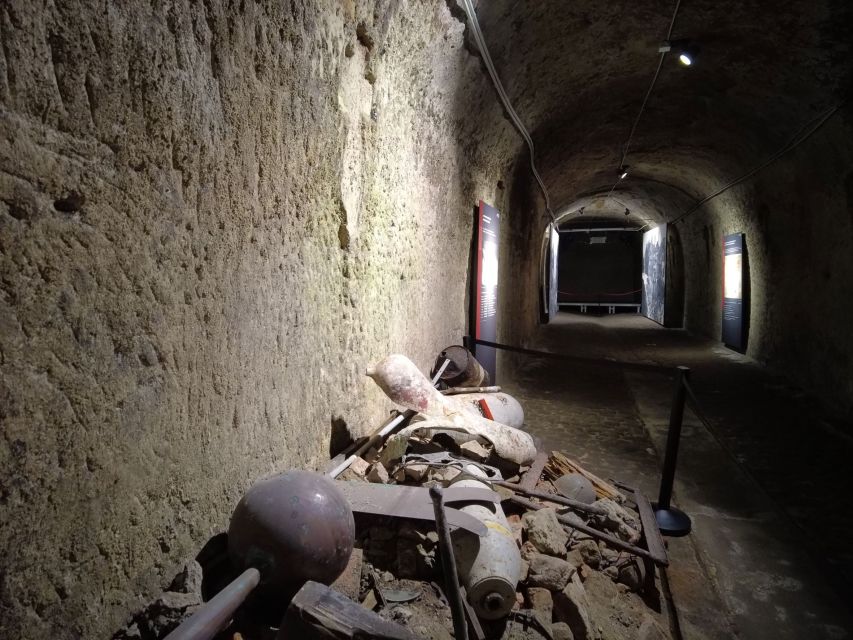
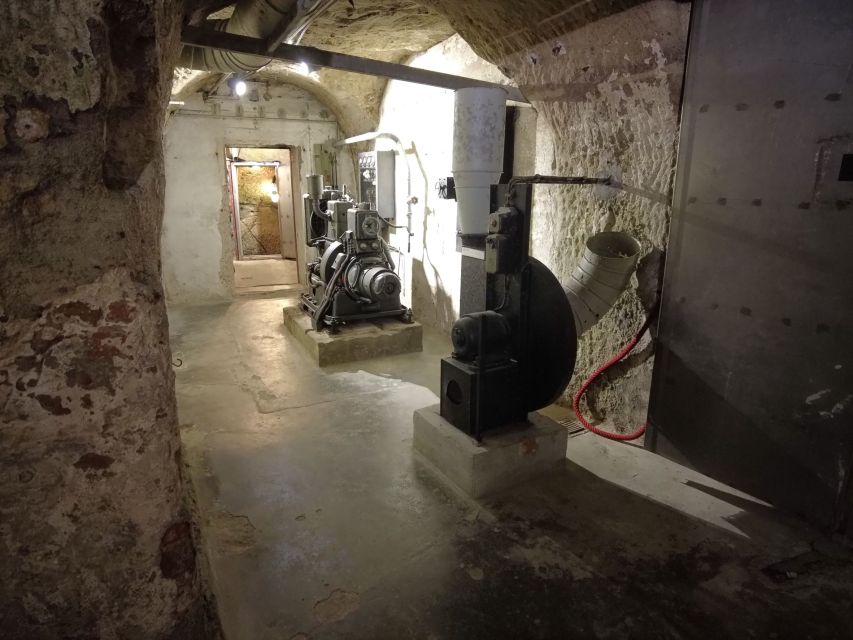
The entrance leads below street level into a network of tunnels and chambers. This is not a polished art museum with broad galleries and bright displays. The character comes from the setting itself: rough walls, enclosed passages, and the sense that the city’s story is continuing beneath your feet.
Your guide leads the group through the bunker and explains how the space changed over time. Long before the Second World War, these underground cellars were used to store beer. During the war, the same protected environment was adapted to shelter major works of art from fire, blast damage, and the collapse of buildings above.
That change in purpose gives the tour its strongest thread. You are not simply hearing about Nuremberg’s wartime destruction in a classroom. You are standing in the kind of place where local officials and specialists tried to keep the city’s most important cultural objects alive.
Other Nuremberg days worth putting on the list:
- Nuremberg: City Tour with the Bimmelbahn Train
★ 4.4 · 2,475 reviews - Nuremberg: Old Town Guided Walking Tour
★ 4.6 · 2,416 reviews - Nuremberg: Tunnels and Secret Passages in the City Wall Tour
★ 4.8 · 2,334 reviews
How the art survived the air raids
The central story is the rescue of valuable works from Nuremberg’s churches, museums, and historic buildings. The tour explains how objects connected with Albrecht Dürer were protected, along with the Veit Stoss Altarpiece, the automaton clock from the Frauenkirche, and the Codex Manesse.
These names matter because they show the scale of the operation. The bunker was not used to save ordinary household goods. It held objects tied to Nuremberg’s artistic identity and to the wider cultural record of Europe.
You will learn how the Nazis used the space to preserve these works during the bombing campaign. That fact needs careful handling. The tour is about the physical protection of art during the Nazi period, not a celebration of the regime. A good guide places the bunker within the larger wartime story and explains the choices made to save cultural property while the city was being destroyed.
The bunker also helps explain why underground storage worked. Thick masonry, sheltered chambers, and the depth below the streets gave the works a better chance than they would have had in exposed buildings. The tour does not ask you to admire the wartime system. It shows you the practical measures used in an extreme situation.
Nuremberg’s destruction and difficult rebuilding
The bunker story becomes more meaningful when you understand what happened above it. Nuremberg’s medieval Old Town suffered enormous damage during WWII, with about 90 percent destroyed. The contrast is stark: important objects were protected below ground while much of the historic city around them was reduced to rubble.
Your guide connects the underground rooms with the city you see today. Nuremberg was rebuilt after the war, and the tour explains some of that process. This gives you a better way to read the Old Town after you leave. Historic-looking streets and buildings are not all untouched survivors. Some areas were reconstructed, and the city had to decide how much of its former appearance to restore.
That is one reason I recommend taking this tour early in your Nuremberg visit. The information changes how you see the churches, squares, walls, and restored streets above ground. A later walk through the Old Town becomes more than a pretty stroll. You begin to notice the tension between survival, reconstruction, and the loss of original material.
If you have already visited major Third Reich sites in Nuremberg, the bunker adds a different angle. The focus here is not mainly on rallies, propaganda, or political spectacle. It is on civilian destruction, emergency planning, architecture, and the effort to protect art.
What the one-hour route feels like
The tour lasts about one hour, which is a useful length for a city sightseeing day. You get a focused visit rather than a long block of indoor time, and the bunker can fit before lunch, after a walk, or between other Old Town stops.
The route takes you through the tunnel network with a guide. Expect to pause in different sections while the guide explains the cellar’s earlier use, its wartime conversion, the objects placed inside, and the damage suffered by Nuremberg.
The space is part of the experience, but it also creates limits. One person described a group of 21 as feeling crushed, and another noted that the space seemed small for the number of people present. If your booking falls in a full group, you may need to stay close to the guide and wait for clear moments to look around.
That crowding matters most if you want quiet time with the architecture. This is a guided history tour, not a free-roaming visit. The guide’s explanation is the main attraction, so choose a position where you can hear clearly and see the areas being discussed.
The enclosed rooms can also feel uncomfortable if you have claustrophobia. The tour is specifically unsuitable for people with mobility impairments and wheelchair users, so check your own comfort before booking. A folding chair has been available on at least one tour for someone who could not stand for long, but you should not assume this solves every mobility concern.
Same city, a completely different kind of day:
- Nuremberg: Medieval Dungeons Guided Tour
★ 4.8 · 1,726 reviews - Nuremberg: Walking Tour of Former Nazi Party Rally Grounds
★ 4.7 · 1,665 reviews - Medieval Tour in Nuremberg in Spanish
★ 5.0 · 1,374 reviews - Nuremberg: PLAYMOBIL®- FunPark
★ 4.7 · 863 reviews
Why the guide makes the difference
The bunker contains a strong story, but the quality of the hour depends heavily on the person leading it. The best guides make the technical details easy to follow and connect them to the city above.
Several guides have been praised for this balance. Michael is described as friendly, humorous, and very well prepared. Andreas has been noted for answering questions and adding local context, including stories connected with growing up in Nuremberg. Marianne has been praised for clear English, energy, and a strong command of the subject. Jana has been described as calm, friendly, and ready to explain both the tunnels and their various uses.
Other named guides include Adrian, Owen, Ralf, Stefan, Mark, Allen, and Andrea. The guide assigned to your departure can vary, so do not book expecting one particular person unless the operator confirms it.
The strongest guiding style here seems to mix dates and facts with human detail. One guide kept younger visitors aged 12 and 13 engaged, while others used humor without making light of the subject. That is useful in a bunker tour, where a long chain of military facts could quickly become heavy.
English and German tours are available. If you have questions, ask them. The guides are expected to explain the history, architecture, air raid preparations, and rebuilding of Nuremberg, and the experience becomes more useful when you connect the information to your own interests.
The cold is part of the practical planning
Bring a warm layer, even if you visit in July or August. The cellar remains around 10 to 12°C, and several people found it distinctly cold. A sweater, cardigan, or light jacket is enough for many visitors, but you should not rely on the outdoor forecast.
The temperature is not just a minor comfort issue. You will spend the full hour underground, often standing in one place while the guide talks. If you arrive in summer clothing, the final part of the tour can feel long.
The tour runs rain or shine, though weather outside has little effect on the conditions below ground. This makes it a useful rainy-day plan, but the bunker is not a warm refuge. Dress for the cellar, not for the street.
Wear comfortable shoes for walking through the tunnels. The supplied information does not give a detailed account of every surface or step, so anyone with mobility concerns should treat the access restriction seriously rather than assume the route will be easy.
Is the $14 price good value?
At $14 per person, the tour offers solid value for a guided hour in a historic site. The entry fee and guide are included, so you are paying for both access to the bunker and the explanation that makes the rooms meaningful.
The value is strongest if you care about WWII, Nuremberg, historic preservation, art, or underground architecture. You are seeing a place with a specific purpose and a direct connection to major works, not simply walking through an old cellar.
The price is less compelling if you want to view original masterpieces in person. The attraction is the bunker and the story of protection, not a full gallery display of Dürer works or the Veit Stoss Altarpiece. You should book it for the setting and interpretation.
There is no food, drink, or transportation included. That is hardly a concern for a one-hour Old Town activity, since the meeting point is central and you can easily plan a café or meal before or after. Several visitors liked the nearby square as a place to relax after the tour, but the food itself is not part of the booking.
Free cancellation up to 24 hours before the start and the option to reserve now and pay later make the booking fairly flexible. Still, check the available starting times before building the rest of your day around it.
Who will get the most from this tour?
I would put this high on the list for anyone with even a mild interest in WWII history. You do not need to be a specialist. The tour gives enough context for first-time visitors, while people who already know the military history can focus on the rescue operation, building design, and postwar rebuilding.
It also suits art lovers who want to understand how works were protected in wartime. The mention of Dürer, the Veit Stoss Altarpiece, the Frauenkirche clock, and the Codex Manesse gives the tour a clear cultural focus.
Families can make good use of the short format. The historical setting is more direct than a long museum visit, and the guides have shown they can keep teenagers involved. Parents should prepare children for the cold, narrow passages and the need to stay with the group.
I would be more cautious for visitors who dislike enclosed spaces or need a fully accessible route. The bunker is not suitable for wheelchair users or people with mobility impairments, and group size can make the passages feel tighter.
How to fit it into a Nuremberg day
Because the bunker is in the Old Town, you can pair it with a walking tour of Nuremberg’s historic center. Visit the bunker before seeing the rebuilt streets, and you will have the wartime context in mind as you look at the city above.
You can also schedule it after other major Third Reich sites. That order gives you a broader picture of Nuremberg’s role under the Nazis, the destruction that followed, and the city’s recovery after 1945.
Allow extra time around the one-hour tour for finding the entrance and continuing to your next stop. The activity itself is short, but the subject is dense. If you enjoy asking questions, leave a little breathing room afterward rather than booking another tightly timed attraction immediately.
Should you book the Historischer Kunstbunker tour?
Book it if you want a focused, place-based look at Nuremberg during WWII. The bunker links medieval beer cellars, wartime air raid planning, famous artworks, and the rebuilding of a city that lost most of its medieval core. At $14 and one hour, it is an easy activity to add to an Old Town itinerary.
Skip it if underground spaces make you anxious, you need step-free access, or you are looking for a conventional art museum. For everyone else, bring a warm layer and book with realistic expectations about the narrow rooms. The setting is modest, but the story is substantial, and a strong guide can make the hour memorable.
FAQ
Where does the tour meet?
Meet your guide at the entrance to the Historischer Kunstbunker Museum in Nuremberg’s Old Town.
How long does the tour last?
The guided tour lasts one hour.
What languages are available?
Tours are offered in English and German.
What artworks are discussed?
The tour discusses works linked with Albrecht Dürer, the Veit Stoss Altarpiece, the automaton clock from the Frauenkirche, and the Codex Manesse.
How cold is the bunker?
The cellar is around 10 to 12°C, regardless of the weather outside. Bring warm clothing.
Is transportation included?
No. Transportation is not included, though the meeting point is at the museum entrance in the Old Town.
Is the tour suitable for wheelchair users?
No. The tour is not suitable for wheelchair users or people with mobility impairments.
Can I cancel the booking?
You can cancel up to 24 hours in advance for a full refund. A reserve-now, pay-later option is also available.
Just added around Nuremberg
- Tour en español al Campo Zeppelin★ 5.0 · 8 reviews
- Stein: Public guided tour of the “Old Mine” museum★ 4.5 · 18 reviews
- “Rotes Bier” and “Blaue Zipfel”. A historical-culinary walk★ 4.4 · 190 reviews
- Nuremberg: Old Town Guided Tour By Bus★ 4.4 · 198 reviews
- Nürnberg kennenlernen: Highlights in der Altstadt★ 4.7 · 189 reviews
- Nuremberg: Bar and Club Tour with Free Shots and Free Entry★ 3.8 · 23 reviews
- Nürnberg Bachelor(ette) Party with Night PubCrawl★ 4.2 · 5 reviews
- Nuremberg: Tour of Former Nazi Party Rally Grounds★ 5.0 · 43 reviews
Nuremberg Tours, compared.
Tunnels and Secret Passages in the City Wall Tour
Read our review →
Walking Tour of Former Nazi Party Rally Grounds
Read our review →
Browse the lists this tour appears in