
Reviewed · CITY TOURS
Nuremberg: Tunnels and Secret Passages in the City Wall Tour
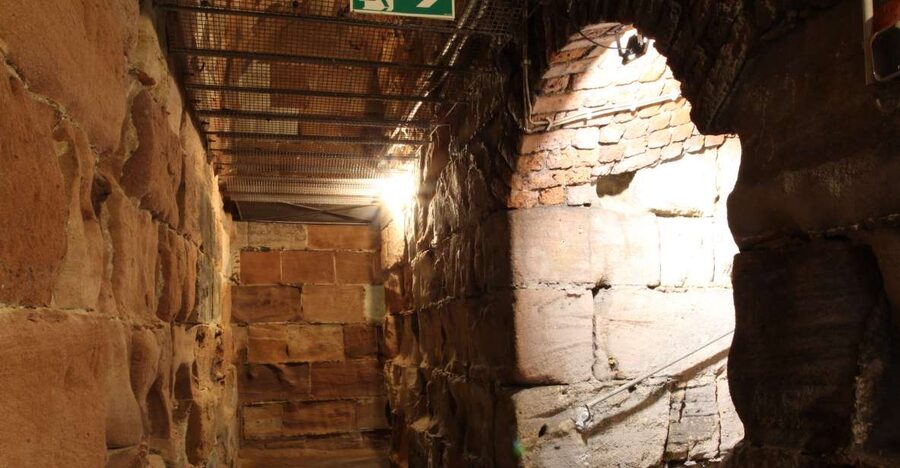
Under Nuremberg’s Imperial Castle lies a world of cramped corridors, rough sandstone, steep steps, and clever military design. This one-hour tour takes you through defensive passages that most castle visitors never see, showing how soldiers once watched the moat and prepared to fire on attackers from several directions.
I like the hands-on sense of medieval defense and the way the tour connects the castle walls with the wider city. I also like the price: at $14 per person, it gives you access to parts of Nuremberg that you cannot explore on your own. The main drawback is physical. You will climb lots of old stairs and ramps, and some passages may feel tight, low, damp, or muddy.
In This Review
- Key points to know before you book
- Meeting the guide beside the Historischer Kunstbunker
- Walking the sandstone walls like a castle defender
- Inside the hidden corridors beneath the Imperial Castle
- How the moat and cannon bastions changed the city’s defense
- What the guide adds to the stonework
- A one-hour tour with real physical demands
- Is $14 a fair price?
- What to bring and what to leave behind
- Who will enjoy this Nuremberg experience most?
- Should you book the tunnels and secret passages tour?
- FAQ
- How long does the Nuremberg tunnels tour last?
- How much does the tour cost?
- Where is the meeting point?
- What languages are available?
- What should I wear?
- Are there many stairs?
- Is the tour suitable for wheelchair users?
- Can I bring food, drinks, or pets?
Key points to know before you book
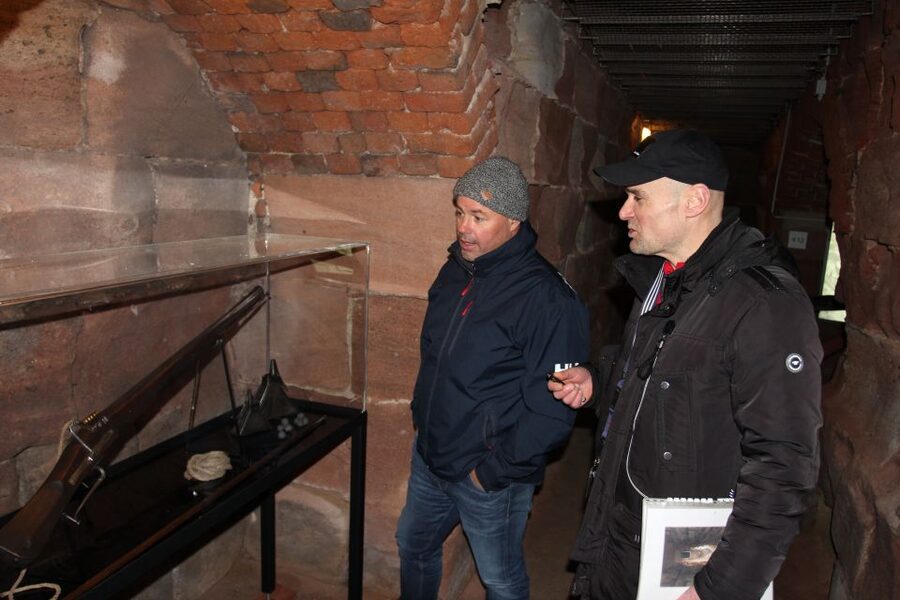
- The tour goes below the Imperial Castle, into secret passages and defensive corridors beneath the sandstone walls.
- Sixteenth-century bastions show how Nuremberg adapted its defenses for cannon warfare.
- The one-hour route is active, with steep steps, ramps, and uneven surfaces rather than a gentle museum walk.
- Guides make the difference, with English and German tours led by guides such as Andreas, Tom, Alan, Martin, Ralf, and Penny.
- Warm clothing and non-slip shoes matter, even in summer, since the underground spaces can be cool, wet, and slippery.
- At $14, it is a strong-value add-on for anyone already visiting the castle or old town.
Meeting the guide beside the Historischer Kunstbunker
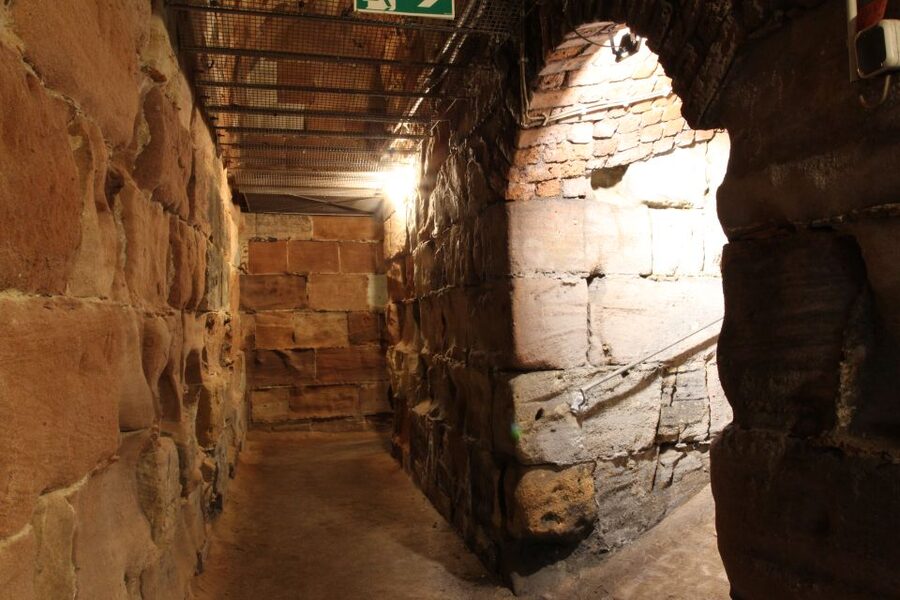
The tour begins in front of the entrance to the Historischer Kunstbunker at Obere Schmiedgasse 52. That location puts you right in Nuremberg’s old town, close to the Imperial Castle and the sandstone walls that shape the whole experience.
You should arrive ready to move. This is not a standard city walk where you pause at a square, take photographs, and stroll on level pavement. The guide leads you toward the castle defenses, then into the passages where the city’s military planning becomes easier to understand.
The tours are offered in English or German. The quality of the explanation depends partly on the guide assigned to your time, but the strongest examples include Alan, Tom, Robert, Andreas, Martin, Ralf, Penny, and Fiona. Guides have been praised for humor, clear English, patience with questions, and their ability to keep children involved.
A useful detail: some guides use questions to draw you into the story. You might be asked to guess what a chamber was for or why a wall was built at a certain angle. That can make the tour lively, though if you prefer quick answers, the question-and-answer style may occasionally feel a little slow.
A few more Nuremberg trips to weigh up
- Nuremberg: City Tour with the Bimmelbahn Train
★ 4.4 · 2,475 reviews - Nuremberg: Christmas City Culinary Tour
★ 4.6 · 40 reviews - Berlin: 1-Hour City Tour by Boat with Guaranteed Seating
★ 4.3 · 16,993 reviews
Walking the sandstone walls like a castle defender
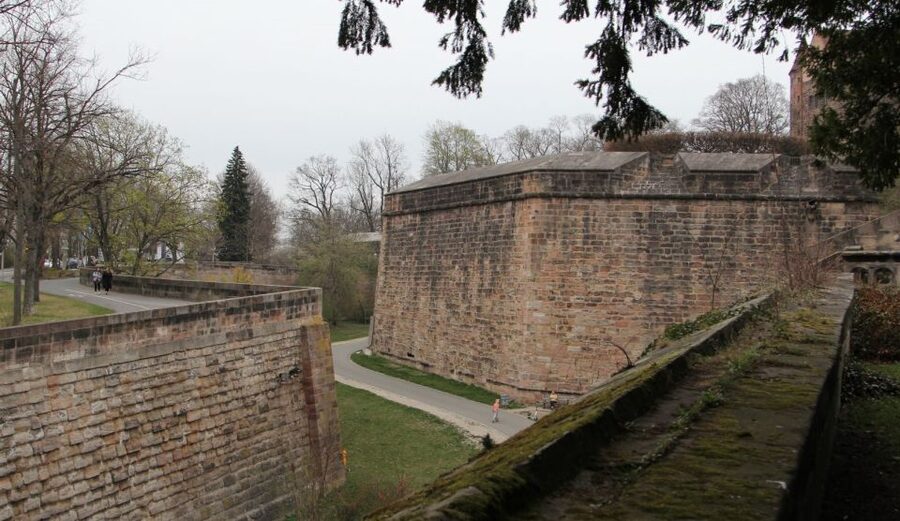
The first major pleasure is seeing Nuremberg’s defenses as working military architecture rather than as attractive old stonework. The city walls and Imperial Castle have an imposing look from above, but the tour explains how those walls were meant to function during an attack.
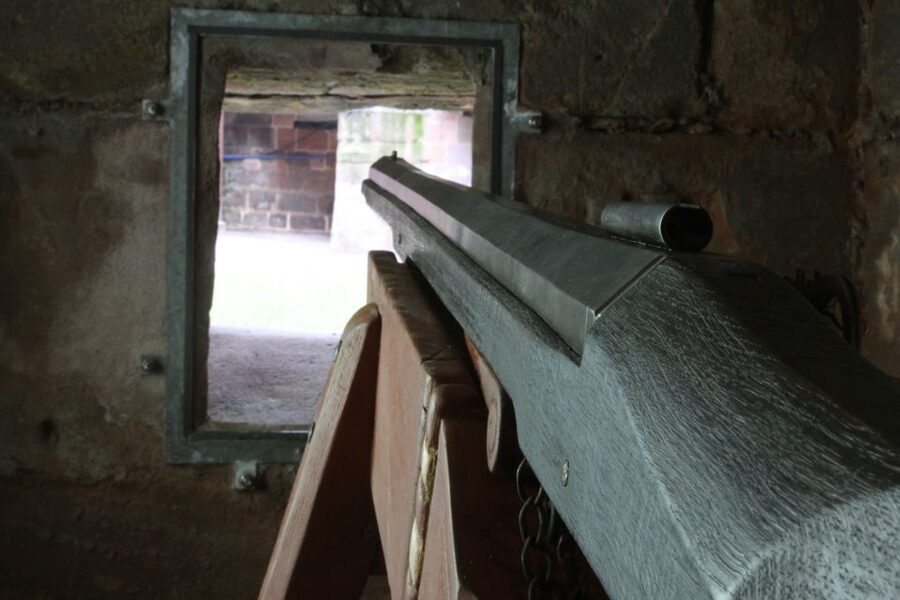
You follow routes used by defenders and see how the moat, walls, chambers, and firing positions worked together. The goal was not simply to build one thick barrier. Nuremberg’s defenses were arranged so soldiers could observe movement, protect vulnerable points, and fire at enemies attempting to cross the moat.
That makes the tour especially useful after you have seen the castle from the outside. A normal visit gives you towers, courtyards, and grand views. This experience supplies the less polished side of the fortress: the cramped work areas, rough steps, and practical corridors where defense depended on timing, teamwork, and a good view of the enemy.
I enjoy tours that explain why a building looks the way it does. Here, a thick wall is not just old masonry. A narrow opening is not merely a quirky architectural detail. Each feature becomes part of a plan for keeping Nuremberg safe.
Inside the hidden corridors beneath the Imperial Castle
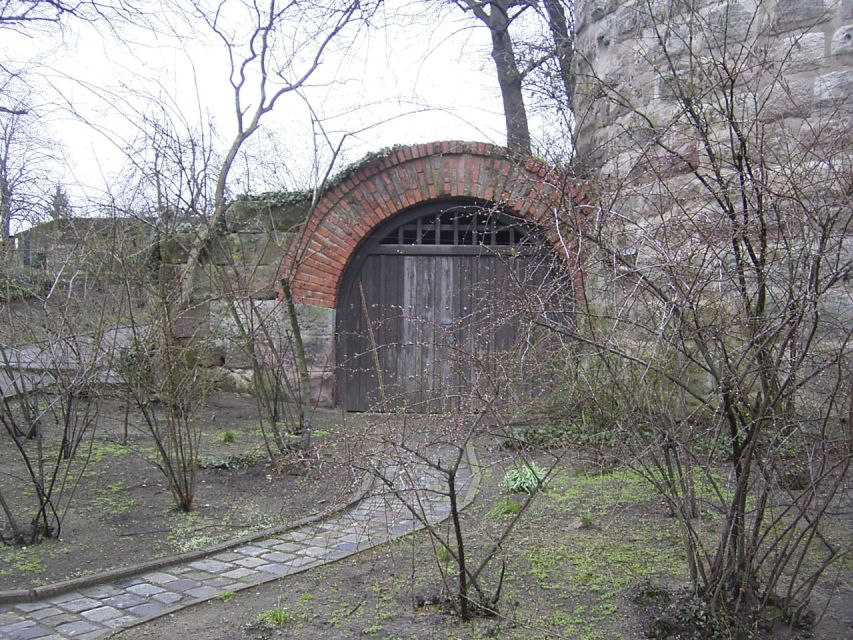
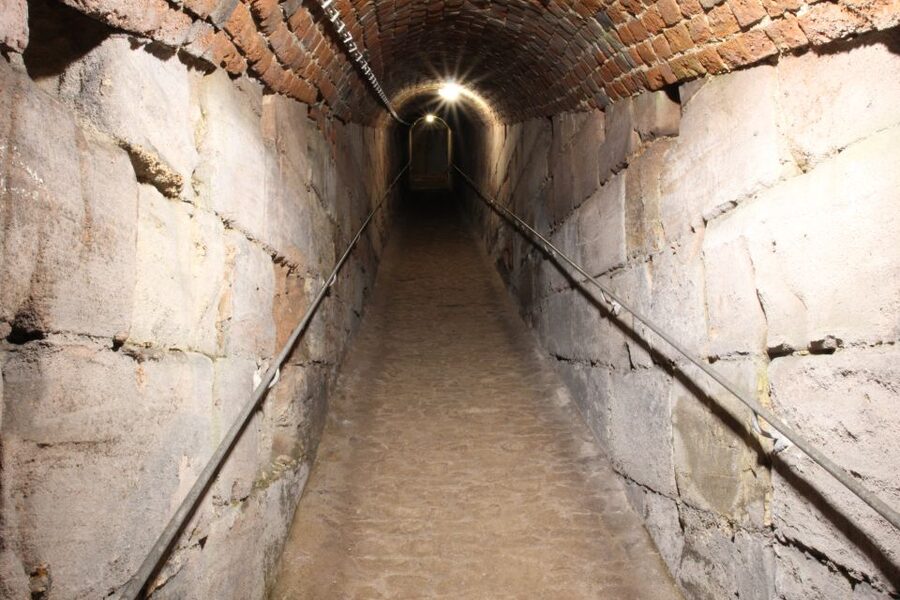
The underground section is the heart of the tour. You enter a labyrinth of passages and high-vaulted chambers cut into the castle rock, with routes that allowed defenders to move through the walls and reach different firing positions.
The spaces are atmospheric without needing theatrical effects. The old sandstone, low ceilings, and limited light do the work. One passage may feel broad enough for a group to gather, while another can become narrow and low. A review of the physical conditions noted sections under 1.5 meters high, so taller visitors should pay attention to their heads.
You may also encounter wet or muddy ground and slippery stone. That is why closed shoes with good grip are more than a polite suggestion. Sandals and flip flops are not allowed, and they would be a poor choice here in any case.
The underground temperature can feel cool even during warm weather. Bring a light jacket or other warm clothing. One advantage in summer is that the tunnels offer a welcome break from heat, while in rainy weather they provide shelter, although you still need to manage the damp surfaces.
There are no toilet breaks during the hour. Plan ahead before meeting the guide, especially if you are traveling with children.
How the moat and cannon bastions changed the city’s defense
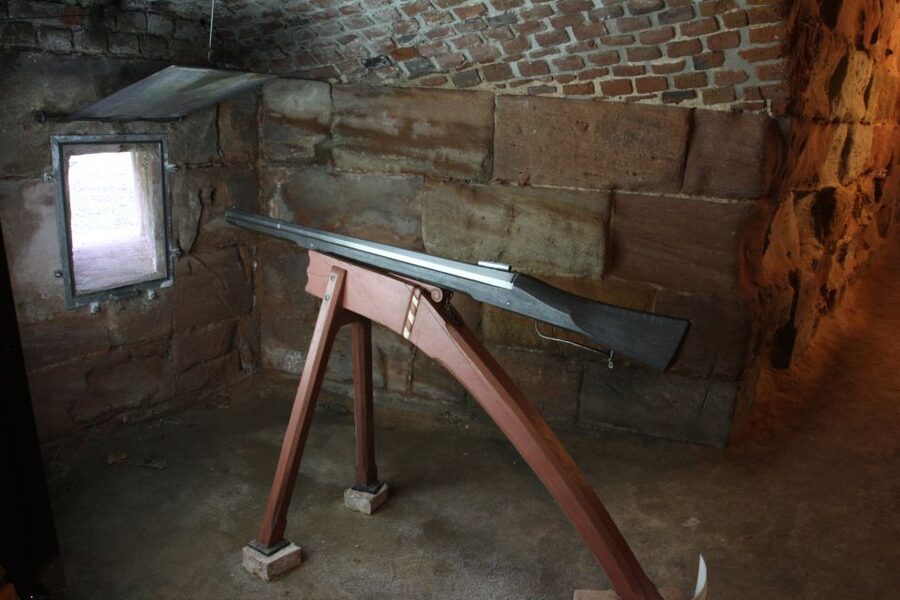
The tour also explains how Nuremberg’s defensive system changed as weapons improved. Medieval walls had to meet a new threat when cannons became more powerful, and the city added modern bastions in the sixteenth century.
These bastions were designed to withstand cannon fire and to give defenders better angles across the moat. The important point is that the fortifications were not frozen in one period. They were adjusted as military technology changed.
You also learn about weapons stored within the city walls and how knights and other defenders worked together. The subject can sound dry in a textbook, but it makes more sense when you are standing inside the chambers that supported the plan.
I find this the most valuable part for visitors who already know a little about castles. Instead of simply seeing a wall and hearing that it was defensive, you get a practical explanation of sight lines, protected passages, firing positions, and movement through the fortification.
The tour’s focus is Nuremberg, but the larger lesson is about how a medieval city operated under threat. Defense required architecture, supplies, communication, and people who knew where to go. The guide helps connect those pieces.
Same city, a completely different kind of day:
- Nuremberg: Old Town Guided Walking Tour
★ 4.6 · 2,416 reviews - Nuremberg: Medieval Dungeons Guided Tour
★ 4.8 · 1,726 reviews - Nuremberg: Walking Tour of Former Nazi Party Rally Grounds
★ 4.7 · 1,665 reviews - Medieval Tour in Nuremberg in Spanish
★ 5.0 · 1,374 reviews
What the guide adds to the stonework
The passages themselves are fascinating, but the guide gives them meaning. Without an explanation, you would see old rock, stairways, openings, and vaulted rooms. With a good guide, you can picture how each part fit into the defensive system.
Several guides have received particularly strong praise for being funny as well as well informed. Andreas is known for clear facts and a good sense of humor. Tom has been praised for making the subject interesting to children. Alan has been described as friendly and full of facts, while Martin has a reputation for inviting questions and keeping the hour moving.
Ralf has been praised for explaining the order of the route, including when the group would return to a feature after passing it. That kind of signposting helps in a maze-like place. Penny has also been praised for detailed explanations and humor.
English delivery is generally described as clear and understandable, although you may find that a soft-spoken guide is harder to hear in stone chambers. Stay close to the guide, especially when the group spreads out in a narrow passage.
The best guides adjust their approach to the group. Families with children can follow the story, while adults interested in military design get enough detail to make the hour worthwhile. If you want a long lecture on every period of Nuremberg’s past, this is not that. The focus stays on walls, tunnels, weapons, and defense, with broader city history added along the way.
A one-hour tour with real physical demands
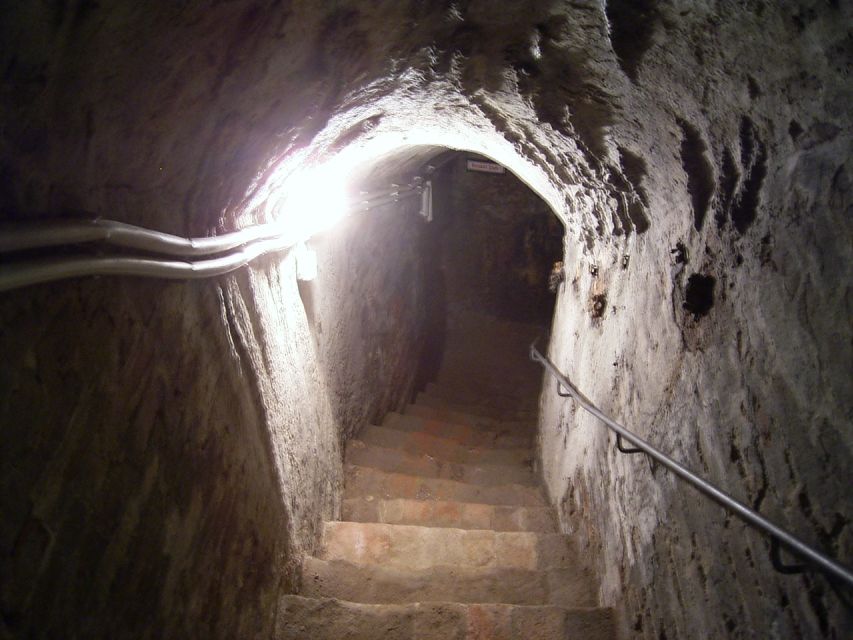
The advertised duration is one hour, and that is a sensible length for this setting. The passages are interesting, but climbing through them takes effort and concentration. An hour gives you a clear look at the system without turning the visit into an endurance test.
Expect many old stairs and ramps. The route is not suitable for wheelchair users or people with mobility impairments. It is also a poor match for anyone with claustrophobia.
The difficulty is not just the number of steps. Some surfaces are uneven, and the narrow corridors require careful footing. You may need to duck under low sections and keep your hands free for balance. Do not plan this as a quick stop while wearing dress shoes or slick soles.
Children can enjoy the tour, and guides have successfully kept children as young as eight interested. Still, parents should decide based on the child’s comfort with darkness, confined spaces, stairs, and a full hour without a break. The tour is not designed for a stroller or for someone who needs step-free access.
The group format also affects the experience. A small group makes it easier to hear the guide and ask questions, while a larger group may feel crowded in the narrow parts. Since the tour has become popular, advance booking is sensible, though short-notice spaces may sometimes be available.
Is $14 a fair price?
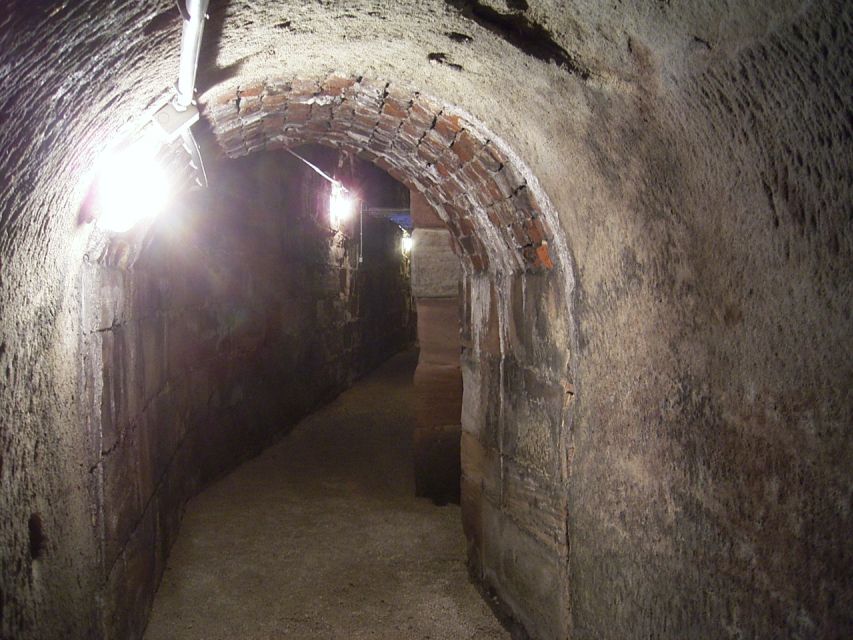
Yes, this is one of the better-value short tours in Nuremberg. For $14, you receive entry to both the defensive corridors in the city walls and the secret passages beneath the Imperial Castle, along with a live guide in English or German.
The value comes from access. You cannot simply wander into these areas by yourself, and the passages are difficult to understand without someone explaining their purpose. A castle admission ticket alone would not necessarily give you this same look at the working defenses.
The one-hour duration keeps the price appealing, though visitors who become fascinated by military architecture may wish the tour lasted longer. One person’s only real complaint was wanting more time underground, which is a fair reaction when the route ends just as the system begins to make sense.
I would place this high on the list for anyone already planning to visit the Imperial Castle. It adds a different layer to the castle without taking half a day or putting a large dent in your budget.
The activity also offers free cancellation up to 24 hours before the start and a reserve-now, pay-later option. Those terms are useful if your Nuremberg schedule is still shifting, but the main decision should be physical comfort, not booking flexibility.
What to bring and what to leave behind
Wear warm layers and firm, non-slip shoes. The underground corridors may be cool, damp, muddy, and slippery, so practical clothing is more important than looking polished.
Do not bring food or drinks into the passages. Pets are not allowed, apart from assistance dogs. A small bag is easier to manage than bulky luggage, particularly when the route narrows.
Before you meet the guide, use a toilet if needed. There will be no toilet stop during the tour.
Give yourself enough time to find the meeting point at the Historischer Kunstbunker. The tour begins promptly, and falling behind at the start would be especially inconvenient when the group is moving through a maze of passages.
Who will enjoy this Nuremberg experience most?
You should book this tour if you like castles, military history, old engineering, or unusual places beneath familiar landmarks. It is also a good choice if you want a break from conventional museums and city walks.
Families can enjoy it when children are comfortable with stairs and tight spaces. The guides have shown they can make the subject accessible, and the defensive story gives children something concrete to imagine: soldiers moving through passages, watching the moat, and preparing to protect the city.
It is less suitable if you dislike enclosed spaces or have trouble with steep, uneven stairs. Wheelchair users and people with mobility impairments should choose another way to explore Nuremberg’s history.
You do not need to be a castle expert. The guide builds the story from what you see, and the physical setting keeps the subject grounded. Even if military history is not your first interest, the chance to walk through an area that is normally closed to independent visitors gives the tour a clear reason to exist.
Should you book the tunnels and secret passages tour?
Book it if you want to see the Imperial Castle from the inside out. The strongest parts are the underground corridors, the explanation of the moat and firing positions, and the chance to follow the routes once used by defenders.
At $14, it is inexpensive for a guided experience with special access. Just arrive in warm clothes and sturdy shoes, and be honest about your comfort with steep stairs, low ceilings, and confined spaces.
Skip it if you need step-free access, regular toilet breaks, or a relaxed walk. For everyone else, this is a compact, practical, and memorable way to understand why Nuremberg’s walls mattered.
FAQ
How long does the Nuremberg tunnels tour last?
The tour lasts one hour. It includes the defensive corridors in the city walls and secret passages beneath the Imperial Castle.
How much does the tour cost?
The listed price is $14 per person. The price includes entry to the defensive corridors and the secret passages.
Where is the meeting point?
Meet in front of the entrance to the Historischer Kunstbunker at Obere Schmiedgasse 52.
What languages are available?
The tour is offered in English and German with a live guide.
What should I wear?
Bring warm clothing and wear sturdy, non-slip shoes. The route includes old stairs and ramps and may be cool, wet, muddy, or slippery.
Are there many stairs?
Yes. The tour involves climbing lots of old stairways and ramps, including steep and uneven sections.
Is the tour suitable for wheelchair users?
No. The experience is not suitable for wheelchair users or people with mobility impairments.
Can I bring food, drinks, or pets?
Food and drinks are not allowed on the tour. Pets are not allowed, although assistance dogs are permitted.
Just added around Nuremberg
- Tour en español al Campo Zeppelin★ 5.0 · 8 reviews
- Stein: Public guided tour of the “Old Mine” museum★ 4.5 · 18 reviews
- “Rotes Bier” and “Blaue Zipfel”. A historical-culinary walk★ 4.4 · 190 reviews
- Nuremberg: Old Town Guided Tour By Bus★ 4.4 · 198 reviews
- Nürnberg kennenlernen: Highlights in der Altstadt★ 4.7 · 189 reviews
- Nuremberg: Bar and Club Tour with Free Shots and Free Entry★ 3.8 · 23 reviews
- Nürnberg Bachelor(ette) Party with Night PubCrawl★ 4.2 · 5 reviews
- Nuremberg: WWII Tour, Courtroom 600 and 3rd Reich Sites★ 4.6 · 94 reviews
City Tours, compared.

1-Hour City Tour by Boat with Guaranteed Seating
Read our review →
City History Canal Sightseeing Tour on a Motorboat
Read our review →





Browse the lists this tour appears in