
Reviewed · CITY TOURS
Bremen: City Center Guided Walking Tour
Bremen’s greatest sights sit close together, and this two-hour walking tour makes a smart introduction to them. You move from the grand market square to the quirky Böttcherstraße and finish among the tiny lanes of Schnoor, seeing the city’s main character in a compact route.
I like the way the tour joins famous landmarks with ordinary old streets, rather than treating Bremen as a parade of monuments. I also like the strong local flavor: guides such as Pierre, Rima, Guido, and Hans have been praised for lively stories, humor, and real pride in the city.
The main consideration is the footing. The roughly 2-kilometer route includes cobblestones, uneven ground, and tram tracks, so wear steady shoes and allow extra care if you use a wheelchair or have limited mobility.
In This Review
- Key points to know before you book
- Starting at Bremen’s compact historic core
- Bremen’s market square, where the city makes its first impression
- Böttcherstraße, where barrels gave way to Expressionism
- Schnoor quarter, Bremen’s most intimate old quarter
- The guide’s role: history with humor and local pride
- What the $14 price delivers
- Practical advice for the route
- Who should book this Bremen walk?
- Should you book the City Center Guided Walking Tour?
- FAQ
- How long is the Bremen City Center Guided Walking Tour?
- What sights are included?
- Where does the tour meet?
- Is the tour available in English?
- Is the route wheelchair accessible?
- Can I cancel or pay later?
Key points to know before you book
- The market square is the grand opening scene: See Bremen’s UNESCO-listed town hall, Roland statue, St. Petri Cathedral, and the Town Musicians.
- Böttcherstraße mixes old and new: Red-brick buildings meet bold Expressionist design along Bremen’s best-known pedestrian street.
- Schnoor gives you the most intimate walk: Tiny lanes reveal the city’s oldest quarter, once home to fishermen, artisans, and sailors.
- The guide makes the difference: English-speaking guides have included Pierre, Rima, Guido, Hans, Anette, Viveka, and others, with humor and clear storytelling frequently praised.
- The route is short but full: Expect about two hours and roughly 2 kilometers, with several stops for explanation and questions.
- The price is hard to argue with: At $14 per person, you get a useful city orientation for less than the cost of many museum admissions.
Starting at Bremen’s compact historic core
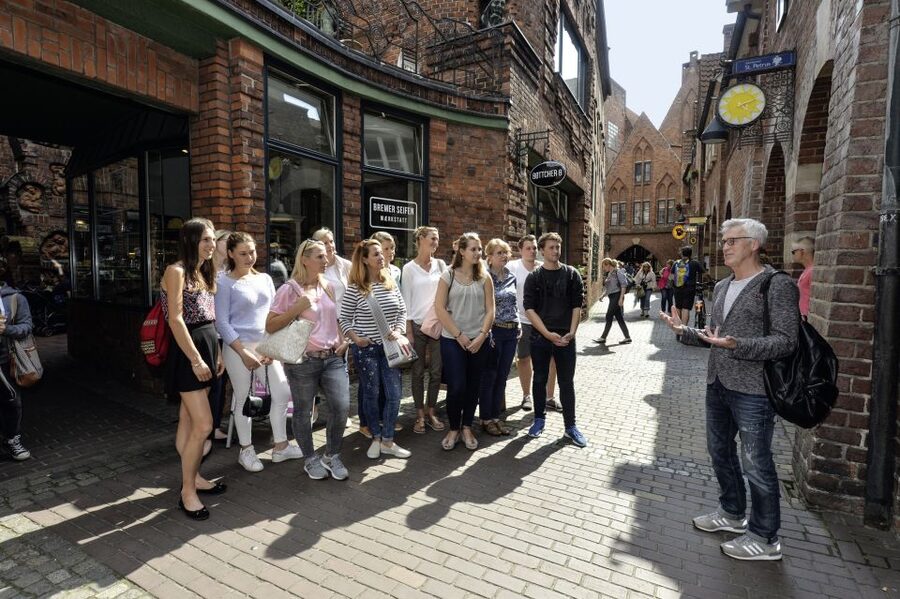
The meeting point is on the right side in front of the Tourist Information at the Glockenspiel House, Böttcherstraße 4. That location puts you close to the market square and one of the city center’s most distinctive streets, so you begin in the thick of Bremen’s old town rather than spending time reaching the sights.
I would arrive a little early. The center can be busy, and the route may change briefly if an event affects the streets. Your guide will lead on foot, with stops to gather the group before explaining important details.
The tour lasts two hours, though one account described a route closer to one hour and forty-five minutes. That small variation is normal for a walking tour, especially when the group pauses for questions, crowds slow the pace, or the guide adds a local story.
The route covers about 2 kilometers. That is manageable for most people, but the surface is not always smooth. Cobblestones and tram tracks call for sensible footwear, and the pace may feel brisk if you prefer frequent sitting breaks.
A few more Bremen trips to weigh up
- Bremen: Walking Tour in German with Night Guard
★ 4.7 · 2,922 reviews - Bremen: Walking Tour of Historic Schnoor District
★ 4.8 · 429 reviews - Bremen: Private Walking Tour with a Professional Guide
★ 4.2 · 22 reviews
Bremen’s market square, where the city makes its first impression
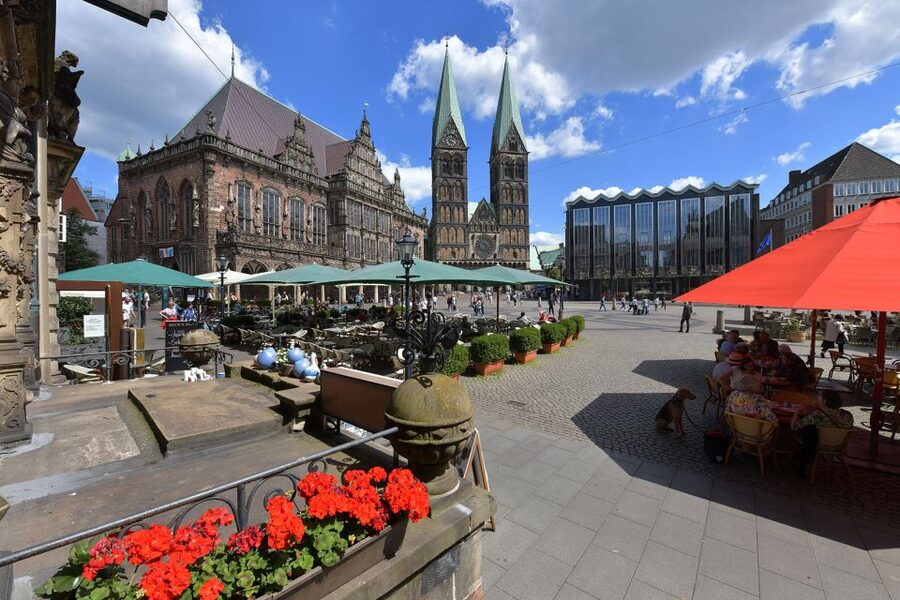
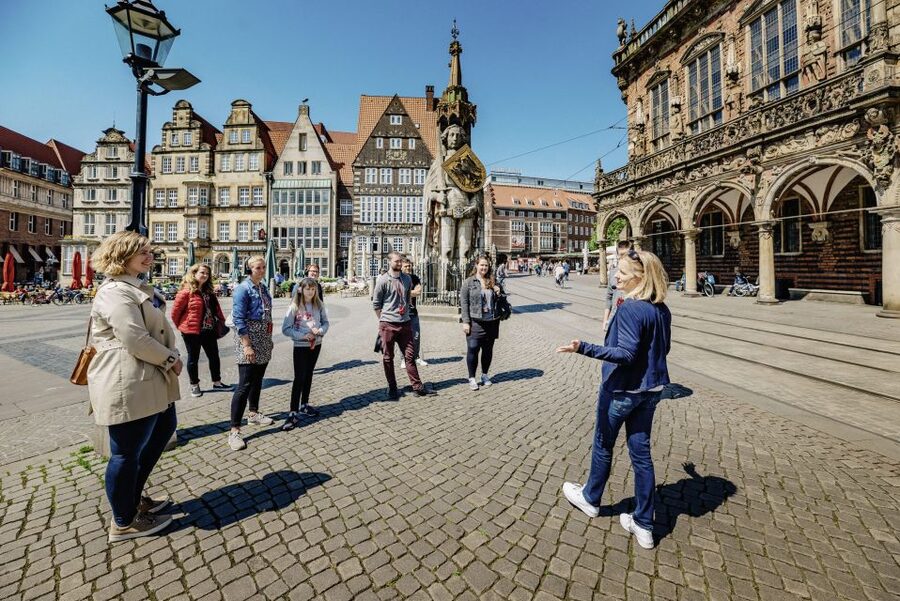
The market square is the tour’s essential stop. It is the broad civic heart of Bremen, framed by major buildings and public monuments. This is where the city’s political, religious, and commercial stories come together, and a guide helps you read details you might otherwise pass without noticing.
The town hall is the star. It is UNESCO World Heritage listed, a distinction that tells you this is not simply an attractive old building but a place of broad cultural importance. Your guide provides the context that turns a photo stop into a clearer picture of how Bremen’s civic life developed.
Nearby, the stone statue of Roland represents the city’s rights and independence. The figure is more than a medieval decoration. It helps explain the pride Bremen has in its civic identity, and it gives the square a strong sense of place.
You will also see St. Petri Cathedral, whose presence adds a different note to the square. The tour focuses on the city center’s historical and architectural story, so this is a useful chance to understand how religious power sat beside civic authority.
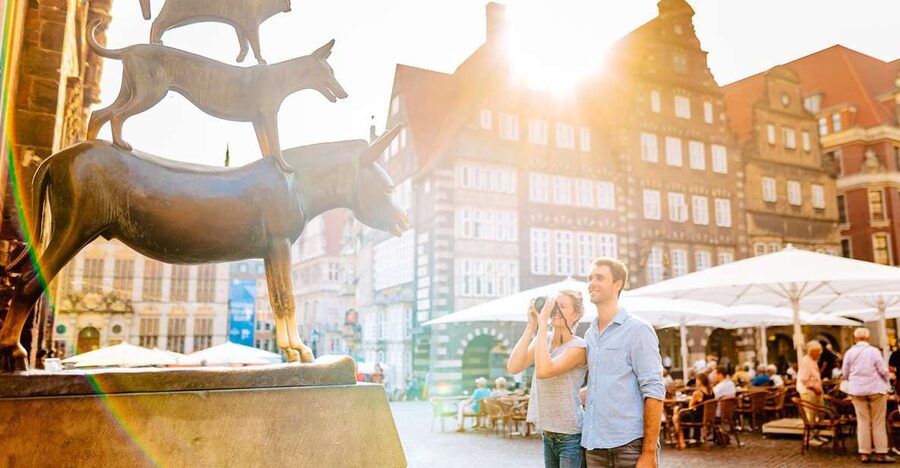
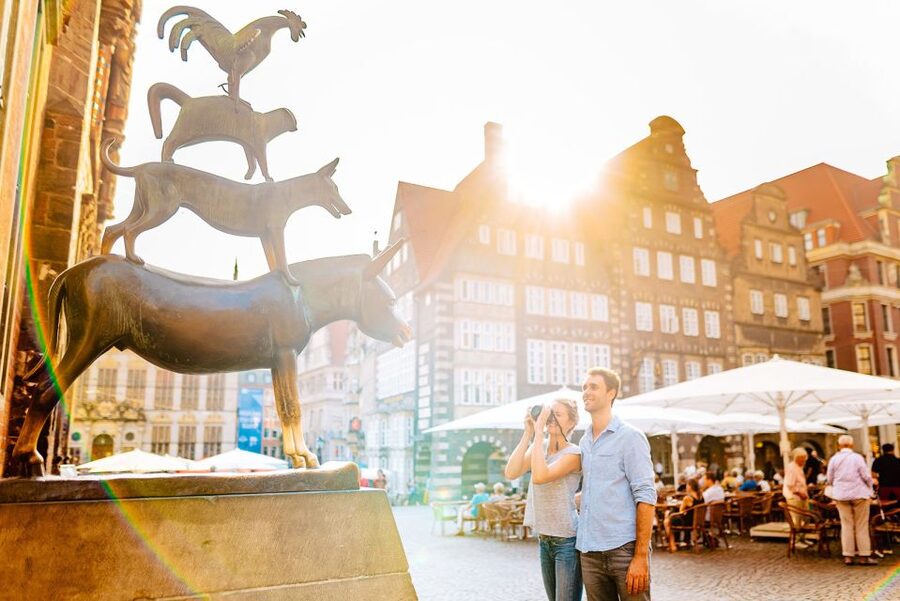
Then comes Bremen’s most playful landmark, the sculpture of the Town Musicians. The donkey, dog, cat, and rooster are drawn from the Brothers Grimm fairytale, and the statue is one of those city symbols that rewards a close look. Your guide can give you the story and local context, while you take in the polished figures and the steady stream of people stopping for photographs.
This opening section works well for first-time visitors because it gives you Bremen’s basic vocabulary: city rights, commerce, religion, local pride, and folklore. I would return to the square afterward if you want more time for photographs or a closer look at the buildings. The guided stop is useful, but two hours does not leave unlimited time at every monument.
Böttcherstraße, where barrels gave way to Expressionism
From the market square, the route explores Böttcherstraße. Its name comes from the böttcher, or coopers, who once made barrels here. Today the street is a pedestrian passage and one of Bremen’s most memorable architectural set pieces.
What makes it special is the contrast. Traditional red brick appears beside modern Expressionist forms, creating a street that feels unlike the orderly façades of the market square. The buildings are not all from one period, and that tension is the point. You see Bremen’s older trading identity alongside a later attempt to create a highly designed cultural street.
A guide is especially useful here because the architecture can be hard to read at street level. Without context, you may notice unusual shapes and decorative brickwork but miss why the street matters. The tour explains how a working lane associated with barrel makers became a place people visit for its design and history.
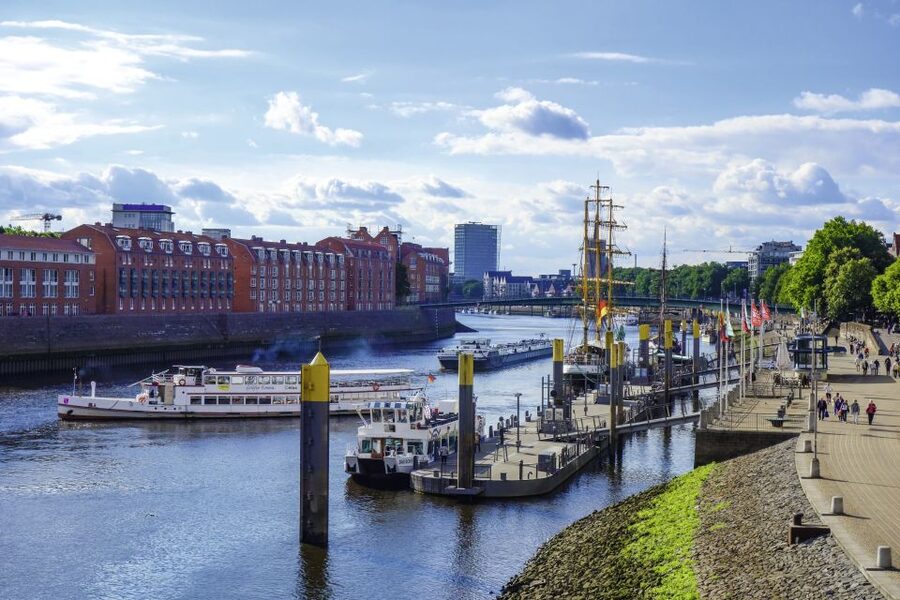
Böttcherstraße also gives the walk a change of mood. The market square is open and formal; this street feels narrower, more theatrical, and more enclosed. It leads toward the Weser River, linking the city center with the water that helped shape Bremen’s commercial life.
You should expect pedestrian traffic here, particularly during busy periods. Keep the group in sight and listen for meeting instructions before the guide begins each explanation. One guide was praised for waiting until everyone arrived at a spot before speaking, a small habit that matters on crowded streets.
The street is also a good place to ask questions about architecture. Guides have been described as using humor, old photographs, and local anecdotes to make the buildings easier to understand. The experience is not just a march between landmarks. It is a lesson in how Bremen presents its past through the built environment.
Schnoor quarter, Bremen’s most intimate old quarter
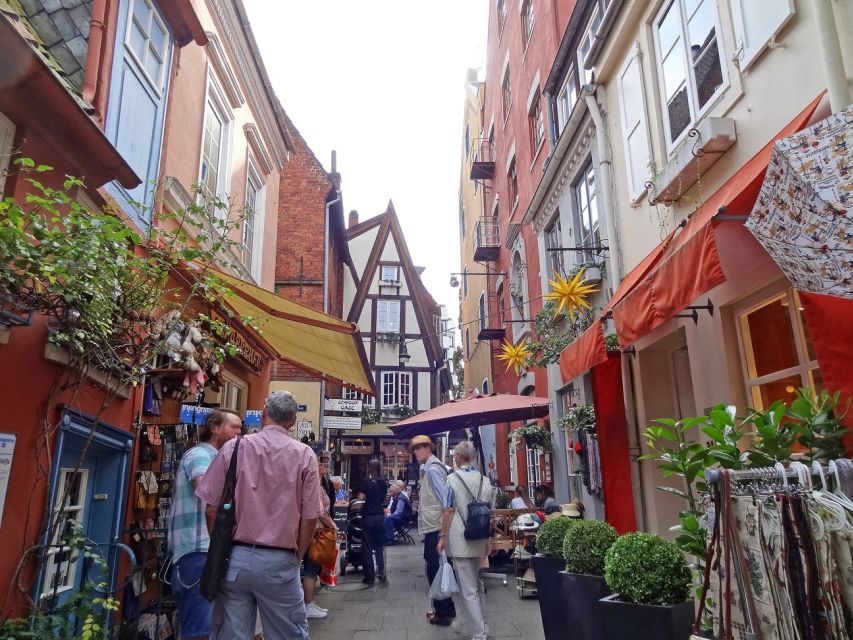
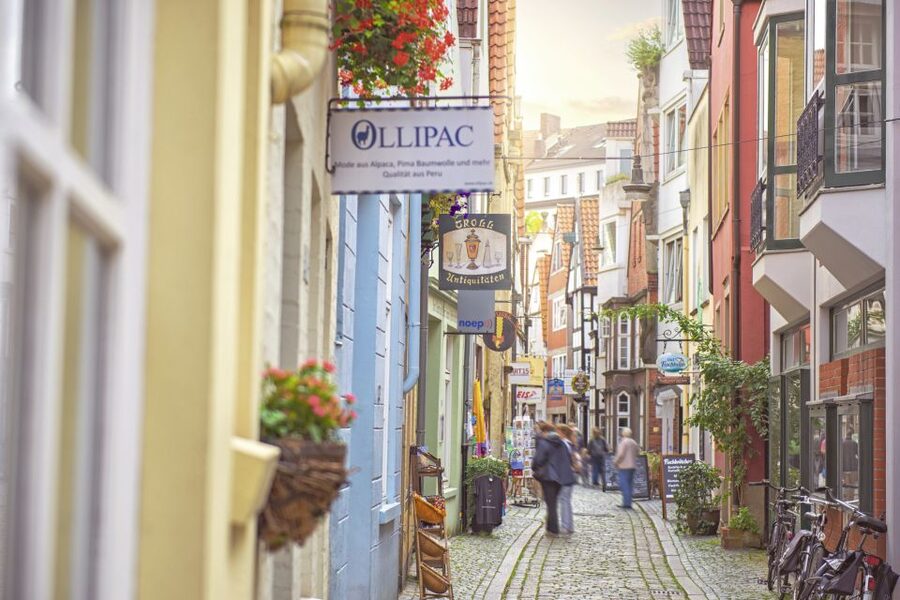
The Schnoor quarter provides the strongest contrast with the formal market square. It is the oldest part of Bremen, a compact area of rambling lanes where fishermen, artisans, and sailors once lived.
The streets are narrow, and the buildings create a more personal sense of the city. Instead of looking across a ceremonial square, you move through lanes that suggest daily life: work, homes, small businesses, and movement toward the river. This is the point where the tour feels less like a list of sights and more like a walk through an old neighborhood.
Today, Schnoor has cafés, restaurants, and handicraft shops. That makes it pleasant to explore after the tour, but it also means the lanes can feel busy and commercial. I would use the guided visit to learn how the quarter functioned in the past, then return on my own if you want to browse shops or sit down for a meal.
Several accounts of the walk singled out Schnoor as a highlight. That makes sense. The market square gives you Bremen’s public face, and Böttcherstraße gives you its bold architectural side. Schnoor shows you the smaller scale, with winding lanes and buildings that make the historic center feel lived in.
One guide was praised for saving the best until the end, and Schnoor often fills that role. The timing gives you a pleasant final impression of Bremen, though the exact order can change. A short-term route adjustment is possible when events affect the streets.
Same city, a completely different kind of day:
- Bremen: Underground Guided Tour
★ 4.1 · 1,408 reviews - Bremen: 3-Hour Beck’s Brewery Tour
★ 4.6 · 1,091 reviews - Bremen: Universum Science Center Entrance Ticket
★ 4.6 · 324 reviews - The Dark Side of Bremen: Killers and Criminals
★ 4.4 · 264 reviews
The guide’s role: history with humor and local pride
The value of this tour depends heavily on the person leading it. The route itself is easy to walk, but the meaning of Bremen’s monuments is not always obvious. A strong guide connects the town hall, Roland, cathedral, Town Musicians, Böttcherstraße, and Schnoor into one story.
The English-speaking guides have received especially strong praise for clear delivery, friendly manner, and humor. Names mentioned in recent tour experiences include Pierre, Rima, Guido, Hans, Anette, Viveka, Christina, Ewa, Sonya, Eric, and Herman. You cannot choose a specific guide from the information provided, but these examples show the range of personalities you might encounter.
Pierre has been described as both an entertainer and a strong storyteller. Rima was praised for excellent English, an easy pace, and detailed answers to questions. Guido has led bilingual tours in English and German, adding anecdotes and Hanseatic humor. Another guide used historical photographs to help explain how Bremen looked in the past.
That variety is worth noting. You are not signing up for an audio recording or a fixed script delivered without pause. The experience can feel more personal when the guide responds to the group, waits for everyone to gather, and makes room for questions.
The bilingual option depends on what you select when booking. The activity information identifies English as an available language, and German is also offered depending on the option chosen. If language is important for your group, check the selected option carefully before paying.
What the $14 price delivers
At $14 per person, this is a strong-value orientation tour. You are paying for two hours of guided access to Bremen’s central sights, not for entry into a paid attraction. The real product is interpretation: someone points out what matters, explains the local story, and helps you use the rest of your time well.
I would especially recommend the price for a first visit. Walking alone through the market square is easy, but you may not understand why Roland matters, how the Town Musicians became a city emblem, or why Böttcherstraße looks so different from the surrounding streets.
The tour can also help you plan the rest of your day. Afterward, you will know which parts of the center deserve a slower second look. You might return to Schnoor for its cafés and craft shops, spend more time around the market square, or revisit Böttcherstraße when you can examine the brickwork without keeping pace with a group.
The tradeoff is that two hours passes quickly. One person wished the experience were longer, and that is a fair point. You get a well-planned introduction rather than a full architectural study or an extended visit inside every major building.
Practical advice for the route
Wear shoes with good grip. The route is described as wheelchair accessible, but the warning about uneven ground, cobblestones, and tram tracks deserves attention. If you use a wheelchair or have difficulty on rough surfaces, check the route conditions at the time of booking and tell the operator about your needs.
Bring rain protection if the forecast is uncertain. Bremen can be wet and windy, and one winter group completed the tour in cold rain while the guide adjusted the route and used indoor spaces to help everyone stay partly dry. That does not guarantee the same arrangement, but it shows why a waterproof jacket is sensible.
Allow time to hear the guide. The best parts are the stories and explanations between the headline sights. Several guides have been praised for answering questions, keeping the group together, and maintaining a pace that was easy to follow.
Keep the meeting details handy: the right side in front of the Tourist Information at the Glockenspiel House, Böttcherstraße 4. Since the route may change for local events, listen for the guide’s directions at the start rather than assuming the walk will follow one exact sequence.
Free cancellation is available up to 24 hours before the tour for a full refund. You can also reserve now and pay later, which is useful when your Bremen plans depend on a changing schedule.
Who should book this Bremen walk?
I would book it if you have only one day in Bremen, want a clear first look at the old center, or prefer history delivered in plain language rather than read from a guidebook. It also suits you if architectural details, local legends, and small neighborhood stories matter as much as taking photographs.
Families may appreciate the Town Musicians and the short distance, although cobblestones and a two-hour standing-and-walking schedule can test younger children. The route also works for solo visitors because the guide gives you structure and a chance to ask questions.
If you already know Bremen well, the tour can still be worthwhile when you want context. A local participant who had walked the streets many times found that the guided explanations changed the way familiar places looked. That is the right way to think about it: the tour adds meaning, not new admission-only sights.
I would skip it only if you strongly dislike group walks, need long breaks, or want to spend substantial time inside the cathedral and town hall. This experience is built around outdoor storytelling and movement through the center.
Should you book the City Center Guided Walking Tour?
For $14, I think this is one of the easiest ways to get your bearings in Bremen without wasting time or money. You see the market square, cathedral, Roland, Town Musicians, Böttcherstraße, and Schnoor in one compact outing, and a good guide gives those places a human connection.
Book it early in your stay, ideally before exploring the center on your own. You will recognize the landmarks later and understand what you are seeing. Bring comfortable shoes, dress for changeable weather, and choose this tour for interpretation and local stories rather than extended time at any one monument.
FAQ
How long is the Bremen City Center Guided Walking Tour?
The tour lasts two hours. The route covers approximately 2 kilometers, though the exact walking time can vary slightly with group pace, questions, crowds, and short-term route changes.
What sights are included?
You will visit Bremen’s market square, see the UNESCO World Heritage listed town hall and Roland statue, view St. Petri Cathedral and the Town Musicians sculpture, walk along Böttcherstraße, and explore the Schnoor quarter.
Where does the tour meet?
The meeting point is on the right side in front of the Tourist Information at the Glockenspiel House, Böttcherstraße 4.
Is the tour available in English?
Yes. An English-speaking guide is available. German is also offered depending on the option selected when booking.
Is the route wheelchair accessible?
The activity is listed as wheelchair accessible. However, the route includes uneven ground in places, including cobblestones and tram tracks, so you should consider those conditions when deciding if it suits your needs.
Can I cancel or pay later?
You can cancel up to 24 hours in advance for a full refund. The reserve-now, pay-later option lets you hold a place without paying at the time of booking.
Just added around Bremen
- Bremen Private Walking Tour With A Professional Guide★ 5.0 · 7 reviews
- Private Walking Tour through the Fascinating Bremen’s City Center★ 5.0 · 5 reviews
- Bremen Exploration Private Game and City Tour on your Phone★ 4.5 · 7 reviews
- e-Scavenger hunt Bremen: Explore the city at your own pace★ 4.0 · 24 reviews
- A Self-Guided Audio Tour of Bremen’s Old Town★ 5.0 · 5 reviews
- Bremen: Underworld Tour with the Cellar of the Theatre★ 4.2 · 74 reviews
- The Dark Side of Bremen: Killers and Criminals★ 4.4 · 264 reviews
- Bremen: Übersee Museum Entrance Ticket★ 4.3 · 59 reviews
City Tours, compared.

1-Hour City Tour by Boat with Guaranteed Seating
Read our review →
City History Canal Sightseeing Tour on a Motorboat
Read our review →




Browse the lists this tour appears in