
Reviewed · HISTORICAL TOURS
Bremen: Walking Tour of Historic Schnoor District
Schnoor is the sort of place where Bremen suddenly shrinks to human size. Little houses crowd the narrow lanes, their upper floors leaning close enough to make the quarter feel like a string of old cottages beside the Weser. This one-hour walk gives those pretty facades a story, from the Franciscan monastery to houses dating from the 15th through 18th centuries.
I like the tour’s compact one-hour format and its focus on details you could easily miss on your own. I also like the mix of architecture: redbrick Gothic, Baroque, Renaissance, classicism, historicism, and half-timbered homes all turn up in a very small area. The main limitation is clear: you only see the buildings from outside, and the tour is conducted in German.
In This Review
- Key points at a glance
- Entering Schnoor from Domsheide
- A quarter first recorded in the 13th century
- Half-timbered houses and close-set facades
- Brasilhaus and Packhaus Schnoor 2
- From Gothic brick to Baroque detail
- Shops, goldsmiths, and modern Schnoor
- What the guide adds to a familiar walk
- Shared walk or private group
- Who will enjoy this Schnoor tour most
- Practical details before you book
- Should you book the Schnoor walking tour?
- FAQ
- Where does the Bremen Schnoor walking tour meet?
- How long does the tour last?
- What language is the tour conducted in?
- Can I book a private tour?
- Does the tour include food or drinks?
- Can I enter the historic buildings?
- Is the tour suitable for wheelchair users?
- What should I bring?
- Can I cancel for a full refund?
Key points at a glance
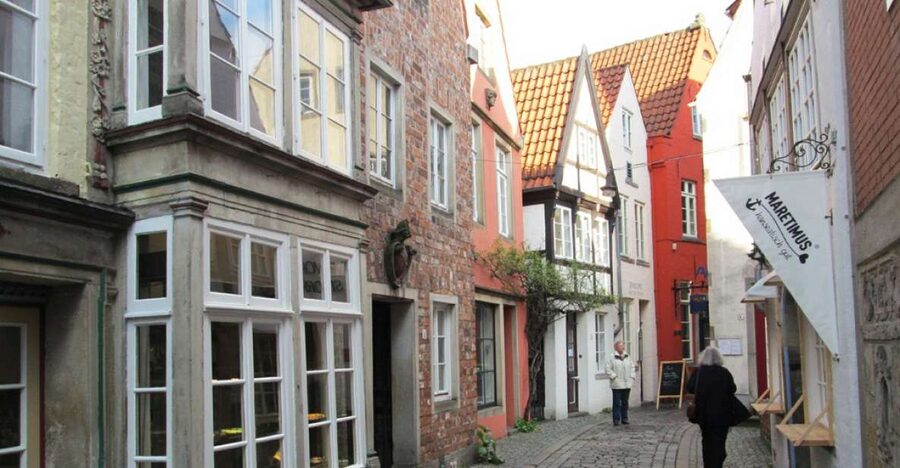
- Narrow Schnoor lanes: Walk through Bremen’s oldest-feeling quarter, where small houses are packed tightly together.
- Centuries of architecture: See buildings and facades connected with the 14th, 15th, 17th, and 18th centuries.
- Important landmarks: Pass St. John’s Church and the remaining church of the former Franciscan monastery.
- Unusual historic details: Look for Brasilhaus, Packhaus Schnoor 2, reconstructed facades, and a half-timbered tea room.
- Local shopping streets: The route passes goldsmiths, handicraft shops, and other small businesses.
- Flexible booking: Choose a shared walk or private group, with free cancellation up to 24 hours before the start.
Entering Schnoor from Domsheide
The tour begins in front of Die Glocke concert hall at Domsheide 6. Your guide waits with a sign reading Bremen Tour Guide, which makes the meeting point easy to identify in a central part of Bremen.
From there, you move toward Schnoor on foot. The start near Domsheide is useful because it places you close to the historic center rather than asking you to make a separate trip across town. Still, arrive with enough time to find the concert hall and gather before the walk begins.
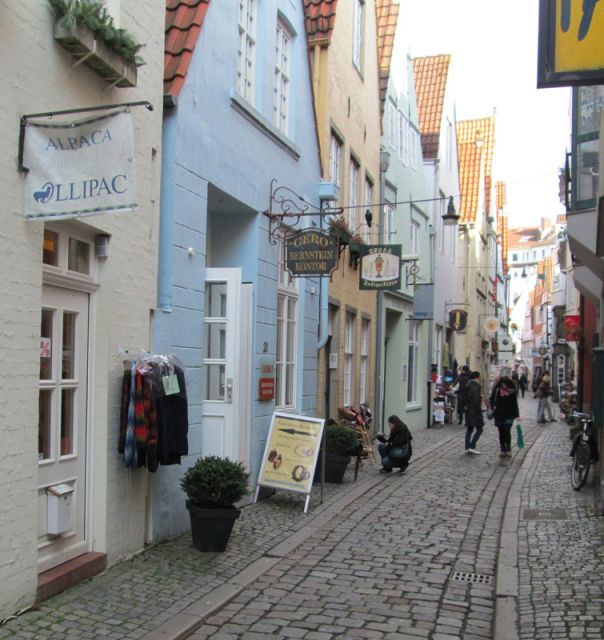
Schnoor is not a wide boulevard kind of place. Its lanes twist, narrow, and change character from one short stretch to the next. The name is linked with the old trades and rope-making associations of the quarter, and the physical layout helps you picture how closely work and home once sat together.
I would wear shoes with a firm sole. The tour lasts only an hour, but you will spend that hour walking and pausing on old, narrow streets. Comfortable footwear matters more here than dressing for a formal sightseeing visit.
A few more Bremen trips to weigh up
- Bremen: Historic old town tour with Geo Epoche
★ 3.3 · 5 reviews - Leipzig: City History Canal Sightseeing Tour on a Motorboat
★ 4.7 · 6,232 reviews - Berlin: Natural History Museum Entrance Ticket
★ 4.6 · 3,382 reviews
A quarter first recorded in the 13th century
The first known written reference to Schnoor dates to the 13th century. Around that time, a Franciscan monastery was built at the edge of the area. Only the monastery church remains today, but that surviving fragment gives the quarter a much older setting than its charming shopfronts might suggest.
The present Catholic St. John’s Church dates from the 14th century and is built in redbrick Gothic style. Its brickwork offers a useful contrast with the smaller domestic buildings around it. Rather than seeing one tidy architectural period, you get a compact lesson in how Bremen changed over several hundred years.
That variety is one of the walk’s strongest points. A pretty old house can look simple from a distance, but a guide can point out its structure, age, and later changes. The tour also explains the people who lived in Schnoor, adding social detail to the architectural view.
Because the route is guided in German, your enjoyment will depend partly on how comfortably you follow spoken German. The activity information does not list another language, so you should not book this expecting an English explanation.
Half-timbered houses and close-set facades
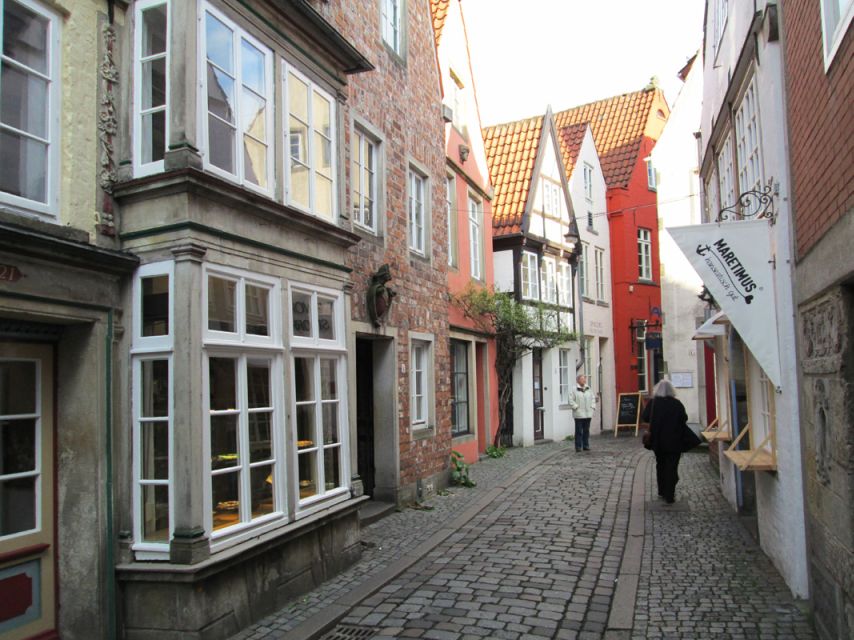
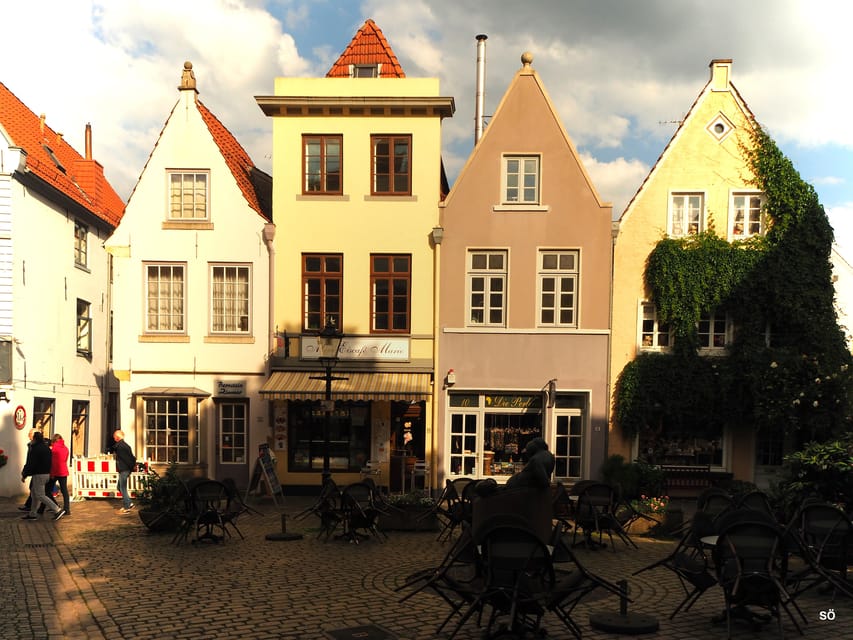
The best part of Schnoor is the street-level experience. Houses sit close together, often with narrow fronts and upper stories that seem to reach toward one another. The effect is romantic, but it also shows how tightly built a historic quarter could be.
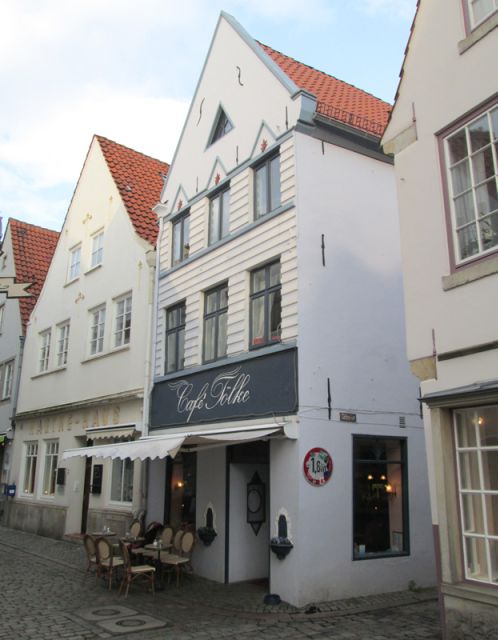
You pass half-timbered houses near the Weser River, along with buildings that now contain shops and small businesses. One half-timbered house includes a tea room, a detail that helps you connect the old structure with present-day use.
Some buildings are not complete historic houses. A few consist only of facades, reconstructed according to historical specifications or moved from elsewhere. This is worth knowing before you arrive, because Schnoor is not a perfectly untouched medieval village. It is a historic quarter with preservation, rebuilding, and modern use layered together.
I find that distinction useful rather than disappointing. It lets you appreciate the appearance without assuming every beam or wall has remained unchanged for centuries. The guide’s job is especially valuable here, since the difference between original fabric, reconstruction, and a preserved facade is not always obvious from the lane.
Brasilhaus and Packhaus Schnoor 2
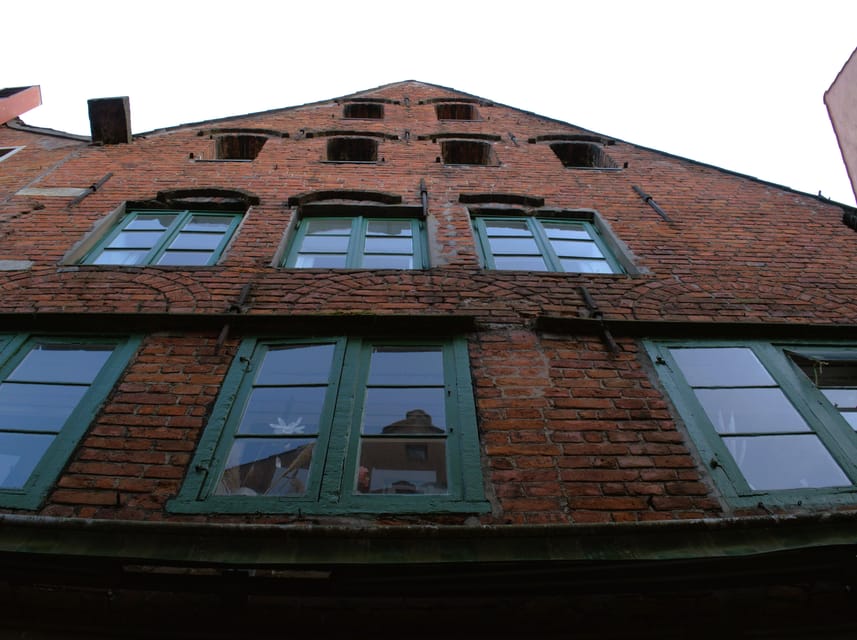
The walk includes some of Schnoor’s oldest remaining secular buildings. Two named examples are Haus Schnoor 15, also known as Brasilhaus, and Packhaus Schnoor 2, both dating back to the 15th century.
These are not grand palaces. Their value comes from their age, scale, and place in the everyday history of the quarter. They help you picture Schnoor as a working neighborhood rather than a display of monuments built only for important people.
Packhaus Schnoor 2 also points to the commercial side of the district. The name suggests a storage or packing function, fitting the idea of a quarter shaped by trades and river commerce. The tour does not turn this into a long museum lecture, but it gives you enough context to read the buildings more carefully.
Haus Schnoor 15, or Brasilhaus, is another reminder that historic value often hides in an ordinary-looking frontage. If you walked alone, you might photograph it and move on. With a guide, it becomes part of a larger explanation about the quarter’s surviving domestic and commercial buildings.
As with every stop on this activity, you view these structures from outside. There is no promise of entry into Brasilhaus, Packhaus Schnoor 2, St. John’s Church, or the tea room.
Same city, a completely different kind of day:
- Bremen: Walking Tour in German with Night Guard
★ 4.7 · 2,922 reviews - Bremen: City Center Guided Walking Tour
★ 4.5 · 2,709 reviews - Bremen: Underground Guided Tour
★ 4.1 · 1,408 reviews - Bremen: 3-Hour Beck’s Brewery Tour
★ 4.6 · 1,091 reviews
From Gothic brick to Baroque detail
Schnoor’s small area contains a surprising range of styles. The redbrick Gothic of St. John’s Church is the clearest major example, but the walk also discusses Baroque and Renaissance influences, along with classicism and historicism.
That mixture makes the route more rewarding for anyone who likes buildings but does not want a long formal architecture tour. You do not need to know the styles in advance. The guide can help you notice the shapes, materials, facades, and decorative choices that separate one period from another.
The age range is also easy to grasp on foot. Many houses from the 17th and 18th centuries survive in their original state, while other structures have been recreated using historical specifications. The result is a quarter that feels cohesive at first glance but becomes more complicated as you look closer.
I would pay attention to the upper floors. In narrow streets, the most interesting details are often above eye level, where timber framing, windows, and changes in construction show how houses developed over time. A walking tour is better suited to this than a quick photo stop because the guide can control the pace and direct your attention.
Shops, goldsmiths, and modern Schnoor
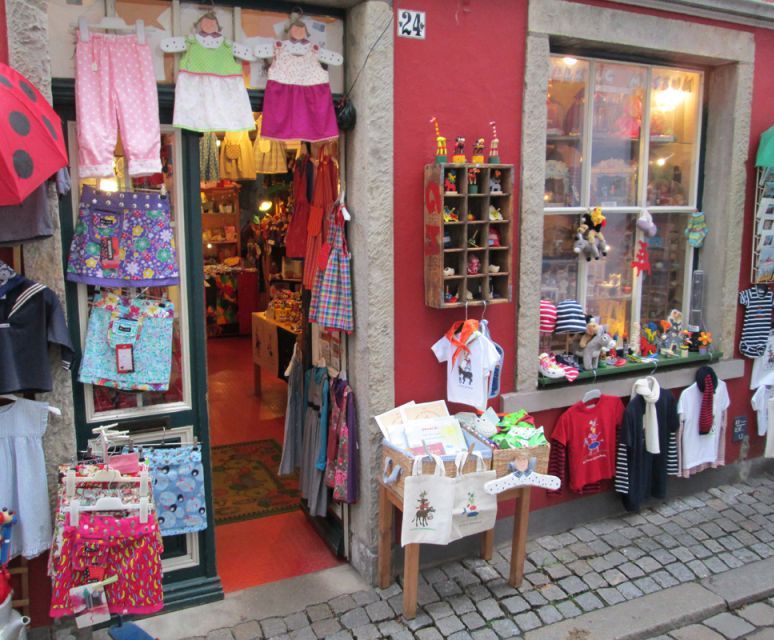
Schnoor is not preserved as an empty historic set. You walk past goldsmiths and shops selling local handicrafts, so modern life remains part of the scene.
That mix is important. A quarter filled only with monuments can feel sealed off from the city around it. Here, the small businesses give the lanes a practical purpose, even if your main reason for coming is history.
The $14 price is fair for this kind of short, guided introduction. You are paying less for admission to a site and more for a focused explanation of streets and facades that you can otherwise see for free. The value is strongest if you are new to Bremen, interested in architecture, or want an orientation walk before exploring independently.
It is less useful if you only want to browse shops at your own speed. The one-hour schedule follows a guided pace, and food and drinks are not included. You can continue shopping or stop for refreshments afterward, but plan and pay for those separately.
What the guide adds to a familiar walk
Schnoor is easy to wander without a guide, yet it is also easy to see only the picturesque surface. A guide connects the lanes, churches, houses, trades, and residents into one story.
The most highly praised part of this experience is the guiding style. The walk is described as informative, lively, and funny, with local stories that make the hour pass quickly. Guide Sönke is singled out for his warm Bremen character and humorous tales connected with Schnoor and the surrounding area.
I would treat Sönke as a possible guide rather than a guarantee, since guide assignments can change. If he leads your walk, you can expect a relaxed presentation with jokes alongside historical information. Even without him, the central benefit remains the same: someone explains why particular houses matter instead of leaving you to guess.
The style seems especially suited to people who have already strolled through Schnoor once. You may recognize the lanes, but the stories and building details can give the area a fresh layer. One hour is enough to add context without taking over your whole day.
Shared walk or private group
You can book a shared tour or choose a private group. The private option makes sense for families, friends, or anyone who wants a more personal pace, though the supplied details do not specify the maximum group size or any special private-tour route.
A shared walk should suit most visitors who want a low-cost introduction. At $14 per person, it is an easy addition to a day in Bremen, especially if you are deciding how to spend a free hour between other sights.
The German-language format may also shape the choice. If everyone in your party follows German comfortably, a private group could make it easier to ask questions and linger over points that interest you. If not, neither option solves the language issue, since German is the listed tour language.
The rating of 4.8 from 429 ratings suggests strong overall satisfaction, with particular approval for the humor, clear information, and value for money. I would still weigh that against the practical limits: one hour, exterior viewing only, and no listed language choice beyond German.
Who will enjoy this Schnoor tour most
I would recommend this walk to you if you fit one of these descriptions:
- You are visiting Bremen for the first time and want a quick introduction to the historic center.
- You like old houses, urban history, and changes in architectural style.
- You prefer local stories and human details to a list of dates.
- You have already walked through Schnoor but feel you missed the meaning behind the buildings.
- You want an affordable activity that leaves most of the day free.
- You are comfortable listening to a live tour in German.
It may not suit you if you use a wheelchair, since the activity is specifically not suitable for wheelchair users. It is also a poor match if you need interior access, a food stop, or a tour in another language.
The walk can work well early in a Bremen visit because it gives you a sense of the quarter before you return on your own. You can note the shops you want to revisit and identify the houses that deserve a second look.
Practical details before you book
The meeting point is in front of Die Glocke concert hall at Domsheide 6, Bremen, postal code 28195. Look for the guide holding a Bremen Tour Guide sign.
The duration is one hour, and starting times depend on availability. The activity includes the guided walk, with a private tour available if you select that option. Food and drinks are not included.
You can cancel up to 24 hours before the start for a full refund. The reserve-now, pay-later option lets you hold a place without paying immediately, which is useful if your Bremen schedule is still shifting.
Bring comfortable shoes. You will be walking through narrow historic streets, stopping outside buildings, and looking up at facades. There is no need to pack special equipment, but shoes that handle a full hour on old paving are a sensible choice.
Should you book the Schnoor walking tour?
Book it if you want a short, affordable explanation of Bremen’s most atmospheric old quarter, especially if you speak German and enjoy architecture mixed with local anecdotes. The $14 cost is reasonable because the guide turns a free-to-enter neighborhood into a more informed experience.
Skip it if you need English, interior visits, wheelchair access, or a longer tour with food and drinks included. For everyone else, this is a useful first look at Schnoor, with enough detail to make your later wandering more rewarding.
FAQ
Where does the Bremen Schnoor walking tour meet?
The tour meets in front of Die Glocke concert hall at Domsheide 6, Bremen, 28195. Your guide waits with a sign saying Bremen Tour Guide.
How long does the tour last?
The walking tour lasts one hour.
What language is the tour conducted in?
The live tour guide speaks German. German is the listed tour language.
Can I book a private tour?
Yes. A private group is available if you select the private-tour option.
Does the tour include food or drinks?
No. Food and drinks are not included.
Can I enter the historic buildings?
No. The buildings viewed during the tour are seen from the outside only.
Is the tour suitable for wheelchair users?
No. The activity is not suitable for wheelchair users.
What should I bring?
Bring comfortable shoes for walking through Schnoor’s narrow historic lanes.
Can I cancel for a full refund?
Yes. You can cancel up to 24 hours in advance for a full refund.
Just added around Bremen
- Bremen Private Walking Tour With A Professional Guide★ 5.0 · 7 reviews
- Private Walking Tour through the Fascinating Bremen’s City Center★ 5.0 · 5 reviews
- Bremen Exploration Private Game and City Tour on your Phone★ 4.5 · 7 reviews
- e-Scavenger hunt Bremen: Explore the city at your own pace★ 4.0 · 24 reviews
- A Self-Guided Audio Tour of Bremen’s Old Town★ 5.0 · 5 reviews
- Bremen: Underworld Tour with the Cellar of the Theatre★ 4.2 · 74 reviews
- The Dark Side of Bremen: Killers and Criminals★ 4.4 · 264 reviews
- Bremen: Übersee Museum Entrance Ticket★ 4.3 · 59 reviews
Historical Tours, compared.
City History Canal Sightseeing Tour on a Motorboat
Read our review →

Browse the lists this tour appears in