
Reviewed · FOOD TOURS
“Rotes Bier” and “Blaue Zipfel”. A historical-culinary walk
Nuremberg’s food traditions make more sense once you see them in the streets where they developed. This two-hour walk links the old town with red beer, small bratwurst, and gingerbread, turning familiar specialties into clues about the city’s past.
I like the mix of short walks and tasting stops, and I like that the guide leaves room for questions. The biggest caution is simple: the tour is held in German, and some snacks may feel more like small samples than a full meal.
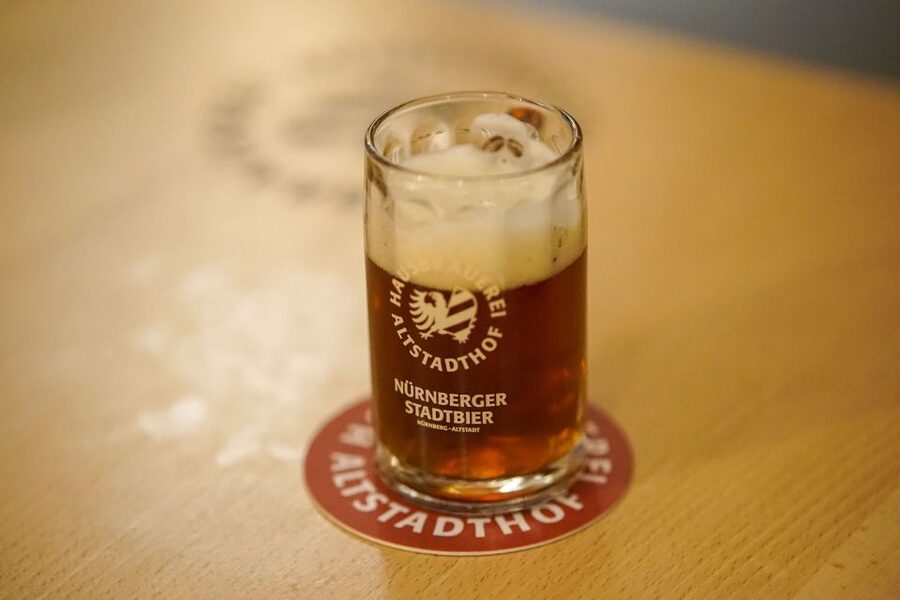
- Red beer at Altstadthof Brewery: Finish with Nuremberg’s distinctive Rotbier in a working brewery setting.
- Small Nuremberg bratwurst: Learn why this local sausage is much shorter than many German bratwursts.
- Gingerbread with a story: Taste Nuremberg Lebkuchen while hearing what makes it special.
- Food history in the old town: Connect cooking, trade, churches, markets, and city planning.
- Short walking route: Most legs take about five minutes, with one ten-minute stretch.
- German-language guiding: Guides such as Sonja explain the subject with humor and take time for questions.
In This Review
- Nuremberg’s old town, served with a side of food history
- Starting at the Alte Rathaus and Rathausplatz
- Bratwurst Röslein and the case of the tiny sausage
- Hauptmarkt, gingerbread, and market-town food
- Trödelmarkt and the city’s culinary questions
- Unschlitthaus and the practical side of food
- St. Sebaldus Church and food beyond the tavern
- Ending with Rotbier at Altstadthof Brewery
- What the food portions mean for the $29 price
- The guide makes or breaks this German-language walk
- Who should book this experience?
- Practical tips for making the most of the walk
- Should you book the Rotes Bier and Blaue Zipfel walk?
- FAQ
- Where does the tour begin?
- Where does the tour finish?
- How long does the experience last?
- Is the tour held in English?
- What food and drink are included?
- Is transportation included?
- Can I cancel the booking?
Nuremberg’s old town, served with a side of food history
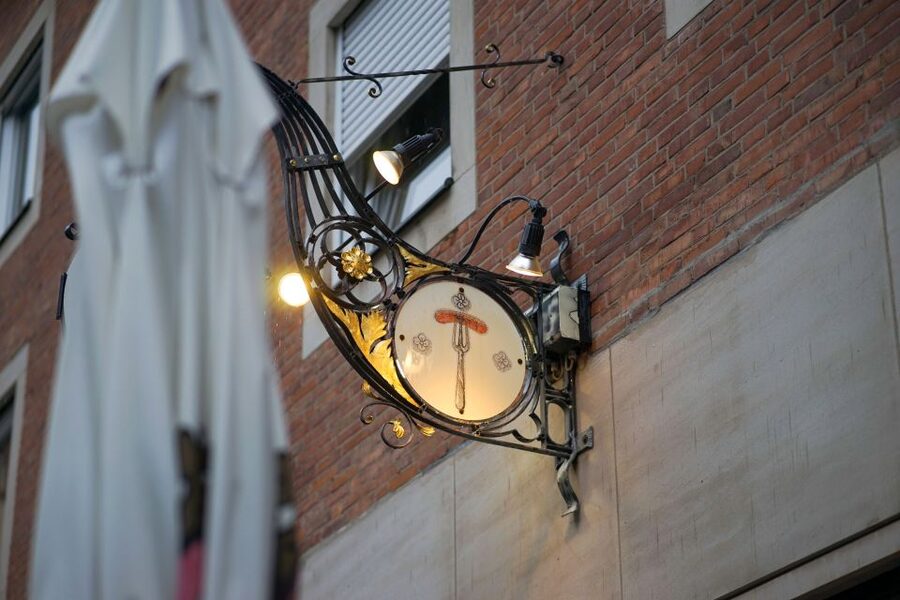
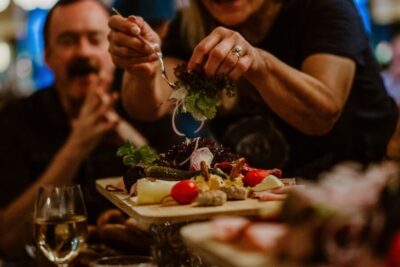
This is not a restaurant crawl with a few historical facts sprinkled on top. It is a guided walk through central Nuremberg in which food supplies the thread. You move from the Alte Rathaus through squares, historic buildings, a church, and finally a brewery, stopping for samples along the way.
The questions give the tour its shape. Why is bratwurst called bratwurst? Why are Nuremberg sausages so small? When did cooks in Nuremberg know something like ravioli? How much meat did citizens eat? What did the name Devil’s Kitchen mean?
Those questions bring everyday life into focus. You are not only looking at grand buildings. You are thinking about what people cooked, bought, preserved, and ate.
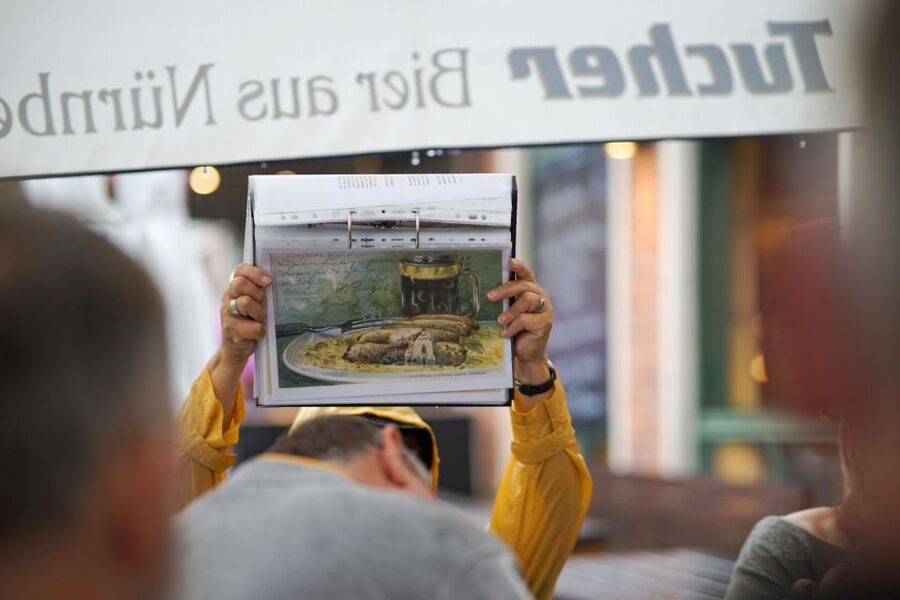
The experience begins at the main entrance of the Alte Rathaus, or Old Town Hall. Look for the guide holding a picture folder with the green Geschichte Für Alle e.V. logo. That detail matters in a busy square, since you will not be looking for a large tour flag or a coach.
Starting at the Alte Rathaus and Rathausplatz
The Alte Rathaus is a fitting place to begin. It puts you at the center of Nuremberg’s civic story before the group turns toward food and drink.
The first section is a guided introduction around Rathausplatz. The guide sets up the main theme, showing how local cuisine fits into the city’s past. This opening should help you understand why a bratwurst, a piece of gingerbread, or a glass of beer can carry more meaning than a quick snack.
I like this approach because it gives the tastings a purpose. You are not simply handed food and told that it is traditional. You hear the questions first, then encounter the answers in places connected to the city.
The tour is on foot, so wear shoes that can handle old-town paving and changing weather. The walk takes place rain or shine. The supplied information does not give a group-size limit, so you should expect a standard guided walking format rather than a private food tour.
More food tours in Nuremberg:
- Nuremberg: Christmas City Culinary Tour
★ 4.6 · 40 reviews - Hamburg: Schanzenviertel Culinary Tour
★ 4.6 · 2,051 reviews - Hamburg: Elbphilharmonie Plaza and HafenCity Food Tour
★ 4.7 · 1,711 reviews
Bratwurst Röslein and the case of the tiny sausage
After the Rathaus, the group walks about five minutes to Bratwurst Röslein. This is the first major food stop and one of the clearest examples of how Nuremberg has made a local specialty into an identity.
Here you learn about the Nuremberg Bratwurst and taste it. The key point is its size. Nuremberg sausages are notably small, and the guide explains why that tradition developed instead of treating the size as a novelty.
That story is useful because sausage rules often seem arbitrary when you meet them only on a menu. A good explanation turns a small portion into a piece of local culture. You also get a chance to judge the flavor for yourself, which is far better than hearing a long description without a sample.
The stop includes a guided explanation and food tasting. It is not presented as a full restaurant meal, so do not arrive expecting this single serving to replace lunch. Think of it as one part of a sequence.
Hauptmarkt, gingerbread, and market-town food

The next walk takes about three minutes to Hauptmarkt, Nuremberg’s main market square. This is one of the most natural places to discuss foods that depend on trade, public markets, and city life.
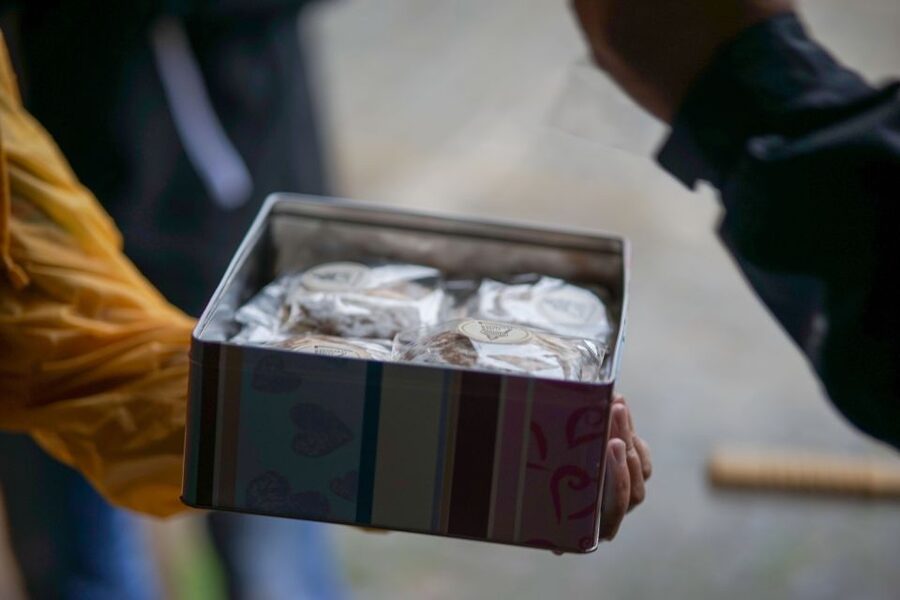
The square includes a guided stop with food tasting. Here the focus turns to Nuremberg gingerbread, or Lebkuchen, one of the city’s best-known specialties. You learn what makes Nuremberg gingerbread distinctive and get to taste it rather than relying on a shop label.
Gingerbread is a good counterpoint to the bratwurst. One is savory and tied to meat, kitchens, and taverns. The other is sweet and connected with baking and spice. Together, they show that Nuremberg’s food identity is not just about sausage.
A second stop at Hauptmarkt 2 also includes a guided explanation and tasting. The information does not specify every sample at each address, so you should see these as a series of food moments rather than a fixed restaurant menu. The changing stops keep the walk moving, but they also mean the exact sample order may vary.
Trödelmarkt and the city’s culinary questions
From Hauptmarkt, you walk about five minutes to Trödelmarkt 13. This stop continues the old-town story away from the biggest square.
The tour’s food questions become especially useful here. You may hear about Nuremberg cooks knowing ravioli, local eating habits, and the amount of meat consumed by city residents. These subjects help show that historical cooking was not limited to one famous local dish.
The point is not to prove that modern Nuremberg invented every food people associate with it. Instead, the guide uses cooking to show exchange, adaptation, and daily routines. That makes the tour a good fit for you if you prefer social history to a list of dates and architectural labels.
The stop includes another tasting. Since the tour supplies snacks along the way, the food works as a series of small discoveries. If you have a large appetite, eat something before the walk or plan a meal afterward.
A few more Nuremberg trips to weigh up
- Nuremberg: 1.5-Hour Private Tour through Historical Old Town
★ 4.8 · 283 reviews - Nuremberg: World War 2 History Tour with Beer Tasting
★ 5.0 · 4 reviews - Leipzig: City History Canal Sightseeing Tour on a Motorboat
★ 4.7 · 6,232 reviews - Berlin: Natural History Museum Entrance Ticket
★ 4.6 · 3,382 reviews
Unschlitthaus and the practical side of food
The route continues on foot for about five minutes to Unschlitthaus. The building adds a more practical angle to the tour’s theme.
The title Rotes Bier and Blaue Zipfel suggests a walk built around recognizable Nuremberg food and drink, but the content reaches beyond the plate. At Unschlitthaus, the guide continues explaining how food, ingredients, and city life fit together.
This is where the tour’s balance between places and stories matters. You get a reason to look at a building instead of simply passing it on the way to the next snack. The historical setting gives the food a sense of place, while the tasting keeps the subject direct and easy to remember.
You should also expect the guide to connect apparently odd terms with Nuremberg’s culinary past. Devil’s Kitchen is one of the subjects included in the tour. The name is memorable, but the value comes from hearing what it meant in context.
St. Sebaldus Church and food beyond the tavern
A ten-minute walk brings you to St. Sebaldus Church, the longest listed leg of the route. The distance is still modest, but this is the one section where comfortable footwear and weather-ready clothing matter most.
The church stop includes guided commentary and a food tasting. That pairing may seem unusual at first, yet it fits the tour’s larger idea. Food history does not happen only in kitchens. Religious institutions, civic life, trade, and urban neighborhoods all shaped how people lived and ate.
The guide also raises the question of what the planner of the English Garden had to do with Nuremberg food. That unusual connection gives the tour a wider reach. You are encouraged to follow people, ideas, and influences beyond the immediate old town.
I especially like this kind of question because it prevents the walk from becoming a simple list of local dishes. The guide asks you to notice links between Nuremberg and the wider German world.
Ending with Rotbier at Altstadthof Brewery
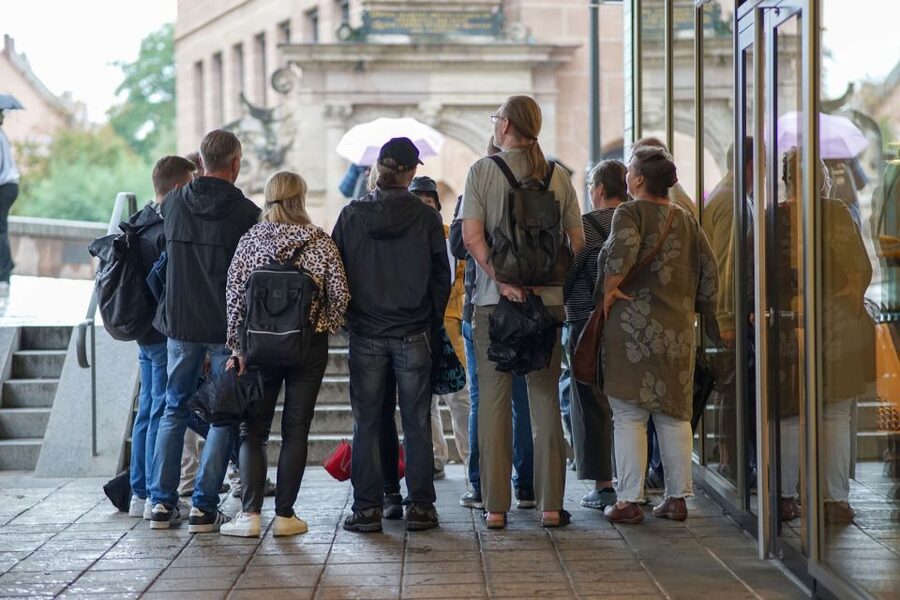
The final five-minute walk leads to Hausbrauerei Altstadthof, specifically the Rotbierstüberl, brewery, and whisky distillery. The tour ends here with beer, and the local red beer is the main drink highlight.
Rotbier has a distinctive character within Nuremberg’s food culture. The experience gives you a chance to taste it after hearing the historical background, so the final drink functions as both refreshment and conclusion.
Ending at a brewery is also practical. You finish in a place where beer is made and served, not just at a random bar. The setting ties the walk’s historical questions back to a current local producer.
The tour includes beer and snacks, but it does not promise a full meal or a broad flight of drinks. If your main goal is serious beer tasting, this may feel too light. If you want one local beer woven into a wider city walk, the format makes good sense.
What the food portions mean for the $29 price
At $29 per person, this experience offers fair value if you want a guided introduction rather than a complete culinary evening. You receive a two-hour walking tour, a live guide, several snacks, bratwurst, gingerbread, and beer. You also avoid spending your short time in Nuremberg trying to connect food stops and city sights on your own.
The value depends on what you expect from the tastings. The food is served in small portions along the route, not as a sit-down lunch. One recent German-language assessment praised the bratwurst, gingerbread, and beer but felt some of the smaller snacks could have been more substantial. I would plan on eating a normal meal before or after.
The history adds much of the value. If you only want sausage and beer, you can spend less at a restaurant. If you want to understand why these foods matter and how they relate to Nuremberg, the fee covers both the samples and the interpretation.
You can also reserve now and pay later, which is useful when your old-town plans are still shifting. Free cancellation is available up to 24 hours before the start time. For bookings made through GetYourGuide, the booking confirmation serves as proof of payment because an invoice cannot be issued.
The guide makes or breaks this German-language walk
The tour is conducted in German. That is the most important booking point.
If you understand German well enough to follow a spoken historical explanation, you can expect a much fuller experience than you would get from simply reading a menu. The guide handles the links between food, buildings, and local customs, and there is time for questions.
Guide Sonja received especially warm praise for explaining with expertise, humor, and lively wording. Another strong point from the feedback is that the guide took time for questions, including from someone who already lived in Nuremberg and still learned new things.
That tells you something useful about the tone. This is not meant to be a rushed script delivered while the group hurries between stops. Still, the exact guide may vary, so do not book solely on the expectation that Sonja will lead your departure.
Who should book this experience?
I would recommend it to you if you have two hours in Nuremberg and want a local introduction that mixes history with tasting. It suits first-time visitors, food-minded visitors, and people who enjoy asking how ordinary life worked in earlier periods.
It is also a good choice for locals or repeat visitors. The food questions are specific enough to add something beyond the usual old-town sightseeing route. The positive feedback from a Nuremberg resident supports that point.
Families and mixed-interest groups may find the structure helpful because the route changes focus often. One stop is a market square, another is a church, another is a brewery. You do not spend the entire two hours inside one museum or at one table.
You may want a different experience if you need English guiding, a large meal, or an intensive beer tasting. You should also consider the rain-or-shine policy and the walking surface. The activity is listed as wheelchair accessible, but you should still be comfortable with an old-town route that includes several walking sections and one ten-minute stretch.
Practical tips for making the most of the walk
Meet in front of the main entrance of the Alte Rathaus, not at the final brewery. The guide carries the picture folder and green Geschichte Für Alle e.V. logo, which helps you identify the group.
Wear comfortable shoes and dress for the forecast. The route is short enough for most visitors, but the tour does not move indoors every time the weather changes.
Do not schedule your main meal immediately before the start if you want to enjoy the tastings, but do not count the samples as lunch. A normal meal afterward also gives you the chance to return to a favorite food from the walk.
If you are studying German, this could be a useful way to hear familiar food words in context. If your German is limited, the food samples and locations may still be enjoyable, but the main historical value depends on following the guide’s spoken explanations.
Should you book the Rotes Bier and Blaue Zipfel walk?
Book it if you want Nuremberg’s old town explained through sausage, gingerbread, beer, markets, and unusual culinary questions. The $29 price is reasonable for a two-hour guided walk with multiple samples, especially when you value context as much as eating.
Skip it if you need an English tour or expect a full meal. For everyone else, this is a focused, good-humored way to get beyond postcard views and understand why Nuremberg’s best-known foods are made the way they are.
FAQ
Where does the tour begin?
The tour begins in front of the main entrance of the Alte Rathaus at Rathausplatz 5 in Nuremberg. Look for the guide with a picture folder and the green Geschichte Für Alle e.V. logo.
Where does the tour finish?
The tour finishes at Hausbrauerei Altstadthof, at the Rotbierstüberl, brewery, and whisky distillery.
How long does the experience last?
The walking tour lasts two hours.
Is the tour held in English?
No. The live tour guide language is German.
What food and drink are included?
The experience includes snacks, a Nuremberg Bratwurst tasting, gingerbread, and beer, including the local red beer theme of the tour.
Is transportation included?
No. Transportation to and from the meeting point is not included.
Can I cancel the booking?
Yes. You can cancel up to 24 hours in advance for a full refund. You can also reserve now and pay later.
More Walking Tours in Nuremberg
- Nuremberg: Old Town Guided Walking Tour
★ 4.6 · 2,416 reviews - Nuremberg: Walking Tour of Former Nazi Party Rally Grounds
★ 4.7 · 1,665 reviews - Nuremberg Old Town and Nazi Party Rally Grounds Walking Tour in English
★ 4.5 · 504 reviews - Nuremberg Old Town and Nazi Rally Grounds Walking Tour
★ 4.7 · 377 reviews
Just added around Nuremberg
- Tour en español al Campo Zeppelin★ 5.0 · 8 reviews
- Stein: Public guided tour of the “Old Mine” museum★ 4.5 · 18 reviews
- Nuremberg: Old Town Guided Tour By Bus★ 4.4 · 198 reviews
- Nürnberg kennenlernen: Highlights in der Altstadt★ 4.7 · 189 reviews
- Nuremberg: Bar and Club Tour with Free Shots and Free Entry★ 3.8 · 23 reviews
- Nürnberg Bachelor(ette) Party with Night PubCrawl★ 4.2 · 5 reviews
- Nuremberg: WWII Tour, Courtroom 600 and 3rd Reich Sites★ 4.6 · 94 reviews
- Nuremberg: Tour of Former Nazi Party Rally Grounds★ 5.0 · 43 reviews
Food Tours, compared.

Elbphilharmonie Plaza and HafenCity Food Tour
Read our review →
Berlin Center Food Tour with 8+ Authentic Local Tastings
Read our review →
Beer and Food Tour with Dinner & Oktoberfest Museum
Read our review →

Browse the lists this tour appears in