
Reviewed · THIRD REICH & COLD WAR TOURS
Nuremberg Third Reich Tour in Spanish
Nuremberg was chosen by the Nazi regime as its symbolic stage, and this tour shows you why. In about three hours, you follow the thread from the city’s medieval importance and antisemitism to Hitler’s propaganda machine, wartime destruction, the Nuremberg Trials, and the modern Street of Human Rights.
I like the route’s clear shape and its Spanish-speaking guide, Federico, who brings plenty of detail and keeps the walk moving. I also like the modest price, $19.70 per person, for nine central stops. The main consideration is the amount of information packed into a walking tour, especially in hot weather, and the group may include up to 30 people.
In This Review
- Key points at a glance
- Why Nuremberg became a Nazi symbol
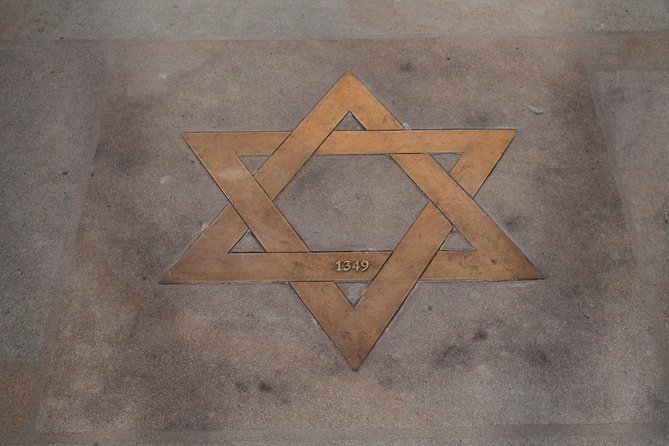
- Starting at Frauenkirche and the 1349 pogrom
- St. Sebaldus Church and the long history of antisemitism
- Nuremberg Town Hall and Hitler’s connection to the city
- The former Main Synagogue and Kristallnacht
- Katharinenkirche, war, liberation, and reconstruction
- St. Lorenz and the link to the concentration camp
- The State Theater and culture under National Socialism
- Charterhouse Gate and the Nuremberg Trials
- Ending at the Street of Human Rights
- Federico’s guiding style and group size
- Is $19.70 a fair price?
- Who should book this Spanish-language walk?
- Should you book the Nuremberg Third Reich Tour in Spanish?
- FAQ
- What language is the tour conducted in?
- How long does the tour last?
- Where does the tour begin?
- What time does the tour start?
- Where does the tour end?
- How many people can join the tour?
- Is admission to the stops included?
- Can I cancel for a full refund?
Key points at a glance
- A historical route with a clear purpose: The walk connects medieval Nuremberg, Nazi ideology, World War II, the trials, and the city’s postwar response.
- Nine central stops: You visit churches, the Town Hall, the former synagogue site, the opera house, the Charterhouse Gate, and the Street of Human Rights.
- A Spanish-language experience: Federico guides the tour in Spanish and explains difficult subjects in a lively, approachable way.
- Three hours on foot: The scheduled stops add up to about two hours, leaving time for walking between them and for explanations along the way.
- A strong ending: The route finishes at the Street of Human Rights, near Nuremberg’s central train station.
- Good value for history-minded visitors: At $19.70, the tour offers a low-cost introduction to one of Nuremberg’s most important historical themes.
Why Nuremberg became a Nazi symbol
Nuremberg had political importance long before the Third Reich. For centuries, it was closely linked with the Holy Roman Empire and hosted the Diets of Nuremberg, major assemblies where the emperor met with prince electors.
Hitler used that older symbolism for his own purposes. He presented Nuremberg as the heir to Germanic traditions and made it a central location for Nazi congresses and propaganda. The choice was not random. The city’s medieval associations helped the regime create a story of supposed continuity between the old empire and the Nazi state.
You will also examine the darker side of that story. Nuremberg was home to Julius Streicher, one of the regime’s leading antisemites and the owner of the weekly publication Der Stürmer. The city was promoted as the most loyal to the regime, so learning about Nuremberg means looking at both its symbolic power and its role in persecution.
That context makes the walk more useful than a simple tour of Nazi-era buildings. You are not only seeing places connected with Hitler. You are looking at how a city’s older identity was reshaped into political propaganda, then confronted after the war.
More third reich & cold war tours in Nuremberg:
- Berlin: Third Reich and Cold War 2 Hour Walking Tour
★ 4.9 · 6,830 reviews - Munich: Third Reich & WWII Walking Tour
★ 4.6 · 6,181 reviews - Berlin’s Best: 2 Hour Walking Tour Third Reich and the Cold War
★ 5.0 · 5,486 reviews
Starting at Frauenkirche and the 1349 pogrom
The meeting point is Hauptmarkt 14, beside the Frauenkirche, at 3:30 pm. This is a practical place to begin because the first stop immediately places Nuremberg’s later Nazi history in a much older setting.
At the Frauenkirche, the guide discusses the Jewish quarter and the pogrom of 1349. The subject is difficult, but it is essential to understanding that antisemitism did not begin with National Socialism. The tour uses this first stop to show how hostility toward Jewish communities was present in medieval Europe and how that history relates to Nuremberg.
You should expect about 15 minutes here. Admission is free, and the focus is the explanation rather than an extended interior visit. If you want to look around the church at greater length, plan to return on your own.
This is a strong opening because it prevents a common mistake: treating Nazi antisemitism as if it appeared without earlier roots. The guide’s job here is to connect periods without suggesting they were identical. That historical framing gives the rest of the tour more weight.
St. Sebaldus Church and the long history of antisemitism
The second stop is St. Sebaldus Church, also in the old center. The discussion continues from medieval antisemitism to National Socialism, helping you see how old prejudices could be used and intensified by a modern political movement.
The church gives the tour another chance to examine the relationship between religion, civic identity, and exclusion. You spend about 15 minutes at this stop, again without an admission charge.
I appreciate this part of the route because it builds an argument in stages. Instead of rushing straight to Hitler, you are asked to consider how ideas can survive across centuries, take new forms, and be turned into state policy.
Because the subject covers a long period, the explanation can feel dense. Pay attention to the main connections rather than trying to remember every date. This is a tour where listening matters more than taking photographs.
Nuremberg Town Hall and Hitler’s connection to the city
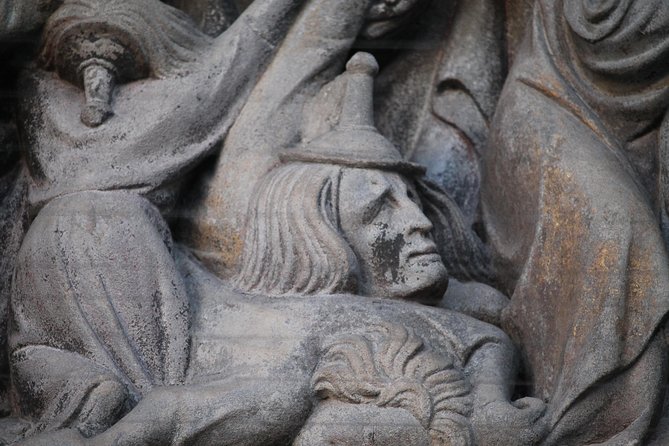
At the Nuremberg Town Hall, the guide turns more directly to Hitler and his relationship with the city. The stop lasts about 15 minutes and links the civic center with Nuremberg’s role under National Socialism.
This is where the earlier discussion of imperial tradition and medieval prestige becomes more immediate. Hitler wanted Nuremberg to represent a powerful German past, and the city’s ceremonial identity served his propaganda.
The Town Hall is also a useful place to think about the difference between a real city and the image a regime creates. Nuremberg was not simply selected for its buildings. It was presented as a model of loyalty and as a symbolic capital for the Nazi movement.
You may find that the stop works best as a lecture in the urban setting rather than as a museum visit. There is no separate admission here, and the tour keeps moving after the explanation.
Same city, a completely different kind of day:
- Nuremberg: City Tour with the Bimmelbahn Train
★ 4.4 · 2,475 reviews - Nuremberg: Old Town Guided Walking Tour
★ 4.6 · 2,416 reviews - Nuremberg: Tunnels and Secret Passages in the City Wall Tour
★ 4.8 · 2,334 reviews - Nuremberg: Medieval Dungeons Guided Tour
★ 4.8 · 1,726 reviews
The former Main Synagogue and Kristallnacht
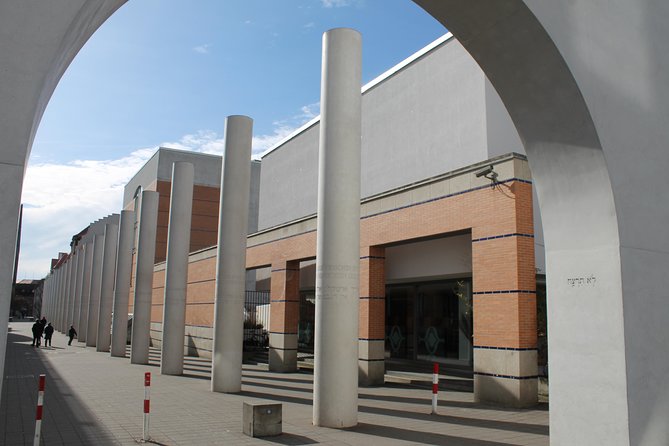
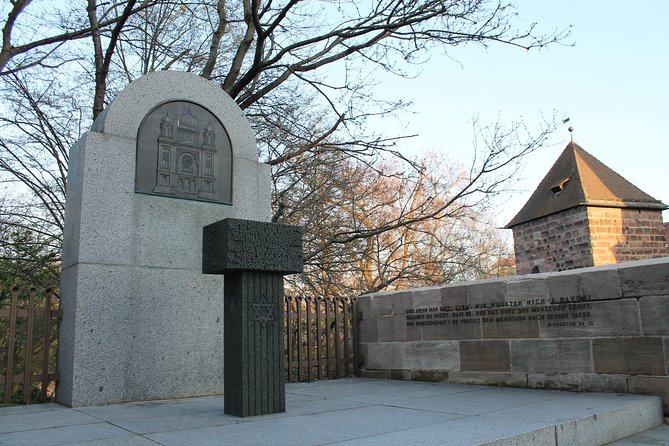
The fourth stop is the memorial site at the former Main Synagogue of Nuremberg. The guide explains the synagogue’s destruction and the events of Kristallnacht, often called the Night of Broken Glass.
The scheduled visit is about 10 minutes. That may sound brief for such a serious subject, but the stop is part of a tightly connected route. The tour uses the site to show how antisemitic ideas became direct attacks on Jewish buildings, communities, and people.
This is one of the places where a guide adds real value. A bare site can be hard to interpret, especially when the physical evidence has been altered or removed. Federico’s explanation gives the location a place within the larger story of Nuremberg’s transformation into a Nazi stronghold.
Expect the tone to become more somber here. The walk is lively in its pacing, but it does not treat the subject lightly. That balance is important on a tour about persecution and political violence.
Katharinenkirche, war, liberation, and reconstruction
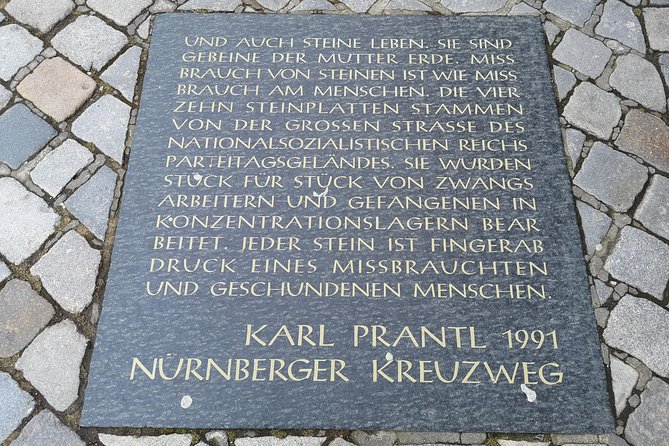
The ruins of Katharinenkirche bring the story into the years of World War II. The guide discusses the battle and liberation of Nuremberg, along with the city’s reconstruction after the war.
You spend about 10 minutes here. The ruined church helps make the consequences of the war visible, while the discussion of rebuilding raises a larger question: how does a city recover when its physical fabric and moral reputation have both been damaged?
This stop also gives the tour a needed change of focus. Up to this point, much of the route has dealt with ideology, persecution, and political symbolism. Here, the subject becomes destruction and the work of rebuilding.
I like that reconstruction is treated as part of the story rather than as an unrelated modern detail. The tour asks you to consider how Nuremberg moved from being presented as the regime’s model city to becoming a place that had to face what had happened there.
St. Lorenz and the link to the concentration camp
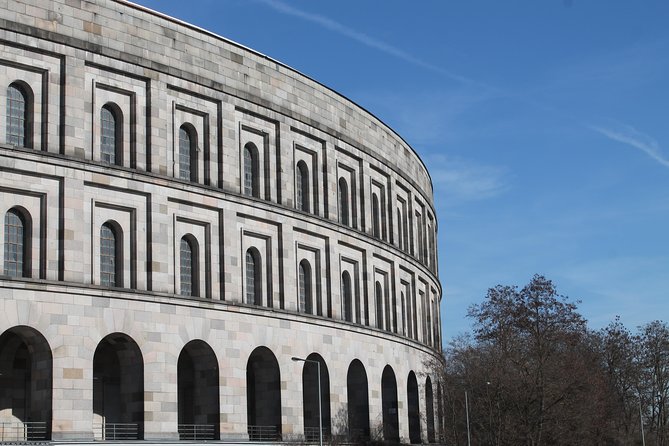
At St. Lorenz, the guide discusses the church’s Via Crucis and its relationship to the Nuremberg Concentration Camp. The stop lasts around 10 minutes.
This section links religious imagery with the history of imprisonment and persecution. The subject is not presented as a separate museum topic. It becomes part of the city walk, showing how familiar places can carry difficult layers of meaning.
You should keep in mind that this is a central-city walking tour, not a visit to a concentration camp memorial site. The route provides historical context and local connections, but it does not replace a longer visit to a dedicated memorial or museum.
That distinction matters when planning your day. If the concentration camp system is your main interest, you may want a separate experience devoted to that subject. If you want to understand how the Nazi period affected Nuremberg as a city, this stop fits well within the wider route.
The State Theater and culture under National Socialism
The Nuremberg State Theater is the seventh stop. Here, the guide explains the opera house and its link with National Socialism, with about 10 minutes devoted to the site.
This is a useful reminder that dictatorship does not operate only through rallies, laws, police power, and war. Cultural institutions also form part of a regime’s public image. Opera and theater could be used to promote ideas about national identity and German tradition.
The stop also returns to the theme of Nuremberg as a symbolic city. The regime wanted the city to represent more than political obedience. It wanted Nuremberg to embody a carefully shaped version of German culture and history.
You will not spend the whole evening inside the theater, and admission is not included or required for this stop. Think of it as an exterior point for a focused explanation.
Charterhouse Gate and the Nuremberg Trials
At Charterhouse Gate, the tour reaches the Nuremberg Trials. This stop lasts about 15 minutes and marks the shift from wartime crimes to the legal response that followed.
For many people, this is the most familiar part of Nuremberg’s modern history. The value of visiting the location with a Spanish-speaking guide is that the trials become part of the city’s full story, not an isolated postwar event.
The route shows a progression: Nuremberg was used to promote Nazi power, then it became associated with the prosecution of leading figures from that regime. That contrast is central to the tour’s message.
The stop is still relatively short. If you want detailed courtroom history, legal analysis, or extensive documentation, you will need more time elsewhere. This walk gives you a solid orientation and explains why Nuremberg became linked with international justice.
Ending at the Street of Human Rights
The final stop is the Street of Human Rights, known in German as Strasse der Menschenrechte. The tour spends about 10 minutes here, ending near Kartäusergasse 1.
This is a fitting close because the route does not end with destruction or punishment. It ends with the city’s attempt to express a different public identity after the war. The Street of Human Rights represents the rebirth of Nuremberg after the ashes of the conflict and the crimes of the Nazi period.
I find this ending more useful than a simple final monument. It asks you to think about what a city chooses to say about itself after its past has been exposed. The tour begins with medieval power and Nazi propaganda, then ends with a modern statement centered on human rights.
The finish is near the central train station, about a 10-minute walk from the starting point. That makes the tour easy to fit before an evening train, though you should still allow extra time if the group finishes late.
Federico’s guiding style and group size
The experience is offered in Spanish, and Federico is the guide named in the tour information. The comments supplied about his work describe a guide who is well prepared, flexible, dynamic, and able to handle a large amount of historical material without making the walk feel flat.
That matters because the route covers a lot: medieval Jewish history, antisemitism, Hitler, Kristallnacht, wartime destruction, liberation, the concentration camp connection, culture under National Socialism, the trials, and human rights. A dry presentation could make this feel like a string of dates. Federico’s approach is described as varied and thoughtful, which suits the subject.
The group can contain up to 30 people. That is not a private walk, so you should expect a shared pace and the possibility that not every question can receive a long answer. The benefit is the low cost and the chance to hear the subject explained in Spanish while walking through the city center.
The tour is recommended for most participants and is near public transportation. Service animals are allowed. Since it depends on good weather, wear shoes suited to walking and check the forecast before you go.
Is $19.70 a fair price?
At $19.70 per person, this is good value if you want a structured introduction to Nuremberg’s Nazi-era history in Spanish. You receive a three-hour guided walk, nine stops, and a route that includes both the crimes of the regime and the city’s later response.
The value comes from the connections. You are not paying simply to be led from one old building to another. You are paying for an explanation of why these places matter together and how Nuremberg’s medieval reputation was used by National Socialism.
The price is less compelling if you want long visits inside museums, extensive time at each site, or a small private group. The main activity is walking and listening, and the locations are treated as historical points along the route rather than as individually guided indoor attractions.
The mobile ticket keeps arrival simple. The tour starts at 3:30 pm, which can work well after a morning of sightseeing. In summer, heat may be a factor, so carry water even though drinks are not included.
Who should book this Spanish-language walk?
I would choose this tour if you want a clear introduction to Nuremberg’s role in the Third Reich and prefer to learn in Spanish. It is especially useful for a first visit, when you want the city’s scattered historical sites placed into one understandable sequence.
It also suits you if you care about the connection between medieval history and modern propaganda. The route does not treat the Nazi period as an isolated chapter. It shows how older symbols, civic pride, antisemitism, and cultural institutions were drawn into the regime’s message.
You may want something else if your main goal is a long, detailed visit to the Nuremberg Trials courtroom or a concentration camp memorial. Those subjects appear here, but only as parts of a broader central-city walk.
The tour received a five-star rating from 355 reviews and was recommended by 100 percent of the people who rated it. The strongest praise focuses on the amount learned, the lively pacing, and Federico’s preparation. One practical lesson is clear: expect plenty of information, not a light sightseeing stroll.
Should you book the Nuremberg Third Reich Tour in Spanish?
Book it if you want an affordable, well-organized walk that connects Nuremberg’s medieval past, Nazi propaganda, persecution, war, the trials, and human rights. The Spanish-language format and Federico’s detailed, flexible style are its strongest reasons to choose it.
Skip it if you want a private tour, long museum visits, or a single-subject study of the concentration camps or courtroom proceedings. For most Spanish-speaking visitors with three hours to spare, though, this route offers a serious look at Nuremberg’s past and a thoughtful place to begin.
FAQ
What language is the tour conducted in?
The tour is conducted in Spanish, with Federico named as the guide.
How long does the tour last?
The tour lasts approximately three hours.
Where does the tour begin?
It begins at Hauptmarkt 14, 90403 Nürnberg, Germany, near the Frauenkirche.
What time does the tour start?
The scheduled start time is 3:30 pm.
Where does the tour end?
It ends at the Street of Human Rights, Kartäusergasse 1, 90402 Nürnberg, Germany, near the central train station.
How many people can join the tour?
The maximum group size is 30 travelers.
Is admission to the stops included?
The listed stops have free admission. The included service is the Spanish-speaking guide.
Can I cancel for a full refund?
Yes. You can cancel up to 24 hours before the experience starts for a full refund. Changes or cancellations made less than 24 hours before the start time are not accepted for a refund.
Just added around Nuremberg
- Tour en español al Campo Zeppelin★ 5.0 · 8 reviews
- Stein: Public guided tour of the “Old Mine” museum★ 4.5 · 18 reviews
- “Rotes Bier” and “Blaue Zipfel”. A historical-culinary walk★ 4.4 · 190 reviews
- Nuremberg: Old Town Guided Tour By Bus★ 4.4 · 198 reviews
- Nürnberg kennenlernen: Highlights in der Altstadt★ 4.7 · 189 reviews
- Nuremberg: Bar and Club Tour with Free Shots and Free Entry★ 3.8 · 23 reviews
- Nürnberg Bachelor(ette) Party with Night PubCrawl★ 4.2 · 5 reviews
- Nuremberg: WWII Tour, Courtroom 600 and 3rd Reich Sites★ 4.6 · 94 reviews
Third Reich & Cold War Tours, compared.
Berlin’s Best: 2 Hour Walking Tour Third Reich and the Cold War
Read our review →
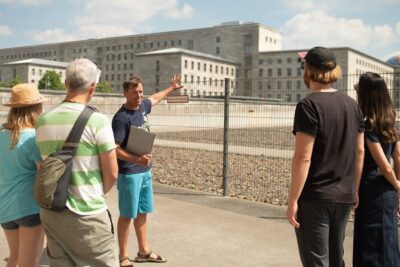
Third Reich Berlin: Hitler and WWII Walking Tour
Read our review →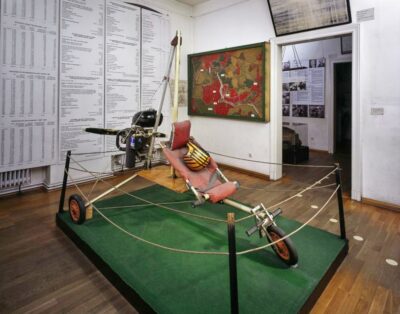
Skip-the-Line: Berlin Wall Museum at Checkpoint Charlie
Read our review →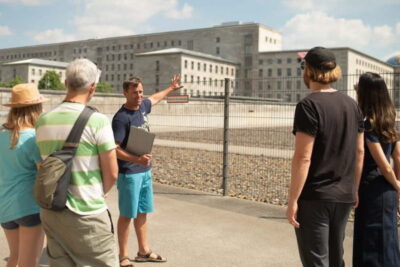
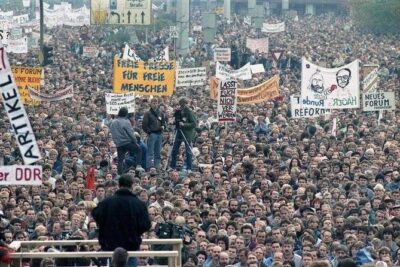
Cold War, Berlin Wall, Spies and the East Side Gallery
Read our review →Browse the lists this tour appears in