
Reviewed · THIRD REICH & COLD WAR TOURS
Berlin: Guided Bike Tour of the Berlin Wall and Third Reich
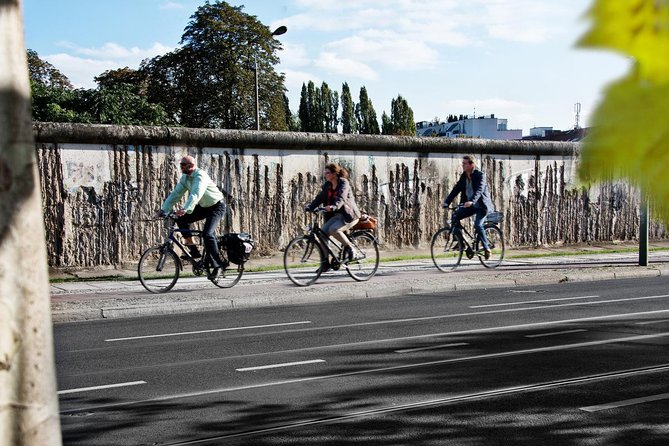
Berlin’s past makes more sense when you follow it on two wheels. This three-hour ride links the Nazi era with the divided city of the Cold War, taking you from Nikolaiviertel along Wall remnants, old bunkers, former border ground, and places tied to Berlin’s ghost stations.
I like the 15-kilometer route, which covers far more ground than a walking tour while still using side streets and bike paths. I also like the human angle: guides such as Juliet, Jake, Bjorn, Martin, and Peter have been praised for making difficult history clear, personal, and approachable.
The main catch is that the route is flexible, so your guide may not visit every point listed in the description. It is also a real bike ride, not a gentle sightseeing shuttle, and winter weather or heavy rain can make the three hours feel demanding.
In This Review
- Key points to know before you ride
- Starting in Nikolaiviertel, Berlin’s old center
- A bike route through Berlin’s Nazi past
- Tracing the Berlin Wall by bicycle
- Ghost stations and the strange geography of a divided city
- Why the guides make a difference
- What the 15-kilometer distance feels like
- Bikes, helmets, rain, and practical comfort
- Is $40 a fair price?
- Who should book this Berlin bike tour?
- My verdict: book it for connections, not checklists
- FAQ
- How long is the Berlin Wall and Third Reich bike tour?
- Where does the tour begin?
- Where does the tour finish?
- Which languages are available?
- Is a bicycle included in the price?
- Can I use an e-bike?
- Can I visit Hitler’s bunker?
- Are helmets and rain protection available?
Key points to know before you ride
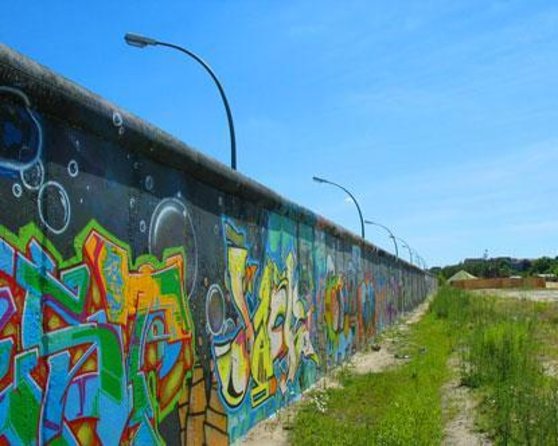
- Follow the former Wall line: See surviving sections, old border areas, and places where the divided city has found new uses.
- Connect two dark chapters: The tour covers Nazi Berlin, the unrealized Germania plan, and Cold War life in one continuous route.
- Visit hard-to-find sites: Side streets and bike paths lead to old bunkers and former ghost-station areas that are easy to miss on foot.
- Expect personal storytelling: Guides including Juliet, Bjorn, Martin, Peter, and Jake have been praised for adding local detail and lived experience.
- Ride at a moderate but active pace: The distance is about 15 kilometers over three hours, with stops for explanation and discussion.
- Pay $40 for a broad introduction: Bike rental, a guide, and rain ponchos are included, making the price fair for a half-day history tour.
Starting in Nikolaiviertel, Berlin’s old center
You meet at the Free Berlin office at Poststraße 11, in the courtyard entrance. Look for the Free Berlin sign. The meeting point is in Nikolaiviertel, about five minutes on foot from Berlin’s TV Tower, so it is easy to pair with a visit to Alexanderplatz.
Nikolaiviertel is a fitting starting point because it is tied to the beginnings of Berlin. From here, the tour quickly shifts from the city’s medieval origins to the 20th century, when Berlin became the center of Nazi power, postwar division, and the Cold War.
You choose from the available rental bikes before setting off. The bikes have baskets and are regularly checked by a certified mechanic, a small detail that matters when you are riding for three hours. Helmets are available if you request one, and large luggage can be left with the operator during the ride if arranged in advance.
The guides speak German, English, or French. Private groups are available, which may be worth considering if you want to ask many questions or need the pace adjusted for your own group.
More Bike Tours in Berlin
- Berlin: Sights and Highlights Bike Tour with a Local Guide
★ 4.8 · 2,698 reviews - Berlin Highlights 3-Hour Bike Tour
★ 5.0 · 948 reviews - Berlin City Bike Tour with Beer Garden Stop
★ 5.0 · 917 reviews
A bike route through Berlin’s Nazi past
This is not a tour focused only on the Berlin Wall. The first half of the story reaches back to the Nazi period and the plans Adolf Hitler’s regime had for reshaping the capital.
One of the strongest subjects is Germania, the proposed redesign of Berlin into a monumental capital. The plan called for huge avenues and oversized buildings suited to Nazi propaganda and power. You do not simply hear about this as an abstract architectural project. The guide points out what remains, what disappeared, and why the scheme was never completed as planned.
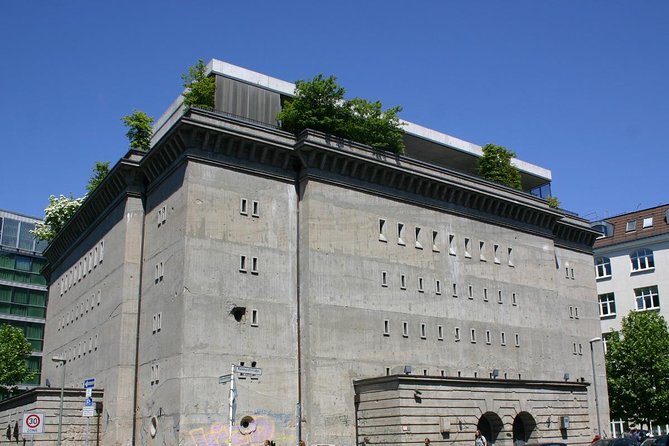
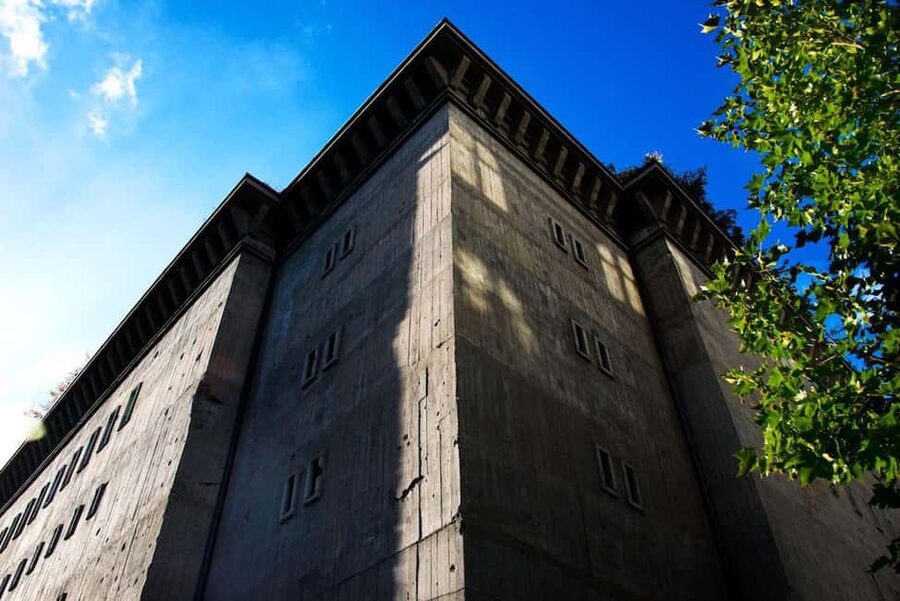
The tour also visits the remains of an enormous bunker. Bunkers are useful historical sites because they show the practical side of dictatorship and war. Instead of grand government buildings, you see thick concrete structures built for survival, command, or protection. Their presence can feel abrupt, especially when surrounded by ordinary modern streets.
The former Führerbunker area is another important stop. You will not enter Hitler’s bunker. Access is no longer possible, and the site has been covered and converted into a parking area. That may disappoint anyone expecting an underground visit, but the guide explains why the location is treated carefully and why no dramatic museum entrance exists there today.
This part of the ride works best when you pay attention to what is absent. Berlin’s modern streets often conceal the places where major decisions were made. The tour helps you connect those ordinary-looking spaces with the regime that once planned to remake the entire city.
Tracing the Berlin Wall by bicycle
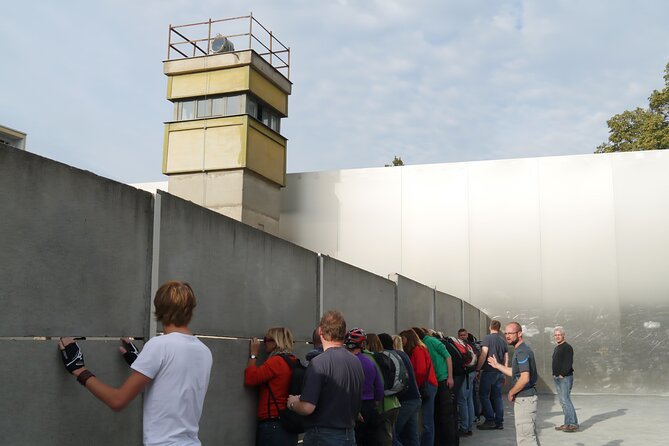
The Cold War section gives the tour its strongest sense of movement. Rather than viewing one famous Wall section and moving on, you follow parts of the former border and see how the old borderland has been reused.
The Wall was not just a concrete barrier. It was a system of fences, patrol routes, watch areas, restricted ground, and checkpoints. Riding along its former outline helps you understand how much space the border took up and how sharply it divided neighborhoods that had once worked as one city.
A bicycle is especially useful here. You can cover sections that are spread across central Berlin without spending much of the tour waiting for public transport. The route also uses side streets and bike paths, allowing your guide to reach corners that buses cannot reach and that you might pass without noticing in a taxi.
The exact route is not fixed. Free Berlin gives the guide room to shape the ride, so the stops can vary. That flexibility is a strength if you prefer a more natural tour, but it means you should not treat the advertised list as a guaranteed sequence of stops.
Your guide may explain what daily life felt like in the divided city, including the practical problems created by the border. The subject becomes more understandable when tied to ordinary routines: getting to work, crossing the city, seeing relatives, and living beside a barrier that could not be treated as a normal street boundary.
Ghost stations and the strange geography of a divided city
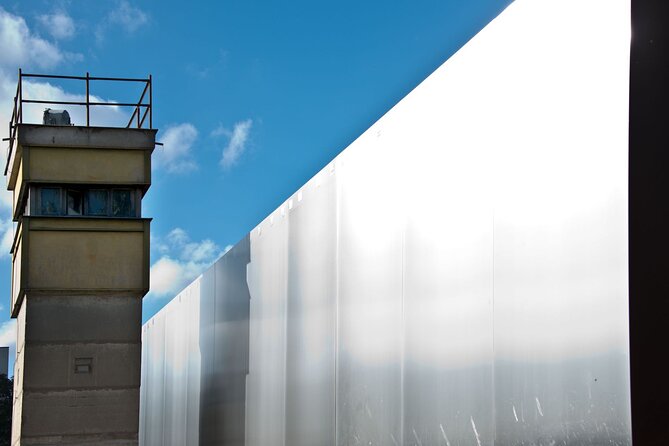
The former ghost stations are among the most unusual Cold War subjects on the route. During Berlin’s division, some subway stations were closed or sealed when train lines passed between East and West Berlin. Trains could move through, but passengers could not get off.
The idea sounds strange today, which is exactly why it is worth hearing about on location. Berlin’s underground network was shaped by politics as much as by transport needs. A station that should have served a neighborhood became a controlled space, watched from above and inaccessible to many people below.
You may not enter the former stations, and the tour is not a subway ride. Instead, you learn where they were and how the divided transport network worked. The bicycle helps put these places into the larger map of the Wall, showing that the border existed above ground and below it.
This is also a good example of the tour’s value. A large museum can explain the Cold War with maps and photographs. On a bike, you move through the actual city and see how the border interrupted streets, rail lines, buildings, and daily habits.
More Third Reich & Cold War Tours in Berlin
- Berlin: Third Reich and Cold War 2 Hour Walking Tour
★ 4.9 · 6,830 reviews - Berlin’s Best: 2 Hour Walking Tour Third Reich and the Cold War
★ 5.0 · 5,486 reviews - Third Reich Berlin: Hitler and WWII Walking Tour
★ 5.0 · 3,301 reviews - Skip-the-Line: Berlin Wall Museum at Checkpoint Charlie
★ 4.1 · 2,041 reviews
Why the guides make a difference
The subject matter is heavy, but the best guides keep it human. Juliet has been praised for her warmth and strong command of Berlin’s story. Jake is known for handling difficult weather while keeping the tour engaging. Bjorn has shared personal information about how he and his family experienced Berlin’s final decades, giving the Cold War section a more direct local voice.
Martin has been described as both serious about the subject and willing to use humor at the right moments. Peter, a former East Berliner, has been especially effective with teenagers because he can connect classroom history with real life. Other guides, including Simone, Celine, Dominick, and Faima, have also been praised for their enthusiasm and willingness to answer questions.
You should not expect the same guide on every departure, and the experience can vary with the person leading it. That is part of the trade-off with a guide-led history ride. The route gives you the framework, but the explanation and storytelling give it character.
A good guide also knows when to slow down. The tour covers a lot of ground, and there is a limit to how long you can spend at each location. If you want long museum-style explanations at every stop, this may feel quick. If you want a clear overview with plenty of places to look at and questions to ask, the pace makes sense.
What the 15-kilometer distance feels like
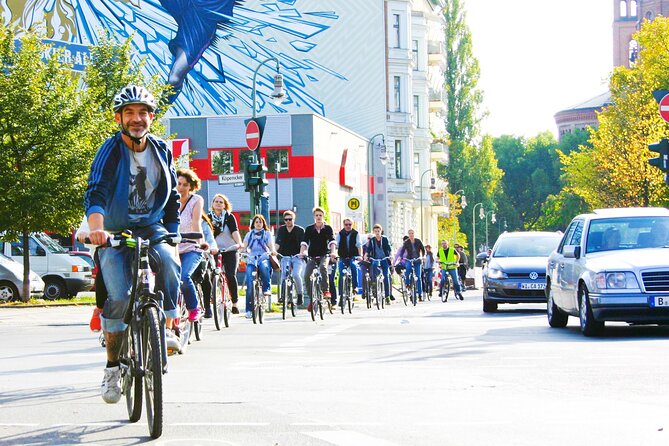
Fifteen kilometers over three hours is manageable for most people who are comfortable on a bicycle, but it is still physical. You will ride, stop, listen, ride again, and repeat that pattern across the city.
The tour is described as active but relaxed, and that is the right expectation. You are not racing, and the ride is built around historical stops. Still, you should be ready to spend a substantial part of the morning or afternoon on a bike.
Several people have found the cycling easier than expected, including those who do not ride often. Others have stressed that warm clothes are important in winter, especially gloves. Berlin weather can change quickly, so use the supplied waterproof poncho if needed and do not assume a pleasant forecast will last for the whole ride.
An e-bike is available if you book the senior option, since that price includes the e-bike adjustment. Make this request during booking rather than waiting until the meeting point. The option can make the route more comfortable if you are concerned about distance, cold, or general stamina.
Bikes, helmets, rain, and practical comfort
The rental bikes come with baskets, which are handy for a small day bag or water bottle. They are checked by a certified mechanic, so you are not simply being handed an uninspected city bike and sent into traffic.
Helmets are included on request rather than automatically supplied as part of the standard setup. If you want one, ask for it when booking or at the start. Large luggage can also be stored safely with the operator for the duration of the ride, which is useful if you arrive before checking in or are leaving Berlin that day.
Rain does not automatically end the experience. Waterproof ponchos are provided, and a private group has continued through very wet conditions with the guide adjusting for comfort and safety. Even so, bad weather will affect visibility, warmth, and how long you want to stand at each stop.
I would wear layers and bring gloves outside the warmest months. You need clothes that allow easy movement, not a polished city outfit. The tour is casual and practical.
Is $40 a fair price?
At $40 per person, this is a solid value if you want both transport and interpretation. The price includes the bike, a guide, and waterproof ponchos, and the three-hour duration gives you a substantial introduction to Berlin’s 20th-century history.
A walking tour may cost less, but it will not cover the same 15-kilometer spread without using public transport. A bus tour may cover distance more easily, but it cannot use the smaller paths and side streets that make this ride feel more connected to the former border.
The value depends on your interests. If you want detailed time inside one museum, spend your money on museum admission and a focused visit. If you want to understand how Nazi sites, Wall remnants, ghost stations, and former border ground fit together across Berlin, $40 is reasonable.
Private groups cost more than a standard booking, but the format may suit families or groups with very different cycling speeds. It also gives you more room to ask about specific family, political, or architectural questions.
Who should book this Berlin bike tour?
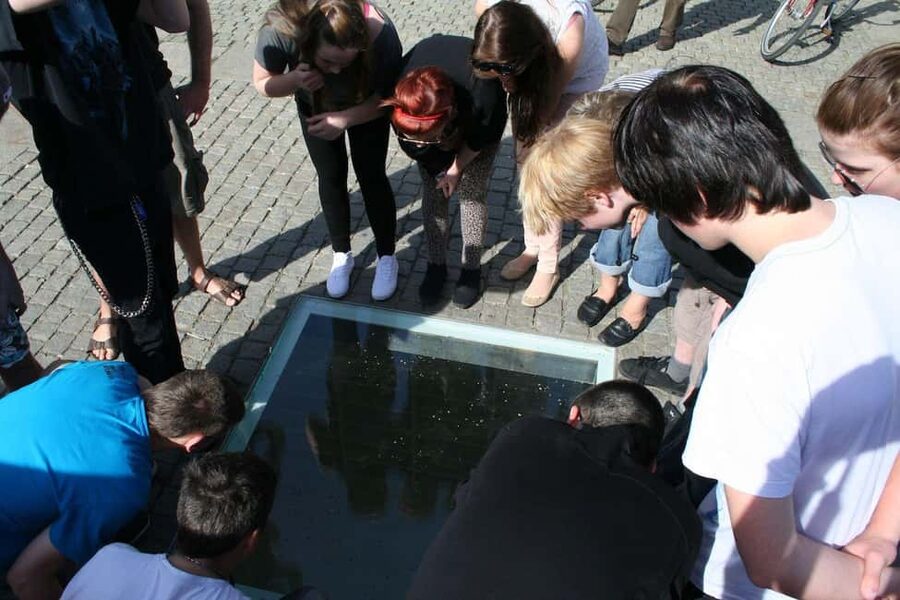
I would choose this tour for a first or second visit to Berlin, especially if you want a clear map of the city’s Nazi and Cold War sites. It is also a strong choice for families with teenagers. Peter’s experience as a former East Berliner shows how a personal voice can make the subject easier for younger people to grasp.
History fans will appreciate the range of topics, from Germania and bunkers to the Wall and ghost stations. You do not need specialist knowledge, since the guides explain the background as you go.
This is less suitable if you dislike cycling, have trouble riding for three hours, or want to spend long periods at individual sites. It is also not the best choice if your main goal is to enter Hitler’s bunker, since that is not possible.
The tour ends back at the Poststraße meeting point, so you can plan another central Berlin activity afterward. Allow time to settle in after the ride, particularly in cold or wet weather.
My verdict: book it for connections, not checklists
Book this tour if you want Berlin’s difficult history explained across the real city rather than isolated in a museum room. The bicycle gives you range, the flexible route lets the guide respond to the group, and the strongest guides bring personal detail to subjects that can otherwise feel distant.
Go in knowing that the route can change, the pace is active, and the Führerbunker is viewed only from the outside area. With those limits understood, the combination of Wall remains, ghost stations, bunkers, and local storytelling makes this a useful and memorable three-hour introduction.
FAQ
How long is the Berlin Wall and Third Reich bike tour?
The tour lasts three hours and covers about 15 kilometers by bicycle.
Where does the tour begin?
Meet the guide at the Free Berlin office at the courtyard entrance of Poststraße 11 in Nikolaiviertel. Look for the Free Berlin sign.
Where does the tour finish?
The activity ends back at the meeting point on Poststraße 11.
Which languages are available?
Tours are available in German, English, and French.
Is a bicycle included in the price?
Yes. Bike rental is included, and the rental bikes have baskets and are regularly checked by a certified mechanic.
Can I use an e-bike?
Yes. You can book the senior option to include an e-bike. The activity provider will then know that you have requested one.
Can I visit Hitler’s bunker?
No. The former Führerbunker cannot be accessed. The location is now covered and converted into a parking area, and the guide explains the site from outside.
Are helmets and rain protection available?
Helmets are available if requested, and waterproof ponchos are provided in case of rain.
More Cycling Tours in Berlin
- Berlin Highlights: 3-Hour Bike Tour
★ 4.9 · 809 reviews - Berlin Highlights Sightseeing Bike Tour in Small Groups
★ 5.0 · 652 reviews - Berlin: Alternative Bike Tour of Kreuzberg & Friedrichshain
★ 4.7 · 548 reviews - Berlin: Highlights Guided Bike Tour
★ 4.8 · 414 reviews
Just added around Berlin
- Love and War in Berlin: Self-Guided Story Puzzle Walk★ 5.0 · 7 reviews
- Rickshaw Tours Berlin – Groups of up to 16 people with several rickshaws★ 4.0 · 97 reviews
- Walking on the Wall: 3-Hour Tour in Berlin★ 4.5 · 34 reviews
- eSIM for Germany and 34 European Countries★ 4.5 · 16 reviews
- Warnemuende Shore Excursion: Berlin Private Sightseeing Tour from Rostock★ 5.0 · 4 reviews
- Your ticket to The Wall Museum Berlin★ 3.0 · 60 reviews
- Warnemuende Shore Excursion: Private Berlin Tour★ 4.5 · 27 reviews
- Berlin’s Gay, Lesbian, and Queer Scene Small-Group Walking Tour★ 4.5 · 66 reviews
Third Reich & Cold War Tours, compared.
Berlin’s Best: 2 Hour Walking Tour Third Reich and the Cold War
Read our review →
Third Reich Berlin: Hitler and WWII Walking Tour
Read our review →
Skip-the-Line: Berlin Wall Museum at Checkpoint Charlie
Read our review →
Cold War, Berlin Wall, Spies and the East Side Gallery
Read our review →Browse the lists this tour appears in