
Reviewed · BIKE TOURS
Berlin: Alternative Bike Tour of Kreuzberg & Friedrichshain
Berlin’s alternative side makes more sense when you can move through it, rather than simply photograph it. This 17-kilometer ride links Prenzlauer Berg, Friedrichshain, and Kreuzberg, taking you from East German boulevards and the Berlin Wall to street art, parks, old courtyards, and the River Spree.
I like the relaxed pace and the small groups, capped at 15 people. I also like the mix of big Berlin stories with personal details, including music history, occupied housing, and the changing culture of SO36. The main drawback is that some city riding shares space with cars, and one rider found a two-gear bike hard on parts of the route.
In This Review
- Key points to know
- Why a bicycle is the right way to see this Berlin
- From Kulturbrauerei to Volkspark Friedrichshain
- Karl-Marx-Allee and the scale of East Germany
- Boxhagener Platz and RAW Tempel
- The East Side Gallery and Oberbaumbrücke
- Along the River Spree into Kreuzberg
- SO36 and the alternative side of Kreuzberg
- Riding conditions, bikes, and group size
- Who will get the most from this tour
- Is the $41 price fair?
- Should you book the Kreuzberg and Friedrichshain bike tour?
- FAQ
- How long does the Berlin alternative bike tour last?
- How far will I cycle?
- Which Berlin neighborhoods does the tour visit?
- Is the East Side Gallery included?
- What is included with the bicycle rental?
- What languages are available?
- How many people are in each group?
Key points to know
- See 17 kilometers of East Berlin by bicycle: Cover a wide stretch of the city without spending the day on public transport.
- Ride beside the East Side Gallery: Follow the longest remaining section of the Berlin Wall, covered in famous murals.
- Compare three very different districts: Start in Prenzlauer Berg, cross Friedrichshain, and finish in alternative Kreuzberg.
- Small groups make a difference: With no more than 15 participants, guides can keep the pace together and answer questions.
- Expect local stories, not just landmarks: Guides such as Anna, Patricia, Andy, Oli, and Joost have brought music, politics, architecture, and neighborhood life into the ride.
- Bring comfortable clothes: Bikes, helmets, gloves on request, sunscreen, trouser clips, and rain ponchos are supplied, but food and drinks are not.
Why a bicycle is the right way to see this Berlin
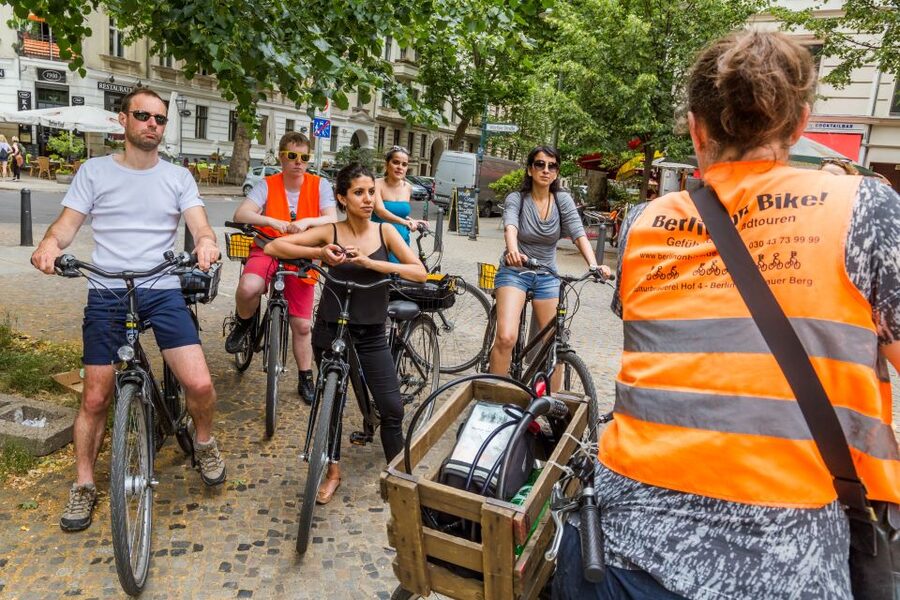
Berlin is spread out, and the neighborhoods on this route are too far apart to appreciate fully on foot in a single afternoon. A bike gives you a useful middle ground. You cover real distance, but you still notice courtyards, painted walls, parks, changing buildings, and people using the city.
This is not a race or a bike-sport outing. You ride at an easy pace with time for photographs and questions. That makes it a good introduction to Berlin on your first day, especially if you want to understand how the former East and West developed into today’s city.
The route usually uses bike paths and quiet roads, though it is not traffic-free. Some city sections require attention around cars and other road users. If you are a nervous cyclist, tell the guide early and stay close to the group. The ride is manageable for less experienced cyclists, but you should be comfortable cycling for several hours.
The tour costs $41 per person. For three to three and a half hours with a bike, a guide, and a route across several districts, I consider that fair value. You are paying not only for the rental bike but also for the time saved planning a safe route and for the local context that turns ordinary streets into meaningful places.
More Bike Tours in Berlin
- Berlin: Sights and Highlights Bike Tour with a Local Guide
★ 4.8 · 2,698 reviews - Berlin Highlights 3-Hour Bike Tour
★ 5.0 · 948 reviews - Berlin City Bike Tour with Beer Garden Stop
★ 5.0 · 917 reviews
From Kulturbrauerei to Volkspark Friedrichshain
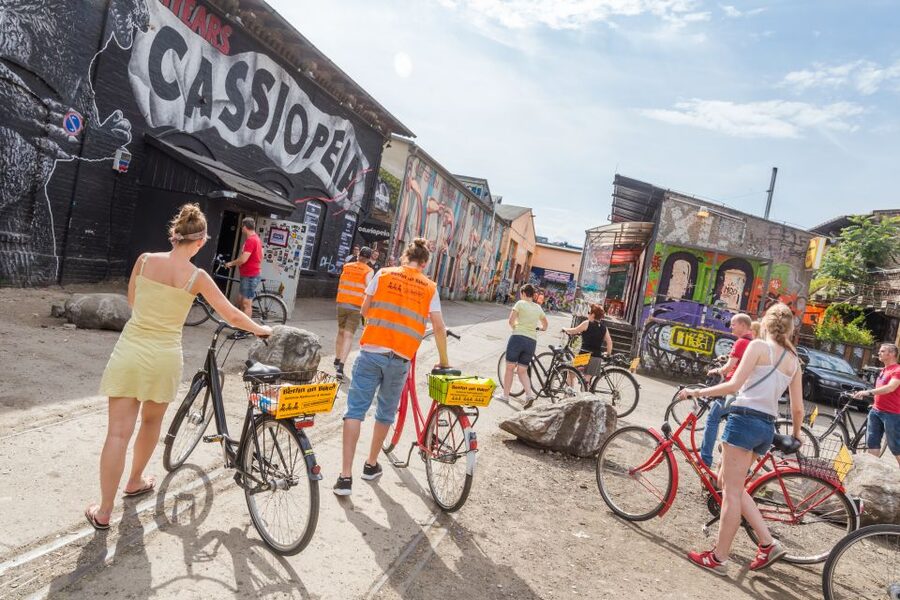
The usual meeting point is Kulturbrauerei in Prenzlauer Berg, though the exact meeting place can depend on the option you book. This former brewery complex is a fitting launch point for a tour about Berlin’s changing neighborhoods. It reflects the city’s habit of giving old industrial buildings new cultural uses.
From here, you cycle toward Volkspark Friedrichshain. The park gives the ride an early change of pace, with open recreational space after the urban start. It also helps you see how Berlin mixes dense neighborhoods with large public parks.
Your guide begins building the city’s story here. Berlin’s districts are not interchangeable, and the ride works best when you pay attention to those differences. Prenzlauer Berg, Friedrichshain, and Kreuzberg each carry a distinct political and social past, even when modern cafes, art spaces, and apartments have begun to blur the boundaries.
The bike fleet is large, and you can choose a bicycle that suits your size. The bikes have baskets for lightweight bags, a practical touch if you are carrying a small camera or water bottle. Helmets and gloves are available on request, while sunscreen and trouser clips are included.
Karl-Marx-Allee and the scale of East Germany
The route continues toward Karl-Marx-Allee, one of the clearest places to see the architectural confidence of the former East Germany. The broad boulevard was designed to project order, scale, and state power. Riding it gives you a better sense of its size than viewing it from a passing car.
This part of the ride adds useful context to the later street art and alternative culture. Berlin’s present-day character did not appear from nowhere. The Cold War, the Berlin Wall, reunification, migration, redevelopment, and rising rents have all left marks on these districts.
A bike helps here because you can stop, look, and then continue without the fuss of parking or finding a train platform. You are not confined to one monument. The changing streets between major stops are part of the lesson.
Boxhagener Platz and RAW Tempel
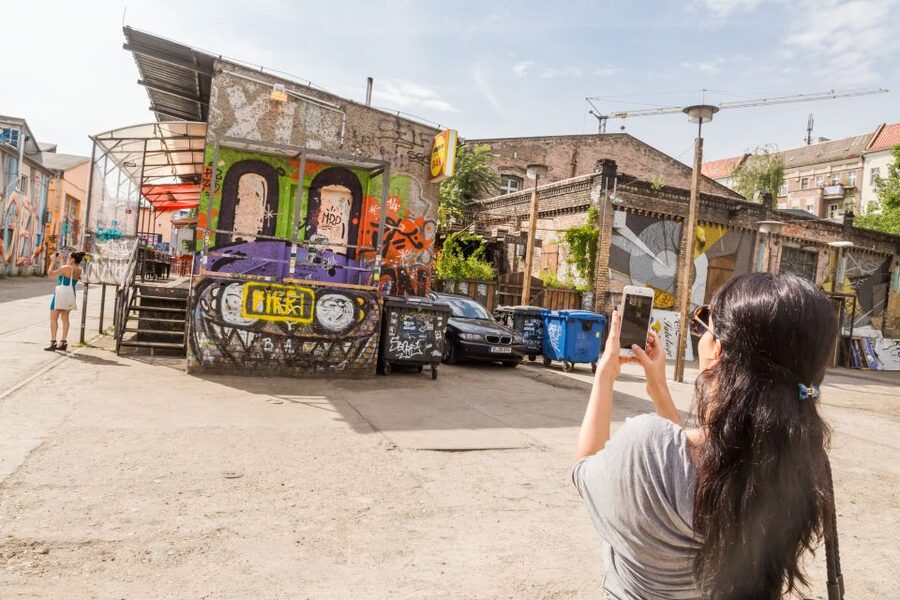
In Friedrichshain, the route heads around Boxhagener Platz and RAW Tempel. These are good places to see the district’s mix of daytime activity and nightlife energy.
Boxhagener Platz is surrounded by the kind of neighborhood life that makes Friedrichshain more than a collection of historic sites. RAW Tempel, set in a former industrial area, is associated with creative spaces, nightlife, and alternative urban culture. During the day, you can see the physical setting without having to experience the district at night.
I like this portion because it shows how Berlin repurposes leftover urban spaces. Old industrial sites can become places for art, music, social projects, and entertainment. At the same time, the changes raise questions about who can afford to stay as a district becomes fashionable.
The guide’s commentary matters here. Several guides, including Patricia, Anna, Andy, Oli, and Joost, have been praised for making the social side of Berlin easy to follow. Their value is not simply naming buildings. It is explaining how a place changed and why it still feels different from a polished central sightseeing zone.
Same city, a completely different kind of day:
- Berlin: Reichstag, Dome and Government District Guided Tour
★ 4.7 · 18,288 reviews - Berlin: 1-Hour City Tour by Boat with Guaranteed Seating
★ 4.3 · 16,993 reviews - Berlin: Boat Tour Along the River Spree
★ 4.4 · 11,252 reviews - Discover Berlin Half-Day Walking Tour
★ 5.0 · 9,624 reviews
The East Side Gallery and Oberbaumbrücke
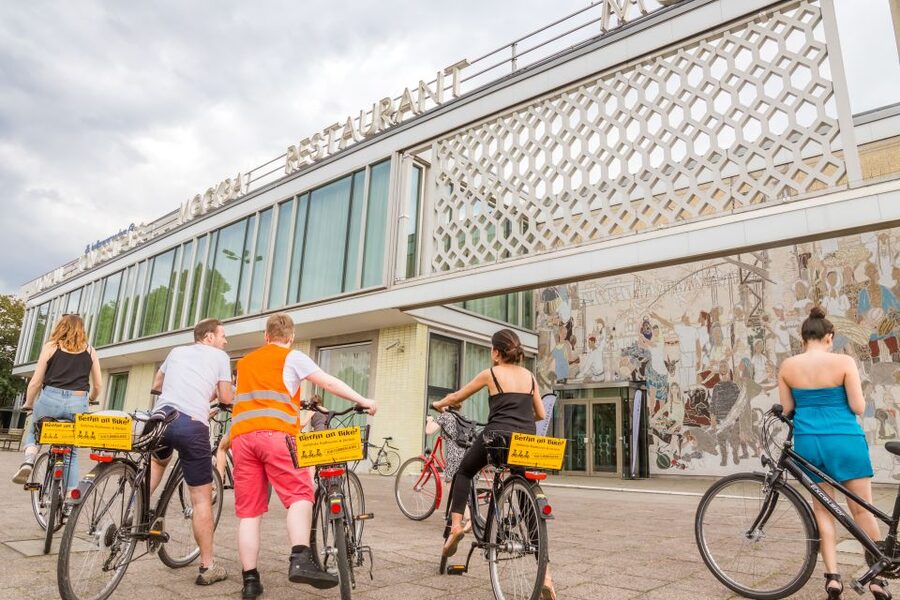
The East Side Gallery is the tour’s most recognizable stop. It follows the largest remaining section of the Berlin Wall, now painted with murals by artists from around the world.
The paintings are colorful, but the setting deserves more than a quick photo. This was once a physical barrier cutting through Berlin. Today, the wall segment is an outdoor gallery and a reminder of how quickly political symbols can change meaning.
Cycling beside the wall lets you see its length and its position within the modern city. You also get a practical sense of how the former border ran through neighborhoods that now connect easily. Your guide can provide the political background, while the ride itself shows the scale of the old division.
You then cross the Oberbaumbrücke into Kreuzberg. The bridge is one of Berlin’s most recognizable crossings, with a striking profile over the Spree. It marks more than a change of district. It also shifts the tone of the tour from former East Berlin planning and redevelopment toward Kreuzberg’s immigrant communities, squats, art, music, and street-level culture.
Along the River Spree into Kreuzberg
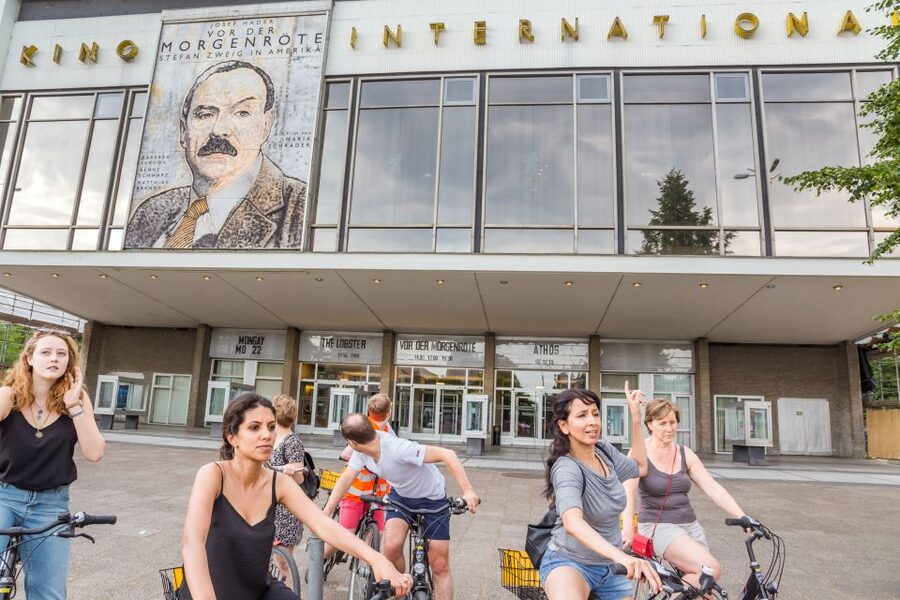
The Spree gives the middle of the ride a welcome open stretch. After busy streets and large buildings, the riverbanks offer scenery and breathing room. You will have time to take photographs and listen without constantly watching for traffic.
The route also explores courtyards and parks. These smaller spaces are useful because Berlin’s character often appears away from its headline sights. A courtyard can show how a block is used; a park can reveal how residents gather; a painted wall can point to a neighborhood’s politics or creative life.
The ride includes Görlitzer Park, an important part of the Kreuzberg section. The park is not presented as a manicured tourist attraction. It is part of the everyday city, with all the rough edges and mixed uses that come with a central urban open space.
That is a strength of this tour. You are not shown only the parts of Berlin that have been polished for sightseeing. You see a district with competing identities, from community life and cultural freedom to redevelopment and social pressure. The guide’s job is to give those contrasts some shape without reducing them to a simple good-old-days story.
SO36 and the alternative side of Kreuzberg
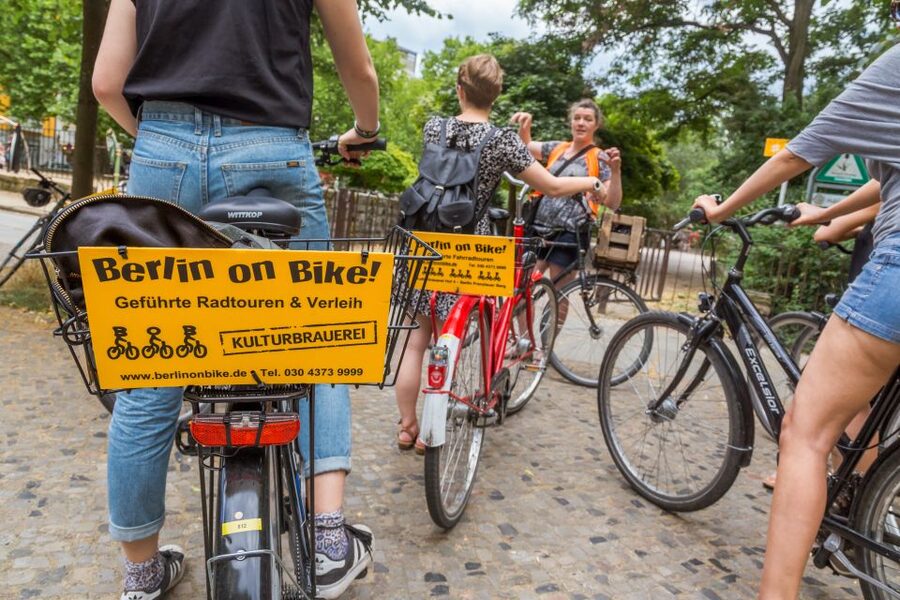
The ride finishes in the SO36 area of Kreuzberg, long associated with alternative culture and a strong neighborhood identity. Here, the route focuses on the ways people have lived outside conventional patterns, from occupied housing to music venues, street art, and independent creative spaces.
The tour can include unusual details that are easy to miss alone. One guide showed the group a studio connected with a David Bowie recording, and another stop relates to Bowie and Iggy Pop’s time in Berlin. These details give the music history a physical setting instead of leaving it as a list of famous names.
You also hear about the district’s changing character. Kreuzberg has attracted artists, musicians, immigrants, students, and entrepreneurs, while redevelopment and gentrification have changed the cost and feel of many streets. The tour does not treat alternative Berlin as a theme park. It presents a living neighborhood with a past that still shapes its present.
This is where a good guide makes the biggest difference. Anna has been praised for learning everyone’s names and making a mixed-age group feel included. Patricia has a talent for telling stories about the alternative city. Andy has helped less experienced cyclists feel comfortable. Oli and Joost have also been singled out for friendly, personal delivery.
Guide quality can vary on any scheduled tour, of course, but the repeated strength here is the human approach. You are given facts, anecdotes, and suggestions for places to eat or drink afterward. One useful tip is to plan a little free time after the ride, since the tour passes areas you may want to revisit at a slower pace.
Riding conditions, bikes, and group size
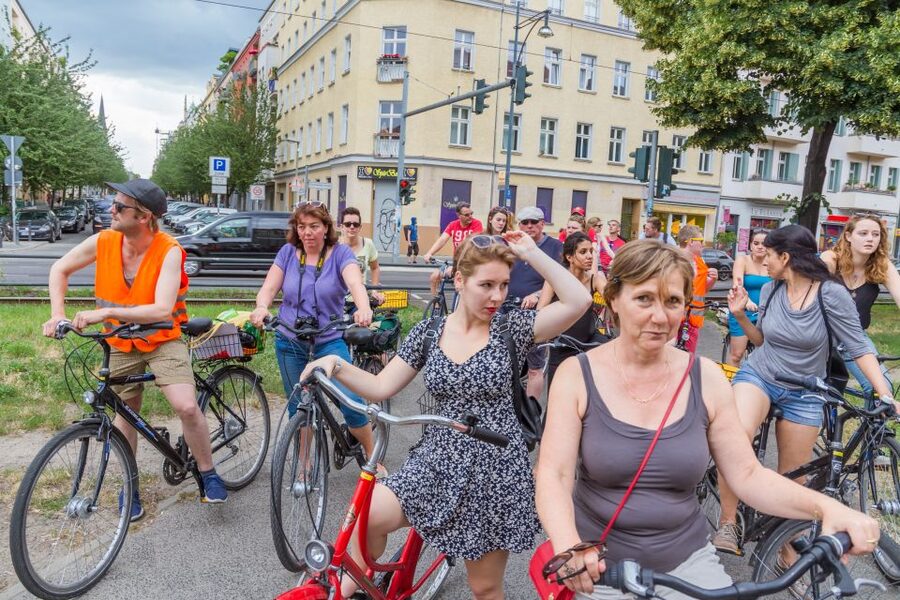
The maximum group size is 15. That is small enough for a personal feel and large enough to keep the price reasonable. A group of this size can also move through city streets more easily than a large sightseeing convoy, though you still need to follow instructions and watch the road.
The ride covers 17 kilometers at a relaxed pace. The published duration appears as three hours or 210 minutes, and the practical expectation is about three and a half hours. Check the starting time and exact meeting point for your chosen option.
Comfortable rental bikes are provided, with baskets for light bags. Helmets and gloves are available on request. Rain ponchos are supplied for bad weather, and trouser clips can keep loose clothing away from the chain.
One caution is worth taking seriously: bike condition can vary. A rider found a two-gear bicycle difficult at times. Most people appear to find the bikes comfortable, but check the gears, saddle height, brakes, and tires before setting off. If something feels wrong, ask for another bicycle immediately.
You do not need specialist cycling clothing. Comfortable clothes are the stated requirement. Since snacks and drinks are not included, bring water and perhaps a small snack, especially if you are booking the ride in warm weather.
Who will get the most from this tour
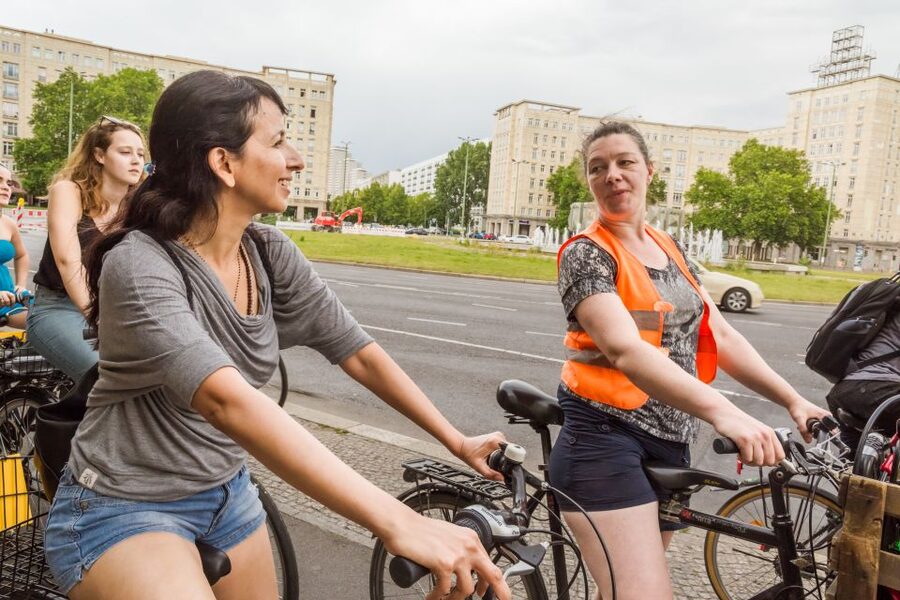
I would choose this tour if you want an early overview of Berlin’s eastern and alternative districts. It gives you a useful mental map, and it may help you decide where to return for dinner, nightlife, museums, music, or a longer walk.
It suits couples, solo visitors, and families with older children. A family with children aged 9 and 11 completed the ride successfully, while teenagers aged 14 and 16 also enjoyed it. The relaxed pace helps, but every participant should be able to cycle for 17 kilometers and manage ordinary city riding.
It is also a good fit if you have already seen Brandenburg Gate, Museum Island, and the main central sights. The route focuses on neighborhoods and social change rather than Berlin’s standard monument circuit.
I would think twice if you dislike cycling in traffic, need a very short outing, or want a tour devoted mainly to major historical monuments. You will see important places, but much of the appeal lies in the streets between them.
English, Dutch, and German tours are available. The guide’s personality and storytelling style will shape the experience, so choose your language carefully and arrive ready to ask questions. The best moments often come from a quick explanation about an ordinary-looking building or a recommendation for what to do next.
Is the $41 price fair?
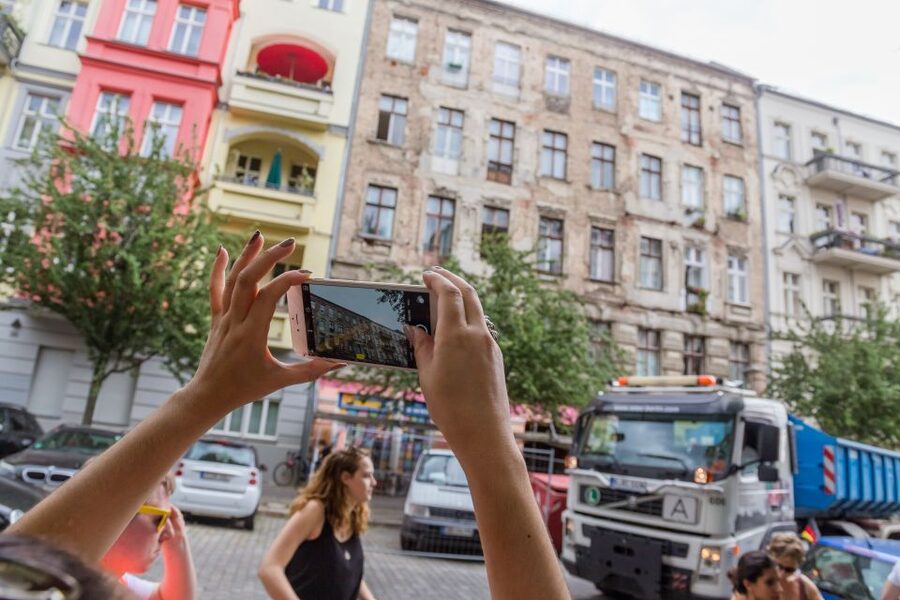
At $41, the tour offers a solid amount of sightseeing for the money. A rental bike alone would not give you the planned route, the safe group navigation, or the stories that link the Wall, East German architecture, music, and Kreuzberg culture.
The value is strongest for a first visit. You cover several districts in one outing and gain enough orientation to return independently. One participant went back to two stops the next day, which is exactly how I would use this kind of tour: let the guide introduce the area, then revisit the places that catch your attention.
The price does not include food or drinks, and there is no scheduled beer stop. One rider thought a short drink break would have been welcome while passing busy bars. I agree that this would be a nice addition, but skipping it helps the tour stay within its three to three and a half hour window.
Free cancellation is available up to 24 hours before departure, and you can reserve now and pay later. Those terms make it easier to fit the ride into a changing Berlin schedule.
Should you book the Kreuzberg and Friedrichshain bike tour?
Book it if you want to see Berlin as a collection of living neighborhoods rather than a checklist of monuments. The East Side Gallery, Karl-Marx-Allee, RAW Tempel, Görlitzer Park, the Spree, and SO36 create a strong route, and the guides add the personal stories that make the stops stick.
I especially recommend it for your first or second day, when you want to get your bearings fast. Check the bike carefully, wear comfortable clothes, bring water, and expect a few traffic sections. If that sounds manageable, $41 is a sensible price for a relaxed, story-filled look at a side of Berlin that is easy to miss from a tour bus.
FAQ
How long does the Berlin alternative bike tour last?
The activity is listed as three hours to 210 minutes. The practical tour information describes a 3.5-hour ride covering 17 kilometers.
How far will I cycle?
You will cover about 17 kilometers at a relaxed pace, with time for photographs and questions.
Which Berlin neighborhoods does the tour visit?
The route begins in Prenzlauer Berg, continues through Friedrichshain, and crosses into Kreuzberg. Stops and riding areas include Volkspark Friedrichshain, Karl-Marx-Allee, Boxhagener Platz, RAW Tempel, the East Side Gallery, Oberbaumbrücke, the River Spree, Görlitzer Park, and SO36.
Is the East Side Gallery included?
Yes. The tour rides along the largest remaining piece of the Berlin Wall, known as the East Side Gallery.
What is included with the bicycle rental?
A bicycle is included. The bikes have baskets for lightweight bags. Helmets and gloves are available upon request, and the tour also provides sunscreen, trouser clips, and rain ponchos for bad weather.
What languages are available?
The live tour guide may lead the tour in English, Dutch, or German.
How many people are in each group?
The tour has a maximum of 15 participants, creating a small-group setting with time for questions and personal interaction.
More Cycling Tours in Berlin
- Berlin Highlights: 3-Hour Bike Tour
★ 4.9 · 809 reviews - Berlin Highlights Sightseeing Bike Tour in Small Groups
★ 5.0 · 652 reviews - Berlin: Guided Bike Tour of the Berlin Wall and Third Reich
★ 4.7 · 499 reviews - Berlin: Highlights Guided Bike Tour
★ 4.8 · 414 reviews
Just added around Berlin
- Love and War in Berlin: Self-Guided Story Puzzle Walk★ 5.0 · 7 reviews
- Rickshaw Tours Berlin – Groups of up to 16 people with several rickshaws★ 4.0 · 97 reviews
- Walking on the Wall: 3-Hour Tour in Berlin★ 4.5 · 34 reviews
- eSIM for Germany and 34 European Countries★ 4.5 · 16 reviews
- Warnemuende Shore Excursion: Private Berlin Tour★ 4.5 · 27 reviews
- Warnemuende Shore Excursion: Berlin Private Sightseeing Tour from Rostock★ 5.0 · 4 reviews
- Your ticket to The Wall Museum Berlin★ 3.0 · 60 reviews
- Berlin’s Gay, Lesbian, and Queer Scene Small-Group Walking Tour★ 4.5 · 66 reviews
Bike Tours, compared.
Sights and Highlights Bike Tour with a Local Guide
Read our review →
Classic Mike’s Bike Tour daily @ 11.30 incl Beer Garden & Surfers
Read our review →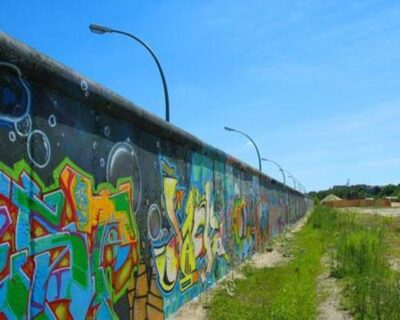
Browse the lists this tour appears in