
Reviewed · MUSEUM & GALLERY TICKETS
Stuttgart: Mercedes-Benz Museum Entry Ticket
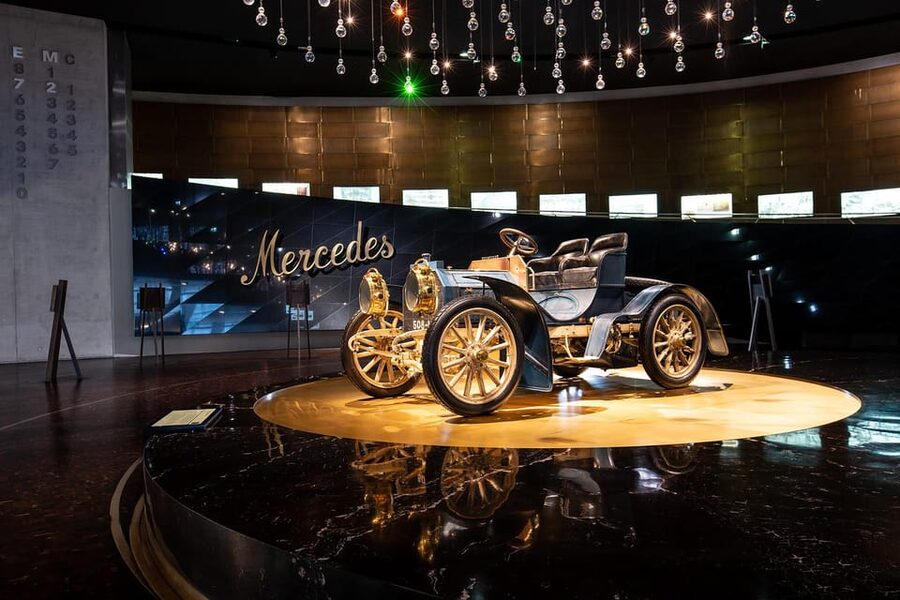
The first automobile, built by Carl Benz in 1886, is only the starting point. Inside Stuttgart’s Mercedes-Benz Museum, more than 160 vehicles trace the rise of the car alongside changes in technology, daily life, industry, and popular culture. The building itself turns this story into a grand walk through time, with exhibits spread across 16,500 square meters and twelve rooms.
I like the chronological layout, which helps you understand why each vehicle matters rather than viewing a random row of old cars. I also like the free audioguide, available in eight languages, because it adds the human and historical context that a silent display of machines can miss. The main drawback is time: one hour is far too short, and even three hours can feel brisk if you read everything.
In This Review
- Key points
- Beginning with Carl Benz’s 1886 motorcar
- The Legend route, from invention to racing glory
- The Collection route, grouped by purpose and character
- Why the building and layout matter
- The audioguide adds the missing context
- What makes this more than a car museum
- Racing cars and futuristic research vehicles
- How long should you stay?
- Price, access, and the practical details
- Who should book this museum?
- Should you book the Mercedes-Benz Museum?
- FAQ
- Where is the Mercedes-Benz Museum located?
- How much does admission cost?
- How long is the ticket valid?
- What are the museum’s opening hours?
- What does the ticket include?
- Which audioguide languages are available?
- How many vehicles are on display?
- Is the museum wheelchair accessible?
- Can I cancel the booking?
Key points
- Follow two story routes: The Legend and Collection tours take you through the museum in different but connected ways.
- See the automobile evolve: Displays range from some of the earliest cars to racing machines and futuristic research vehicles.
- Plan three to five hours: Short visits are possible, but they leave large parts of the exhibition unseen.
- Use the eight-language audioguide: Choose German, English, Italian, Spanish, French, Chinese, Japanese, or Russian.
- Bring the family: Children can use a kids’ audioguide and puzzles, while younger visitors may find coloring activities.
- Buy with flexibility: Admission costs $18 per person, includes the exhibition and audioguide, and allows cancellation up to 24 hours before the visit.
Beginning with Carl Benz’s 1886 motorcar
The museum’s central idea is simple: the automobile did not appear in isolation. It changed how people moved, worked, traveled, and imagined the future, while wider events also shaped the company and its products.
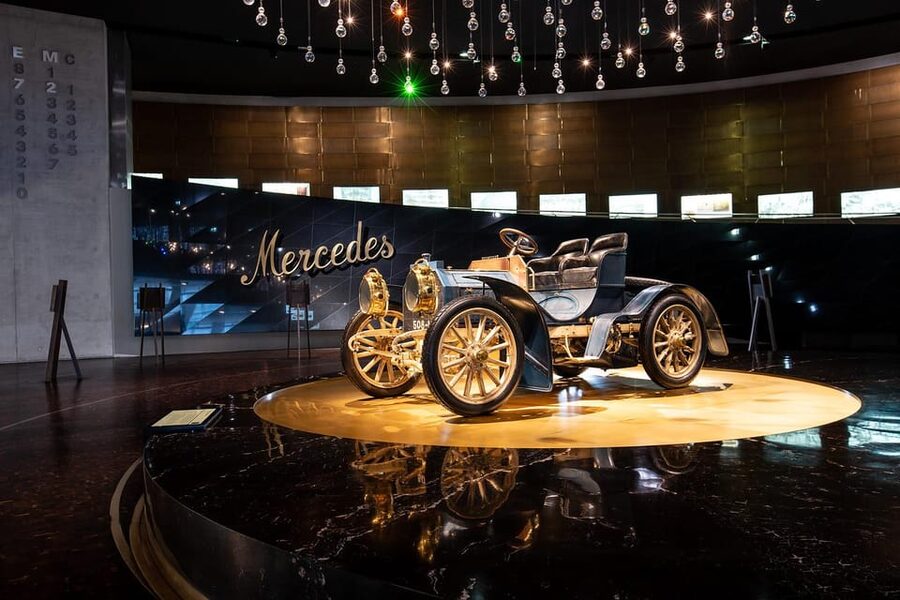
You begin with the origins of the motorcar and then move through the development of Mercedes-Benz. The early vehicles matter because they show the problem the engineers were trying to solve: how to turn an experimental engine into a machine for everyday transport. This opening section gives the rest of the visit a clear purpose.
I find this approach much more useful than a museum that simply labels each car with a date and horsepower figure. You see the cars as steps in a longer story. The museum also places automotive progress beside major events in German and world history, so the visit becomes part industrial history and part social history.
The exhibition is arranged across several levels, with routes that carry you forward through time. That layout is visually impressive, but it also requires energy. You are not making a quick loop around one large hall. You are following a long, carefully planned route through multiple floors.
More museum & gallery tickets in Stuttgart:
- Stuttgart: Museum of Illusions Entry Ticket
★ 4.2 · 507 reviews - Stuttgart: Stuttgart Wine Museum Wine Tasting
★ 4.7 · 55 reviews - Berlin: Jewish Museum Berlin Entrance Ticket
★ 4.5 · 8,393 reviews
The Legend route, from invention to racing glory
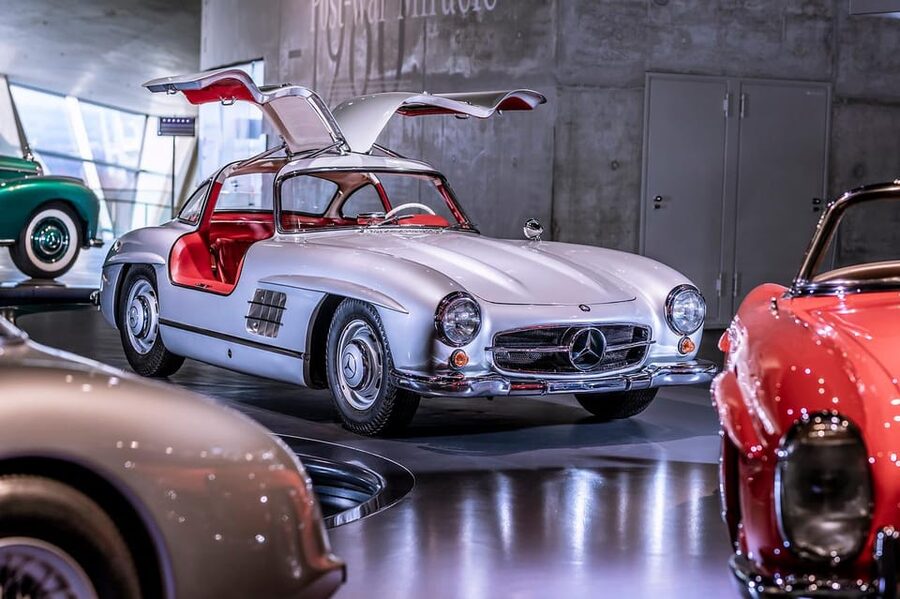
The Legend route is the natural choice if you want a chronological walk through the company’s story. It takes you from the earliest automobiles toward later milestones, showing how design, engineering, and public expectations changed over the years.
The early cars are especially valuable for anyone who thinks of Mercedes-Benz only as a modern luxury brand. Here, the emphasis is on invention and development. You see how basic ideas became practical machines, then how those machines gained speed, comfort, status, and wider use.
As you continue, the vehicles become familiar in shape and purpose. The museum connects them with day-to-day life and popular culture, which helps explain why certain models became more than transport. A car can signal wealth, freedom, technical progress, or a new way of living. The displays make room for those meanings.
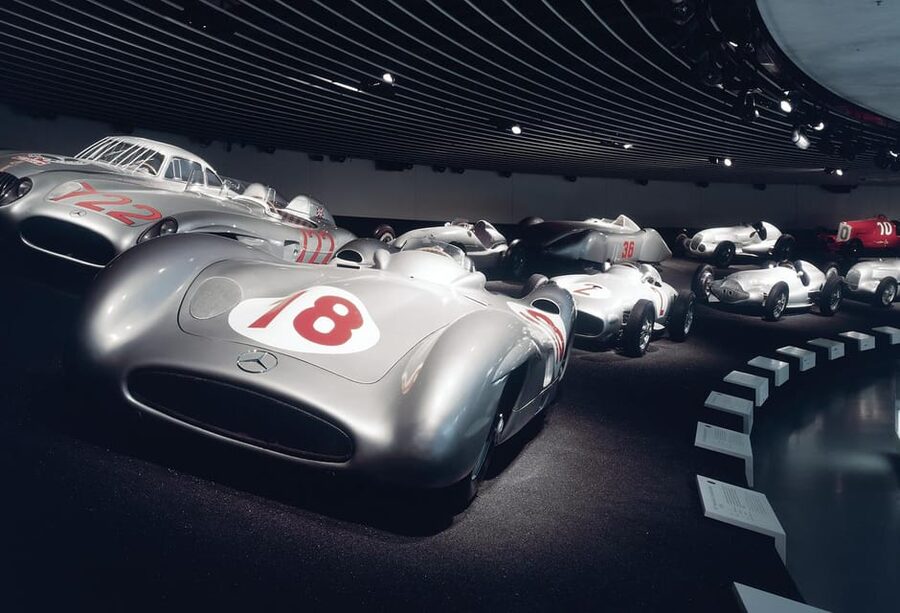
The final sections bring you toward legendary racing cars. This is a strong finish because the racing vehicles provide a sharp contrast with the early motorcars. They are lighter, faster, and built around performance rather than ordinary travel. Even if you are not a serious motor enthusiast, the engineering and visual drama make this section easy to appreciate.
The Collection route, grouped by purpose and character
The Collection route gives you another way to read the museum. Rather than focusing only on a straight timeline, it brings together vehicles by their role and identity. This helps you compare different kinds of Mercedes-Benz machinery and see how the company served more than one market.
You might move from passenger vehicles to commercial or specialist applications, then compare ordinary road cars with competition machines. The supplied information identifies vehicles of all types, including classic automobiles, racing cars, and research vehicles. That range is one of the museum’s greatest strengths.
The collection also reaches beyond cars. The wider story includes engines and their use in areas such as aircraft and trams. This matters because it shows the company as part of a larger industrial age, not just a maker of stylish road vehicles.
You can use one route as your main path and treat the other as a way to understand what you missed. If you want every label, video, and audioguide stop, plan on four or five hours. If your interest is selective, you can move more quickly, but do not expect to see the whole museum properly in 60 or 90 minutes.
Why the building and layout matter
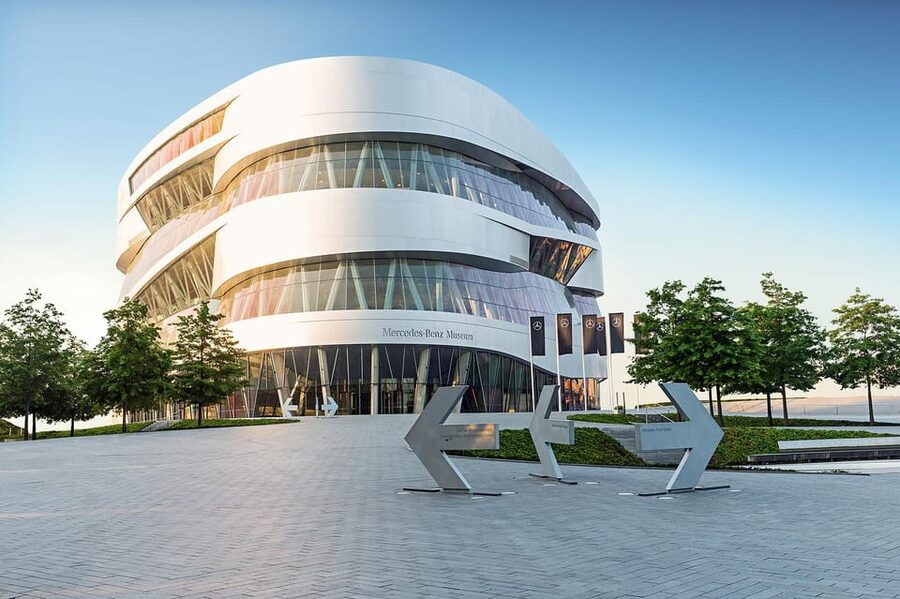
The museum is not just a storage space for vehicles. Its modern architecture and multi-story design set the tone before you reach the main displays. The building gives the collection room to breathe, while the long route creates a sense of progress.
I like the way the physical structure supports the subject. Cars are machines built around movement, and the museum asks you to keep moving through time. The arrangement also makes the visit feel more like a story than a warehouse tour.
The drawback is that the scale can work against you. There are many floors, rooms, vehicles, and information points. If you arrive late in the afternoon, you may feel pressured to rush. One available entry slot can leave only 90 minutes before closing, and that is enough for a quick look, not a full visit.
For the best experience, arrive with a generous block of time. Three hours is a sensible minimum if you want to see the major sections without racing. Four to five hours suits a car enthusiast who wants to stop often and listen to the audioguide.
More factory & production tours in Stuttgart:
- Dresden: Tour of VW’s Transparent Factory
★ 4.5 · 4,058 reviews - Tickets to the Meissen Porcelain Factory
★ 4.7 · 718 reviews - Leipzig: Exclusive BMW & MINI Behind-the-Scenes Factory Tour
★ 4.6 · 289 reviews - Dresden: Guided tour VW factory , test drive & food
★ 4.6 · 143 reviews
The audioguide adds the missing context
Admission includes an audioguide in German, English, Italian, Spanish, French, Chinese, Japanese, and Russian. This is more than a small extra. The museum covers technology, social history, daily life, and popular culture, and spoken commentary helps connect those subjects.
I would use the guide even if I planned to move quickly. It gives the vehicles a reason for being there and can help you decide which displays deserve more time. An English guide is available, along with the other listed languages, so international visitors can follow the story without relying only on written panels.
There are a few practical cautions. Some handheld units have not activated immediately, and one reported group found that two of four headsets did not work. Another issue is volume: when the museum is noisy, the commentary may be difficult to hear. If your device fails to activate, ask staff for help right away rather than carrying on and missing the explanation.
The audio system is useful, but it is not a private guide. You still need to manage your own pace and choose how closely to follow each stop. A future express route or more digital guidance would help people with limited time, but for a full visit the existing system adds real value.
What makes this more than a car museum
The strongest feature here is the connection between machines and society. You are not only looking at polished metal. You are seeing how engines, factories, transport, design, competition, and social change affected one another.
The timeline places company history beside larger historical events. That gives you a clearer sense of Germany’s industrial development and the way the automobile influenced the modern world. The experience can work for someone who knows little about engines because the story begins with a basic question: how did the first motorcar become the complex vehicle we know today?
The museum also shows how the company’s work reached different areas of transport and engineering. Aircraft, trams, passenger cars, racing vehicles, and research projects broaden the visit. You may arrive for one famous model and find yourself spending time with a vehicle designed for a completely different purpose.
That broader view is why I would not reserve this only for a devoted Mercedes-Benz fan. The cars remain the main attraction, but the surrounding story gives non-specialists a reason to keep looking.
Racing cars and futuristic research vehicles
The racing section provides one of the most exciting parts of the visit. Competition vehicles are built to solve narrow, demanding problems: speed, control, reliability, and efficiency. Their shapes and mechanical details make the difference between ordinary transport and elite engineering easy to see.
You can also expect futuristic research vehicles, which shift the mood again. These displays ask what the automobile might become rather than simply showing what it was. Placing experimental vehicles near historic cars lets you compare real success with ideas that were still being tested.
For children and teenagers, the racing and concept sections may be the easiest way into the museum. Videos on the floors can add another layer for younger visitors, and a kids’ audioguide and puzzles help make the long route more manageable. Coloring activities are also available for younger children.
The museum still asks children to pay attention for a long time, so families should not assume every child will want to read each panel. Give younger visitors a few highlights to seek out, then allow them to enjoy the shapes, colors, and unusual vehicles at their own pace.
How long should you stay?
The official ticket is valid for one day, but your practical question is how many hours to set aside. I would use these guidelines:
- One hour: Only suitable for a rushed overview. You will miss much of the story.
- Ninety minutes: Possible if you have a late entry, but not enough for a careful visit.
- Two to three hours: A workable first visit for a general audience.
- Three to four hours: Best for seeing the main routes and using the audioguide.
- Four to five hours: Ideal for serious car fans who want to study the vehicles and listen to most commentary.
The museum is open Tuesday through Sunday from 9am to 6pm, with last admission at 5pm. Do not plan to arrive at 4:30pm if your main goal is to understand the full evolution of Mercedes-Benz. The closing time will arrive before you have made a proper circuit.
I would also protect your arrival time if you are coming by train or fitting the museum between other appointments. A delay can turn a relaxed three-hour plan into a rushed one. Since the museum is large, lost time has a direct effect on what you see.
Price, access, and the practical details
At $18 per person, the ticket is fairly priced for a full-day museum visit. The value is strongest if you can stay three hours or more, since the exhibition covers 16,500 square meters and includes more than 160 vehicles.
The admission includes access to the Mercedes-Benz Museum exhibition and the audioguide. You enter directly through the main entrance, and advance tickets can be scanned at the entrance carousel, helping you avoid the standard ticket line. Keep an eye out for signs or ask staff where prepaid tickets are handled, since directions may not always be obvious.
The museum is wheelchair accessible. That makes the scale easier to manage for visitors who need accessible facilities, although the long route still means you should allow enough time and take breaks as needed. Some people would welcome more resting points, so plan your pace rather than trying to push through every floor without stopping.
Flexible booking is useful if your Stuttgart schedule is uncertain. You can reserve now and pay later, and cancellation is available up to 24 hours in advance for a full refund. Those terms matter most when you are coordinating trains, family plans, or a packed day in the city.
Who should book this museum?
I would book it if you like cars, engineering, design, industrial history, or museums that explain objects in context. It is especially good for a family with children of different ages because the collection offers racing cars, videos, puzzles, coloring activities, and a long visual journey.
It also works well for a mixed-interest group. Someone who is not a motor enthusiast can focus on social history, classic design, transport, and the development of everyday life. Someone who loves cars can spend much longer with the racing and research vehicles.
I would be more cautious if you have only one hour in Stuttgart, dislike large museums, or want hands-on activities. The experience is primarily a self-guided exhibition, and there is no simulator mentioned in the admission. Its strength is the depth and organization of the collection, not quick entertainment.
Should you book the Mercedes-Benz Museum?
Yes, if you can give it at least two or three hours. The combination of early automobiles, company milestones, racing machines, research vehicles, and world history makes this far more useful than a simple showroom of expensive cars.
Book ahead if you want a smoother entry and the option to pay later or cancel up to 24 hours before arrival. Choose your audioguide language, arrive well before the final admission time, and do not underestimate the size of the building.
If you have only 90 minutes, you can still enjoy the architecture and a selection of highlights, but I would save the museum for a longer block. At $18, it is good value when you let the story unfold at its intended pace.
FAQ
Where is the Mercedes-Benz Museum located?
The museum is in Stuttgart, in the Baden-Württemberg region of Germany.
How much does admission cost?
The listed price is $18 per person.
How long is the ticket valid?
The ticket is valid for one day.
What are the museum’s opening hours?
The museum is open Tuesday through Sunday from 9am to 6pm. Last admission is at 5pm.
What does the ticket include?
It includes admission to the Mercedes-Benz Museum exhibition and an audioguide.
Which audioguide languages are available?
The audioguide is available in German, English, Italian, Spanish, French, Chinese, Japanese, and Russian.
How many vehicles are on display?
The permanent exhibition includes more than 160 vehicles.
Is the museum wheelchair accessible?
Yes, the museum is wheelchair accessible.
Can I cancel the booking?
Yes. You can cancel up to 24 hours in advance for a full refund. You can also reserve now and pay later.
More Museums in Stuttgart
- Berlin: DDR Museum Tickets
★ 4.3 · 3,443 reviews - Berlin: Natural History Museum Entrance Ticket
★ 4.6 · 3,382 reviews - Berlin: Neues Museum Entry Ticket
★ 4.6 · 3,261 reviews - Cologne: Chocolate Museum Entrance Ticket
★ 4.4 · 2,790 reviews
Just added around Stuttgart
- Stuttgart: Exklusive Floßboote Finne & Fischle★ 4.5 · 23 reviews
- Stuttgart: Landesmuseum Württemberg Old Castle Entry Ticket★ 4.5 · 15 reviews
- SUP Yoga with Guide★ 4.1 · 4 reviews
- Stuttgart: Wine Tour with wines of the best winemakers★ 4.0 · 7 reviews
- Stuttgart: Wilhelma Zoological-Botanical Garden Ticket★ 4.7 · 121 reviews
- Stuttgart: Stand Up Paddling Rental★ 4.6 · 55 reviews
- Stuttgart: Walking Custom Tour with a Local Guide★ 3.8 · 4 reviews
- Stuttgart: Stäffele Guided Walking Tour★ 4.8 · 61 reviews
Museum & Gallery Tickets, compared.



Skip-the-Line: Berlin Wall Museum at Checkpoint Charlie
Read our review →
Browse the lists this tour appears in