
Reviewed · MUSEUM & GALLERY TICKETS
Stuttgart: Museum of Illusions Entry Ticket
Stuttgart’s Museum of Illusions turns simple rooms into a playful test of your senses. You can walk through a rotating Vortex Tunnel without actually moving, stretch your reflection in the Mirror Room, and watch holograms appear to change before your eyes. It is part photo stop, part science lesson.
I like the hands-on format, since you do not merely look at displays behind glass. I also like the $16 price, which makes this an easy family outing or a short indoor break in Stuttgart. The main caution is that the Vortex Tunnel, Zoetrope, and Tilted Room are not suitable for people with epilepsy.
In This Review
- Key points to know before you go
- What the Stuttgart Museum of Illusions actually offers
- Starting with the Mirror Room and optical illusions
- Testing balance in the Vortex Tunnel
- Finding the Infinity Room and Anti-Gravity Room
- Trying the Clone Table and Head on the Platter
- Watching the Turntables and learning how perception works
- Why the photo opportunities matter
- How long to plan and when the ticket works best
- Who will enjoy this most
- Is $16 a fair price?
- Should you book the Museum of Illusions Stuttgart?
- FAQ
- What does the Museum of Illusions Stuttgart ticket include?
- How much does admission cost?
- How long is the ticket valid?
- Can I cancel the booking?
- Can I reserve now and pay later?
- Is the museum wheelchair accessible?
- What should I bring?
- Are any exhibits unsuitable for people with epilepsy?
Key points to know before you go

- The Vortex Tunnel challenges your balance: The cylinder rotates around you while the floor stays flat and stable.
- Mirror rooms create the best photo opportunities: Expect distorted reflections, repeated images, and plenty of room for funny poses.
- The exhibits explain the science: You learn how your eyes and brain interpret images that do not match physical reality.
- The visit is flexible: Your ticket is valid for one day, with starting times based on availability.
- It works well for families and groups: Many displays make more sense when you try them together.
- The activity is wheelchair accessible: Transportation, food, and drinks are not included.
What the Stuttgart Museum of Illusions actually offers

This is not a traditional museum where you quietly move from one framed object to the next. The Stuttgart Museum of Illusions is built around participation. You stand in a room, step onto a marked spot, look through an opening, or pose beside a friend to make the effect work.
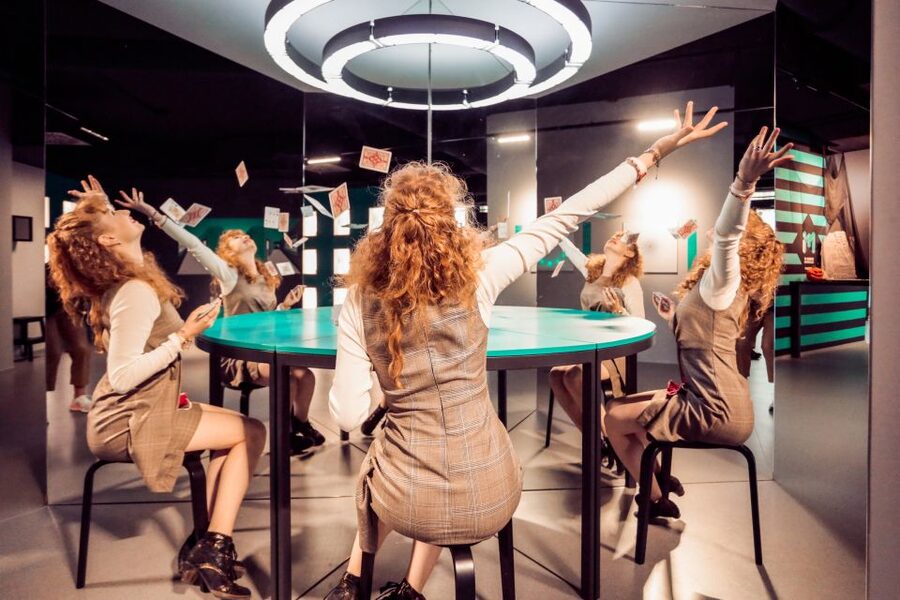
That matters because the best part of each display is often the moment when your eyes and your common sense disagree. You know the floor is level, yet the room seems tilted. You know your friend has not multiplied, yet the mirror makes it look as if several versions are sitting at the same table.
The experience combines visual tricks, balance tests, photography, and short explanations about human perception. You can have fun first, then return to the explanation and understand why the trick works. That balance keeps the visit from feeling like a collection of random photo backdrops.
The ticket costs $16 per person. For that price, I see this as a reasonably priced indoor activity, especially if you are visiting with children, teenagers, or friends who enjoy taking photos. It is not a full-day museum in the traditional sense, so the value comes from the number of interactive exhibits you try and the amount of time you spend experimenting with them.
More museum & gallery tickets in Stuttgart:
- Stuttgart: Mercedes-Benz Museum Entry Ticket
★ 4.8 · 1,400 reviews - Stuttgart: Stuttgart Wine Museum Wine Tasting
★ 4.7 · 55 reviews - Berlin: Jewish Museum Berlin Entrance Ticket
★ 4.5 · 8,393 reviews
Starting with the Mirror Room and optical illusions
The Mirror Room is one of the clearest introductions to the museum’s style. Mirrors alter your reflection and make the space seem larger, stranger, or less stable than it really is. You can pose, change your position, and take photos that look impossible without special effects.
I would allow time to try each effect more than once. A quick snapshot may show the basic trick, but a second attempt lets you adjust your pose and understand how the room is controlling your view. This is especially useful if you are visiting with a group, since one person can take photos while the others test the illusion.
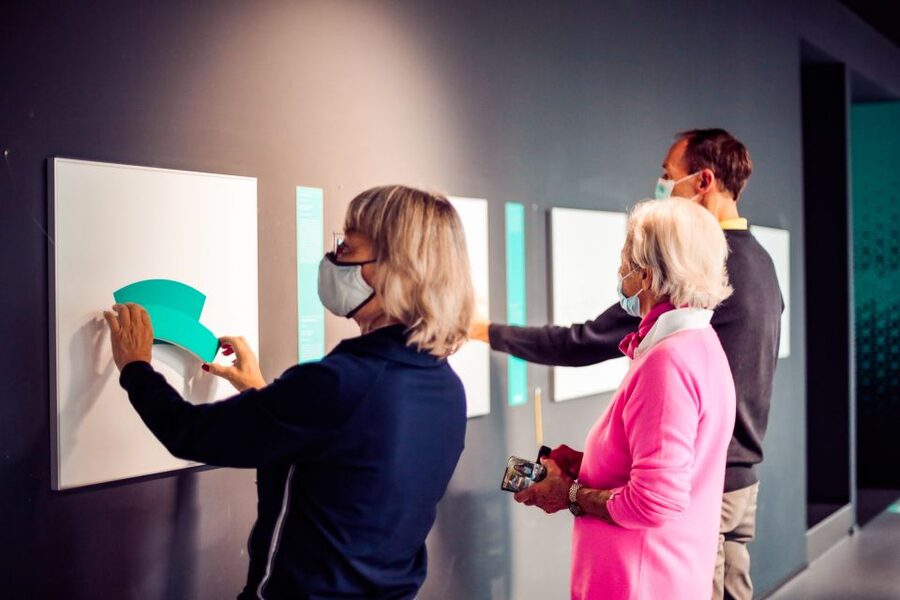
The museum also includes holograms. These images appear, disappear, and change as you look at them. They are a good reminder that not every illusion depends on a large room or complicated equipment. Sometimes the trick is in the way light and images reach your eyes.
You do not need special knowledge to enjoy these exhibits. Still, the explanations give the displays more value. You begin to see the difference between what your eyes receive and what your brain decides the image means.
Testing balance in the Vortex Tunnel

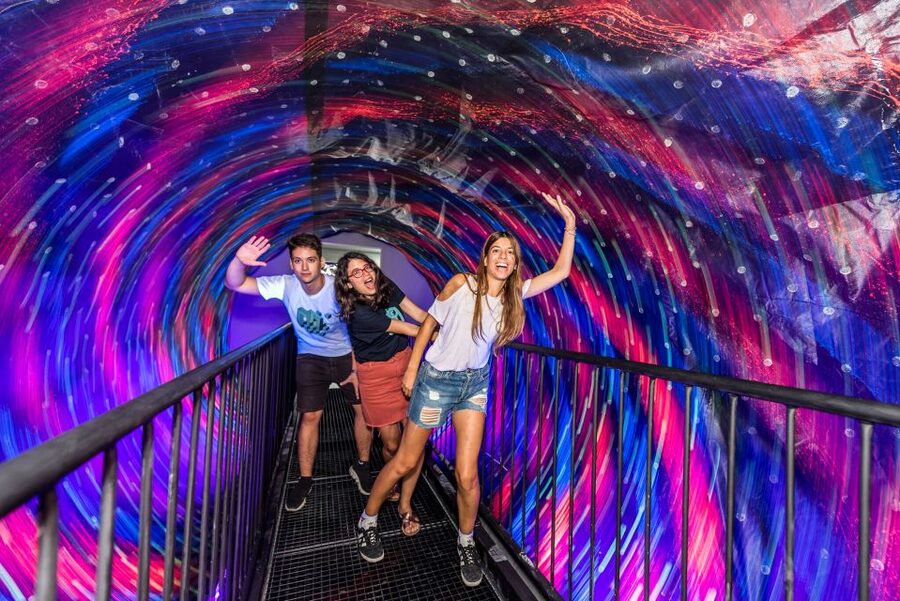
The Vortex Tunnel is likely to be one of the most memorable stops. It is a rotating cylinder that makes you feel as if your balance is failing, even though the floor beneath you remains flat and stable.
That contrast is the whole point. Your body reacts to the movement you see around you, while your feet receive different information from the floor. The result can feel surprisingly strong. Move carefully, especially if you already know that spinning or visual motion affects you.
The Vortex Tunnel is not suitable for people with epilepsy. The same warning applies to the Zoetrope and Tilted Room. This is important to consider before booking, since the museum’s appeal comes partly from sensory effects rather than simple displays.
If you are visiting with children, keep the experience playful but sensible. No one needs to prove anything by spending extra time in a room that makes them uncomfortable. There are plenty of other exhibits to enjoy, including mirrors, holograms, and interactive tables.
Finding the Infinity Room and Anti-Gravity Room
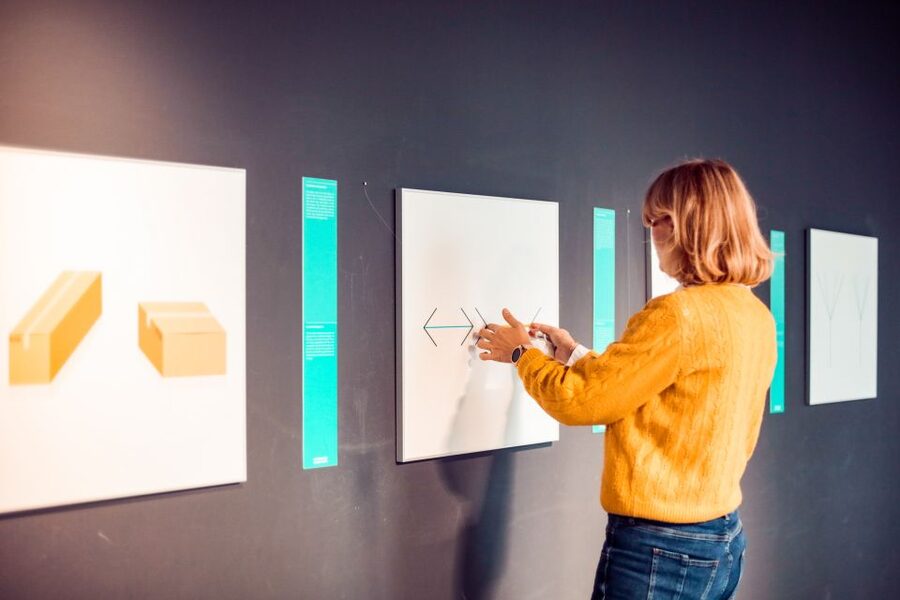
The Infinity Room uses mirrors to create the feeling of endless space. Instead of seeing a normal room with clear walls, you see repeated reflections stretching outward. The effect can be disorienting in a gentle, theatrical way, and it makes a strong setting for photographs.
The Anti-Gravity Room plays with your sense of what is upright. The room’s design makes ordinary body positions look impossible, so a person can appear to lean or stand at an unusual angle. Photos work best when the person posing commits to the idea and uses the room’s lines carefully.
These rooms are valuable because they show how much your brain depends on visual clues. You normally trust walls, floors, and repeated lines to tell you which way is up. Change those clues, and your interpretation changes with them.
The Tilted Room belongs to this same family of effects, but it comes with the epilepsy warning. If that applies to anyone in your group, skip the affected display and focus on the many other rooms.
A few more Stuttgart trips to weigh up
- Berlin: DDR Museum Tickets
★ 4.3 · 3,443 reviews - Berlin: Natural History Museum Entrance Ticket
★ 4.6 · 3,382 reviews - Berlin: Neues Museum Entry Ticket
★ 4.6 · 3,261 reviews - Cologne: Chocolate Museum Entrance Ticket
★ 4.4 · 2,790 reviews
Trying the Clone Table and Head on the Platter
The Clone Table is designed for group play. It uses mirrors and positioning to create the impression that one person has several copies. This is the sort of exhibit that becomes more entertaining when you take turns and compare the resulting photos.
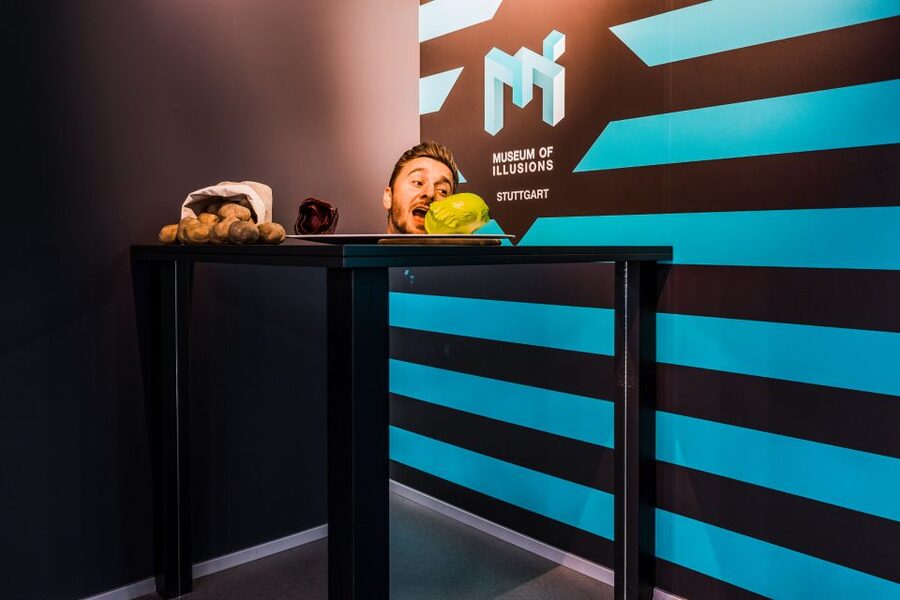
The Head on the Platter is another playful group display. It creates the appearance that a person’s head is sitting on a serving platter while the rest of the body seems to have vanished. The effect is simple, silly, and easy to understand, making it a good choice for families.
These exhibits also help explain why the museum works better with at least one companion. A second person can take the photo, help you find the correct pose, and react to the finished effect. You can visit alone, but some displays are more rewarding when someone else is part of the illusion.
Do not expect every exhibit to appeal equally to every age group. Younger children may prefer the large room effects, while older children and adults may spend more time trying to work out the visual mechanics. The variety helps keep the visit moving.
Watching the Turntables and learning how perception works
The Turntables create hypnotic effects through rotating patterns. Your eyes follow the movement, and the changing shapes can seem to shift in ways that are not physically happening.
This part of the museum slows the experience down. Instead of posing for a photo, you watch and notice how your perception changes. The effect can be a useful pause between the larger interactive rooms.
Throughout the museum, explanations cover human vision, perception, and the way the intellect interprets what the eyes see. The language may be aimed at a general audience rather than a specialist, which suits the setting. You come away with a simple but useful idea: seeing is not the same as understanding.
I appreciate that the museum gives rational explanations after presenting the trick. Without them, the displays could feel like a string of amusing visual stunts. With them, you can connect each effect to balance, reflection, perspective, movement, or the brain’s tendency to complete a pattern.
Why the photo opportunities matter
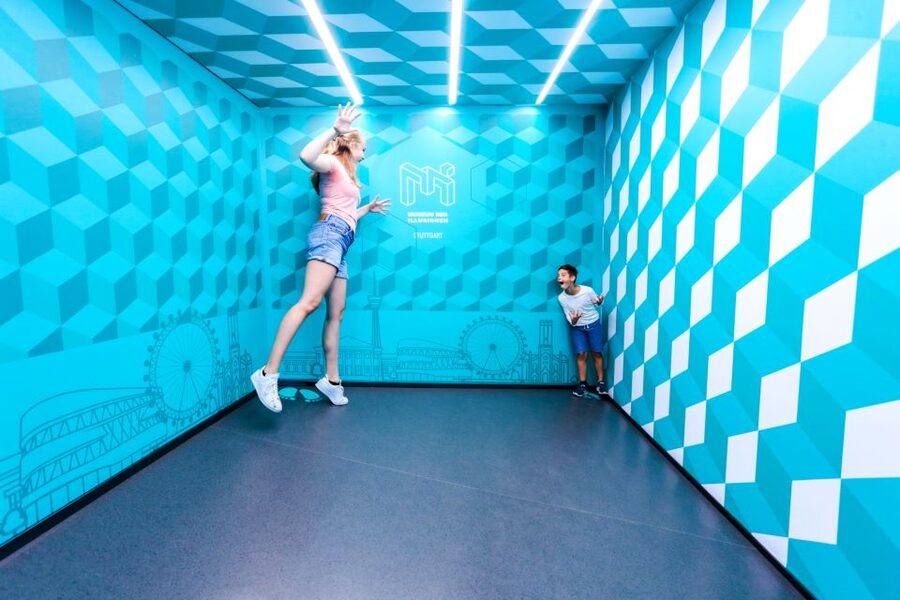
Photography is not just an extra feature here. It is part of how many exhibits work. The Mirror Room, Clone Table, Head on the Platter, Infinity Room, and Anti-Gravity Room all invite you to capture the illusion and share it later.
Bring a charged smartphone. That is the one item specifically recommended, and you will want enough battery for repeated attempts. A single photograph may not capture the effect properly, so take a few versions and check the result before moving on.
The museum is a good match for people who enjoy playful pictures rather than formal portraits. You can strike funny poses, distort your reflection, and create images that need no editing to look odd. If you dislike taking photos, you can still study the rooms and read the explanations, but you may not get the full value of every display.
The strongest photos usually depend on following the room’s intended viewpoint. Look for marked positions or natural places where the image lines up. The staff or display instructions may guide you, but the provided information does not name individual guides or promise a guided tour, so plan on exploring the museum at your own pace.
How long to plan and when the ticket works best
Your ticket is valid for one day, and you choose from available starting times when booking. The information does not state a fixed visit length, so I would treat this as a flexible attraction rather than a tightly timed tour.
That flexibility helps if you are building a Stuttgart day around other plans. You can place the museum into a schedule as an indoor activity without committing to a full-day program. Check the available start times before you book, particularly if your day includes trains, meals, or another timed attraction.
There is no transportation included. You need to make your own way to the museum, and food and drinks are also not part of the ticket. Those exclusions are normal for an entry ticket, but they matter when you are planning a family outing.
The museum is wheelchair accessible. If someone in your group has specific access needs, it is still sensible to confirm how the individual rooms are arranged before arrival, since an accessible venue does not automatically mean every illusion feels equally easy to use.
Who will enjoy this most
I would recommend this experience to families, groups of friends, and anyone who likes science presented through play. It gives children something to do with their hands and bodies, while adults can enjoy the photography and the explanations behind each effect.
It also works well on a rainy day or when you want a change from Stuttgart’s larger cultural attractions. The visit does not require a long attention span, and you can move between active rooms and quieter visual displays.
People who prefer detailed art collections, long historical displays, or a formal guided tour may find the museum too light. The focus is on perception and amusement, not on a large collection of original objects. The rating of 4.2 out of 5 from 507 ratings supports the idea that it is a well-liked activity, though not every exhibit will suit every person.
Those with epilepsy should read the safety warning carefully. The Vortex Tunnel, Zoetrope, and Tilted Room are specifically unsuitable. You can still consider the visit if you plan to avoid those areas, but the museum should not be booked without taking that limitation seriously.
Is $16 a fair price?
At $16 per person, the ticket is fairly easy to justify if you use the museum as a hands-on outing rather than a quick photo stop. You are paying for access to several themed rooms and displays, including the Mirror Room, Infinity Room, Anti-Gravity Room, Clone Table, Turntables, holograms, and Head on the Platter.
The value is strongest when you take your time. Try each room, retake photos, read the explanations, and compare how the illusions affect different people in your group. If you rush through only a few rooms, the price may feel less attractive.
The reserve-now-and-pay-later option adds planning flexibility. You can book a place without paying immediately, and free cancellation is available up to 24 hours in advance for a full refund. Check the exact terms and available time when making your reservation.
Should you book the Museum of Illusions Stuttgart?
Book it if you want a short, interactive Stuttgart activity with plenty of photo opportunities and enough science to give the fun some substance. It is particularly useful for families, friends, and indoor plans, and the $16 price keeps the decision simple.
Skip it if you want a traditional museum, dislike visual motion, or need to use every sensory exhibit. If epilepsy is a concern, remember that three named attractions are not suitable. For most other visitors, this is an entertaining way to test your eyes, confuse your balance, and leave with a better understanding of how your brain makes sense of the world.
FAQ
What does the Museum of Illusions Stuttgart ticket include?
The ticket includes entry to the Museum of Illusions Stuttgart. It does not include transportation, food, or drinks.
How much does admission cost?
The listed price is $16 per person.
How long is the ticket valid?
The ticket is valid for one day. Available starting times are shown when you check booking availability.
Can I cancel the booking?
Yes. You can cancel up to 24 hours in advance for a full refund.
Can I reserve now and pay later?
Yes. The reserve-now-and-pay-later option lets you book your spot without paying immediately.
Is the museum wheelchair accessible?
Yes. The activity is listed as wheelchair accessible.
What should I bring?
Bring a charged smartphone. You will have several opportunities to take photos of the mirror and perspective illusions.
Are any exhibits unsuitable for people with epilepsy?
Yes. The Vortex Tunnel, Zoetrope, and Tilted Room are not suitable for people with epilepsy.
Just added around Stuttgart
- Stuttgart: Exklusive Floßboote Finne & Fischle★ 4.5 · 23 reviews
- Stuttgart: Landesmuseum Württemberg Old Castle Entry Ticket★ 4.5 · 15 reviews
- SUP Yoga with Guide★ 4.1 · 4 reviews
- Stuttgart: Wine Tour with wines of the best winemakers★ 4.0 · 7 reviews
- Stuttgart: Wilhelma Zoological-Botanical Garden Ticket★ 4.7 · 121 reviews
- Stuttgart: Stand Up Paddling Rental★ 4.6 · 55 reviews
- Stuttgart: Walking Custom Tour with a Local Guide★ 3.8 · 4 reviews
- Stuttgart: Stäffele Guided Walking Tour★ 4.8 · 61 reviews
Museum & Gallery Tickets, compared.





Skip-the-Line: Berlin Wall Museum at Checkpoint Charlie
Read our review →
Browse the lists this tour appears in